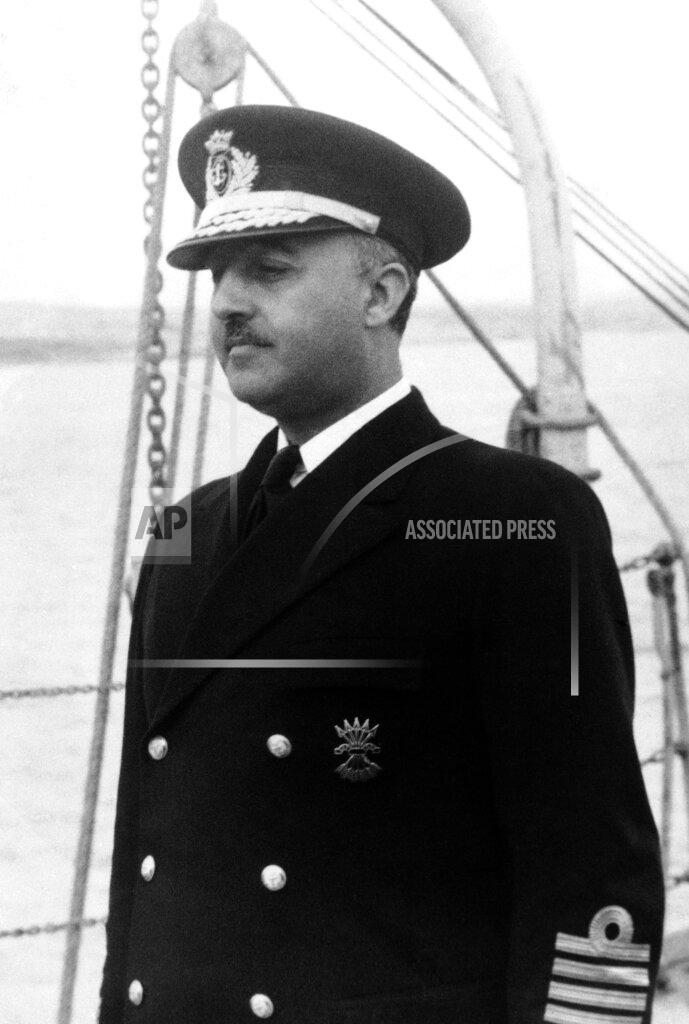
“The admiration for me expressed by neighboring democracies today leaves me as indifferent as the abuse they heaped on me yesterday,” Generalissimo Francisco Franco is quoted as saying by the newspaper Solidaridad Nacional of Barcelona this morning. Apparently, this is his reply to all comment by the foreign press on his present position in Spain, including criticism of the courts martial now being held here and advice from abroad that he show generosity toward his vanquished foe. “Among all Spaniards, I am the one who most desires to end the war,” he is quoted as saying. “But I shall accept only the enemy’s unconditional surrender. “The press of neighboring countries is making itself the accomplice of those who have committed savage crimes and excesses in Spain. It would be in better taste now for them at least to keep silent, but it is precisely this same press that today presumes to give me advice.” Trials by military courts in Barcelona of military and civilian prisoners accused of common and capital crimes will be resumed tomorrow.
Following the great display here yesterday of General Franco’s land and air forces, he reviewed today most of his fleet in Tarragona. Harbor, sixty miles down the Mediterranean coast. Accompanied by Generals Gonzalo Queipo de Llano, Andres Saliquet and Oswaldo Orgaz and other army commanders who took part in yesterday’s parade of 80,000 troops, as well as by Count Francisco Gomez Jordana, his Minister of Foreign Affairs; Ramon Serrano Suner, his Minister of the Interior, and Juan Antonio Suances, his Minister of Industry and Commerce, he motored to Tarragona. The party was taken in three launches out to the Mar Negro, a liner converted into a warship after its capture from the Loyalists. They were greeted by Admiral Cervera, commander of the Insurgent fleet, who spoke feelingly of General Franco’s first review at the Canary Islands of those Spanish naval vessels and marine officers that had elected to support his movement in 1936. General Franco joined with his highest naval officials in paying tribute to the memory of comrades lost when the cruiser Baleares sank.
The Netherlands recognizes Francisco Franco’s regime in Spain.
An unnamed vessel sends a mystery SOS, announcing an attack by a submarine torpedo, south of the Azores in the Atlantic. This was almost certainly a hoax. There is no record of such an attack or a lost ship on this date.
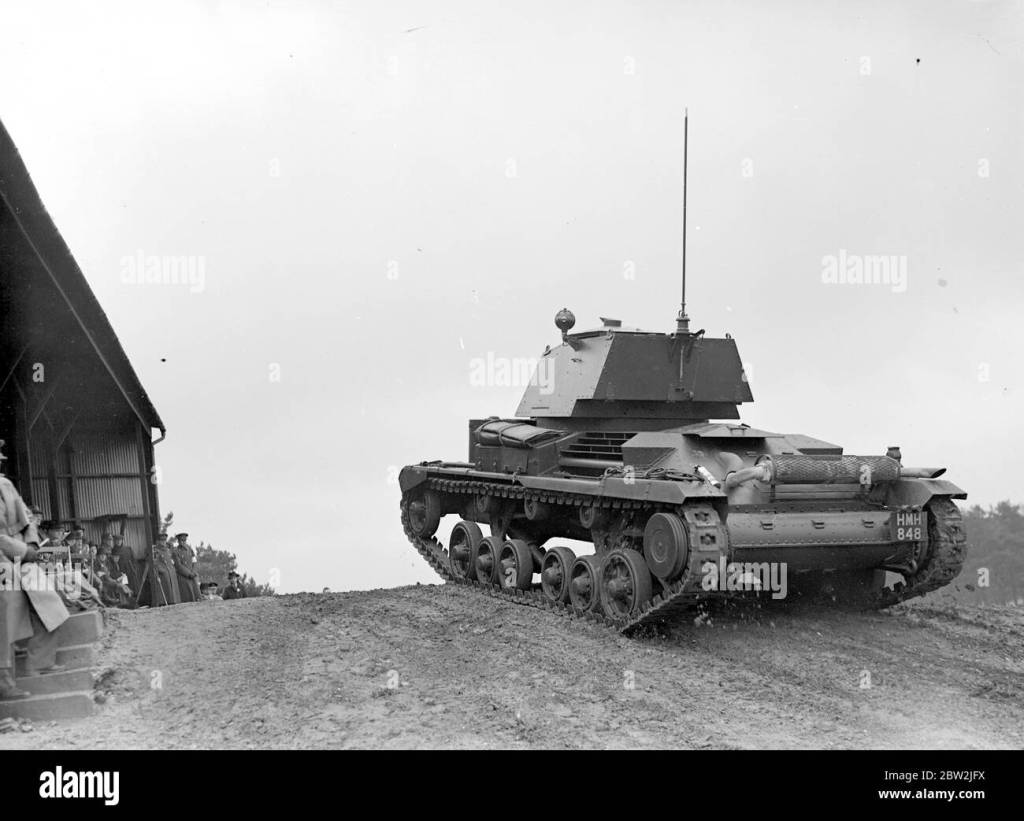
The British Cabinet made the unprecedented decision to authorize military aircraft production to maximum levels without regard to cost.
The government authorizes the formation of a “British Expeditionary Force” to go to France in the event of war with Germany.
Neville Chamberlain tells an audience in Blackburn, “Ships, guns and ammunition are produced by our shipyards and factories with an increased acceleration… Even if the whole world is against us we will win.”
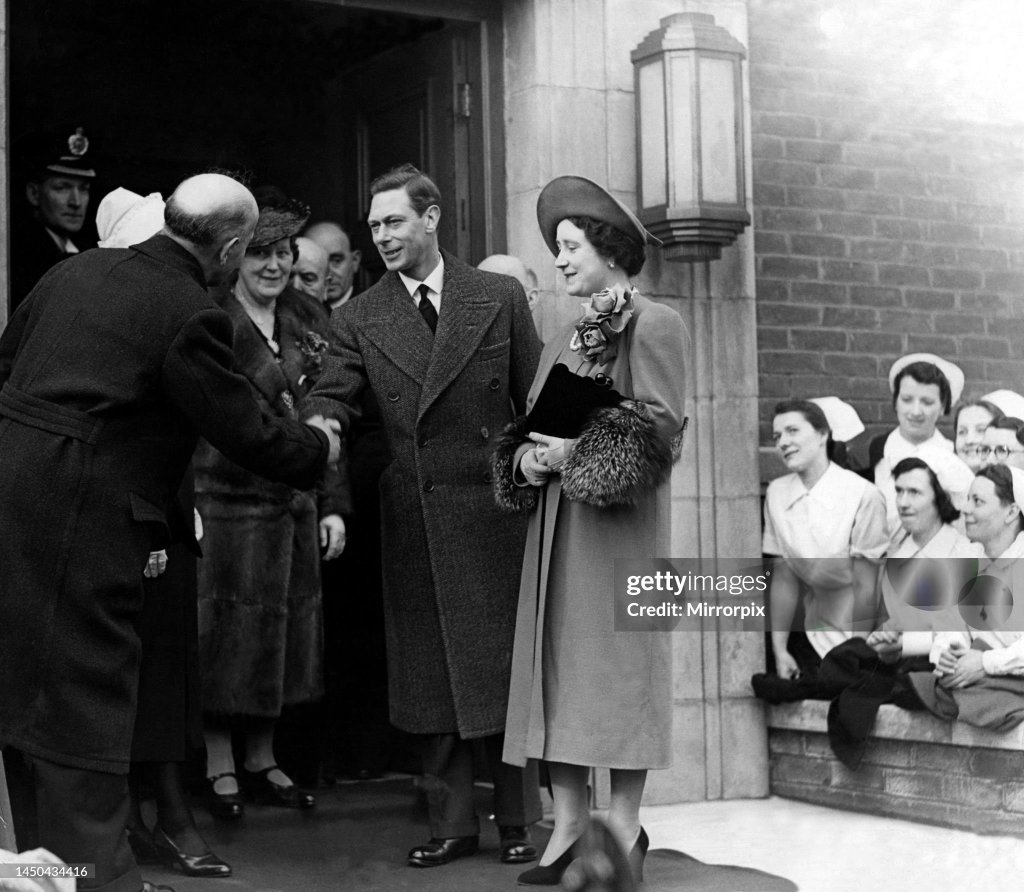
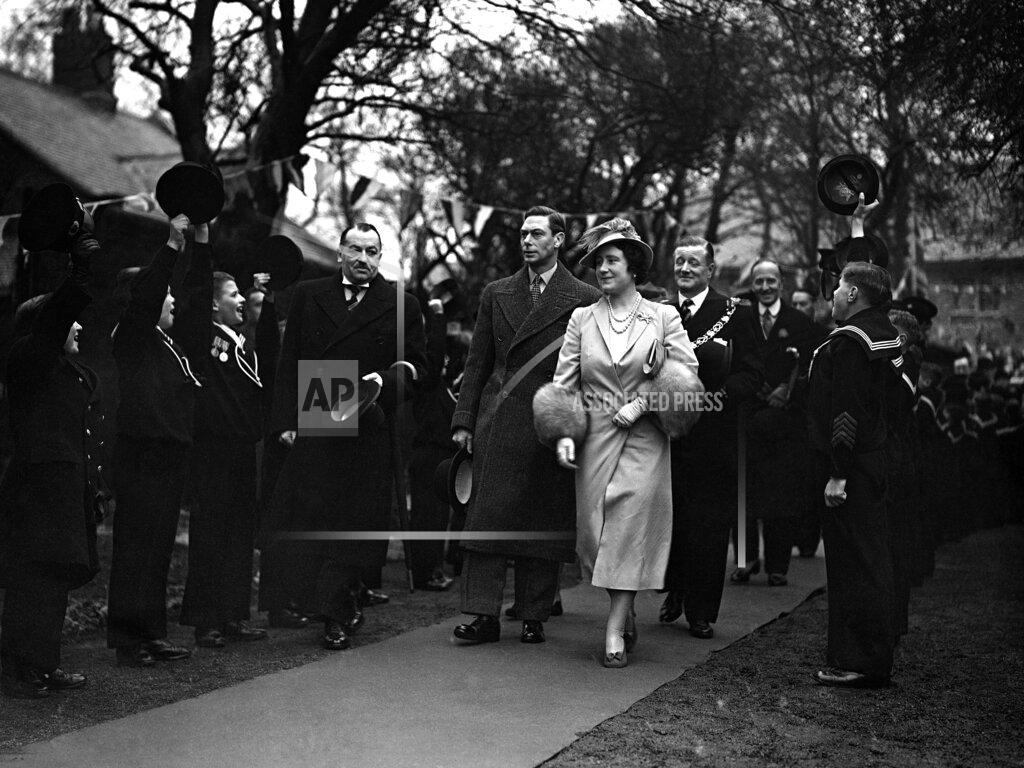
Prime Minister Neville Chamberlain hints that idle youth will get work building camps for air raid refugees. While King George and Queen Elizabeth were seeing something of the poverty-stricken “depressed areas” along the Tyne today, Prime Minister Neville Chamberlain hinted that thousands of unemployed youths might be put to work soon building wartime camps for air-raid refugees. This was the first sign of a frontal attack by the government upon the growing army of unemployed, which now exceeds 2,000,000 for the first time in three years, despite Great Britain’s rearmament program.
Chancellor Adolf Hitler has caused to be conveyed to Prime Minister Neville Chamberlain through a reliable channel his pained surprise at the extent of British armaments. After Munich, Herr Hitler alleges, Germany began putting a brake on her effort in the armaments race, but the giant growth of the British forces has obliged her to restart it. Germany fears that Britain is arming not for defense, but for waging a preventive war against the Nazi Reich in the not distant future. The reality of that message was confirmed by the Prime Minister’s speech in the House of Commons. yesterday, when he went out of his way to give assurance that no intention existed in this country to unleash preventive warfare. The German surprise at the dimensions of the British effort proves that Herr Hitler and his advisers are shocked by the discovery they somehow have missed the moment to catch Britain napping. War against the United Kingdom ceases to be a holiday trip across the North Sea and becomes a dangerous adventure with an uncertain outcome.
[Ed: The unintentional comedy of Adolf Hitler.]
France fears a new war crisis as Italy mounts troops and Germany increases munitions.
The French study the danger in Tunisia. A clash between French and Italian troops is reported there, but officials deny reports. Chiefs of France’s armed forces in Africa met in extraordinary conference here today following reinforcement of Italian troops in Libya. General August Nogues, coordinator of French African forces, which number some 100,000 men, planned to fly to Paris immediately after the meeting to report directly to Premier Edouard Daladier. The urgent meeting followed hard on the heels of persistent reports of a bloody clash between French and Italian troops in Southeastern Tunisia. Although both the French Resident General, Eirik Labonne, and the Italian Consulate General in Tunis denied that any clash had taken place, the military conference was regarded as highly significant.
Reports received in Paris by diplomatic circles and through private channels from Tunis said that eighty Italians and four Frenchmen had been killed last Friday on the Tunisian-Libyan border when Italian troops penetrated French territory from Libya and were driven back. Italy denies the reports.
France will resist any threats of force and notes solidarity with the United States. Premier Edouard Daladier solemnly declared tonight that France, in protecting her empire from aggression, “will never give way either to threats of force or to blackmailing tactics.” The Premier spoke at a Washington’s Birthday dinner at the American Club. He was introduced by the United States Ambassador, William C. Bullitt, who stressed that the United States would not “start a war with any nation.” “We are not in the habit of starting wars,” Mr. Bullitt said. The word “starting” was underscored in a printed text of the speech distributed to newspaper men.
Premier Daladier was making his first public declaration since Italy reinforced her troops in Libya, North African colony that lies next to French Tunisia. “When it becomes a question of the independence of our fatherland and the integrity of our territory,” he said, “we are resolved to stand firm in the face of all threats.” At the same time the Premier reiterated that his country was ready to “participate, in a spirit of reciprocal good faith and under effective measures of control, in any sincere work of limitation and even reduction of armaments.”
M. Daladier, asserting that France would not pay for peace by sacrificing her liberty, said his country was “resolved to make her rights respected.” Declaring that the United States and France must band together in working for peace, M. Daladier added that “we know that in this work of peace there will be, as there is today, a solidarity between us.”
Papal ties with France are a vital issue in selection of the new Pope.
The Czech foreign minister stresses the importance of amity with Germany.
In Budapest, Hungary, Premier Count Paul Teleki today outlined his program to Parliament in a two-hour speech. The main burden was the continuance of former Premier Bela Imredy’s policies. Regarding internal affairs Count Teleki first referred to the anti-Jewish bill as “a painful operation on the body of the Hungarian nation which must be performed for reasons the Hungarians realized even twenty years ago.” He said the broad lines would remain unchanged “to safeguard the position of the Magyar race.” Regarding his foreign policy, he said Hungary would remain a true friend of Germany and Italy, and also preserve her traditional cordial relations with Poland. After his speech the anti-Jewish bill was introduced in the lower house as accepted by a special committee.
The Foreign Office announced tonight that Hungary would sign the anti-Comintern pact Friday. Foreign Minister Count Stephen Csaky will sign at a meeting with the Ministers of Italy, Germany and Japan.
Arab-Jewish talks may be held in London. Delegates from Egypt and Iraq may attend.
A U.S. Senate group lifts limits on airplanes. The Senate Military Affairs Committee recommended today that the top strength of the army air corps be set at 6,000 serviceable airplanes, instead of the 5,500 authorized by the Air Corps Expansion Bill the House passed last week. The vote was unanimous for reporting the measure, authorizing the expenditure of about $358,000,000, of which $170,000,000 was the War Department estimate for airplanes, the committee said. It is expected to reach the floor within a few days.
The Senate also completed Congressional action on the bill extending the Reconstruction Finance Corporation and the Disaster Loan Corporation to June 30, 1941; approved the Independent Offices Appropriation Bill, heard Senator Taft read Washington’s Farewell Address, and recessed at 1:29 P. M. until noon tomorrow.
The House, in the meantime, pushed toward final passage the Naval Air and Submarine Base Bill by ending general debate and clearing the decks for a final vote tomorrow. Representative Sutphin of New Jersey offered an amendment, at the close of today’s session, to strike from the authorizations the item of $5,000,000 for improving the harbor of Guam. This proposal is expected to occasion the only parliamentary battle accompanying the passage of the measure. Debate on the amendment will be limited to thirty minutes, fifteen on each side, since most of the general debate of six hours has been occupied with discussions of the pros and cons of the Guam item, and leaders are desirous of finishing with the bill tomorrow. Opposition to the Guam improvements comes from both sides of the House and their ultimate fate is uncertain.
These two defense bills comprise all the legislation necessary to carry into effect the recommendations President Roosevelt made in his emergency national defense message of January 12. Those proposals were estimated to cost about $552,000,000 in all. In addition to the $358,000,000 authorized by the Air Corps Expansion Bill, the Naval Air and Submarine Base Bill will authorize about $53,800,000 of improvements and additions. There are about $110,000,000 in various coast defenses, anti-aircraft equipment for the regular army and the National Guard, asked by the President, which have already been authorized and need only the appropriation to put them into effect.
The Senate Finance Committee reported favorably today by a vote of 14 to 3 a House bill which would set up reciprocal taxation of salaries paid to employees of the federal and state governments. The overwhelming committee support for a bill already approved by the House indicated quick passage of the measure and the establishment of a precedent in tax legislation.
Under current procedure the federal government assesses federal income taxes only against salaries paid to its own employees. The states which have income levies tax their own employees in the same manner. The new bill, backed by the Administration, would permit states to assess income taxes against federal employees residing in their jurisdictions and the federal government to collect income taxes on the salaries of all state, county and municipal workers. Senator Byrd, a sponsor of the measure in the Senate, has stated that about 4,000,000 persons would be affected by the bill.
James Hines, Tammany leader, does not testify on his own behalf on corruption allegations, and the trial stage ends.
First Lady Eleanor Roosevelt says the New Deal is not a permanent solution, but a stop-gap measure that gives the country time to think.
President Franklin Roosevelt requests that $150,000 cut out of the New Deal budget be reinstated. He receives the silent treatment from Congress on the issue.
Lord Rothschild, head of the British bank, travels to the United States to consult with scientists about matters that interest him.
The San Francisco fair draws more attendance than the 1933 fair in Chicago. The attendance of the first two days stands at 237,409, as compared to 172,559.
Joseph Prance, founder of the Kiwanis group, dies after surgery.
Spanish surrealist artist Salvador Dali assures viewers that he does not understand his art, either.
Darryl Zanuck, 20th-century movie chief, buys the contract of a popular radio performer and bans her from the air. Zanuck did the same with Tyrone Power last week.
“Tarzan” actor Johnny Weissmuller will re-wed after a divorce from Lupe Velez is final.
Searchers unearth an old Richard Wagner score. Some believe this song has never before been played.
Nadia Boulanger will be the first woman to conduct the Philadelphia Orchestra.
Internationally known polo star Pat Roark dies of brain injuries after a fall during a game.
The Mexican Federation adopts a six-year plan calling for government in business, and plans for this to serve as a platform for the Mexican Revolutionary Party.
As political assassinations continue, Japan threatens action in Shanghai’s International Settlement if the Chinese do not curb terrorism. The Japanese Foreign Office has sent stern demands to Shanghai’s International Settlement for the suppression of Chinese terrorism, warning that a failure to remedy conditions might lead to serious consequences. Tokyo newspapers say Japan also demanded increased representation on the municipal council, the appointment of more Japanese to responsible positions in the International Settlement administration and police. Though those demands cannot be officially confirmed they are corroborated by Foreign Minister Hachiro Arita’s statements in the House of Peers yesterday when, answering a question, he said Japan demanded the employment of more Japanese police in Shanghai and an increase in their authority. Officials, while declining to reveal the terms, express confidence that nothing drastic will happen while they are being discussed. This view is supported by the fact that the press has moderated its tone.
Forty-three foreign refugees from Kuling, including eight Americans, have been brought through Chinese and Japanese lines to Kiukiang, Yangtze River port. A dispatch from the United States gunboat Oahu, at Kiukiang, to naval authorities here told of the withdrawal of the foreigners from the mountain resort where they had been isolated for months.
The casualties in the Japanese raid at Ichang yesterday, the second in two days, were given as 100 killed and 200 injured. Ichang is 180 miles west of Hankow. More than 600 buildings were said to have been destroyed when a densely populated district was attacked.
Japan will train 30,000 brides for Japanese men living in Brazil. Grooms will select their bride by photo.
Died:
Antonio Machado, 63, Spanish poet.
Alexander Yegorov, 55, Soviet military leader (died in prison).
Naval Construction:
The Вое́нно-морско́й флот СССР (ВМФ) (Soviet Navy) “M” (Malyutka)-class (3rd group, Type XII) submarines M-34, M-35, and M-36 are laid down by Krasnoye Sormovo (Gorkiy, U.S.S.R) / Yard 112.
The Вое́нно-морско́й флот СССР (ВМФ) (Soviet Navy) “S” (Stalinec)-class (2nd group, Type IX-modified) submarine S-31 is launched by the Marti Yard (Nikolayev, U.S.S.R.) / Yard 198.


 History Diaries