Franco’s forces prepare to fight, dropping the idea of a loyalist surrender. The belief predominates in Franco’s Nationalist Spain that it will be necessary that troops conquer the territory still remaining in Loyalist hands. It is evident now that no immediate collapse is likely, and the Loyalists are not expected to surrender either Valencia or Madrid, in view of the failure of the French envoy, Senator Leon Berard, to indicate the prompt desire of the French Government to recognize the Franco regime on his arrival at Burgos, the Insurgent capital. The French Government is delaying British recognition of Generalissimo Francisco Franco, in the opinion of his followers.
Editorial comment published by the press throughout General Franco’s zone today says: “France backed the Republicans (Loyalists) to win and lost. Another proof of France’s bad faith is her treatment of Nationalist (Insurgent) prisoners carried off to Perpignan by the retreating Republicans. These prisoners were still considered to be under the control of the Spanish Republicans on French soil, and it is insolently proposed that they should be exchanged for Republican prisoners we hold.” Traveling by road from Burgos to Barcelona, a New York Times correspondent passed a truck convoy and trains carrying at least two full divisions from Catalonia to other sectors.
Railroad passenger service between Barcelona and Saragossa was reestablished today. A train that left Barcelona at 11:30 A.M. was scheduled to arrive at Saragossa, about 150 miles distant, at 9 o’clock tomorrow morning.
Insurgent air raids on Almeria killed 44, and injured 110 people over the weekend.
Trials by military courts were suspended in Barcelona today.
From Saint-Jean-de-Luz, to which he had returned for the purpose, Senator Leon Berard, French envoy to Burgos, telephoned to Foreign Minister Georges Bonnet late this evening his first report on conversations that he had Saturday and yesterday with Count Francisco Gomez Jordana, Foreign Minister of the Spanish Insurgent regime. It was stated that his negotiations were going “fairly well” but were “not without difficulty.” Senator Berard is returning to Burgos tomorrow for another meeting Wednesday with Count Jordana, who in the interval will have seen Generalissimo Francisco Franco at Barcelona.
Cardinals intend to continue the policies of Pius XI. The U.S. cardinals agree with his doctrine of full spiritual control.
Britain will finance £580 million in arms with a tax increase.
The Italian Fascist Party excluded Jews from membership.
Hitler recognizes healing practitioners who do not have medical training or a license. Those with intuitive ability to cure the sick can practice under the title of heilpraktiker, or healing practitioner.
Persistent rumors of a reshuffling of the Czecho-Slovak Cabinet insist that General Jan Syrový, War Minister, and General Alois Eliáš, Communications Minister, will be ousted and replaced by more docile Ministers who have not been friends of former President Edvard Beneš. There is even talk that all the Cabinet members will be replaced by men who are outspokenly pro-German. Czech-German relations are not developing in the manner Prague. expected after making such great sacrifices to satisfy Germany and avoid war. The international guarantees of Czecho-Slovakia’s borders, solemnly promised at Munich, have not yet materialized. This means that Hungarian or Polish inroads into Carpatho-Ukraine are still possible.
Germany is understood to want a high price for a guarantee. First, she wants delivery of one-third of the Czecho-Slovak National Bank’s gold reserves; second, a radical reduction of the Czecho-Slovak, Army — a figure as low as 50,000 men is currently mentioned — and, third, immediate “solution of the Jewish problem” on Nuremberg lines. In addition, Berlin desires effectively to control this country’s foreign policy, which would include denunciation of the French, and Russian alliances and separation from the Little Entente. Moreover, Germany expects Czecho-Slovakia to furnish the raw materials for the former’s industries even at the sacrifice of currency. Foreign Minister František Chvalkovský is employing skillful dilatory tactics, but the Germans are pressing hard. They have asked for a purge of the army of Beneš appointees, and a start has already been made in this direction.
The Balkan Entente conference opened in Bucharest, Rumania today with the participation of the four Foreign Ministers of the member States-Rumania, Yugoslavia, Greece and Turkey. General John Metaxas, Greek dictator, speaking at a banquet here tonight, intimated that the entente members were determined to safeguard their territorial integrity and the inviolability of their frontiers and that they were convinced that the Salonika agreement concluded with Bulgaria would improve the relations between that State and the entente. That statement was regarded as an indication that no revisionist demand by Bulgaria upon Hungary would be considered by the entente. The Black Sea pact envisaged by Turkey will not be discussed at this conference in view of General Metaxas’ declaration that the outcome of the present meeting would not be the signing of any new commitments. Yugoslavia, moreover, persists in opposing any agreement with Russia, while King Carol of Rumania, who refused to join the anti-Comintern pact, is reluctant to accept any combination in which the Soviet Union would join. The conference will continue tomorrow, when it will consider de jure recognition of the Spanish Insurgent regime.
A three-day conference of the Danish, Finnish, Norwegian and Swedish Foreign Ministers, to discuss the common problems facing the North European States, began in Helsingfors, Finland, today. It is expected that the Ministers will exchange confidential information on recent world events and their potential repercussions on Scandinavian security with a view to framing concerted measures to meet possible emergencies. Particular attention is expected to be directed toward the tension between the totalitarian powers and the democracies, the armaments race, the question of recognition of the Spanish Insurgents and the thorny refugee problem — all calling for speedy decisions. The nations are also expected to discuss means of preserving their neutrality in the light of military experiences during the September crisis. In this connection the Aland Islands fortification scheme will probably be further examined.
The independent Arab States-Egypt, Iraq, Saudi Arabia, Trans-Jordan, and the Kingdom of Yemen — today told the British delegates to the Palestine conference of their unreserved support of the Palestinian Arabs’ demands for the establishment of another independent Arab State comprising the Holy Land. The position of the independent States was put by Aly Maher Pasha of the Egyptian delegation, who presented the combined views of the other States, developed over a weekend of conferences among the Arabs. The conferences were held at the suggestion of Malcolm MacDonald, Secretary for Colonies. All sources tonight agreed that the statement presented by the Egyptian tonight did not differ essentially from the stand of the Palestine Arabs as presented on the opening day of the conference.
That stand was for the complete independence of Palestine under Arab rule, with the number of Zionists frozen at the present figure, but enjoying minority rights and a strong treaty with Britain. There is no reason to believe that the British attitude that independence cannot be granted to Palestine has changed any more than the Zionists’ attitude that such a step would be a betrayal of British promises of a permanent national home has changed. Under the circumstances there is the general belief that the Palestine discussions have not progressed beyond the deadlock at which they started and that the time is rapidly approaching when the British must declare that further talks are hopeless and announce their own plan for Palestine.
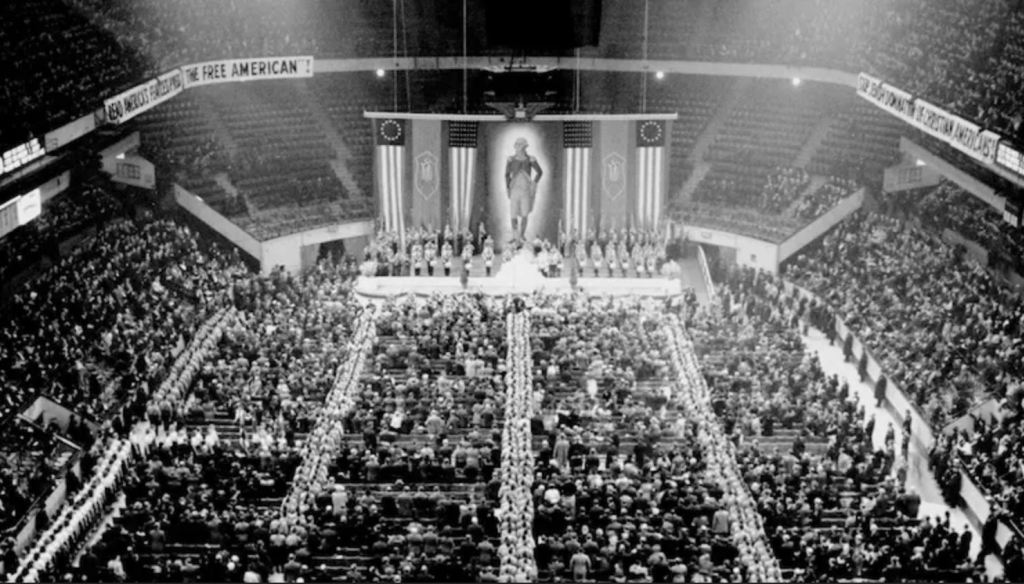
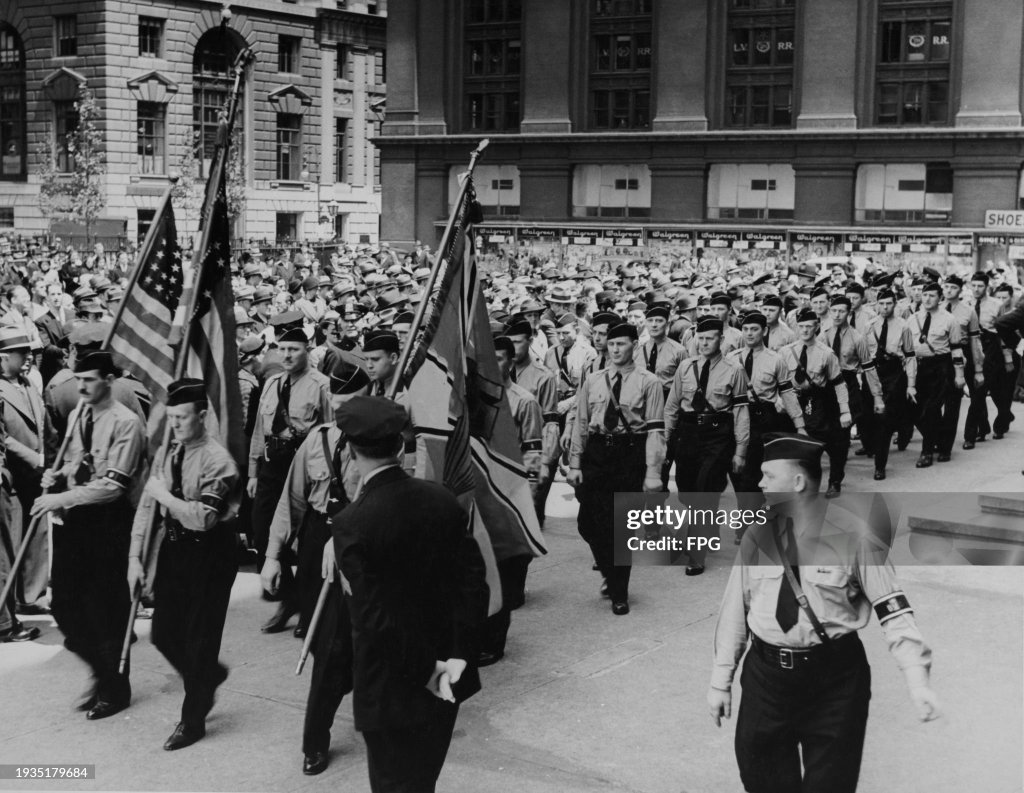
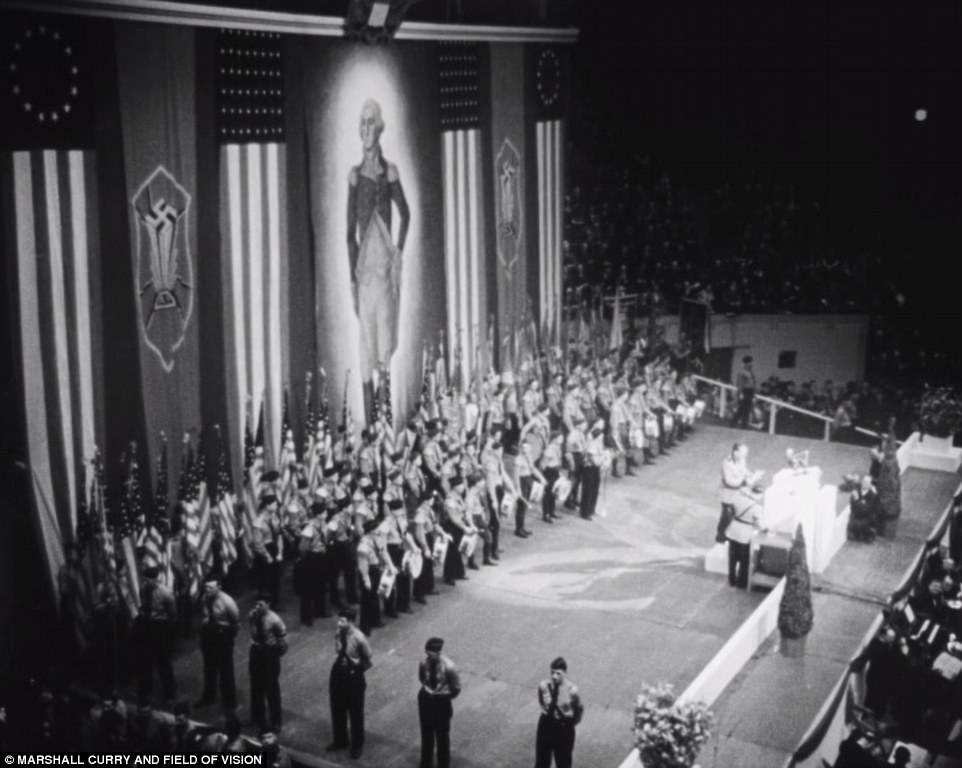
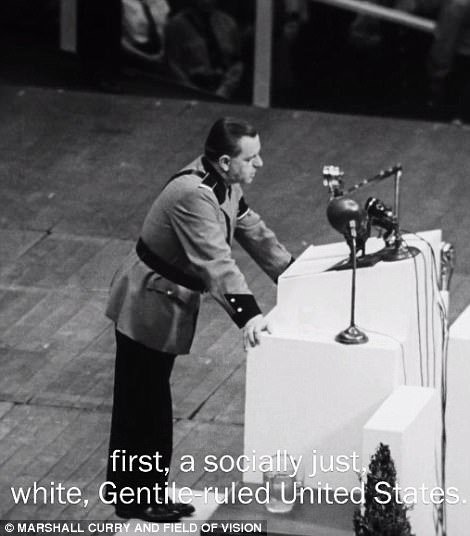
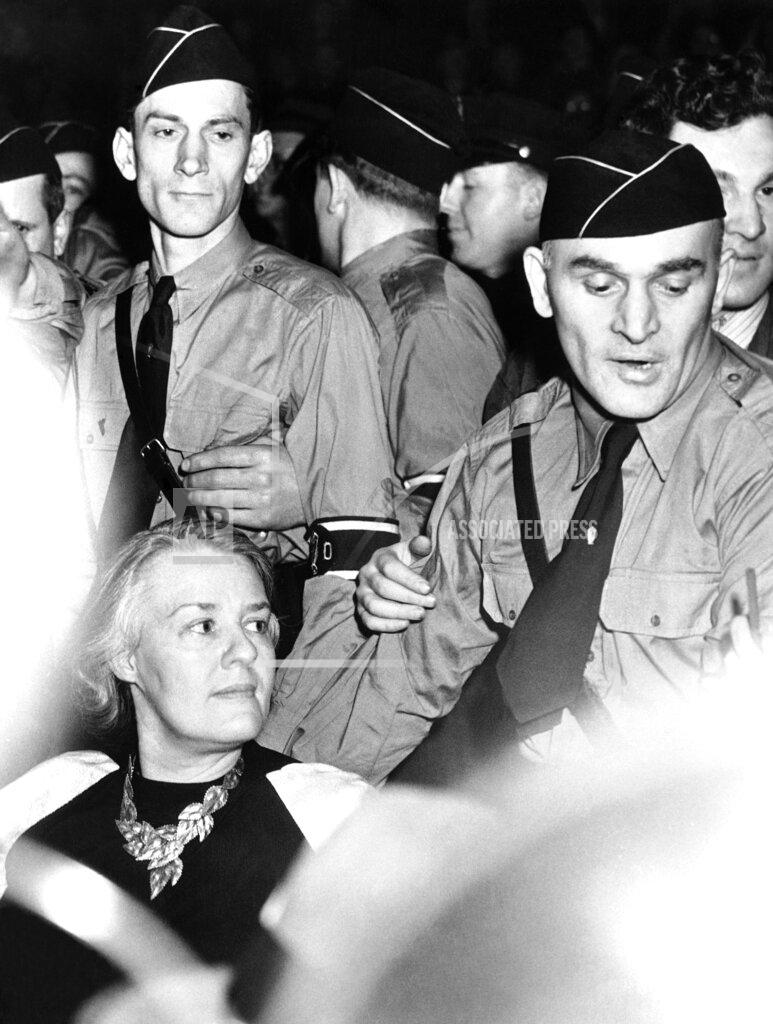
20,000 Nazi sympathizers and supporters of Father Charles Coughlin attended a rally of the German American Bund in New York’s Madison Square Garden. More than 50,000 anti-Nazis protested outside the venue, held back by 1,700 police who made thirteen arrests breaking up various fights in the street. The rally occurred when the German American Bund’s membership was dropping; Kuhn hoped that a provocative high-profile event would reverse the group’s declining fortunes. The pro-Nazi Bund was unpopular in New York City, and some called for the event to be banned. Mayor Fiorello La Guardia allowed the event to go forward, correctly predicting that the Bund’s highly publicized spectacle would further discredit them in the public eye.
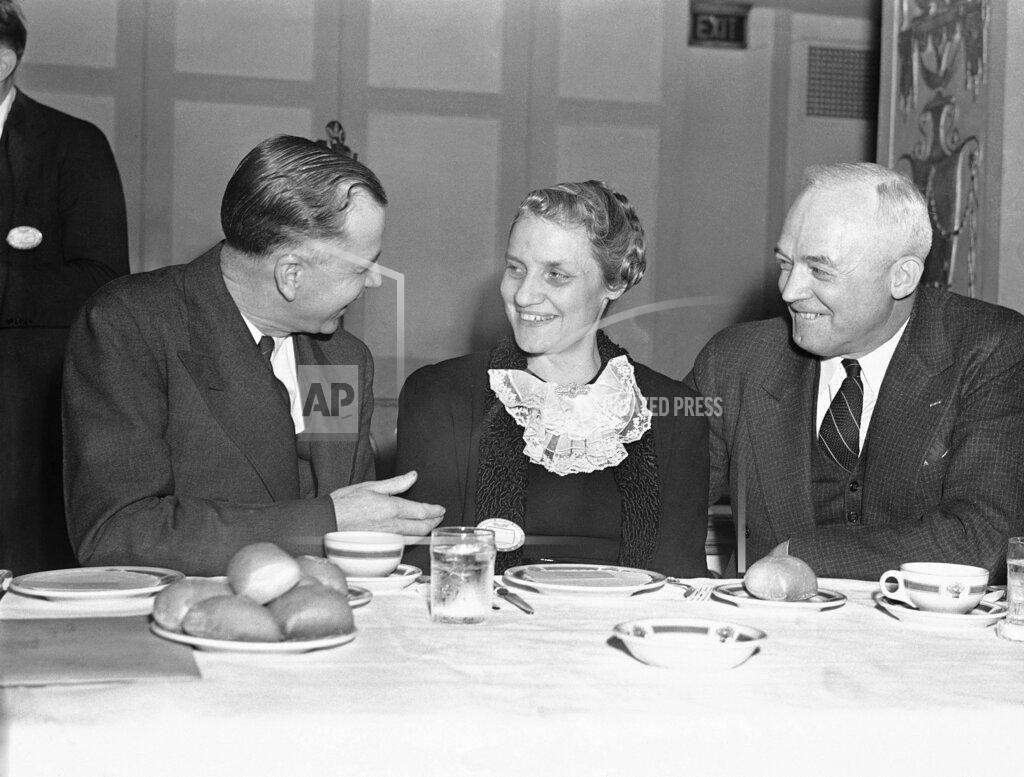
The rally began at 8 pm with a rendition of “The Star-Spangled Banner”, sung by Margarete Rittershaush. Next, James Wheeler-Hill, national secretary of the Bund, opened the night with the statement that “if George Washington were alive today, he would be friends with Adolf Hitler.” Calling upon his fellow Americans, Wheller-Hill challenged Bund members to restore America to the ‘True Americans’ while condemning President Franklin D. Roosevelt’s Secretary of the Interior, Harold L. Ickes for attacking Nazi officials. Midwestern Gau leader George Froboese was next to speak, pushing themes of ‘Jewish world domination’, blaming the ‘oriental cunning of the Jew Karl Marx-Mordecais for the class warfare felt across the country.’ West Coast leader Hermann Schwinn chose to denounce the Jewish control of Hollywood and news industries, following a common theme of the night with an extremely antisemitic run-on sentence, “Everything inimical to those Nations which have freed themselves of alien domination is ‘News’ to be played up and twisted to fan the flames of hate in the hearts of Americans, whereas the Menace of Anti-National, God-Hating Jewish-Bolshevism, is deliberately minimized.”
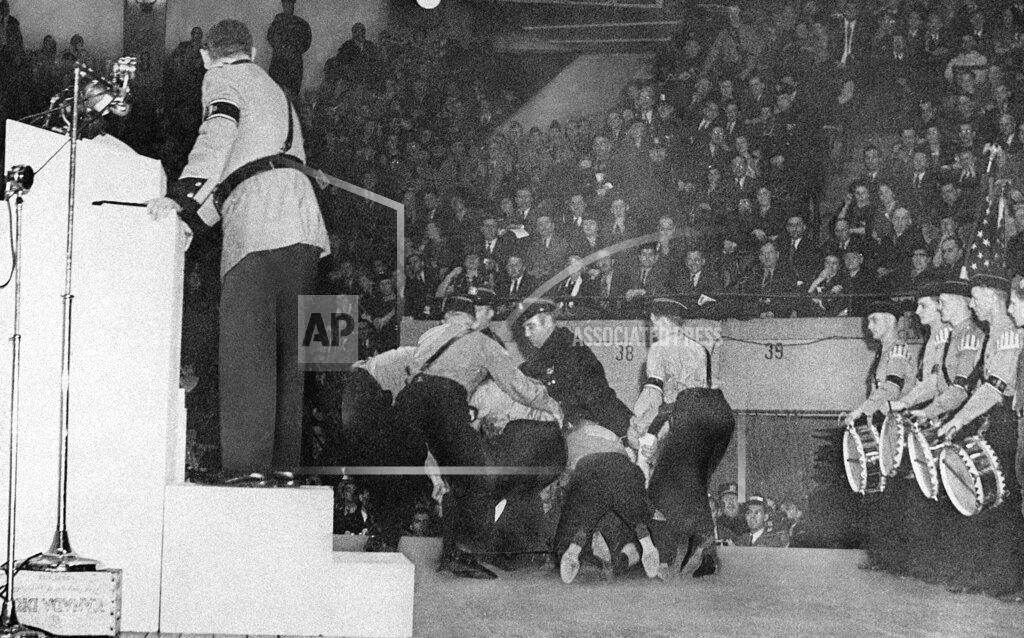
Last to speak, the Bundesführer himself, Fritz Kuhn, continued to push the anti-Semitic theme, going as far as calling President Roosevelt ‘Rosenfeld’ and calling Fiorello La Guardia, the man whom he promised to make no anti-Semitic remarks about, Fiorello “Jew Lumpen” LaGuardia. Everything came to an immediate halt in the middle of Kuhn’s final speech because a man who was dressed in blue broke through the lines of OD men, ran onto the stage, and charged at the speaker. Quickly swarmed by the Ordnungsdienst, the Bund’s paramilitary, he was subdued in an effective routine of punches and stomps which exemplified an ‘uncanny replication of Nazi thuggery’ [as] a pack of uniformed men blast[ed] away with fists and boots on a lone Jewish victim.” Later identified as 26-year-old plumbing assistant Isadore Greenbaum, the lone victim was pulled away by a team of police, saving the young man from serious injury. Attempting to control the riled-up crowd, Kuhn delivered his rousing finish, advocating the establishment of an America which would be ruled by White Gentiles, free from a Jewish Hollywood and news. “The Bund is open to you, provided you are sincere, of good character, of White Gentile Stock, and an American Citizen imbued with patriotic zeal. Therefore: Join!” As Kuhn exited the stage, 20 thousand Bund members chanted “Free America! Free America! Free America!” in the biggest Nazi rally in United States history.
[Ed: What a bunch of pathetic losers.]
Shortly after the rally, the Bund rapidly declined. Two months after the rally, the film Confessions of a Nazi Spy was released by Warner Brothers, ridiculing the Nazis and their American sympathizers. The Bund also came under investigation. After its financial records were seized in a raid on the group’s Yorkville, Manhattan headquarters, authorities discovered that $14,000 (about $273,000 in 2021) which were raised by the Bund during the rally were unaccounted for, Kuhn had spent them on his mistress and various personal expenses. Kuhn was convicted of embezzlement and sent to Sing Sing prison in December 1939. Kuhn’s successor as the Bund’s leader was Gerhard Wilhelm Kunze, a spy for German military intelligence who fled from the United States in November 1941. However, Mexican authorities forced Kunze to return to the United States, where he was sentenced to serve 15 years in prison for espionage. The Bund’s final national leader was George Froboese, who was in charge of the organization when Germany declared war on the United States. Froboese committed suicide in 1942 after he received a federal grand jury subpoena.
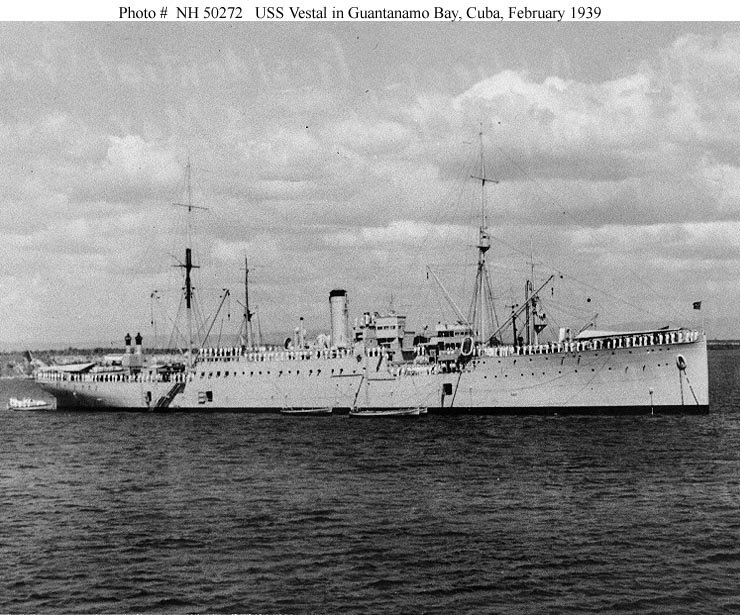
President Franklin Roosevelt visits Guantanamo Bay, Cuba, a strategic site for defense of the Panama Canal. President Franklin Roosevelt stays in touch with Washington by radio as he monitors the Navy’s maneuvers. President Roosevelt, aboard the cruiser USS Houston on his thousand-mile journey to join the fleet, made a brief visit today at Guantánamo Bay, Cuba, one of the strategic points in the program for defense of the Panama Canal from possible Western attack. The visit was a few hours after Fleet Problem XX, the elaborate maneuvers to test the naval protection of the canal, had been declared officially in progress, according to a radio message this evening to the temporary White House offices in Miami from Captain Daniel J. Callaghan, naval aide to the President. Captain Callaghan’s message said: “While proceeding at leisurely speed to the eastward to join the fleet war game, the President took the opportunity this morning to visit Guantánamo Bay. The Houston entered at 10:30 A. M. and steamed slowly past the naval station to the upper part of the bay, turned and left the harbor without anchoring.
The foreign relations and national defense problems of the United States. dominated the attention of the capital again today as officials and members of Congress speculated on the meaning of President Roosevelt’s suggestion of Saturday that an international crisis might cause him to cut short his visit with the fleet in the Caribbean.
Senator Nye introduced a bill in the Senate to put statutory restrictions on the sale to foreign countries of American-made airplanes and airplane parts, the measure being a direct outgrowth of the controversy over courtesies extended to the French air mission in this country. Even before he presented his bill restricting the sale of American airplanes abroad, legislation akin to that which was the spearhead in former neutrality legislation, Senator Nye made the prediction that Congress eventually would ban the exports of all arms, munitions and materials of war to any foreign country.
The Senator explained that his bill granted power to the War and Navy Departments to designate the aircraft and aircraft equipment which they did not desire to be sold abroad, and then prohibited such sale or inspection by foreign agents. The bill sought to write into law the so-called “release policy” now followed by the army and navy in relation to aircraft. “The bill fortifies the military with a specific law,” Mr. Nye said. The Senator said that the measure was a direct outgrowth of the controversy over the activities of the French air mission in this country, and of testimony to the effect that army officers had opposed the granting to this mission of certain privileges which the President finally extended by virtue of his own position as Commander in Chief of the army and navy.
The Senate Military Affairs Committee began a study of President Roosevelt’s $376,000,000 Emergency Defense Bill.
The House prepared to take up tomorrow the $53,800,000 Naval Air Base Bill and thus open the controversial subject of improvement of fortifications at Guam.
Administration officials, including Secretary Hull and Jesse H. Jones, chairman of the Reconstruction Finance Corporation, rushed to the defense of the Export-Import Bank, as Republican leaders opposed extending its life on the ground that its operations were involving the United States in international complications.
Senator Bridges of New Hampshire attacked the Administration’s foreign policy in a radio speech, declaring “it has brought us to the brink of war.”
Senator Pittman of Nevada, chairman of the Foreign Relations Committee, defended the Roosevelt foreign aims in another radio address, calling upon the nation to wholeheartedly support “the honorable, peaceful and practical policy of our Administration.”
The New York Senate Majority Leader Perley Pitcher dies alone in a hotel. Perley A. Pitcher, the kindly, gray-haired majority leader of the State Senate, died alone in his hotel room some time between 1:15 and 3:30 o’clock this afternoon of a heart ailment. His death, at the age of 62, threw the Capitol into mourning for one of its best-loved members. Legislation adjourns for one week.
The Prison Association of New York urges a new system for state prisons, citing its need for classifying and placing prisoners.
A war ambulance replaces the dragon in a Chinese New Year parade as a symbol of grim reality in China.
The World’s Fair crowd visits exhibits. Attendance is close to 138,000.
Edsel-Ford debuted the 1939 model of their Lincoln-Zephyr design, the Lincoln Continental.
The Douglas DC-5 makes its first flight. Only 12 are built, five as commercial DC-5 transports and seven as R3D military transports.
Chilean leftists see new threats from rightist groups. The administration will announce a big plan for aid for quake victims.
Peru rounds up suspects in the foiled coup, including General Cirilo H. Ortega.
Forty Soviet volunteer and Chinese Air Force fighters intercepted 30 Japanese bombers near Lanzhou, Gansu, China, shooting down 9 Japanese bombers.
A Japanese blockade of Chinese ports causes American shippers to redirect vessels.
Japan’s Parliament demands the army take over Shanghai completely. The lower house of the Diet (Japanese Parliament) will change its program today to permit an emergency hearing on the “anti-Japanese terror” in Shanghai. Representatives of both the major parties are expected to speak in favor of “drastic measures,” by which is meant that the Japanese Army shall take over the International Settlement. Tanizo Koyama, who will speak for the Minseito, will warn the government that unless Japan extinguishes the terror, Chinese leaders will refuse to serve in the new administrations Japan is trying to promote. As the continuance of such a situation may jeopardize the success of Japan’s whole policy, he will advocate the most rigorous measures regardless of legal complexities and foreign susceptibilities. The government will be asked to state a definite policy.
Dow Jones Industrial Average: 142.74 (-2.77).
Born:
Herbert Kohler Jr., American billionaire businessman (executive chairman of the Kohler Company), in Chicago, Illinois (d. 2022).
Gerhard Kretschmar, severely disabled German child, first to be euthanized on Hitler’s express orders, prior to the inauguration of the official Aktion T4 program, in Pomssen, Germany.
Naval Construction:
The Nihon Kaigun (Imperial Japanese Navy) Kagerō-class destroyer HIJMS Tokitsukaze (時津風, “favorable wind”) is laid down by the Uraga Dock Company (Uraga, Japan).
 History Diaries