Cambodian Air Force planes today destroyed two American artillery pieces captured by Communist rebels, the military command said. The search continued for artillery used to shell Phnom Penh. The command said the captured American‐made 105‐mm. howitzers were hidden 10 miles northeast of the capital, out of range of the city. All the 105‐mm. fire against the city so far has come from the south. The weapons reported destroyed today have a six‐mile range. Communists have captured at least 10 of the howitzers and are believed to be moving them closer to the capital. Reports from the field said that government soldiers had killed 40 rebels in a five‐hour battle, 11 miles southwest of the capital. Government casualties were reported as four killed and 13 wounded.
A 19‐year‐old South Vietnamese killed himself and two army officers with a grenade today after the civilian airliner he tried to hijack to Hanoi landed at an airport south of Huế. The man, wearing a military uniform, boarded a scheduled Air Vietnam flight at 9:35 A.M. at Đà Lạt, brandished the grenade and demanded to be flown to North Vietnam, according to airline and military police officials. Instead of going to Quy Nhơn on schedule, the DC‐4, a four‐engine propeller‐driven plane, headed north to the Phú Bài airport, 10 miles south of Huế. South Vietnamese F‐5 fighter‐bombers scrambled to tail the airliner, but reportedly did not interfere with its flight.
According to an account from officials in Huế, the pilot, Dương Văn Em, tried to persuade the hijacker that the plane was landing at Đông Hà, a Communist‐controlled town in Quảng Trị Province, just south of the demilitarized zone. As the 46 passengers and 6 crewmen were filing off at Phú Bài, according to several accounts, a South Vietnamese first lieutenant and a chief warrant officer apprehended the hijacker, who pulled the pin of the grenade, killing himself and the two officers. Five passengers and a stewardess were described as slightly injured in the blast, which ripped into the midsection of the plane. The co‐pilot, an American named William Anderson, reportedly escaped unhurt. Officials said the plane was not seriously damaged. Military‐police officials in Phú Bài identified the hijacker as Nguyễn Cửu Việt, a native of Huế.
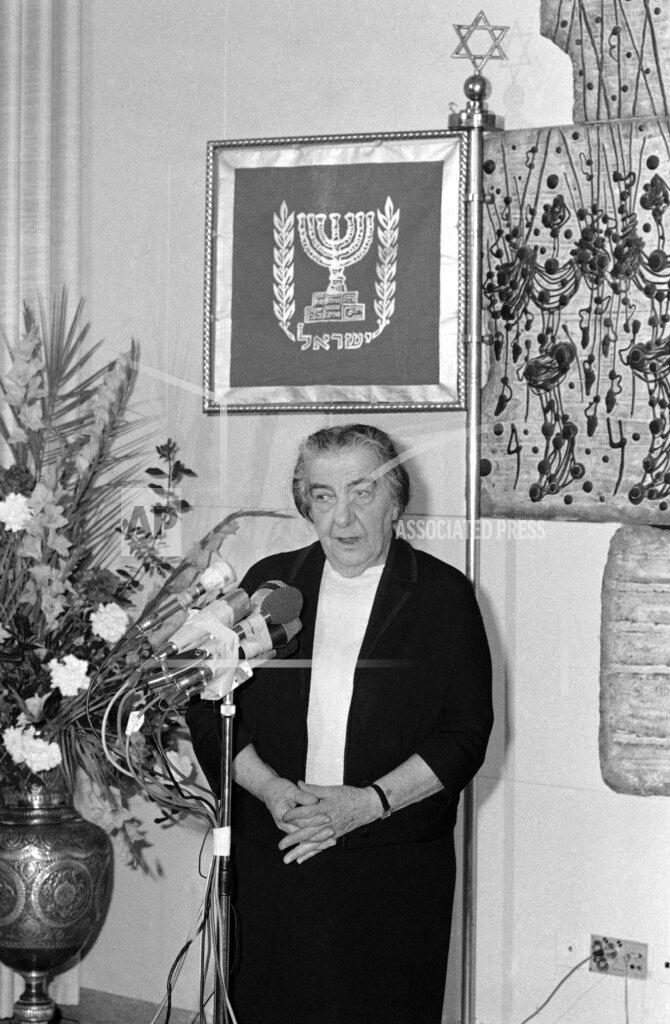
Premier Golda Meir of Israel announced that she was prepared to form a minority coalition government and had asked Moshe Dayan to serve as Defense Minister. The announcement — less than an hour before the expiration of her 21-day mandate to form a government — followed the collapse of intensive negotiations to form a broader coalition with the National Religious party. There was no immediate word on whether Mr. Dayan would accept the invitation.
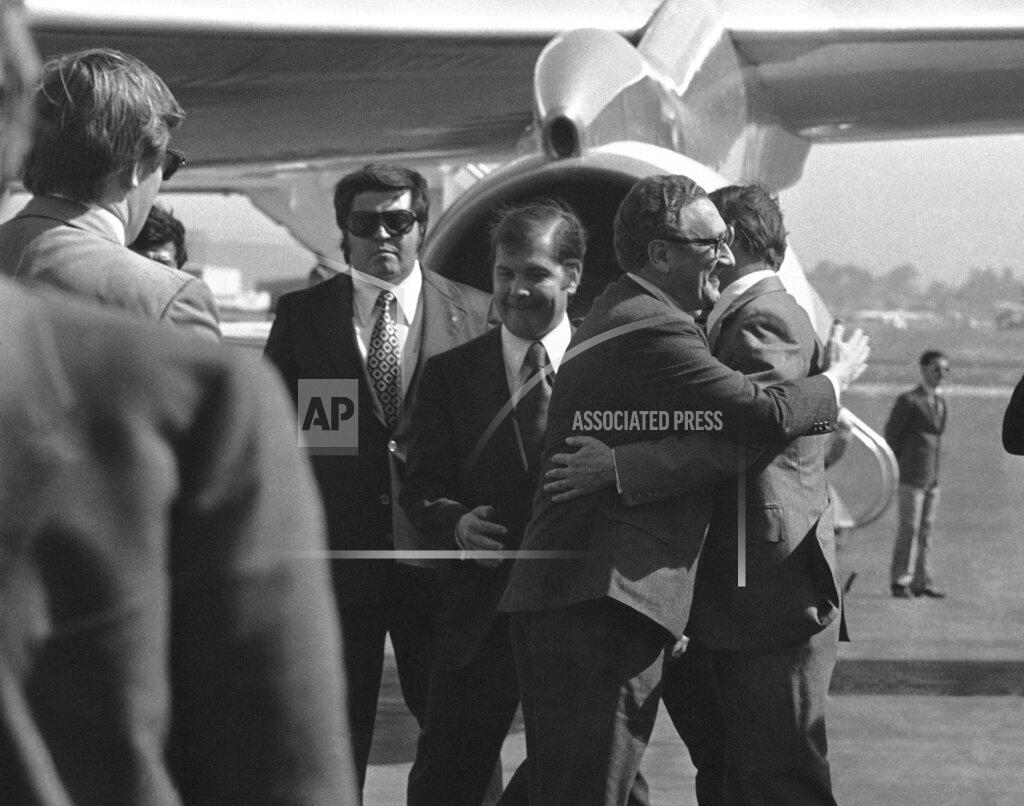
After last-minute moves aimed at getting Syrian-Israeli talks underway, Secretary of State Kissinger said goodbye to Arab envoys in Washington and flew to Mexico. With Middle East questions still unsettled, Mr. Kissinger turned his attention to Western Hemisphere problems and three days of talks with 24 Latin-American and Caribbean foreign ministers in Mexico City.
Mr. Kissinger comes to the meeting with more of a vision than a plan for reshaping relations with Latin America. He seeks a relationship of equals, and feels Latin American leaders are more disposed toward this vision than those in Western Europe. The Secretary of State will face a continent whose political and economic structures have changed radically since United States policy was set three years ago. Poverty is still the overwhelming problem, but the energy crisis and the shortage of raw materials have given Latin America a new leverage against the United States.
Mrs. Aleksandr Solzhenitsyn said the Soviet authorities had told her that she and her family could join her husband in exile. Her disclosure came as the Soviet press justified Mr. Solzhenitsyn’s expulsion with an article that was taken as a sign that officials feared his outspokenness would undermine Soviet prestige and confidence and hamper trade with the West.
Representatives of more than 100 nations met in Geneva to bring the rules of war up to date, especially in view of the trend toward guerrilla warfare. The five-week conference, which was organized by the Red Cross, will consider proposals that internal resistance civilian members receive the rights of soldiers in international combat and that bombing be prohibited against civilian targets, including crops, livestock and dams. The Israeli delegation walked out during a speech by Mauritanian President Moktar Ould Daddah accusing Israel of war crimes and aggression.
West Germany’s parliament ratified the international treaty to halt the spread of nuclear weapons more than four years after Chancellor Willy Brandt’s government signed the document. By a vote of 355 to 90, it approved the ratification law sanctioning West Germany’s pledge to refrain from developing a nuclear arsenal. West Germany was the 93rd nation to sign the nuclear nonproliferation pact, signing November 28, 1969.
A front-page article in the Soviet government newspaper Izvestia disclosed that many key grain-producing areas were threatened by melting snow, flooding and dangerous ice crusts. The newspaper described adverse conditions in the Ukraine, Kazakhstan, European Russia, the Baltic states and western Siberia. The warnings recalled those of 1972, when weather ruined much of the winter crop and forced Russia to make massive grain purchases from the United States and Western Europe.
Vienna police said they had recovered 87 medieval paintings worth about $2 million that were stolen last month from a chapel in Schlegl, upper Austria. A former industrialist. Dr. Gerhard Reichmann, 52, was arrested. The paintings were found packaged in the back of his pickup truck.
Japan has asked the United States to halt visits of nuclear submarines to her ports, a Foreign Ministry official said in Tokyo. He said the request to stop such calls, at least temporarily, had been made unofficially.
Second Lieutenant Hiroo Onoda, a member of the Imperial Japanese Army’s intelligence unit who had been in hiding on Lubang Island in the Philippines for 29 years after World War II, was located by a Japanese adventurer, Norio Suzuki. After being told that World War II had ended, 2nd Lieutenant Onoda told Suzuki that he would not surrender until ordered to by a superior officer, and finally gave up on March 9 when his former commander, Major Yoshimi Taniguchi, delivered the order. Onoda was the second-to-last Japanese officer to surrender after World War II. The last one, Teruo Nakamura, would be located in Indonesia on December 18, 1974.
Foreign ministers of the world’s Muslim nations completed a broad-based agenda for a summit meeting, opening Friday in Lahore, Pakistan, which will seek to reach agreement in support of the Arab cause but which will not likely get involved in the most pressing Mideast problems. However, on the questions of oil and the embargo against the United States, a spokesman indicated that they might be discussed: “Nothing is included and nothing excluded.” This is the first time since Islamic conferences were initiated that all Arab states will be represented. More than 20 of the 37 nations taking part are expected to be represented at the highest level.
Nineteen black miners have been slain and 287 injured in a week of intertribal clashes with clubs, knives and sharpened sticks, police reported at South Africa’s Welkom gold mine, largest in the world. The fighting between Basotho and Xhosa tribesmen has halted production at the Anglo-American mine. Of a total of 10,000 miners, 4,500 Basotho have quit to return to their homeland, independent Lesotho, while more than 500 Xhosa have fled to the Transkei, their tribal area. Police have found no cause for the clashes.
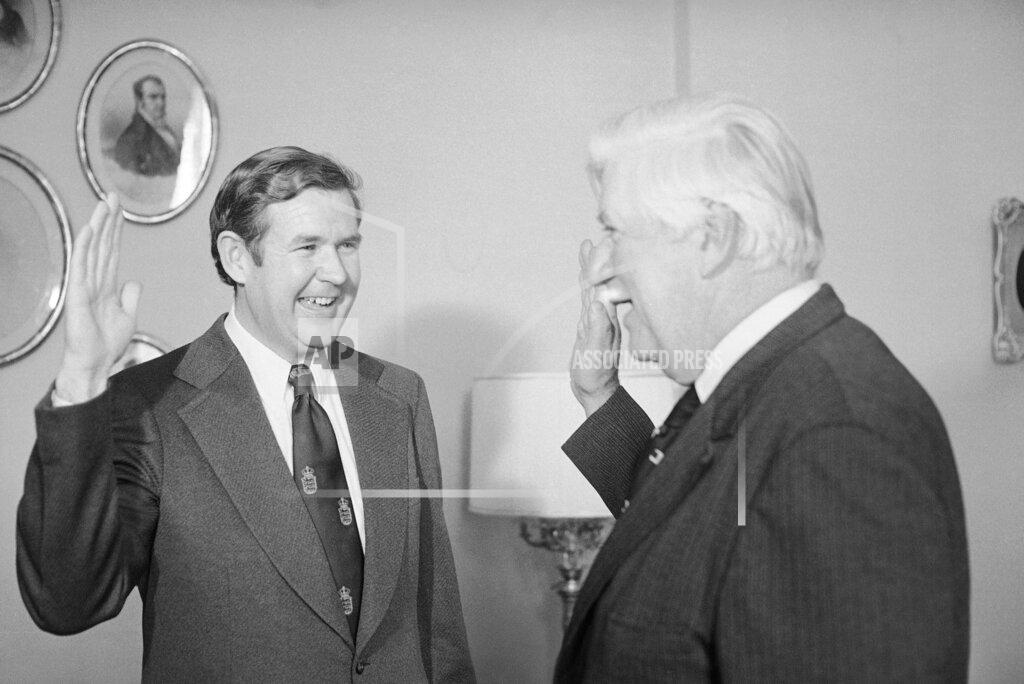
Navy yeoman Charles Radford testified before the Senate Armed Services Committee about his key role in Pentagon spying on the White House. Radford stated that he took orders from Rear Admiral Rembrandt Robinson and Admiral James Welander. His superiors arranged for Radford to take trips with Henry Kissinger and Alexander Haig; Radford stole items during those trips. Welander is scheduled to testify tomorrow. Committee chairman John Stennis said that the investigation is far from over.
CBS has learned that Democrats are prepared to agree to an out-of-court settlement in their Watergate damage suit against Republicans. The suit will be settled for $800,000. National party chairman Robert Strauss and former chairman Lawrence O’Brien agreed to turn over their share of the settlement to the Democratic National Committee. Association of State Democrats chairman Spencer Oliver may proceed with a separate suit of his own.
The House Judiciary Committee moved closer to impeachment proceedings against President Nixon. Staff lawyers will present the committee’s views on impeachable offenses tomorrow.
Judge Gerhard Gesell ruled that John Dean may testify against President Nixon’s former appointments secretary Dwight Chapin in Chapin’s perjury trial.
President Nixon met with Republican leaders to discuss Monday’s special election upset in Michigan, in which Democrat Richard Vander Veen defeated the Republican candidate in the race to fill Gerald Ford’s old seat. Representative John Rhodes said that the President referred to Watergate without actually saying it.
Prospective jurors received the first formal information on the charges and potential witnesses in the trial of former Attorney General John Mitchell and former Commerce Secretary Maurice Stans. The judge introduced the defendants, described the charges and read a long list of prospective witnesses, including both of President Nixon’s brothers, his former counsel, John Dean, and two former chairmen of the Securities and Exchange Commission.
U.S. District Judge Gerhard A. Gesell ruled that John W. Dean III can testify for the government at the forthcoming trial in Washington of former White House aide Dwight L. Chapin. Chapin has claimed that he consulted with Dean while Dean was counsel to President Nixon and that therefore a confidential attorney-client relationship existed and would bar Dean from testifying. The judge said his order was subject to a “single qualification.” This was not explained. Chapin, whose trial opens April 1, faces four charges of lying under oath to the Watergate grand jury.
Mrs. Joseph P. Kennedy, 83, mother of the late President John F. Kennedy, has suffered a very mild stroke, said a spokesman at St. Mary’s Hospital in West Palm Beach, Florida. The spokesman said a small blood vessel in the brain ruptured, but the “cerebral-vascular accident” did not result in any complications. The hospital said the matriarch of one of America’s most famous political families was resting quietly and would remain in the hospital “for at least a few days.” Senator Edward M. Kennedy (D-Massachusetts) said his mother had suffered headaches for several days before she went to the hospital Tuesday.
The announcement of a one-time “injection” of new gasoline supplies into 20 hard-hit states produced confusion over just how much relief the emergency allocations would bring. William Simon, the federal energy chief, said it would help but not end long lines at gasoline pumps.
The gasoline shortage, which is proving a drain on much of the nation, is pumping new life into central cities. The flight to the suburbs has been slowed, if not reversed, local retail sales are up, real estate leaders predict a new boom in office space rentals, centrally situated hotels are profiting and the cities appears to have won a round in their bout with the automobile.
Prices for most raw materials reached record or near-record levels in the nation’s commodity exchanges — the strongest signal yet that consumer prices will soar much higher in the coming weeks.
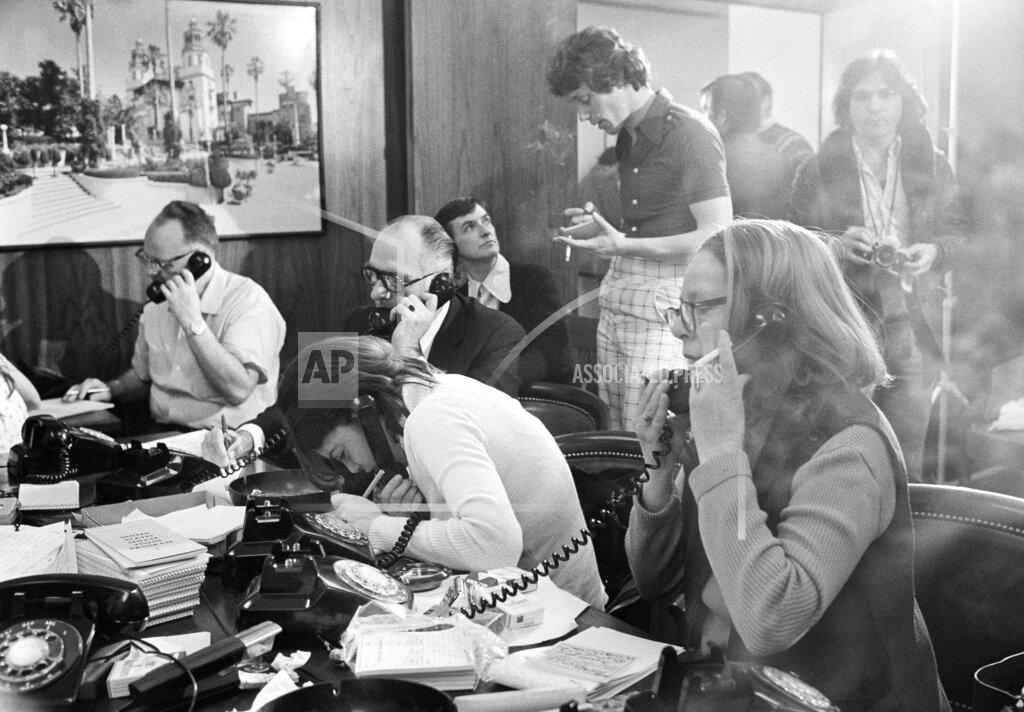
J. Reginald Murphy, editor of the Atlanta Constitution newspaper, was kidnapped by a right-wing activist who claimed to be a member of a group called the “American Revolutionary Army”. Murphy was freed two days later after the newspaper paid a ransom of $700,000, and Williams was arrested later in the day after the FBI had been tipped off by a Miami investor who had been swindled out of $6,000 by Williams.
Senate and House conferees approved a compromise mass transit bill that would provide $800 million in 1974 and 1975 that localities could use for operating subsidies or to make capital improvements. The original House and Senate bills would have provided funds solely for operation. The compromise bill provides for allocation of funds by formula, with 50% based on population, 25% on the number of revenue passengers and 25% on the basis of mass transport revenue miles.
Army Secretary Howard H. Callaway told President Nixon that “the volunteer Army is a reality… stronger than when the draft ended.” Callaway’s statement was made in a letter forwarding a report to Mr. Nixon on the Army’s first full year without the help of Selective Service. Callaway told a news conference that the Army’s combat readiness was “substantially better” now, especially in West Germany where, he said, its “capability to fight… is of a higher order of magnitude than it was a year ago.” The secretary minimized the fact that the service was short about 10,000 men and probably would end the fiscal year in June about 20,000 men below the objective of 782,000.
The national accident death toll dropped to 116,000 in 1973, a 1% reduction from the previous year, the National Safety Council reported. The drop was attributed in part to fewer vehicle fatalities during the fuel shortage which began to affect driving habits toward the end of the year. Auto deaths were 55,600 in 1973, or 1,000 fewer than in 1972, the council said. The year-end figures showed disabling injuries from all types of accidents totaled 11.4 million, including 4 million in home accidents and 2.4 million in work-related accidents.
ABC records releases “Pretzel Logic”, the third studio album by rock band Steely Dan; it features hit single “Rikki Don’t Lose That Number.”
Al Dark agrees to manage the Oakland Athletics, making it his second term with owner Charles Finley.
Gordie Howe comes out of retirement for $1 Million for the WHA Houston Aeros.
Dow Jones Industrial Average: 831.04 (+11.50, +1.40%).
Born:
Ömer Halisdemir, Turkish Army non-commissioned officer who foiled the 2016 attempt to overthrow the Turkish government; in Niğde, Turkey (killed 2016).
Tom Fordham, MLB pitcher (Chicago White Sox), in San Diego, California.
Michelle Campbell, WNBA center (Utah Starzz, Washington Mystics), in Carson, California.
Monita Rajpal, Hong Kong-born Canadian journalist and TV anchor for CNN; in British Hong Kong.
Died:
Matilde Hidalgo, 84, Ecuadorian physician and women’s rights activist.
 History Diaries