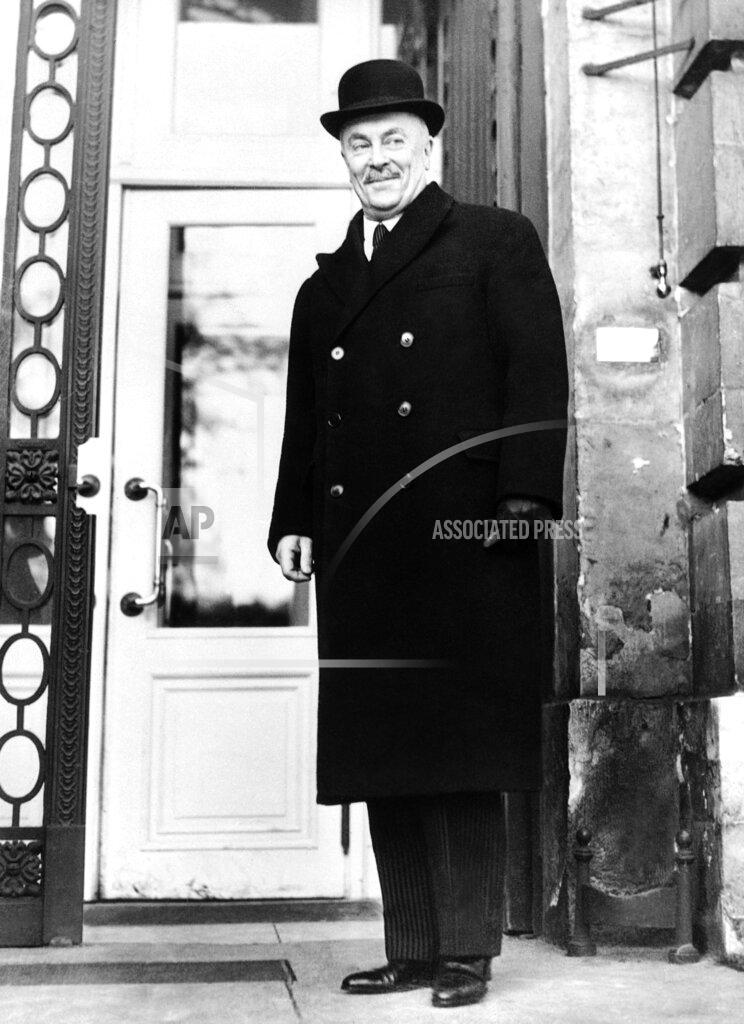
Senator Léon Berard’s negotiations with the Burgos government in the person of Count Francisco Gomez Jordana, the Foreign Minister, moved forward “satisfactorily” today, according to information that has reached official quarters here, but no precise report has yet been made by the French agent. To do that he is expected to return tomorrow perhaps to Paris but more probably to the French frontier, whence he can telephone to the Quai d’Orsay. It is not expected that when he does report he will be able to make any sensational announcement leading to immediate recognition of the Burgos government. There are far too many complicated questions involved for events to move as quickly as that. M. Berard in reality is negotiating two separate questions.
The first is the terms on which France will recognize the Burgos government as the de jure government of Spain. The principal condition is, naturally, that all foreign troops should leave the country and that no part of Spanish soil should be held by any foreign nation.
The second negotiation is a humanitarian one and is not necessarily involved with the first, for in it the French envoy is only an intermediary. He bears — whether officially or unofficially is not known for certain — a message from Spanish President Manuel Azaña, agreed to by Foreign Minister Julio Alvarez del Vayo when he was here in Paris, that the Madrid government will abandon the war and surrender the territory it hold without bloodshed if it has assurance that no reprisals will be taken against Loyalists.
An informed Nationalist (Insurgent) source reiterated tonight that Generalissimo Francisco Franco was ready to accept capitulation of Republican (Loyalist) Spain only upon his own terms. These terms, as announced previously, include “unconditional surrender,” his guarantee that there would be no reprisals, and stipulations that Republicans accused of high crimes must face trial in courts that might decree death for those convicted and that government sympathizers responsible for prolonging resistance might be exiled or stripped of citizenship. General Franco repeatedly has assured Britain and other nations that there would be no reprisals but in Nationalist eyes that means aside from the political penalties he has decreed. He is also adamant on the point that Republicans charged with murder or treason must face tribunals as they would in peacetime and be willing to accept whatever punishment might be handed down.
President Roosevelt’s war fears supposedly mystify Europe. Italy suspects theatricals while Germany believes the United States is spurring the arms market. The British public and British official quarters alike were disturbed today by streamer headlines announcing that because of “ominous reports” front Europe President Roosevelt might curtail his cruise with the fleet. The question asked here was whether these reports had been relayed from London, since it was recalled immediately that United States Ambassador Joseph P. Kennedy, who returned from America last week, had seen Prime Minister Neville Chamberlain and the Foreign Secretary, Viscount Halifax, on Friday and received an account of developments in foreign affairs during his absence. In British quarters, however, it was emphasized that no particularly alarming news had been reported to Whitehall within the past few days and that, in fact, the outlook was slightly more hopeful than it had been. This does not mean, however, that the British Government is going along with some of the more hopeful citizens who argue that since the dictators did not, as expected, stage a crisis immediately after the fall of Barcelona this is going to be an uneventful year. Everything points to some difficult days in the next few months.
But the point is that the past few days have brought no particularly important developments in a situation that is always dangerous. Yet it is true that the Italians ere steadily strengthening their forces in Western Libya near the Tunisian frontier, while the press campaign in Rome for French territory shows no signs of slackening. And in Germany the large numbers of men being called up for what is officially described as special training very possibly may have something to do with Chancellor Adolf Hitler’s pledge in his Reichstag speech of support for Italy. These developments have been fully reported in American newspapers, however. So even if they occasioned special reports from Mr. Kennedy or from William C. Bullitt, United States Ambassador to France, who also recently returned to his post, it is hard to understand the suddenness of the President’s announcement.
Italian Premier Benito Mussolini reviews elite bodyguard units on the 18th anniversary of the founding of the group.
A crowd of more than 12,000 leftists and communists in London, including delegates from all parts of Britain, tonight attended a pageant organized by the National Youth Movement on behalf of a “people’s government.” In the form of a litany four delegations recited their mottoes:
“Defend democracy at home and abroad.”
“Demand a charter of youth for social justice.”
“We will serve peace and freedom.”
“All together for a people’s government.”
Gabrial Carritt, secretary of the League of Nations Union youth groups, said the youth movement demanded that Britain cooperate with the United States and Soviet Union and that food and arms be sent to Loyalist Spain. He appealed to the youth of Germany to “unite against the greatest enemies of mankind and we will unite against their friends within our own gates.” There was a mass meeting in Trafalgar Square in the afternoon, after which the delegates marched to the Spanish embassy to demonstrate their support of the Republican government.
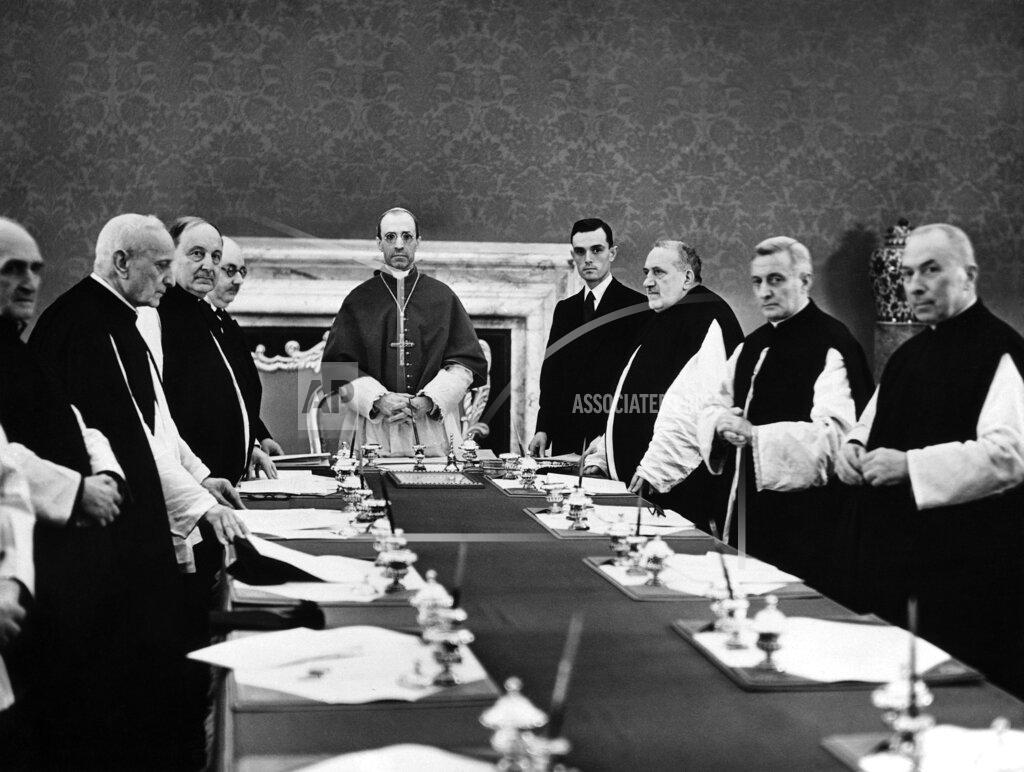
U.S. Cardinals carry weight in selection of the new Pope in Rome, but the chances of an American pope are held to be extremely slim.
Arms and troop movements add to world tension. The United States and Britain build up defenses while Axis powers maneuver for positions.
Graham Sharp of the United Kingdom won the men’s competition of the World Figure Skating Championships in Budapest.
Finland looks forward to hosting the Olympics in 1940. [Ed: Of course, this will never happen. The next Olympic Games will be held in 1948.]
A trade agreement was signed between the Soviet Union and Poland in an attempt to strengthen Poland as a buffer against Germany. Poland and the Soviet Union, who during the September Czecho-Slovak crisis appeared on the verge of a diplomatic break, today signed a far-reaching agreement designed to greatly increase their trade. The agreement, reached after several weeks of negotiations, is the first general economic pact between Poland and Russia based on the principle of the most-favored nation. It consists of three sections: The trade agreement proper, an agreement regulating the transport of goods, and a clearing agreement. The Polish Embassy said that it “regulates to the fullest extent the economic relations between the two countries.”
Russian exports to be increased under the agreement include cotton, cotton waste, tobacco, manganese, asbestos, and graphite. Poland will sell Russia more coal, ferrous metals, cement, textile goods, textile machinery, leather goods, and artificial silk. On September 22, when the Czecho-Slovak crisis was at its height, Moscow warned Warsaw bluntly that if Polish troops invaded Czecho-Slovakia, Soviet Russia would cancel the Soviet-Polish non-aggression pact. However, after the Munich accord, which produced Czecho-Slovakia’s dismemberment, the atmosphere changed rapidly and on November 26 a joint Soviet-Polish statement reaffirmed existence of the non-aggression treaty and called for improved trade relations.
The Guam debate will be heard in the House. The bill faces attack by those who fear the United States is “inviting trouble” with Japan. A Congress that is increasingly sensitive to the political omens for 1940 will proceed cautiously this week along a pathway that is beset with little major legislation. The week, however, may see a start made toward the actual framing of some controversial measures, potentially important to the fortunes of parties and politicians, which must be disposed of before the session ends. The question of national defense will continue to attract much attention this week. It is expected that inquiries will be made as to the fresh “crisis” in Europe which President Roosevelt hinted on Saturday might cause him to turn back from his Caribbean cruise. A strong element in both houses of Congress is still unsatisfied with the public declarations of Mr. Roosevelt regarding his foreign policies and apprehensive lest deeper implications may lie in some of the things that have been said and done.
The revelation that Mr. Roosevelt was personally responsible for the sale of war planes to France, and the secrecy that surrounded this deal has not calmed the fears of those who have expressed distrust of Administration foreign policies, and fresh discussion of this situation is expected. Two of Mr. Roosevelt’s measures for strengthening national defense will receive consideration on the floor or in committees of the House and Senate this week. One is the Naval Air Base Bill, which has been approved by the House Naval Affairs Committee and is scheduled to reach the floor of the House Tuesday. Republicans have indicated that they would oppose an item of $5,000,000 for harbor improvements on the island of Guam unless they were convinced that the project would not “invite trouble” with Japan. The Senate Military Affairs Committee will begin consideration during the week of the bill which the House passed last Wednesday to increase the army air force to 5,500 planes, involving construction of more than 3,000 new planes at an estimated cost of around $330,000,000.
The U.S. naval fleet scatters all over the South Atlantic and Caribbean in the largest war maneuvers ever staged in American waters.
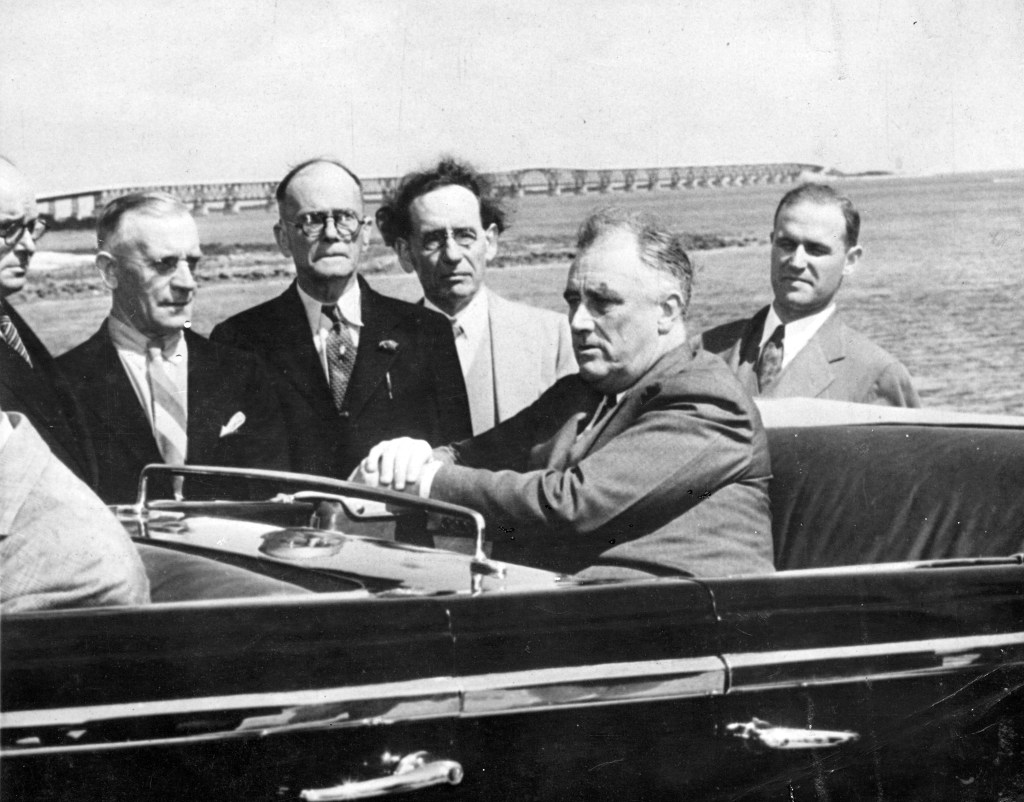
Beset with “disturbing” diplomatic reports suggesting that another European war crisis was in the offing, President Roosevelt sailed eastward through the Caribbean today to join the combined fleet in its test of the nation’s naval defensive power. On board the cruiser USS Houston, he kept in touch with Washington through the naval radio station at Arlington, Virginia. At the temporary White House offices in the Miami-Biltmore Hotel no word had been received from the Houston at a late hour tonight, but there could be no doubt of the seriousness attached by the President to the confidential reports he took with him on the cruise and of which he spoke at an informal press conference yesterday. He had promised a few minutes before embarking yesterday to keep the temporary White House offices informed of his movements through radio bulletins twice a day unless the Houston’s broadcasting equipment was silenced as a part of the maneuvers.
Suggestions went unconfirmed that Mr. Roosevelt had received an unfavorable reaction to his press conference reference to diplomatic reports and might have decided to avoid new statements. Although he did not mention the source of the diplomatic reports to which he referred nor specify the certain countries which, he said, were resorting to threats of aggression as a means of getting their way with European democracies, it was assumed that his remarks applied to Germany and Italy. The President declared that he considered the information in his possession sufficiently serious to make probable an earlier return to Washington than he had planned. The White House staff here waited with especial interest for the first communication from the President because of reports reaching Washington before his departure that Japanese fishing boats were plying Caribbean waters. There has been no official confirmation of the reports.
In New York, 10,000 people rally for recognition of Franco’s government. Recognition by the United States of the Franco government in Spain was urged at a mass meeting held yesterday afternoon in the 107th Infantry Regiment Armory, at Sixty-Sixth Street and Park Avenue, under the auspices of the General Committee for Americanism and Neutrality. Resolutions were unanimously adopted demanding that Congress enforce on all executive officers absolute neutrality in foreign controversies, forbid special privileges in secrecy to any foreign government and condemn abusive and contemptuous comments upon rulers of foreign states. The police estimated the crowd in the armory at more than 10,000. References by speakers to General Franco, Premier Mussolini and Chancellor Hitler were applauded. A picture of the Rev. Charles E. Coughlin carried down the aisle while Dr. Alexander Hamilton Rice, geographer and explorer, was speaking, was greeted with such boisterous enthusiasm by a section of the audience that Dr. Rice could not make himself heard.
The Rev. Charles E. Coughlin, pro-Nazi radio priest, said in his weekly radio address today that “Internationalism both in the fields of finance and politics have all but destroyed capitalism,” and added that “if this policy of internationalism continues war will eventuate, capitalism will cease and communism under some form will follow.” Father Coughlin paid tribute to George Washington and said that the American public “is perplexed with this question: ‘if Washington and his compatriots proposed to build the edifice of this nation upon the foundations of no foreign entanglements; and if America grew to greatness by adhering to this tradition, why, so suddenly, must we adopt in its stead a policy of bigger and better foreign entanglements after the bitter experience of the World War?’ ” Father Coughlin quoted at length from an article which he said appeared in the magazine American Hebrew in 1920 “corroborating the statement that Jewry not only made contributions toward the Russian revolution but, more pertinently, that the system of international finance which has crucified the world to the cross of depression was evolved by Jews, both for their own defense as well as for holding the peoples of the world under control.”
American passport applications fall by 20 percent.
The Child Welfare League of America lists the pros and cons of spanking foster children.
Writing in the Daily News, new Yankee president Ed Barrow picks his all-time, all-star team and there are a few surprises: P Waddell, Mathewson, Johnson, McGinnity; 1B Chase; 2B Lajoie; SS Wagner; 3B Jimmy Collins; OF Cobb, Ruth, Speaker; Utility Bresnahan, Keeler, Buck Weaver, Joe DiMaggio.
Between 2,000 and 3,000 of the men who fought under Carranza, Villa, and Zapata dined under the blazing sun in the old amusement park just off Paseo de la Reforma in Mexico City today and heard speakers exhort them to unite to save the revolutionary movement in Mexico from being dominated by Stalinist doctrines imported from Moscow. The speakers, including such important revolutionary figures as Generals Francisco Coss and Jacinto Trevino, denounced the administration as false to the principles of the 1917 Constitution. All the speakers professed devotion to democracy, denounced communism as a national enemy and denied charges of a link to Nazism. Some anti-Semitic literature was distributed and the reference of Bernardino Mena Brito, a colonel in the Carranza army, to “Jewish coyotes,” and his attack on Dr. Francisco Castillo Najera, Ambassador to Washington, as an “employee of the Jewish synagogues of New York” rather than the true Ambassador of Mexico, drew wild shouts of applause from the diners. Fernando de la Fuente, former Supreme Court justice, attacked Indalecio Prieto, former Spanish Loyalist War Minister, now in Mexico, as “a bandit” and an unwelcome guest.
Peruvian army officers launched an uprising against the government while President Óscar R. Benavides was sailing on holiday. The coup in the presidential palace was quickly put down with about a dozen deaths, including the coup’s leader General Antonio Rodríguez. General Rodriguez, Peru’s Minister of Government and Interior, escorts President Benavides to a ship, returns home, and declares himself head of the nation, but is killed in the coup attempt.
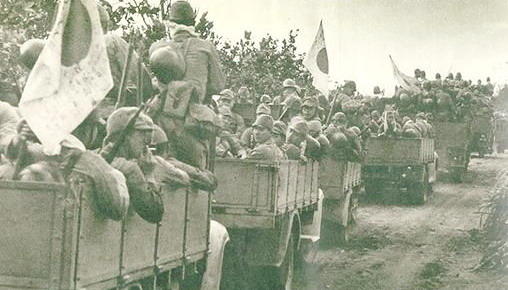
The foreign minister in the Nanking regime is slain by gunmen. Tcheng Loh (Chen Lu), Foreign Minister in the Japanese-sponsored Nanking “Reformed Government,” was shot to death today by twenty Chinese gunmen who broke into his home. Mr. Tcheng, one-time Chinese delegate to the League of Nations, was called from retirement to fill the Cabinet post when the new government was set up March 28, 1938, to replace in the area the administration of Chinese Generalissimo Chiang Kai-shek. The slaying was the second attack on pro-Japanese Chinese here during the week-end and was the fifty-second political assassination here since Japanese occupied areas surrounding the city.
The police said the gunmen entered the Foreign Minister’s home, which is in Japanese-occupied territory adjoining the International Settlement, at the height of the New Year festivities. They disarmed his bodyguard and made their way to his room where they shot him and then fled. Mr. Tcheng died en route to a hospital. He was 61 and had a long and brilliant record in China before joining the Japanese-instituted “Reformed Government.” He studied at the University of Paris, served as Chinese Minister to Mexico from 1915 to 1917 and was Vice Minister of Foreign Affairs from 1918 to 1920. His last diplomatic assignment abroad was as Minister to France from 1920 to 1927. He was China’s delegate to the League of Nations in 1923.
A Chinese gunman fired an automatic rifle through the window of a taxicab in the International Settlement last night and wounded three of four Japanese occupants. Despite a hail of bullets from policemen he escaped among crowds in Nanking Road celebrating the New Year. All the wounded Japanese, including a woman and a Japanese Army photographer, were expected to recover. They had just entered the taxi after leaving a Chinese restaurant.
Chinese reports from Chekiang Province, south of Shanghai, said the Japanese had failed in an attempt to land troops on the coast. They asserted Chinese shore batteries at the mouth of the Lin River had blocked Japanese warships from opening the way for troopships to land their men. The Chinese believe the Japanese sought to land their forces in the zone to blast a path to Kinhwa, capital of the province since the fall of Hangchow. Kinwha is more than 100 miles from the coast.
The British-American naval mission to Kuling, mountain-top refuge of foreigners southeast of Hankow, reported today that a party of refugees, including nine Americans, would leave the town Wednesday. The mission, composed of Lieutenant Commander Charles R. Jeffs, commander of the United States gunboat USS Oahu, and Lieutenant Commander R. S. Stafford, commander of the British gunboat HMS Ladybird, reached Kuling, fifteen miles south of the Yangtze River port of Kiukiang, yesterday. Lushan, the mountain which Kuling surmounts, is ringed by Chinese forces, and the Japanese had scheduled for tomorrow an attack to clean up the zone.
Reports from Chungking yesterday said the officers expected to direct the removal of forty-four of the foreigners, leaving some who could not be moved because of illness or who might remain for other reasons. The Chungking reports said about 100 foreigners were in Kuling, though here it is believed the total is sixty-five, including twelve Americans. Reports from the British and American officers received today in American naval quarters by way of the gunboat Oahu at Kiukiang said the refugees were in need of money to pay their debts before leaving. American missionaries will attempt to send them 6,000 Chinese dollars tomorrow. Japanese naval officials have agreed to send an airplane to fly the cash to Kiukiang, from where it is presumed United States naval officials will dispatch a courier to Kuling.
Alleged military information emanating from Chungking asserted the Chinese on Hainan Island had counterattacked, causing 2,000 casualties among the Japanese, and had advanced toward Klungchow. Klungchow, in the northern part of the island, fell to the Japanese without opposition when they began their occupation February 10. Hong Kong military quarters discounted the Chungking reports since they did not believe sufficiently powerful Chinese units remained on the island to defeat the well-equipped and well-organized Japanese. Reports circulating in Chungking also said 10,000 Hainan aborigines with old matchlock guns were aiding Chinese troops to combat the invaders. Approximately 500,000 aboriginal non-Chinese tribesmen inhabit Hainan, but they previously had stayed aloof from Chinese overlords, remaining in secluded mountain districts.
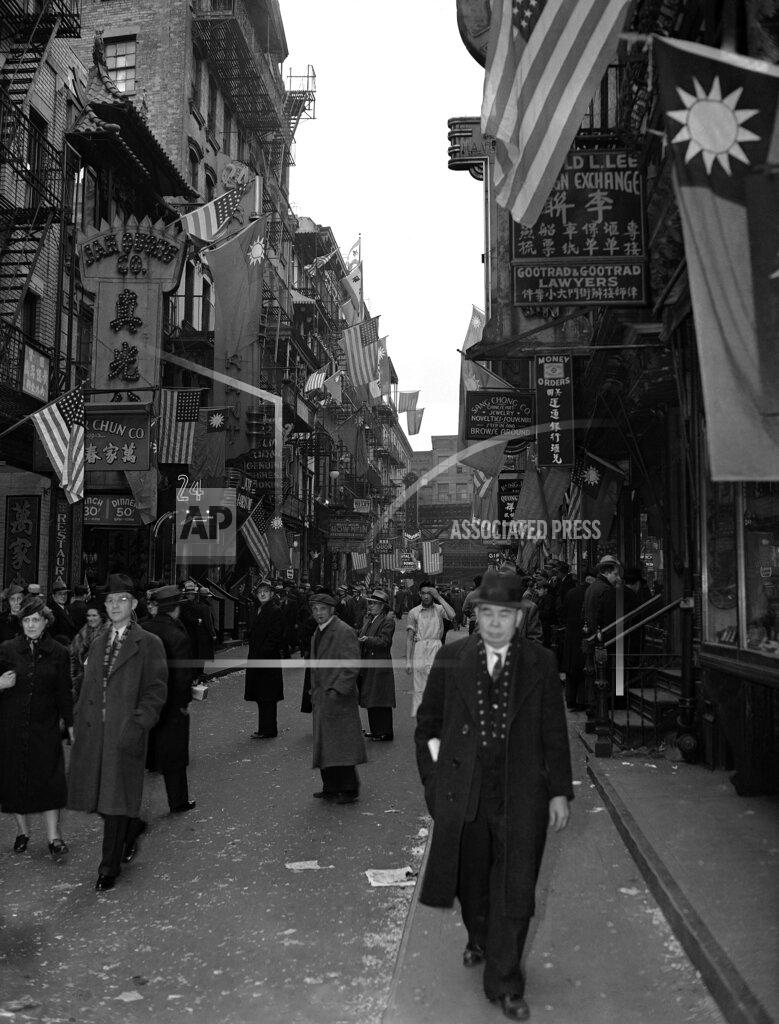
A fire that raged through the night while Chinese noisily celebrated the advent of their New Year today destroyed $80,000 worth of motor trucks that were being assembled in Hong Kong for the Chinese Government. Today was the first day of “the Year of the Hare,” succeeding “the Year of the Tiger.” The blaze failed to dampen the enthusiasm of the Chinese living under British protection in Hong Kong and tons of powder were burned in firecrackers. In contrast to the gaiety here, however, reports from the mainland said Chinese in areas untouched by the Japanese invasion spent one of the quietest New Year’s Eves of modern times. They followed the advice of Generalissimo and Madame Chiang Kai-shek, who exhorted their people not to waste time and money in celebrating but to devote their entire energies to the national fight for life.
Born:
Takashi Mitsukuri, Japanese Olympic gymnast (Olympic Gold Medal, Team Combined Exercises, 1960, 1964), in Toyama, Japan.
Douglas Mitchell, Canadian Football Hall of Fame executive (CFL Commissioner 1984-88), in Calgary, Alberta, Canada (d. 2022).
Jim Weaver, MLB pitcher (California Angels), in Lancaster, Pennsylvania.
Jackie Moore, MLB catcher (Detroit Tigers), in Jay, Florida.
Gwen Taylor, British actress (“Monty Python’s Life of Brian”; “Duty Free”; “Heartbeat”), in Crich, Derbyshire, England, United Kingdom.
Max Bennett, neuroscientist, in Melbourne, Victoria, Australia.
Erin Pizzey, author and founder of the world’s first domestic violence shelter, in Qingdao, China.

 History Diaries