Spanish Government officials said tonight that the Madrid government had authorized France and Britain to negotiate its surrender to the Nationalists (Insurgents) on the sole condition that there would be no reprisals against former government fighters and sympathizers. These officials, closely identified with the Spanish President, Manuel Azaña, said French and British representatives at Burgos had been instructed to present to Generalissimo Francisco Franco’s government the offer for peace in the two-and-a-half-year-old civil war. The French Government, acting through a special envoy at Burgos, sought quick settlement of the war and repatriation of about 380,000 civilians and soldiers now refugees in France. Sir Robert Hodgson, British agent in Nationalist Spain, arrived tonight at Saint-Jean-de-Luz, France, from Burgos, the Nationalist capital, after a reported conference. with Nationalist officials on the government’s proposition.
Sir Robert had talked at length with the Nationalist Foreign Minister, Count Francisco Gomez Jorda, at Burgos before leaving for the French border town to confer with representatives of his government. Whether he bore General Franco’s answer was not known, but it was understood that he conferred immediately with the British Foreign Office in London by telephone. Officials of the French Foreign. Office said France and Britain had informed the Nationalists that their diplomatic recognition of General Franco’s government would now be contingent on the granting of assurances to the Spanish Republican (Loyalist) Government against reprisals.
The negotiations followed an unsuccessful attempt after the fall of Barcelona to arrange peace in the Spanish conflict. The difference now seemed to be that France and Britain were backing the Madrid government’s sole condition for surrender on their own account. Spanish Government officials here declared that President Azaña was ready to return to Spain if an accord were possible and his presence was necessary to carry it out. The peace offer was made through President Azaña by Foreign Minister Julio Alvarez del Vayo, who returned to Madrid today.
It was believed that Señor Alvarez del Vayo’s long conversation here with Georges Bonnet, French Foreign Minister, had convinced Spanish Government officials, who now hold only one-fourth of Spain, that no help would be forthcoming for further fighting from either France or Britain. The granting of the government’s wishes for assurances from General Franco of no reprisals appeared to be the answer to the whole question of whether peace was imminent in Spain. Previous government conditions that General Franco dismiss foreign soldiers from the country and set up a regime free of foreign influence appeared to have been satisfied through Nationalist assurances to Britain.
Señor Alvarez del Vayo previously had attempted to convince President Azaña that he should return to the fighting zone, since he was chief of the Spanish State. The President consistently had refused, declaring he would do nothing to continue the bloodshed. The President’s aides characterized the last meeting between him and Señor Alvarez del Vayo as “terribly bitter.” The Foreign Minister was said to have accused the President of making further resistance impossible because his absence from Madrid ended the legality of the government.
Insurgents shell Madrid and there are many casualties. Insurgent artillery shelled Madrid today, while the port of Alicante was subjected to a prolonged air raid. A number of casualties were caused by high explosive shells falling in widely separated sections of the besieged capital. At Alicante forty persons were reported killed and 160 wounded in the raid, directed at the heart of the port. Thirty buildings were wrecked. The shelling of Madrid by Insurgent guns from their emplacements in suburban University City was resumed after a thirty-six-hour silence. The war-weary populace disappeared quickly into underground refuges from which they had emerged yesterday following two days of incessant shelling. Intermittent explosions continued into the night, heightening nervous tension in the darkened city. The Communist political bureau appealed to all parties and unions forming the Popular Front to hold meetings to discuss the new conditions “under which we shall carry out the struggle against Fascism.” The civil population of Madrid tasted meat for the first time in many weeks when one-and-three-quarter ounces of Argentine meat was distributed to each person today.
Great Britain has protested to Generalissimo Francisco Franco against the seizure of the 516-ton British freighter Stangrove by Insurgent forces February 5. The Stangrove, en route from Valencia to Port Selva, near Barcelona, was taken to Palma, Majorca.
Belgian police guard the Spanish Consulate in Brussels after nine Spanish insurgent members attempt to seize the building.
Goebbels criticizes Germans who have pictures of Kaiser Wilhelm in their homes, but not pictures of Hitler. He calls them “unrefined.”
The Reich’s Minister of Education shuts down a Catholic institution for interfering with freedom of academic teaching.
Premier John Metaxas of Greece arrived in Belgrade, Yugoslavia today en route to the Balkan Entente conference at Bucharest, Rumania. He was received in audience by Regent Prince Paul and afterward had a long conversation with the new Foreign Minister, Alexander Cincar-Markovitch. It is understood that the conversation dealt with the commercial and traffic relations of the two countries. The Premier went on to Bucharest tonight. The Balkan conference is expected to define a common attitude toward Insurgent Spain as well as to discuss a nominee to The Hague Court to succeed the Rumanian member, whose term expires this year.
Experts fear a long papal conclave if results are not announced within two or three days.
The article “Physical Evidence for the Division of Heavy Nuclei under Neutron Bombardment” is published in the science journal Nature by Otto Frisch.
Hearing a report that Italy has called up 150,000 reservists, France puts troops on the alert in Tunisia and other African possessions, and bolsters defenses there. France strengthened her empire defenses in Africa and put them on the alert today following reports of Italian troop concentrations near the borders of two fascist-coveted French territories. Reliable foreign circles in London said last night that Italy had called up 150,000 reservists and planned to have 300,000 in service by Spring, according to The Associated Press.
In Tunisia, French protectorate, troops were held in barracks and airplanes were made ready for immediate flight in case of trouble. Submarine patrols surveyed the Tunisian coast and important troop reinforcements had been sent to the central stretches of Tunisia’s frontier with Italian Libya. Heavy artillery reinforcements were shipped aboard the liner Chenonceaux from Marseille to Djibouti, French colonial seaport on the Straits of Bab el Mandeb and one object of the clamor for concessions aroused by the Italian press and public. French troops established garrisons in a strategic twelve-and-a-half-mile strip of coastal territory between French Somaliland and Italian Eritrea, retaking an area once ceded to Italy.
France also was reported to have sent reinforcements from Tunis to the border between Italian Libya and French Tunisia. French authorities began recruiting natives in Djibouti to match Italian forces along the border of French Somaliland. Italian forces along the frontier were reported to number 15,000. Italian Ethiopia and Eritrea border French Somaliland. Meanwhile, as a preparedness test of France’s frontier with Germany, the Moselle Department was ordered in a “state of alert” for thirty-six hours beginning next Wednesday. Fascist tumult for the fulfillment of Italy’s “natural aspirations” has centered since last November 30 in clamor for Tunisia and Djibouti, the capital of French Somaliland.
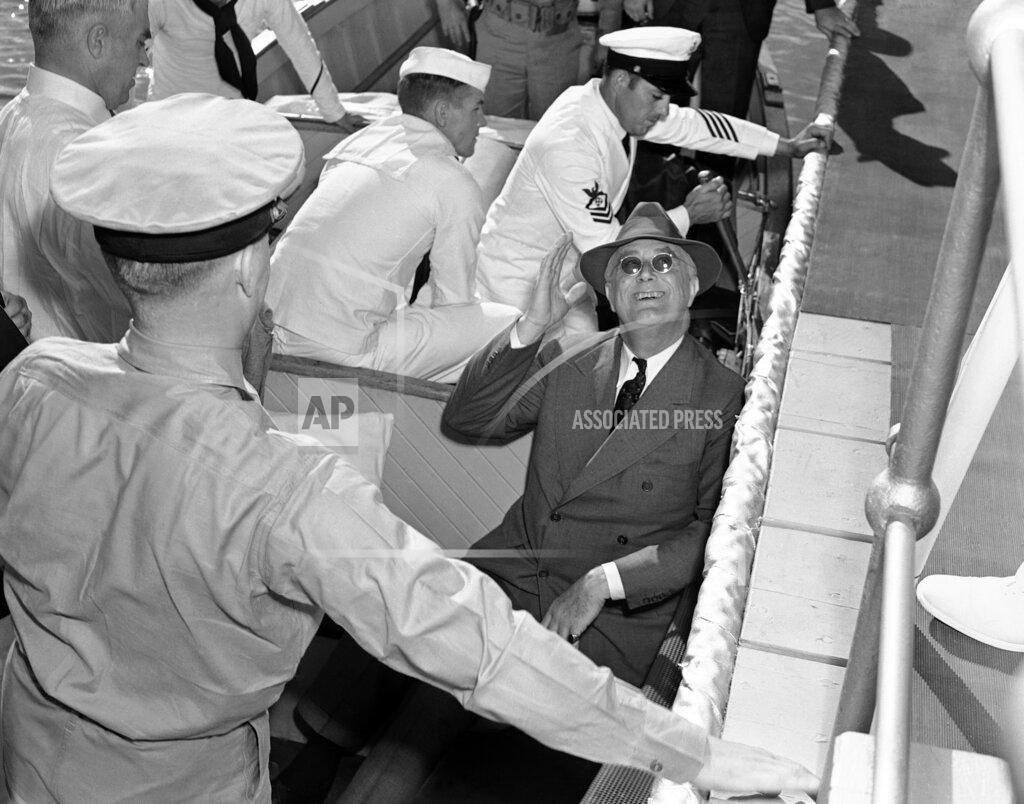
In a radio speech, President Franklin Roosevelt warns aggressive nations to stay out of the Americas. President Roosevelt gave a blunt warning to aggressive nations today in a statement that the Americas were united in a “common aspiration to defend and maintain their self-governing way of life.” He called on all the countries of this hemisphere to set an example of international solidarity “to lift democracy high above the ugly truculence of autocracy.” In two radio addresses made just before he left to board the cruiser Houston for a Caribbean cruise on which he will view the fleet maneuvers, the President rededicated his Administration to the “Good Neighbor” policy and renewed his pledge to cooperate in any effort “honestly put forward” to limit armaments. Before leaving American soil the President took occasion to remind. totalitarian powers of this country’s interest in the continued political independence of the world democracies. He said disturbing information continued to be received from the international front which might cut short the two-week cruise he now plans.
Mr. Roosevelt made his two radio addresses one after another from the rear seat of his open automobile. Facing a battery of microphones he addressed first the San Francisco International Exposition and then the Pan American Hernando de Soto Exposition, at Tampa, Florida. It was in the first address that the President called for continental solidarity as the best guarantee of continued democratic self-government in the American nations. “Many times, in the elaboration of what I call the good neighbor policy,” the President said, “I have stressed the point that the maintenance of peace in the Western Hemisphere must be the first concern of all Americans — North Americans, South Americans and Central Americans — for nothing is more true than that we here in the New World carry the hopes of millions of human beings in other less fortunate lands. By setting an example of international solidarity, cooperation, mutual trust and mutual helpfulness, we may keep faith alive in the heart of anxious and troubled humanity and at the same time lift democracy high above the ugly truculence of autocracy.”
Criticizing President Roosevelt’s obvious desire to aid the European democracies, France and England, in military preparedness, Senator Gerald P. Nye of North Dakota declared yesterday that the United States should adopt a “mind-our-own-business” foreign policy as the only way to prevent probable entanglement in another world war. Senator Nye, who spoke at the first of this year’s Saturday luncheon discussions of the National Republican Club, charged that the President’s arraignment of the Fascist powers, presumably Germany, Italy and Japan, and his demand for a large appropriation for national defense, were designed to cover up the failure of his domestic policies. In reply to questions after his prepared speech, Senator Nye said he had no objection to sale of airplanes to France, provided that this was done openly, that airplanes were made available for sale to all other countries, and that France paid “cash on the barrel” for the planes, with no “conniving at borrowing in the United States to pay for them.” He warned, however, that sale of war material to foreign countries for profit increased the likelihood of the United States being involved in war.
The Chamber of Commerce president warns that the New Deal moves the country toward state capitalism.
The Department of the Treasury projects the deficit for 1939 as $4 billion, and says it has spent more in 7.5 months than it expects to bring in during one year.
Rep. Martin Dies undergoes emergency appendix surgery.
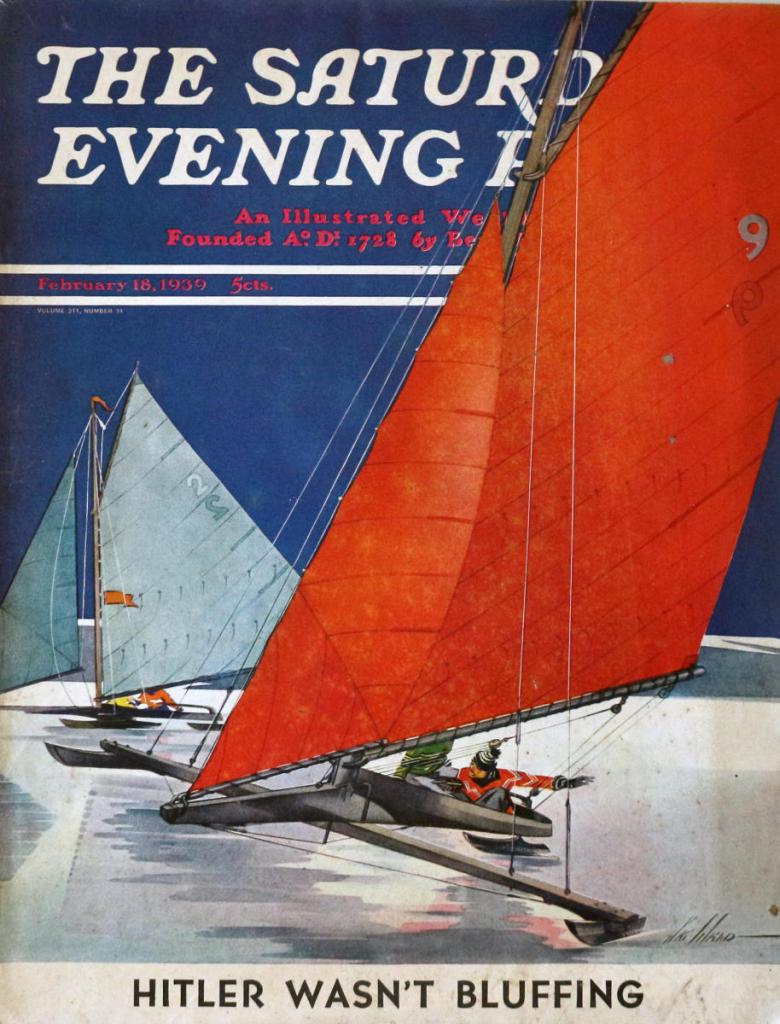
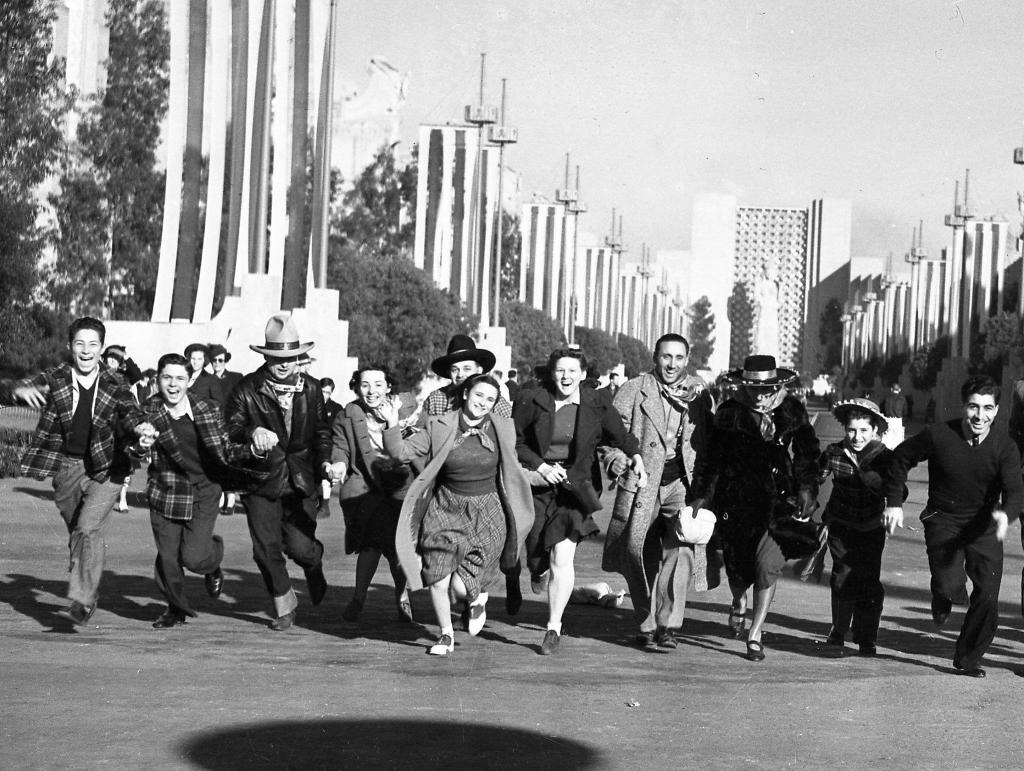
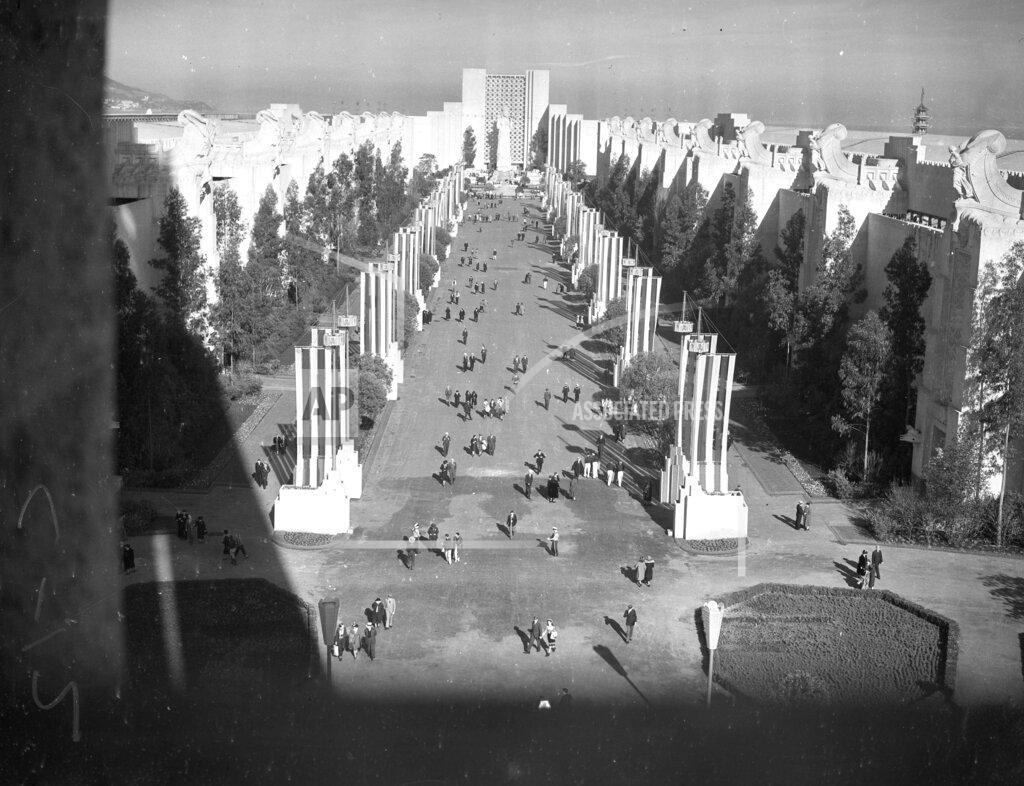
The Golden Gate International Exposition opened on Treasure Island in San Francisco Bay. A crowd of 128,697 attended the Exposition on opening day 18 February 1939. They viewed such splendors as the Tower of the Sun, Court of Pacifica, Court of the Moon and the Treasure Garden. Other buildings included the California Building, the Court of Nations, the Federal Building and the Hall of National Defense.
Initially, the Exposition was planned for one year. However, before it closed on 29 October 1939, plans to reopen the fair for a second year were already in the works. In September of 1939, the president of the San Francisco Chamber of Commerce Marshall Dill announced the creation of The 1940 Exposition, Inc. Although financial difficulties nearly put an end to the 1940 fair, fortunately additional funding pledges were slowly collected through contributions, city funds, the California Toll Bridge Authority, the Bank of America and other various sources. Billy Rose, the New York impressario, offered to contribute two million dollars contingent upon being given control of the fair. The commission rejected his offer. The commission was able to garner the financial assistance to extend the fair through 1940.
A Catholic group opposes the movement toward legalizing mercy killing.
Chemists patent a new sleep potion that is less toxic with better results.
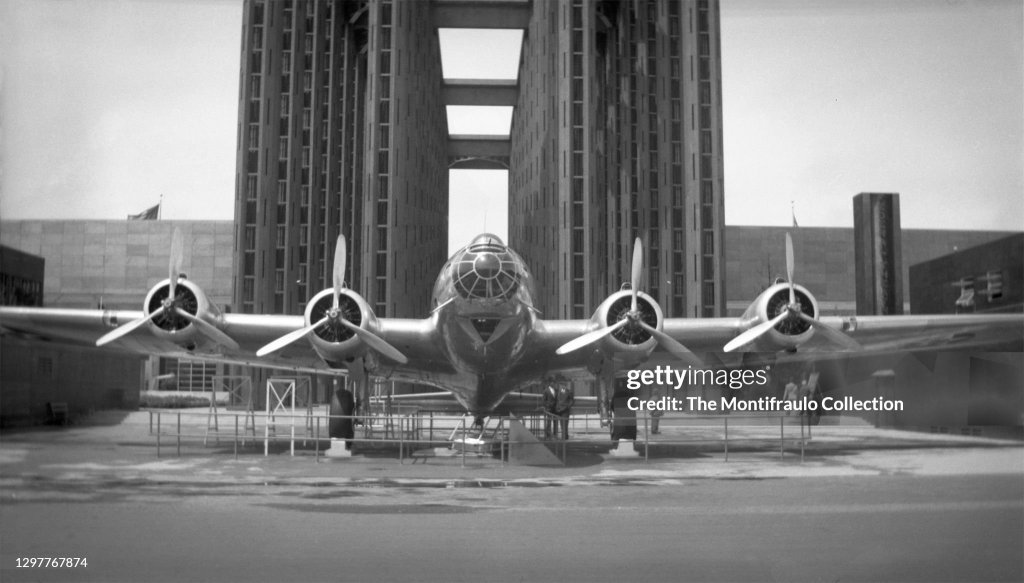
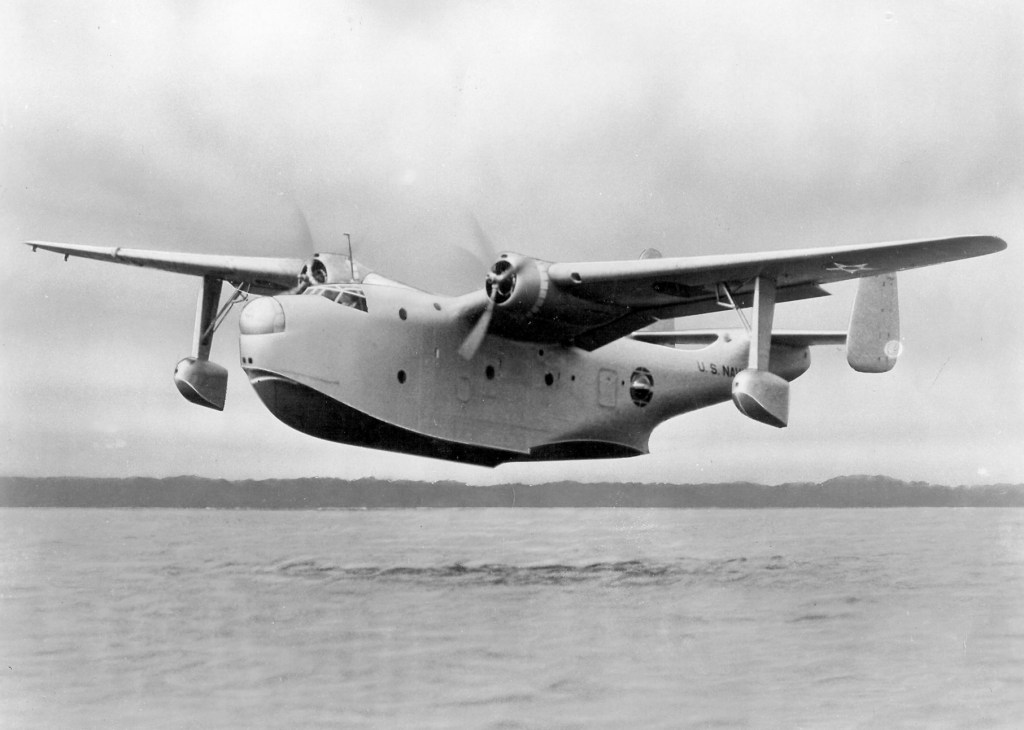
The Martin XPBM-1 Mariner twin-engine American patrol bomber flying boat makes its first flight. 1,366 Mariners of different variants would ultimately be built. The type began service with the U.S. Navy (VP-55) in September 1940. PBMs were responsible, wholly or in part, for sinking a total of ten U-boats during World War II. Uruguay would retire the last in 1964.
John Barrymore will perform with his wife, Elaine Barrie, in “My Dear Children.”
In Hopei and Hunan provinces, Chinese guerrilla fighting continues as the Japanese claim victory.
Will the serious quarrel between Japan and Soviet Russia precipitate the long-expected second Russo-Japanese war this Spring or early Summer? It is quite possible, but it is by no means certain. What is certain is that, unless Tokyo and Moscow can come to an amicable arrangement within the next two months, there will be a series of armed clashes and “incidents” in Siberian waters and along the Korean-Manchukuoan boundary facing Soviet and Outer Mongolian territory.
Unquestionably, there is a strong and influential group in Japan, largely composed of extremists among the military, but embracing civilian extremists as well, that believes that the current year is the most opportune for Japan to strike an armed blow at the Soviet Union and emerge victorious. They would thus end once and for all what they consider the Russian menace to their empire and its growing continental interests; acquire a very large slice of Siberian territory, either directly, as a part of Manchukuo or as still another puppet State under Tokyo’s tutelage, and gain monopolistic access to the tremendous undeveloped wealth of the Russian Far East.
Except for airplanes and a limited amount of heavy artillery, Japan has not sent her best war materiel into the China campaign, but has retained it at home and in Manchukuo as a reserve in the event of an armed clash with Russia, it is claimed. The same is even truer as regards her manpower. Very few of the first-line reserves, of Japan’s ablest fighting men, have been sent into the China war. They are being held for the same purpose. Japan could at any moment put a far stronger and more efficient army into the field against Russia or any other State than she has employed in China during the last eighteen months.
Dow Jones Industrial Average: 145.51 (+0.56).
Born:
Bob Miller, MLB pitcher (World Series Champions-Dodgers, 1963, 1965, Pirates-1971; St. Louis Cardinals, New York Mets, Los Angeles Dodgers, Minnesota Twins, Cleveland Indians, Chicago White Sox, Chicago Cubs, San Diego Padres, Pittsburgh Pirates, Detroit Tigers), in St. Louis, Missouri (d. 1993).
Dal Maxvill, MLB shortstop and second baseman (World Series Champions, Cardinals, 1964, 1967; A’s-1972, 1974; St. Louis Cardinals, Oakland A’s, Pittsburgh Pirates), in Granite City, Illinois.
Jesse Hickman, MLB pitcher (Kansas City A’s), in Lecompte, Louisiana (d. 2022).
Bobby Hart [Harshman], American pop songwriter (“I’m Not Your Steppin’ Stone”; “Last Train To Clarksville”) and singer (Boyce & Hart – “I Wonder What She’s Doing Tonight”), in Phoenix, Arizona.
Died:
Kanoko Okamoto, 49, Japanese writer and poet.
Naval Construction:
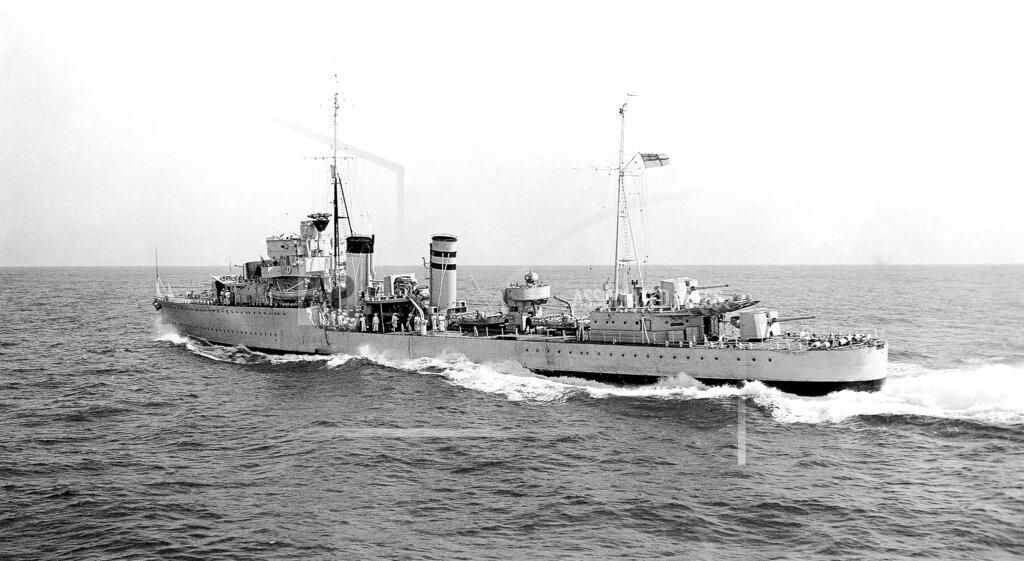
The Marine Nationale (French Navy) Le Hardi-class torpilleur d’escadre (squadron destroyer) Mameluk is launched by At.&Ch de la Loire (St. Nazaire, France).
 History Diaries