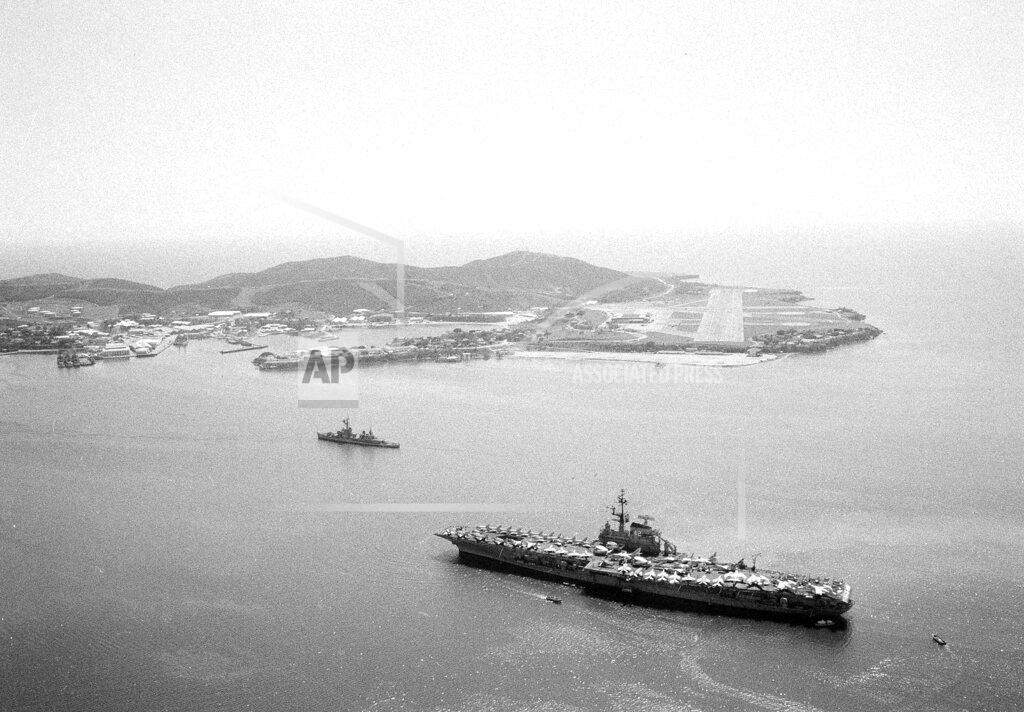
Cyprus rejected tonight a key provision of a proposal by Secretary General Thant for the establishment of a peacekeeping force on the island republic. According to a reliable source Spyros Achilles Kyprianou, the Cypriote Foreign Minister, told the Secretary General that Cyprus would not be satisfied with a statement by Mr. Thant or by the president of the Security Council upholding the independence and territorial integrity of Cyprus. In his talk with the Secretary General, Mr. Kyprianou remained firm on the Cypriote demand that the Security Council itself must give such a commitment against alleged Turkish plans to annex part of Cyprus. Later, in a lengthy statement to the Council, Mr. Kyprianou declared that a Council commitment in this sense would be “the greatest contribution” it could make toward keeping peace in Cyprus. The territorial integrity, unity and sovereignty of Cyprus, he added, were “not negotiable.”
The Turkish Ambassador to the United States, it is understood, was equally unyielding in a talk he was reported to have had with Mr. Thant. The Ambassador, Turgut Menemencioglu, reiterated his government’s opposition to a commitment on Cyprus’s territorial integrity. In fact, he was said to have insisted that the Security Council adopt a resolution specifically endorsing the Cypriote Constitution and the treaty under which it was guaranteed by Britain, Turkey and Greece. The Cypriote crisis began after an attempt by Archbishop Makarios, President of Cyprus, to amend the constitution to eliminate the right of the Turkish minority to veto certain decisions by the Greek majority.
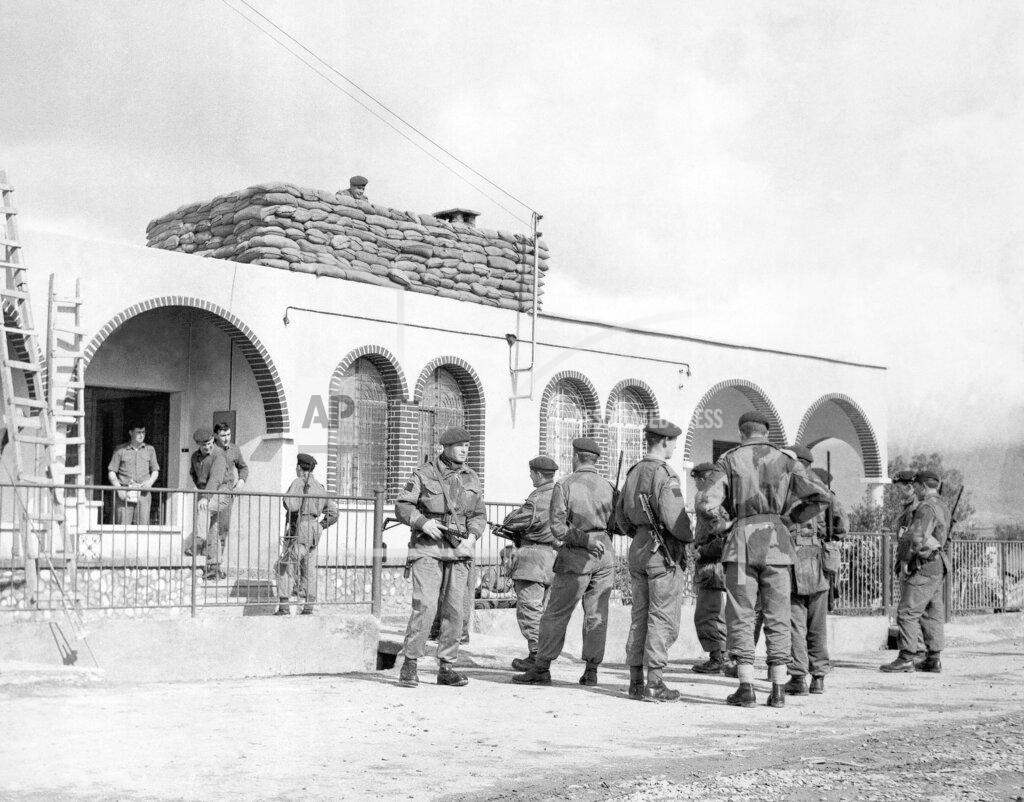
British patrols crisscrossed the rugged Tylliria Promontory on Cyprus today, trying to bolster a shaky cease‐fire among a score of hostile Greek and Turkish Cypriote villages. The situation here duplicates what is going on all over Cyprus as one area after another erupts into open violence and then subsides into fear and suspicion. At Kokkina, a British major leaned on an armoured scout car and explained that his men were trying to turn the temporary truce into a permanent one by moving through the villages to ease tensions. “We’re trying to get them together to negotiate, but they have a complete lack of faith in each other,” he said.
Almost 1,000 feet up in the hills behind Kokkina, reached by a three‐mile dirt road, is the Turkish Cypriote village of Alevga. It was surrounded by Greek Cypriotes during the weekend, but suffered no casualties. Today it was being protected by two British armored scout cars. The 140 villagers live in stone houses with thatched roofs. Almond trees form a lacy pattern along the rides and slopes around the village. “We are the poorest village on Cyprus,” said Naik Hassan, the headman. He was wearing shoes and socks and a pair of striped pajamas under a long British Army overcoat. Asked if he was ready to make peace with the neighboring Greek villages, he shouted, “No, we cannot trust them!” “The Greeks expect the Turks to be quiet and go into their houses and then the Greeks will jump on us like mad dogs,” he said. “We are in danger and are living like wild animals with only four or five shotguns to defend ourselves. But the British have promised to watch over us.”
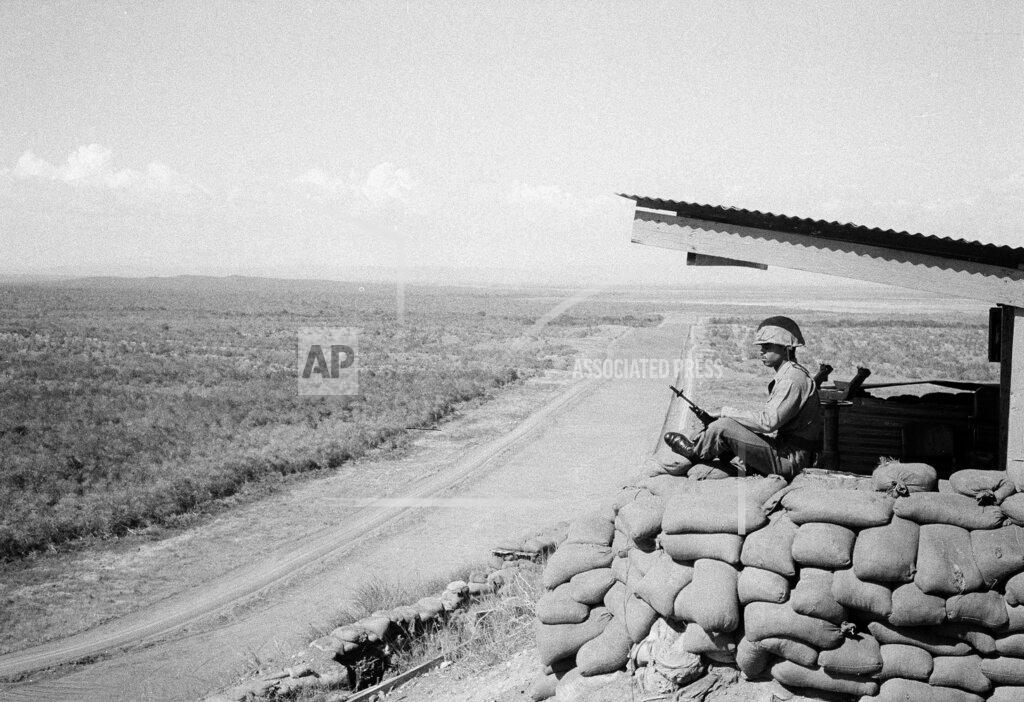
Secretary of Defense Robert S. McNamara has told members of Congress that the United States still hopes to withdraw most of its troops from South Vietnam before the end of 1965. There are about 15,500 officers and men of the Army, Navy, Air Force and Marine Corps serving in training and other assignments with the South Vietnamese in their war against the Viet Cong. The Defense Secretary, in testimony before the House Armed Services Committee made public today, disclosed that orders had gone out to certain United States commanders to complete their training assignments and start sending their men home. He called attention to the fact that 1,000 training troops were withdrawn last December. In answer to a question, Mr. McNamara said 101 Americans had been killed in combat operations in Vietnam.
On a current problem, a Pentagon spokesman said there was no plan to bring home any of the dependents of Americans in Saigon, the South Vietnamese capital, although Viet Cong terrorists have stepped up their attacks on the American community. There are 785 dependents in South Vietnam, the Pentagon said, of whom 569 are in military families and 216 with employes of civilian agencies. General Maxwell D. Taylor, chairman of the Joint Chiefs of Staff, expressed confidence during his appearance before the committee that the war against the Communist guerrillas could be won. He decried what he called defeatist press reports.
The Pentagon officials testified in closed session January 27 during the presentation of the annual “military posture” report. The transcript showed many deletions, but it also retained extensive sections dealing with South Vietnam. Secretary McNamara was questioned closely on United States plans for South Vietnam and was asked to explain what appeared to be fluctuations in his confidence in the outcome of the war there. He cited statements on the subject dating from last October to demonstrate that he had been consistent. Essentially his view has been that the fighting will be long and hard, that victory is probable and the United States will find it possible to withdraw most, if not all, of its support troops.
[Ed: Bean Counter Bob is, of course, Full of Shit. He much later admitted to doubts early on about the Vietnam debacle.]
The Soviet Union said today that President Johnson’s offer to freeze the number of long‐range carriers of nuclear bombs failed to go far enough. Semyon K. Tsarapkin, the Soviet delegate, told the 17‐nation disarmament conference that Washington’s proposals did not dispose of the nuclear threat at an early stage. He deplored the West’s cool reception to Moscow’s plan for destroying all but a strictly limited number of missiles at the outset of disarmament. The Soviet Union has presented the plan as a concession to Western objections to its original demand that all missiles be destroyed in the first of three projected disarmament stages. Instead, the United States proposes across‐the‐board cuts in all major arms categories by agreed percentages to preserve the power balance until the completion of disarmament. Mr. Tsarapkin denounced the percentage approach as unrealistic in view of United States plans for future weapons production.
France intervened in the coup in Gabon, 50 soldiers at the Libreville International Airport and then moving out to occupy strategic points. The rebels responded by closing the airport but failed to establish obstacles. By 5:00 in the afternoon, less than 48 hours after the coup began, rebels in the Gabonese presidential palace surrendered to the French troops without incident.
A powerful earthquake struck the central Azores in the North Atlantic Ocean, leading to orders for the evacuation of the 20,000 residents of Sao Jorge Island amid fears that the island could break apart and sink. All but three of the almost 2,000 houses in the village of Vila das Vejas were destroyed by a series of tremors.
In a symbolic, but inconsequential punishment to stop nations from trading with the Communist government of Cuba, the United States halted foreign aid to the United Kingdom, France and Yugoslavia. American foreign aid to the UK was only slightly more than $5,000 at the time, while aid to France was $25,000 and Yugoslavia at $20,000.
The Papandreou government takes power in Greece. Papandreou, the Premier‐designate, announced tonight the members of his new Cabinet, which is scheduled to be sworn in tomorrow. Mr. Papandreou’s pro‐Western Center Union party gained 174 of 300 seats in the Chamber of Deputies in last Sunday’s elections. He gave King Paul his choices for the Cabinet when the King asked him to form a new government today.
Prime Minister Jawaharlal Nehru is reported to have rejected a suggestion that he and Premier Chou En‐lai meet in Rangoon in a new effort to resolve the Chinese‐Indian border dispute. Well‐informed sources said the suggestion was made February 10 by General Ne Win, chairman of Burma’s Revolutionary Council, during a visit to New Delhi. General Ne Win was reported to have advanced the proposal at Communist prompting; he was presumed to have informed Mr. Chou of Mr. Nehru’s negative response during the Chinese Premier’s five‐day visit to Burma, which ended today. In a communiqué issued after their talks Premier Chou and the general voiced the hope that India and Communist China would open direct negotiations on the border issue “to remove progressively differences between them and finally achieve a friendly settlement of the Sino‐Indian boundary question.”
The Chinese Communists are said to have urged General Ne Win to make an approach to Mr. Nehru because the continuing border dispute with India has embarrassed Peking in its efforts to expand friendly ties with African and Asian nations. Mr. Chou left for Pakistan, apparently without having won Burma’s pledge to support a proposed African‐Asian solidarity conference, similar to the one held in Bandung, Indonesia, in 1955. Communist China has been promoting a conference of nonwhite countries opposed to imperialism and neocolonialism. However the communique did not contain any Burmese pledge to attend a Bandung conference. This omission was seen by some observers here as indication that General Ne Win had fended off Premier Chou’s pressure to side with the Chinese against India and others on the conference issue.
Legislation to extend Canada’s territorial waters to 12 miles offshore will be sought by Prime Minister Lester B. Pearson’s Liberal party government. This was disclosed today in the Speech from the Throne opening the second session of Canada’s 26th Parliament. The speech, outlining the Government’s program, was written by Mr. Pearson and approved by his Cabinet. It was read by the Governor General, Georges P Vanier. Although the new session is expected to produce heated debate, Mr. Pearson’s minority Government is expected to survive all tests of confidence.
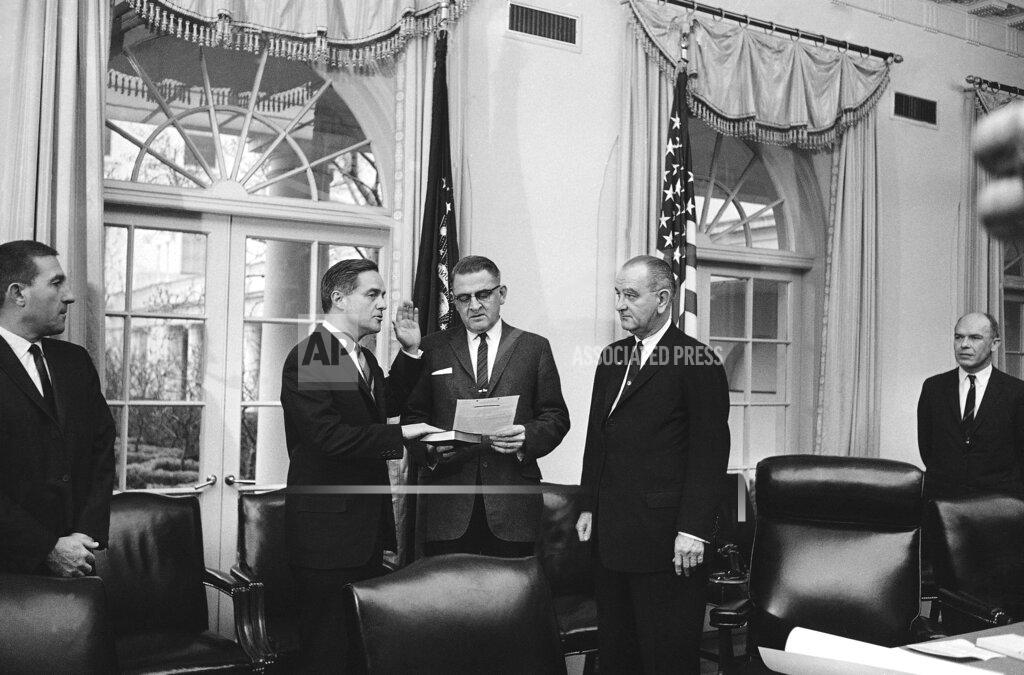
U.S. President Lyndon Johnson opened a Cabinet meeting today by having Sargent Shriver sworn in as his special assistant in charge of the “war on poverty.” The President closed the meeting with thanks and a tribute to Theodore C. Sorensen, his special counsel, who is leaving February 29 and was attending his final Cabinet session. At the meeting Mr. Shriver, who is also director of the Peace Corps, outlined plans for the attack on poverty. Secretary of State Dean Rusk reviewed the world situation and Lawrence F. O’Brien discussed the progress of the Administration’s legislative program. The poverty program was the first order of business, however. Mr. Johnson and the Cabinet members stood by as Herbert Miller, a White House clerk, administered the oath to Mr. Shriver.
Officials of the North American Aviation Company never knew that they were in a business deal with Robert G. Baker until they began to read about it in the newspapers a few months ago, testimony before the Senate Rules Committee indicated today. John L. Atwood, president, and other officials of the big aviation, missile and electronics enterprise, appeared before the committee today. They described the negotiations by which a contract in force with one vending‐machine company for a number of years had been abruptly reduced by half in January, 1962, for the benefit of another vending company, Serv‐U, in which Mr. Baker had a substantial interest. The activities of Mr. Baker have been under investigation about four months. At issue is whether his outside business dealings conflicted with his position as secretary to the Senate majority, from which he resigned October 7.
The Senate Foreign Relations Committee approved today a tightening of controls over lobbyists for foreign governments and other interests. Most of the lobbyists involved are Americans. Without a dissent, the committee voted to curb political contributions to candidates by lobbyists. It also struck at inadequate reporting of lobbyists’ activities here and other practices disclosed by its own investigations during 1962 and last year. The legislation reported to the Senate would make it easier for the Attorney General to halt operations that violated the amended Foreign Agents Registration Act of 1936.
The Foreign Relations Committee also recommended confirmation of five ambassadors.
Representative Carl Vinson, chairman of the House Armed Services Committee, argued today for a program to develop and produce a new manned bomber. But the Georgia Democrat disputed the thesis of Senator Barry Goldwater that the nation’s intercontinental missiles were not dependable. Mr. Goldwater, an Arizona Republican, made the charge in support of Air Force demands for a new manned bomber.
Mr. Vinson also discussed differences in testimony before his committee by Secretary of Defense Robert S. McNamara and General Curtis E. LeMay, Air Force Chief of Staff. He said that the conflict between the two on missile reliability “was in the area of a mere detail.” “They both agree that our missiles are reliable,” Mr. Vinson said. The committee chairman dealt with the missile and bomber controversy in an appearance before the House Rules Committee to arrange for the debate Thursday on the $19.6 billion military authorization bill.
The House Agriculture Committee heard Secretary Freeman urge approval of a five‐year extension of the Food for Peace Program.
House Republican leaders endorsed today a constitutional change to authorize prayer and Bible reading in public schools. At the same time more members supported a move to force a vote on the issue. Representative John W. Byrnes of Wisconsin, chairman of the House Republican Policy Committee, said that the group went on record for an amendment. The amendment would overturn the Supreme Court’s ruling last year that Bible reading and prayer in schools violated a constitutional ban on establishment of a religion. Representative Frank J. Becker, of upstate New York, meantime said that more members yesterday and today signed his petition to pry such an amendment out of the House Judiciary Committee and bring it to a vote on the floor. As of the close of today’s House session he said that the petition bore 141 signatures. To make it effective, 218 names are required, a majority of the House membership.
The mail‐order rifle belonging to Lee Harvey Oswald, believed to have killed President Kennedy, was the same one used in an attack on former Major General Edwin A. Walker, a police ballistics report indicated today. The report was made public for the first time by Chief Jesse Curry and Chief of Detectives M. W. Stevenson. “The ballistics report cannot be final or conclusive,” Mr. Stevenson said, “but generally the comparison points of the slugs were good.”
More than 100 hunger marchers held an hour‐long sit‐in today outside the offices of Mayor Richard J. Daley at City Hall to demand emergency food relief. The demonstrators chanted “No food, no go” and clamored for Mayor Daley to come out and hear them. The demonstrators finally left at the pleas of their leaders after the mayor threatened to have them removed. He refused to talk to the group. About 150 demonstrators, who earlier had marched around City Hall chanting “We want jobs! We want food!” gathered outside the mayor’s fifth‐floor offices while he conferred for more than an hour with their leader, the Rev. Henry Mitchell.
The Federal Government has begun an investigation of illegal gambling in Hot Springs, Arkansas. A Justice Department official said today that the scope of illegal gambling here was the largest in any state. William Hundley, chief of the organized crime and racketeering section of the Justice Department, arrived here yesterday with a group of agents. He called a news conference today to announce that an investigation was under way. “From what I saw down here last night,” Mr. Hundley said, “it seems awfully hard for me to comprehend that gambling of this scope could possibly be self‐contained within the confines of Arkansas.”
NASA, to the disappointment of some politicians, is abandoning plans to return the lunar explorers to a landing spot in the southwestern United States. Instead, the three Apollo astronauts will return to a watery landing, probably in the mid-Pacific. The National Aeronautics and Space Administration considered that it would be safer for the astronauts if they were able to cushion the impact of their spacecraft by landing on water. In changing its plans, the agency has stirred up some difficulty for itself among the politicians, including some southwestern Congressmen who have been influential supporters of the space program. Until the change in plans, Representatives from California, New Mexico, and Texas had been vying for the honor and appropriations of having their district picked as the home port for the lunar expedition.
Muriel Resnik’s “Any Wednesday” premieres in NYC
The BBC renewed “Doctor Who” for a second season.
Dow Jones Industrial Average: 795.40 (-0.79).
Born:
Matt Dillon, American actor (“The Outsiders”, “Drugstore Cowboy”, “Crash”), in New Rochelle, New York.
Kevin Tapani, MLB pitcher (World Series Champions-Twins, 1991; New York Mets, Minnesota Twins, Los Angeles Dodgers, Chicago White Sox, Chicago Cubs), in Des Moines, Iowa.
Dave Truitt, NFL tight end (Washington Redskins), in New Brunswick, New Jersey.
Died:
Joseph-Armand Bombardier, 56, Canadian inventor best known for the snowmobile.



 History Diaries