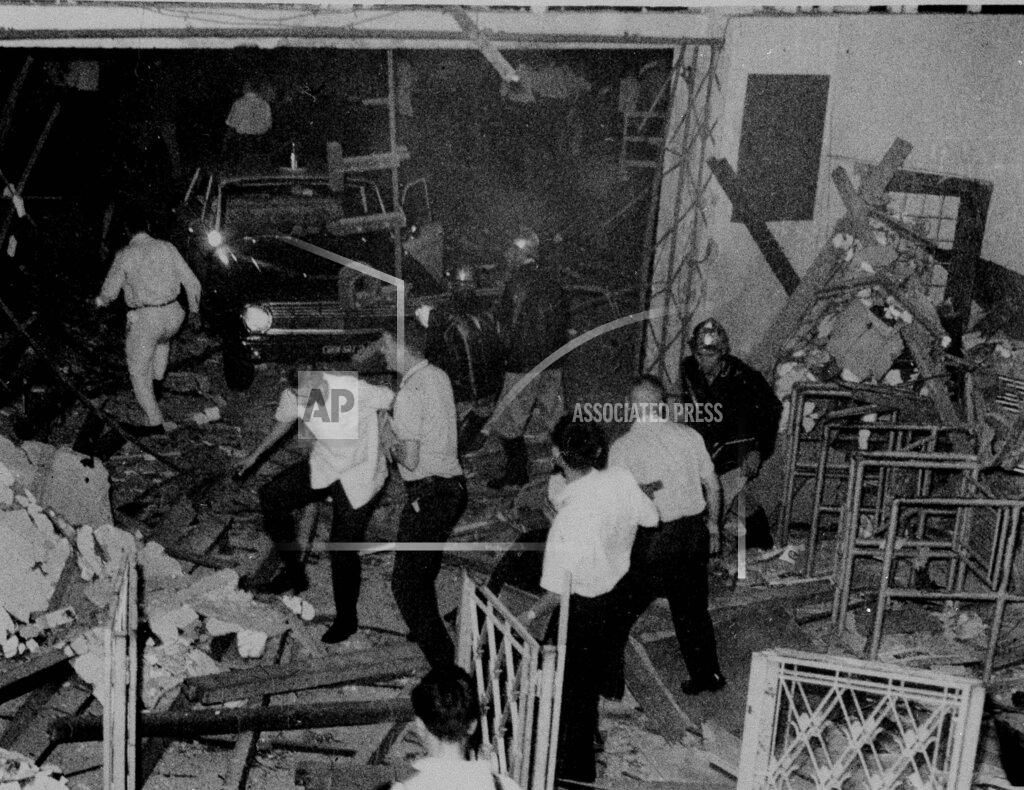
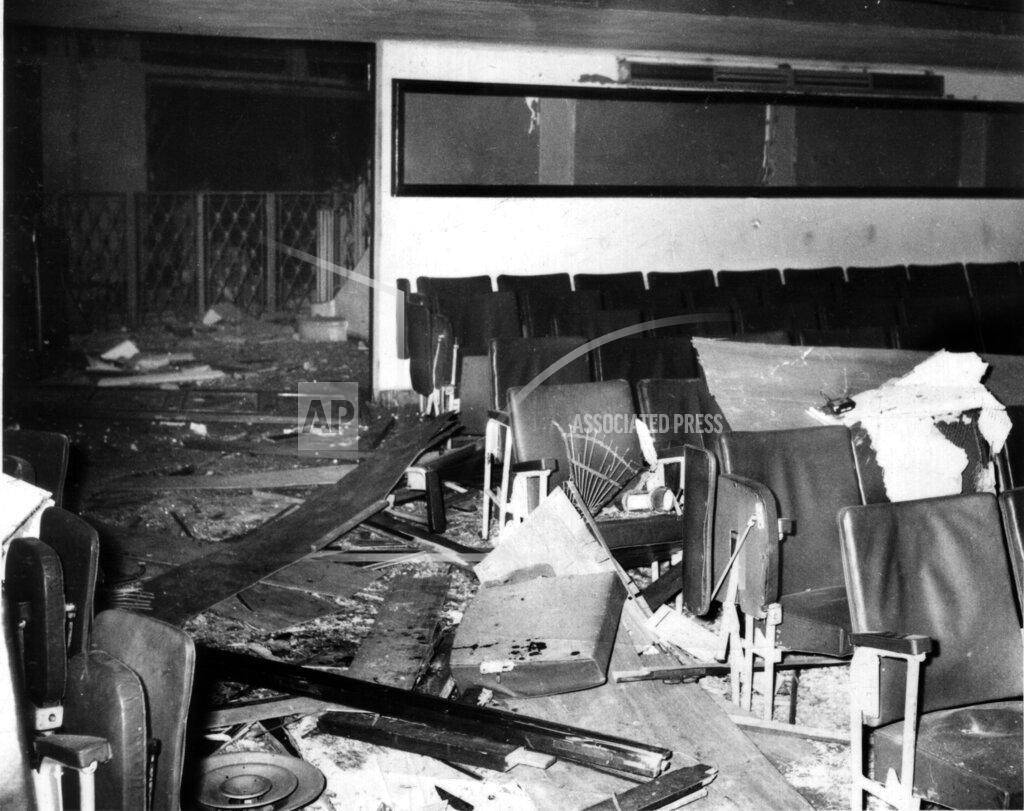
A bomb explodes in the U.S. community’s movie theater in Saigon, killing three Americans and wounding fifty. U.S. officials announce that the Viet Cong are evidently conducting a terrorist campaign to force a face-losing evacuation of army and diplomatic dependents. The United States charge d’affaires, David Ness, scheduled an urgent meeting with the South Vietnamese Premier, Major General Nguyễn Khánh, later today. They will “discuss the security measures to be taken to offer the American community maximum protection,” the United States Embassy said.
The incident, clearly carefully planned, reinforced mounting fears in the American community that Communist terrorists have mounted a campaign in the capital against the Americans here advising the South Vietnamese in the war effort against the Viet Cong guerrillas. The theater was closed for one night last Wednesday after security officials discovered evidence that a bomb might have been planted inside the auditorium. But a search turned up no explosives. Americans speculated that the evacuation of dependents in South Vietnam might now be ordered, but they admitted that this would have a bad psychological effect both on the Americans and on the Vietnamese.
The North Vietnamese Air Force scored its first aerial victory against an American aircraft when the North Vietnamese pilot of a T-28 Trojan trainer aircraft shot down a C-123 Provider transport plane.
An article in an official Hanoi newspaper hails the Soviet Union’s pledge of support for the struggle against ‘U.S. imperialists’; the North Vietnamese Communists are playing a delicate game of trying to balance support from both the Soviet Union and China.
The lines of a two‐pronged approach to the Cyprus problem by London and Washington emerged today from talks between British officials and the American Under Secretary of State, George W. Ball. First, according to diplomatic sources, there will be an effort to achieve, as completely as possible, the diplomatic isolation of Archbishop Makarios, the Cypriote President. The second objective, taking shape on the horizon, is an attempt to end the island’s communal fighting by administrative partition between the Greek and Turkish Cypriote factions, these sources said. The first diplomatic step was taken last night when Britain, with the support of the United States, called for an early meeting of the United Nations Security Council “to consider the urgent problems raised by the deterioration of security in Cyprus.” Tonight final touches were put on a resolution that Britain plans to introduce in the Security Council tomorrow. It calls for a mandate to establish a peace‐keeping force in Cyprus, and for the appointment of a neutral mediator to settle the quarrel between the communities.
Archbishop Makarios, in a radio address to his embattled republic, warned tonight that “the island’s territorial integrity security and peace are under serioue threat.” In a dry, unemotional broadcast, the President asserted that the state faced “two great dangers—the danger of foreign intervention and the danger of resumption of internal disturbances on a larger scale.” He said that despite the threats of foreign military intervention and internal anarchy, the Greek Cypriotes—the faction for which he speaks—would not “yield to threats, pressure or blackmail.” This was the first time since the bitter communal fighting began Christmas week that the President broadcast directly to the people.
The Archbishop reiterated his contention that “subject to certain conditions” his Government was not opposed to “a larger military force” for peace‐keeping. The present force comprises about 5.000 British troops. No military force, he said, will be able to perform its mission “if the Greeks and Turks of Cyprus do not show goodwill and a desire to live together in peace in the same space.” The Turkish Cypriotes have advocated federation or partition for the island. “If, against all hope, the Turks of Cyprus insist on any partition plans and seek to impose them by force,” the Archbishop warned, “we will consider such a situation inadmissible. We have political differences, but it is not possible for one side to impose its views on the other by the use of force.”
In parliamentary elections in Greece, the Centre Union (EK) Party, led by Prime Minister Georgios Papandreou won 171 of the 300 available seats, a gain of 45, for a clear majority. The National Radical Union (ERE) Party, led by Panagiotis Kanellopoulos lost 11 seats to fall to 107 in the unicameral legislature.
An investigating committee of the Organization of American States was reported today to have found that Communist influence in last month’s antiUnited States riots in Panama was minimal. It also found, after a weeklong inquiry, that the firepower used by United States troops to keep Panamanian mobs from penetrating the Canal Zone was “disproportionate” to the threat posed to the security of the United Statesoccupied territory. The five-nation committee also decided that the action of the United States forces, even if deemed excessive, did not justify Panama’s charges of aggression. The committee, still in Panama, was appointed by the Council of the inter-American organization to look into Panama’s charges and to seek conciliation in the dispute.
Ethiopia charged tonight that troops from Somalia attacked the Ethiopian border towns of Dolo and Yet two hours after a cease‐fire became effective at noon today. Somalia charged that Ethiopian troops had penetrated Somali territory at 12 places, The Associated Press reported from Mogadishu. The Ethiopian report said Somali attempts to occupy Dolo had been repulsed. Later another Ethiopian town, Ferfer, was shelled, it was reported. Foreign Minister Ato Ketema Yifru described the attacks as a deliberate and serious breach of the cease‐fire agreement. Ethiopia is informing the Organization of African Unity and U Thant, Secretary General of the United Nations. The truce was called for by the Council of Ministers of the African group on Friday. Acceptance by both Somalia and Ethiopia was announced yesterday.
Willy Brandt, the 50‐year‐old Mayor of West Berlin, was elected leader of West Germany’s Social Democratic party today and was named the party’s choice to stand against Chancellor Ludwig Erhard in the national elections next year. Mr. Brandt was unopposed for the candidacy. He received 323 of a possible 336 votes at a special party congress in nearby Bad Godesberg. Only five delegates voted against him. The colorful Berlin Mayor achieved almost the same near-unanimous endorsement in his election to the chairmanship of the party. Succeeding the late Erich Ollenhauer. He won 320 votes, with nine opposed and one delegate abstaining.
Syrian guns in the Galabina area on the Israeli border fired today on an Israeli air force plane that was flying over Israeli territory, an Israeli army spokesman said. The plane was not hit. Israel lodged a complaint with the Israeli‐Syrian Mixed Armistice Commission.
A 21-year‐old Czechoslovakian auto methanic, who strapped himself to the undercarriage of a bus loaded with Austrian Communists on a weekend excursion, escaped to Austria laast night. The mechanic, who has been identified as Viliam Hudec, used the belt of his overcoat to strap himself behind the real wheels while the bus stood outside a hotel in Bratislava. The Austrian party, which. had visited a refinery, was then having farewell drinks. A week before another Czech escaped in the same way and the border guards had been alerted. When the bus reached the frontier, however, the Austrians persuaded he guards to forgo a search.
The Congolese Army is still uncertain about how it can tackle the five‐week‐old rebellion that has devastated a third of Kwilu Province. In the tense provincial capital of Kikwit, Congolese officers talk vaguely about a need to win over the populace and to assure it that the army it here for protection. One officer said: “We will drop leaflets to say that we are friends: Then we have to resettle the villagers, give them things they need, and protect them.” In fact, there is no contact between the army and the people in the bush. Most of the soldiers, who began arriving after the rebels had swept a territory the size of New Jersey, are stationed in Kikwit. Two garrisons in rebel territory, one at Idiofa the other at Gungu, both about 60 miles from Kikwit, have stood up to repeated attacks by bands armed almost exclusively with bows and arrows. Hundreds of rebels have been killed.
Quick agreement on the final version of the Administration’s tax‐reduction bill is expected this week as Congress resumes work after a six‐day pause for Lincoln’s Birthday. Other major scheduled business includes the opening of hearings on housing and college student aid—programs that were submitted by President Johnson for action this session. In addition, advocates of a strong manned bomber force will again carry their fight to the House floor in debate on a $16.9 billion military procurement and research bill. The tax bill, as passed by the Senate February 7, provides $11.6 billion in annual tax relief for individuals and corporations through rate reductions coupled with structural revisions of the Revenue Code. The version passed by the House last September called for a net cut of slightly less than $11.1 billion.
A Senate‐House conference committee meets tomorrow with the expectation of settling all differences in two or three days. Additional time will be required for staff work, however, and it is uncertain whether the final text will be ready for House and Senate approval before next week. In any event the bill almost certainly will reach Mr. Johnson’s desk for his prompt signature within 10 days or two weeks. A lower income‐tax withholding rate under such a schedule would go into effect early in March. The conference committee has already agreed on a provision for reduction of the 18 percent withholding rate to 14 percent, effective a week after the President signs the bill.
Defense Secretary McNamara has emerged as a “strong man” of the Cabinet of President Johnson, according to many high‐ranking observers. In many respects, it is said, Secretary McNamara is more influential today than he was under President Kennedy, although Mr. Kennedy frequently demonstrated his confidence in the Secretary. President Johnson, it is pointed out, is less inclined than his predecessor to attempt changes in the details of defense policy and operations. President Johnson has had much praise for the Defense Secretary, particularly for his performance in cutting the defense budget this year, a major contribution to the Administration’s frugality campaign.
An advisory group has recommended to President Johnson that the White House continue the strong interest in the creative arts started by the Kennedy Administration. It suggested modifications to cultural policies envisioned by President Kennedy but emphasized the need for continued efforts to develop closer contacts with writers, artists and musicians. A key part of the new proposals is the development of the projected John F. Kennedy Center for the Performing Arts here into a showcase for the best talent in the country in the fields of theater, music and dance. The center will be built with Federal and private funds on the banks of the Potomac as a memorial to President Kennedy and his efforts to give greater recognition to the artistic community.
The International Longshoremen’s Association went ahead today with plans to stop loading wheat for shipment to the Soviet Union tomorrow despite urgent appeals from Washington. There were indications that the longshoremen might be willing to relax their prohibition if given assurances that at least 50 per cent of the wheat shipments would be carried in United States vessels. However, neither Thomas Gleason, president of the I.L.A., nor Paul Hall, head of the Maritime Trades Department of the American Federation of Labor and Congress of Industrial Organizations, seemed to be in a mood to accept such assurances without iron‐clad guarantees that they would be enforced. Mr. Gleason said the longshoremen had opposed the wheat deal in the first place and had agreed last fall to load ships only at the urging of President Kennedy. But he contended that the Administration had “reneged” on an agreement to ship half of the grain in vessels of the United States. Consequently, he said, the union had decided to stop loading the wheat.
The trial of Jack L. Ruby will begin in Dallas at 9 A.M. tomorrow with an attempt to pick a jury from a panel of 900 Dallas County residents. The trial will go on without the services of the first lawyer retained for the defense of the 52‐year‐old night club operator who shot and killed Lee H. Oswald, the accused assassin of President Kennedy, last November 24. The lawyer, Tom Howard of Dallas, announced today that he was withdrawing from the case. Since Melvin M. Belli of San Francisco took charge of the defense last December, Mr. Howard’s participation in the case has been steadily reduced. His dissatisfaction with his role has been evident since the change of venue hearing that ended Friday.
Senator Barry Goldwater today claimed 450 “sure” votes for the Presidential nomination at the Republican National Convention in July, plus 125 more “practically sure” votes. The total, he said, does not include votes he hopes to win in primary elections in California, New Hampshire and Oregon. To win the nomination, 655 votes are needed. Mr. Goldwater also said that he did not believe any candidate could be nominated without winning the California primary, which will be held on June 2. It is the last primary in the nation and the largest, with its prize of 86 convention votes.
This is the first time Mr. Goldwater has said his nomination would be impossible if he lost in California. His only opponent there is Governor Rockefeller of New York. The Senator declared that he also planned to fight for delegates in New York. He is known to feel privately that he has a chance to pick up as many as 22 of the state’s 92 votes if he challenges Mr. Rockefeller there, an estimate considered very high by most observers. Mr. Goldwater did not document his claim of convention votes. No one denies, however, that at this point he seems to have more probable delegate strength than any other candidate. Mr. Goldwater said that a “great groundswell” was now moving in his campaign and that it had “taken up where it left off at the time of the assas-sination of President Kennedy.”
An intelligence network of Alabama state agencies and officials is amassing information on civil rights advocates and others at the direction of Governor George C. Wallace. Its components, which generally have only informal ties with one another, sometimes work openly. Far more frequently however, their activities and the results are secret. Their interest extends beyond Alabamians. They have given considerable attention to Black leaders, Justice Department officials, newsmen and others who have come into the state during racial crises. In this racial aspect the operation is similar to those found in Mississippi and Louisiana. But in terms of overall scope and amount of activity the intelligence network seems to be unparalleled in this country.
State officials say that the information being obtained will not be misused to bring pressure, political or otherwise, on anyone. Nevertheless, the investigations alone have served as a means of intimidation in some cases. And after one such inquiry a Black student was expelled from the University of Alabama after having won admission under a federal court order. Governor Wallace controls all the agencies involved, either directly as chief executive or indirectiy through his powers of appointment or his influence in the Legislature.
Striking clerks and National Airlines signed an agreement today ending a 42‐hour walkout that had grounded the nation’s sixth largest airline at the height of the Florida tourist season. In New York a spokesman for the line said that limited service was resumed tonight, In National’s home hub of Miami, the first plane took off at 6:30 P.M. nonstop for Kennedy International Airport in New York. The first flight out of New York left at 7:50 for Norfolk, Virginia. Service was expected to be normal tomorrow. The signing was a bare formality, since both sides had earlier accepted a proposal by Labor Secretary W. Willard Wirtz for ending the walkout.
Roy M. Cohn has asked for dismissal of a perjury indictment against him on the ground that the Government has been intercepting his mail and that of his lawyer for almost a year. A copy of a purported special Post Office Department order for the interception of mail addressed to the home of Thomas A. Bolan, Mr. Cohn’s lawyer, was attached to papers submitted to Federal Judge Archie O. Dawson last week in connection with the dismissal request.
Robert Emmett Dolan and Johnny Mercer’s musical “Foxy”, starring Bert Lahr, opens at Ziegfeld Theater, NYC; runs for 72 performances, with Lahr winning a Tony Award.
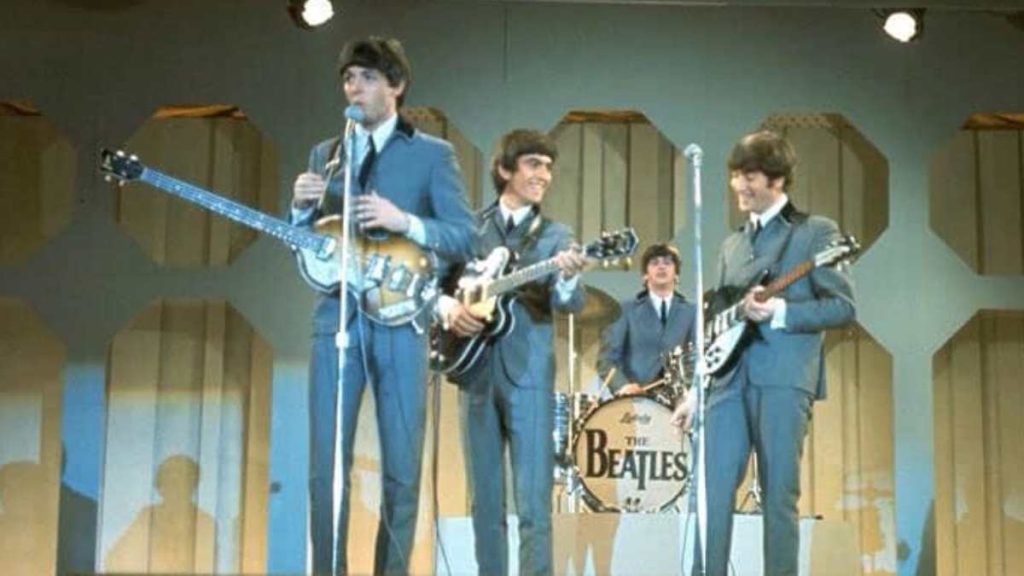
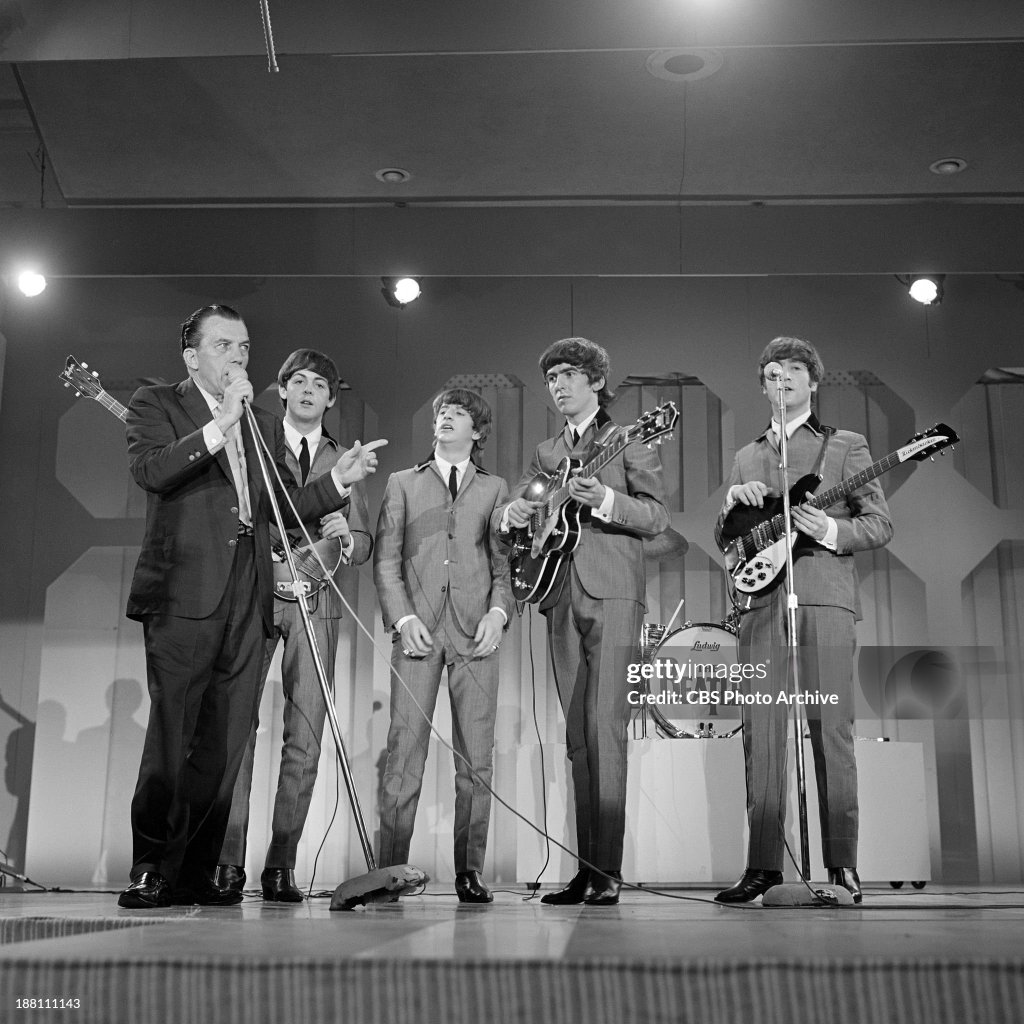
The Beatles’ 2nd appearance on “The Ed Sullivan Show,” live from Deauville Hotel in Miami, Florida; the broadcast draws about 70 million television viewers.
Born:
Christopher Eccleston, English actor known for being the ninth to portray the title character (during 2005) in Doctor Who; in Salford, Lancashire, England, United Kingdom. Two days after Eccleston’s birth, on February 18, 1964, the BBC renewed Doctor Who for a second season.
Jim Cantore, American TV meteorologist, in Beacon Falls, Connecticut.
Rico Rossy, Puerto Rican MLB shortstop, third baseman, and second baseman (Atlanta Braves, Kansas City Royals, Seattle Mariners), in San Juan, Puerto Rico.
Craig Neal, NBA point guard (Portland Trailblazers, Miami Heat, Denver Nuggets), in Muncie, Indiana.
Richard Rellford, NBA small forward (San Antonio Spurs), in Riviera Beach, Florida.
Died:
Jette Bang, 50, Danish photographer known for her documentation of the people of Greenland


 History Diaries