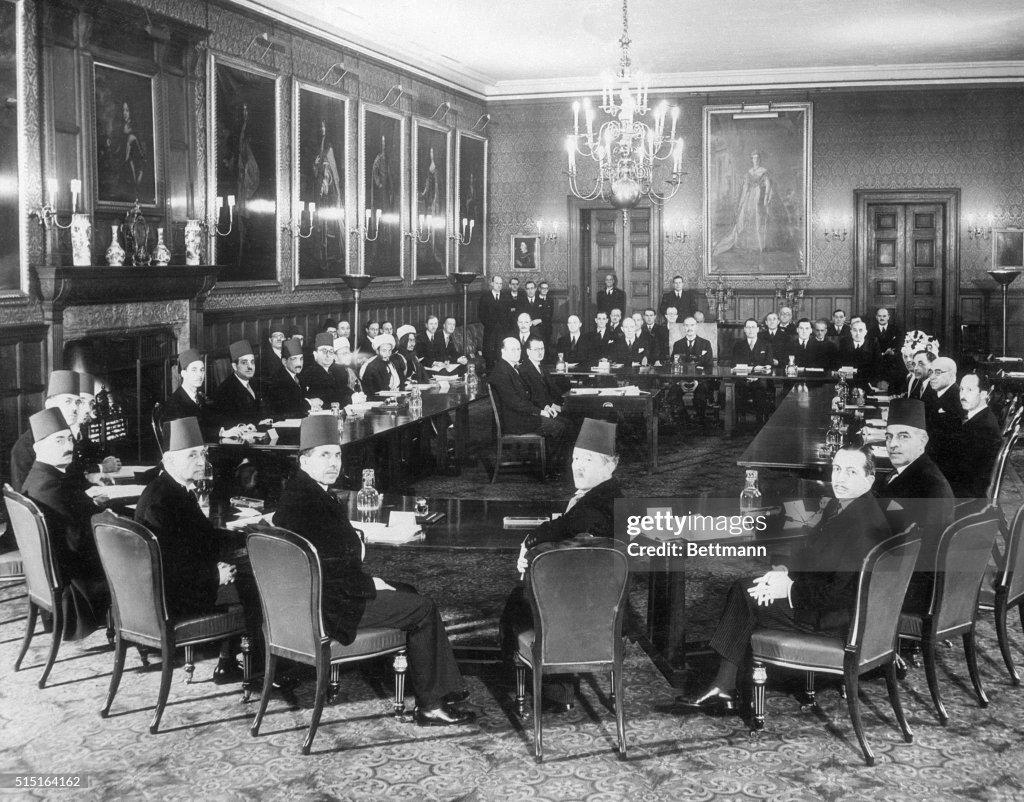
Hungarian Prime Minister Béla Imrédy resigned after confirming rumors that his ancestry was partly Jewish. Imrédy still defended his antisemitic policies as “a good thing for our fatherland” but said he was resigning because it was “inconsistent that under such circumstances I should be identified with such legislation.”
Count Pál Teleki takes office as Hungary’s prime minister. Premier Bela Imredy resigned from power after conducting an aggressive anti-Semitic policy when the National Socialists in Hungary taunted him with his Jewish background (he admitted that his great-grandfather was Jewish).
The British Government again today deferred its formal recognition of the Franco regime in Spain until President Manuel Azaña, now in Paris, made up his mind whether to resign as head of the Spanish Republic. As soon as President Azaña’s resignation is announced the British and French will have an excuse for saying that the Spanish Republican Government no longer exists and that it is time to face the new situation. Prime Minister Neville Chamberlain told the House of Commons today that recognition was “still under consideration,” but there is not the slightest doubt that his Cabinet, at its meeting a few hours earlier, had determined to establish full diplomatic relations with the victorious Franco regime in Spain at the first possible moment. Indeed, the Ministers were so thoroughly in agreement on the subject that they left the final decision in the hands of Mr. Chamberlain to use whenever he thinks the appropriate moment has come.
The British are anxious not to get out of step with the French on the matter of recognition, and like the French they would prefer for political reasons to see recognition preceded by surrender of Spain’s Republican leaders. The French also would like assurances from Generalissimo Francisco Franco that Italian troops will really be withdrawn from Spain. As a matter of fact, the British are gambling on General Franco’s friendliness, just as a year ago Mr. Chamberlain gambled heavily on restoration of Anglo-Italian good relations when he began the negotiations that led to the resignation of Anthony Eden as Foreign Secretary. The British believe that, by a great show of goodwill now, they have more than an even chance to shake General Franco loose from the control and influence of his Italian and German allies. They are taking him at his word that he wants Spain to remain Spanish, just as they have consistently taken Premier Benito Mussolini at his word that he will withdraw Italian troops from Spain when the civil war is over.
The British Government announced today that it would lay down two more giant battleships in the 1939-40 financial year, bringing the total under construction to nine and almost matching the combined battleship-building programs of Germany, Italy and Japan. In addition, work will be begun on another big aircraft carrier, making a total of six under way apart from the 23,000-ton Ark Royal, which was completed and commissioned only a few months ago. A start also will be made in the new financial year on four big cruisers, eighteen destroyers and twenty fast escort vessels of a new type intended to protect merchant shipping against the menace of submarines. It is understood that at least one further capital ship will be laid down in 1940-41 to complete Britain’s gigantic five-year naval building program. In any case Britain expects to have enough floating fortresses by 1942 to send a powerful battle fleet to Singapore and still have plenty left in European waters to defeat any combined challenge from the Fascist powers.
British officials can now compel journalists to reveal sources in instances of espionage.
The world watches the old stove pipe at the Vatican. Its smoke will announce when a new Pope has been named.
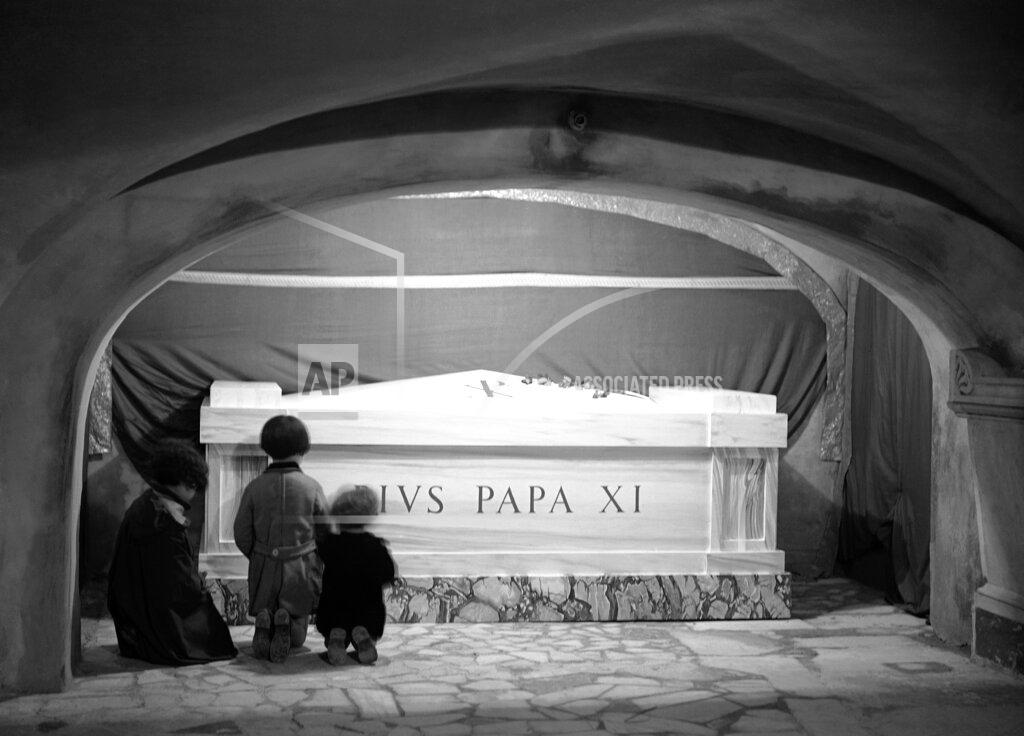
Attempts are being multiplied on the part of various civil governments to influence the Sacred College of Cardinals in the election of a successor to Pope Pius XI. Unusual activity is perceived in the diplomatic corps accredited to the Holy See. Automobiles bearing the letters “C. D.” — the diplomatic number plate — may be seen passing at all hours of the day through the Arch of the Bells, the Vatican City frontier, where they receive a salute from the picket of Swiss Guards. In them ride Ambassadors or Ministers in morning coats and silk hats on their way to confer with Eugenio Cardinal Pacelli, the Cardinal Camerlengo, or papal chamberlain, or more simply attired secretaries desirous of talking with lesser officials of the Vacant See.
Great as is this overt activity, it is exceeded by the covert. Cardinals who have never before participated in the conclave — an overwhelming majority, since only ten took part in the election of Pius XI — complain that they are being frequently pestered by mysterious emissaries calling on them at their private homes and wishing to engage them in conversation on the benefits the Church would derive from the election of this rather than that Cardinal. These emissaries always protest that they have only the Church’s good at heart. The older Cardinals have given up being surprised by such attempts, for they know that they are the normal thing just before the conclave. They defend themselves by refusing to receive strangers.
Madrid orders resistance to the death, if necessary.
The special camp for Jews at the concentration camp at Buchenwald is closed and demolished after the breakout of typhus.
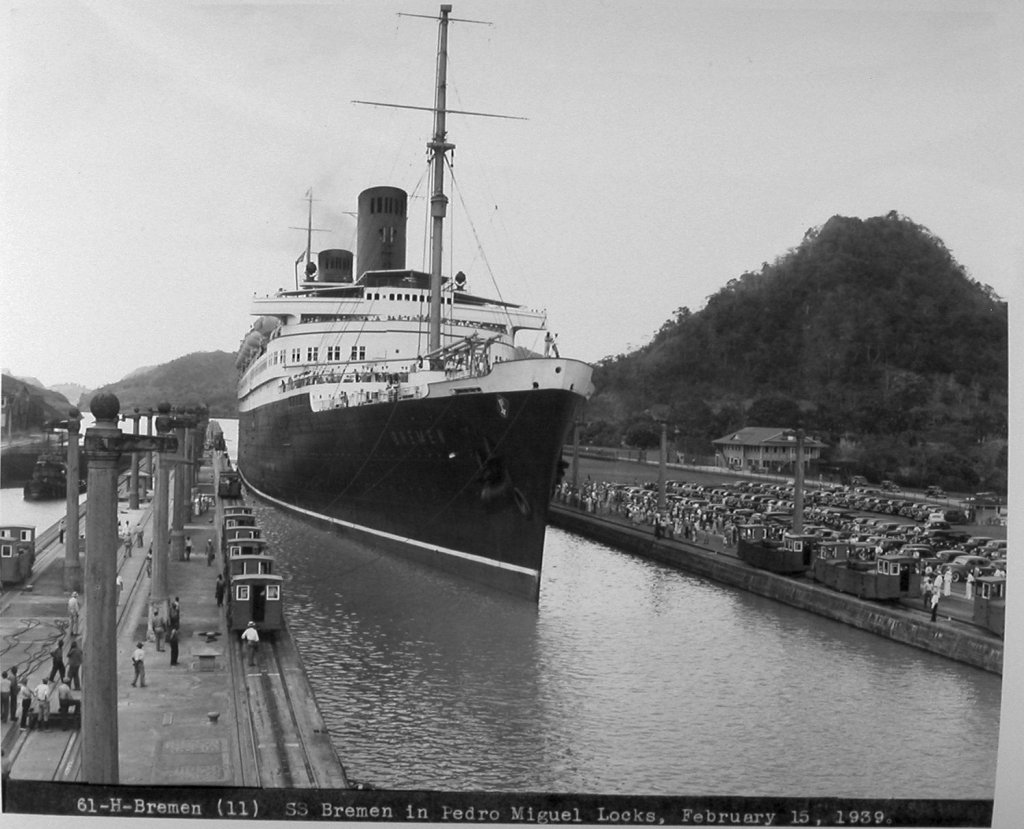
The 51,731-ton German passenger liner ‘Bremen’ becomes the largest vessel to have traversed the Panama Canal.
The first deliveries of the Lockheed Type 14 bomber aircraft, named “Hudson” by the RAF, arrive at Liverpool docks.
France ordered 100 DB-7 medium bombers from the Douglas Aircraft Company of the United States.
Swiss fashion producers plan to push organdy as a silk substitute, capitalizing on anti-Japanese sentiments.
Rumanian Baptists may form churches again.
British Colonial Secretary Malcolm MacDonald unveils a proposal giving equal political representation to Jews and Arabs in Palestine. No one likes the plan.
Spurred by word pictures of the menace of foreign invasion, the U.S. House of Representatives passed and sent to the Senate today the May bill to increase the Army Air Corps to 5,500 serviceable airplanes. The vote was 367 to 15. With other expenditures authorized in the bill, an outlay of about $376,000,000 would be involved. The measure would also authorize the training of pilots in approved civilian schools, the expenditure of $23,750,000 for improving the garrison facilities in the Panama Canal Zone, and the placing of $34,500,000 worth of “educational orders” between now and 1941, and $2,000,000 a year thereafter “to familiarize private manufacturing establishments with the production of munitions of war of special or technical design, noncommercial in character.” Administration spokesmen took no chances on waverers. Speaker after speaker pointed out dangers in the international situation and predicted that it might become worse rather than better, to the ultimate danger to the peace and security of the United States.
While the House was following so strongly the Administration’s national defense policy, Secretary Hull sent to Representative McReynolds of Tennessee, chairman of the House Foreign Affairs Committee, a letter intimating that revision of the Neutrality Act would not be distasteful to the Administration, although leaving the initiative entirely to Congress. There has thus far been no clear cut indication of what President Roosevelt and his advisers would like to have done about the neutrality law, which would be the strongest factor in American foreign relations in the event of a general war. The letter from the Secretary of State was written in response to a request from Chairman McReynolds for information regarding a proposed bill to prohibit the exportation of pig iron, scrap iron and scrap steel to Japan and China. “Since H. R. 3419 concerns the neutrality policy of the United States,” Secretary Hull wrote, “I suggest that you may consider it advisable to postpone consideration of that bill until such time as the Congress may find it convenient to consider our neutrality policy in all its aspects.”
A poll indicates that 55 percent of Americans think businessmen have better ideas for the economy than the New Deal.
The Senate kills a bill that would allow women to serve on juries. A female Senator says that most women do not want more responsibility.
In an attempt to convince Roosevelt to overturn the policy of neutrality, historian Roger B. Merriman forwarded to the president an assessment of the German threat written by renowned historian George M. Trevelyan. Like many Britons both in and out of government, Trevelyan saw the United States as the only possible savior for England and Europe and chastised Americans for their isolationist views writing: “If you [the United States] don’t want Europe and Africa to be prostrate at the feet of Germany and her allies, with Japan in possession of Asia, you had better be reconsidering your isolation policy before you are indeed ‘isolated.’”
Jack Benny is allowed by the court to complete his film before beginning his smuggling trial.
The State Motion Picture Division bans “Yes, My Darling Daughter,” calling it an affront to morals and worrying it will encourage trial marriages.
Victor Fleming replaces George Cukor as director of “Gone with the Wind.”
The Lillian Hellman play “The Little Foxes” starring Tallulah Bankhead premiered at the National Theatre on Broadway.
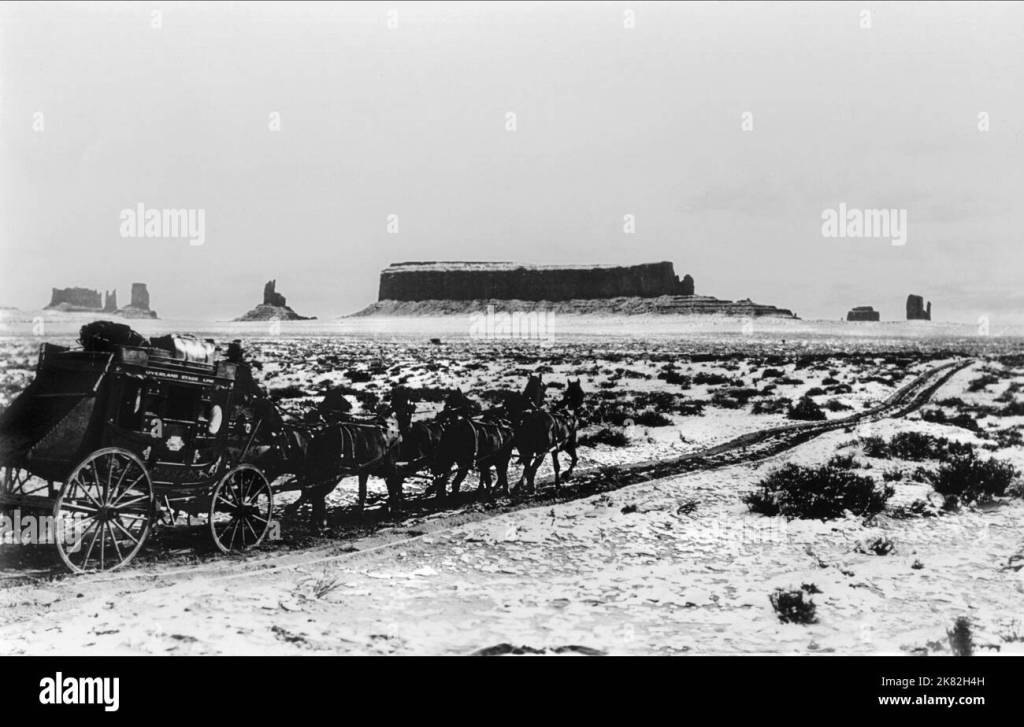
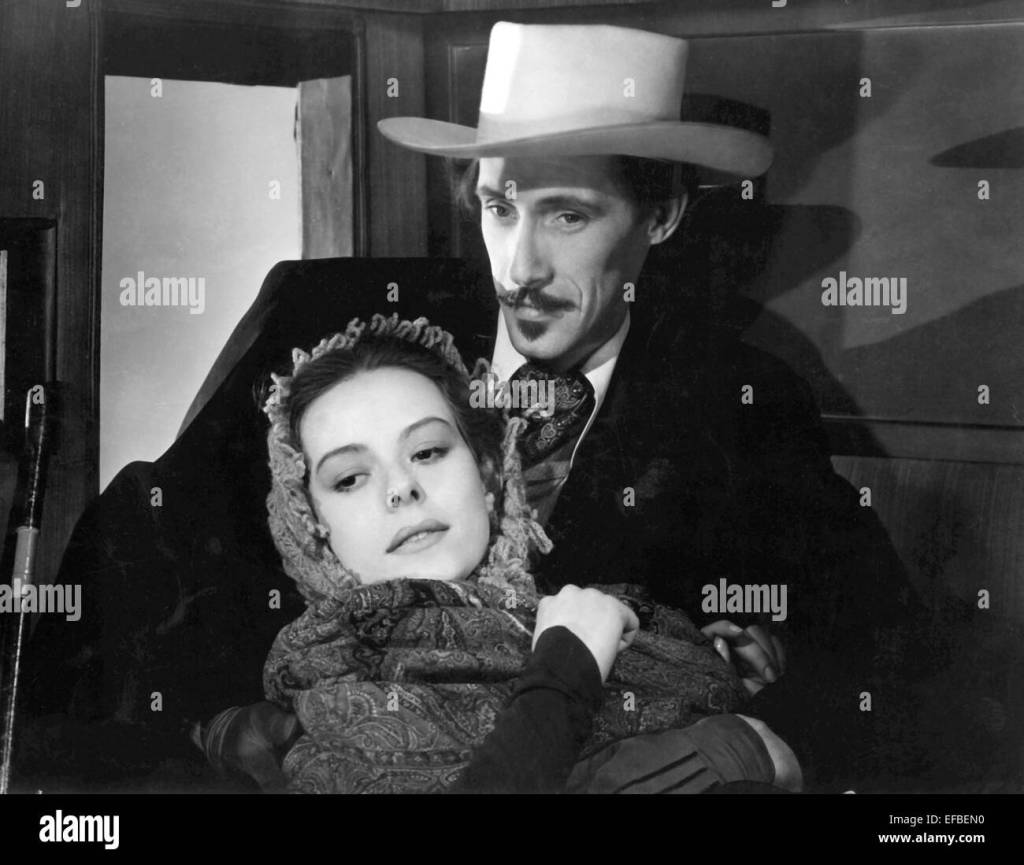
The John Ford-directed Western film “Stagecoach,” starring Claire Trevor and John Wayne in his breakthrough role, was premiered in New York City and Los Angeles.
Mexican Communists plead for unity and cite the danger of fascism.
Mexico reduces the lunch and siesta break for workers from four hours to three.
War with the Soviets, some writers opine, would enable Japan to quit the China fight without losing face.
China continues its guerilla war in the central provinces.
Japanese military reports declare detachments in southern Hopeh Province had recently engaged in large-scale operations against Chinese guerrillas, especially against several thousand under the command of General Shih Yu-shan. The Japanese were said to have occupied most of the important cities, using them as bases for excursions against the Chinese forces. In the last few months, the reports of encounters with guerrillas have listed increasingly smaller numbers of the various Chinese forces encountered. It is believed the Chinese forces are separating into smaller bands, seldom of more than 500, for raids against the Japanese lines of communications and bases throughout North China.
The Japanese air force reported it had raided towns northeast of Lanchow in Kansu Province following an attack on Lanchow. There has been no explanation of the raids in this sector. Although Lanchow is a possible route for supplies from Russia, the Japanese fliers apparently found no new caravans or supply convoys.
With the approach of the Chinese New Year Peiping’s guards have been increased because of rumors that attempts will be made to cause disturbances to embarrass the pro-Japanese Government. Gendarmes are on all main streets, searching Chinese. The Japanese military authorities have issued an order forbidding the planting of kaoliang and bamboo near highways, railways and air fields as a precaution against cover for possible guerrilla attacks.
Dow Jones Industrial Average: 144.60 (+0.47).
Born:
Ole Ellefsæter, Norwegian cross-country skier (Olympic gold 50km & 4×10km relay 1968; World Championship gold 4×10km relay 1966), in Furnes, Norway (d. 2022).
Robert Hansen, American serial killer active in Anchorage, Alaska, between 1972 and 1983, in Estherville, Iowa (d. 2014).
Jo Clayton, American fantasy and science fiction author (“Irsud”, “Maeve”, “Star Hunters”), in Modesto, California (d. 1998).
Died:
Henri Jaspar, 68, 27th Prime Minister of Belgium (1927-31).
Naval Construction:
The Regia Marina (Royal Italian Navy) Marconi-class submarine Luigi Torelli is laid down by Odero Terni Orlando (OTO) (La Spezia, Italy).
The Kriegsmarine (German Navy) Type 1936A destroyer Z25 is laid down by AG Weser (Deschimag), Bremen (werk 959).
The Vasilikón Naftikón (Royal Hellenic Navy) destroyer RHS Vasilefs Georgios (D 14), lead ship of her class of 2, is commissioned.

 History Diaries