Arab diplomats in Cairo said that the Egyptian and Saudi Arabian foreign ministers would ask the Nixon administration over the weekend for assurances that Israeli forces would eventually withdraw from the entire Golan Heights area they occupied in 1967. The partial lifting of the oil embargo against the United States and Syria’s willingness to enter into a troop-separation agreement with Israel depend on the American assurances, the diplomats said.
Clashes between Syrian and Israeli forces were reported today on the Golan Heights front after a lull of about two days. The Damascus radio said that four Israelis were killed in clash between Syrian and Israeli patrols in the morning. In Tel Aviv, a military spokesman said that the Israelis killed four members and wounded the rest of a Syrian motorized patrol that had penetrated Israeli lines, The Associated Press reported. A Syrian military spokesman said that two artillery duels were fought during the day and that two Israeli tanks, one missile position and one heavy artillery position were destroyed. The Israelis were said to have fired at Syrian positions in the central part of the front, but the Syrians gave no report on casualties.
Last September, Libya seized control of major American oil operations. The Wall Street Journal reported today that soon after the seizure, oil giants including Texaco and Standard Oil of California — with the apparent collaboration of the State Department — pressured smaller oil companies against importing Libyan oil products.
Iraq accused Iran in the Security Council today of provoking border fighting in an expansionist drive to take control of the Persian Gulf area. “The situation remains tense and fraught with danger,” said the Iraqi representative, Talib el‐shibib, to the Security Council. He charged that large‐scale Iranian arms purchase from the United States were being used to further expansionist policies. Replying, Fereydoun Hoveyda, Iran’s chief delegate, accused the Baghdad Government of carrying out increasingly serious attacks across the border and also of trying to incite the overthrow of the Iranian Government. The disputing parties were the only speakers in the opening debate today, which a number of Council members had unsuccessfully tried to head off in part because they felt the border area was quieting down.
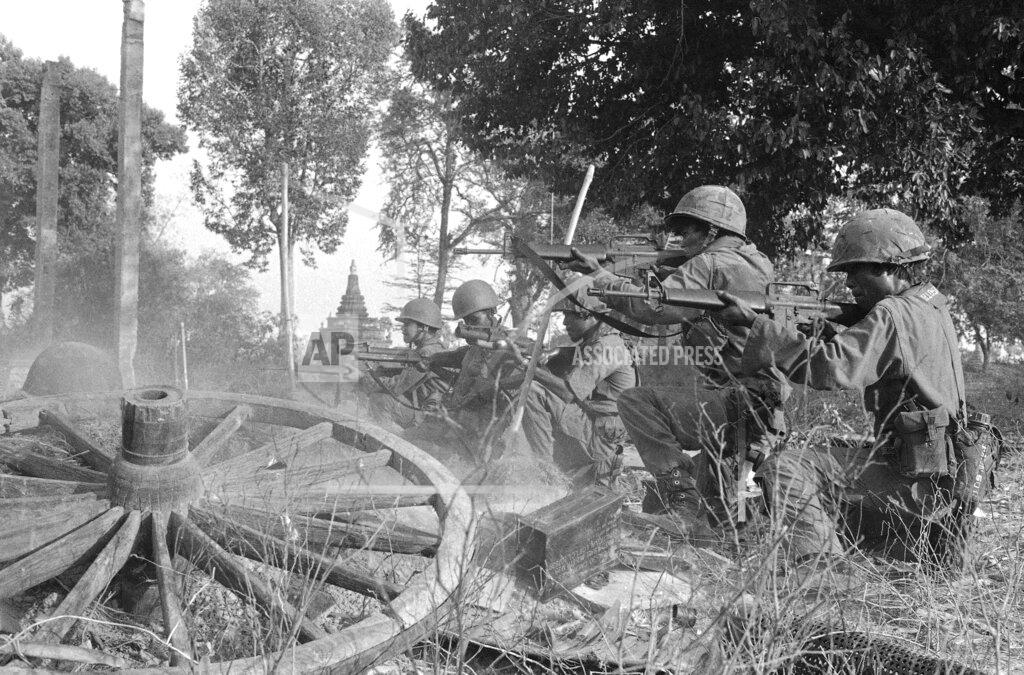
Helicopters and T‐28 planes attacked rebel targets south and southwest of Phnom Penh today. The military command said at least two munitions dumps were destroyed. The command said pilots reported explosions near Kompong Tuol on the capital’s southern front and along Route 4 about 44 miles southwest of Phnom Penh, indicating ammunition was hit. Ground forces clashed near Sak Sampeou last night about 11 miles south of Phnom Penh. Despite recent gains by government troops in that area, they have failed to drive back the insurgent artillery and rocket launchers that have been taking a heavy toll in the southern part of the city.
Cambodian leaders are asking why the world community has remained virtually silent about the terror shellings of Phnom Penh — which have killed or wounded nearly 1,000 people, almost all of them civilians, since the random barrages by the Communist‐led insurgents began in late December. “International opinion seems not to react to the suffering of the Khmer people,” said Premier Long Boret, in an interview today. “When American airmen were bombing Hanoi in December of 1972, the whole world condemned the action. But when the other side kills our innocent women and children, there is no reaction. We do not understand this.” The worst insurgent attack came in broad daylight on Monday, when artillery shells from captured American‐made 105‐mm howitzers, and the subsequent wind‐fed fires, leveled an entire working‐class neighborhood. The casualties and destruction—the worst ever inflicted on civilians in this four‐year war — were about 200 people killed and an equal number wounded, 1,000 or more houses destroyed and some 9,000 people rendered homeless.
The Cambodian Government and some of the country’s intellectuals have long been bewildered and upset at what they consider the double standard of morality applied to the participants in the Indochina war by antiwar groups and others in Western countries. “Is it that the Communists alone are worthy of compassion while their victims merit only silence and oblivion?” asked Le Republican, a quasi-official French‐language newspaper, in yesterday’s issue. Premier Long Boret asked the same question: It seems if the victims are Communists, world opinion rushes to support them, but if they are not Communists there is no reaction. Is this the rationale for the discrimination?”
The South Vietnamese Cabinet of Premier Trần Thiện Khiêm resigned today in the most sweeping government change since President Nguyễn Văn Thiệu took office seven years ago. Saigon Radio said Mr. Thiệu accepted the resignations, brought to him by Mr. Khiêm, but asked the ministers to stay as caretakers until a new Cabinet is named. There was no official explanation for the move, and Mr. Khiêm and Mr. Thiệu remained in their posts. The last big cabinet shift was last October when. Mr. Thiệu reshuffled the body in a move designed to put more steam into the economy.
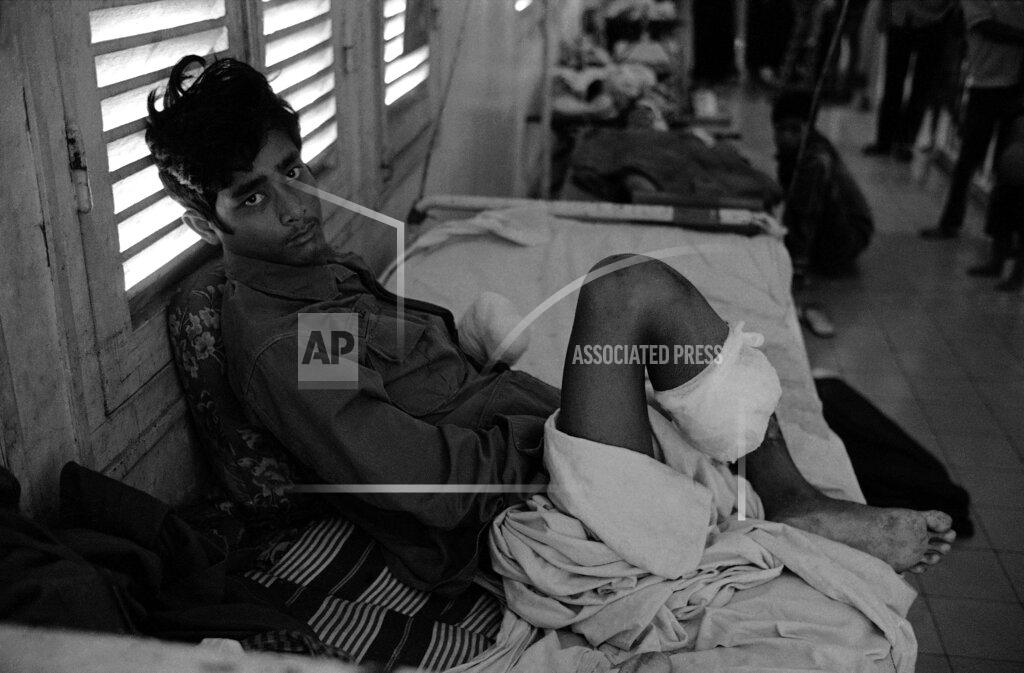
Two South Vietnamese soldiers released from a Vietcong prisoner of war camp said today they were detained during the early stages of their two years in captivity with two Americans. But Corporal Do Tan, 26 years old, and Private Le La, 23, said that this was in April and May of 1972 and by June of that year the Americans were taken away, apparently to North Vietnam. The United States Embassy said the Americans “probably were among those released” by North Vietnam after the ceasefire agreement was signed in January, 1973. Corporal Tan said in an interview that the North Vietnamese asked South Vietnamese officers in the prison camp in South Vietnam’s Central Highlands to serve as interpreters for the Americans. Corporal Tan described the Americans as helicopter crewmen who were shot down in the area in 1972.
Striking British mine workers extended their picketing to rail bridges and grade crossings today and threatened to blockade the river Thames to keep coal and oil from reaching power plants. Their leaders threatened to mobilize up to 10 million other workers in a new escalation of their five-day-old walkout. In what could be an ominous new escalation, Michael McGahey, vice president of the miners’ union and a Communist Party member, said miners and other trade unions in Scotland have agreed on tougher strike support. He said they plan to call for a joint conference with leaders of the 10 million-member Trades Union Congress to discuss stepped-up picketing of power stations and fuel depots.
The 269,000 mine workers launched a national strike last weekend, demanding a 30-35% pay boost. The state-run National Coal Board offered 16.5% — the maximum allowed under the government’s anti-inflation guidelines. Pickets were posted on grade crossings near the Isle of Grain oil refinery on the Thames estuary. They urged locomotive engineers not to drive trains with oil for power stations. In Yorkshire and Lincolnshire in the north, picketing miners manned rail bridges and urged engine drivers to refuse to move coal and oil.
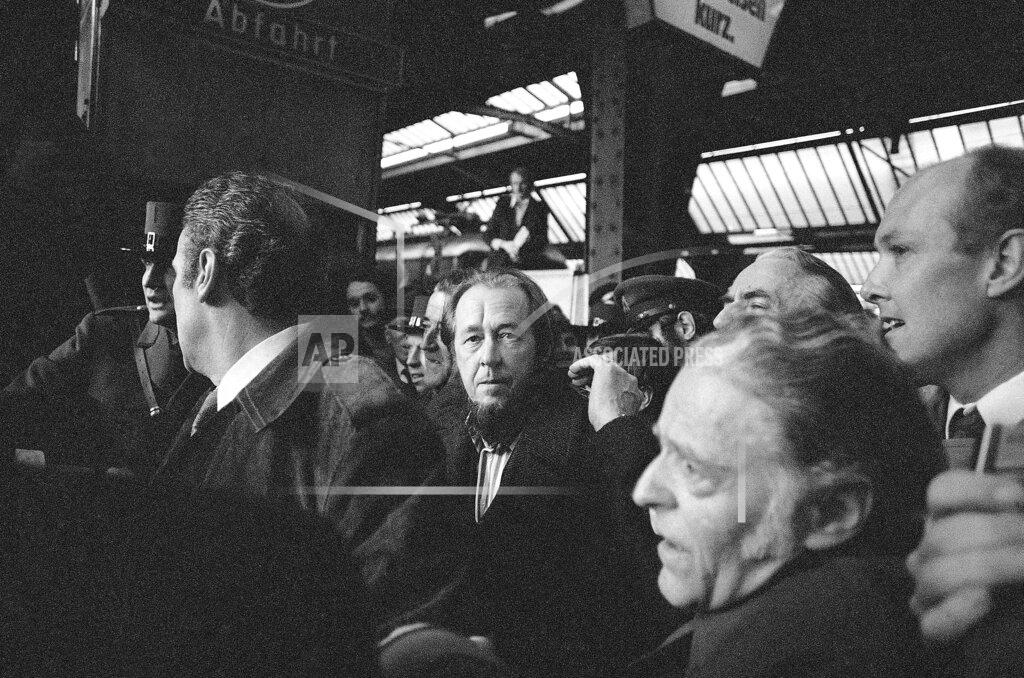
Aleksandr I. Solzhenitsyn came to Switzerland this afternoon and went into seclusion in the suburban apartment of his lawyer. The author, who was stripped of Soviet citizenship and expelled to West Germany last Thursday, left Germany this morning. Rudolf Streit, director of the publishing concern that published the Swiss edition of Mr. Solzhenitsyn’s latest book, “The Gulag Archipelago, 1918–1956,” told Swiss journalists that the writer had presumably left West Germany because his presence constituted a problem for Bonn’s delicate relationship with Moscow. Switzerland issued Mr. Solzhenitsyn a three‐month temporary residence permit that allows him to travel throughout the country. Such a permit is usually given on, condition that the holder make no declaration harmful to Swiss foreign relations.
The North Korean Navy sank a South Korean fishing boat that had strayed too close to the Five West Sea Islands, killing 13 of the 14 people on board. The sole survivor was captured by the North Koreans after a rescue. Later in the day, the crew of 14 of another fishing boat was captured.
About a dozen U.S. business executives, including the chairman of General Motors, intend to bring Soviet trade officials to their local communities this month to seek grassroots support for broadened commerce with the Soviet Union and to combat a growing anti-Soviet mood in this country which threatens to block further expansion of Soviet-American trade.
Inflation is worsening. Wholesale prices increased 3.5% in January and were up 20.8% over the past year. Wholesale livestock prices increased 15% last month, causing all farm produce prices to jump. Fuel prices increased 8%. Food prices are rising by leaps and bounds. Consumers are expected to notice the most excessive food prices at the retail level within the next two weeks. Wholesalers believe that food prices are likely to continue upward.
The dreary script generally forecast for the American economy in early 1974 — lower production and sharply higher prices — was followed on schedule in January, government reports disclosed. Wholesale prices climbed 3.1 percent and industrial production dropped 0.8 percent. The news followed an earlier report of higher unemployment last month. Taken as a whole, this is probably the worst set of monthly economic statistics in at least 25 years.
The number of persons not paying their installment loans on time increased by 19 percent in November and December, partly because of inflation and the slowdown in the economy. At the end of the period, the percentage of delinquent loans rose to 2.53 percent of those outstanding on Dec. 31, up from 2.12 percent at the end of October, according to a report by the American Bankers Association.
Service stations are balking at the new government regulation forbidding gasoline sales to regular customers only; station owners want permission to raise prices. Many stations have closed to protest the gasoline allocation system and energy czar William Simon’s regular-customer ruling.
Federal energy office deputy director John Sawhill stated that gasoline rationing is not likely to be used. President Nixon opposes rationing.
Amtrak, the nationwide rail passenger system, reported yesterday that, because the fuel shortage was causing huge passenger shifts to rails, it now expected to reach in 1975 the passenger loads that had been predicted for the 1977 fiscal year. In its annual report, Amtrak said it had recorded a 1973 calendar‐year loss of $158.6‐million, compared with $147.5‐million loss in 1972. An increase in revenues of $39.5‐million was more than offset by cost increases amounting to $50.6‐million, it said. In a letter to President Nixon and to Congress at the beginning of the report, Amtrak’s president, Roger Lewis, hailed 1973 as a year of considerable progress. He said the progress resulted in large measure from Congressional actions in dispelling uncertainties about the size of Amtrak’s route structure, and in voting huge new appropriations to permit the overhaul of facilities and the purchase of new equipment.
More than 100,000 auto workers have lost their jobs because of the fuel shortage. United Auto Workers president Leonard Woodcock urged that the nation’s energy supply be removed from private hands and turned over to a public energy corporation.
Federal Judge Gerhard Gesell, who will preside at the perjury trial of Dwight Chapin, the former presidential appointments secretary, tried to calm the rising public debate about the truthfulness of John Dean, the former White House counsel and witness in the Watergate case.
The White House said that despite President Nixon’s refusal to turn over tapes and documents to Leon Jaworski, Mr. Nixon wanted to avoid another “point of confrontation” with the Watergate prosecution. Therefore, Mr. Nixon instructed his lawyer to continue private conversations with Mr. Jaworski and to cooperate with him “fully, consistent with the principles of confidentiality of presidential conversations.”
Republican members of the House Judiciary Committee are seeking to delay or cancel a public hearing set for next week to discuss the fundamental issue of what constitutes an impeachable offense. Republican members who attended a party caucus late yesterday said that they had agreed to ask the committee’s chairman, Peter W. Rodino Jr., a New Jersey Democrat, to delay or cancel the February 21 meeting because they said it would serve no useful purpose.
Sources familiar with the interparty struggle on the impeachment inquiry report that Republican members are concerned that a public airing of the question of impeachable offenses will lock them into fixed positions on impeachment. Some observers believe that the research will show a strong historical bias in favor of holding a public official accountable for acts other than criminally indictable offenses. One Republican member privately voiced concern that a public hearing on the question might be used by the Democratic majority to put the committee on record.
Senator Edward M. Kennedy is saying privately, to his closest political associates, that it is extremely unlikely that he will run for President in 1976. Mr. Kennedy has said repeatedly over the last six months that he felt reluctant to make the race. But now, with the pressures.” mounting upon hint to run, he is expressing his views in stronger terms. Nevertheless, some visitors to his Capitol Hill office are going away with the impression that he is already in the race. According Kennedy staff members, they come to see the Senator because they desperately want him to run and, when he says only that he intends to keep his options open until late 1975, they convince themselves that he is encouraging them.
The General Accounting Office notified the Treasury that payments to Secret Service agents assigned to protect former Vice President Agnew would be cut off after Sunday. The Controller General, Elmer Staats, said there was no legal authority for assigning agents to Mr. Agnew.
Two escaped convicts were reported to be the leaders of the mysterious Symbionese Liberation Army, the group that kidnapped 19-year-old Patricia Hearst. However, the Federal Bureau of Investigation refused to confirm reports that the convicts were involved in the kidnapping.
The administration proposed that the federal government cease subsidizing interest on student loans except for those persons most in need. The proposal, a blow to middle-income families, received a polite but somewhat cool reception from a House education subcommittee considering changes in the Guaranteed Student Loan Program.
Dow Jones Industrial Average: 820.32 (+10.40, +1.28%).
Born:
Seattle Slew, American racehorse (American Triple Crown 1977), in White Horse Acres Farm, Texas.
Ugueth Urbina, Venezuelan MLB pitcher (All-Star, 1998, 2002; Montreal Expos, Boston Red Sox, Texas Rangers, Florida Marlins, Detroit Tigers, Philadelphia Phillies), in Caracas, Venezuela.
Martin Gendron, Canadian NHL right wing (Washington Capitals, Chicago Blackhawks), in Valleyfield, Quebec, Canada.
Tim Hall, NFL running back (Oakland Raiders), in Kansas City, Missouri (d. 1998).
Mr Lordi (stage name for Tomi Petteri Putaansuu), Finnish singer and make-up artist; in Rovaniemi, Lapland, Finland.
Died:
George W. Snedecor, 92, American mathematician and statistician known for the F-distribution.
Kurt Atterberg, 86, Swedish composer and engineer.

 History Diaries