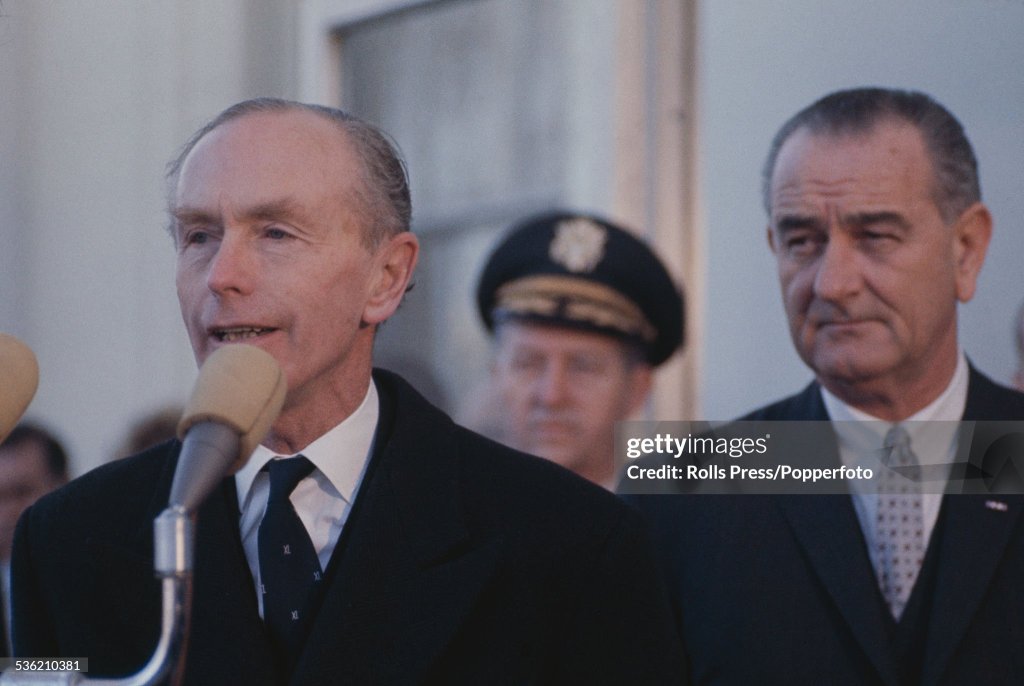
Efforts by Britain and the United States to win the agreement of Cyprus for their compromise peace proposals collapsed today. George W. Ball, the United States Under Secretary of State, flew to Ankara after Archbishop Makarios, the Cypriote President, rejected the Western proposals. Mr. Ball is also visiting Athens and London again, urging restraint by all concerned. A Greek Cypriote spokesman for the Government announced tonight that the two sides had “failed to reach a common ground.” The Cypriote Government will now take the issue to the United Nations Security Council.
It was announced that Glafkos Clerides, president of the House of Representatives, and Foreign Minister Spyros Kyprianou would leave for New York tomorrow night. The rest of the Government delegation will follow on Monday. The failure of the three days of talks increased the peril of renewed violence and of Turkish intervention on behalf of the Turkish Cypriote minority. The Western powers were “greatly concerned that there be no move by Athens and Ankara that could bring war on a much larger scale,” a diplomatic source said.
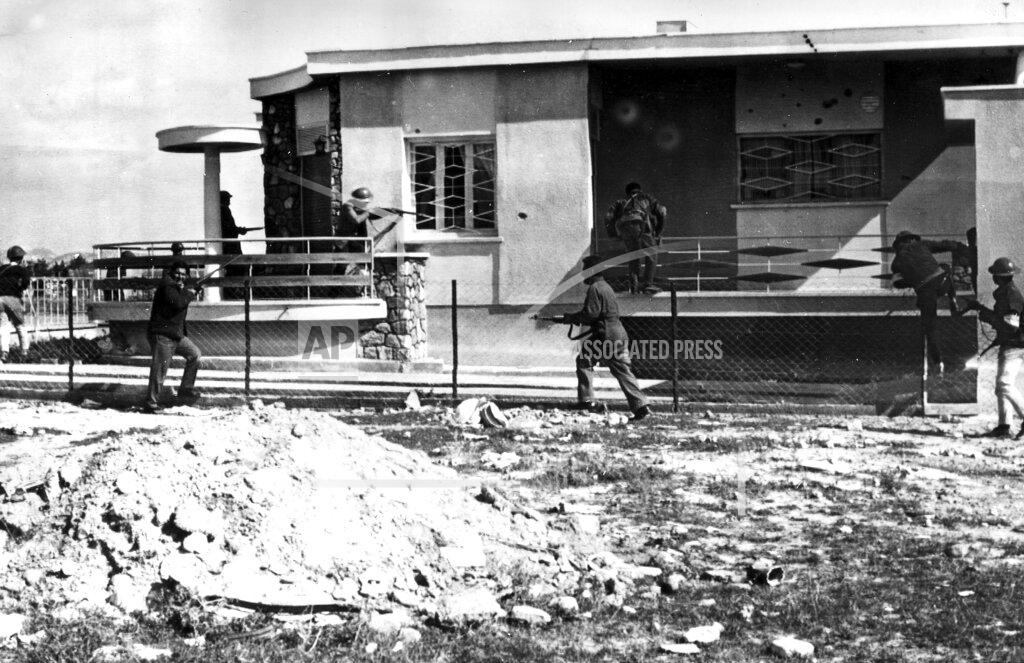
Greece and Turkey are allies in the North Atlantic Treaty Organization, and any move by Turkey to intervene in Cyprus might well bring a countermove by Greece and turn the conflict into a war. The island was still shocked by the savage fighting in the southern port of Limassol when it was reported on high authority that Archbishop Makarios had turned down the Western proposals. These called for an augmented international peacekeeping force and mediation. There were reports of renewed shooting in the cities of Paphos and Polis, with several persons killed. Diplomatic sources said the Greek and Turkish Governments would be asked to exercise restraint in the explosive situation. Dr. Fazil Kutchuk, Vice President of Cyprus and leader of the Turkish minority, asserted that Turkey had “the right and the obligation to intervene, not with the object of invading the island but to restore peace and order.”
Vietnamese authorities denied today an accusation by Prince Norodom Sihanouk of Cambodia that Vietnamese Air Force planes had crossed the frontier and bombed a Cambodian village. The Vietnam Press Agency reported that authoritative sources had expressed a willingness to join a joint commission to establish the facts of the incident. The sources said the Air Force did bomb a village near the frontier February 4, the day Prince Sihanouk charged that the border incursion took place. But the sources said the village was clearly inside Vietnamese territory. They identified the village as On Doc, about five miles south of the Cambodian border. The air force was said to have received reports of a concentration of Communist guerrillas in that area. Prince Sihanouk is reported to have accused the Vietnamese Air Force of having bombed Mong, a village about one and a half miles inside Cambodia.
Casualty figures from South Vietnam reflect the increasing involvement of the United States in this country’s guerrilla war against the Communist Viet Cong. So far this year the toll of American dead and wounded as a result of hostile action is almost as large as the total in 1961 and 1962, according to figures provided by the United States Military Assistance Command here. From January 1, 1961 to the end of December, 1962, a total of 21 Americans were killed in hostile action against the Viet Cong, while 80 were wounded. Non‐hostile actions killed 34, and 45 were injured. Thus far this year 12 Americans have died in hostile action, 87 have been wounded and two are missing. Five were killed in non‐hostile actions and four injured.
Pro‐Communist Laotian forces drove across southern Laos today, obliging the removal of American, French and Filipino civilians in the path of their advance toward the Thailand border. Thailand alerted her 90,000‐man army. A communiqué of the rightwing Laotian forces reported that Pathet Lao troops had seized a strategic hill overlooking Xiengkhouang in central Laos and had moved reinforcements into the town itself. The communiqué said the Communists drove to within a few miles of French-owned tin mines in the Khamkuet area to the south, necessitating the removal of wives and children of French employes there A neutralist military communiqué said about 2,800 townspeople had been removed from the Plaine des Jarres, where it said its forces were subjected to Communist artillery and automatic fire Sunday.
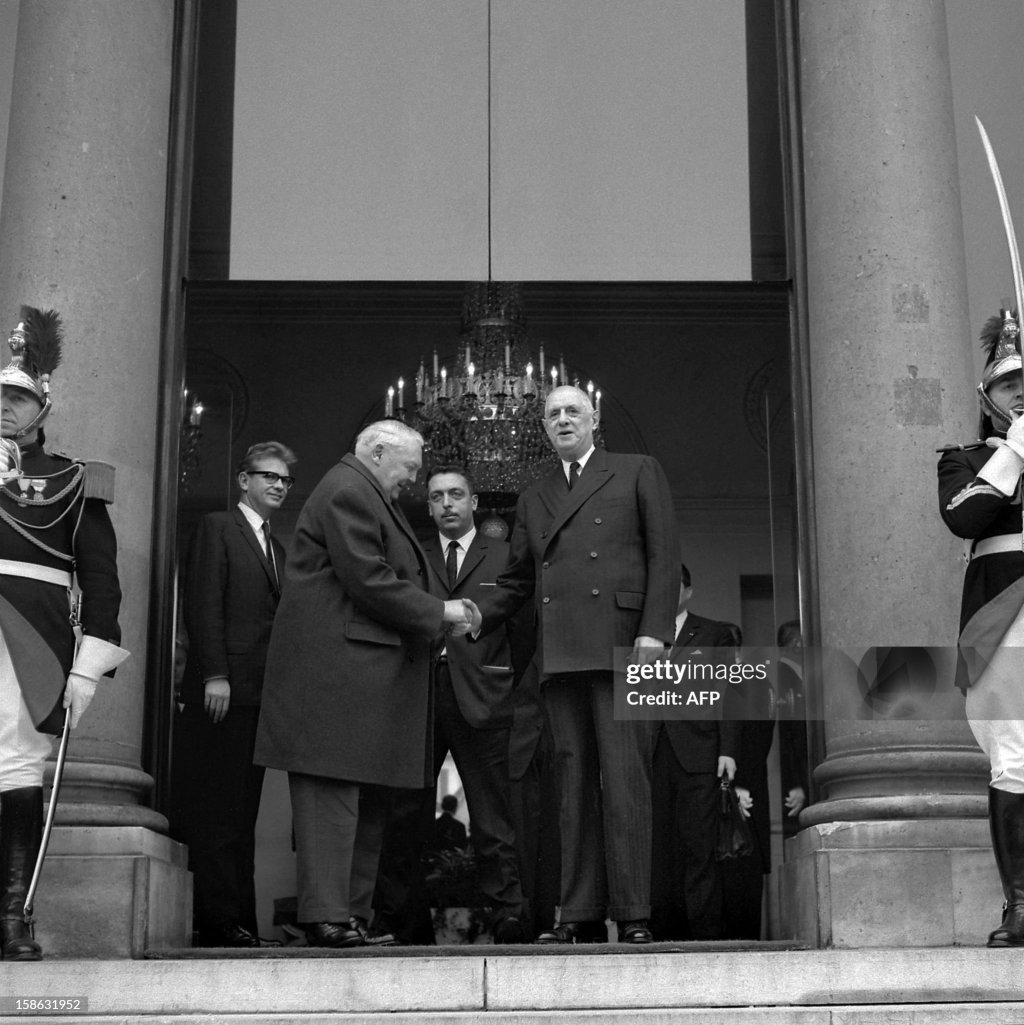
President de Gaulle and Chancellor Ludwig Erhard discussed today the controversial French policy of neutrality for the states that once made up French Indochina, qualified sources disclosed. The French President is understood to have explained to his German guest that his government advocated this policy for the states, North and South Vietnam, Laos and Cambodia, because neutrality appeared to be the only alternative to Communist subjugation. The Germans were believed to have welcomed General de Gaulle’s reassurances on his general Far Eastern policy. The two leaders conferred in private for two hours in the morning at Élysée Palace, the President’s official residence. Chancellor Erhard arrived earlier in the day for one of the regular meetings between French and West German Government leaders called for by the countries’ Treaty of Cooperation signed in January, 1963. Discussing his government’s recognition of Communist China recently, the President asserted that France sees the world as it is. This prompted questions in Bonn about how the general might view East Germany, whose Communist Government insists, like the Peking regime, that it is the legitimate government of its territory.
Premier Khrushchev pledged today that the Russians would try to restore the monolithic unity of the Communist camp. He vowed to continue the fight against “newly baked Trotskyites” who were making “high‐sounding phrases” about revolution and anti‐imperialism, while, in fact, they were undermining the Socialist camp with their “splitting activities.” Although the Premier did not mention the Chinese Communists by name, his statement was patently aimed at Peking. The terms “Trotskyites” and “splitters” have long been applied to the Chinese leaders in statements by Soviet officials and newspaper writers.
Premier Khrushchev made his statement in a wide‐ranging speech to the 350‐man Central Committee of the Soviet Communist party in the Kremlin. The Central Committee has been meeting since Monday in a special plenary session devoted to the problems of Soviet agriculture. The Premier spoke for several hours. A long summary of his speech was made public by Tass, the official press agency. Its tone was one of exuberant confidence. The Premier’s theme, to judge from the summary, amounted to a repeated warning to the West not to take the Soviet Union’s recent troubles in agriculture as a reason for underestimating its over‐all economic, political and military strength.
West Germany rejected today an East German offer of a temporary renewal of the agreement that enabled more than a million West Berliners to cross the Berlin Wall during the Christmas holidays. The rejection of the Communist Government’s offer was announced in a joint statement by the Government in Bonn and the Senate, or municipal government, of West Berlin. The statement, which preserved a common front in negotiations with the East German regime, was made after urgent consultations. The move was seen as an East German attempt to drive a wedge between Bonn and West Berlin.
The danger of such a split, which would also have meant a break in the common front on the pass issue between the governing Christian Democratic party and the opposition Social Democrats, became apparent after a Cabinet meeting Wednesday. At the meeting the Government decided to reject an East German offer that had been on the negotiating table for nearly a month. This proposed a simple renewal of the Christmas agreement for the period of the Easter and Whitsun holiday weeks, with the small bonus of special passes for West Berliners in “emergency” cases. Further extensions were also offered in principle. Mayor Willy Brandt of West Berlin had declared himself in favor of accepting the East German proposition in the expectation that an improved agreement could be achieved later.
The West German negotiator, Horst Korber, temporized in his bargaining session in East Berlin yesterday, pending a showdown meeting between Mayor Brandt and Chancellor Ludwig Erhard scheduled for early next week. Last night the East German regime made public the terms of its offer. The move was apparently intended to provoke an open break between Dr. Erhard and Mr. Brandt, who will be nominated by the Social Democratic party this weekend to campaign for the Chancellorship next year. The response on the Western side was to close ranks against the Communists, probably at the sacrifice of early agreement on new pass arrangements.
The joint statement by Bonn and West Berlin said the East German proposal was unacceptable, but stated Western readiness to negotiate further on the basis of it. The statement charged the East German regime with trying to make political capital out of the longings of families divided by the Berlin wall built by the East Germans in August, 1961. Three East German political demands are being resisted. They are: that East German postal officials establish permit stations in West Berlin, that the new agreement refer to East Berlin as “the capital of the German Democratic Republic” and that West Berliners be given privileges inferior to those of residents of West Germany.
In the United Kingdom, the Cambridgeshire and Isle of Ely Order was issued, proposing to create a new county by merging the areas of the administrative counties of Cambridgeshire and Isle of Ely (with minor boundary changes). The Order was subsequently approved by Parliament. The Huntingdon and Peterborough Order was created to fulfill a comparable function for the neighboring county of Huntingdonshire and for the Soke of Peterborough. Both orders would be passed despite considerable local opposition. In 1974, the two amalgamations of counties would be combined into incorporated into a single non-metropolitan county, preserving only the name of Cambridgeshire.
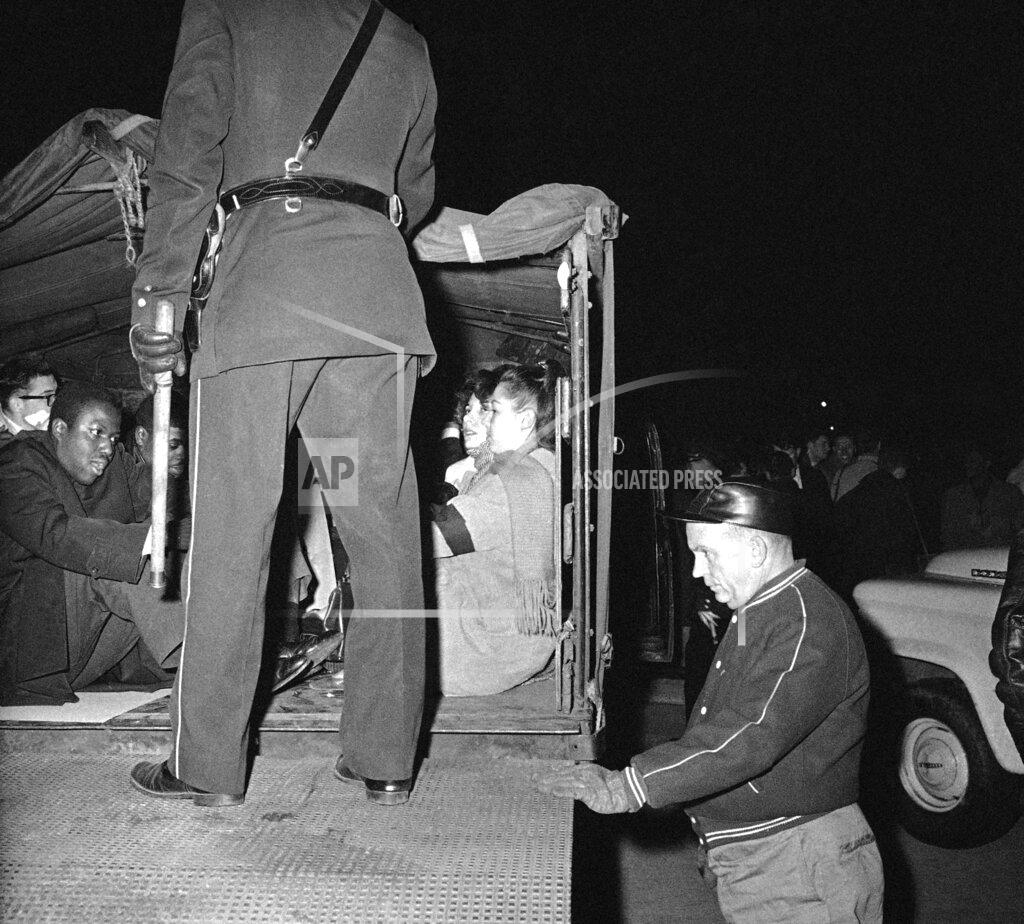
The police arrested 86 civil rights demonstrators tonight as they started a march toward the hotel where President Johnson was making a speech to open St. Louis’s 200th anniversary celebration. The demonstration, led by the St. Louis Committee on Racial Equality, was to point up racial unrest here, the group’s Midwest field representative, Eugene Tournour, said earlier. Many of the demonstrators arrested tonight were on probation from convictions of contempt of court growing out of earlier demonstrations.
About 40 officers, uniformed and in plainclothes, moved in and surrounded the group. The arrests went smoothly. With no resistance, the demonstrators were herded into police vans and trucks. There were about 100 in the group, but several fled as the police were rounding them up. The 86 arrested were taken to police headquarters and questioned, but were not booked. They were later released.
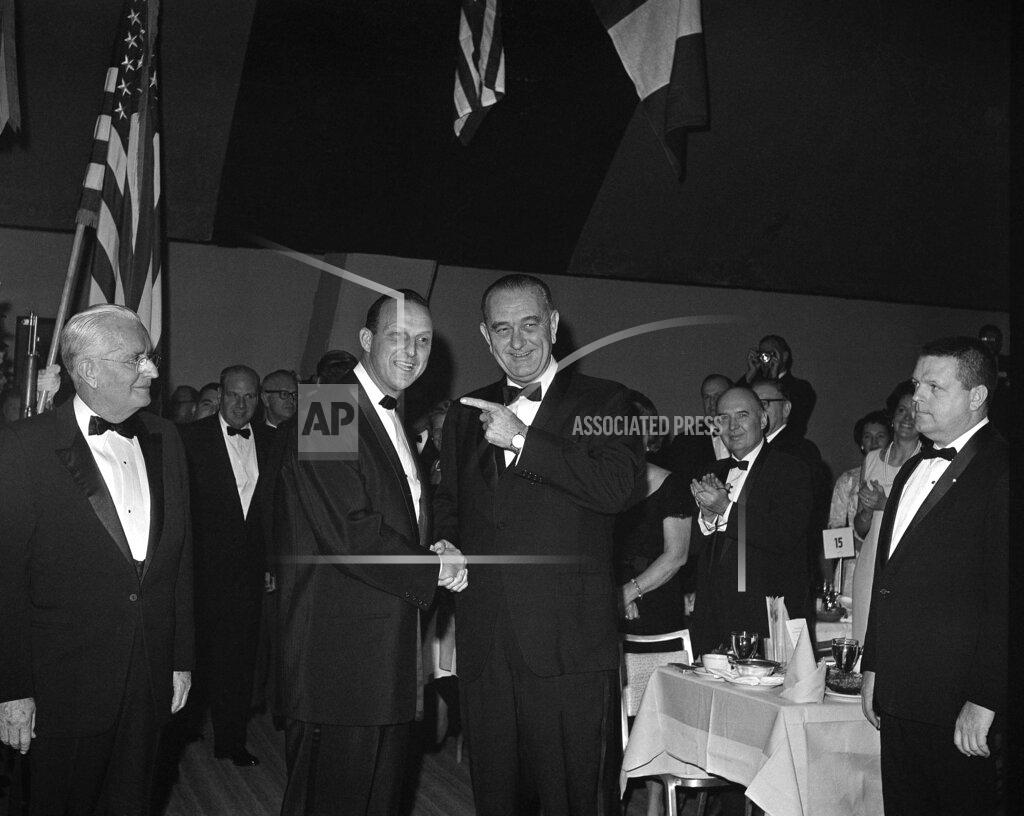
President Johnson said tonight that the task of building “healthier local communities” in the United States was closely related to the “larger task” of building a healthy and diverse world community. “We cannot secure the success of freedom around the world if it is not secure for all citizens in our cities,” he said in opening the observance of St. Louis’s 200th anniversary. “And no city in America can be certain of its safety until all the world is made safe for diversity.” Mr. Johnson, making his first appearance in the Midwest since becoming President last November 22, also opened a new counterattack on his critics, whom he described as “those who distort the truth to alarm the people either at home or abroad.” There was no need, he said, for “twisted arguments that would damage the good name of our country.”
Plans to rush President Johnson’s anti‐poverty message to Congress next week were abandoned today. There is no “deadline pressure,” the President assured the team of aides that has worked almost around the clock for 10 days to put the program together. The message outlining the President’s key domestic program of the year had originally been planned for delivery earlier this month. But the program became bogged down in differences among various Government departments. Seeking to unravel the tangle, the President on February 1 named Sargent Shriver, Director of the Peace Corps, as his special assistant in charge of organizing and directing the anti‐poverty program. A hard driver, President Johnson instructed that the program be put in shape quickly. President Johnson’s decision to ease the pressure on rushing the message to Congress was made at a one‐hour conference today with Mr. Shriver.
Judge Joe B. Brown has decided to begin Jack L. Ruby’s murder trial Monday in Dallas. However, he did not formally deny today a defense motion for a change of venue. He may still move the case to another county if he finds, during the examination of jurors, that Ruby cannot receive a fair trial here. He said the “true test of whether or not the defendant can obtain a fair trial rests upon the actual examination of jurors.” “I am withholding my ruling until the jurors have been examined,” he added. That process begins Monday at 9 A.M. Before the judge’s announcement, the results of encephalographic tests administered to Ruby last month were delivered to the court. Judge Brown declined to make the results public.
Representative Carl Vinson took the lead again today in a Congressional fight for a new manned bomber for the Air Force. Two years ago, the Georgia Democrat lost a similar campaign in behalf of the RS‐70 bomber. This time he apparently intends to make some progress and at least bow out fighting as he ends more than half a century of Congressional service. Mr. Vinson, who is 80 years old, has announced that he will retire at the close of the current session of Congress. He came to Washington as a Representative in 1912 when Woodrow Wilson had just entered the White House.
The stage was set today for Mr. Vinson’s last stand in a report by his committee calling for an immediate start on developing and producing a successor to the B‐52 and B‐58 bombers. The committee also called for a new manned interceptor. The report was issued in support of the $16,914.800,000 military authorization bill that the committee approved last Saturday. The bill provided less than the $17,185,300,000 the Administration requested, but it included $92 million extra for a manned bomber and an improved interceptor that the Administration did not request.
The committee report cited a statement by Secretary of Defense Robert S. McNamara that, while missiles would be most useful against Soviet targets, bombers would continue to be used in the follow-up attack. They would be used particularly against hardened missile sites and against the targets that need not be attacked immediately—for example, weapon‐storage sites. “The committee is constrained to ask what the plan will be should war not occur during the life of the B‐52 bombers and B‐58 bombers,” the report said. As to the need for an improved manned interceptor, the report said it was known that the Soviet Union had missiles that could be launched from bombers cruising beyond the range of antiaircraft defenses. The purpose of the interceptor would be to attack enemy bombers at a distance greater than the range at which their missiles would be effective.
The Government asked today to drop one of four charges of jury‐tampering against James R. Hoffa, president of the International Brotherhood of Teamsters, several hours after the prosecution had rested its case at his trial. A special prosecutor, James Neal, asked Federal District Judge Frank Wilson to direct of Mr. Hoffa on a charge that he had aided Lawrence Medlin, operator of a Nashville sandwich shop. Mr. Medlin is accused of having offered a $10,000 bribe to a juror in Mr. Hoffa’s 1962 conspiracy trial. That case ended in a mistrial after the jury had voted, 7 to 5, for acquittal and then failed to agree on a verdict.
A dynamite blast derailed 14 cars of the strike-plagued FIorida East Coast Railway tonight, exploding a tank car full of liquid petroleum and setting fire to the woods nearby. Authorities said one man in the caboose was injured, apparently when he jumped from the train. He was taken to Fish Memorial Hospital for treatment of minor injuries. W. L. Thornton, vice president of the railway, said the explosion was “attempted murder… obvious sabotage.” Union officials said they deplored the incident. “I don’t believe that the unions had anything to do with this incident,” said George E. Leighty, chief negotiator for the striking workers. “We have continually cautioned our people against violence. We are not interested in seeing the railroad damaged because we expect to have new contracts with them within the next few months and we would like to see a prosperous company at that time.”
The Studebaker Corporation, the independent auto maker that has stopped making cars in the United States, had a loss of $16,926,732 in 1963, it was announced yesterday. This contrasted with earnings of $489,460, before a non‐recurring profit of $2,072,334, in 1962. Sales of Studebaker last year rose to $403,314,089 from $365,452,692. The company is continuing producing cars in its Hamilton, Ontario, plant in Canada.
The representative body for most of the nation’s high schools began yesterday a campaign to protect “legally and ethically the United States scholastic program from possible destruction by the National Football League.” Clifford B. Fagan, the executive secretary of the National Federation of State High School Athletic Associations, said in Chicago that he had written to the NFL commissioner, Pete Rozelle, protesting plans for the televising of five Friday night league games next fall. Fagan said that a copy of the protest had been sent to Senator Philip A. Hart, Democrat of Michigan, who is chairman of the Senate Antitrust and Monopoly Subcommittee. “We have also reached other Senators and Congressmen,” said Fagan. “Our association will be in touch with more next week.” Fagan noted that 86 per cent of all scholastic football in the United States was played Friday nights. “Plans to televise N.F.L. games at the same time would detract from attendance,” he said.
British pop music duo Peter & Gordon release single “A World Without Love” (written by Paul McCartney, credited to Lennon-McCartney).
Dow Jones Industrial Average: 794.56 (+0.14).
Born:
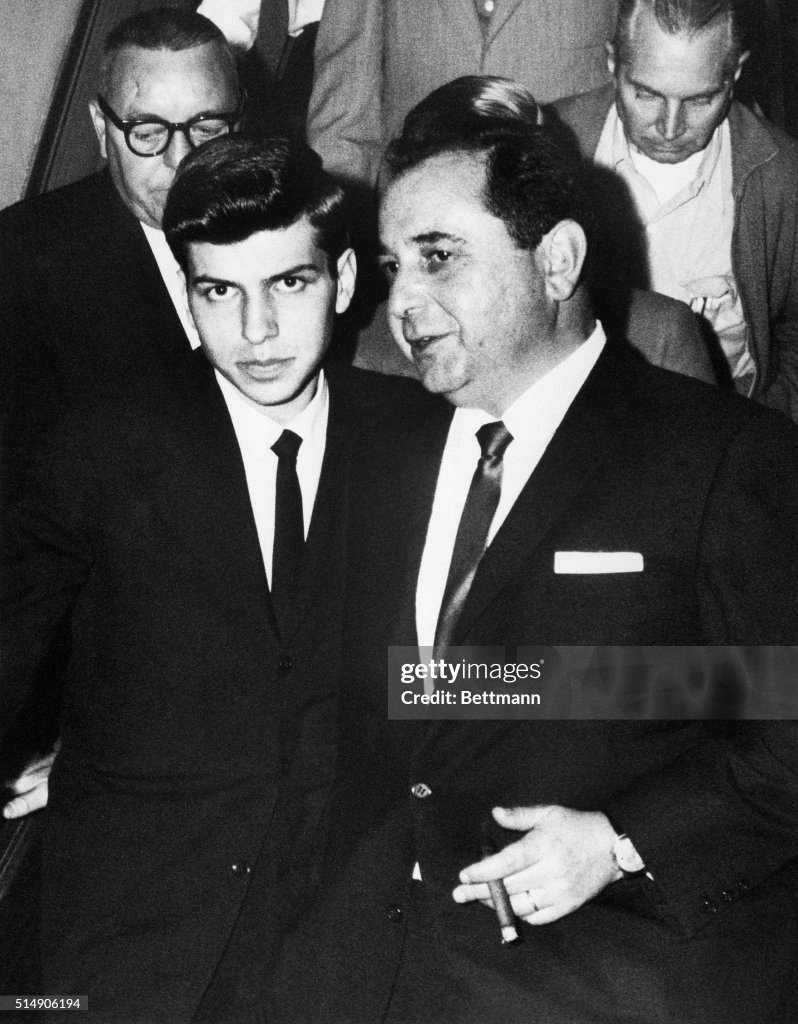
John A. Gotti, American organized crime boss who succeeded to control of the Gambino crime family in 1992 after the imprisonment of his father, John J. Gotti; in Queens, New York, New York.
Darrick Brilz, American NFL center and guard (NFL Champions, Super Bowl 22-Redskins, 1987; Washington Redskins, San Diego Chargers, Seattle Seahawks, Cincinnati Bengals), in Richmond, California.
Trent Baalke, NFL general manager (San Francisco 49ers, Jacksonville Jaguars), in Rosendale, Wisconsin.
Keith Brown, MLB pitcher (Cincinnati Reds), in Flagstaff, Arizona.
Bill McGuire, MLB catcher (Seattle Mariners), in Omaha, Nebraska.

 History Diaries