Greek Cypriot and Turkish Cypriot residents begin fighting in Limassol, Cyprus. Within two days, fifty people were killed.
R. A. Butler, the British Foreign Secretary, outlined today to the Secretary General, U Thant, a plan to provide a “link” between the Security Council and the proposed international peace‐keeping force for Cyprus. A British source said the two men had agreed that nothing further could be done until Archbishop Makarios, President of Cyprus, had given his answer. The plan is to be presented to the archbishop tomorrow by George W. Ball, United States Under Secretary of State, who discussed it in Ankara today with Turkish officials after talks in Athens yesterday with Greek officials. According to the British source, Mr. Thant and Mr. Butler also discussed possible developments in the event that Archbishop Makarios rejected the plan. There is a growing belief here that the archbishop will turn it down, demand a Security Council meeting next week and come to New York to present Cyprus’s case for a force under Council control.
President Johnson and the British Prime Minister, Sir Alec Douglas‐Home, will begin two days of conversations here tomorrow. The broad objectives in the Western alliance and in dealing with the Communist world are supposed to dominate the conversations, which are part of a regular exchange of views. As usual, however, the crises of the moment will intrude.
Cyprus now leads the list. The two heads of government will be awaiting word about the willingness of Archbishop Makarios, President of Cyprus, to accept their repeatedly modified plan to keep peace between the Greek and Turkish communities with an international force. The Greek Cypriotes are holding out for United Nations control of the force.
Mr. Johnson and Sir Alec, with Secretary of State Dean Rusk and the British Foreign Secretary, R. A. Butler, must decide whether they will take the issue to the United Nations Security Council. They fear a Soviet role in the situation, but the possibility of new violence on the island and of intervention by Turkey and Greece has persuaded both Governments that they must do something.
The Republic of China (Taiwan) broke off diplomatic relations with France because of French recognition of the People’s Republic of China. President de Gaulle gave the Chinese Nationalist Government no choice but to sever relations with France, an authoritative source said today. Although they had formulated a course of action, the Nationalists were said to have held out some hope that General de Gaulle would not bring on a showdown with Taipei and that Peking eventually would turn its back on the French.
Prince Norodom Sihanouk pressed his demands today for an international conference on Cambodia’s neutrality after taxing the United States with responsibility for the bombing of a Cambodian village by South Vietnamese planes. The Cambodian chief of state also demanded that the United States finance the establishment of posts along the Cambodian‐South Vietnamese border by the International Control Commission, the truce observation group set up by the 1954 Geneva conference on Indochina. Prince Sihanouk’s charges and demands raised the possibility of another major dispute with Washington.
His messages were sent following an alleged bombing of the Cambodian village of Muong by South Vietnamese planes. The attack resulted in the death of five Cambodians and the wounding of six others, the prince said. He urged the immediate convening of a neutrality conference as a means of preventing such raids and charged that the United States bore a measure of responsibility for “overarming” South Vietnam. The United States has been reluctant to participate in the proposed conference on the ground that questions could be raised that would embarrass Thailand and challenge the United States military support of South Vietnam’s fight against Communist guerrillas.
The conference has become a primary objective of Prince Sihanouk’s foreign policy. Observers here are convinced that if there are delays in convening it, the United States could expect new strains in its relations with Cambodia. The prince’s demand for truce posts along the border with South Vietnam was made in telegrams sent over the weekend to the United States, Britain and the Soviet Union. If the United States refuses to agree to his requests Cambodia cannot remain “passive,” the prince said in his telegrams. “We would be compelled to modify our neutrality status and would have to consider assistance pacts with certain great friendly countries,” he added.
In a continuation of the communist guerrilla campaign against Americans in Saigon, South Vietnam, a grenade explodes in front of a United States Air Force captain’s home. The blast smashes a fence and windows but no one in the house is injured. American officials unearth three mines in a softball stadium, where Viet Cong bombs Sunday destroyed a bleacher section, killing two Americans and injuring 23 others.
The Communist guerrillas in South Vietnam have welcomed what they term the “sympathy shown by many governments, personalities, and mass organizations in various countries for the realization of peace and neutrality in South Vietnam.” A statement issued by the National Liberation Front, the political arm of the Viet Cong guerrillas, said: “In the present conditions it is exceedingly urgent to hold a meeting of representatives of forces struggling for peace and neutrality in South Vietnam.” The advocacy by President de Gaulle of a neutral role for Vietnam was said to be “worthy of note.”
The statement, broadcast by the Hanoi radio in Communist North Vietnam said the front highly valued “all efforts to realize real neutrality in South Vietnam.” It charged that the United States was the “only obstacle to the stabilization of South Vietnam and to the end of the bloodshed there.” It proposed a “minimum program of action” calling for the withdrawal of all United States troops, weapons and equipment from South Vietnam and for negotiations among all parties and forces “in the spirit of placing national interests above all.”
Premier Victor G. M. Marijnen told the lower house of the Dutch Parliament tonight that Princess Irene and Prince Carlos Hugo of Bourbon‐Parma would marry in the Netherlands. The place and the date, he said, have not yet been decided. The Premier’s announcement came in reply to legislators who had expressed fears that if the marriage were held in Madrid, the Carlist movement in Spain, which supports the claims of Prince Carlos to the Spanish throne, might make capital of it by staging demonstrations.
The Nagaland Legislative Assembly, the unicameral state legislature for India’s 15th and newest state, met for the first time with 46 representatives.
President Johnson said today that his foreign crises were not nearly so bad as President Kennedy’s or Premier Khrushchev’s, and he urged the country to ignore the “alarmists.” Foreign policy can be frustrating as well as exciting, the President said, and frustrations, he added, encourage people “who like to jump on their government” with criticism that is not constructive. He said such people were aligning themselves with the nation’s enemies and causing almost as much trouble as “other enemies.” “But that is no reason for us to lose hope or to be concerned,” he added. “The best way to treat them is to just ‘God forgive them, for they know not what they do.’”
Mr. Johnson’s plea that politics should stop at the water’s edge was made to a group of tax collectors for whom he summarized his philosophy of government, his feelings about a series of foreign‐policy problems, his high regard for public servants — especially Secretary of the Treasury Douglas Dillon — and his strong views on economy and civil rights.
President Johnson tells the tax collectors from 50 states that things are tough all over. The tax officials, called in for their annual conference, assemble at the White House to have their pictures taken with the President. Johnson delivers a 25-minute, off-the-cuff recital of domestic and world affairs, ranging from the necessity of turning off the lights to the problem of Vietnam.
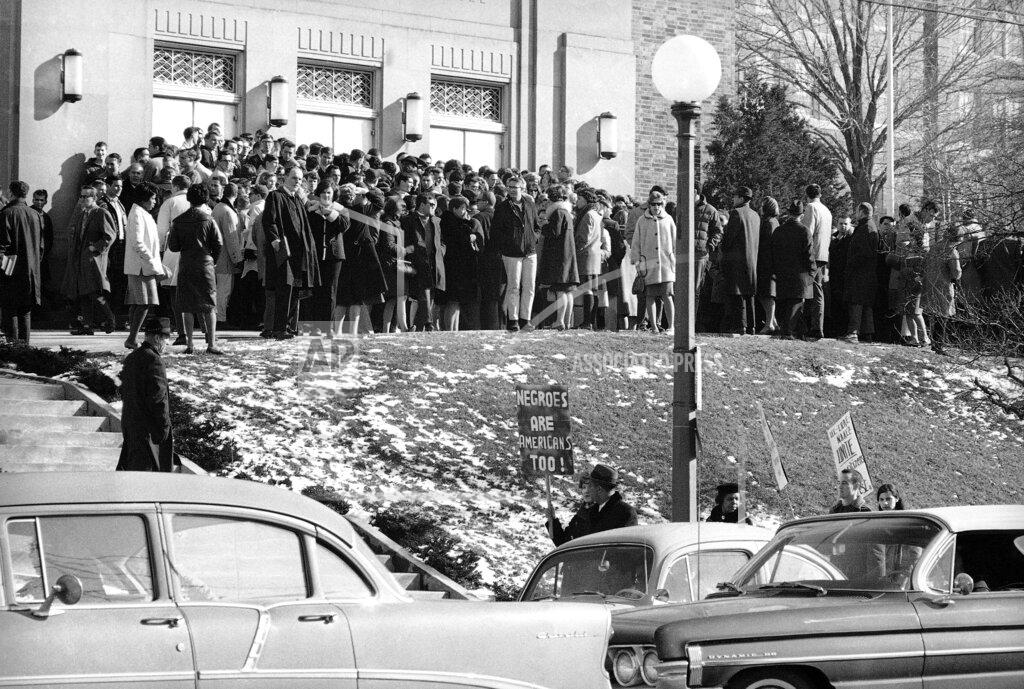
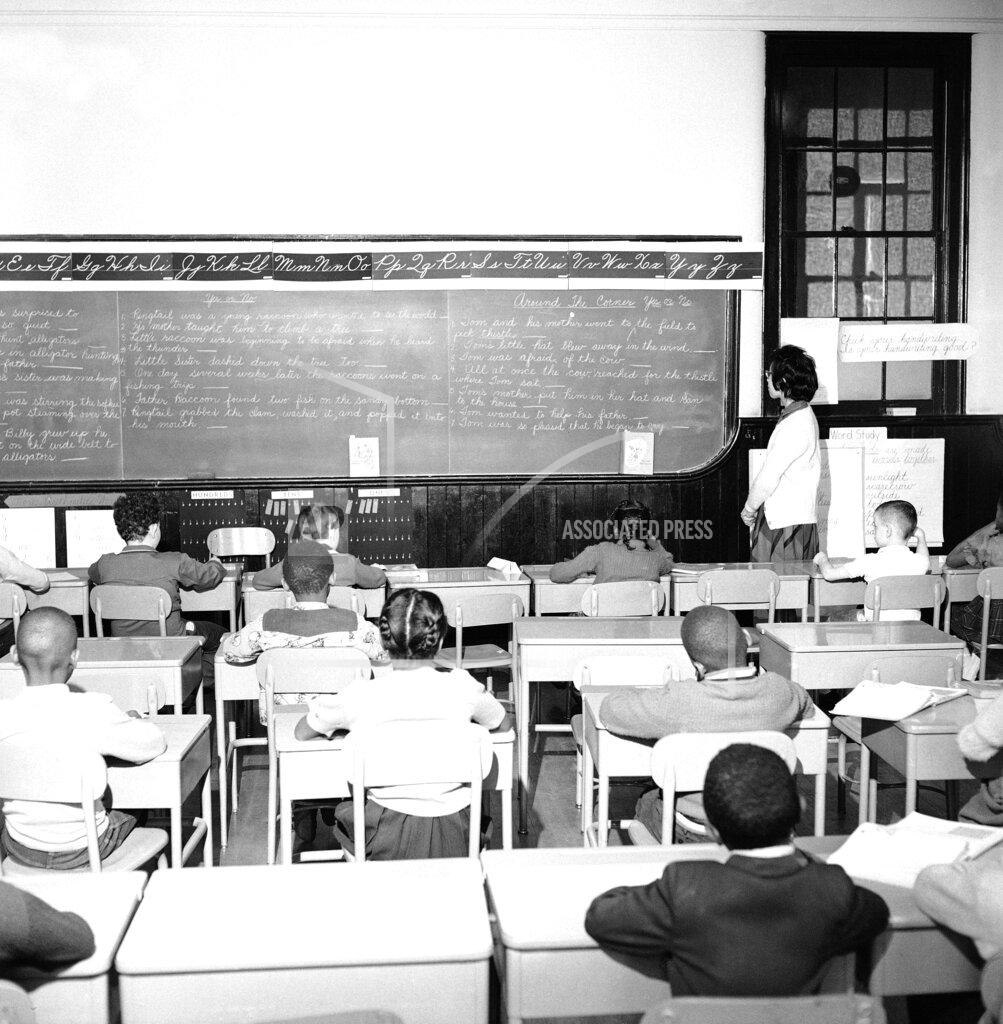
Public school boycotts promoted by integrationists are staged in Cincinnati and Cambridge, Maryland, but school authorities minimize their effectiveness. In Cincinnati, 80 percent of the pupils in the city’s predominantly Black schools stay out of class, but the city’s overall absenteeism rate is only 35 percent, compared with a normal 10 to 12 percent. In Cambridge, nearly 1,000 Black pupils — about 40 percent of the enrollment — stay away, but school officials blame a heavy snowstorm for most of the absenteeism and send all pupils home at 1 p.m. because of the snowfall.
President Johnson signed a bill today providing funds for a new mental‐health program and emergency financing for three existing programs. The bill provides $41.8 million to help start the building of community mental‐health centers and the training of special teachers for mentally retarded children.
Witnesses summoned by the defense — president of the Neiman-Marcus store, a former mayor, and a number of lawyers — testify there is so much resentment in Dallas that Jack Ruby cannot get a fair trial on charges of murdering Lee Harvey Oswald, assassin of President Kennedy. A Methodist minister, who disclosed that some Dallas school children cheered on learning the President had been shot, dissents.
The president of the American Medical Association said today that President Johnson’s health message to Congress was a “remarkable document of inconsistency and misinformation.”
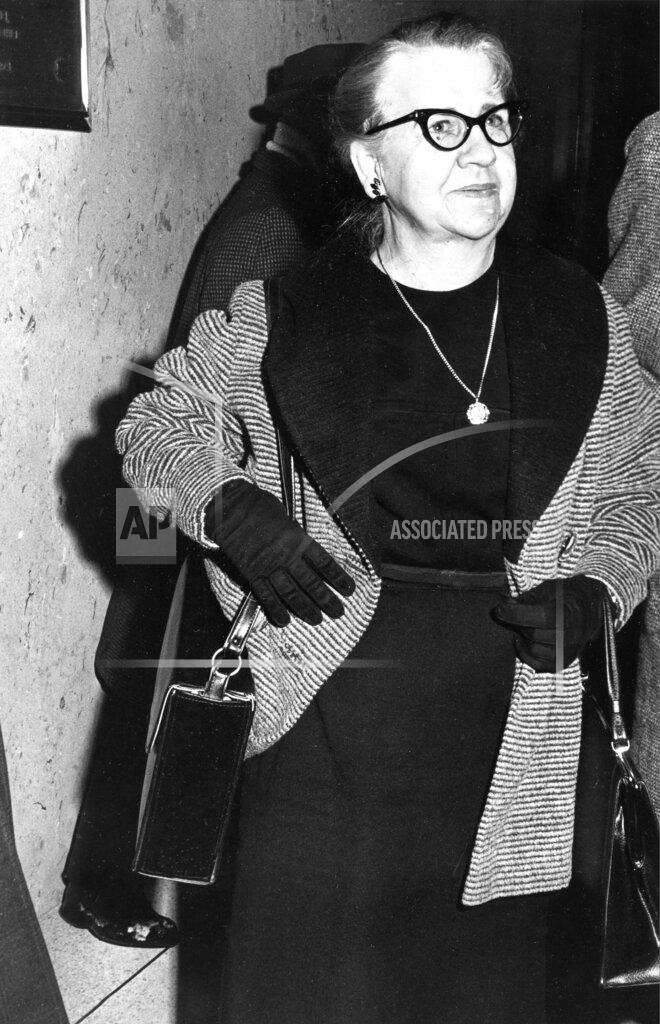
Counsel for three charged with kidnapping Frank Sinatra Jr. brand the whole affair a hoax, designed to gain publicity for the young entertainer. In opening defense statements, the federal District court in Los Angeles is informed the singer’s actions “were suspect of chicanery from start to finish.” A woman lawyer offers numerous instances when young Sinatra could have called for help, but elected to play out what she terms the whole “planned contractual agreement.”
A comparison of state tobacco tax collections shows Americans are smoking fewer cigarettes than a month ago. South Dakota reports a 24 per cent drop in cigarette tax collections despite a 20 per cent increase in the tax rate. Vermont reports January sales drop nearly one million packs below sales in December, 1963. California’s budget is based on each smoker cutting back his consumption of four packs.
A murder warrant is issued for an Iowa stepfather after a gunman chases a high school girl down an icy Des Moines street and shoots her to death as she walks toward school. The shooting victim, Diane Linn McConnell, 16, was a drummer in her school band, had been chosen a member of the all-city band, and was preparing to become a nurse.
Simultaneous production of the Kennedy half dollar began at 11:00 a.m. Eastern Time at the Philadelphia and Denver branches of the United States Mint. The coins, made in honor of the late President John F. Kennedy, would go into circulation on March 24 and would replace the previous 50 cent coins that bore the likeness of Benjamin Franklin.
At 12:05 in the morning, Herb Jepko began the first call-in radio show. Jepko, daytime host at KSL-AM, a 50,000-watt clear-channel station in Salt Lake City, Utah, had persuaded the station’s management to allow him to fill the early morning hours for a six-week trial. For the first time, listeners could call in and their telephone conversations could be heard on the radio. The show, originally called “The Other Side of the Day” and eventually renamed “Nitecaps”, would quickly become a success. By January 1968, it would be broadcast by other stations and on November 4, 1975, would become the first radio call-in show to be broadcast nationally (as part of the Mutual Broadcasting System).
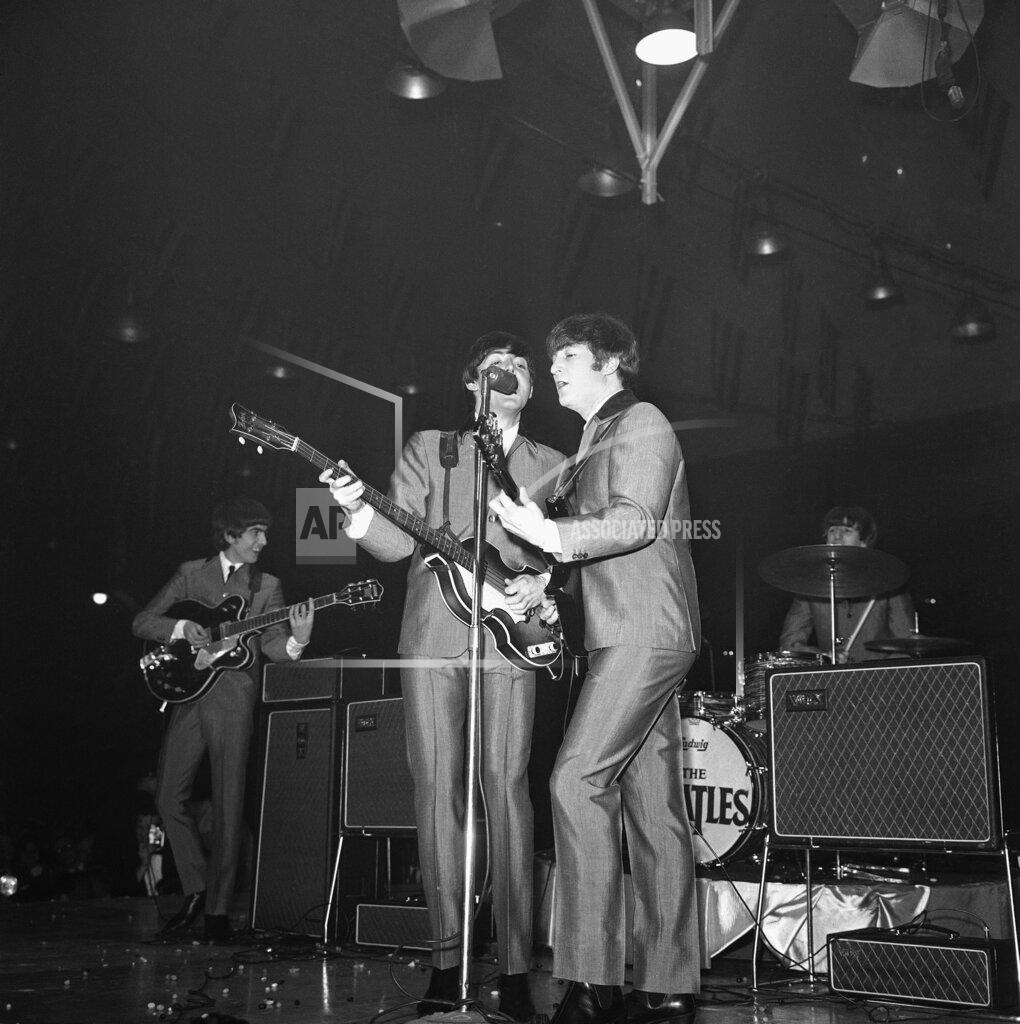
The Beatles held their first American concert, appearing at Washington, D.C. before 8,000 screaming fans at the Washington Coliseum. The crowd of “youngsters, mostly girls”, showed their appreciation by throwing jelly beans on the stage.
Dow Jones Industrial Average: 792.16 (+3.45).
Born:
Sarah Palin [as Sarah Louise Heath], American politician who served as Republican Governor of Alaska and who ran for Vice President of the United States in 2008; in Sandpoint, Idaho.
Ville Sirén, Finnish National Team and NHL defenseman (Olympics, 1984, 1992; Pittsburgh Penguins, Minnesota North Stars), in Tampere, Finland.


 History Diaries