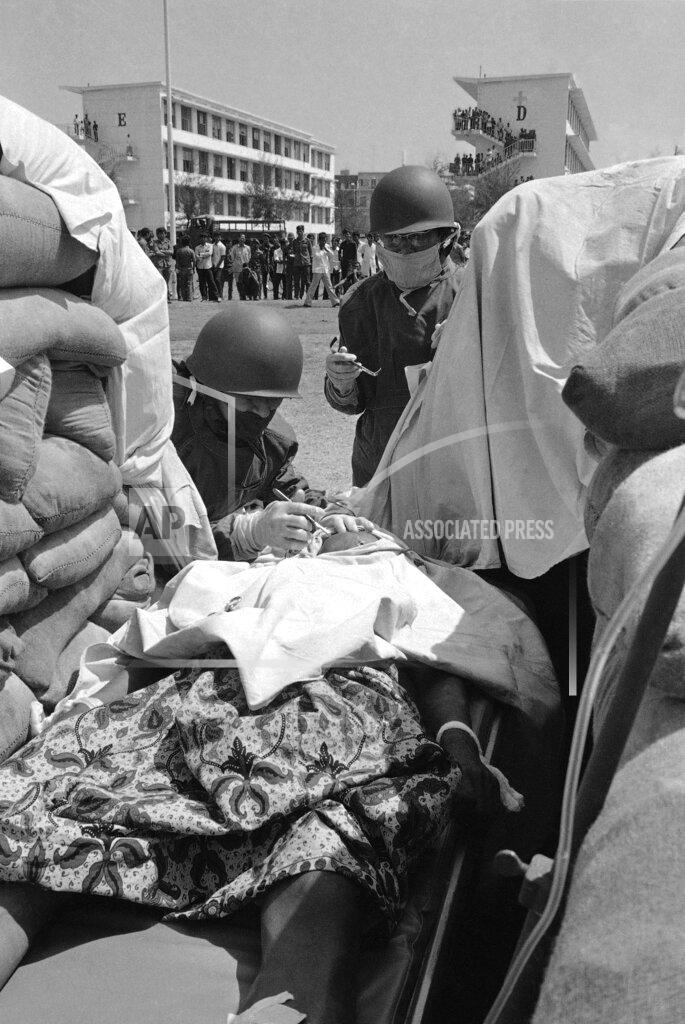
Khmer Rouge guerrillas in Cambodia fired a heavy barrage of 105-mm howitzer shells and 122-mm rockets on the capital, Phnom Penh, killing 139 residents and wounding 300 others, as well as destroying 1,200 homes. Most of the victims were in the crowded Sa Deoum Ko marketplace in the southwestern part of the city. Government estimates put the number of dead at 139 and the wounded at 46, but this toll is expected to increase. Workers this morning were digging bodies out of the rubble. The carnage surpasses what until now had been the bloodiest attack of the war on Phnom Penh’s civilian population — a rocket barrage in March, 1972, in which 112 persons were killed.
Yesterday’s shelling, which came after an eight‐day lull, struck somewhat deeper into the city than did the six previous artillery attacks in the current dry‐season offensive, and it came at a busy daylight hour whereas most of the earlier bombardments had come at night. But it had one thing in common with the earlier raids —there were virtually no military targets in the area, only civilians going about their daily affairs. Although some of the shells fell around the Presidential palace—sending the personnel of the nearby American Embassy into their heavily bunkered lobby in a hurry — the most devastating barrage landed on the densely populated neighborhood of Sa Deoum Ko in the southwestern section of the city. The barrage — the Government said 73 shells fell in all—started at 3 P.M. and lasted only half an hour, but the damage was extreme.
Within five minutes, the closely packed Sa Deoum Ko area was turned into a firestorm, as the flames, swept by a brisk wind, leaped from wooden house to wooden house until an area perhaps one‐quarter‐mile square was completely ablaze. The fire burned and smoldered all night. Thousands of people were made homeless, presenting the Government with a grave problem of finding shelter and food for them. Immediately after the shells struck, hundreds of people were running in all directions — screaming, wailing and dragging their children and whatever belongings they could grab, including screeching pigs, away from the fire. On the shopping streets bounding the blazing neighborhood, bodies of men, women and children lay on the road, on the sidewalks and beside shattered stalls in a large open marketplace.
China was conspicuously unrepresented today as the North Vietnamese trade‐union federation opened its third congress with delegations from the Soviet Union and other Communist countries as well as non‐Communist countries in attendance. The Chinese decision not to attend appeared to have been unexpected as arrangements had been made for simultaneous translation of the proceedings into Chinese as well as other foreign languages. The absence of the Chinese was all the more noticeable because the Albanians, who like the Chinese boycott the Soviet-dominated World Federation of Trade Unions, had delegates on the platform.
The Islamic Republic of Libya announced that its government would nationalize Amoseas Petroleum Ltd., jointly operated by Texaco and Standard Oil of California, and the Libyan-American Oil Company, already 60 percent owned by the Libyan government.
The three-day Washington Energy Conference of oil-consuming nations began to discuss ways of combating the oil crisis. Thirteen oil-consuming nations are meeting in Washington to discuss the growing energy crisis. The conference has been marked by internal strife, as European countries and Japan are afraid to take any action likely to upset the oil-producing countries. Federal energy administrator William Simon criticized any bilateral agreements between an oil-consuming nation and the Arab producers. The European Common Market defended the bilateral agreements, and France’s representative Michel Jobert sharply attacked the conference.
The OPEC nations reacted negatively to the conference. The organization’s Secretary General warned of a confrontation if consuming nations set up a united front. The Shah of Iran also warned consuming countries against taking any concerted action.
Guerrilla gunmen fired from a parked car into a group of workers arriving at a meat-packing plant in Belfast, killing a 16-year-old youth and wounding four other persons, police reported. Meanwhile, the Irish Republic announced the arrest of a former guerrilla leader, Martin McGuinness, in the Donegal border town of Buncrana. McGuinness was head of the Provisional wing of the Irish Republican Army in Londonderry.
Britain’s striking coal miners began their second day on the picket line; the strike seems to be successful so far. Prime Minister Edward Heath believes that the strikers must realize problems the strike is causing and accept responsibility for them. Labor party leader Harold Wilson stated that Heath is using the strike to cover up the fact that his policies have failed.
The miners say that money is the most important issue to them, not which party wins the upcoming election. However, British locomotive engineers are calling off their work slowdown in order to help the Labor party win the election.
A leading British architect, John Poulson, and a former undersecretary in the government’s Scottish office, George Pottinger, were both sentenced to five years in jail on 13 charges of corruption. A jury in Leeds found Poulson guilty of buying favors from Pottinger for gifts and money totaling $66,000. Both men had pleaded not guilty, claiming the gifts were between friends. The scandal brought the resignation of Dep. Prime Minister Reginald Maulding in 1972.
A Glasgow, Scotland, man, convicted in Leningrad of causing a fire that killed two women last November, was sentenced to two years in a Russian labor camp. Alexander Paton, a bar manager who was a tourist in the Soviet Union, was found guilty of negligently causing the blaze in a Leningrad hotel when he dropped a match or a cigarette.
Soviet troops and police broke up demonstrations by two groups of citizens of German origin protesting the refusal of authorities to allow them to emigrate to West Germany. They detained two U.S. newsmen covering the incident and seized their film. In New York, United Press International said its two correspondents, Ray Moseley and Christopher Ogden, were doing their legitimate jobs of covering news and that the wire service protested their detention and the seizure of their film.
French President Georges Pompidou returned to work after an illness-caused absence that had renewed speculation that he might resign. A medical bulletin issued last week said that Pompidou, 62, had been ordered to bed because of influenza and fever. On his first day back at work after missing five, the president received Premier Pierre Messmer at the Elysee Palace.
A Mexican official kidnapped two weeks ago was freed unharmed in Acapulco and said a $240,000 ransom was paid for his release. Vicente Rueda Saucedo, an alternate congressman and mayor of Acapulco, was kidnaped Jan. 29 by the leftist Revolutionary Armed Forces. The kidnappers said they would kill him unless the ransom was paid, 45 peasants were freed from jail and newspapers published a guerrilla communique urging socialist revolution in Mexico. The government refused to comply with the latter two demands.
Electrical and telephone workers on St. George’s, Grenada — defying a threat of dismissal and prosecution — voted to remain out in a general strike that started 43 days ago. The walkout is intended to force the resignation of Prime Minister Eric Gairy, who has been accused of tolerating police brutality directed against his political enemies. The threat of dismissal and prosecution against the workers, members of the Technical and Allied Workers Union, came from the prime minister. The vote to remain on strike was 106 to 91.
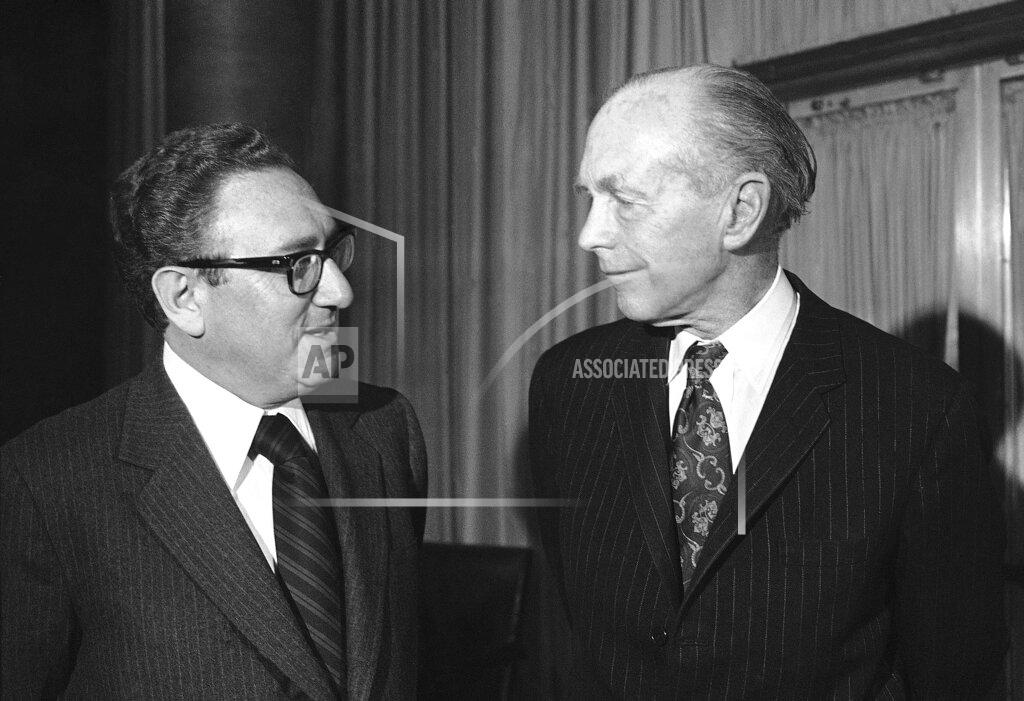
U.S. Secretary of State Henry Kissinger unveils Nixon Administration’s seven-point “Project Independence” plan to make the U.S. energy independent
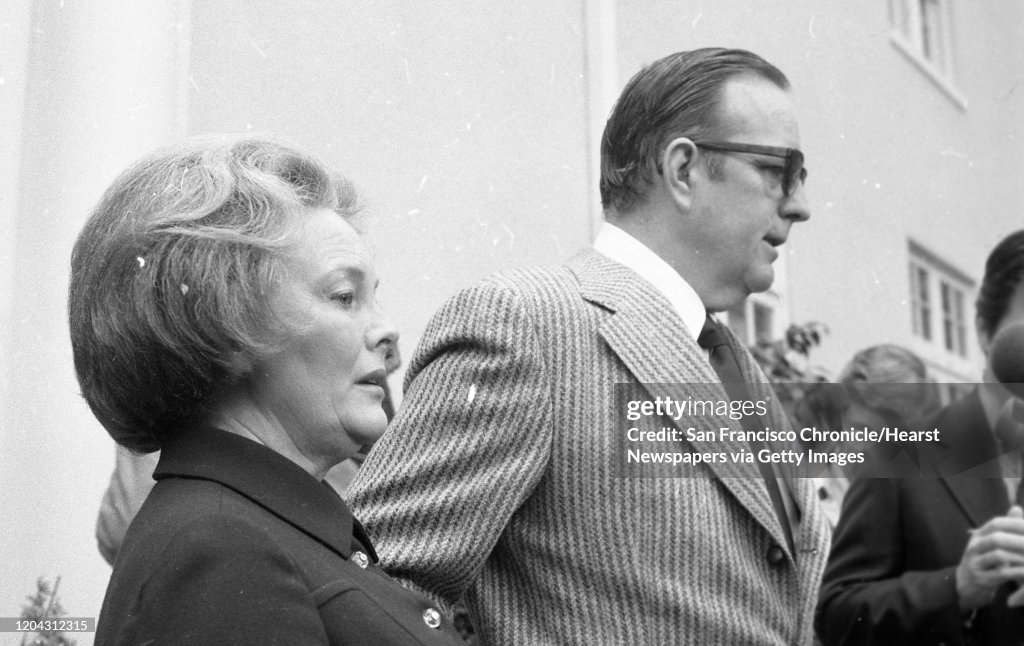
Patricia Hearst has now been kidnapped for one week. Her father, Randolph Hearst, says he has received no word about Patricia’s whereabouts, but he expects a letter from the kidnappers. A radio station in Berkeley received a letter earlier this week.
Southern Californians are fearful because of the unexplainable violent acts occurring near San Francisco. Handgun sales have increased as fear has increased. Miss Hearst’s neighbors are even more wary, and industrialists are fearful also because many of them are on the Symbionese Liberation Army’s “enemies list”.
Many more independent truckers returned to the highways today; truck traffic was nearly back to normal. Truck traffic was heavy in Florida despite some independents’ decision to reject the settlement and remain on strike. Meat packing houses and stockyards are back in business now with most truckers back at work, but meat prices are likely to skyrocket.
Federal grand juries in 20 major cities are investigating a multi-million-dollar federal housing fraud. The inquiries are expected to lead to the indictment of dozens of Federal Housing Administration employees, bank and mortgage firm officials, contractors and real estate agents, government sources said. Attorney General William B. Saxbe declined to discuss specifics but he said the investigation was being coordinated by a task force in the Justice Department’s criminal division and indictments could be expected “in the near future.” Included in the 20 cities were Los Angeles and San Francisco.
The Food and Drug Administration announced it is delaying plans to triple the amount of iron in bread and flour so the agency can hold a hearing on the issue. The effective date was changed from April 1, 1974, to January 1, 1975. The baking industry has proposed the move in response to dietary studies showing that some Americans, particularly women, do not get enough iron. The increase has been opposed by doctors who fear the additional iron would harm people with certain blood diseases, and contribute to iron storage disorders and liver trouble associated with excessive drinking.
Charging violations of First Amendment rights, the Reporters Committee for Freedom of the Press said it would sue the American Telephone & Telegraph Co. for secretly turning over newsmen’s phone records to law enforcement officials. The Washington-based group said it would seek court orders requiring notification whenever such records are demanded by government agencies. AT&T disclosed that records of at least four news organizations and five journalists were secretly subpoenaed in recent years.
Alice Roosevelt Longworth, the irrepressible combination of grande dame and enfant terrible, will celebrate what she calls her “goddamn birthday” — her 90th — tomorrow in the house on Massachusetts Avenue in Washington where she has lived for nearly 50 years. Her home is perhaps the only one in the city where President Nixon and his most caustic critics could — and at the birthday party may again — meet under the same roof.
The energy shortage is affecting Florida tourism, which has dropped sharply because it depends on gasoline. Unemployment has risen because of the drop in tourism, and an overly optimistic building spree combined with the energy crisis has caused two out of every three hotel rooms in Orlando to currently be vacant.
Chicago Mayor Richard J. Daley named James M. Rochford, 52, a 26-year veteran, to be the new police superintendent. Sources said the mayor was hoping that Rochford’s appointment — he has been acting superintendent since the resignation last October of James M. Conlisk Jr. — would clear up the controversy that has engulfed the department the last several years. Scandal after scandal has rocked the department in the wake of a continuing federal prosecution of policemen in connection with shakedowns of tavern owners, as well as charges of brutality and racism in the hiring of blacks and Latin Americans.
The first Titan IIIE rocket launched from Cape Canaveral was destroyed by the range safety officer 748 seconds after liftoff due to engine failure. The pieces of the $20,500,000 rocket fell into the Atlantic Ocean 2,200 miles (3,500 km) down range after the destruct order was carried out. Destroyed along with the rocket was its payload, the SPHINX (Space Plasma High Voltage Interaction Experiment) satellite and the supporting Viking Dynamic Simulator. A Titan Centaur spacecraft designed as a workhorse for future trips to Mars was blown up in space when an engine failed to start and the $20.5 million rocket started dropping into the Atlantic. Space agency officials said pieces of the rocket fell into the ocean about 2,200 miles downrange. The launch had been flawless. Officials said preliminary data indicated that a faulty pump failed to supply enough oxygen to the engine and caused the failure. Six missions had been planned for the new Titan Centaur combination after this initial seven-hour orbital “proof flight.”
Forty-eight Major League players invoke the new arbitration procedure established to settle contract differences. The first is pitcher Dick Woodson (seeking a contract for $29,000) and his team, the Twins (offering $23,000), who present their respective cases to Detroit lawyer and labor arbitrator Harry H. Platt, who must decide on one of the monetary amounts presented. Woodson wins.
Dow Jones Industrial Average: 803.90 (-16.50, -2.01%).
Born:
Alex Jones, American conservative talk radio host (“InfoWars”), conspiracy theorist, author and filmmaker, known for having a defamation lawsuit judgment against him for $1.4 billion in Lafferty v. Jones; in Dallas, Texas.
D’Angelo (stage name for Michael Eugene Archer), American singer and songwriter, 4-time Grammy Award winner; in Richmond, Virginia.
Jaroslav Špaček, Czech National Team and NHL defenseman (Olympics-Czech, gold medal, 1998, bronze, 2006; Florida Panthers, Chicago Blackhawks, Columbus Blue Jackets, Edmonton Oilers, Buffalo Sabres, Montreal Canadiens, Carolina Hurricanes), in Rokycany, Czechoslovakia.
Pedrito de Portugal (born Pedro Alexander Roque Silva), Portuguese matador known for Portuguese-style bullfighting; in Lisbon, Portugal.
Trey Beamon, MLB pinch hitter and outfielder (Pittsburgh Pirates, San Diego Padres, Detroit Tigers), in Dallas, Texas.
Ronnie Ward, NFL linebacker (Miami Dolphins), in St. Louis, Missouri.
Wally Richardson, NFL quarterback (Baltimore Ravens), in Orangeburg, South Carolina.
Died:
Anna Q. Nilsson, 85, Swedish-born American silent film star (“Shenandoah”; “Uncle Tom’s Cabin”; “Toll Gate”; “Sorrell & Son”).
Ghantasala Venkateswararao, 51, popular Indian singer and film score composer, died of a sudden heart attack.




 History Diaries