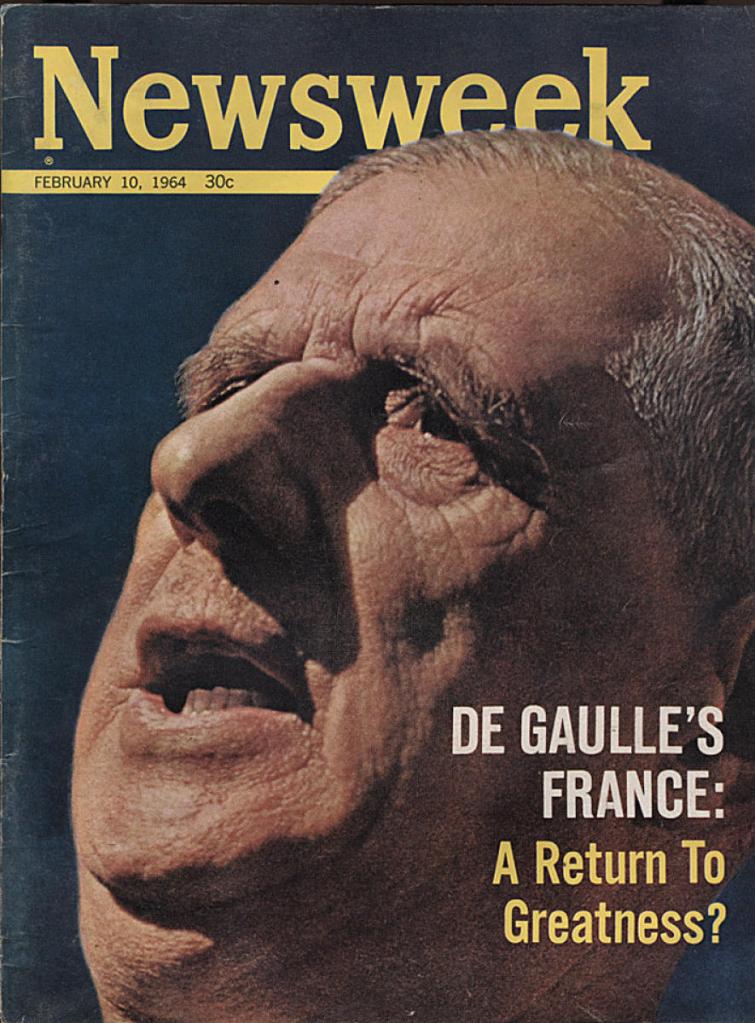
France forced Nationalist China to announce a break in diplomatic relations today. The establishment in a very few days of a Chinese Communist diplomatic mission in Paris is expected here. Qualified sources reported that Pierre Salade, French chargé d’affaires in Taipei, told the Chinese Nationalist Government yesterday that France intended to implement her decision to recognize the Communist Government by an exchange of missions, headed at the outset by charges d’affaires. This French statement prompted the Nationalist Government ‘s announcement that it was breaking relations with France. The break in relations was announced shortly after the French Foreign Ministry declared that General de Gaulle ‘s Government no longer regarded the Chinese Nationalists as representing China in Paris.
By forcing the issue in Taipei, the French Government escaped from a difficult diplomatic situation that France had embraced unwillingly, a “two Chinas” policy. The French Government announced on January 27 that it had established diplomatic ties with the Peking regime, and that ambassadors would be exchanged in three months. The Nationalist action provided the French Government with a welcome escape from the increasingly awkward situation arising from the presence of a Chinese Nationalist mission in Paris after the recognition of Peking. The insistence of the Nationalists on remaining in Paris had impeded the installation of a Communist mission here, and delayed the implementation of General de Gaulle’s plans for the neutralization of Vietnam, Laos and Cambodia in cooperation with the Chinese Communists.
A ranking staff officer of the Soviet secret police who defected in Geneva has requested political asylum in the United States. The defection last Tuesday by Yuri I. Nosenko was disclosed in a terse announcement today by the State Department. There were indications that he might have acted for some time as a United States agent. Richard I. Phillips, State Department press officer, indicated that Mr. Nosenko’s request for asylum was under consideration here. The 36‐year‐old Mr. Nosenko was serving as an “expert” with the Soviet delegation to the 17‐nation disarmament conference in Geneva. Though he defected last Tuesday, it was only yesterday that the Soviet delegation made it known that he had been “missing” for five days. The Nosenko case was described privately here as one of the most important recent triumphs of United States intelligence services. Apparently, they have gained from him knowledge about the operations of the Soviet secret police and possibly about Soviet defense planning.
Colonel Abdel Salam Arif, the President of Iraq, and General Mustafa al‐Barzani, leader of the Kurdish rebels, announced a truce and the resumption of peace negotiations tonight. Colonel Arif said all Kurdish prisoners held by Iraqi authorities would be released and the economic blockade ended. General Barzani, in a proclamation, ordered all Kurds to “cease fire immediately.” He said he was convinced of the Government’s good faith in recognizing “the national rights of the Kurds within one Iraqi national union.” A proclamation signed by Colonel Arif and read by Brigadier Abdel Kerim Farhan, Minister of National Guidance, on the radio, said the “Government endorses the national rights of the Kurds within one Iraqi national unity.” This guarantee is to be included in the provisional constitution that is now being drafted. The proclamation called for the re‐establishment of Government administration in northern areas and the lifting of restrictions on the sending of foodstuffs to Kurd territory. While General Barzani welcomed some parts of Colonel Arif’s statement, Kurds here doubted whether he would accept the return of Government administration to northern areas. The Kurds have previously insisted on autonomy.
Prince Souvanna Phouma asked the Soviet Union and Britain today to use their influence to prevent a resurgence of serious fighting in Laos. The neutralist Premier declared that a severe military blow dealt to right‐wing and neutralist troops in central Laos by the pro‐Communist Pathet Lao had disrupted plans for a peace conference of leaders of the three factions. Ambassadors Sergi A. Afanasyev of the Soviet Union and Donald Hopson of Britain were summoned to the residence of the Premier to hear his expression of concern about the Pathet Lao seizure of Nakay plateau in central Laos. The Ambassadors were told of a report from the battle area of the large‐scale involvement of North Vietnamese units in an attack that swept neutralist and right‐wing forces from th rice‐growing plateau late nonth.
Prince Souvanna Phouma asked the Soviet and British Ambassadors to exert a moderating influence on the situation to head off other serious violations of cease‐fire agreements. The Premier called in the members of the International Control Commission. which has responsibility for policing the cease‐fire, to lodge a similar appeal with them. Polish, Indian and Canadian members make up the commission. The Pathet Lao have denied that North Vietnamese units took part in the Nakay operation. They contend that their forces attacked in response to encroachments on their territory by right‐wing forces of General Phoumi Nosavan.
The executive committee of the American Association for the United Nations proposed today that the Vietnam problem be considered by the United Nations. The committee suggested that the United States might consider this possibility in consultation with its allies. The committee also suggested that the issue be explored with a view toward invoking mediation or peacekeeping help from the United Nations. It should not be posed as an issue for “futile cold war debate,” the statement said. The statement said that it had become increasingly clear that a complete military victory in Vietnam was impossible, and that there must eventually be a political settlement.
Richard de Heaulme, a French planter kidnapped by Communist guerrillas a month ago, was released Friday night, the South Vietnamese news agency reported today. Mr. de Heaulme was picked up by the Viet Cong on January 8 at the Ben Cui rubber plantation, 50 miles northwest of Saigon.
The United States and Britain have prepared another proposal to put an international peacekeeping force in Cyprus, according to reliable sources. The plan was rejected by the Cypriote Foreign Minister. The new proposal is longer and more detailed than previous plans put forward by the two nations to restore calm in the embattled island republic. The main point of difference in the new proposal is that it has dropped all reference to the original aim of drawing troops to Cyprus from the United, States and as many other member nations as possible in the North Atlantic Treaty Organization.
As the new proposal stood tonight, it would leave open completely to agreement with the Cyprus Government the question of which nations would contribute to the peace‐keeping force. Duncan Sandys, Britain’s Commonwealth Relations Secretary, gave the gist of the plan to Spyros Kyprianou, the Foreign Minister of Cyprus, in an hour‐long meeting tonight. It was rejected outright by Mr. Kyprianou on the same main ground the previous proposals could not be accepted: the peace‐keeping force would not be answerable to the United Nations Security Council.
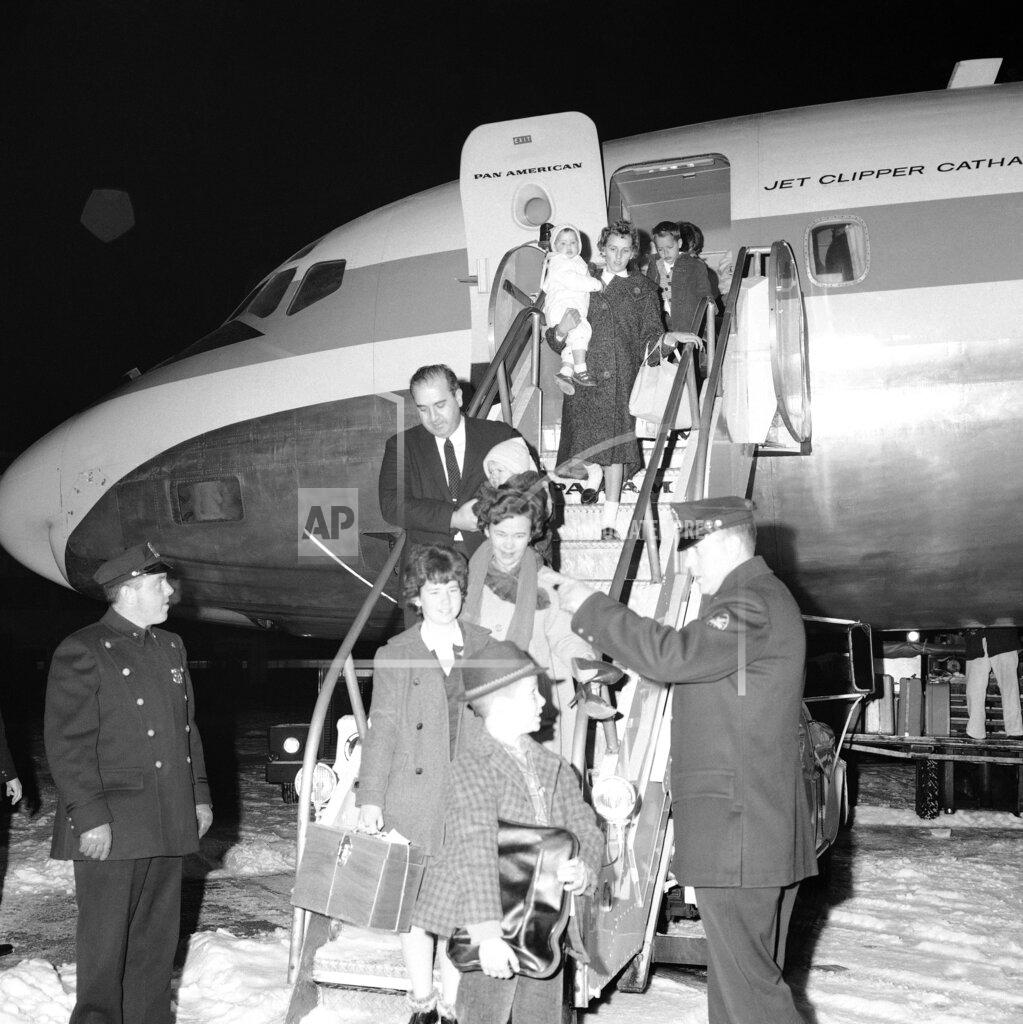
Eighty dependents of Navy, Marine Corps, and embassy personnel arrived at John F. Kennedy Airport last night from Beirut, Lebanon after they had been evacuated from Cyprus. Members of the group, which included 55 children, said they regretted they had to leave their relatives on the strife‐torn island. They were flown fronm Nicosia to Beirut last Wednesday.
The United States Embassy filed a strong written protest today over an attack on an American Foreign Service officer by The Ghanaian Times. The Government‐owned paper vilified A. Emerson Player for having saved the United States flag during a demonstration organized by the ruling Convention People’s party outside the embassy last Tuesday. The embassy’s protest described as “scurrilous” the attack on Mr. Player and said that “the attack can only be deeply resented by all Americans, whatever their origin.” The protest was delivered to the Foreign Ministry shortly after Mr. Player had received a personal letter from President Johnson praising him for his “bravery” in seizing the flag from demonstrators and running it back up the flagpole.
The Ghanaian Times characterized the action of Mr. Player, a Black, as “shameful.” Mr. Player never should have done what he did, the paper said, “for no people have suffered more under the yoke of Yankee arrogance and racialism than the Afro‐Americans.” The paper said Mr. Player had “made an ass of himself” and called him “a spineless stooge whose activity has brought shame on the millions of Afro-Americans fighting for freedom in their own country.”
Eighty-two members of the Royal Australian Navy died when the destroyer HMAS Voyager was rammed and cut in half by the aircraft carrier HMAS Melbourne. Voyager Captain Duncan H. Stevens went down with the ship; another 242 of the crew were rescued. The two ships had been conducting maneuvers 20 miles off the coast of Jervis Bay, when Voyager cut across the path of Melbourne at about 9:00 in the evening. Chief Petty Officer Jonathan Rogers, who helped evacuate more than 50 sailors to safety before going down with the ship, would be awarded the George Cross posthumously for his heroism. A little more than five years later, HMAS Melbourne would be involved in a similar collision cutting the American ship USS Frank E. Evans in two and killing 73 men.
The small West African nation of Sierra Leone became the first to issue the self-adhesive stamp for postage. The stamps that did not need to be licked, made in the shape of the country’s boundaries and designed to be peeled off of a wax paper sheet, were issued in connection with the upcoming New York World’s Fair and were necessitated by that nation’s humid climate, but “infuriated philatelists as the self-adhesive stamps were difficult to remove and save in mint condition”.
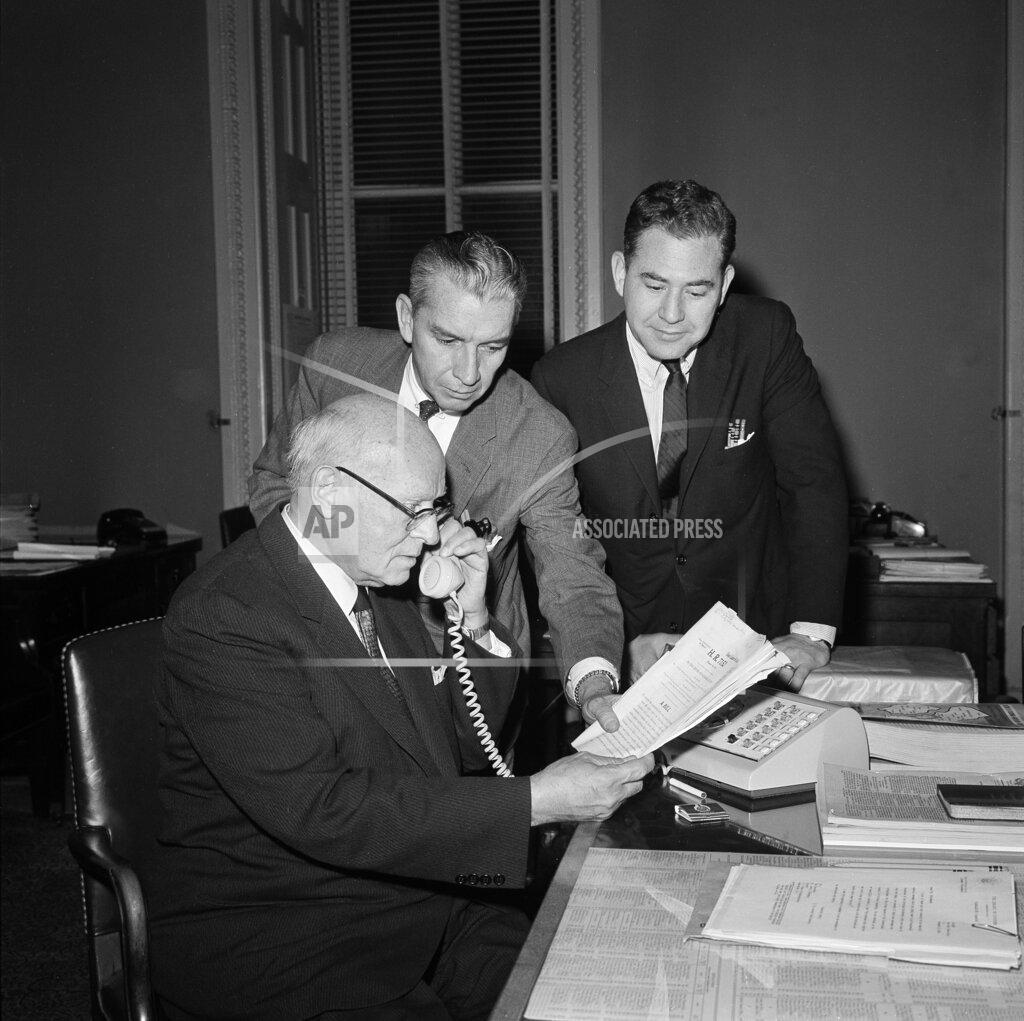
The U.S. House of Representatives voted, 290-130, to approve the Civil Rights Act of 1964, the most comprehensive civil rights legislation in the United States since the Reconstruction Era. Voting in favor were 152 Democrats and 138 Republicans, while 96 Democrats and 34 Republicans, most of them from Southern states, were against. The bill was expected to face a more difficult chance of passage in the U.S. Senate, but, after delays for votes on more than 100 amendments and a long filibuster, would pass there on June 10, 1964, by a margin of 71-29.
President Johnson renewed today his appeal to Congress for a program of hospital and nursing home care for the aged to be financed through Social Security. He also asked that Federal funds be channeled toward the renovation of “obsolete and inefficient” hospitals in the major cities. These were the highlights of the President’s special health message to Congress, Mr. Johnson said he would define other requests in the health field in subsequent messages on poverty and drug abuses.
Describing his program as a “vigorous and many‐sided attack on our most serious health problems,” the President said: “There is no need and no room for second‐class health services.” He disclosed that he was creating a commission on heart disease, cancer and strokes to make a study and report to him in a year on how best to reduce the incidence of these diseases. The President asked for a program of grants for construction of schools of nursing. The program is somewhat similar to the one enacted last year for medical and dental schools. He proposed a federal scholarship program for nurses, too.
Congress acted today to speed the increase in take‐home pay that all wage and salary earners will get when the pending tax‐cut bill is passed and signed. The new withholding rate was the first part of the tax bill considered by the conference committee, which is meeting to compromise the differences between the bills passed by the House and Senate. The House bill approved a reduction in the withholding rate to 15 percent this year and 14 percent in 1965. The Senate, at President Johnson’s urging, voted to cut the rate to 14 percent immediately. The withholding issue was made the first order of business of the conferees so that the Internal Revenue Service could start immediately distributing new withholding tax tables to the nation’s 4.5 million employers who collect withholding taxes for the Government.
Mrs. Marguerite Oswald, insisting she is not convinced that her son, Lee Harvey Oswald, killed President Kennedy, begins telling her story to the commission investigating the assassination. Chief Justice Earl Warren, head of the seven-man commission, says there has been nothing in her testimony “that would change the picture as I see it.”
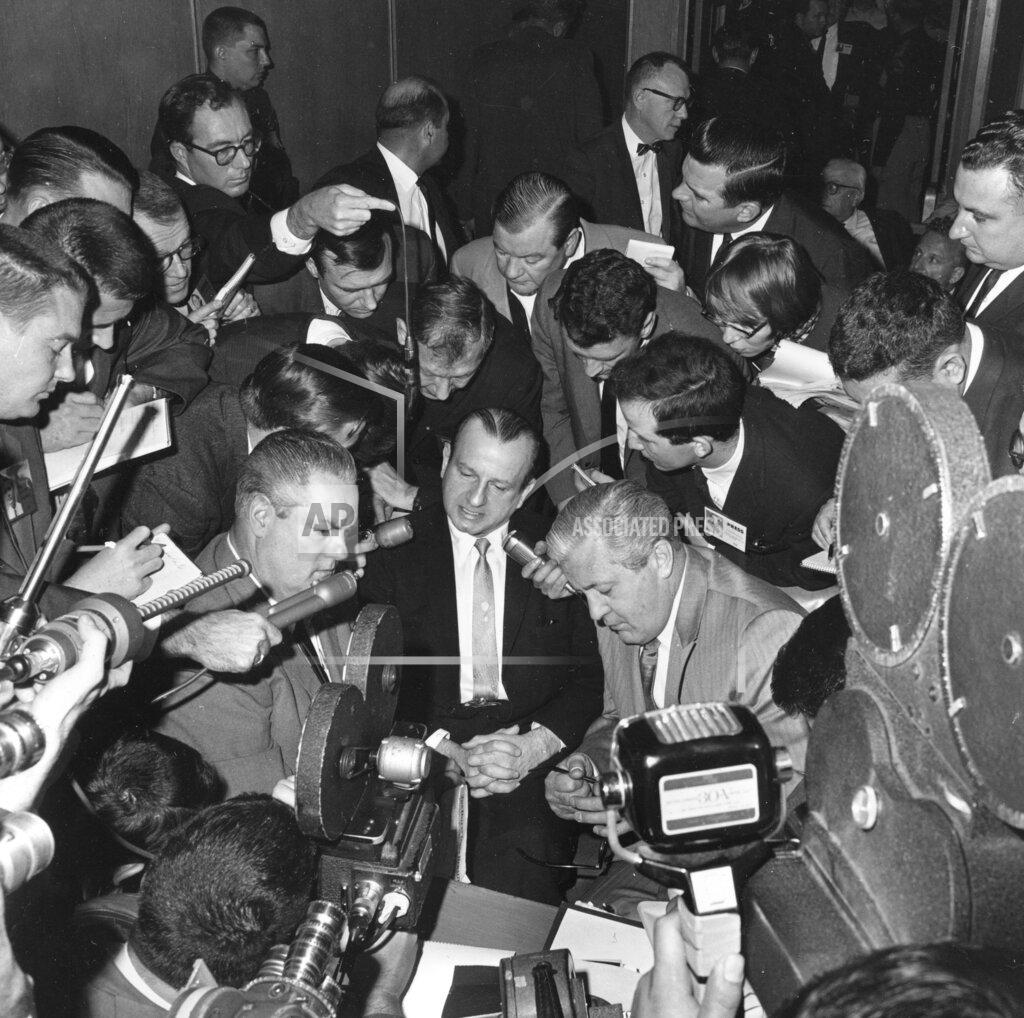
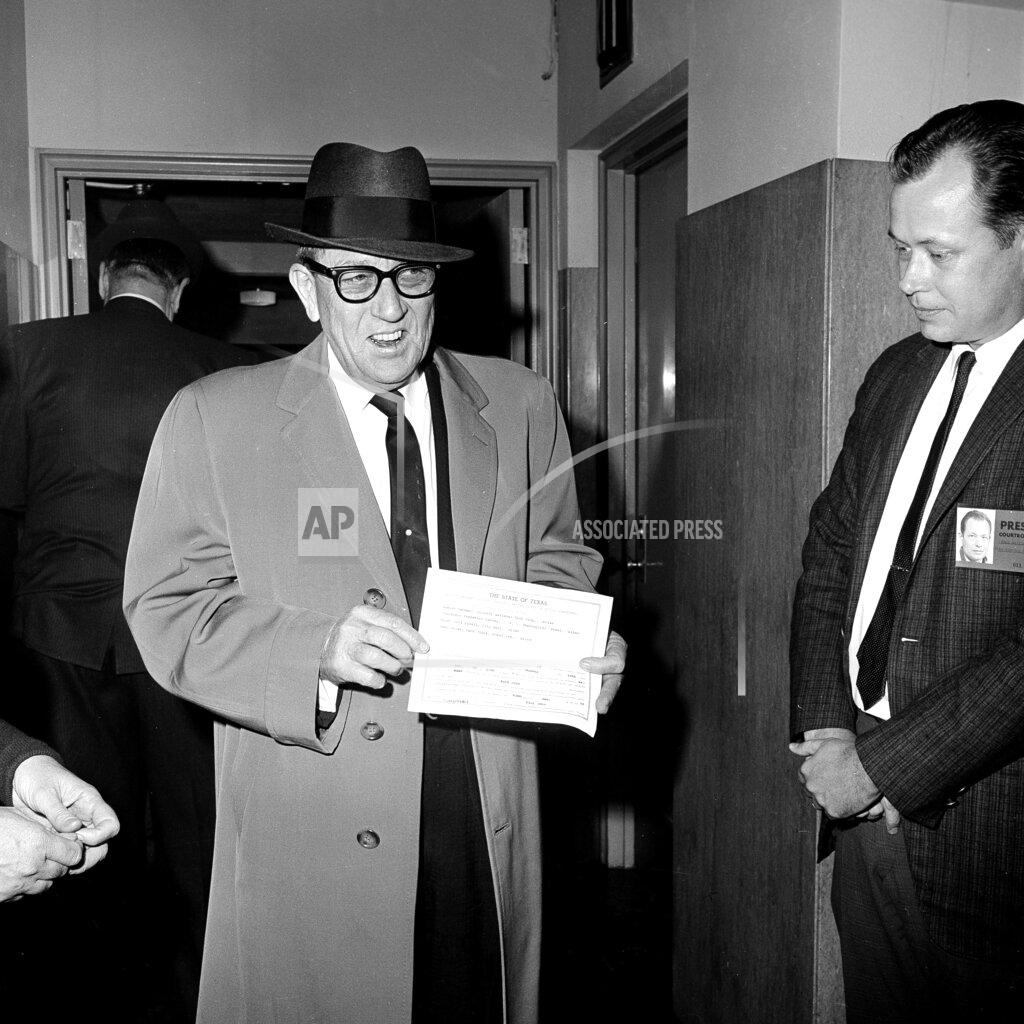
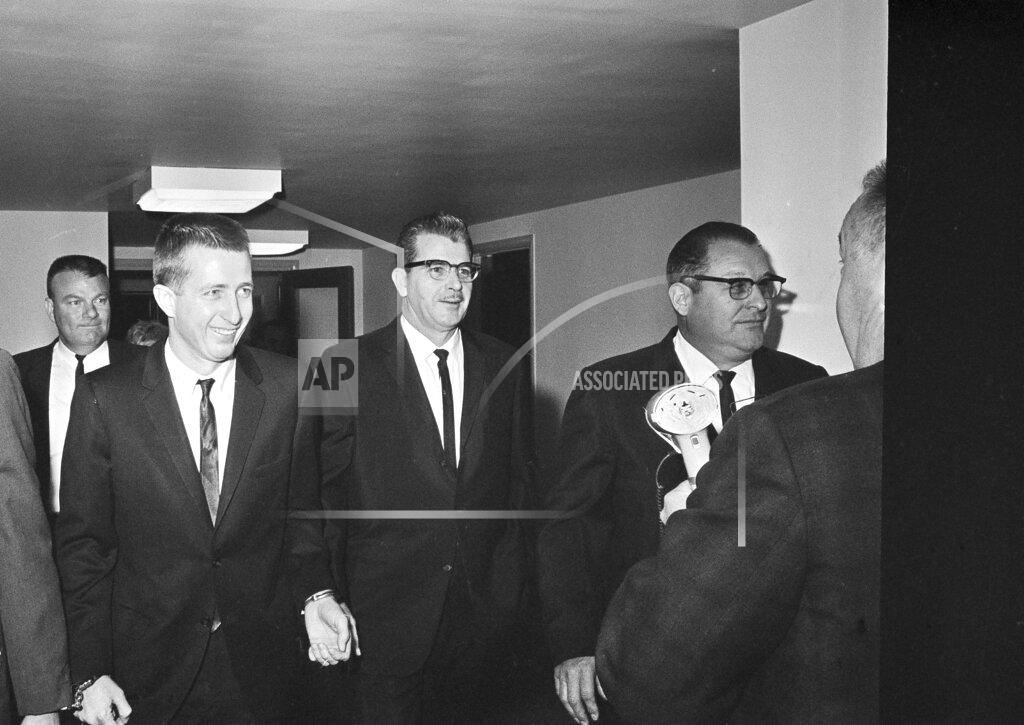
Jack L. Ruby’s defense attorneys began attempting to demonstrate today that the business leadership of Dallas wanted Ruby executed to prove that law and order exist here. Melvin M. Belli, the chief defense lawyer, said that testimony from Dallas residents and clippings from newspapers and magazines would show that no resident of Dallas was indifferent to the outcome of Ruby’s trial. Quoting Associate Justice Tom C. Clark of the United States Supreme Court, Mr. Belli said that indifference to the consequences of the verdict is the prime requisite of a juror. The first six witnesses of the 170 subpoenaed by the defense all testified today, however, that Ruby could get as fair a trial in Dallas as in any other Texas city.
Members of 11 nonoperating unions striking against the Florida East Coast railway throw picket lines around the Merritt Island space installation and tie up the nation’s moon flight project. Picket lines are set up at the boundaries of the government property when a Florida East Coast freight train enters the reservation over tracks owned by the space agency. About 4,500 building trades craftsmen on the reservation honor the picket lines, tying up 30 construction projects.
Senator Margaret Chase Smith of Maine gets a warm welcome in New Hampshire as she opens a week-long campaign for the Republican Presidential nomination. With the temperature 28 below zero, she makes her first pitch to two loggers loading a truck. Later, at a Rotary club luncheon, Mrs. Smith says she would be able to stand up to Nikita Khrushchev.
James R. Hoffa’s defense attorneys charge the federal government is paying its chief witness to testify against the teamster union czar in his jury tampering trial in Chattanooga federal District court. The federal prosecutor terms the charge “an unmitigated lie.” The charge is lodged as a Hoffa lawyer cross-examines Edward Grady Partin, business agent of the Baton Rouge teamster local and onetime associate of Hoffa who has testified in support of the tampering charge.
Dow Jones Industrial Average: 788.71 (-2.88).
Born:
Glenn Beck, American radio and television host, in Everett, Washington.
Sam Graddy, U.S. 4x100m runner (Olympic gold 1984) and NFL wide receiver (Denver Broncos, Los Angeles Raiders), in Gaffney, South Carolina.
Gerald Nichols, NFL nose tackle and defensive tackle (New York Jets, Tampa Bay Buccaneers, Philadelphia Eagles, Washington Redskins), in St. Louis, Missouri.
Russell Hairston, NFL wide receiver (Pittsburgh Steelers), in Greenbelt, Maryland.
Reggie Bynum, NFL wide receiver (Buffalo Bills), in Greenville, Mississippi.
Don King, NFL defensive back (Green Bay Packers), in Dallas, Texas.
Francesca Neri, Italian actress (Ages of Lulu), in Trento, Italy.
Died:
Eugen Sänger, 58, Austrian aerospace engineer
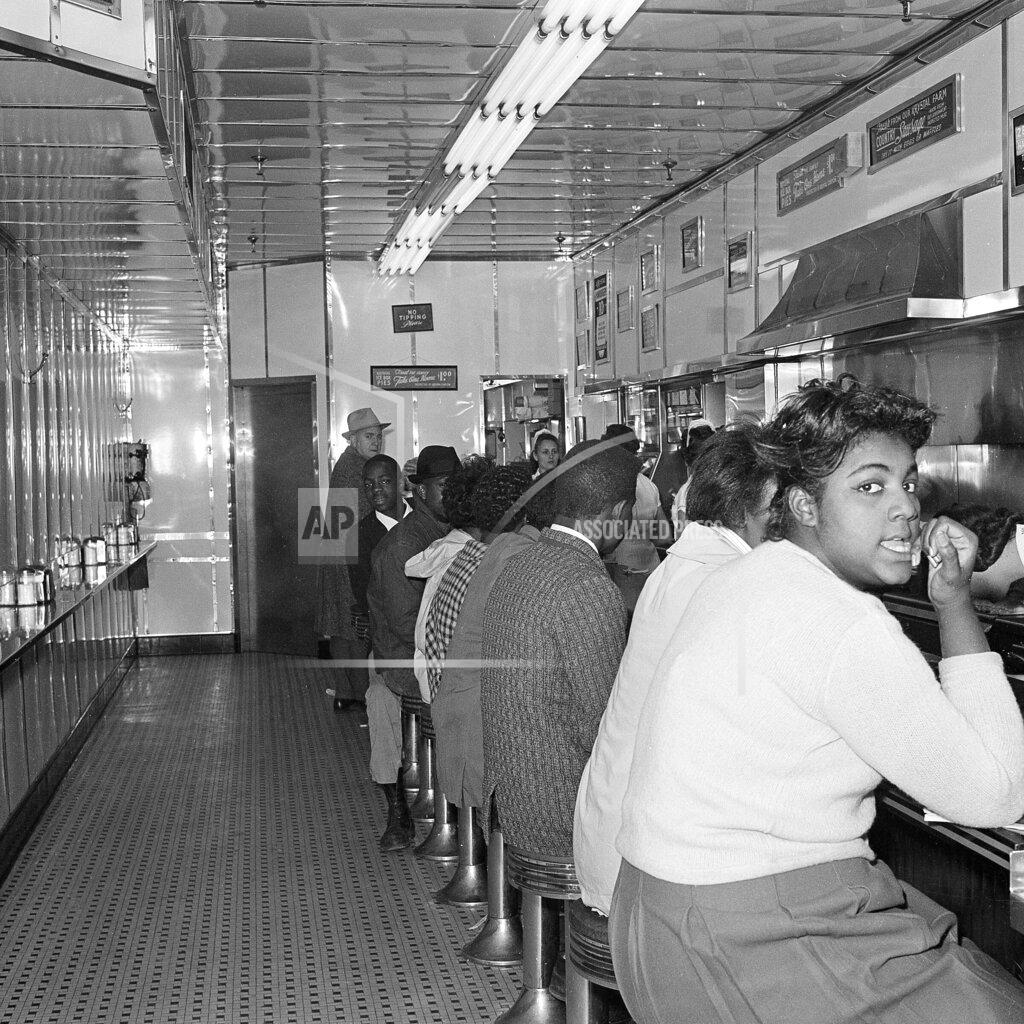
[Ed: Now comes the hard part: the U.S. Senate. The Senate is where civil rights and anti-lynching legislation has gone to die by filibuster since the beginning of the century…]

 History Diaries