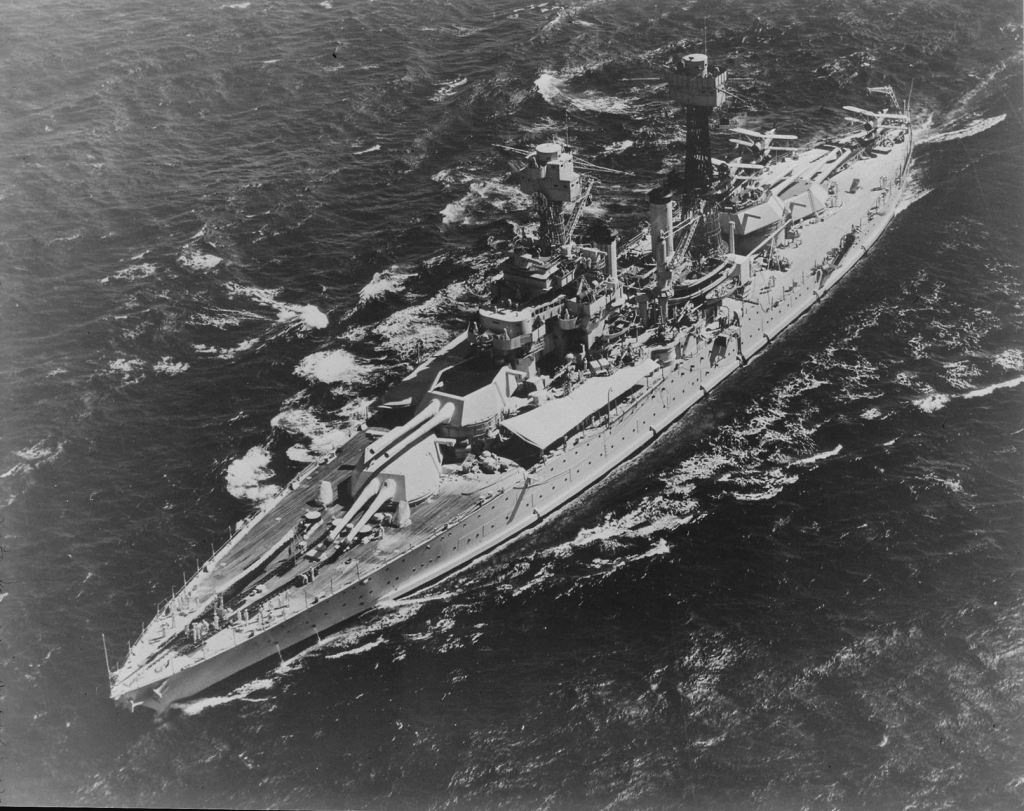
West Virginia was moored on Battleship Row on the morning of 7 December 1941 when Japan attacked Pearl Harbor, bringing the United States into World War II. Badly damaged by torpedoes, the ship sank in the shallow water but was later refloated and extensively rebuilt over the course of 1943 and into mid-1944. She returned to service in time for the Philippines Campaign, where she led the American line of battle at the Battle of Surigao Strait on the night of 24–25 October. There, she was one of the few American battleships to use her radar to acquire a target in the darkness, allowing her to engage a Japanese squadron in what was the final action between battleships in naval history.
The Battle of Menorca (Minorca) ended with the surrender of the Republican garrison. After the fall of Catalonia, the island of Menorca, the only Balearic island held by the Republic, was isolated from other Republican-held territory by the Nationalist naval blockade. Francisco Franco informed the British government that Mussolini’s Italian troops would abandon the Balearic Islands after the war and the British government agreed to arrange the surrender of the Republican garrison.
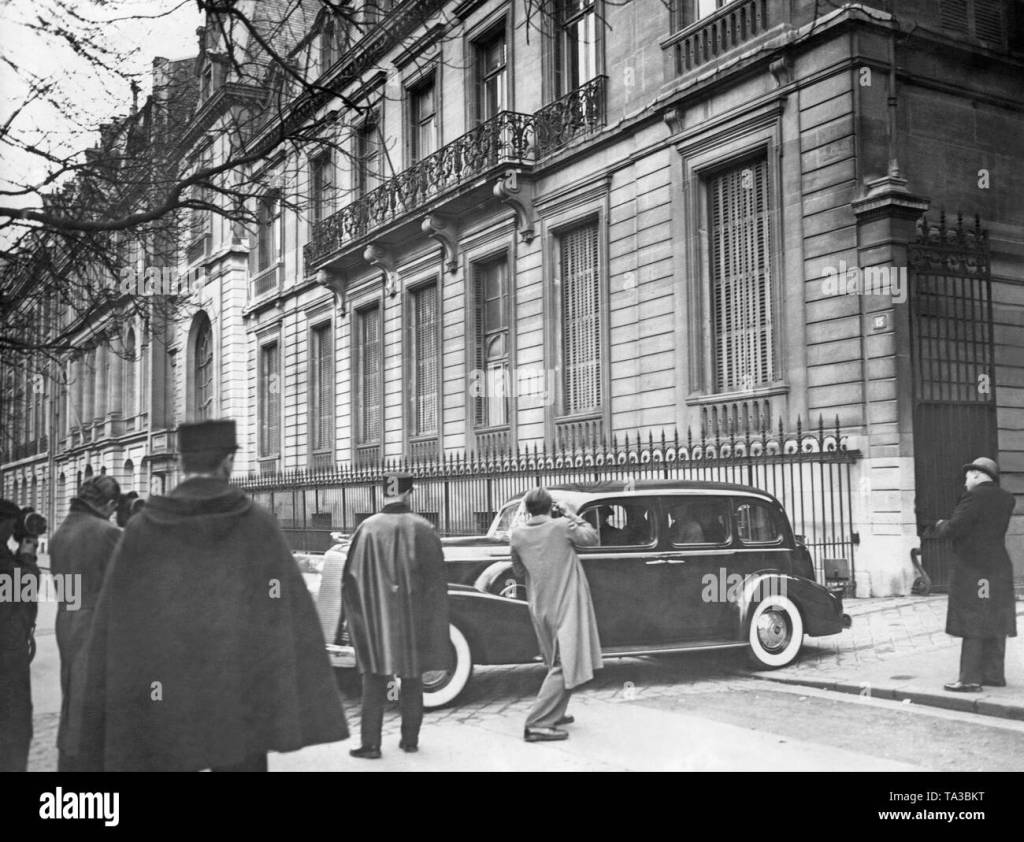
On 7 February, the Royal Navy cruiser HMS Devonshire arrived in Mahón harbor with a Nationalist emissary, Fernando Sartorius, on board. Sartorius said to the Republican commander, Luis González Ubieta, that the Nationalist forces would occupy the island on 8 February, but the Republican officers and supporters could abandon the island. The same day, three battalions of the Republican garrison, led by a member of the Fifth column, the officer Juan Thomas, occupied Ciutadella, after killing the Republican commander, Marcelino Rodríguez. One brigade of Republican troops arrived from Mahon, and defeated the rebel troops after a brief engagement and surrounded Ciutadella. Nevertheless, the Republican officers, convinced that any resistance under those circumstances was pointless, asked for safe passage to the mainland. The British eventually arranged the surrender of Menorca to the Nationalists on board of Devonshire. On 8 February, Italian and Spanish Nationalist bombers attacked Mahón. The same day the Devonshire sailed to Marseille with 452 Republican refugees on board. On 9 February, the 105th division of the Nationalist Army disembarked at Ciutadella and the remaining Republican troops surrendered.
After the surrender of Menorca, many Republican officers in the central zone believed that they would negotiate a deal with the Nationalists, and then started to plan a coup against the Negrín government.
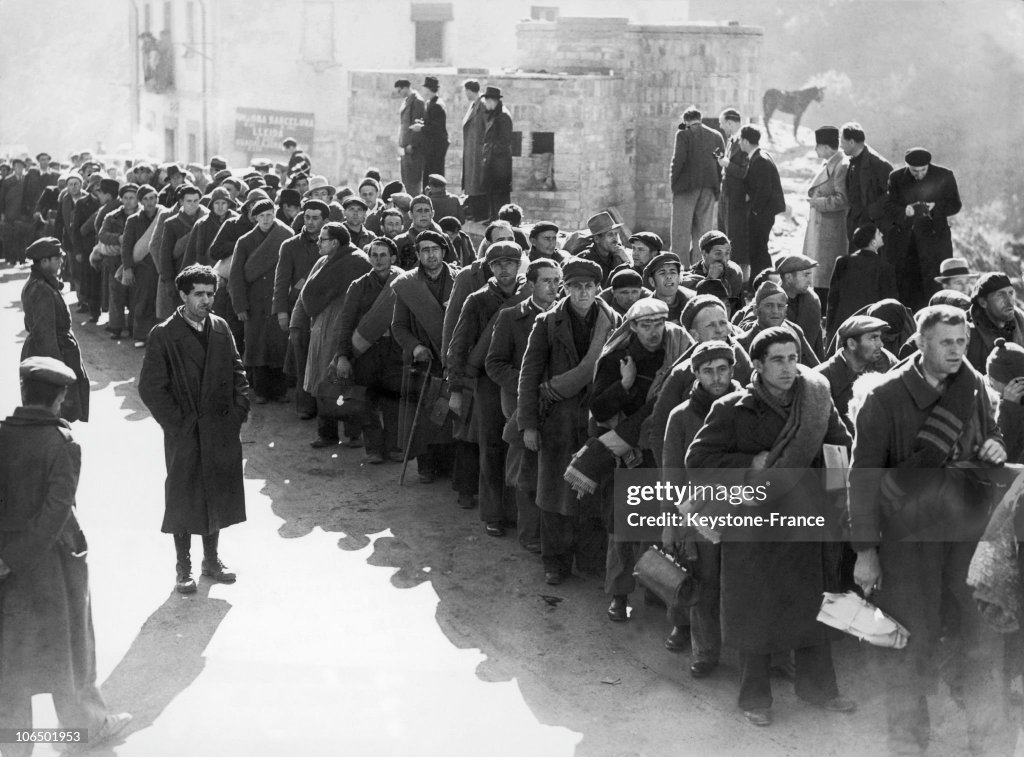
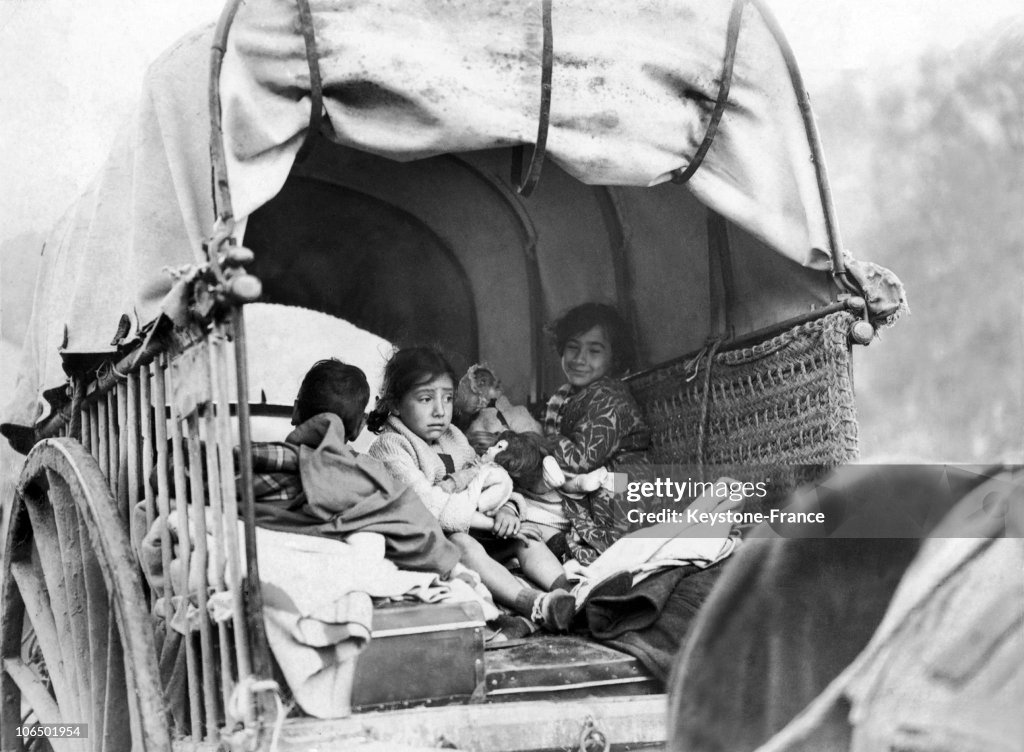
The majority of the Nationalist troops finally cross the border into France. Between 400,000 to 500,000 Republican refugees have survived to get into France. The Republican president Manuel Azaña, Prime Minister Juan Negrín, Republican Army chief of staff Vicente Rojo, and Catalonian president Lluís Companys and his Catalan government have all made it over the border. Most people have crossed in the region have crossed at Le Perthus, but Prime Minister Negrín crosses back into Spain.
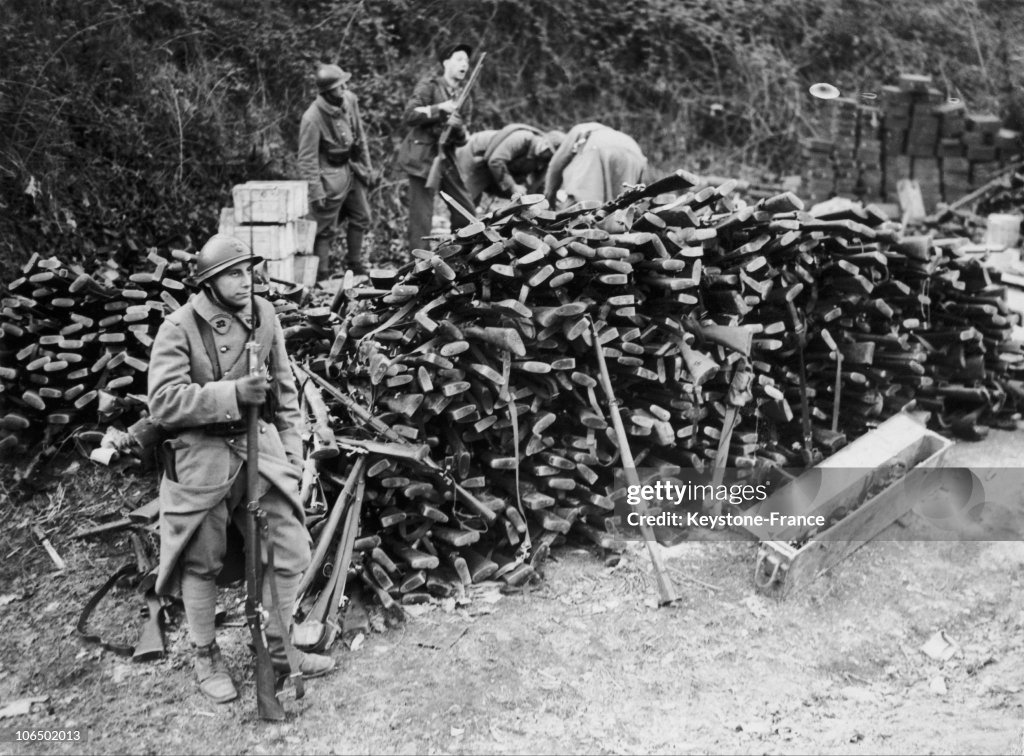
A Francoist column reached the French border at Le Perthus, trapping many trucks. Loyalists were still fighting a rear-guard action at the northeast tip of Spain, but were expected to cross the frontier tomorrow.
Franco pledges the removal of Italian and German soldiers from Spain. Britain will recognize the new government once foreign soldiers are removed.
Franco waits for Madrid to surrender. Rebels want France to return ships, gold, and artwork stored there.
A decision to “fight on for liberty until the end” was announced early today after an important meeting of General José Miaja, Republican (Loyalist) defense commander and military governor for Central Spain, and representatives of the Popular Front [Left parties]. Taking part in the conference were other military representatives. The object of the meeting, said General Manuel Matallana, who only tonight was appointed by Premier Juan Negrín to the command of all five armies of the central zone, was “to insure the resistance of both the people and the army, which will eventually bring about the defeat of the invaders.” General Leopoldo Menendez, commander of the Eastern Army; Jesus Hernandez, Political Commissar for the five central armies, and other officers were present.
All Madrid morning newspapers today published a message in which Foreign Minister Julio Alvarez del Vayo stated: “The Republican government is prepared to fight on until the end, defending the independence of the country. Our means in the central zone (the one-fourth of Spain unconquered by the Insurgents) will enable us to continue to fight for many months.” Members of the Popular Front asserted that, despite the gravity of the situation, they were confident of ultimate victory in the civil war.
[Ed: There is a word: “Lunatics.”]
Italy says France violates international law by allowing a Spanish Loyalist Cabinet to operate there.
Italy was suspicious of the British action in taking a Franco emissary to Menorca, holding it was “meddling” intended to keep the Italians away from the island.
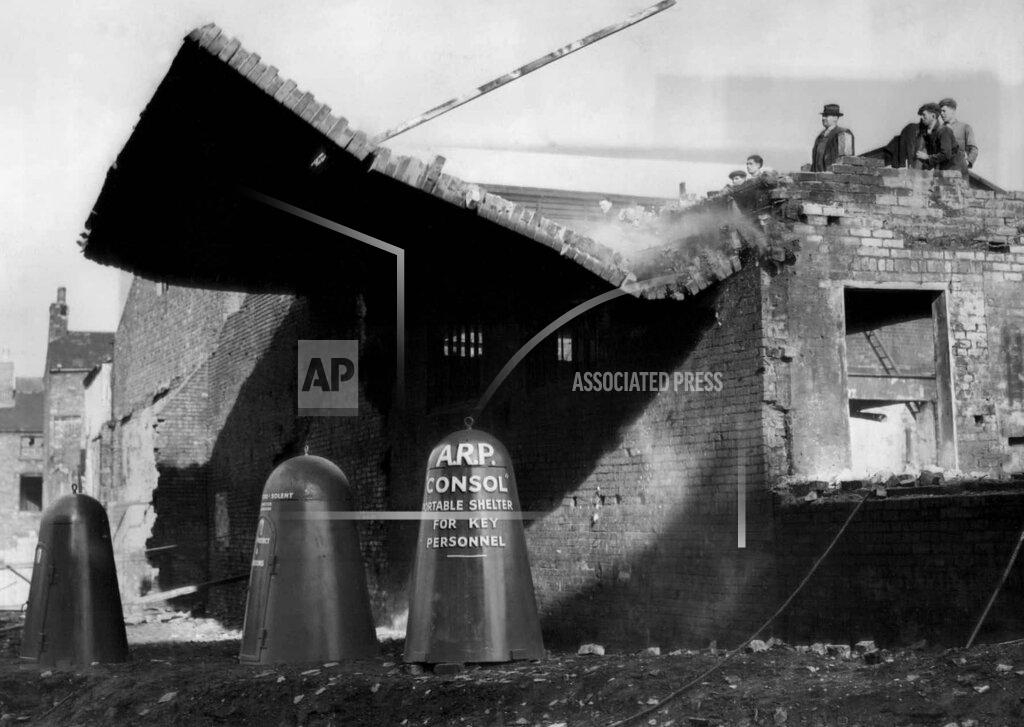
The Home Office announced plans to provide shelters to thousands of British homes in districts most likely to be bombed in the event of war. The steel shelters, nicknamed “Anderson shelters” after Lord Privy Seal Sir John Anderson, measured 6’6″ by 4’6″ and were designed so that two unskilled people could erect them. The government promises free air-raid shelters for London’s poor.
The Times continued in its efforts to calm British public opinion when it printed:
“The signatories of the ridiculous ultimatum to Great Britain are men of no account. Nobody in this country would have taken them seriously, but for the recent outrages in Great Britain. As a political force in Éire, the IRA simply does not count.”
In London, two bombs exploded at Kings Cross railway station, and bomb threats were made to the National History Museum.
The Irish support a bill to control bombings. The bill includes punishment for treason.
The Belgian Spaak government falls. Premier Paul-Henri Spaak’s Cabinet resigned today and Parliament adjourned sine die, climaxing a long-drawn struggle that had been temporarily put off by the attack on the Premier by veterans last week. The crisis was precipitated at a Cabinet meeting at noon. The Liberal members announced then that they would resign unless Dr. Adrian Maertens, pardoned under an amnesty on a wartime conviction for dealings with the enemy, withdrew from the recently constituted Belgian Academy of Medicine. Premier Spaak, who had appointed Dr. Maertens, failed to obtain his retirement and said it would be impossible for him to continue to govern. He went directly to King Leopold and presented his Cabinet’s resignation. After a brief sitting Parliament adjourned pending the formation of a New Cabinet. All week the Parliament Building has been heavily guarded because of disturbances that threatened to divide the country between the two language groups.
Russia seeks a pact with Black Sea countries that would form an eastern bloc to forestall German efforts.
At the London conference on Palestine, Arab leaders demand that the Jewish refugee problem be kept separate from their discussions. The Arabs desire independence and an end to the British Mandate.
To a Senate still smarting under President Roosevelt’s charges of attempted individual usurpation of his constitutional prerogative of judicial appointment, the Chief Executive today sent a “blue ribbon” list of judgeship nominations, which, in two important instances, rejected recommendations of as many Senators who had opposed the President’s selection. The appointment list which the President sent to the Senate a short time before its opening hour was headed by Robert P. Patterson for the District Court of the New York Southern District, whose nomination to fill the seat vacated by Circuit Judge Martin Manton was the only one of three which had not been contested by Senators from the States represented. The President named Francis Biddle of Philadelphia to fill a vacancy on the Third Circuit Court of Appeals and Herschel W. Arant of Ohio to take over the new appellate judgeship in the Sixth Circuit Court. Both appointments were against the wishes of Senators Guffey and Denahey, consistent New Deal supporters, who had made their preferences known to the President.
Although various phases of the verbal warfare which followed the Senate’s rejection by a vote of 72 to 9 of the President’s nomination of Judge Floyd H. Roberts of Virginia were expected, the sharp difference of opinion between the Senate and the White House was evidenced by a stand against the President taken today by Senator Thomas of Utah. Quietly a loyal follower of Mr. Roosevelt and his policies, Senator Thomas asserted in a brief unannounced speech that the President had gone too far in personally interpreting the Constitution by attempting to force the confirmation of Judge Roberts over the protest of Senators Glass and Byrd. “It suggests a spirit that is contrary to much that is good in our American constitutional theory and practice,” said the former college professor. Meanwhile, the junior Virginia Senator, Harry F. Byrd, entered the mounting Senatorial protest against Presidential selections for federal office not concurred in by Senators representing the States from which the nominees came when he joined Senator Glass with the statement that Mr. Roosevelt’s appointment of Judge Roberts was designed “to chastise” both.
The House Military Affairs Committee urges the bolstering of military equipment, which they say is currently woefully inadequate. President Roosevelt’s emergency program for national defense as outlined in his message of January 12 was approved today, in its main features, by the Republican Conference of the House of Representatives. The conference, however, was not convinced of the necessity for fortifying the island of Guam. The action of the conference indicates that there will be little opposition to the May bill, strengthening the air corps and otherwise enlarging the military establishment, when it comes to the floor of the House on Monday. The conference adopted a report unanimously submitted by a policy committee headed by Representative Wadsworth of New York and including Representatives Ditter of Pennsylvania, Wigglesworth of Massachusetts, Maas of Minnesota, Andrews of New York, Powers of New Jersey, Short of Missouri, Church of Illinois, Dworshak of Idaho, Ford of California, and Lewis of Ohio.
The AFL and CIO jointly sponsor a plan to admit 10,000 refugee children into the United States under a Quaker program. Senator Robert F. Wagner of New York, himself German-born, today proposed that Congress authorize the admission of 10,000 German refugee children “of every race and creed” during each of the calendar years 1939 and 1940. He introduced a joint resolution to that effect. The New Yorker said that such action would not suspend existing quota restrictions upon adults but merely authorize the admission “during a limited period of a limited number of refugee children, 14 years of age or under.”
“This could readily be accomplished,” he said, “without their becoming public charges and without any danger of dislocating American industry or displacing American labor. Their admission would be predicated upon satisfactory and voluntary undertakings by responsible American citizens, or private organizations that adequate provision would be made for their maintenance and care, in homes of their own faiths.”
The Securities and Exchange Commission will present evidence that insurance companies forge signatures of policyholders when electing directors as common practice.
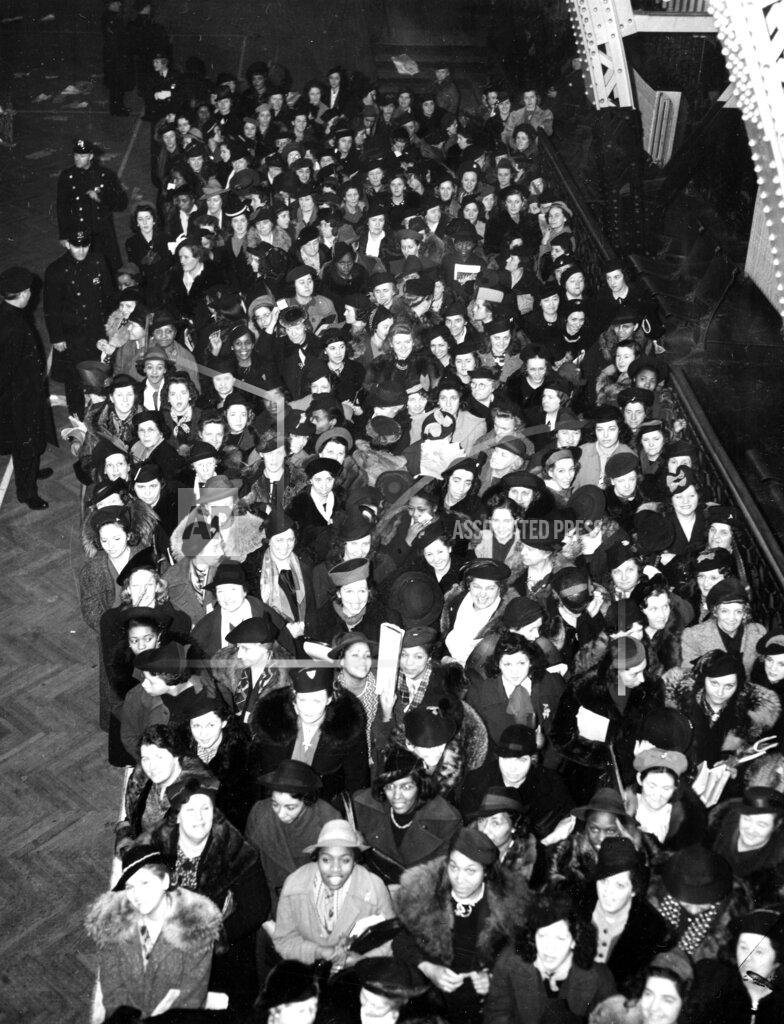
4,139 women turn out in New York to apply for one of twelve positions as laboratory assistants at the city Health Department.
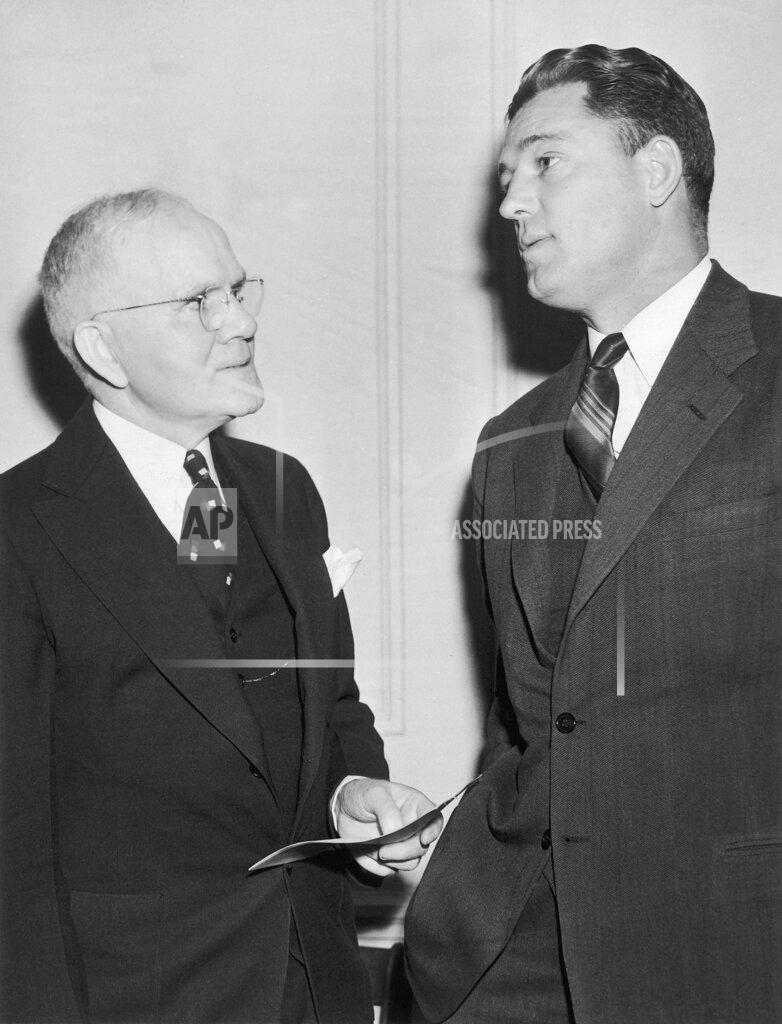
The National Football League names Joe Carr as president for a 10-year term.
The Cardenas Government in Mexico, it was learned today on the highest authority from sources close to the Foreign Office, has no intention of recognizing the Franco regime in Spain despite economic ties to the totalitarian states resulting from oil seizures and the consequent boycott of the United States and Great Britain. The Petroleum Administration leans strongly toward the Republican (Loyalist) cause in Spain and Mexico will wait, it was said, until the last possible moment before extending diplomatic recognition to Generalissimo Francisco Franco. The people of Mexico are said to be about equally divided between the Republicans and the Nationalists (Insurgents). It is believed, however, despite the assertion that as long as the Cardenas regime remained in power it would not recognize General Franco, such action by the United States would be followed here.
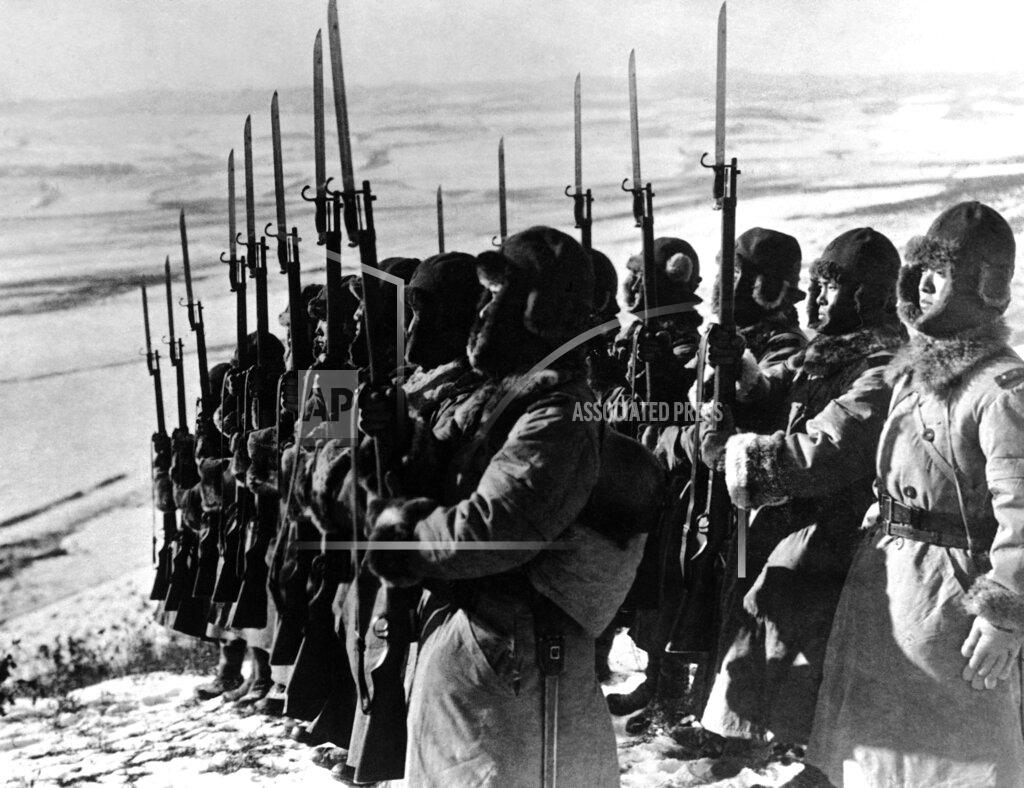
Soviets announce the repulsion of a Japanese attempt to capture “Island #227” in the Argun River.
The Soviets warn Japan they no longer are weak on the frontier.
The last Labor Party disbands in Tokyo.
The Japanese 5th Fleet arrived off Qinghai Bay, Hainan Island in southern China some time between 2300 hours and the end of the day. They prepare to land troops on the island.
Australia disputes a claim that Lincoln Ellsworth made that grants 80,000 acres of the Antarctic to the United States.
Dow Jones Industrial Average: 143.99 (-1.44).
Born:
Barry Mann [Imberman], American pop songwriter (“You’ve Lost That Lovin’ Feeling”), and singer (“Who Put the Bomp In The Bomp, Bomp, Bomp”), in Brooklyn, New York.
Tadahiro Matsushita, politician, in Satsumasendai, Kagoshima, Japan (d. 2012).
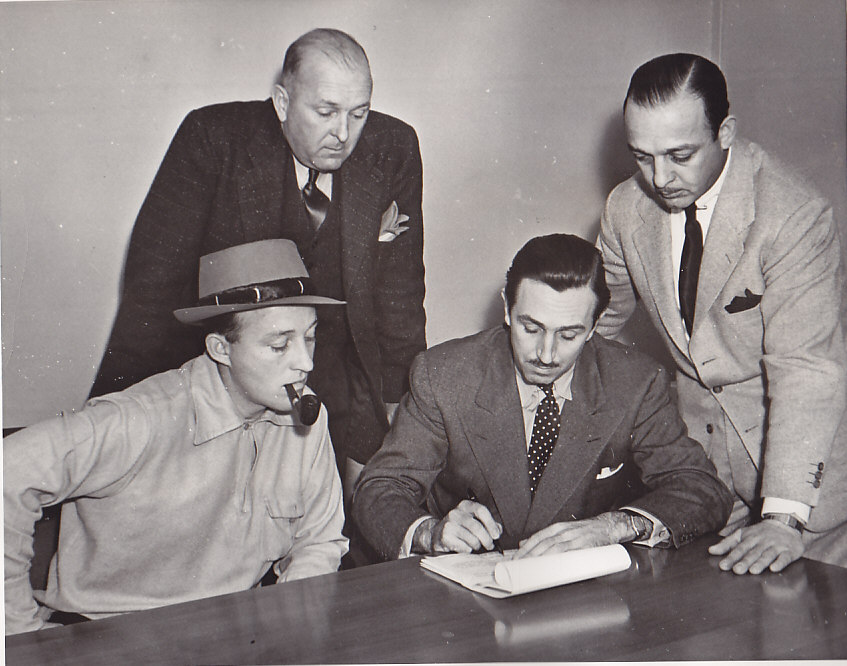
The group was attempting to build an indoor sports arena in the area. The plan fell through; the Park La Brea apartments community was built on the site in the 1940s. (L.A.Times, February 9, 1939)
 History Diaries