A bomb explodes at the Saigon stadium, killing two Americans and injuring 20; U.S. authorities in Saigon denounce such indiscriminate bombings but take steps to tighten security measures at all U.S. installations in Saigon. Two were killed tonight and more than 20 other Americans were injured by two explosions under the bleachers of a stadium during a softball game. The blasts were attributed to Communist terrorists.
Three of the injured Americans were said to be in serious condition. An American woman reported among the injured was described as an employee of the United States aid mission. The explosions demolished a section of the bleachers. Authorities believe they were caused by two American‐made, 20‐pound aerial‐fragmentation bombs planted 20 feet apart. Presumably the bombs were electrically detonated by terrorists some distance away. The bombing caused the greatest number of United States casualties recorded here in a single incident. The stadium, Pershing Field, is near the Saigon airport and is used exclusively by United States personnel.
It is feared that there will be a wave of such bombings directed against Americans. Reliable intelligence sources disclosed last week that the Communist Vietcong had brought terror and assassination experts into Saigon to attack Americans. Vietnamese children usually play in the area of the bleachers, cleaning up trash and watching the games. Witnesses said that during the game today the children were absent, leading to speculation that the Viet Cong had warned residents the bombs would be set off. In the last week one other United States serviceman was killed and seven were wounded by bombings in Saigon.
France has quietly taken the first steps toward a revival of her influence in Laos. Diplomatic activity here has been coordinated with moves by President de Gaulle toward obtaining the neutralization of Vietnam and Cambodia. Until 1954 Vietnam, Laos and Cambodia made up French Indochina. French policy here appears to be based upon the assumption that the United States will eventually be compelled by the deteriorating military situation to withdraw from South Vietnam. The neutralization of Indochina could then be accomplished, General de Gaulle believes, through an understanding with Communist China that would tacitly sanction France’s retention of her traditional ties with the three states.
The United States took the initiative today in seeking a solution to the tangled and threatening Cyprus problem. George W. Ball, United States Under Secretary of State, spent almost the entire day in conference with British officials. He also saw Spyros Kyprianou, Foreign Minister of Cyprus. Mr. Ball arrived in London by plane at 11 A.M. By 9 o’clock tonight he was in the air again, bound for Athens and a meeting there with the United States Ambassadors to Greece, Turkey and Cyprus. From Athens he was scheduled to go to Ankara, and thence possibly to Nicosia. (Mr. Ball arrived in Athens early Monday.
Officials said it was still too early to determine whether Mr. Ball could get an agreement for an international force to keep the peace between the feuding Turkish and Greek communities in Cyprus. His chances were considered slim. Archbishop Malkarios, President of Cyprus and leader of the majority Greek community, was apparently still insisting that any international force be made responsible to the United Nations Security Council. In Ankara the Turks accepted a British‐United States proposal for a United Nations link to a Cyprus peace force but with Turkish participation in the force.
The gravity of the situation was underlined by Sir Alec Douglas‐Home, Britain’s Prime Minister, before he flew to Ottawa today. Sir Alec will confer with Canadian leaders for two days and then go to Washington for talks with President Johnson. The Cyprus problem. it seemed clear, will occupy much of the attention in both Ottawa and Washington. The Canadians are reported to favor the international force.
Malaysia, the Philippines and Indonesia were unable yesterday to reach any agreement in their dispute over Malaysia that could pave the way for a meeting of the heads of government. After five days of talks, the ministers failed to find any common ground for ending the opposition of Indonesia and the Philippines to the new federation of Malaysia, and prepared to adjourn. Early this morning they were still trying to work out the wording of an arrangement for policing the cease‐fire in northern Borneo. The conference in Bangkok was arranged after Attorney General Robert F. Kennedy of the United States obtained an agreement from the Indonesians that guerrilla raids into northern Borneo would be halted.
The Secretary General, U Thant, sent an urgent appeal to Ethiopia and Somalia today to end hostilities immediately. Mr. Thant conveyed his appeal in separate but similar messages to Emperor Haile Selassie of Ethiopia and Premier Abdirashid Ali Shermarke of Somalia. The Secretary General was replying to messages that the two leaders sent to him yesterday. A United Nations spokesman said that no formal request had been received for a meeting of the Security Council. Both sides informed Mr. Thant yesterday of a state of emergency resulting from armed clashes between troops along the border between the countries. Mr. Thant conferred with the chief representatives of both states before sending his appeal. About 350 Ethiopians were reported to have been killed as fighting widened at Tug Wajale. Ethiopia has called for a meeting of the Organization for African Unity.
Brazilian Communists gave unqualified public support today to the leaders of the Soviet Union today in their ideological dispute with Communist China. A second, somewhat ambiguous endorsement of the Soviet position appears to have been given by the leaders of the Communist party of North Vietnam. Delegations of the two parties have been in Moscow for the last few days. They have been wined and dined in the Kremlin in the company of the entire Soviet leadership. Photographs of their members with Premier Khrushchev and other top ranking Russians appeared on the front pages of Soviet newspapers. Moscow is believed to regard Latin America and Asia, in addition to Africa as key regions in the dispute with China. The Brazilian and the North Vietnamese Communists hold important positions in these regions.
Guarded hopes for a break in the month‐long conflict between Panama and the United States developed today as a fact‐finding committee of the Organization of American States completed plans to leave for Panama. Intensive and difficult negotiations are still expected, but the indications here are that the two sides are more interested than ever in finding a way to restore normal relations and settle their differences. Powerful economic forces in Panama were reported to be urging moderation on President Roberto F. Chiari. The break in diplomatic relations that followed the riots and deaths along the Canal Zone border on January 9 and 10, and the subsequent acrimony between the two countries, have seriously hurt Panama’s economy. Panama is largely dependent on United States trade, investments and development aid.
The Johnson Administration has indicated by a series of conciliatory moves in the last few days that it hopes to create a favorable atmosphere for the round of negotiations that will begin when the O.A.S. committee arrives in Panama. On January 15 the Inter‐American Peace Committee, an O.A.S unit, succeeded in working out an accord to end the dispute, but it collapsed over differences in the interpretation of its terms. Panama is seeking to negotiate a new treaty for the Panama Canal, a goal that acquired new urgency after the January rioting.
Soviet officials said today that a member of the Soviet delegation at the 17‐nation disarmament conference in Geneva disappeared last Tuesday and may have defected to the West. He was Yuri Nosenko, 36 years old. The chief Soviet disarmament negotiator, Semyon K. Tsarapkin, formally notified the chief of police of Geneva. André Leyvraz, Saturday of Mr. Nosenko’s disappearance. Swiss plainclothes men interrogated employes at the hotel where Mr. Nosenko had stayed and searched his belongings over the weekend, apparently without finding any clue to his whereabouts.
An East German girl tobogganist in the Winter Olympics in Austria defected to West Germany, The Associated Press reported from Innsbruck. Also 13 East European spectators were reported to have fled to the West during the games, which ended Sunday.
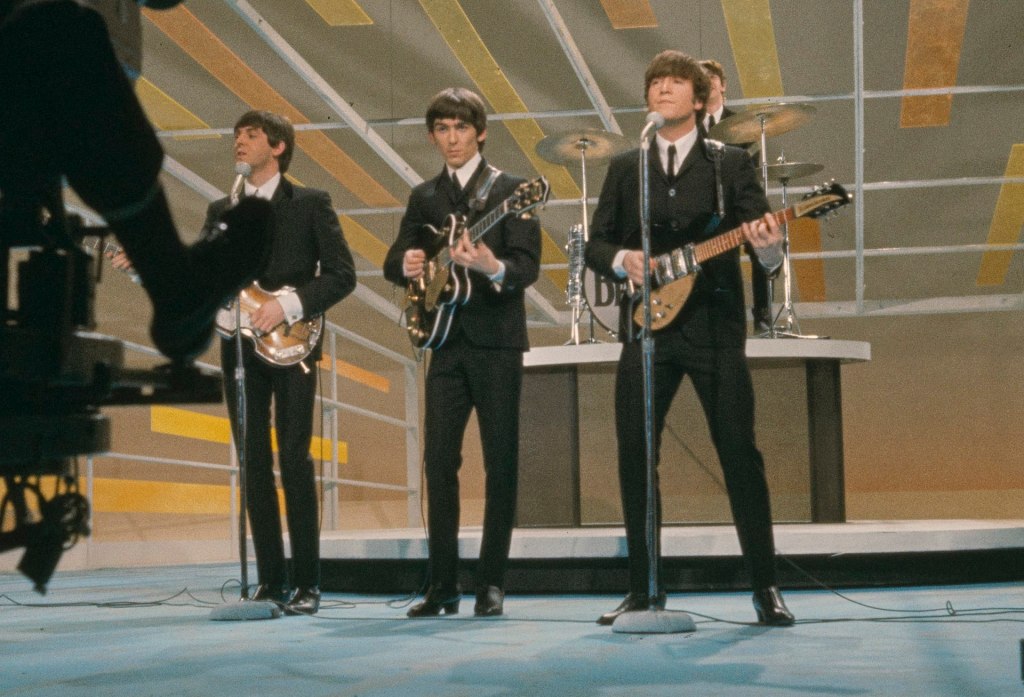
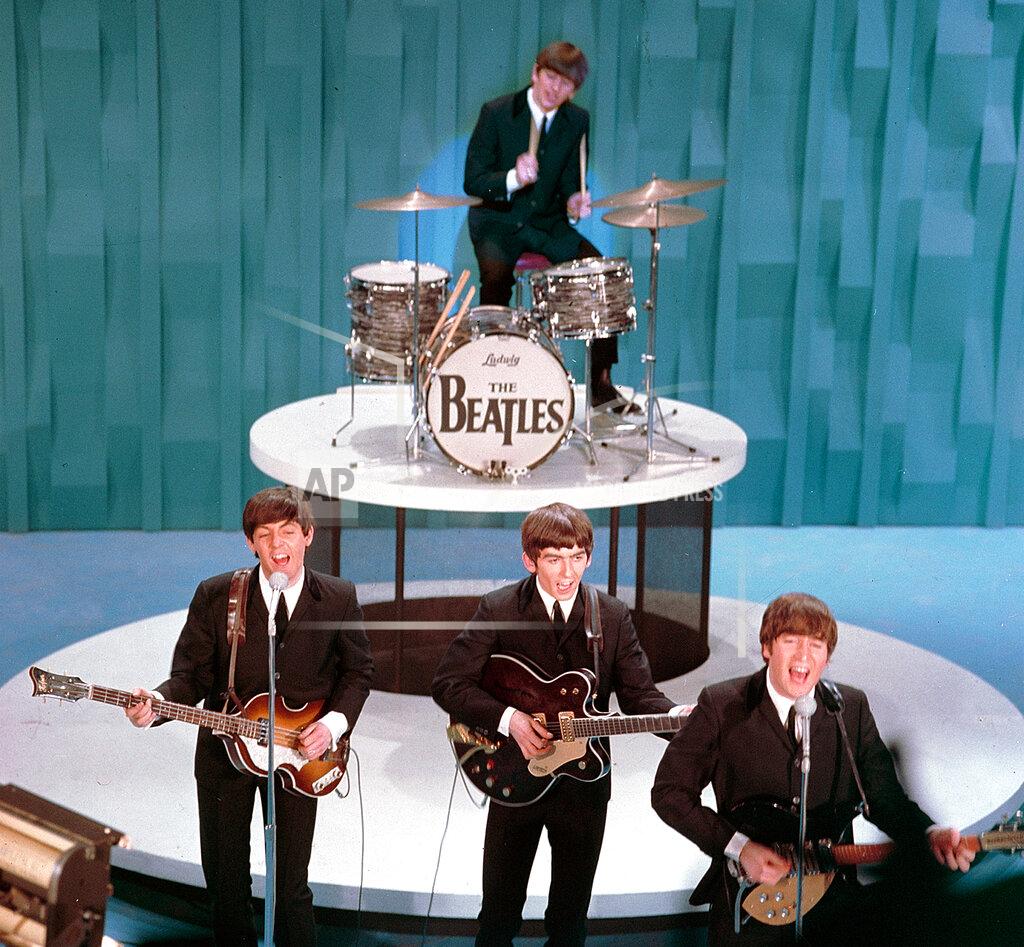
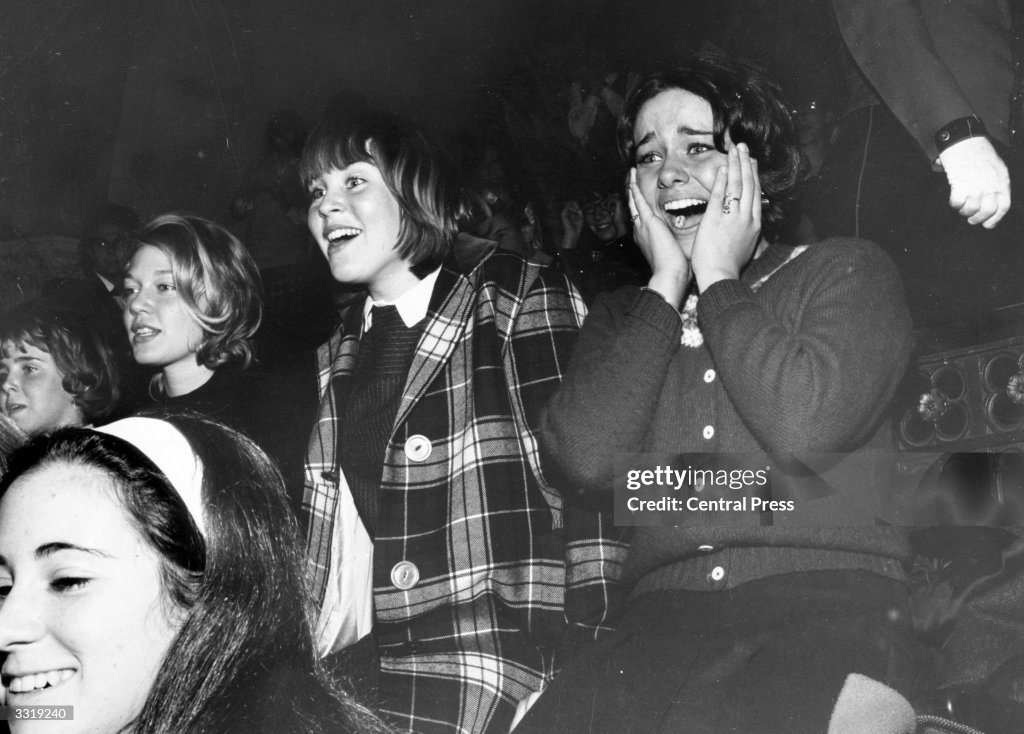
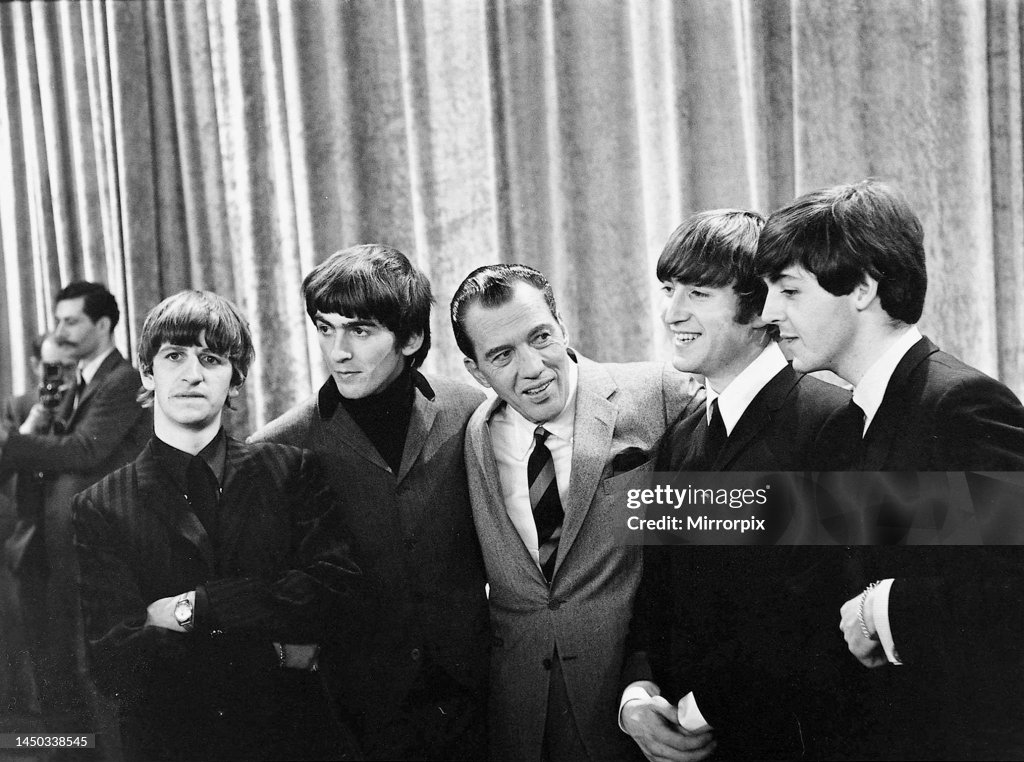
The Beatles appeared on The Ed Sullivan Show at 9:00 p.m. in New York City, marking their first live performance on American television. According to an AP report, “[T]he 721 members of the audience — mostly young girls — kept up a steady stream of squeals, sighs and yells.” The show also featured Welsh stage actress “Two Ton Tessie” O’Shea in between the Beatles’ two performances. The A. C. Nielsen Company would report two weeks later that the CBS show “was seen on television sets in an estimated 23 million homes and by close to 70 million people.” (In December, Variety would quote the figure of a “73 million audience.”) The appearance became the catalyst for the mid-1960s “British Invasion” of American popular music.
At 10:00 tomorrow morning the House of Representatives will take up the civil rights bill where it left off, in some heat, at 10 last night. The stopping point was the controversial section to ban discrimination in jobs and union membership. The House last night defeated, by a vote of 150 to 90, a motion to strike out the whole section, so there is no doubt about ultimate approval. But the length of time required to conclude action will depend on the number of amendments the Southerners still have tucked away in their jacket pockets. The House leadership of both parties and the floor managers of the bill hope a final vote can be taken tomorrow. Under prior agreement, the vote must be taken by Tuesday night. Once the fair‐employment section is out of the way, there will be only three remaining titles to dispose of. But two of these could bring on amendments.
The first of the two would provide for the Census Bureau to compile registration and voting statistics in areas recommended by the Commission on Civil Rights meaning some Southern states. Such a compilation could be used to enforce Section 2 of the 14th Amendment. This provides that states shall lose representation in the House in proportion to any denial of the right to vote. The section has never been applied.
The other controversial section would allow defendants in civil rights cases involving sit-ins, trespass and demonstrations to appeal from orders of Federal District Courts remanding the cases to the state courts from which they were removed. At present such remand orders are not reviewable, and many District Court judges in the South have been hostile to removal. The remaining title to be disposed of — there are 10 titles in the bill altogether — has three provisions.
Senator Jacob K. Javits defended President Johnson today against criticism arising out of the Senate’s investigation of Robert G. Baker. The New York Republican said he agreed with President Eisenhower, who had previously spoken up for Mr. Johnson with respect to accepting gifts. Testimony before the Senate Rules Committee has disclosed that Mr. Johnson, as a Senator, accepted a stereo set in 1957 that he thought was a gift from Mr. Baker. Mr. Baker resigned last year as secretary to the Democratic majority in the Senate. “When you are dealing with the Presidency, you have to have something a lot more solid than that before you begin to cast aspersions,” Mr. Javits said.
The Citywide Committee for Integrated Schools announced early today that it would sponsor another one‐day public school boycott in New York sometime between March 9 and April 17. The Rev. Milton Galamison, chairman of the committee, said the date would be announced in the next few weeks. He said the boycott would be called “Fizzle No. 2.” This was a sardonic allusion to a description of the first boycott, on February 3, by James B. Donovan, president of the Board of Education. He called that protest a “fizzle.” About 464,000 pupils, or 44.8 cent of the total enrollment, were absent that day. On a normal day about 100,000 pupils are absent.
Notasulga, Alabama Mayor James Rea said today that if white students boycotted the Macon County High School tomorrow as threatened, he would have “no choice” but to admit six Blacks. Mayor Rea personally blocked the admission of the Blacks last week despite a federal court order. He told the pupils a recently passed city ordinance limited enrollment at the school to 175 because of fire regulations. “But if the white students stay away from school tomorrow,” the mayor explained, “I could not prevent them from being admitted under the ordinance.”
Defense attorneys for Jack L. Ruby begin their efforts tomorrow to move his murder trial from Dallas. About 170 Dallas residents have been subpoenaed to testify on the defense’s contention that Ruby could not receive a fair trial in Dallas. Judge Joe B. Brown will rule whether the trial, now set for February 17 here, should proceed on schedule. A change of venue would mean a delay in the starting date. Judge Brown has indicated that he would follow the case and preside elsewhere if he granted the change. Henry Wade, the Dallas County district attorney, is opposing any change. He has specifically objected to transferring to Houston the trial of Ruby, who is charged with killing Lee H. Oswald, the accused assassin of President Kennedy.
James Hoffa of the International Brotherhood of Teamsters attacked the Department of Justice in a speech here today, charging that “hundreds of agents” had been sent to Chattanooga “for the sole purpose of trying to get a conviction” in his trial here. Mr. Hoffa and five co‐defendants are on trial in United States District Court here on jury‐tampering charges. The fourth week of the trial will start tomorrow. The jury‐tampering charges stem from Mr. Hoffa’s trial in 1962 on charges of conspiracy. That case ended in a mistrial after the jury, which had voted 7‐5 for acquittal, could not agree on a verdict.
The Federal trial of three alleged kidnappers of Frank Sinatra Jr. starts tomorrow. Barry Worthington Keenan, 23 years old; Joseph Clyde Amsler, 23, and John William Irwin, 42, have pleaded not guilty to a six‐count indictment charging that they kidnapped the 19‐year‐old singer from a Lake Tahoe motel last December 8. Conviction could carry a maximum sentence of life in prison, plus 75 years, and a fine of $35,000 for each man.
A dynamite blast knocked out Florida East Coast Railway service to metropolitan Miami today and derailed a 91‐car freight train. A second blast across town disabled the only derrick car the railway has in southern Florida. The police were forced to close busy U.S. 1 in northern Miami at the scene of the derailment, only yards from the heavily traveled four‐lane highway. No injuries were reported as a result of the two explosions. Damage was estimated at more than $250,000 by W. L. Thornton, the railway’s chief operating officer. Federal agents and city, county and railroad detectives were investigating. The violence was the latest — and the most damaging — in a series of acts against the railroad since 11 nonoperating employes’ unions went on strike January 23, 1963.
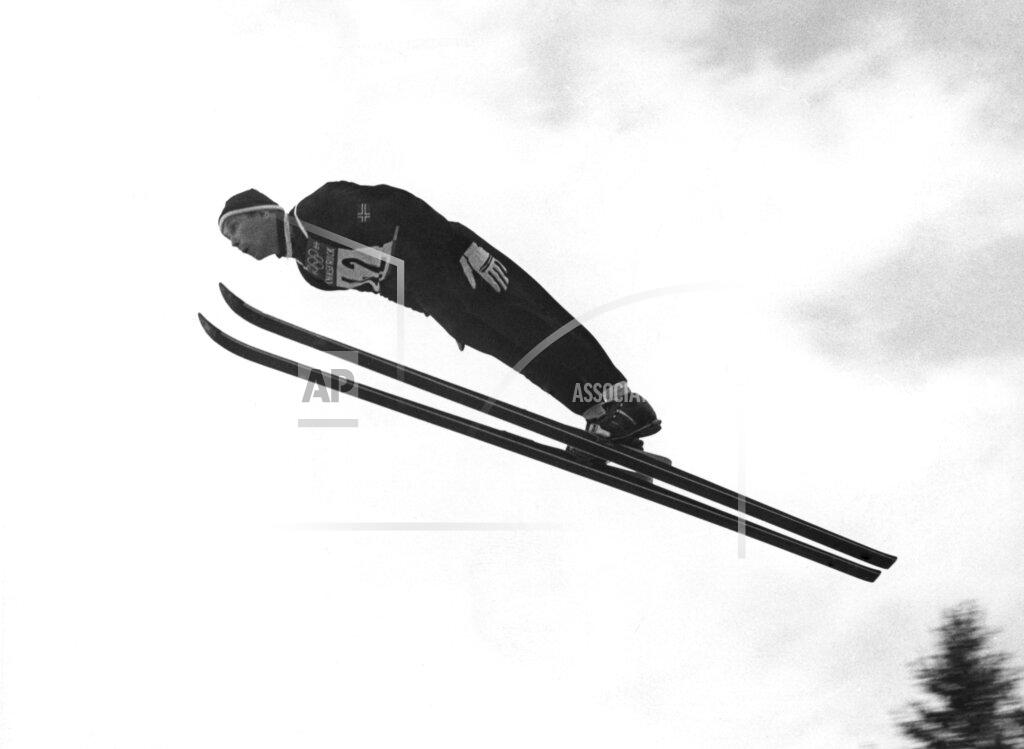
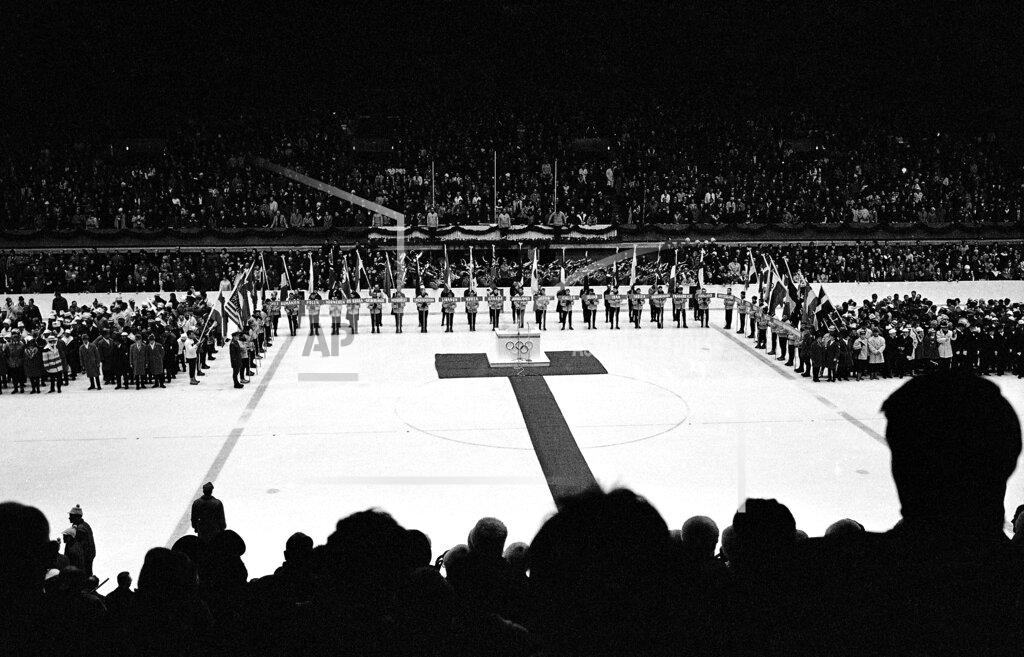
The 1964 Winter Olympics came to a close in Innsbruck, Austria. In the final event, held before the closing ceremony, Toralf Engan of Norway won the gold medal in final event, the 90-meter ski jump. The night before the closing ceremony, Ute Gähler, a member of the women’s luge team of East Germany, traveled 25 miles to Austria’s border with West Germany, then crossed over and defected.
The 1964 Australian Grand Prix was won in Melbourne by Australia’s Jack Brabham. Up until the 37th of 64 laps at Sandown Park, the race had been close until New Zealand’s Bruce McLaren had to drop out when his car threw a rod.
Born:
Ed Whited, MLB third baseman and first baseman (Atlanta Braves), in Bristol, Pennsylvania.
George Duarte, NFL wide receiver and punt returner (Chicago Bears), in Tucson, Arizona.
Moses Ford, NFL wide receiver (Pittsburgh Steelers), in Dillon, South Carolina.
Wes Dove, NFL defensive end (Seattle Seahawks), in Buffalo, New York (d. 1989, suicide).


 History Diaries