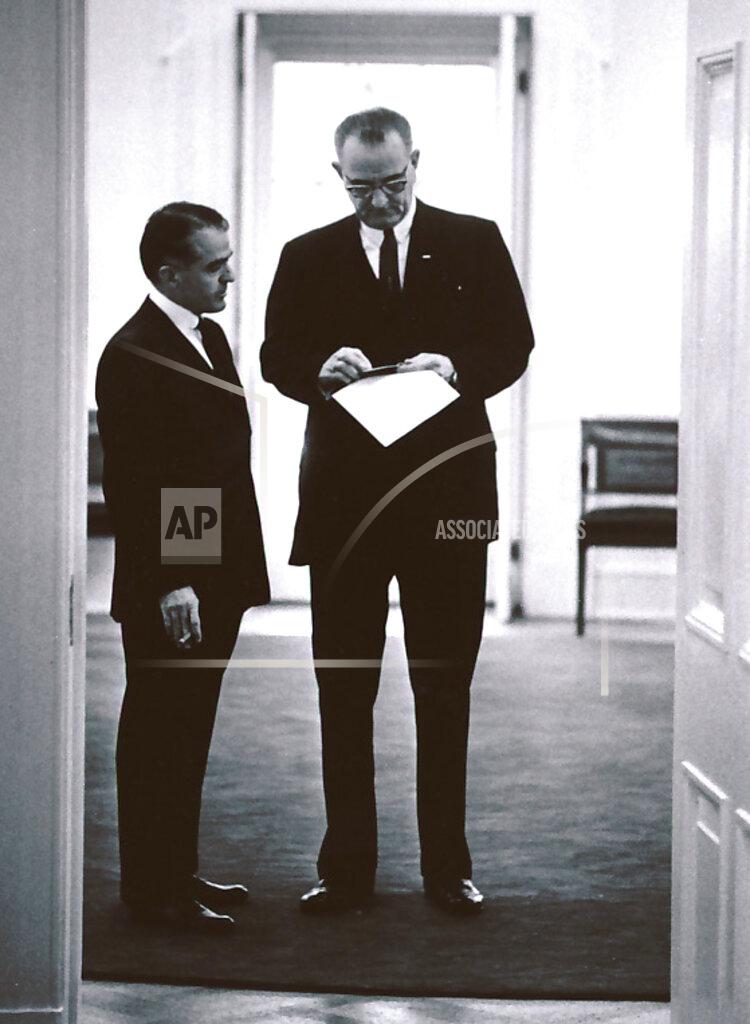
Major General Nguyễn Khánh announces the formation of a new Vietnamese Government with himself as Premier; General Dương Văn Minh is named chief of state, a titular position without authority. Nine days after replacing Minh as President of South Vietnam General Khánh announced that he would assume the role of Prime Minister, and allow Minh to resume the presidency as a nominal head of state. Minh would be removed from that post six months later, on August 16, and replaced again by Khánh.
Prince Norodom Sihanouk, the chief of state, proposed to President Johnson today that an international control commission be posted at sensitive points along the Cambodian‐South Vietnamese border to prevent “aggression” by South Vietnam. The prince told Mr. Johnson in a cablegram that the United States should cover the expenses of these posts because of “the great responsibility falling upon the United States in the war in South Vietnam.” He warned that Cambodia “cannot remain eternally passive in front of these repeated (South Vietnamese) aggressions and if no international measure is taken Cambodia will be obliged to its regret to modify its status of neutrality and have recourse to assistance pacts with certain friendly countries.” He was presumably referring to Communist China.
The Johnson Administration took a much calmer view today of the United States’ dispute with Cuba and moved to end the exchange of retaliatory harassment. Officials let it be known that they were inclined to doubt the theory that Premier Fidel Castro had provoked them into seizing four Cuban fishing boats to justify a series of actions against the United States naval base at Guantánamo Bay. In any case, Washington does not expect further trouble at the base.
The United States will carry on with measures to make the base independent of Cuban water and labor supplies. But it has also urged authorities in Florida to deal quickly and leniently with the captured vessels and crewmen, hoping to end the affair, which some officials saw as much more menacing only 24 hours ago. The boats and 38 fishermen were seized 65 miles west of Key West, Florida, Sunday. Eventually they were turned over to state officials for prosecution under a Florida law against unauthorized fishing in territorial waters. On Thursday, Cuba responded by cutting off Guantánamo’s water supply — temporarily, Havana said.
Yesterday Washington countered with orders to forgo reliance on Cuban water and to cut off the flow of dollars from the base to the Cuban Government. This would jeopardize the jobs of 2,500 Cuban workers who commute to the base and who surrender their dollar wages to a Cuban bank. The Administration moved fast and talked tough yesterday, officials said, because it had to face the possibility of a major effort to challenge the large naval installation. Premier Castro has consistently challenged the legality of the base on Cuban soil, but has thus far vowed only legal and diplomatic measures to evict the United States. The suspicion here yesterday was that the Cuban fishing boats had intentionally sailed into United States waters, with Havana’s knowledge and support. Cuban and Soviet propaganda seemed determined to link the affair with the Guantánamo question and to relate this, in turn, to the dispute between Washington and Panama over American sovereignty in the Canal Zone. The Administration saw in Cuban statements this morning a signal that there would be no further moves now. The base itself reported everything normal, and Cuban workers appeared as usual.
British Prime Minister Sir Alec Douglas-Home accused Premier Khrushchev tonight of making offensive and unfounded charges about Britain’s attempts to keep the peace in Cyprus. In his reply to a message received from the Soviet Premier yesterday, Sir Alec suggested to Mr. Khrushchev not only that he was in error, but also that he was contributing to the high level of passions in that island republic and making the situation more difficult. Under Secretary of State George W. Ball was ordered to London to join the negotiations over a peace‐keeping force on Cyprus. Mr. Khrushchev, in messages to Sir Alec, President Johnson, President de Gaulle, Premier Ismet Inonu of Turkey, Premier John Paraskevopoulos of Greece and President Makarios of Cyprus, condemned what he called a plan by allied leaders to organize “military intervention” in Cyprus.
The Soviet Premier said that because the Eastern Mediterranean was not so far removed from the southern borders of the Soviet Union, his government could not remain indifferent to the situation in Cyprus. In his reply tonight, Sir Alec said: “I will not conceal from you that I have been surprised and disappointed to receive the message which you sent me on February 7 about the situation in Cyprus.”
“I am surprised,” Sir Alec continued, “that the Soviet Government should have formed a view of this question which is so completely divorced from reality and I am disappointed that, on the basis of that view, you have seen fit to make charges which are as offensive as they are unfounded.” Britain, at the invitation of the leaders of the embattled Cypriote communities, has committed about 2,700 combat troops to patrolling the island and to holding a thin neutral zone in Nicosia since open warfare began Christmas week.
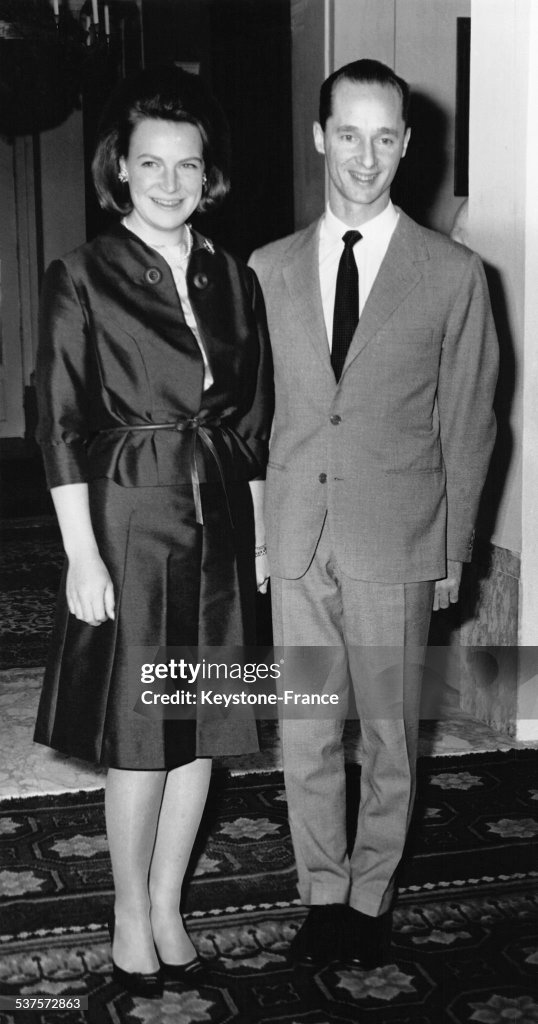
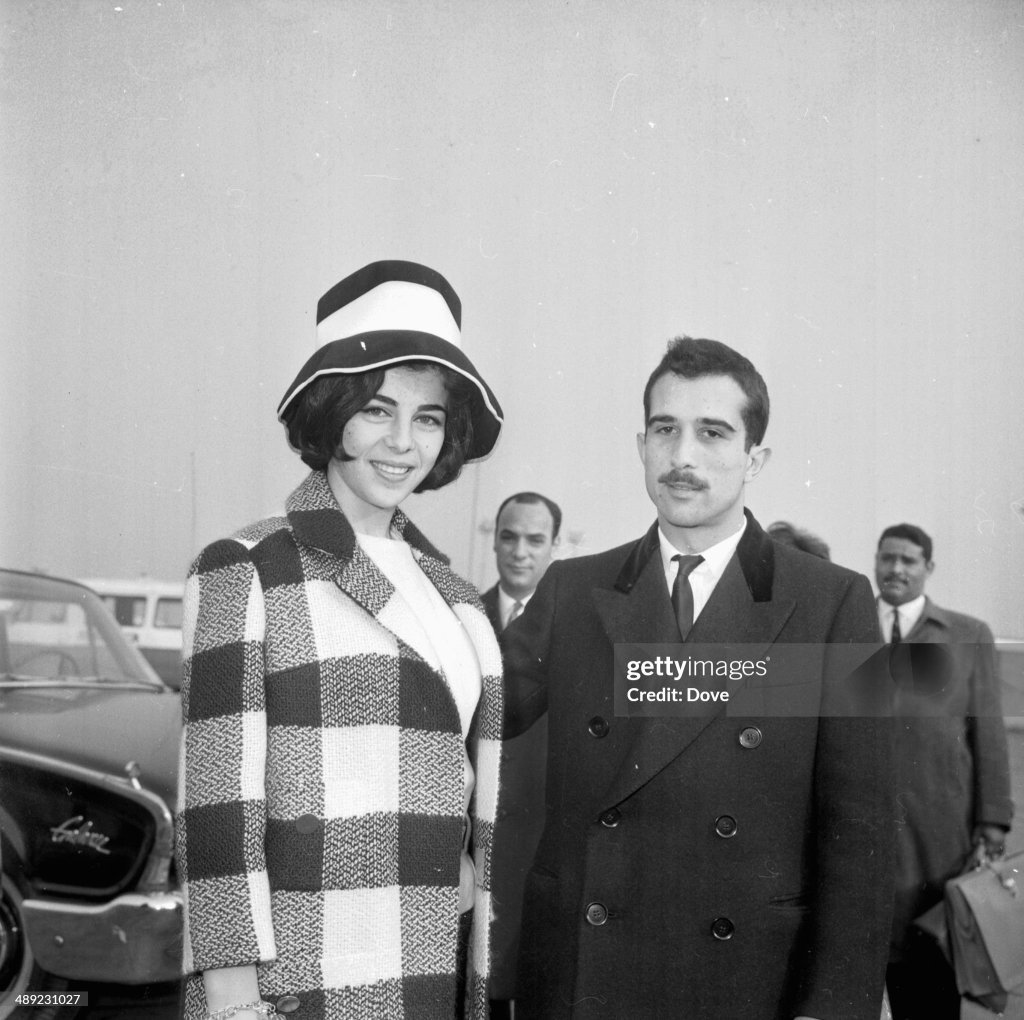
Princess Irene of the Netherlands, second in line to the Dutch throne (after Princess Beatrix, announced that she would renounce her claims to succession in order to marry Carlos de Borbon y Parma, a Roman Catholic and the son of the Carlist pretender to the throne of Spain. By “just acting natural,” Prince Carlos Hugo of Bourbon‐Parma and Princess Irene of the Netherlands concealed that they were in love and wanted to marry. The prince told with a smile today how “the secret” was secret, and then flew off with the Princess to The Hague to “talk things over” with the Dutch royal family. Prince Carlos, a lean, 33-year-old athlete and French Air Force pilot and parachutist, was interviewed by the Spanish press agency E.F.E. after he was revealed as Irene’s fiancé. “We met for the first time many years ago,” he said, “and since then we have met at several places in Europe. But it was not until recently in Spain that we decided to become engaged.”
One hundred Somalis have been killed and 200 wounded in border clashes with Ethiopian troops, the Ethiopian Government said in Addis Ababa today. Nine Ethiopians were reported killed and 44 wounded. The main fighting occurred yesterday around the town of Tug Wajale, which lies on both sides of the border. The Government said the Somalis had been dispersed and had left ammunition, weapons and trucks behind. The Ethiopian Information Ministry charged that 2,000 Somali troops invaded Ethiopia Friday with artillery support. Official sources here said the Somalis were putting pressure on 10 Ethiopian posts along the border and that Tug Wajale had been ruined. Fighting was reported to have broken out again today.
Ethiopia declared a state of emergency on the Somali border, and Emperor Haile Selassie sent an urgent message to African heads of state to inform them of the fighting. The emperor described the situation as “the latest in a series of incidents which have been provoked by armed bands from Somalia.” He also said he would send African leaders an account of the events of the last three and a half years that have resulted “in the present sad deterioration of relations between Ethiopia and Somalia.”
The Government of Ghana deported four American faculty members and two other foreign teachers at the University of Ghana today for allegedly “indulging in subversive activities.” Among those ordered expelled was Professor William Harvey, dean of Ghana’s Law School, who is on leave from the University of Michigan Law School. The expulsions were announced over the Ghana radio as more than 2,000 members of the ruling Convention People’s party invaded the university campus at Legon carrying anti-American placards and chanting “Down with Yankee stoogism,” and “C.I.A. students go home.” The expulsions followed a week of almost daily demonstrations by the Government party against the United States and the publication of vitriolic anti‐American propaganda in the party press. The demonstrations led to the recall of Ambassador William P. Mahoney Jr. Thursday for “urgent consultations” in Washington
U.S. Senator Barry Goldwater said today that Cuba “must be sealed off” with a new naval blockade. He also told 3,000 cheering Republicans here that when water supplies to the Guantanamo Bay naval base were cut off, the United States should have used marines if necessary to “turn it back on.” Standing under an American flag the size of a tennis court, Mr. Goldwater received two standing ovations from the crowd at a Republican $100‐a-plate fundraising dinner. He was frequently interrupted by applause. The crowd did not, however, specifically applaud his call for a new blockade to prevent military supplies from reaching Cuba.
U.S. Congressman Howard W. Smith of Virginia, a supporter of racial segregation, introduced an amendment to the Civil Rights Act of 1964 to add a prohibition against employment discrimination based on gender, one of several attempts by Deep South members of Congress to stall passage of the bill. Smith’s motives have been questioned, since he opened with a humorous speech about one of his constituents who had asked him to “remedy the shortage of men for women to marry”, though he would say later that he believed that if the law passed, white women should have the same advantages that African American men and women would be given. In any event, female members of Congress were irritated enough by the frivolous “Ladies’ Afternoon in the House” debate among their male colleagues, that “the Virginia Congressman’s tactical maneuver backfired”, the amendment passed 168-133, and Title VII would end up becoming part of the law.
The House failed to complete action on the civil rights bill tonight after bogging down in a morass of amendments to the section outlawing discrimination by employers and labor unions. At 10:12 P.M. the House adjourned until 10 A.M. Monday, when it will resume debate on one of the most controversial sections in the omnibus bill. The chances for a final vote Monday on the whole bill are probably slim. However, a final vote must be taken by Tuesday. On the question of adjournment, the Northern bipartisan coalition broke ranks for the first time. The Republicans wanted to stay all night, if necessary, so that they could get away for the traditional Lincoln’s Birthday speech‐making.
They were resentful when Representative Emanuel Celler, Democrat of Brooklyn, who is floor manager for the bill, put the motion to adjourn. As the Northern Democrats stood up in support of Mr. Celler, ironic cries of Coalition! Coalition!” arose from the Republican ranks. The Republican leader, Charles A. Halleck of Indiana, was so angry that he demanded a roll call on adjournment, a most unusual request. The motion to adjourn carried, 220 to 175. However, with the Southerners showing no signs of running out of amendments, it was doubtful that action on the fair employment section and the three remaining sections could have been completed by dawn. It was a tumultuous day. The final fate of the section was never in doubt, as was demonstrated tonight when a motion to kill it entirely was easily defeated, 150 to 90.
The House battle on the civil rights bill is all but over. The war in the Senate is about to begin. In the House the Southerners were defeated at every turn. But the bill in the Senate will be something else again. The difference between the House and the Senate is the difference between the five‐minute rule on amendments and unlimited debate. The battle in the House was hardly a battle, not even a token one. The Southern leaders threw up amendments by the dozen. But time and again not more than half or two‐thirds of their regional force—numbering about 100—passed between the tellers. They were whipped before they started, they knew it, and their heart was not in it.
The Southern leaders had no hopes of tempering those provisions of the bill most repugnant to the South. They were not out even to make a showing. They were intent on making a record — first, for the folks back home, but more importantly for the use of their friends in the Senate, which will be the Verdun in this struggle. The Senate has held no hearings on the bill as it is. Last summer’s hearings in the Senate Commerce Committee were limited to the public accommodations section. The hearings on the whole of the original bill in the Judiciary Committee were nothing but a marathon legal hazing of the Attorney General by “the North Carolina solon,” as Senator Sam Ervin calls himself. Therefore, the Southern leaders in the House used their time to open up salients for the big push in the Senate.
Nevertheless, the ease with which the coalition of Northern Democrats and Republicans were carrying the day in the House should not be allowed to detract from the significance of what happened there this week. This is the most far‐reaching civil rights bill ever put before Congress. Its prohibitions—against subjective use of voter qualification tests, against discrimination in public accommodations and state‐operated public facilities, against police brutality and denial of first amendment rights, against discrimination in Federally‐assisted programs —and the powers given to the Attorney General to initiate, or intervene in, legal proceedings to enforce these prohibitions, all added up to an extension of Federal authority unthinkable a few years ago. smoothly through the House? Why has it received such overwhelming support? The two questions, of course, are interrelated. It moved easily because of organization. There are 432 members in the House now, with three vacancies. Not once did fewer than 400 answer a quorum call. The civil rights supporters had compelling reasons to be on hand — White House pressure, of course, but even more important this election year was the presence in the galleries of mental tellers from civil rights groups, labor organizations, religious affiliates.
For four consecutive years, midwinter’s passing has brought Black activists into the streets to mount another campaign in the war on racial privilege. This year is no exception. The relative calm that marked the first two months of the Johnson Administration has been shattered by a riot in Cleveland, brawls in Atlanta, a school boycott in New York and lesser crises scattered from Chicago to Chapel Hill to Jackson, Mississippi. If the trend of these opening skirmishes continues, this year’s struggle will be of even greater scope and intensity than those of the past. The issues will be more complex. Solutions will be more difficult to find. Further, as was true of the wave of sit‐in demonstrations against lunch counter segregation that ushered in the direct action movement in February of 1960, the politics of a Presidential election year will add to the conflict. Thus, President Johnson faces the unpleasant task of wrestling with a reluctant Congress over the civil rights bill in an atmosphere of rising tension. And it seems there is little he can do to change it.
The head of the United Automobile Workers has told the membership that President Johnson’s wage-price policy will not restrict the union’s collective bargaining goals this year. Walter P. Reuther made that point in an administrative letter sent last week to the union’s 1,200 locals.
President Johnson, spending an unexpected weekend in Texas, mixed White House routine today with relaxation at the LBJ Ranch. Mr. and Mrs. Johnson flew here last night after receiving news of the death of an old friend, Mrs. J. C. Kellam of Austin. They will attend the funeral at 3 P.M. tomorrow. The President brought only a skeleton staff with him last night, but McGeorge Bundy, his Special Assistant for National Security Affairs, arrived here this afternoon. Mrs. Bundy was with him and the two were to be guests tonight and tomorrow at the LBJ Ranch. Pierre Salinger, the White House news secretary, said Mr. Johnson wished to discuss a number of world situations with Mr. Bundy.
Peter Shaffer’s musical “Royal Hunt of the Sun” premieres in London.
Judy Garland was taken to Mount Sinai Hospital last night, unconscious and with cuts on her face. The hospital said she had suffered a mild concussion but was in good condition. Her physician, Dr. Kermit Osterman, reported that the singer had stumbled and fallen in her suite at the Sherry Netherland Hotel. He accompanied her to the hospital in an ambulance.
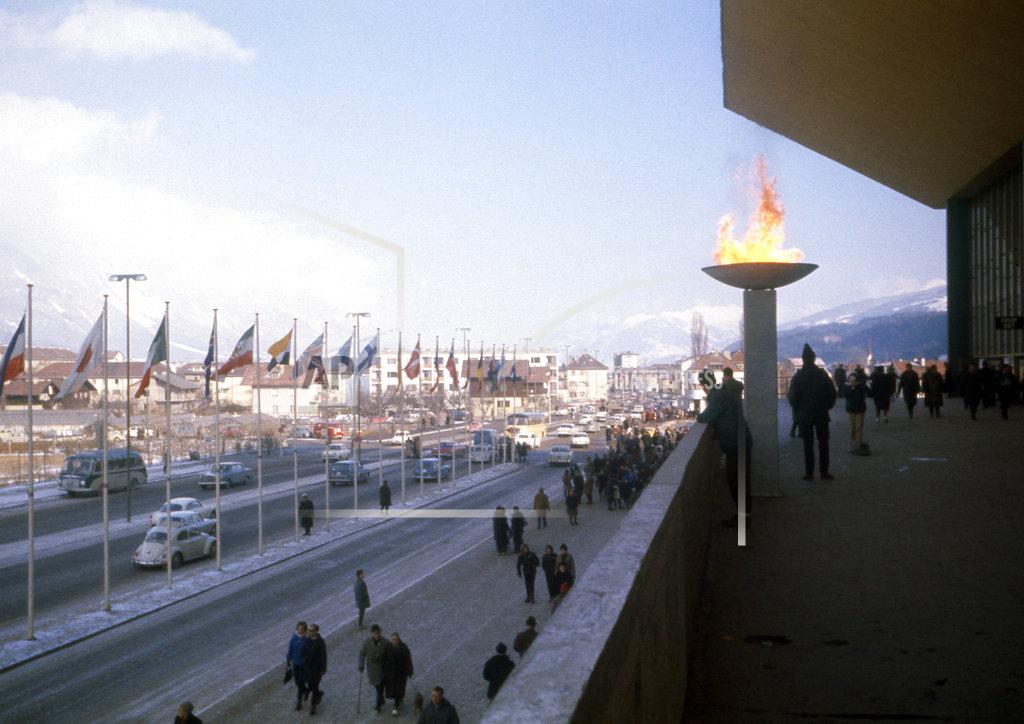
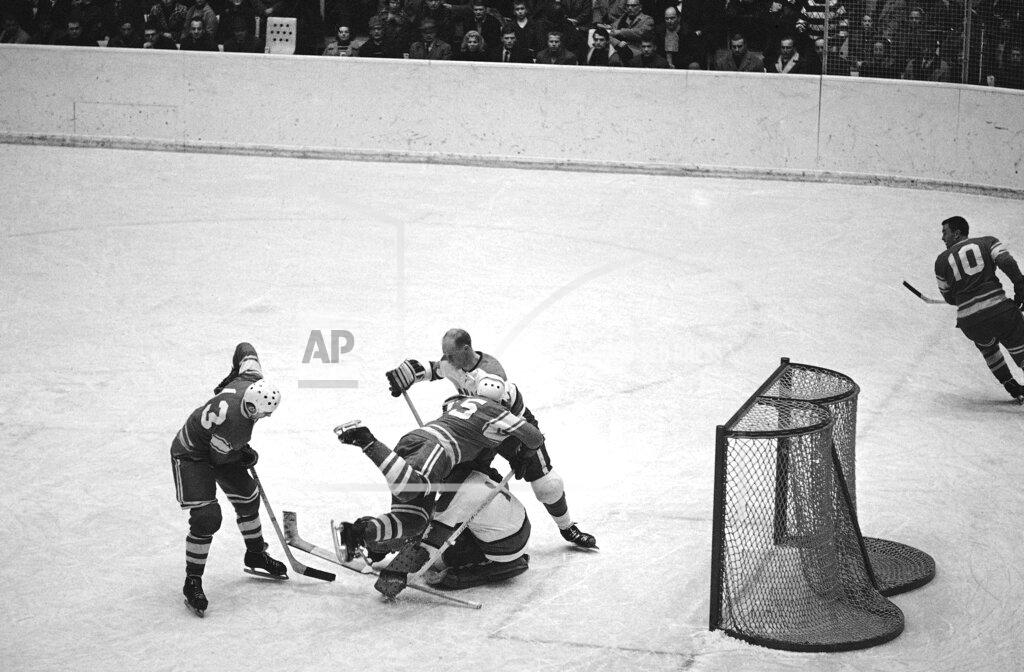
The Soviet Union’s team won the gold medal in hockey at the Winter Olympics in Innsbruck, Austria, by beating the Canadians, 3‐2, in their final game of the round‐robin tournament yesterday.
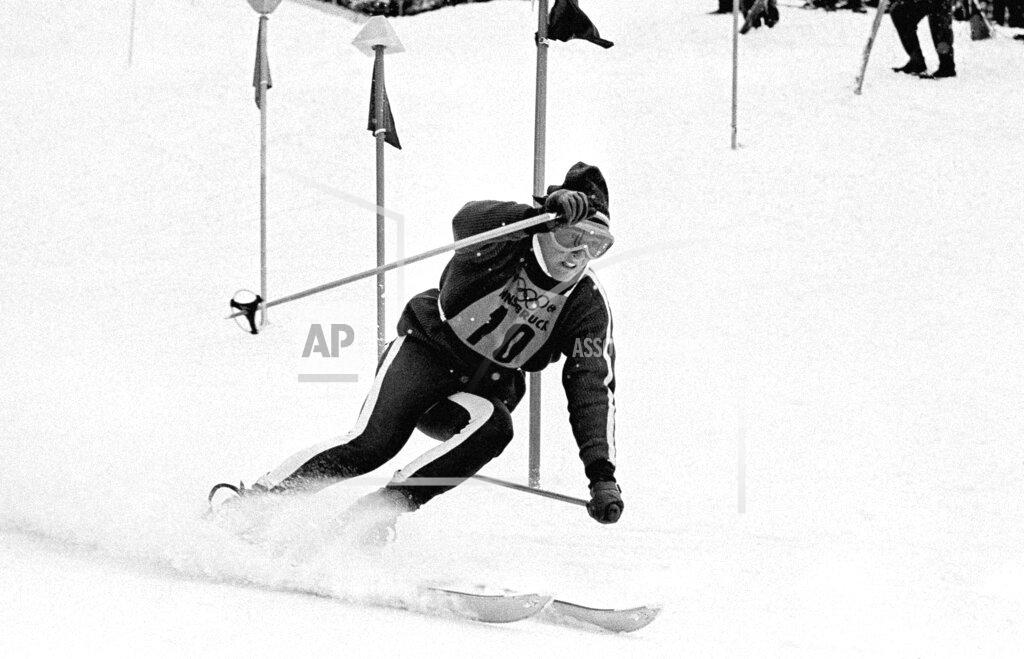
Americans turned in surprising performances by finishing second and third in the men’s slalom. Bruce Kidd of Vermont placed second and Jimmy Heuga of California was third. Josef Stiegler of Austria took the gold medal.
A tremendous spurt by Assar Roennlund gave Sweden the gold medal today in the 40‐kilometer men’s ski relay race as the Winter Olympic Games neared an end. Finland finished second and the Soviet Union, leading at the halfway point, was third. Sweden’s time for the race of about 25 miles over the hills and through the trees was 2 hours 18 minutes 34.6 seconds. Finland was timed in 2:18:42.4 and the Soviet Union in 2:18:46.9. Norway was fourth in 2:19:11.9.
Born:
Dennis Gibson, NFL inside linebacker (Detroit Lions, San Diego Chargers), in Des Moines, Iowa.
Edgar Díaz, Puerto Rican MLB shortstop, second baseman, and third baseman (Milwaukee Brewers), in Santurce, Puerto Rico.
Trinny Woodall, British fashion guru (Trinny and Susannah-“What Not to Wear”), in London, England, United Kingdom.
German Gref, Russian economist and politician, in Panfilovo, Kazakh SSR, Soviet Union.
Died:
Boshirō Hosogaya, 75, former Imperial Japanese Navy admiral
Ernst Kretschmer, 75, German psychiatrist who first identified the persistent vegetative state known as Kretschmer’s syndrome

 History Diaries