The Battle of Minorca began. The island of Minorca, still held by the Republicans, is captured by the Nationalists by ship, with no resistance. Mallorca has been Nationalist-held for most of the war, and now the smaller island of Minorca is simply brought into the fold. Only one person is killed, but the Republicans start planning a coup with Prime Minister Negrín.
The Spanish Government’s policy is unchanged, and the civil war will continue in Central Spain after it ends in Catalonia, Foreign Minister Julio Alvarez del Vayo declared in Perpignan, France today. He added his emphatic denial that peace negotiations had begun. Premier Juan Negrin is still in Catalonia, along with most of his Ministers, according to Señor Alvarez del Vayo, and will remain there just as long as possible. The presumption is that he will go directly to Valencia when he has to leave.
A dispatch to The Associated Press from Valencia stated that General José Miaja, Republican Army commander in the Madrid-Valencia zone, was determined to fight to the finish and convinced that the government was in “a splendid position” to continue the struggle, despite the loss of Catalonia.
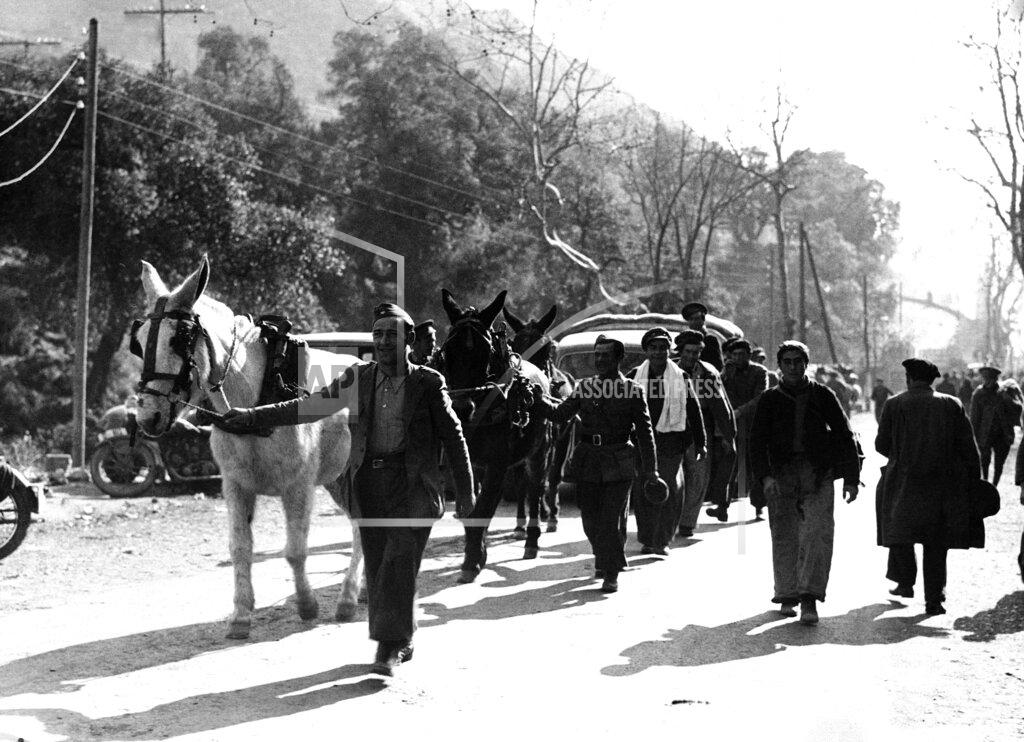
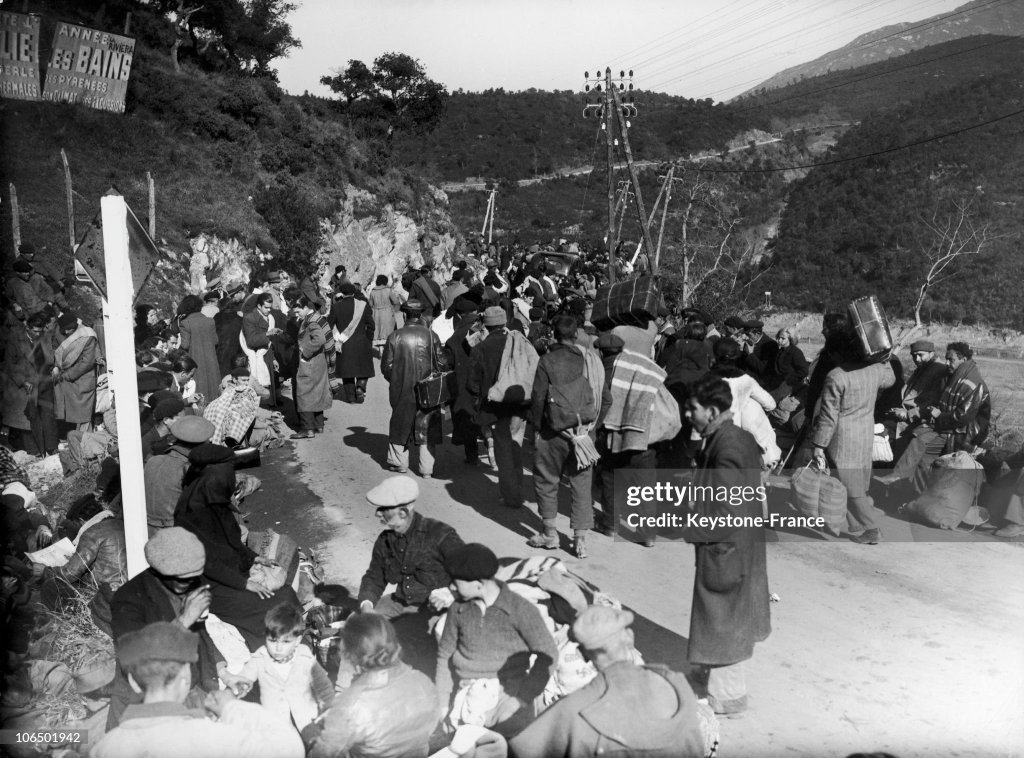
As the stream of refugees into France thinned, some 700 members of the International Brigades crossed the border and went into French refugee concentration camps. Also crossing the frontier were large quantities of guns, mortars, grenades and planes, which were surrendered to the French.
With many Loyalist officials on French soil, warnings were issued in the Senate in Paris that political activity by them would not be tolerated. On the other hand, Foreign Minister Bonnet said France would not permit a foreign State to threaten Spain’s integrity.
But in Rome Virginio Gayda, reaffirming Italy’s intention of keeping her troops in Spain until the “political victory” was won, said the aim was to prevent intriguing from French territory and to effect French recognition of the Franco regime.
Alfred Rosenberg, at a press conference in Berlin, discusses a plan to settle all 15 million of the world’s Jews on the island of Madagascar.
In conversation with the Czech Minister for Foreign Affairs, the French Minister in Prague, M. V. De Lacroix, is told that the Germans place an importance to the Jewish question which is out of all proportion to the other questions remaining between themselves and the Czechs, such as the status of the current frontiers.
He relates that the Foreign Minister of the Reich (von Ribbentrop), as well as the Chancellor (Hitler), are said to have stated emphatically that it was not possible to given a German guarantee to a State which does not eliminate the Jews:
“Do not imitate the sentimental and leisurely manner in which we ourselves treated this problem,” the two statesmen are reported to have said. “Our kindness was nothing but weakness, and we regret it. This vermin must be destroyed. The Jews are our sworn enemies, and at the end of this year there will not be a Jew left in Germany. Neither the French, nor the Americans, nor the English are responsible for the difficulties in our relations with Paris, London, or Washington. Those responsible are the Jews. We will give similar advice to Rumania, Hungary, etc…. Germany will seek to form a bloc of anti-Semitic States, as she would not be able to treat as friends the States in which the Jews, either through their economic activity or through their high positions, could exercise any kind of influence.”
The Pope’s health was again the cause of apprehension today when only half an hour or so before the usual audiences it was suddenly announced that he was not sufficiently well to see anyone and would not leave his apartment. Cardinal Pacelli, Vatican Secretary of State, who is always the first to be received in the morning, was the only visitor admitted. The reason given officially for the decision of the papal physician not to allow the Pontiff to leave his room was that he was suffering from a slight cold and desired to recruit his strength for the long and trying ceremonies on Saturday and Sunday to celebrate the tenth anniversary of reconciliation with the Italian Government and the seventeenth of his coronation. The fact that preparations for these ceremonies are being continued is a hopeful sign.
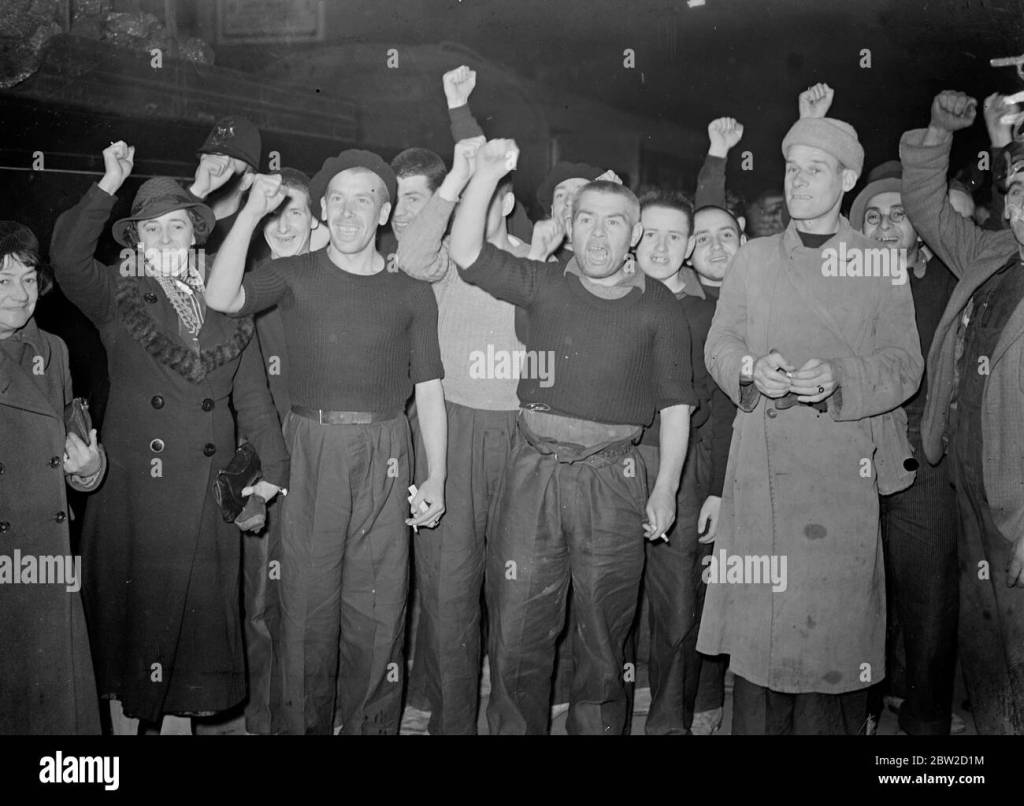
In the streets of Derry, IRA supporters burnt thousands of leaflets issued by the British Government calling for “voluntary national service”.
Irish Prime Minister Eamon de Valera, speaking in the Senate tonight, announced his government’s intention of taking immediate steps to meet the challenge of the Irish Republican Army, which is being held responsible for the bombing outrages in Great Britain. Tomorrow when the Dail Eireann meets, Mr. de Valera told the Senate, he will straightway introduce measures conferring special powers upon the Executive to deal with the situation the extremists have created. Like his predecessor, former President William T. Cosgrave, Mr. de Valera now finds it necessary to amend the Constitution and enact a Public Safety Act under which extremists may be arrested and brought before a special tribunal. When his new Constitution came into force, Mr. de Valera suspended the existing Public Safety Act and abolished the military courts, hoping that the invocation of such extraordinary powers would no longer be necessary. The extremists’ propaganda activity at home and their organized bombing attacks in Britain have forced him, much against his inclinations, to move to suspend the ordinary civil processes.
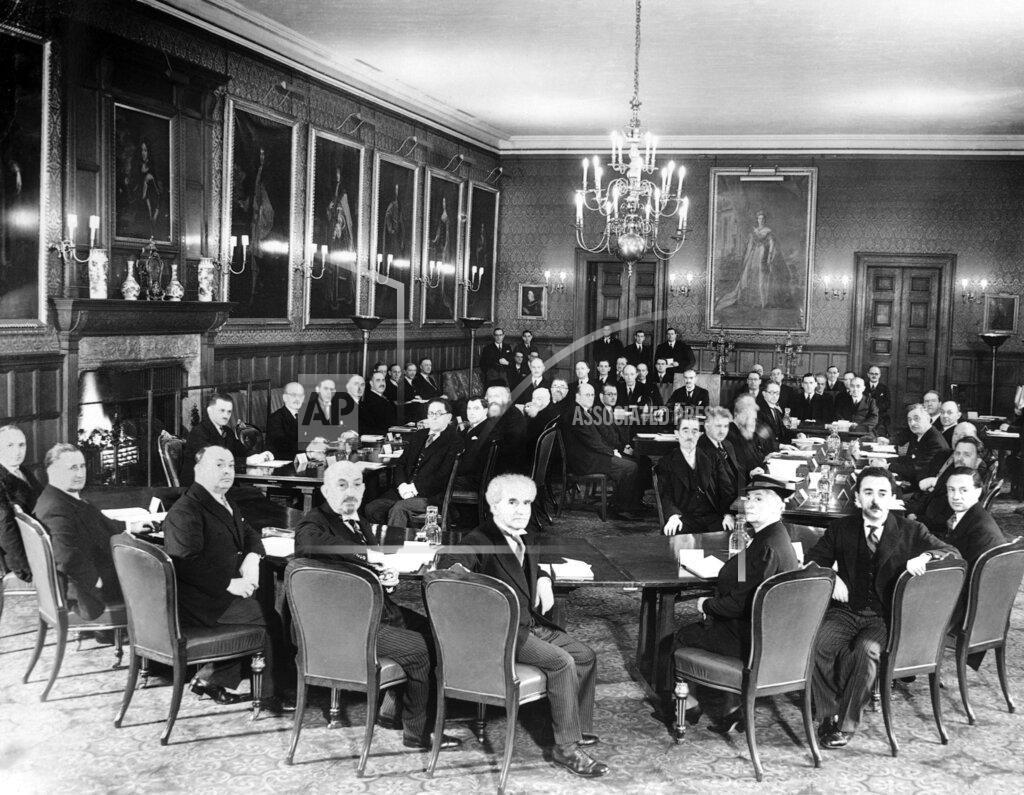
The London Conference on Palestine opened. Despite the hardest sort of effort by the British Government, the split between the two groups of Palestinian Arabs remained wide open at the formal beginning of the Palestine conference this morning. As a result, the opening was restricted to optimistic speeches of welcome by Prime Minister Neville Chamberlain and similar responses by the Jews and the Arabs. The first meeting between the British delegation and the Arabs, which had been slated for this afternoon, had to be postponed while Colonial Secretary Malcolm MacDonald continued his efforts to compose the differences between the Arab groups and to induce them to present a united front at future meetings.
In his speeches of welcome to the Arabs and the Jews, Mr. Chamberlain set forth again his contention that peace must first depend on personal contact. He reiterated the British Government’s determination that the conference should be “full, frank and free,” and he explained that while standing by the principle that Palestine should be a national home for the Jews the British Government had no intention of advancing their own arguments until the two sides had made their positions clear.
The Colonial Secretary, Malcolm MacDonald held a series of separate meetings with the Palestinian and Zionist delegation, because the Palestinian delegation refused to sit in the same room as the Zionist delegation. When MacDonald first announced the proposed conference he made clear that if no agreement was reached the government would impose a solution. The process came to an end after five and a half weeks with the British announcing proposals which were later published as the 1939 White Paper.
Arabs riot in Jerusalem to protest the London Conference, a meeting between Britain, Arabs and Jews, discussing the end of the British Mandatory Government of Palestine and the setting up of independent Arab AND Jewish states.
U.S. President Franklin D. Roosevelt threw the fight over relief funds back into the lap of Congress today, declaring in a curt message that there already existed an “emergency” demanding its immediate consideration of restoring the $150,000,000 which it cut a week ago from his $875,000,000 supplemental appropriation request. In notifying Congress that he had signed the $725,000,000 measure, Mr. Roosevelt said he would have rejected it “on the ground of its inadequacy to meet human need,” were it not for a provision that no more than 5 percent of those now on relief could be put off the rolls before April 1. He was asking immediate consideration of the restoration, he indicated, because it would require until March 1 to obtain Congressional action. Within a few minutes of receipt of the message on Capitol Hill leaders of the economy group which had slashed the $150,000,000 from the supplemental WPA request, were putting their heads together for another fight should the President carry further his attempt to restore the cut.
The Congressional economy advocates regarded the message more as continuing the battle over the reduction than as a statement of a new “emergency” as required under the terms of the bill which the President said he had signed last Saturday. Leaders of this group already were planning further cuts in relief appropriations, as well as wholesale revision of the entire Federal unemployment-relief system when the appropriation for a full fiscal year was requested of Congress in the Spring of this year. Although mild in their public reactions, these Representatives and Senators did not hesitate to show their firm attitude privately, and they expressed fears for the future of the Democratic Party if the contest between the President and his party members in Congress over the spending program continued.
President Roosevelt charged in a letter to Judge Floyd H. Roberts today that Senators Glass and Byrd of Virginia had attempted to usurp his constitutional prerogative of naming judges to the bench by invoking the rule of Senatorial courtesy which led to rejection by the Senate yesterday by a vote of 72 to 9. At the same time Mr. Roosevelt gave the lie in polite language to Senator Glass for having testified before the Senate Judiciary Committee that the President has given to Governor Price of Virginia the veto power over nominations made by the Senators from that State. Neither this statement nor another by Mr. Glass that the Attorney General gave no consideration to his recommendations was true, the President said.
“I am sorry, in view of my long personal friendship for the senior Senator, that he has made any such statement, and I can only excuse it on the ground of anger or forgetfulness,” the President wrote. While the Constitution has vested in the Senate as a whole the duty of rejecting or confirming nominees solely on the ground of their fitness, the body had on rare occasions rejected nominees “on the ground of their being personally obnoxious to their Senators,” thus vesting in individual Senators what amounted to the power of nomination, Mr. Roosevelt said.
An Army Air Corps force of 5,500 serviceable planes has been agreed upon by the House Military Affairs Committee and the committee will report the Emergency Defense Bill to the floor tomorrow. Debate is expected to start on Monday. Originally the measure specified 6,000 planes as the maximum, but General Malin Craig, Chief of Staff, and other War Department experts testified that 5,500 would meet present needs. When War Department witnesses spoke to the Senate Military Affairs Committee, however, they suggested a 6,000 limit because, under certain circumstances, the larger number might be provided within the $300,000,000 which the bill would authorize. The measure would authorize the training of pilots in approved civilian flying schools, an increase In the officer and enlisted personnel of the Air Corps and other branches of the army affected, and the expenditure of $32,500,000 in “educational orders” to familiarize industrial plants with the duties which they might have to perform in war time.
The Public Works Administrator recommends a permanent public works department.
A House Representative seeks protection of the bald eagle.
The World’s Fair will employ 1,000 hostesses.
Charlie Chaplin completes the script of his next movie, “The Great Dictator.” It includes a speaking part for Chaplin.
El Salvador insists its government is democratic and denies Nazi or fascist influence.
Japan reports its failure to resolve its border dispute with Russia.
No further progress has been made by the Japanese in their drive toward Ichang, which last week gave indications of becoming an offensive to occupy that Yangtze “treaty port” and Shasi, 100 miles down the river. A Chinese military spokesman today told your correspondent that it was not now believed that a push toward Ichang was likely. He thought the recent Japanese activity westward of Hankow was more probably connected with an offensive on Sian, capital of Shensi Province. He said it was expected that Japanese forces in Central China would take part in such an offensive by driving up the Han River valley toward Hsiangyang and then toward Sian.
The Chinese spokesman said he thought the Japanese, by utilizing their Hupeh, Honan, Hopeh and Shansi forces and bringing in perhaps a new division from Manchukuo, could marshal approximately ten divisions for Sian operations. He believed, however, that a Sian drive would depend for its success on the present Japanese clean-up campaign in Shansi, which he denied was favorable to the Japanese. It is reported that Chinese planes from Sian cooperated with land forces in defending Chungtiao mountain districts in South Shansi against a Japanese attack Sunday, bombed Japanese defenses and supply stations and destroyed a section of railway. Two Japanese regiments are said to have withdrawn from the Chungtiao attack toward Kungkuantsun.
The Japanese continue widespread air raids upon interior Chinese cities, nearly everywhere using incendiary bombs, which are setting devastating fires. Sian in Shensi, Tangyang in Hupeh, Kweihsien in Kwangsi, Tuchang, Chinhsien, Tunghsiang, Wuning, Nanchang, Pinghsiang, Changshu, and Hsiangtang in Kiangsi were bombed yesterday. The present count for Saturday’s raid on Kweiyang is 250 killed, 500 injured and the count for Wanhsien 1,000 killed and injured.
The Japanese Navy is not concerned about the fortification of Guam, which, in the opinion of its high officers, would only be a point of vulnerability for the United States, Admiral Mitsumasa Yonai, the Naval Minister, said today. Replying to a question by Paryusuke Tsurumi, who is known in America as a lecturer on Japanese subjects, Admiral Yonai said, according to the newspaper Asahi: “The United States seems to be planning to strengthen the fortifications of Guam. If that is so, I should feel rather sorry for America from the naval point of view. The fortification of such a distant point increases vulnerability. The Imperial Japanese Navy, therefore, is not worried about these reports. We will deal with the situation after the plans have materialized.” According to an Associated Press dispatch, the expression used by Admiral Yonai and translated as “feel rather sorry for,” was said by other Japanese to mean that Japan would regret if the United States felt it necessary to increase armament in the Pacific, but that no threat by Japan was implied.
Admiral Yonai told a committee of the Diet today that Japan was preparing a wholly new naval building program, the budget for which he said would be submitted soon. He said the plan was designed to balance construction with that of other nations and will provide for new vessels and expansion of the air force.
Dow Jones Industrial Average: 144.10 (-0.93).
Born:
Dan Ficca, AFL guard (Oakland Raiders, New York Jets), in Atlas, Pennsylvania.
Amos Bullocks, NFL halfback (Dallas Cowboys, Pittsburgh Steelers), in Chicago, Illinois.
Frank Kreutzer, MLB pitcher (Chicago White Sox, Washington Senators), in Buffalo, New York.
Naval Construction:
The Royal Navy Halcyon-class minesweeper (Third Group) HMS Sphinx is launched by William Hamilton & Co. (Port Glasgow, Scotland); completed by J.S. White & Co. (Cowes, U.K.).
The U.S. Navy submarine USS Sargo (SS-188), first of her class of 10, is commissioned. Her first commanding officer is Lieutenant Commander Elmer Eugene Yeomans, USN.


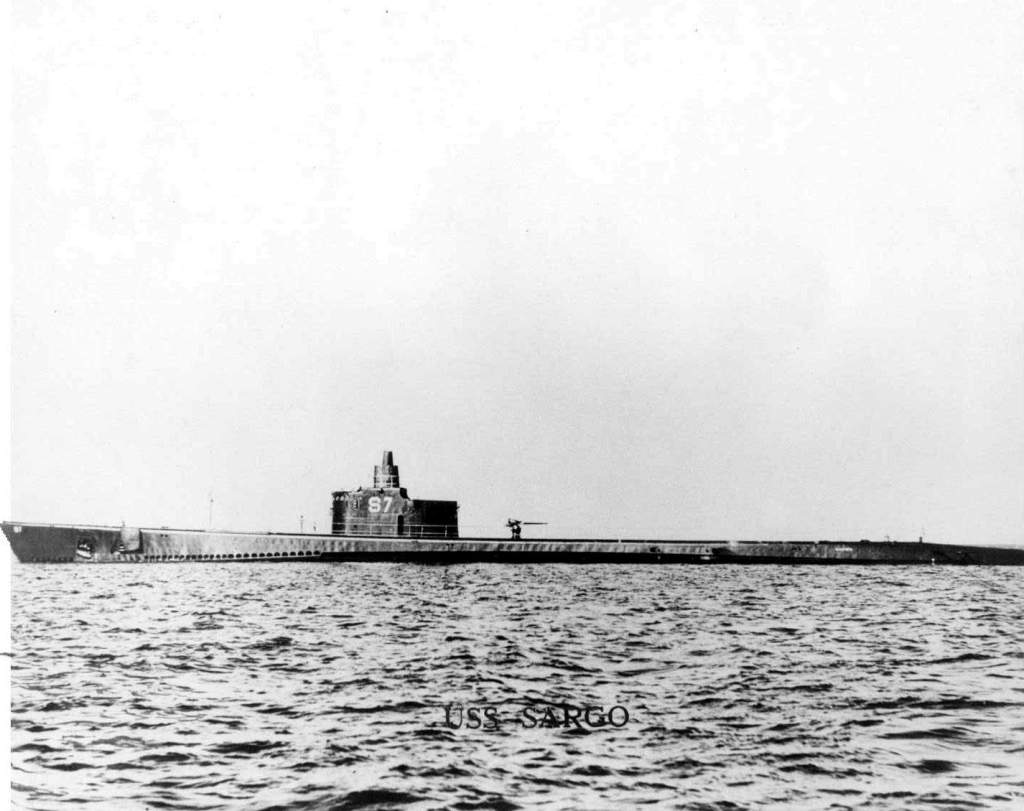
After shakedown along the eastern seaboard of South America, Sargo departed Portsmouth, New Hampshire, in July 1939 for duty with the Pacific Fleet. Transiting the Panama Canal, she arrived at San Diego, California, in mid-August. She operated in the eastern and mid-Pacific for the next two years, including a practice 40-day war patrol between Midway Island and the Marshall Islands in the fall of 1941. She departed Pearl Harbor on 23 October 1941, arrived in Manila on 10 November, and was there when the Japanese attacked Pearl Harbor on 7 December.
https://en.wikipedia.org/wiki/USS_Sargo_(SS-188)#Construction_and_commissioning
JANAC credits Sargo with sinking 7 Vessels for a total of 32,777 tons.
Decommissioned on 22 June 1946, she was stricken from the Naval Vessel Register on 19 July 1946. Her hulk was sold for scrap on 19 May 1947 to the Learner Company of California.
Sargo was awarded the Asiatic-Pacific Campaign Medal with eight battle stars for World War II service and the Philippine Presidential Unit Citation (Republic of the Philippines).
 History Diaries