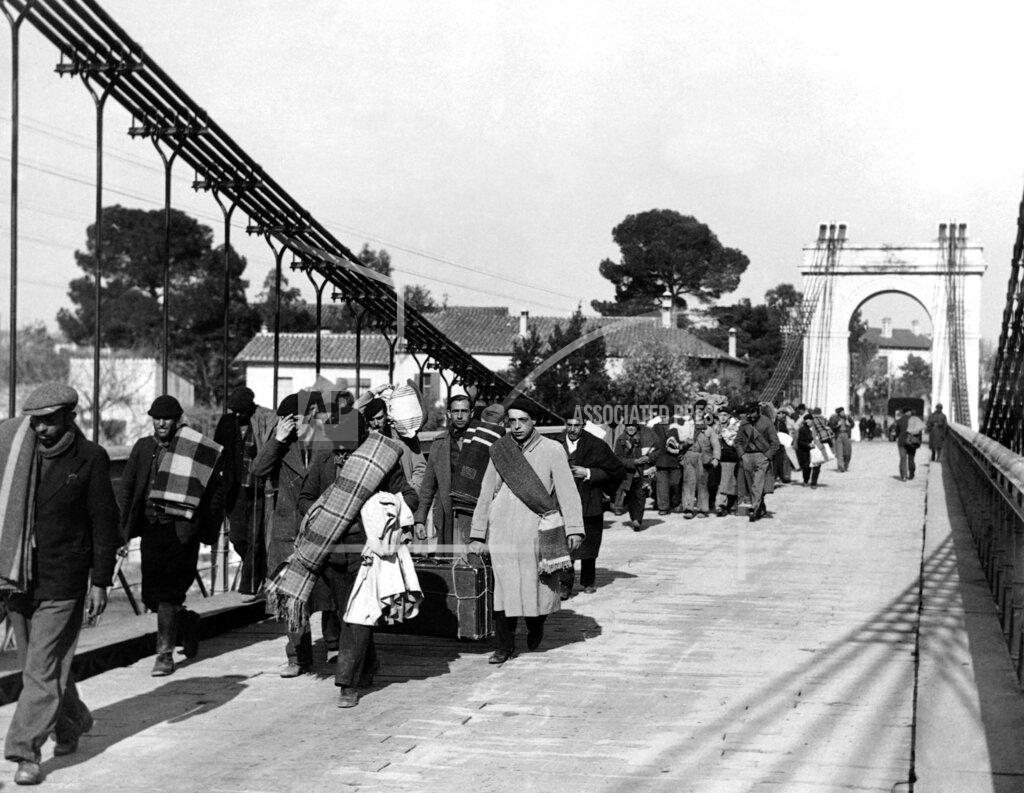
The Spanish government fled to France. The Spanish government and its fleeing army today abandoned Catalonia to conquering rebel troops and found a haven in France. President Manuel Azaña and his family were the first to arrive. He crossed the frontier last night, presented a diplomatic passport and continued toward Paris. With him were three automobiles marked with the insignia of the president of the Spanish republic and a dozen trucks loaded with gold and silver belonging to the bank of Spain. With Azaña came former Premier Joseph Giral.
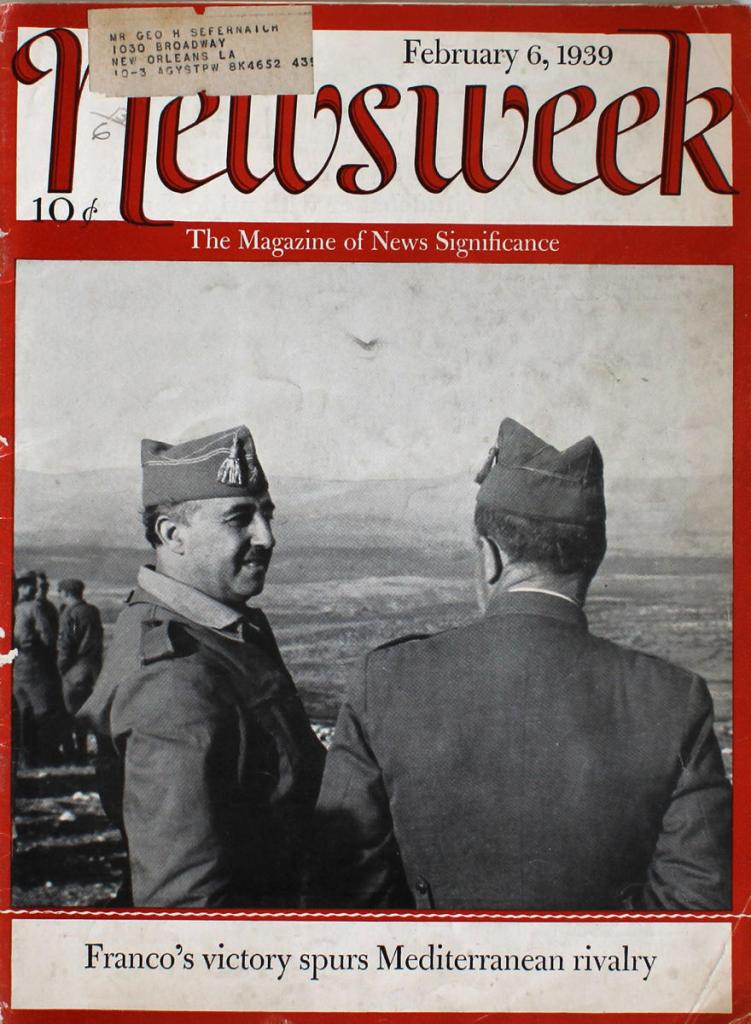
President Luis Companys of Catalonia and José Aguirre, who was head of the now nonexistent Basque republic, were the next to enter France. They arrived on foot and apparently had walked a long distance. Then came Minister of Labor José Moix Regas. Next to find refuge on French soil was Premier Juan Negrín of Spain. He crossed the border with four of his cabinet in a fleet of eight automobiles at 3:45 a. m. They had driven from Agullana, just across the frontier from Le Perthus, France, where they had held a cabinet meeting earlier in the night. Mattresses and suitcases were strapped on the roofs of their automobiles. The windshield of one of their cars was riddled with bullets. Premier Negrín quit Spain after failing to negotiate a peace on his own terms with Generalissimo Francisco Franco, the rebel commander in chief. It was said he intends to seek to return to central Spain to continue the war. Azaña’s aides said the president had broken forever with Negrín.
France reopens its border to the fleeing loyalist army.
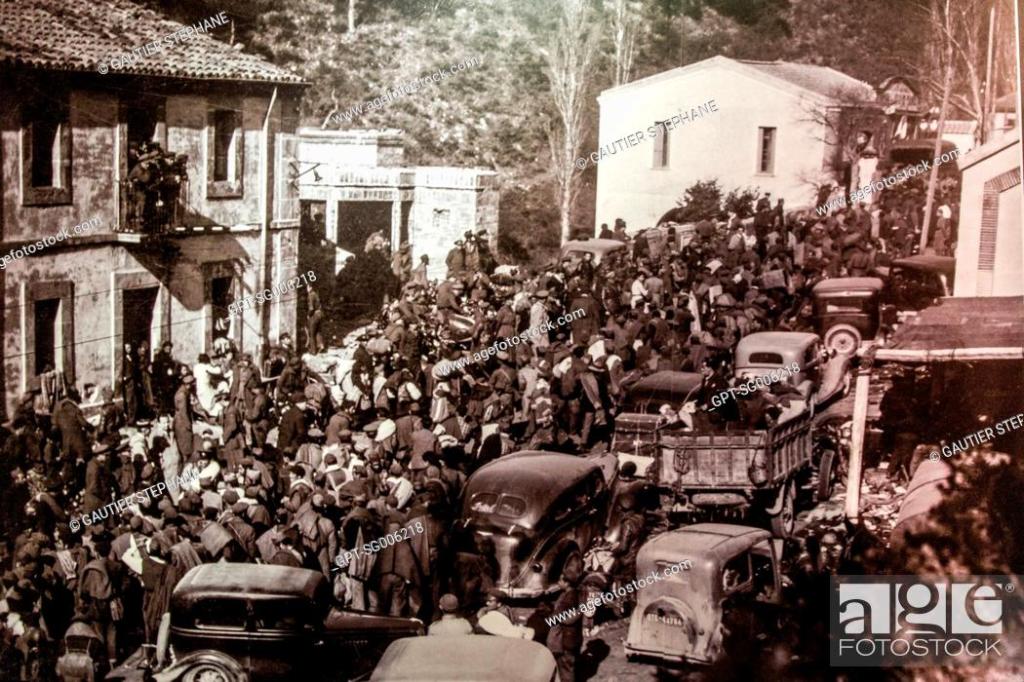
Routed loyalist troops began crossing the frontier in France yesterday afternoon after the French government opened the border. Almost 10,000 soldiers had entered France before nightfall. The border was left open through the night to women, children, the aged, and the wounded among the refugees seeking a haven in France.
While the Nationalist (Insurgent) forces operating in the coastal sector today captured La Bisbal and Palafrugell in the course of their advance northward as far as the mouth of the Ter River, other troops arrived within five miles of Ripoll and also drew the circle around Puigcerda closer by marching north from Seo de Urgel to occupy Arcabell, on the Andorran frontier. Andorran mountaineers cheered as Generalissimo Francisco Franco’s soldiers raised the Nationalist flag over the customs house on the international boundary. The Nationalists, moving up toward Ripoll along the road from Berga, started from San Julian de Cerdanyola this morning. When they reached La Pobla de Lillet they found the Republicans (Loyalists) had fired the whole village before evacuating it. The troops worked hard to extinguish the flames, but most of the houses in the village are reported to have been burned. With the occupation of the villages of Palmerola, San Agustin, and San Baudilio, virtually all the territory within the triangle formed by Berga, Vich, and Ripoll now has been conquered by the Nationalists, who tonight camped on Matamola Crest, dominating Ripoll on the west.
With the Nationalist (Insurgent) troops reported less than twelve miles away, the question of whether Puigcerda was going to fight or surrender was seemingly answered today. when Colonel Martinez Cimenez, military commander of the town, notified the French authorities here that he intended to make a “last stand.” This determination to fight to the bitter end seems contradicted to some extent, however, by another notification that “certain Loyalist war material” will be sent across the border tomorrow to be confiscated by the French in order that it may not fall into Generalissimo Francisco Franco’s possession, and also by the report that a number of Loyalist troops may be expected to cross the border on the same day. A number of artillery trucks in any case are already in the process of being transported to French territory. Officers coming from Puigcerda report that a number of tanks and guns are parked in the center of the town, presumably awaiting “evacuation.”
Any decision to defend Puigcerda is of interest to the French in view of the fact that only a small river separates that Spanish town from Bourg-Madame. Consequently, if General Franco’s troops should shell the town and bombard it from the air, stray projectiles might well fall over the frontier. The French military authorities in this sector are reported to have pointed out this danger for Bourg-Madame and also to have expressed the opinion that resistance would be futile in the circumstances. The Loyalists hold, however, that Puigcerda is strategically a key position and should be defended. The region in the immediate vicinity of the battle zone was very quiet today. Not a shot was heard here all day. Shortly before noon a Franco scouting plane came as far as Puigcerda but turned back almost immediately. French infantry contingents are preparing machine gun emplacements along the frontier in this region. The frontier district is constantly patrolled by cavalry. It is reported here that the Nationalist troops have taken hold of the Andorran border.
The Spanish Government was reported tonight to be ready to surrender its remaining one-fourth of Spain upon obtaining from the Insurgents little more than “moral guarantees.” Foreign Minister Julio Alvarez del Vayo conferred tonight with the French Ambassador to Spain, Jules Henry, and the British Minister, Ralph C. S. Stevenson, in the police station at Le Perthus, France. From other diplomats it was learned they had discussed the possibility of surrender to Generalissimo Francisco Franco and an end to the two-and-one-half-year civil war. All of Catalonia having been abandoned to the Insurgents yesterday, events moved swiftly today. Tonight’s meeting, concerning which all of the principals remained silent, had been arranged earlier by Premier Juan Negrín, who later returned to Spain. From diplomats it was learned that Premier Negrín’s stand, which only yesterday was that the government would fight to the bitter end in the Madrid-Valencia-Alicante “island” in Central Spain, had changed during the day.
The Republican government was represented as willing to surrender upon receiving only these guarantees:
- No reprisals against government leaders who would fall into Insurgent hands as a result of mass surrenders at Madrid, Valencia, Alicante and other centers of government resistance.
- Formal assurances by General Franco that all Italian and German influence would be banished from Spain by the Insurgents.
Several weeks ago, General Franco stated that no foreign power would have a voice in his regime, and yesterday at Burgos he was represented as standing on his demand for unconditional surrender, according to The Associated Press. In Paris it was reported General José Miaja, Loyalist army commander in Central Spain, had refused to answer communications from Premier Negrín and was believed seeking an armistice with General Franco.
Four Spanish Communists are punished by their party for fleeing Barcelona.
Neville Chamberlain was heartily applauded in the House of Commons when he said that any threat to France “must evoke the immediate co-operation of this country.” Prime Minister Neville Chamberlain unexpectedly gave France today what sounded like the most sweeping pledge of assistance that has come from any British Government in recent years. He declared in the House of Commons that “any threat to the vital interests of France, from whatever quarter it came, must evoke the immediate cooperation of this country.” The Prime Minister’s statement was made in reply to a question by Arthur Henderson, Laborite, who had asked whether a recent statement by Georges Bonnet, French Foreign Minister, was “in accord with the views of His Majesty’s Government.”
The Prime Minister’s reply follows:
“According to my information, M. Bonnet’s statement in the Chamber of Deputies of Jan. 26 was that in case of a war in which the two countries were involved all the forces of Great Britain would be placed at the disposal of France, just as all forces of France would be at the disposal of Great Britain. This is in accordance with the views of the British Government. “It is impossible to examine in detail all the hypothetical cases which might arise, but I feel bound to make it plain that the solidarity of interests in which France and this country are united is such that any threat to the vital interests of France, from whatever quarter it came, must evoke the immediate cooperation of this country.”
Bishop Hilfrich of Limburg is a pastoral letter writes that Jesus had been a Jew, but “the Christian religion has not grown out of the nature of this people, that is, is not influenced by their racial characteristics. Rather it has had to make its way against this people.” Christianity, the bishop concludes, is not to be regarded as a product of the Jews; it is not a foreign doctrine or un-German. “Once accepted by our ancestors, it finds itself in the most intimate union with the Germanic spirit.”
Einsatz des Juedischen Vermoegens is published, decreeing complete “Aryanization” of Jewish property in the Reich.
Hungary and Russia end diplomatic ties.
Reich clerics report oppression after pleading for peace.
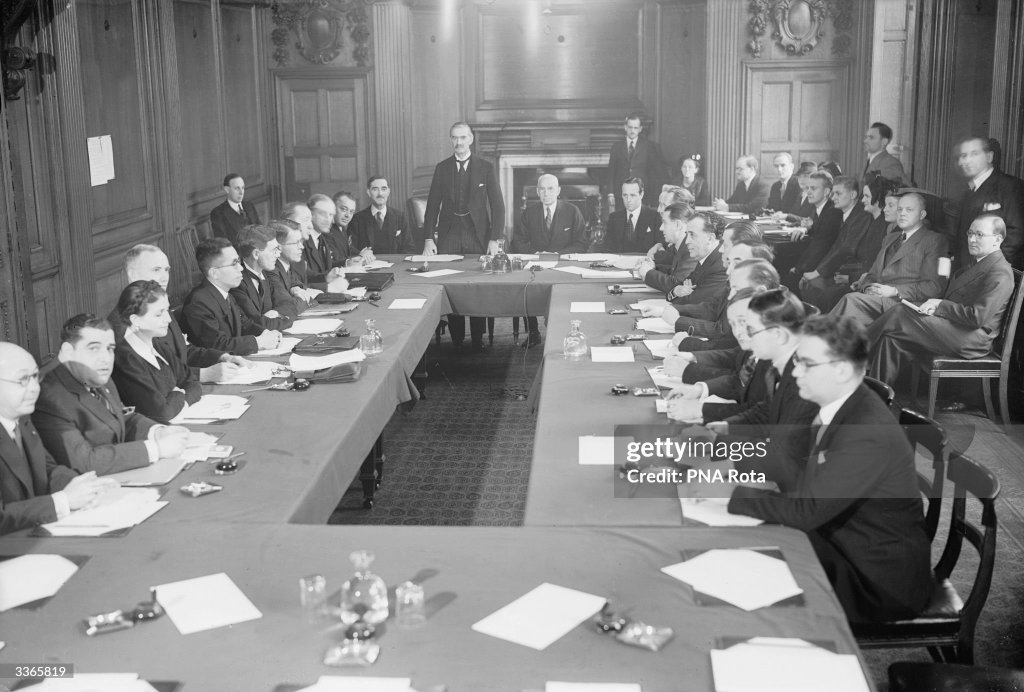
Arab delegates refuse to sit in the same room as Jews in a conference held in London. Prime Minister Neville Chamberlain opens the conference with groups meeting in separate chambers.
Arabs in Jerusalem called for a three-day strike coinciding with a conference in London between Arabs, Jews and British authorities on the Holy Land.
The expected storm over what some Senators have been denouncing as President Roosevelt’s secret foreign policy was averted today by quick adjournment of the Senate before debate could begin. The chamber adopted a motion of Senator Barkley, majority leader, to recess until Thursday. Administration critics immediately interpreted the move as a design to keep the forum closed until the heat worked up over French airplane deals and the secret parley between the President and the Senate Military Affairs Committee last Tuesday had subsided. The leadership is expected on Thursday to move adjournment until Monday, that is, unless the President’s foreign policy opponents upset the strategy and start a line of questioning and debate through which they expect to open the confidences of the Military Affairs Committee. “These long recesses are an evidence of a desire to see if this thing won’t drift itself out,” said Senator Nye, a leader among the critics of the President’s course. “It shan’t be permitted to die until there is clarification of the President’s foreign policy.”
The Senate signaled an extraordinary independence of White House control today by rejecting the nomination of Floyd H. Roberts as district judge for the Western District of Virginia by the overwhelming vote of 72 to 9. The action came without debate and in the adverse vote of 8 to 1 Administration opponents and adherents joined alike. The nomination had been submitted and pressed by President Roosevelt over the objections of both Virginia Senators, Carter Glass and Harry F. Byrd, who termed it “personally obnoxious.” This was the first instance in which the Senate had rejected a judicial appointment by President Roosevelt, but it also was the first appointment he had submitted in the face of objection by both Senators from a State. The vote represented the culmination of a bitter fight waged off the Senate floor by the same group of “purgees” who won a single-vote victory in cutting by $150,000,000 the $875,000,000 WPA appropriation requested by President Roosevelt. They obviously were surprised by the margin of their victory today.
Syracuse, New York, Fire Department First Assistant Chief Charles A. Boynton died of a heart attack. Boynton had been present at the Collins Block fire on February 3 and had worked for hours attempting to rescue the trapped firefighters and then to recover their bodies.
Representative Dies told the Supreme Court today that lawyers of the Justice and Labor Departments were attempting in the Strecker case to get a judgment protecting “other aliens against whom deportation proceedings are now pending.” The chairman of the House Committee on un-American Activities filed a brief as a “friend of the court” in connection with oral arguments late this week on the validity of a deportation order against Austrian-born Joseph G. Strecker of Hot Springs, Arkansas, an admitted former member of the Communist party.
Mr. Dies has demanded that Secretary Perkins press deportation proceedings against Harry Bridges, West Coast CIO leader, on the ground that he is a Communist. Miss Perkins has said she was awaiting a Supreme Court ruling on the Strecker case before taking any further action against Mr. Bridges: After contending that government attorneys have gone “outside the record” to raise the constitutional rights of freedom of speech and of assembly in the Strecker case, Mr. Dies said: “Although counsel for the government owe a duty to enforce the laws of the United States, they have chosen rather to suggest to this court rights which the alien does not urge.”
The government’s case was presented in a brief filed last month by Solicitor General Robert H. Jackson and Gerard D. Reilly, Labor Department solicitor. They contended that an alien who becomes a member of an organization seeking the overthrow of this government by force is subject to deportation, “whether or not he is a member at the time of his arrest or the issuance of the warrant for his deportation.” They also raised, however, the question of the extent to which rights of free speech and free assembly are guaranteed to aliens by the Constitution.
Court testimony reveals that James Hines, a Tammany official, demoted police with good records.
Floods leave 30,000 people homeless in Kentucky, West Virginia, Tennessee, and Ohio.
The Texas governor gives a 30-day reprieve to a man sentenced to capital punishment to illustrate the cruelty of the death penalty.
A major trade boon is seen as a result of a TVA/private utility company peace deal.
Smoking alone does not cause heart disease, a study shows, although nicotine may be a factor in disease.
Hollywood nominates George Bernard Shaw for an award for “Pygmalion.”
Marlene Dietrich signs to perform in “The Image” for a French company.
The Yankees sell Kemp Wicker, Jack LaRocca and Chris Hartje to the Dodgers for $50,000.
The recent discussions in Washington between President Roosevelt and Ambassador Francisco Castillo Najera of Mexico regarding settlement of the oil-expropriation controversy were followed here today by a prolonged conference of Mexican Petroleum Department executives with President Lazaro Cardenas. Although no disclosure of the subject of discussion was made, it was believed to be an attempt by President Cardenas to familiarize himself with the latest developments in the oil situation in preparation for an expected visit by Donald R. Richberg, representing Standard Oil, whose property was one of the largest expropriated. The executives who conferred with President Cardenas were Vicente Cortes Herrera, general manager, and Gustavo Espinosa Mireles, general sales manager. It is reported in informed but unofficial quarters that one proposal to be made to the oil companies is that 40 percent of the total product of Mexican wells be retained by the government for domestic sale and that 20 percent of the 60 percent remaining for export be paid as a royalty to the government. However, little likelihood is seen that the companies would accept any such proposition, which would give the government not only title to the wells but 60 cents of each gross dollar earned.
China lists 1,500 new bombing casualties. A radio message from the Shantung provincial government “somewhere in Shantung” reports intensification of the Japanese campaign to mop up Chinese guerrillas there. Japanese units operating from the Tsingtao-Tsinan and Tientsin-Pukow Railways have been combined east and north of these lines in the last week. Litsing, Hweimin and ten other county seats are said to have been occupied. The report adds that the Japanese succeeded only in driving the Chinese from the major cities, but that the guerrillas are constantly counter-attacking and harassing the Japanese on the outskirts of the main towns. Ishan in Northern Kwangsi, Linghsien in Northern Kwangtung, and Liling in Eastern Hunan were bombed by Japanese planes yesterday morning. Incendiary bombs dropped on the first two cities, said the Central News Agency, set fires which raged for many hours and destroyed scores of buildings. Casualties in all three places were said to be high.
Japanese political parties draft stern legislation requesting more aggressive tactics toward Russia.
Japan refuses to cooperate with a treaty even after the United States, Britain, and France request cooperation.
Dow Jones Industrial Average: 145.03 (-0.04).
Born:
Mike Farrell, actor (“MAS*H”), in Saint Paul, Minnesota.
Naval Construction:
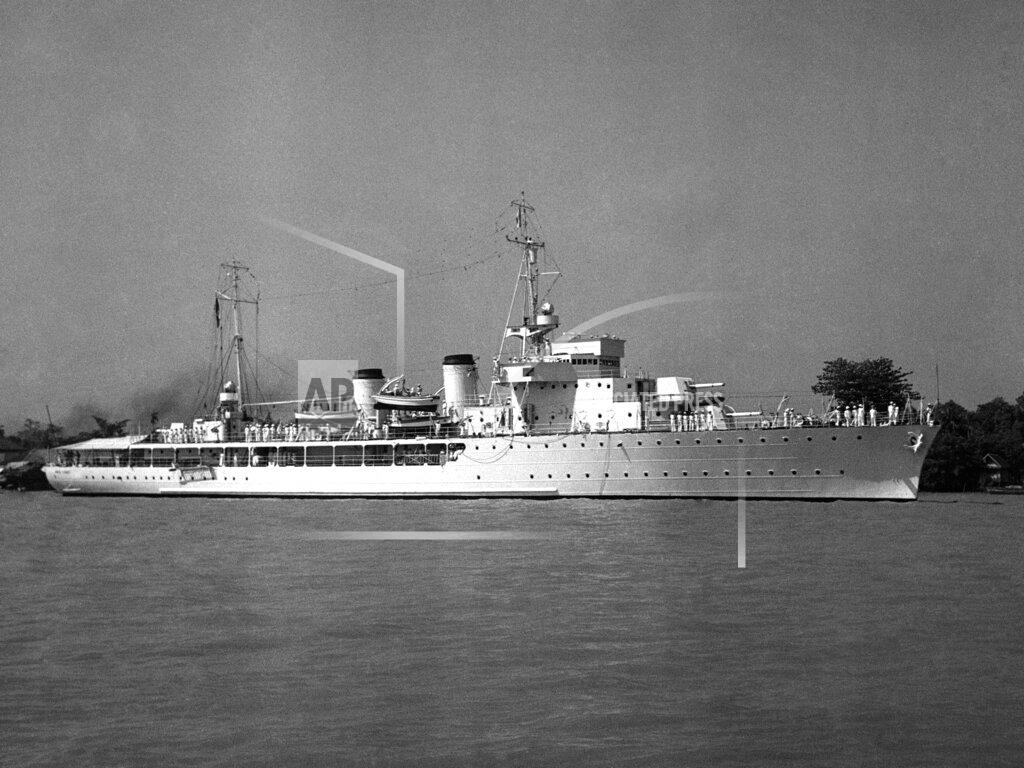
The Royal Navy “K”-class destroyer HMS Khartoum is launched by Swan Hunter and Wigham Richardson Ltd. (Wallsend-on-Tyne, U.K.): Wallsend.


 History Diaries