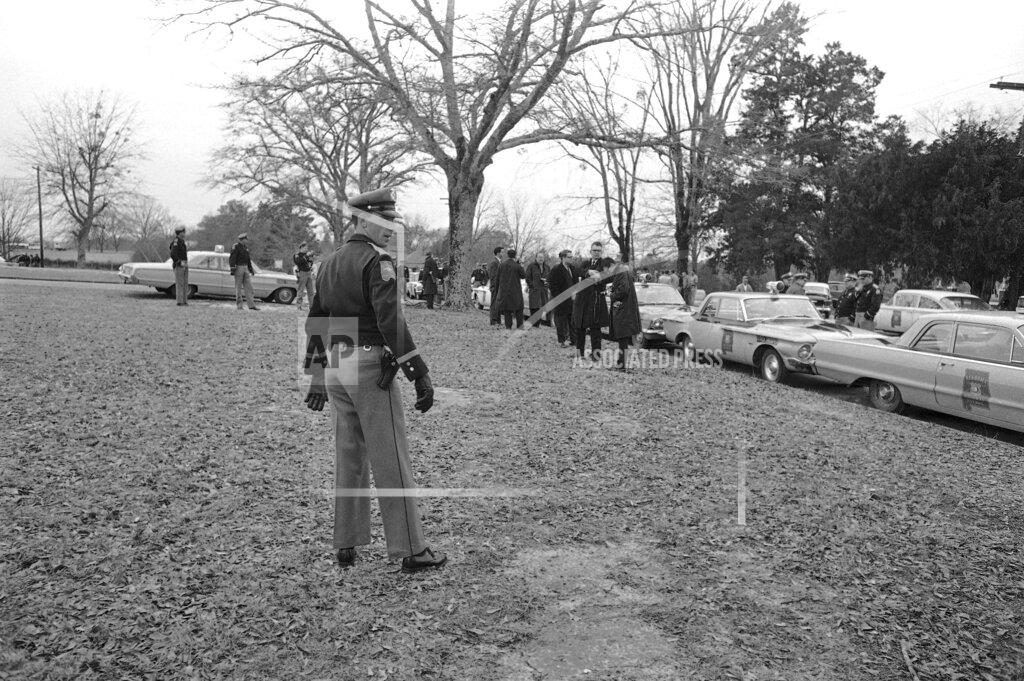
At two minutes before 2:00 in the afternoon local time, Cuba cut off the normal water supply to the United States Guantanamo Bay Naval Base, in reprisal for the U.S. seizure the previous Sunday of four Cuban fishing boats (and the 36 fishermen on board) off the coast of Florida, by shutting off a freshwater pipeline from the Yateras River. Cuban Premier Fidel Castro told foreign correspondents that he would allow water to flow to the U.S. Navy base, which had been leased from Cuba for decades before Castro came to power, for one hour each day “out of deference to the families of American personnel on base”. At the time, there were 10,500 U.S. residents on the 31 square mile base, 2,400 of whom were women and children. Over the next ten months, U.S. Navy tankers would deliver fresh water to the Guantanamo base from Ocho Rios, Jamaica, and Port Everglades, Florida, while a desalinization plant could be constructed. On December 6, 1964, the base would be able to convert the ocean into potable water.
President Johnson received a complete briefing on the Cuban situation late tonight on his return from New York. He will hold a top‐level emergency meeting at the White House tomorrow morning on the United States position in response to Cuba’s move at Guantanamo. A preliminary two‐hour conference involving the country’s highest civilian, intelligence and military officials was held here earlier in the evening, but no indication was forthcoming on any course of action. The concern in Administration and diplomatic quarters was that the Cuban regime might be preparing to reopen the question of the 1934 treaty under which the United States holds the Guantanamo base. The possibility that Premier Fidel Castro was determined to raise the issue of the Guantanamo treaty and make it into a cold war problem, using Washington’s controversy with Panama over the Canal Zone as the starting point, was reported to have been reviewed at length at this evening’s conference at the State Department.
Communist guerrillas, whose activity has been increasing, have imposed a sharp new defeat on Government forces in a Mekong Delta battle about 85 miles southwest of Saigon, military sources reported today. United States officials said about 250 Communist guerrillas caused serious casualties and captured more than 100 weapons in the clash yesterday. Following their typical tactics, the Communist unit overran Thới Lai, an outpost about 15 miles west of the big delta town of Cần Thơ, and then ambushed two companies of South Vietnamese Government troops rushing to the rescue. The Communist one‐two punch left 32 Government soldiers dead, 20 wounded and 38 missing. Military reports listed one guerrilla dead and one Communist weapon captured.
This was the second sizable Communist attack in the delta region in two days. On Tuesday a battalion of 400 guerrilla troops smashed its way into an army command post about 55 miles southwest of Saigon. It was an unusual and daring attack against a fixed, well‐manned point defended by regular troops. The United States command reported yesterday that Communist attacks were stepped up in size and intensity throughout the country this week. Many of the new attacks were terrorist acts aimed at intimidating local officials or undermining the morale of Government forces. There have been several assassinations. It was disclosed yesterday that guerrillas slipped into a strategic hamlet, or fortified settlement, in Vinh Long province and murdered the mother of the chief Vietnamese Army intelligence officer for the southern half of the delta. She had refused to pay taxes to the Communists.
After the attack on the Thới Lai outpost yesterday, the Communists cut down Government reinforcements as they were marching along a road in daylight. Of 200 Government soldiers in the rescue force, 26 were reported killed, 17 were wounded and 23 were missing. The guerrillas were said to have picked up 66 weapons — rifles, carbines and submachine guns. Similar weapons losses by Government troops in scores of similar battles over the last eight months have provided significant amounts of arms to the Communists. The guerrillas also captured three American‐made army radios, enabling them to monitor the Government communications network. Military sources said that although the Thới Lai outpost was within range of Government artillery positions, there apparently was no artillery support. They also said that 200 Civil Guard and Self‐Defense Corps troops sent toward the post after the attack were without air cover.
The Defense Ministry announced today completion of a 20‐day operation against a Communist stronghold in Kiến Hòa Province, south of Saigon, in which six Americans were killed during the first 40 hours of fighting. Three thousand Government troops were used in the operation, which was aimed at finding and destroying a Communist battalion and breaking up its training areas. Government troops were carried in by helicopter in what was called the biggest such airlift in military history. Communist troops hidden in trenches when the attack began directed heavy fire against the incoming helicopters and two of the craft were lost.
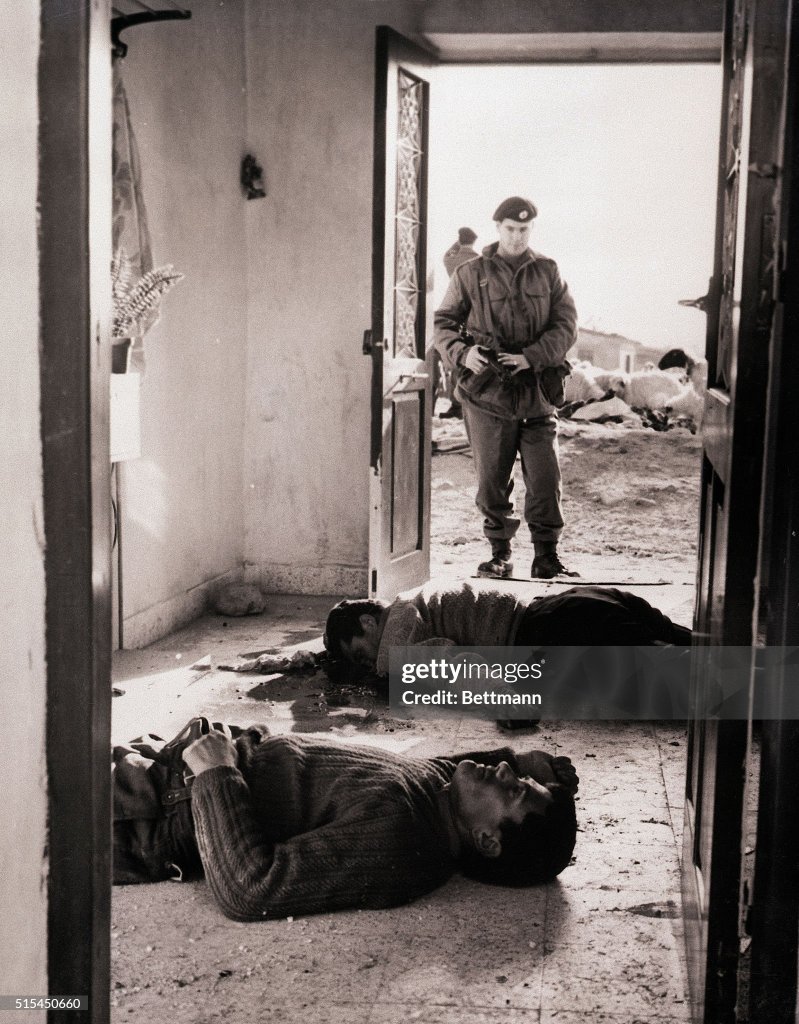
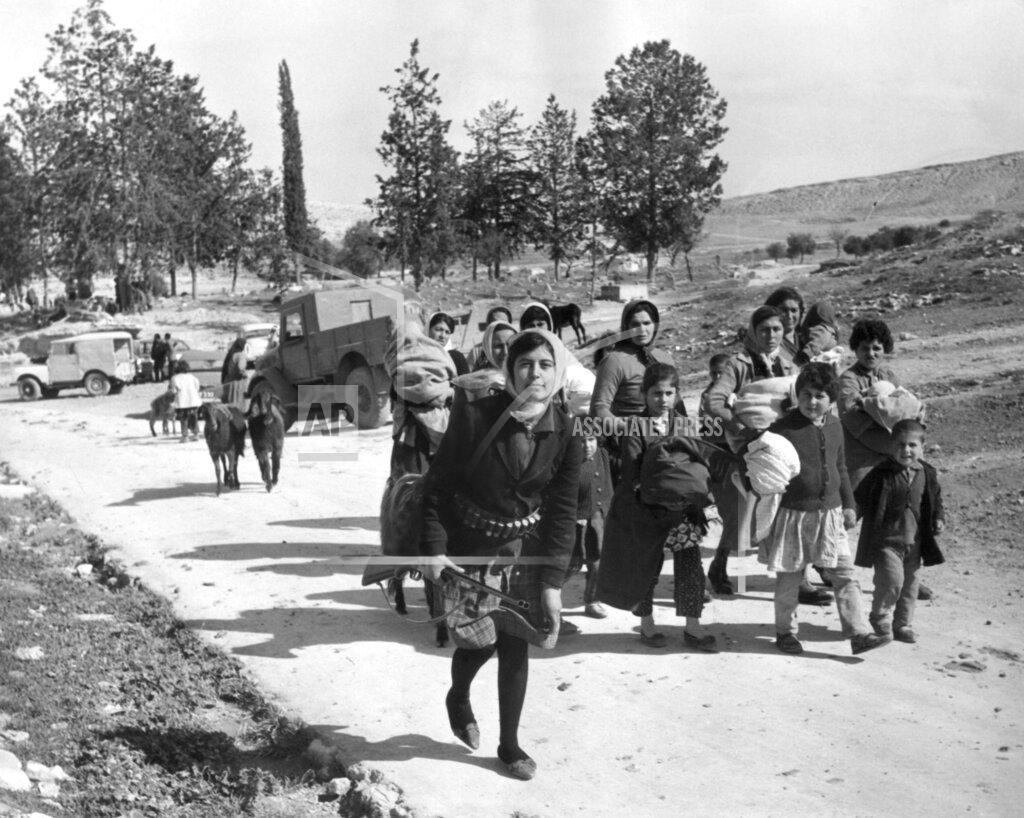
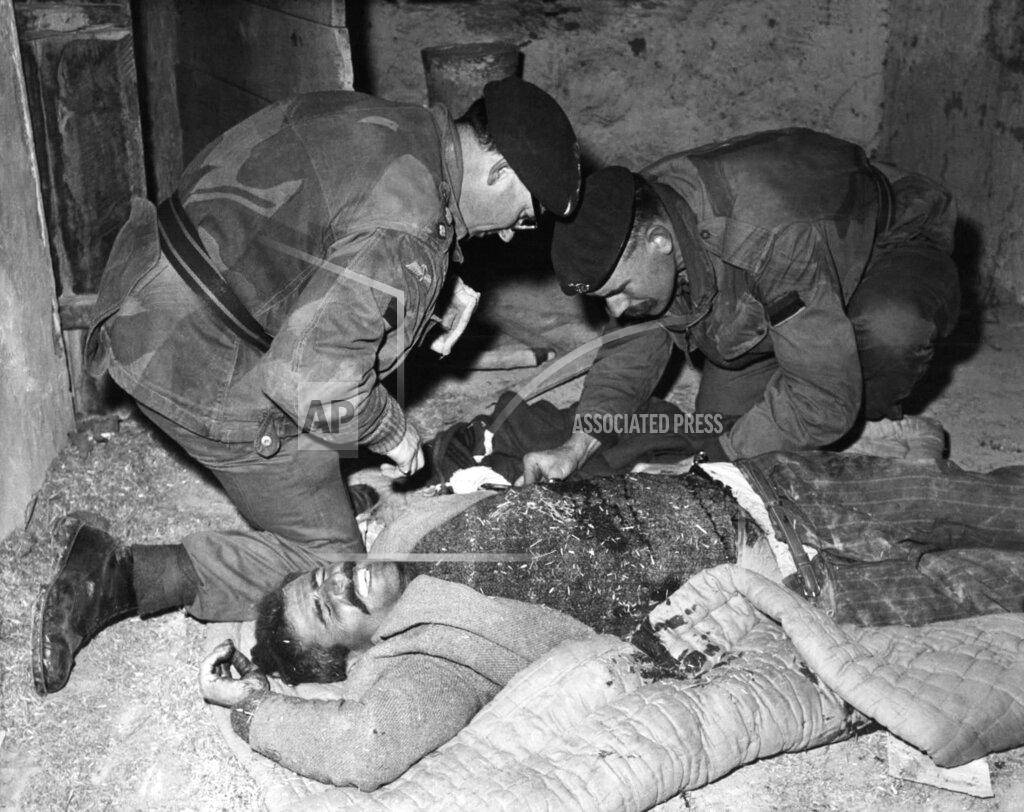
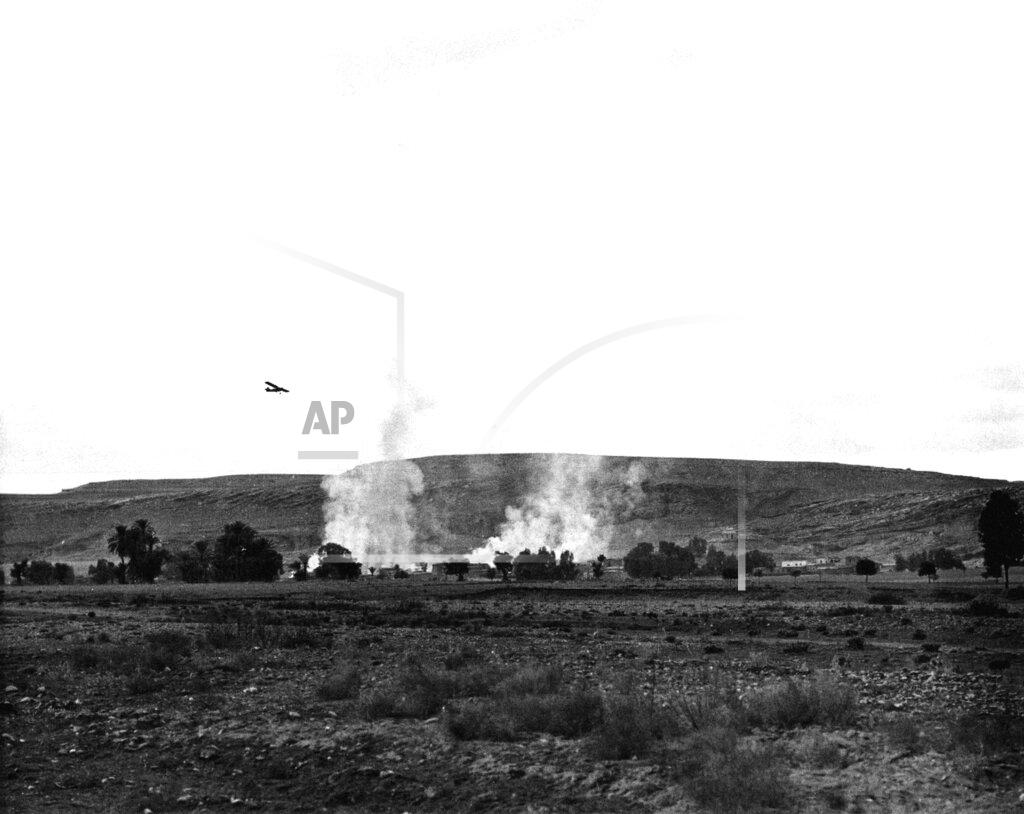
Greek and Turkish Cypriotes fought a gun battle today in Agios Sozomenos, 16 miles from Nicosia. The village was left burning. It was the worst fighting since the bitter clashes at Nicosia over Christmas week. It threatened a resumption of open warfare between the two communities. Cyril Pickard, British Under Secretary of State for Commonwealth Relations, and Major General Peter G. F. Young, British commander of the force policing a cease-fire in the communal fighting, intervened with Archbishop Makarios, President of Cyprus, and the Greek Cypriote chief of police to try to stop the fighting. British troops and armored cars went into the center of the village to get between the combatants. A British spokesman said the troops were handicapped by the presence of women and children, but the firing eventually ceased.
A Greek Cypriote spokesman said there were six Greek Cypriotes killed and 18 wounded. A Turkish Cypriote spokesman placed Turkish casualties at five dead and three wounded. There was fear that the violence might spread to Nicosia. Anxious Turkish Cypriotes gathered at the home of Dr. Fazil. Kutchuk, Vice President of Cyprus and leader of the Turkish community. His house is in the Turkish sector of Nicosia’s old city. In the Greek sector the streets were deserted. According to the Greek Cypriotes, the fighting at Agios Sozomenos began after a Greek Cypriote policeman and five workers went to fix a water pump near the village, The party was ambushed by Turkish Cypriotes from the village, according to the report.
The United States and Britain have formulated a new device to promote their plan for a peace force for Cyprus. They want to give the United Nations a place in the operation, but no voice. The purpose of the slight amendment is to make the temporary occupation of Cyprus more palatable to Archbishop Makarios, the island’s President, and other Greek Cypriotes. The archbishop has insisted that any force sent to the island be responsible to the United Nations Security Council. The hope is that the Secretary General of the United Nations, U Thant, will sanction the move without seeking a mandate from the Security Council, and that Greece, Turkey and Turkish Cypriotes will not revoke their approval of the basic plan.
That plan is to send to Cyprus an international force of 10,000 men drawn from members of the North Atlantic Treaty Organization, including up to 2,000 United States troops. It would try to keep the peace between the Greek and Turkish communities for three months while a mediator sought a political solution. The new device would put the force under a United Nations umbrella, but control would remain in Western hands. One suggestion, for instance, is that the allies inform the world organization of their activities and objectives and that they regularly report to Mr. Thant’s special representative on the island.
The governments of the United Kingdom and France made simultaneous announcements in London and Paris that they had reached an agreement for construction of the first railway tunnel underneath the English Channel. The original plan for the proposed Channel Tunnel (which would open 30 years later, in 1994) was for a 33-mile-long (53 km) railroad tunnel running from Dover to Sangatte.
The Organization of American States agreed in principle tonight to establish a 17‐nation committee to investigate and mediate the conflict between Panama and the United States. The action was taken at an informal session of all members of the O.A.S. Council except the two parties to the dispute. The session, which ended at 7:15 P.M. after a day of diplomatic activity, appeared to have broken the deadlock that developed Tuesday on the scope and membership of the investigating committee. In effect, the full membership of the inter‐American body will assume the responsibility for looking into the causes of the dispute over the Panama Canal as well as for seeking a settlement.
Panama’s chief delegate said today that he would call for an immediate meeting of the Security Council if the Organization of American States failed to settle the dispute with the United States over the Panama Canal. If the Council could not settle it, Aquilino Boyd said, Panama will ask for a special session of the General Assembly. “This is the last chance to achieve understanding through true partnership,” Mr. Boyd said. “Otherwise, there will be new explosions of popular feeling and the whole status of the canal will have to be changed.”
Lieutenant Colonel Eugene Ebaya, 44, the Chief of Staff of the Army of the Congo and second in command to General Joseph Mobutu, was assassinated by a poison arrow shot by rebels in the Kwilu Province. Ebaya had been ambushed while in a convoy on the road between the provincial capital of Kikwit and the besieged town of Gungu.
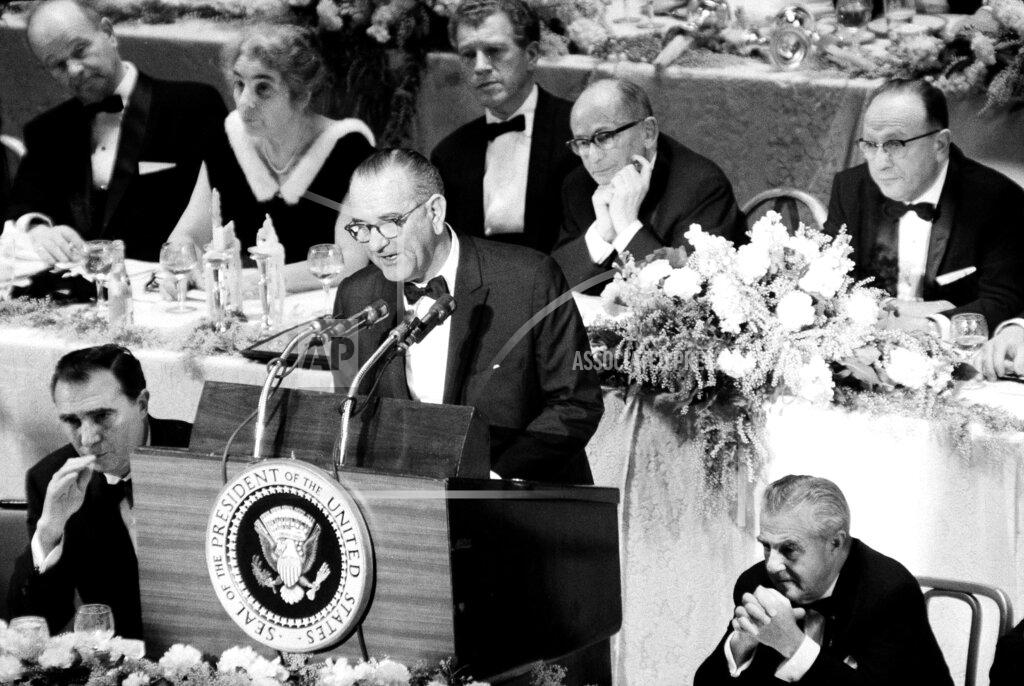
President Johnson disclosed last night that the United States had offered to cooperate with Israel in using nuclear power to help solve the water shortage in the Middle East. Israel has indicated she will divert water from the Jordan River to meet her needs — a project that threatens war between Israel and the Arab States. Mr. Johnson said this country had begun discussions with representatives of Israel on cooperative research to turn salt water into fresh water by the use of nuclear power.
With the Northern bipartisan coalition firmly in control, the House of Representatives completed action tonight on three more sections of the civil rights bill. The leaders set Saturday as the target date for a final vote on the measure. In the afternoon the coalition withstood a sustained Southern attack against one of the sections. This would grant the Attorney General authority to intervene in suits brought by civil rights demonstrators to stop police brutality and to protect their rights of free speech, peaceful assembly and petition for redress of grievances. This authority is the heart of Title III of the bill, which also deals with desegregation of state‐owned or operated public facilities, such as golf courses and swimming pools. Then in night session the House approved without substantial change Title IV, which authorizes the Attorney General to initiate school desegregation suits, and Title V, which makes permanent the Civil Rights Commission. Thus, the House kept to a schedule agreed upon by the floor managers of the opposing sides.
As Southern amendments went steadily down to defeat, the floor managers huddled off the floor this afternoon. They agreed to finish up tonight with amendments on Titles III, IV and V. They also decided to deal tomorrow with Title VI, prohibiting discrimination in federally assisted programs, and take up the controversial fair employment practices section, Title VII, on Saturday. They agreed to vote on the whole bill by Saturday night. The managers for the civil rights coalition are Representatives Emanuel Celler, Democrat of Brooklyn, and William M. McCulloch of Ohio, the ranking Republican on the House Judiciary Committee. Mr. Celler is chairman of the committee. The captain of the Southern contingent is Edwin E. Willis of Louisiana, ranking Southerner on the same committee.
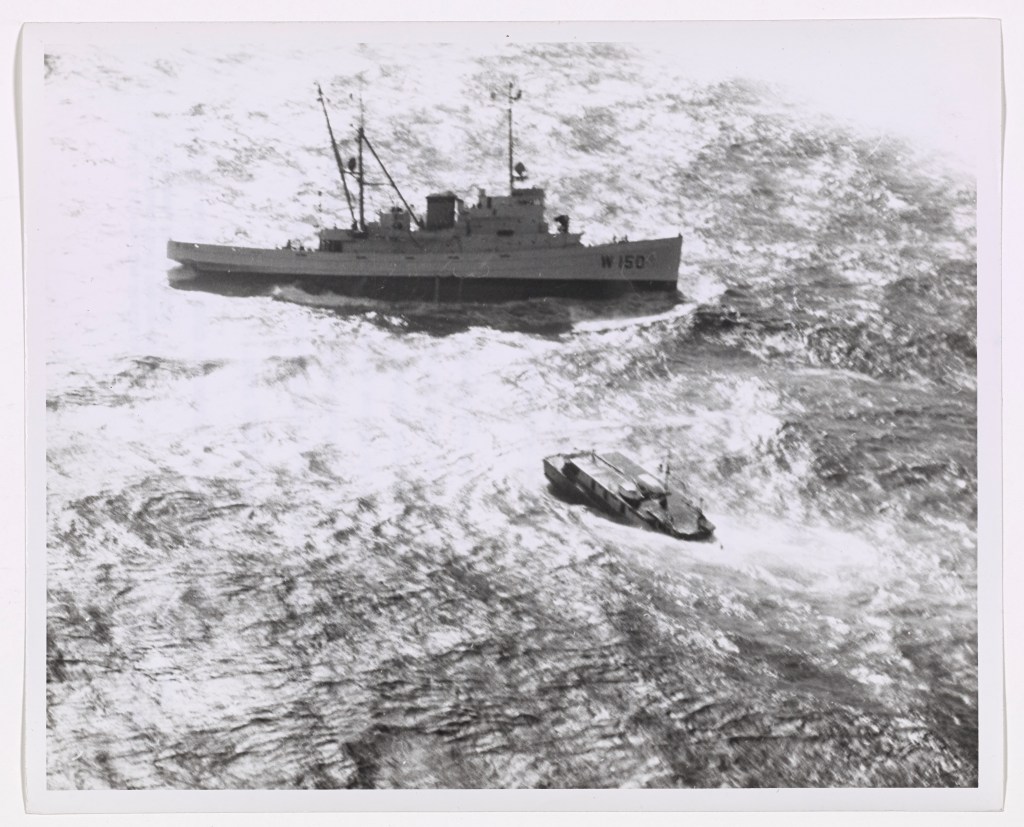
A House committee set out today to speed the completion of a federal law to permit the seizure of foreign trawlers caught fishing without permission in United States waters. The Senate passed such a bill last October 1, but it was engulfed in unfinished business when the first session of the 88th Congress adjourned December 30. The House Committee on Merchant Marine and Fisheries moved today to start immediate hearings on the Senate measure. Representative Herbert C. Bonner, the North Carolina Democrat who heads the panel, said: “We’ll get a bill out soon.” The committee’s action was prompted by the finding of Cuban trawlers off the coast near Key West, Fla., this week. Four boats were boarded by Coast Guard officers Sunday night off the Dry Tortugas, an island group 65 miles from Key West. The boats were escorted to Key West.
The proposed repeal of the 10 percent Federal theater tax was rejected by the Senate today, 59 to 33. Proponents were encouraged, however, by the size of the vote to eliminate the levy and said the chances for favorable action later this year had improved. Debate and voting on the theater tax and other amendments slowed a Senate drive for passage of the Administration’s $11.6 billion tax‐reduction and reform bill. While Democratic leaders failed to dispose of the bill tonight, as they had hoped to do, passage tomorrow was virtually assured by a unanimous agreement to limit debate. Discussion of all except two prospective amendments was limited to 30 minutes each. The two others were allowed a total of three hours. Further debate on the bill itself was limited to one hour.
A rifle that authorities believe was used to kill President Kennedy was identified today by Mrs. Marina Oswald as the one that her husband had kept in their Texas home. Chief Justice Earl Warren, chairman of the Presidential commission investigating the Nov. 22 assassination, disclosed the identification of the Italian-made weapon by the widow of Lee H. Oswald. He also said that Mrs. Oswald, who was born in the Soviet Union, testified that her husband had used the fictitious name of “A. Hidell” in some activities when they lived in New Orleans last summer, before moving to Dallas. That was the name under which the rifle had been purchased by mail from a Chicago sporting goods store.
President Johnson has been urged to appoint an advisory commission on “sea power superiority” to determine how the nation’s supremacy in the high seas can be maintained. Edwin, M. Hood, president of the Shipbuilders Council of America, made public yesterday a letter he sent the President on Jan. 31 suggesting that such a commission was needed to formulate policy, which, he said, is now lacking. Another function of the commission, Mr. Hood suggested, might be the preparation of suitable legislation for submission to Congress not “anchored to statutes now on the books.” He said that “new and imaginative actions and legislation are needed” if the nation’s sea power deficiencies were to be corrected.
“Rugantino” opens at Mark Hellinger Theater NYC for 28 performances.
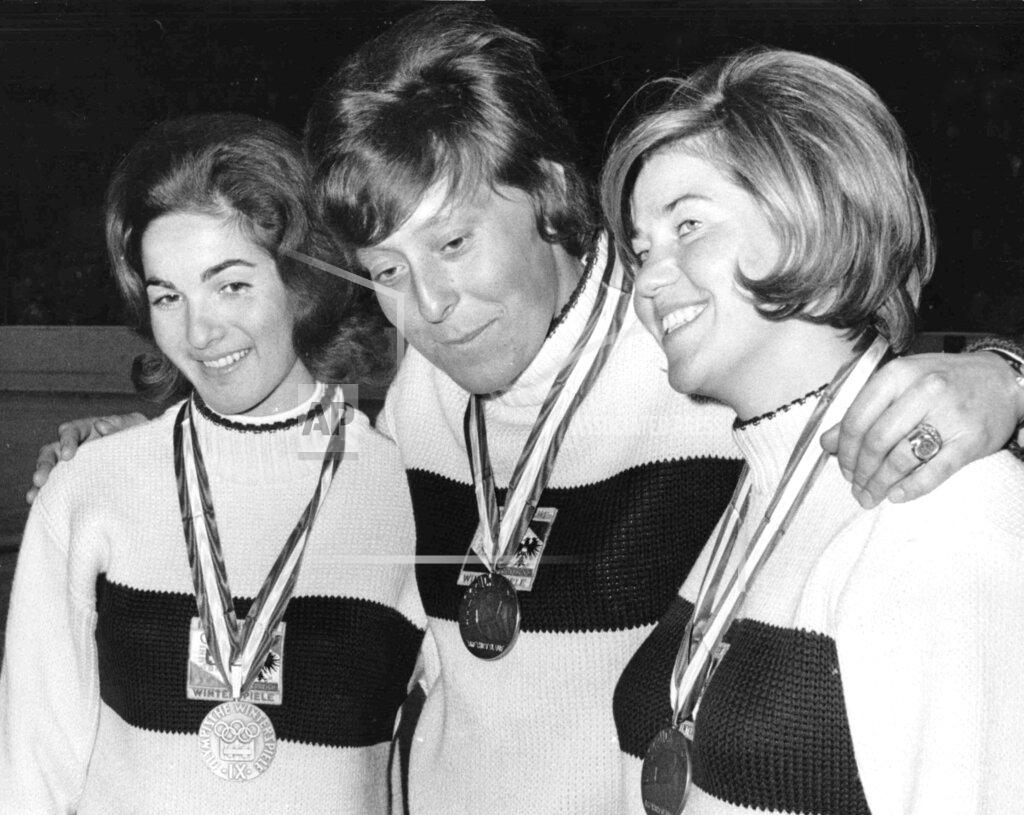
Three angry Austrians swept the women’s downhill today, and a 25‐year‐old Estonian student named Ants Antson gave the Soviet Union its ninth gold medal of the IX Winter Olympic Games by winning the 1,500-meter speed‐skating title. A bobsled quartet from Canada, which doesn’t have a bob run, increased its lead after its third run down the scarred, rutty course with one run remaining. Two runs were made yesterday. Scott Allen of Smoke Rise, New Jersey, won the fourth medal for the United States by finishing third in men’s figure skating. Manfred Schnelldorfer of Germany won the gold medal, and Alain Calmat of France was second.
Dow Jones Industrial Average: 786.41 (+3.37).
Born:
Gordon Downie, Canadian rock singer-songwriter and musician (The Tragically Hip), in Amherstview, Ontario, Canada (d. 2017).
Skip Ewing, American country vocalist (Coast of Colorado), in Redlands, California.
Died:
Emilio Aguinaldo, 94, Filipino freedom fighter who led the insurgency against Spain, and later the United States, during their occupation of the Philippines in the late 19th century.
Sophocles Venizelos, 69, premier of Greece (1944, 1950-1951).
 History Diaries