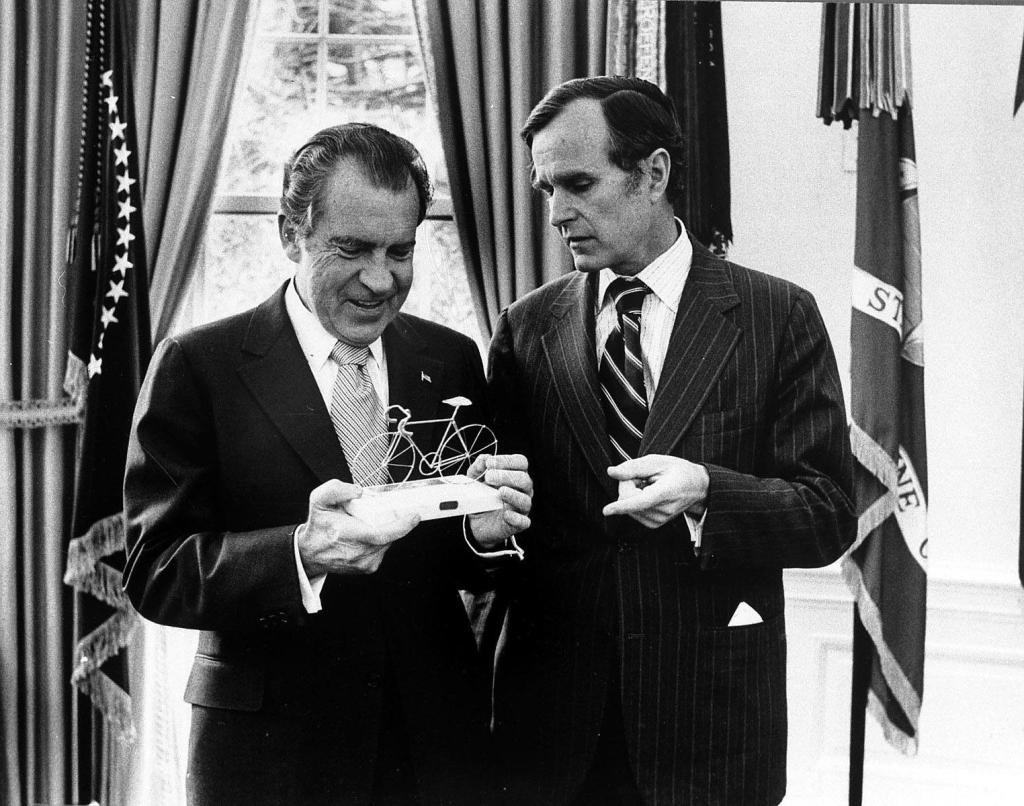
Secretary of State Henry Kissinger displayed his displeasure over the continuing Arab oil embargo against the United States. Kissinger said that the embargo must be considered as blackmail. Diplomacy in the Mideast may suffer if the embargo is not lifted. Mr. Kissinger was responding to reports from the Middle East that the chances for the early end of the embargo were not as good as Washington believed they were.
France announced that it will attend a meeting in Washington that consists of 13 oil-consuming nations, but will oppose any move at organizing against the oil producing countries. Underscoring the French insistence on independent action, Foreign Minister Michel Jobert left to pursue a two‐way oil deal with Iraq immediately after the Cabinet decided he should attend the Washington conference on February 11.
Jordan’s King Hussein was forced to postpone a meeting in Washington because of a mutiny within his troops. Diplomatic sources said today that Jordanian troops mutinied Sunday at a garrison near Amman because of discontent with their living allowance in a period of inflation. The uprising was said to have been confined to the garrison town of Zerga, 15 miles northeast of Amman, the Jordanian capital, but the informants said there was considerable sympathy for the demands of the mutineers throughout the armed forces and in the civilian population. The Jordanian Government reportedly prohibited newsmen from sending out reports of the mutiny, and Premier Zaid a‐Rifai was quoted in a newspaper here as having denied that there was an uprising, But the Jordanian news agency said that King Hussein raised army pay scales today.
A Palestinian guerrilla group seized the Japanese Embassy in Kuwait and took Ambassador Ryoko Ishikawa and several members of his staff hostage, demanding that the four guerrillas trapped aboard the ferryboat Laju in Singapore harbor be flown to Kuwait aboard a Japanese airliner. The Japanese government acceded to the guerrillas’ demands, and the hostages were released unharmed after 48 hours.
Communist Khmer Rouge rebels edged closer to Phnom Penh on four fronts, shelling a major highway and driving government forces from an outpost within sight of a bridge into the capital. Cambodian forces pulled back heavy artillery on the southern front to about one mile from the city, reporting strong Communist pressure in the region after nearly three weeks of heavy fighting. Shelling closed Highway 2 at the southern edge of Phnom Penh.
South Vietnam and the Viet Cong agreed to exchange a total of 1,404 prisoners after completing the fourth meeting in 24 hours to iron out final details of the releases. The agreement to resume the exchanges, suspended in July after mutual accusations about the handling of earlier releases, came after two months of tough negotiations. The Viet Cong will free 100 military and 104 civilian South Vietnamese within a week beginning Friday and Saigon will release 1,200 Viet Cong military and civilian prisoners during the same period.
Six American teen-agers, charged with sacrilege for climbing a statue of Buddha, were sent back to jail after a Bangkok court set bail at $30,000, the U.S. Embassy said. The Americans were part of a tour group from the American high school in Singapore when they were arrested after reportedly climbing a sacred Buddha statue at Sukhothai in northern Thailand. An embassy spokesman said the six pleaded guilty but that no sentence would be passed until their case was reviewed later this week.
The Senate virtually killed any likelihood the United States would ratify the 25-year-old U.N. anti-genocide treaty. Supporters failed in their second attempt in two days to cut off the filibuster being waged by Southern Democrats and conservative Republicans opposed to the treaty. Backers of the convention making genocide an international crime said they will no longer push for a vote and will use the next few months to engage in public education on the importance of the treaty. The vote to end debate was seven short of a two-thirds majority.
An extremist group calling itself the Red Brigade telephoned a Belfast newspaper to claim responsibility for blowing up a bus Monday in England carrying British servicemen and their families, killing 11. Intelligence officials said the group was either a cover name for the militant Provisional wing of the Irish Republican Army or a small IRA group of extremist Trotskyite leanings. Meanwhile, widespread bomb blasts damaged a textile mill and lumber yard in Coal Island, west of Belfast, a garage and shops in Newry, and a supermarket in Londonderry. Telephoned warnings preceded the blasts.
Several key leaders of the Conservative party said tonight that Prime Minister Heath was on the verge of calling a general election in the wake of the decision by the coal miners to strike on Sunday. The leaders thus added weight to the rising speculation in London that the announcement could come from Mr. Heath as early as tomorrow. Newspapers, in early morning editions out tonight, were virtually agreed on February 28 as the most likely day. The decision, however, is made personally by Mr. Heath. Whether he has yet confided his innermost thoughts on an election to his closest advisers is not known.
Election fever has been rising here with the intensity of the dispute with the miners, who are fighting for wage levels that Mr. Heath argues would go beyond his anti‐inflation curbs. A strong hint of the possibility of an announcement tomorrow came from one of the most senior members of the Government. James Prior, the leader of the House of Commons, commented in a speech today that “I think we have gone as far as we can to reach an agreement” with the miners. He also quoted another member of Parliament as having said: “The miners have had their ballot, perhaps we ought to have ours.” But then Mr. Prior added: “I don’t know at this stage what the decision will be. This is something for the Prime Minister alone to decide.”
Roy A. Medvedev, the dissident historian known in the West for his unofficial history of Stalinism, issued a long well‐documented essay today praising and defending Aleksandr I. Solzhenitsyn’s latest book as a “mercilessly truthful” work providing more insight into Russian prison life than Dostoyevsky’s writings. “In this respect, it seems to me that nothing in Russian or world literature can compare with Solzhenitsyn’s book,” Mr. Medvedev declared in an essay circulated to Western newsmen. His 7,000‐word statement was the first serious scholarly review of “The Gulag Archipelago, 1918–1956,” since its publication in the West in late December. It found minor fault with some of Mr. Solzhenitsyn’s facts and differed with certain “evaluations and conclusions” in the book.
The bomb that ended the life of Premier Luis Carrero Blanco in December has produced a political and administrative upheaval of rare proportions in Spain. It is doubtful whether the little band of young Basque nationalists presumed to have carried out the assassination realized how many more people would be affected by the act. While the hunt goes on for the assassins, careers have been made and unmade, people have emerged into prominence and power while powerful and prominent persons have plunged into obscurity and cautious hopes have once again arisen that this country’s slow‐moving political forces will embark on new paths.
The Dutch speed limit is set at 100 kph due to the oil crisis.
The Roman Catholic Church issued proposed revisions in its ritual for the Sacrament of Penance or confession of sins, with a 121-page document titled Ordo Paenitentiae.
The U.S. House of Representatives voted almost unanimously, 410 to 4, to grant the bipartisan House Judiciary Committee the power to subpoena any witness in its inquiry on whether to impeach U.S. President Richard Nixon. A Republican amendment that would have set a deadline of April 30 for any impeachment inquiry failed by a vote of 70 to 342. It was only the second time in in the nation’s history that such a step had been taken by the House. The overwhelming vote — 410 to 4 — was not regarded as a test of sentiment for impeachment.
President Nixon, arguing against being forced to comply with a Senate subpoena for five White House tapes, told a federal judge that giving the tapes to the Watergate committee would be giving them “to the world at large,” and could prejudice criminal trials if made public.
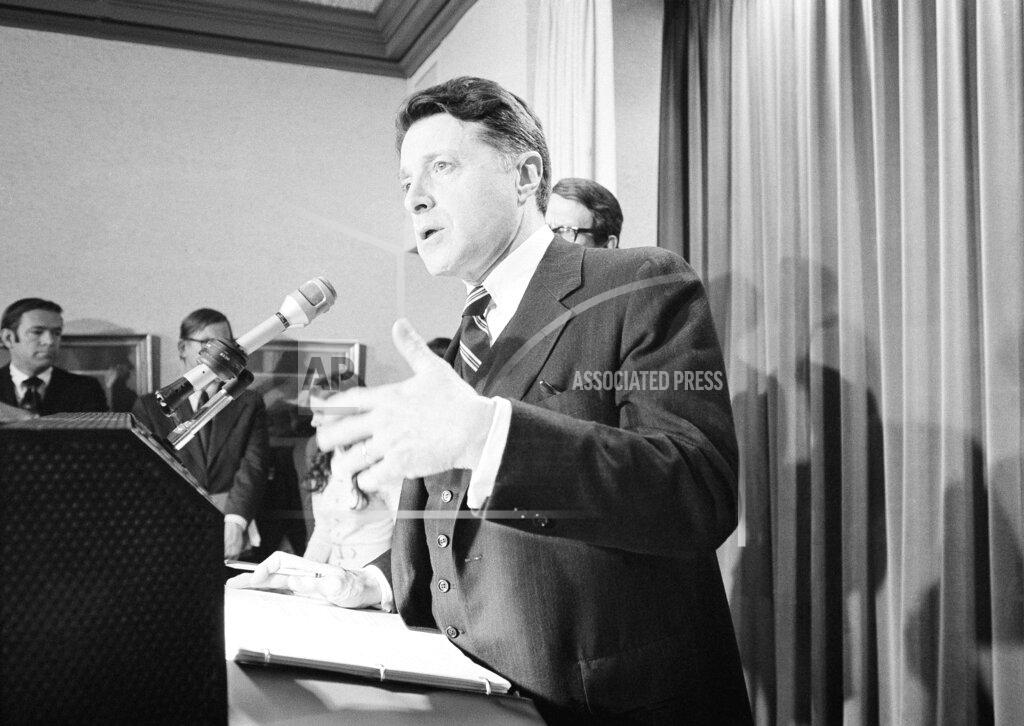
The administration asked Congress to let all wage-price controls expire on April 30 except for those on health care and petroleum products. Secretary of the Treasury Shultz said the administration opposed even stand-by controls because “they can become an inflationary source.”
President Nixon proposed a national health insurance program, saying it would cost $5.9 billion a year and offer all Americans comprehensive health coverage for the first time. In a long-awaited message to Congress, Mr. Nixon said the plan would not require additional taxes and could be financed out of existing revenues.
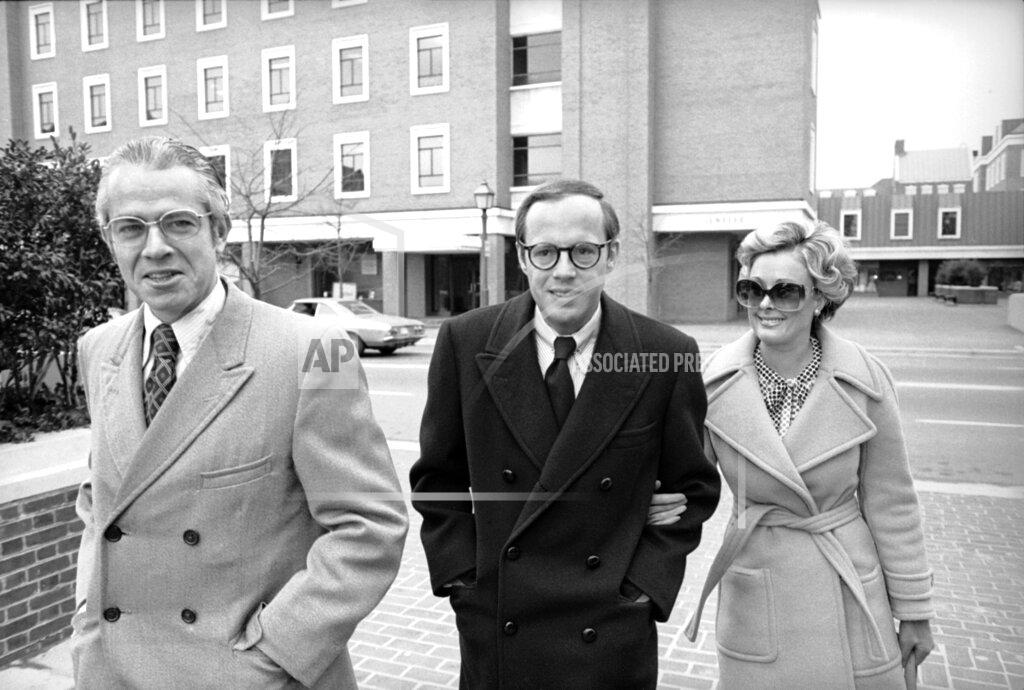
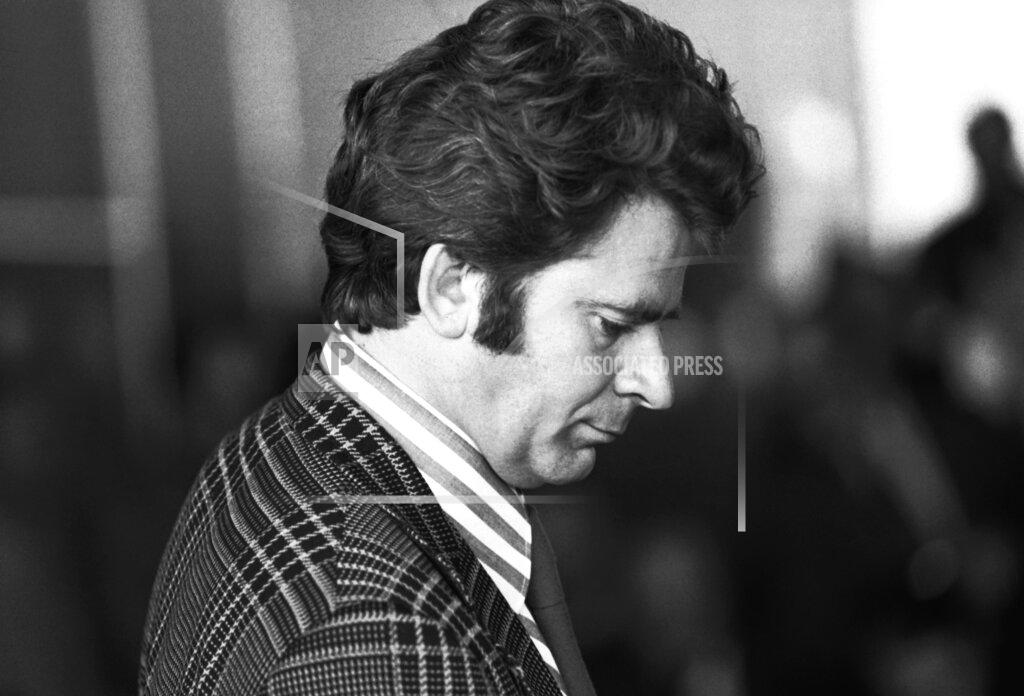
A three‐judge state court today disbarred John W. Dean 3d, former counsel to President Nixon, for what it called unethical, unprofessional and unwarranted conduct in the Watergate affair. The 35‐year‐old Mr. Dean, who has pleaded guilty to a federal felony charge of obstructing justice and defrauding the United States, did not address the court in his own defense. The disbarment action was brought by the Virginia State Bar, which charged that Mr. Dean had been guilty of unprofessional conduct by with‐ holding evidence, inducing a witness to commit perjury, authorizing payment of hush money to the Watergate burglars and diverting money to his own use. The three Circuit Court judges found Mr. Dean guilty of “unethical, unprofessional and unwarranted conduct as an attorney‐at‐law violating the code of professional ethics.” They ordered that Mr. Dean’s license to practice law in Virginia be revoked.
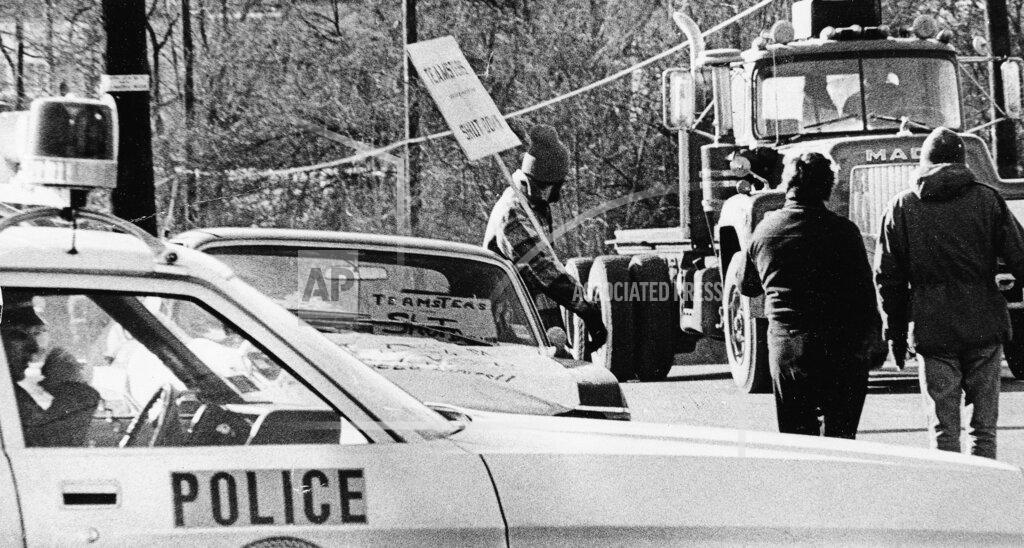
Independent truckers appeared to be willing to yield because of the diesel fuel price rollback, but they want the freeze on diesel fuel to remain intact as long as necessary. Independent truck operators sent proposals for ending their strike, revised only in “language and presentation,” back to the White House today.
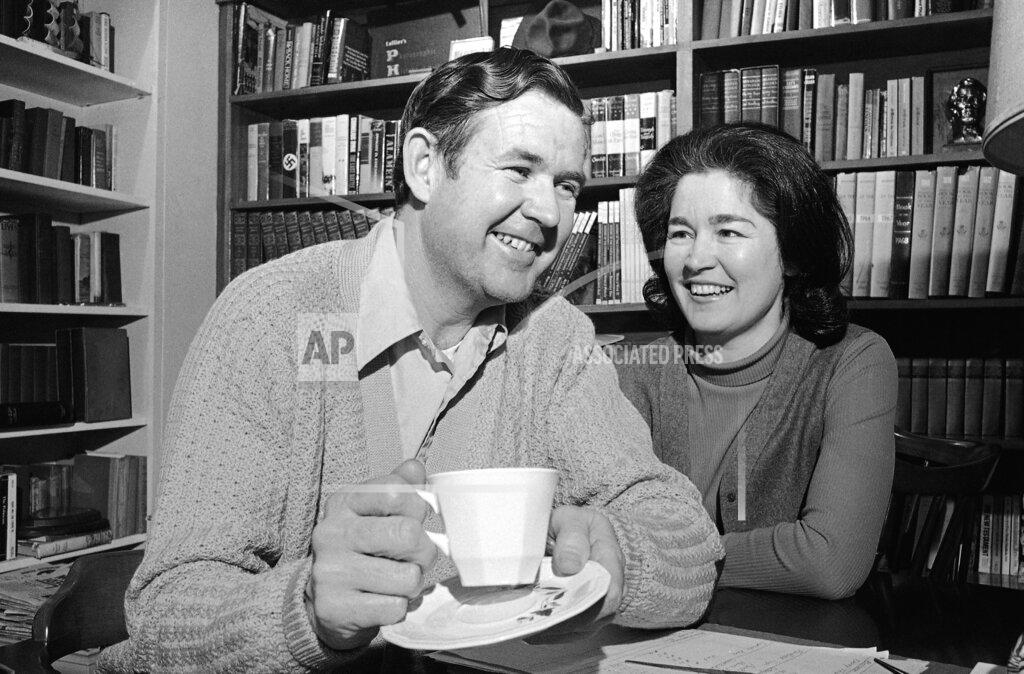
Democrat John P. Murtha Jr. said his narrow victory in the first congressional election of the year was the result of voter dissatisfaction with national problems such as the energy crisis, inflation and the trucker strike-but not necessarily Watergate. The Pennsylvania Democrat’s victory by a margin of 220 votes was being contested by Republican candidate Harry M. Fox. Murtha, 41, a state legislator and Vietnam veteran, will serve out the term of Republican John P. Saylor, who died last October after carrying the district in 13 consecutive elections.
The owner of a cargo plane that crashed in a residential neighborhood after takeoff from Miami International Airport last December 15, killing nine persons, was charged with 154 violations of Federal Aviation Administration rules. The FAA said Aircraft Pool Leasing, Inc., was charged, among other things, with not having a charter operation license, as well as lacking a license to arrange for such things as fuel, crew and insurance. The company could be subject to fines of $1,000 for each violation, officials said.
The Senate Rules Committee approved a campaign reform bill under which the federal government would match the private funds raised by candidates for federal office. The public financing provisions apply to candidates for the Senate and House, as well as presidential candidates, and cover primary as well as general elections. The measure also incorporates with only minor variations a separate bill passed by the Senate last year sharply limiting campaign contributions and expenditures. A bipartisan federal elections commission would be created as an enforcement agency and would be empowered to initiate criminal proceedings.
The last crew of Skylab astronauts, preparing to leave their orbiting laboratory Friday after nearly three months in space, maneuvered the 100‐ton craft a few miles higher above the earth this afternoon, so as to increase chances for a revisit by future space pilots. A three‐minute firing of steering rockets above Africa, which began at 4:48 P.M., Eastern daylight time, raised the workshop’s altitude to between 270 and 283 miles, minutely reducing the drag from the atmosphere and thus extending the maximum estimated lifetime in orbit from six years to eight. The Skylab program is scheduled to end Friday and the workshop is to be rendered completely “dormant” — lacking in power, air‐conditioning and atmosphere — by Saturday afternoon. However, a space‐suited revisit to the craft is one of several possible alternate missions being considered for the American‐Soviet rendezvous flight next year if the Apollo and Soyuz craft cannot link up as planned.
[Ed: Increased solar activity will cause Skylab’s orbit to decay somewhat more quickly than anticipated. It will burn up on re-entry before the U.S space shuttle enters service.]
A wealthy Miami Beach attorney, held for 16 hours by kidnappers who sought $40,000 in ransom, escaped by untying his bonds and quietly slipping out of a hotel room while one of his abductors slept, police said. The suspects, identified by police as unemployed drifters, were later taken into custody. Charles Courshon, 47, the victim, was unharmed. He said two men forced him into a car at gunpoint after he left his law office Tuesday and he was gagged, blindfolded and tied with rope until he made his escape. Police said they arrested Marvin O’Donnell, 20, of Minneapolis, still sleeping soundly in the room from which Courshon fled, and Sydney Pullman, 42, of the Bronx.
The Consumer Product Safety Commission warned that defects in thousands of so-called “rainbow lamps” could cause a fatal electric shock. The commission said that about 35,000 of the lamps, also known as a “minishadowy stand,” have been sold in the United States in the past year. Consumers were warned to use “extreme care” in disconnecting the lamp plug from an outlet and to avoid touching metal objects while doing so. The lamp, imported from Taiwan, is designed to cast shadows of various shapes on walls. It has been advertised nationally and carried in a Greenland Studios of Miami mail-order catalog.
The science fantasy film “Zardoz,” directed by John Boorman and starring Sean Connery, opened in Los Angeles and New York City.
A Federal judge ruled today that the American Basketball Association commissioner, Mike Storen, could not prevent the sale of George Gervin by the Virginia Squires to the San Antonio Spurs. The judge said Gervin was now the property of San Antonio and could play for the Spurs tomorrow night against the Utah Stars. “I’m glad to be here,” said Gervin moments after the ruling. “I want to win. I’m willing to play and I’m going to give 100 percent — 110 percent if I can.”
Dow Jones Industrial Average: 824.62 (+3.98, +0.48%).
Born:
Juan Roque, NFL tackle (Detroit Lions), in San Diego, California.
Jason Johnson, NFL center (Indianapolis Colts), in Kansas City, Missouri.
Nathan Davis, NFL defensive end (Atlanta Falcons, Dallas Cowboys), in Hartford, Connecticut.
LaCharlotte Smith, WNBA guard (Orlando Miracle), in Oak Vale, Mississippi.
Javier Payeras, Guatemalan poet, novelist and essayist; in Guatemala City, Guatemala.
Died:
Dana Latham, 75, former U.S. Commissioner of Internal Revenue.

[Ed: Wow. When did he find the time to invent the internet? /sarc]


 History Diaries