The Secretary General. U Thant, cut short his African tour today after the United States and Britain gave their conditional consent to the authorizing by the Security Council of a peacekeeping force in Cyprus. In the wake of Tuesday’s bombing of the United States Embassy in Nicosia, 320 American women and children, dependents of federal employees, were evacuated by air to Lebanon. According to reliable sources Washington and London have offered to agree to this procedure on condition that Cyprus and all other interested governments agree, before the Security Council meets, upon the composition of the proposed force and the instructions under which it would operate.
The decision on which country would ask for the force is subject to negotiation. However, if agreement is reached, Cyprus would probably make the request. In that event, it is thought that a Soviet veto in the Security Council would he less likely. The Secretary General announced in Tunisia that he would return to New York morrow night. Zenon Rossides, the Cypriote representative here, predicted that the Security Council would meet on the Cyprus question before the weekend. According to some sources. the United States and Britain decided to shelve their plan for a force for Cyprus composed of units of the North Atlantic Treaty Organization and under their direction. But a spokesman for the British delegation to the United Nations denied this.
Yesterday, Archbishop Makarios, President of Cyprus, renewed his previous demand that a peacekeeping force for his country be responsible to the Security Council. The sources in the U.N. reported that Archbishop Makarios had said he would agree that the countries that were to provide contingents for the Cyprus force be selected before the Security Council met. After agreement by the United States. Britain, Turkey. Greece and Cyprus, the Council would be asked to ratify the selections. It was understood that Archbishop Makarios wants a Security Council commitment that an outside force sent to his country would respect the independence and territorial integrity of Cyprus. In other words, he wants a guarantee that Cyprus will not be partitioned between the Greek and Turkish communities as a result of any intervention in the fighting between Greek and Cypriotes. The Turkisk minority of Cyprus is said to favor partition.
About 1,000 students in Saigon demonstrate for the return to power of General Dương Văn Minh, whom General Khánh has persuaded to stay on as a figurehead, and for a more effective war effort. For the second day student demonstrators filled a central square of Saigon. The students’ expressed doubt that the new regime was the best force to rally the country in the war against Communism.
Last week’s coup d’état has spawned a new period of political instability in Saigon. Popular confidence in the military is believed to have been undercut. The military was widely regarded as the one institution that could hold the country together in the war against the Communist guerrillas. As in the last days of President Ngô Đình Diệm’s regime. the capital is again full of talk of coups — in this case countercoups against the country’s new strongman, Major General Nguyễn Khánh. Civil servants, politicians and some junior military officers have privately expressed fears for the future and some have spoken bitterly of last Thursday’s rebellion. “The army was the only disciplined, unified organization we had left,” one young officer said. “We don’t have any political parties. All we have is the army. Now this coup shows that the army also doesn’t have discipline, that the chain of command is broken. The army is divided now. They will fight among themselves and there will probably be another coup.”
The United States military command in South Vietnam announced an increase in Communist attacks against government forces since last week’s coup d’ etat in Saigon. An official spokesman said incidents had doubled in most of the country in the last four days. They included acts of terrorism against administrators of villages and fortified hamlets, harassing of outposts, probing attacks and small ambushes. Blame for the heightened guerrilla activity was not attributed entirely to the military and civilian confusion brought about by the overthrow of the military junta. The United States announcement said the Communists had been expected to intensify their attacks just before the Vietnamese New Year celebrations that start next week. Military sources added, however, that even stronger attacks could be expected if the present probing indicated any weakening of morale or structure in the South Vietnamese Army.
The United States is recalling its Ambassador from Ghana for consultation to emphasize protests against that nation’s sponsorship of a sudden anti-American campaign. Officials here say that nothing has occurred in recent relations between Washington and Accra that would explain yesterday’s organized march of Ghanaians against the United States Embassy or the virulent attacks now appearing in the Government‐controlled press. The Administration suspects, therefore, that President Kwame Nkrumah has encountered serious internal opposition that he intends to ascribe to American intervention. The plan here to suggest firmly, but gently at first, that this could be a costly blunder. Ambassador William P. Mahoney Jr. will be recalled to Washington for “consultation,” a low-key diplomatic signal of displeasure. More serious diplomatic and economic sanctions are being considered, but not yet threatened.
President Nkrumah, a virtual dictator in what is now a one-party Socialist state, survived a fifth attempt at assassination last month and has lived in seclusion since then. The opposition is thought to be increasing. Foreign debts are coming due while foreign exchange reserves are almost exhausted. Mr. Nkrumah has a reputation here for emotional and erratic leadership. But his reliance on United States support for the Volta River hydroelectric project is thought to have been a restraining influence. The $196 million project, partly financed with American loans, will be completed in two years. Two American corporations are building a $1.5‐million aluminum smelter that will be the project’s principal customer. Washington is reluctant to threaten these projects before it knows more about the extent and reason for the anti-American outburst. It still hopes that the Ghanaian leader can be persuaded to cancel the campaign.
India’s chief delegate to the United Nations, Education Minister M. C. Chagla, told the UN Security Council that “I wish to make it clear on behalf of my government that under no circumstances can we agree to the holding of a plebiscite in Kashmir,” responding to charges by Pakistan Foreign Minister that India had backed out of its 1948 offer to hold elections so that the Kashmiri people could decide which nation they wished their region to be part of. “Plebiscite in Kashmir ruled out — Chagla”, In 1965, the Indian would incorporate its claimed area into what would become the state of Jammu and Kashmir. Since 1990, February 5 has been observed as “Kashmir Day” by the nation of Pakistan, and by Kashmiri nationalists in India.
General Emilio Aguinaldo, the hero of the Philippine struggle for independence, died today at Veterans Memorial Hospital. He was 94 years old. Frail, almost blind and unable to walk, General Aguinaldo had spent most of the last four years in the hospital. After suffering the latest in a series of strokes last week, he rallied briefly yesterday and talked with relatives.
The civil rights bill’s ban on discrimination in public accommodations survived all major attacks today and was tentatively approved by the House of Representatives. The section had been thought to be one of the most vulnerable parts of the measure. All day long the Southerners laid down an ineffective barrage of amendments but the coalition forces held their ground. Finally, in a Iast futile gesture, the Southerners moved to kill the entire section and were defeated, 144 to 63. Nothing can now endanger this key section except a vote to recommit the entire bill with instructions to remove it. This is not likely to happen. What happens in the Senate is another matter.
The Senate refused today to broaden the Administration’s tax‐cut bill to provide for repeal of $445 million in federal sales taxes on items ranging from luggage to lipstick. The vote was 48 to 45. The Administration forces thus maintained control, though by a continued slender margin, in seeking to steer the measure to passage without major amendments. The bill, passed by the House last September, calls for rate reductions and structural revisions of the revenue code to give taxpayers $11.6 billion in annual relief.
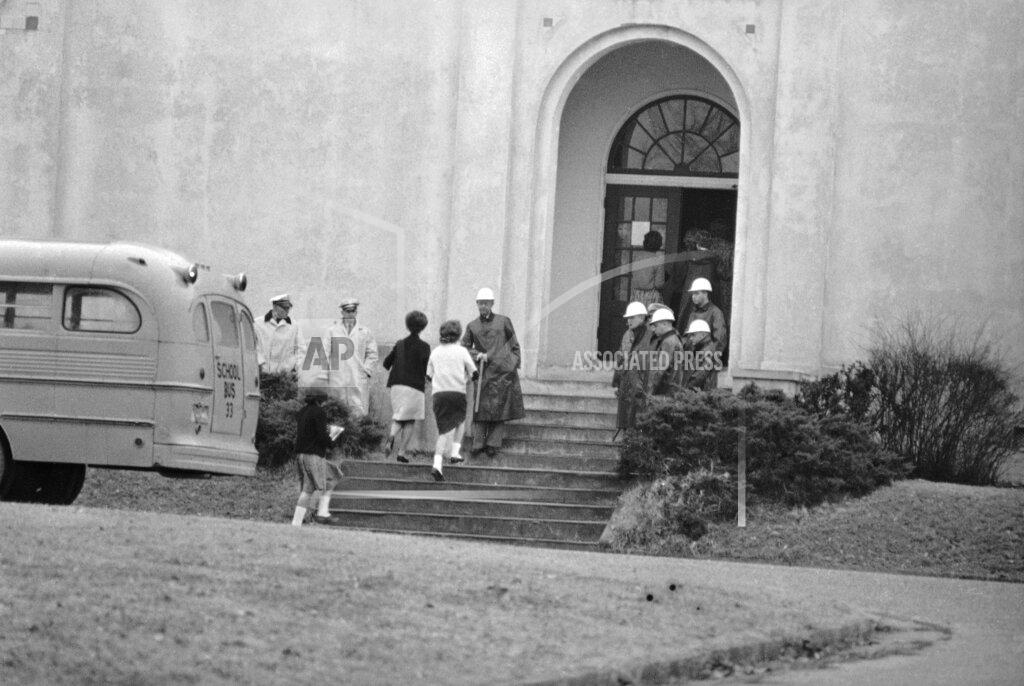
Notasulga, Alabama Mayor James Rea today turned back six Blacks who sought to enter the all-white Macon County High School under a federal court order. He said later that their presence would have created a fire hazard. Tonight, the city’s water plant was heavily damaged by fire, according to Mayor Rea. He ordered all schools closed as a result of the fire. “Definitely, the plant is out of operation for three days,” he said. Justice Department attorneys moved immediately to meet the challenge posed when the mayor blocked admission of the Blacks. It was the first major move against federal authority on the issue since President Johnson took office. The lawyers filed a suit tonight in the Federal District Court in Montgomery, 50 miles to the west, for a preliminary injunction prohibiting further interference by Mayor Rea.
A hearing was set for 10 A.M. Friday before Judge Frank M. Johnson. It thus appeared that the second showdown over the admission of the six students might not come before next week in this farming and textile town of 1,000 persons in east‐central Alabama. Six other Black students were admitted this morning to the all‐white Shorter High School, 15 miles southwest of here, without serious incident. More than half of its white students attended classes throughout the day. This indicated at least a temporary failure of segregationists’ efforts to promote a mass boycott. Sixty state troopers, trained and equipped for riot duty, sealed off the Shorter High School area.
A small but angry crowd of three dozen men gathered in a yard across the street in front of the Macon County High School this morning. All were dressed in rough work clothes — overalls and khakis. A few were unshaven. Several carried hickory walking sticks. They cursed newsmen and hacked at them with the walking sticks. On the opposite side of the street, Colonel Lingo, commanding the state troopers, waited with a friend, Sheriff Jim Clark of Dallas County, in the western Alabama Black Belt. Mayor Rea, who was standing in the schoolhouse door, surrounded by local policemen and deputies, invited Sheriff Clark into the area. He said later, “We thought we might need his mounted posse.” The posse had figured prominently in a Birmingham riot last May, when it drove Blacks at rifle point and shotgun point from the A. G. Gaston Motel.
A yellow school bus driven by a Black pulled up at the entrance shortly before 9 o’clock. Sheriff Clark, clutching an electric cattle prod wrapped in black tape, jumped aboard, followed by a local deputy. Crouched in the aisle was a white photographer. Vernon Merritt 3rd of Birmingham, son of former Governor Gordon Persons’ executive secretary. Sheriff Clark began jabbing the prod into Mr. Merritt’s stomach and then started flailing him with it. The deputy, who had snatched the photographer’s two cameras, smashed them over the metal bars at the back of the bus seats. The sheriff then threw the man off the bus and stood over him jabbing him occasionally with the prod. The bus pulled up to the high school door. Mayor Rea approached and told the students he was invoking a “safety and fire prevention ordinance” adopted January 27. The bus then returned the students to Tuskegee, the county seat, nine miles to the south, where they live.
A consumer education program aimed particularly at helping the nation’s poorest families avoid swindlers and get the most from their limited budgets is being planned by the Johnson Administration. The educational campaign is just one part of a far‐reaching program of consumer protection put before Congress today by President Johnson in a special message on consumer interests. Other elements in the program include recommendations that Congress enact new laws to keep pesticides and cosmetics off the market until they have been proved safe and to extend mandatory inspection of meat and poultry to products produced and consumed within one state. The President asked for 10 new laws altogether, most of aimed at expanding the government’s authority to protect consumers from deception and from unsafe products.
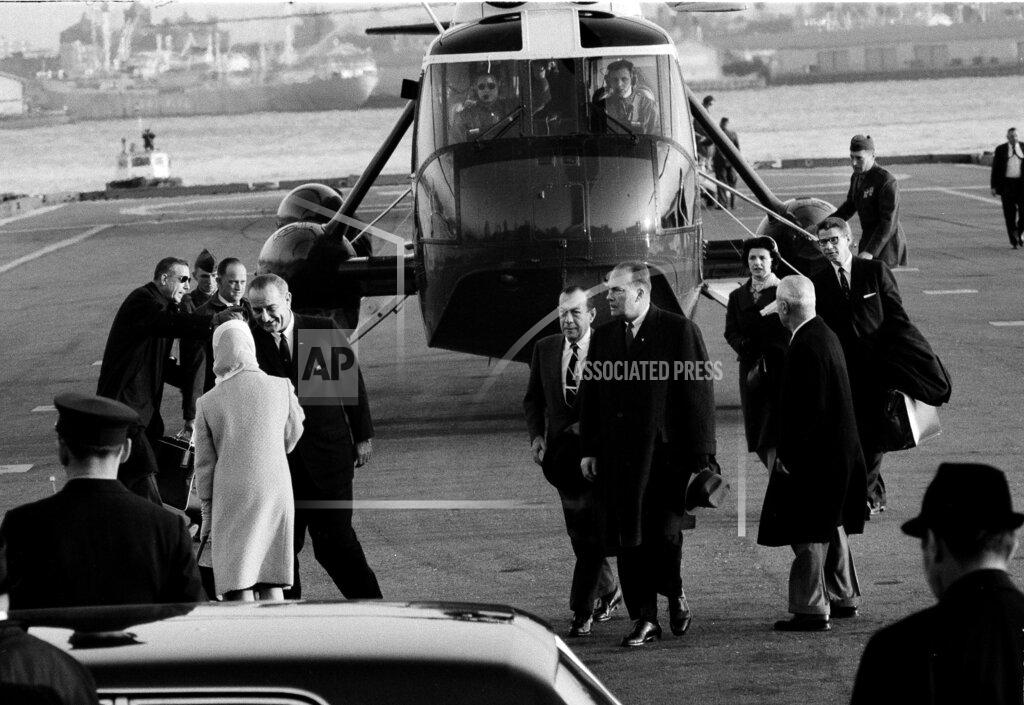
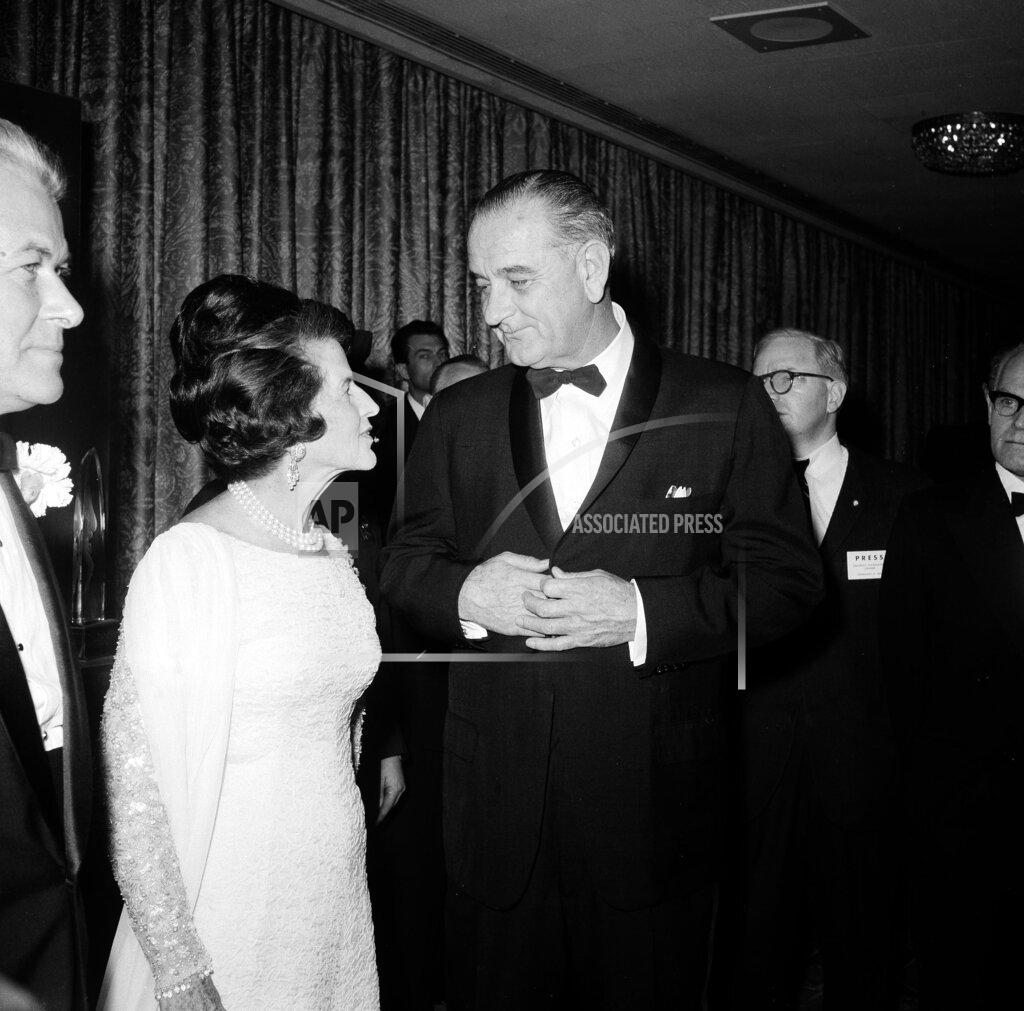
President Johnson promised here last night to continue the crusade launched by President Kennedy against “mental retardation and mental illness and poverty, and every other foe of the land he loved.” He spoke at the second annual international awards dinner of the Joseph P. Kennedy Jr. Foundation in the Americana Hotel where he presented six awards for scientific contributions in the fight against mental retardation. Arriving in Manhattan by helicopter from Kennedy International Airport, President Johnson set a precedent that may ease the security problems of the police on future Presidential visits. But the Presidential party, by arriving at the Downtown Manhattan Heliport, Coenties Slip and South Street, at 4:52 P.M. — only eight minutes ahead of the rush hour — severely tied up East Side traffic.
A teamsters’ union official linked James P. Hoffa, general president of the union directly today to alleged attempts to bribe jurors in Mr. Hoffa’s trial in Nashville in 1962. The testimony of the official, Edward G. Partin, was the first to bear on personal involvement of Mr. Hoffa since the trial of the president of the International Brotherhood of Teamsters and five other defendants on jury‐tampering charges began in United State Court in Chattanooga January 20. Mr. Partin said that Mr. Hoffa, at one point, had told him he would pay whatever it cost to get to the jury. The Government is charging that Mr. Hoffa and his five co-defendants tried corruptly to influence the jury in Mr. Hoffa’s Nashville trial on Federal charges of accepting illegal payments from an employer. That proceeding ended in a mistrial after the jury failed to agree on a verdict. It voted 7 to 5 for acquittal.
Dow Jones Industrial Average: 783.04 (-0.26).
Born:
Laura Linney, American actress (“The Truman Show”, “Mystic River”), in New York, New York.
(Michael Andrew) “Duff” McKagan, American bassist (Guns N’ Roses), in Seattle, Washington.
Jim Pugh, American tennis player (8 x Grand Slam doubles titles; world #1 doubles 1989), in Manhattan Beach, California.
Mark Tigges, NFL tackle (Cincinnati Bengals), in Algona, Iowa.
Cornelius Dozier, NFL defensive back (Kansas City Chiefs), in Ennis, Texas.
Russell Griffith, NFL punter (Seattle Seahawks), in Salt Lake City, Utah.
 History Diaries