War resumed between Syria and Israel, with a group of 500 Cuban soldiers joining a Syrian tank division at Mount Hermon in Syria, and then proceeding to battle in the Golan Heights, formerly Syrian territory occupied by Israel since the 1967 Six-Day War. Syrian and Israeli artillery and tanks exchanged fire for the ninth day, and a Syrian spokesman said that six Israeli tanks were destroyed. In Tel Aviv, an Israeli spokesman said two Israeli soldiers were wounded on the Golan Heights front. The fighting lasted until a ceasefire was agreed upon on May 31.
Three guerrillas who hijacked the Greek freighter Voria in Pakistan were being held at Cairo International Airport, Egyptian authorities reported. The semi-official newspaper Al Ahram said the three, between 18 and 25 years old, were believed to be Filipinos studying engineering at a Karachi university and were holding Pakistani passports. The trio, by releasing the freighter and two hostages, won assurances from the Greek government that it would spare two Arabs sentenced to death for killing five persons and wounding 45 in an attack on the Athens airport last August.
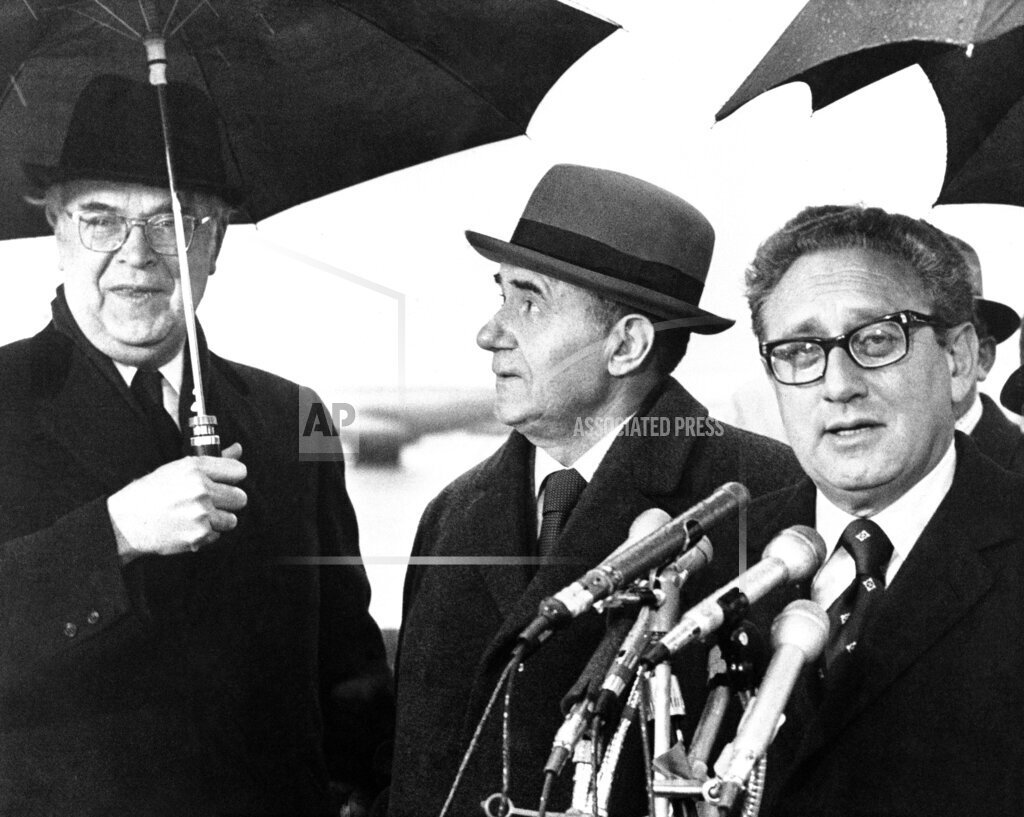
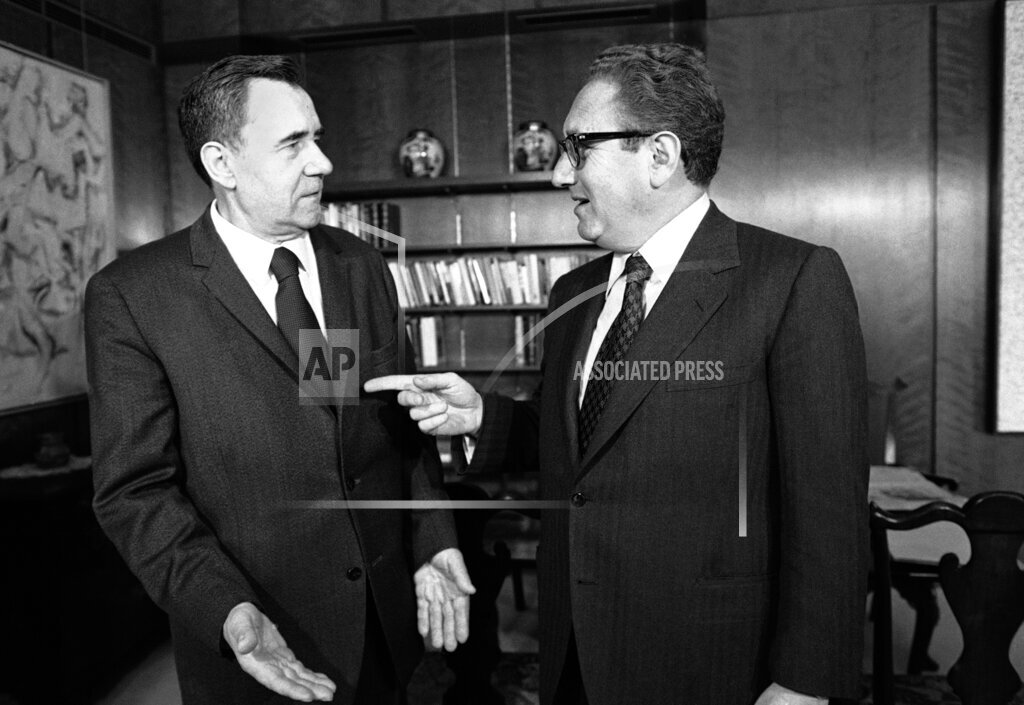
The Soviet Foreign Minister, Andrei Gromyko, opened talks with President Nixon and Secretary of State Kissinger, focusing on the Middle East and Soviet-American issues. Officials withheld details of the discussions, but Mr. Gromyko, who had just arrived from Havana, said the topics had “definitely not” included Cuba during his initial meeting.
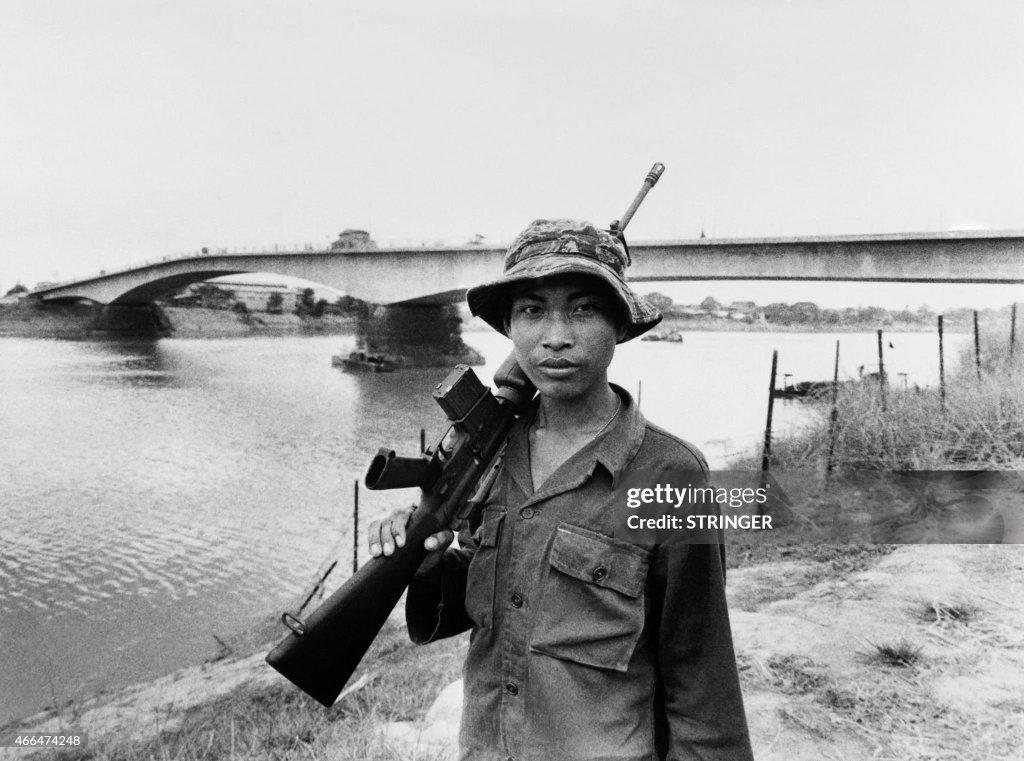
A Viet Cong military spokesman accused South Vietnamese government negotiators today of “once more” sabotaging the agreement on prisoner releases. The charge was made after the two sides failed to agree. South Vietnamese military sources said they felt the failure was only a slight snag. The ‐ South Vietnamese spokesman, Lieutenant Colonel Lê Trung Hiền, said that the Viet Cong had demanded, that a timetable be drawn up for the entire three weeks of the releases, which, both sides agreed last week, should start this Friday. That proposal was unacceptable, the colonel said. The Viet Cong spokesman, Major Phương Nam, said that the negotiators for the other side had refused to discuss the timetable and “once more they have sabotaged the agreement.”
Small South Vietnamese forces have landed on two more islands in the disputed Spratly archipelago in the South China Sea, military sources said today. The semiofficial newspaper Dan Chu said the landings were made without incident. Unopposed landings were made last week on two other islands in the chain, off Southern South Vietnam.
The Chinese Government accused South Vietnam today of having “invaded and occupied” some of the Spratly Islands. It warned that it would not “tolerate infringement of China’s territorial integrity and sovereignty by the Saigon authorities on any pretext.”
Two American woman and a Briton working for a Quaker medical team have been released after being held for 12 days by the Viet Cong, a British Embassy spokesman said today.
British union officials announced that the coal miners had voted overwhelmingly for a strike. By an 81 percent margin, they gave their leaders authority to set a date for a walkout. Prime Minister Heath failed, meanwhile, in a latest effort to avert economic disruption with a settlement. Leaders of the miners’ union are to meet tomorrow to consider a strike date, which could be as early as next Sunday.
In the United Kingdom, the bombing of a bus killed nine soldiers and three civilians (including two children) and injured 38 others. The bus was traveling on the M62 motorway in England when the bomb, hidden in the luggage compartment, exploded near Batley, West Yorkshire, at 12:30 in the morning. The bombing was carried out by the Provisional Irish Republican Army, but the identity of the specific perpetrator or perpetrators remains unknown. Judith Ward was wrongfully convicted of the bombing in November 1974; her conviction was overturned in 1992.
An intensive manhunt across northern England sought Irish guerrillas believed responsible for a bomb blast which killed 12 persons, including a family of four, aboard a British military bus. Stepped-up security measures were put in effect in London after a newspaper security guard was injured by a letter bomb, also believed to be the work of the Irish Republican Army Provisional wing.
Eight noncommissioned officers in the West German navy have been disciplined for singing old Nazi songs during a mock celebration of Hitler’s birthday during a training cruise in the Pacific last year, the Defense Ministry in Bonn said. A disciplinary hearing is pending against the first officer of the training ship for not intervening, the ministry said.
Ronald Biggs, fugitive convict of Britain’s Great Train Robbery, will not be extradited from Brazil to England until Britain makes an official request, Police Inspector Carlos Alberto Garcia said in Rio de Janeiro. The two countries have no extradition treaty, but the inspector said that Britain had 60 days to file a request which could be filled on the basis of reciprocity. Biggs, 44, will remain in custody until the federal Supreme Court receives and judges such a request.
The Singapore government turned down a request from four hijackers — two Arabs and two Japanese — aimed at ending a five-day stalemate by swapping their three hostages and pirated ferry — but not their arms — for a getaway airplane. There also apparently was no agreement on a government offer to allow the hijackers safe passage to any of Singapore’s 42 diplomatic missions where they could stay until a means of getting them out of the country was arranged. The hijackers, showing no apparent strain from the lengthy ordeal, sipped soft drinks and did calisthenics on the ferry, which is surrounded by police boats.
Officials of Ipoh, Malaysia, feared that up to 21 persons were killed by a huge wall of water and slime that broke through an embankment of a flooded tin mine and swept through squatter huts, cave homes, a temple and an elderly women’s home. The ooze was 25 feet high in some places and 500 yards wide. It swept through a 10-acre area. Six bodies have been recovered so far.
The candidate of the ruling National Liberation Party, Daniel Oduber Quiros, showed a strong lead in early tabulations of Costa Rica’s presidential elections. With 41.22% of the vote, he managed to stay just above the 40% required for a first ballot victory. He told newsmen, “Victory is assured.” His nearest rival was Dr. Fernando Trejos Escalante of the Unification Party. If Oduber fails to get 40% on the final tally a runoff election will be necessary. The current president, Jose Figueres, was barred from serving more than one four-year term.
Student disorders erupted over the weekend at four of Nigeria’s universities, and here at Lagos five policemen were taken captive and held on the university grounds. The campus was barricaded today, and the policemen were reportedly placed in the custody of the university’s vice chancellor. Later, policemen using tear gas forced their way through the barricades and freed the five captives, Agence France‐Presse reported.
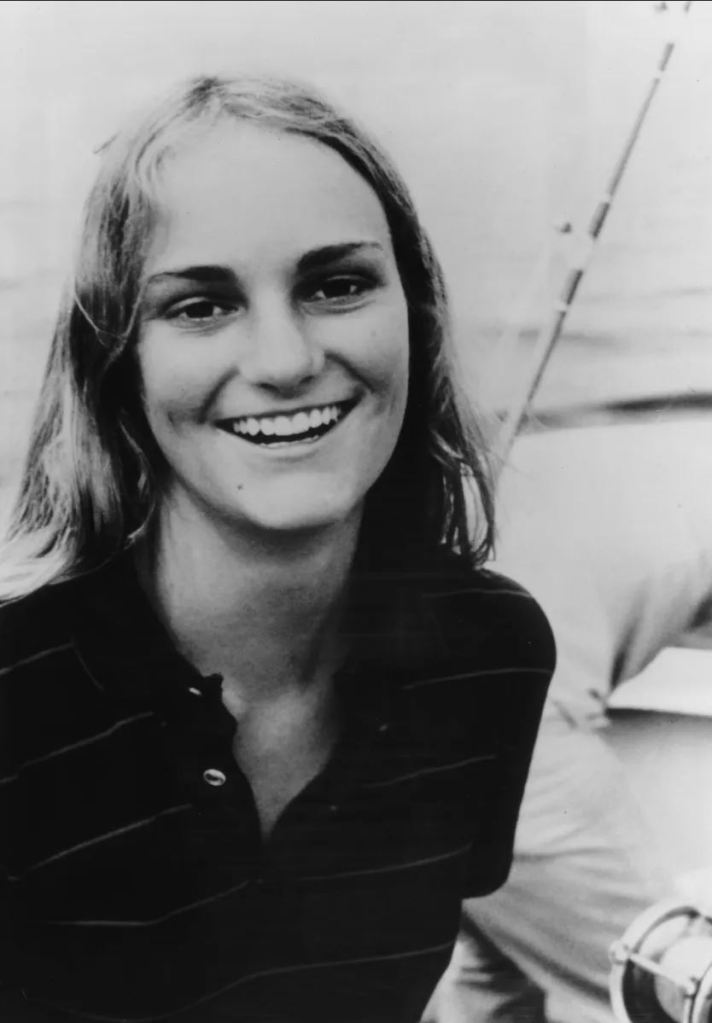
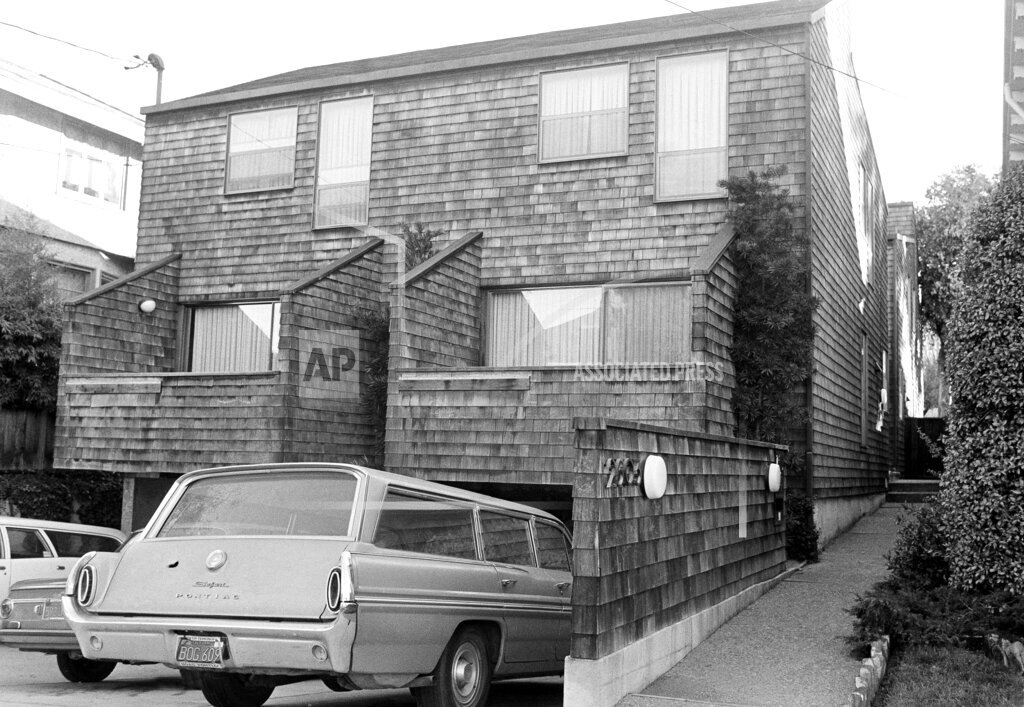
In one of the most famous kidnappings in U.S. history, three members of the left-wing terrorist Symbionese Liberation Army kidnapped 19-year-old Patty Hearst, a granddaughter of newspaper magnate William Randolph Hearst, from her apartment in Berkeley, California. At 9:30 p.m., two African-American men (one of whom was Donald DeFreeze) and a white woman invaded the Berkeley, California apartment of Hearst, a 19-year-old sophomore at the University of California. Hearst’s fiancé Steven Weed and a neighbor were beaten, and gunshots were fired at nearby witnesses as the group loaded Hearst into the trunk of a car in the apartment’s parking garage.
President Nixon sent Congress his $304.4 billion budget for the coming fiscal year, terming it a budget of moderate restraint and fiscal responsibility. According to his assistants, the budget might be “busted” if a slump in the economy calls for more spending. As it is, the budget makers foresee a deficit of $9.5 billion, largely because an economic slowdown is expected to curb the growth in revenues. The budget totals, the President said, were in line with “a continuing anti-inflation program.”
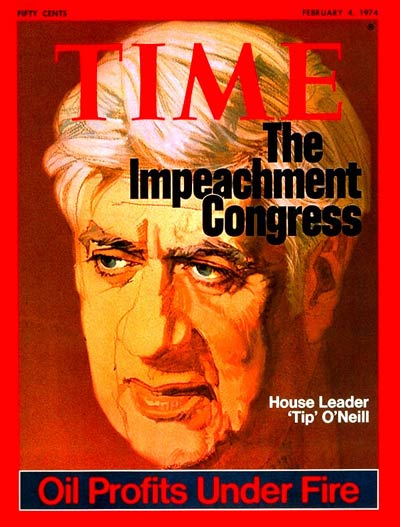
The Watergate scandal found itself reflected in several areas of the President’s budget requests for fiscal 1975. For instance, the President asked for a substantial increase in the White House payroll, much of it reportedly to pay for the legal staff the White House has added to handle the complex Watergate litigation.
The White House declared “categorically” that evidence handed to the Watergate prosecutor, Leon Jaworski, did not support John Dean’s testimony implicating President Nixon in the Watergate cover-up but rather bore out Mr. Nixon’s version of events. The statement referred to unspecified’ “tapes and other evidence.”
Amoco announced a decrease of 2 cents per gallon in the price of its gasoline, and a 1 cent decrease for heating and residual fuel oils. A congressional committee approved legislation to force a rollback in the prices of crude oil. Both house of Congress must approve the measure before it becomes law.
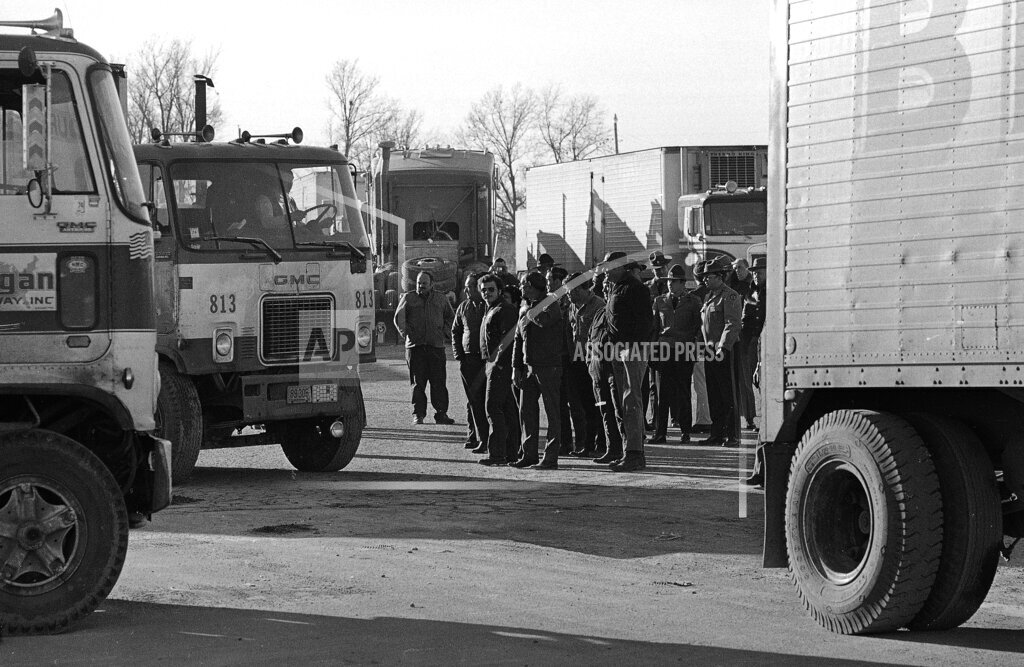
Negotiations between the government and truckers continued in Washington. The National Guard is on call to prevent violence and protect working truckers in Ohio, Michigan and Pennsylvania. Food distribution has been seriously affected. There is a backlog of undelivered meat products in the Chicago stockyards because of the strike, which is keeping grocery stores from carrying meat. Illinois Governor Daniel Walker ordered escorts for working truckers, but few chose to risk violence. Much of Florida’s vegetable and fruit harvest won’t reach Northern markets because truckers refuse to haul the produce. Products which do reach Northern markets will cost the consumer dearly.
Teamsters union president Frank Fitzsimmons declared that he opposes the strike, and he urged federal and state governments to crack down. Former Teamsters president Jimmy Hoffa said that he supports the strike.
The truckers’ strike has also affected gasoline distribution. Schools in many areas have been forced to close, and there are long lines at service stations. Federal energy czar William Simon requested that motorists not buy gasoline unless they need at least $3.00 worth, in order to shorten lines at the pumps.
Treasury Secretary George Shultz told the House Ways and Means Committee that a windfall tax should be imposed on oil company profits, but he stated that price rollbacks would not work. Talk of nationalizing oil companies is “outrageous”, according to Shultz. Shultz backed the administration’s plan to break the tax advantage for overseas oil production.
A spokesman for the baking industry claimed that the United States could completely deplete its bread supply if the wheat shortage continues. An Agriculture Department economist said that the wheat shortage won’t become critical.
Armed intruders entered the Ya Sin Mosque in Bedford–Stuyvesant, Brooklyn, New York City, leading to a shootout in which two of the intruders, a mosque member and the mosque’s leader, Minister Bilal Abdullah Rahman, were killed.
“If our markets are kept open and are allowed to function, there will be no shortage of flour in the United States,” Don Paarlberg, the Agriculture Department’s top economist, told a Senate subcommittee studying a wheat reserve system. But several senators blasted the department’s statistics and past prediction performance as slipshod, incomplete and misleading. Michael Hinebaugh, a grain-futures commodities executive, said that because of the department’s mistakes “we are wavering a thin tightrope between a continued uncomfortable situation and utter chaos.” A spokesman for the American Bakers Association repeated a prediction that the nation will run out of wheat before spring.
A federal judge ruled in Jacksonville, Florida, that President Nixon did not have the authority to permanently halt construction of the Cross Florida Barge Canal. U.S. Circuit Judge Harvey M. Johnsen said the authority to build, stop or destroy the canal rested with Congress. “I am unable to regard the President as having any general executive power to terminate whatever legislative authorized public works project he chooses,” Johnsen said. He ordered the immediate release of $150,000 appropriated for an environmental impact study which the Administration has impounded.
Chimpanzee Nim Chimsky signs his 1st word, at 2½ months.
Dow Jones Industrial Average: 821.50 (-22.44, -2.66%).
Born:
Brandon Convery, Canadian NHL centre (Toronto Maple Leafs, Vancouver Canucks, Los Angeles Kings), in Kingston, Ontario, Canada.
Jerome Davis, NFL tackle (San Francisco 49ers), in Detroit, Michigan.
Chris Ward, American NFL defensive end (Baltimore Ravens), in Atlanta, Georgia.
Urmila Matondkar, Filmafare Award winning Indian actress; in Bombay (today Mumbai), Maharashtra, India.
Died:
Satyendra Nath Bose, 80, Indian mathematician and theoretical physicist known for the Bose–Einstein condensate.

 History Diaries