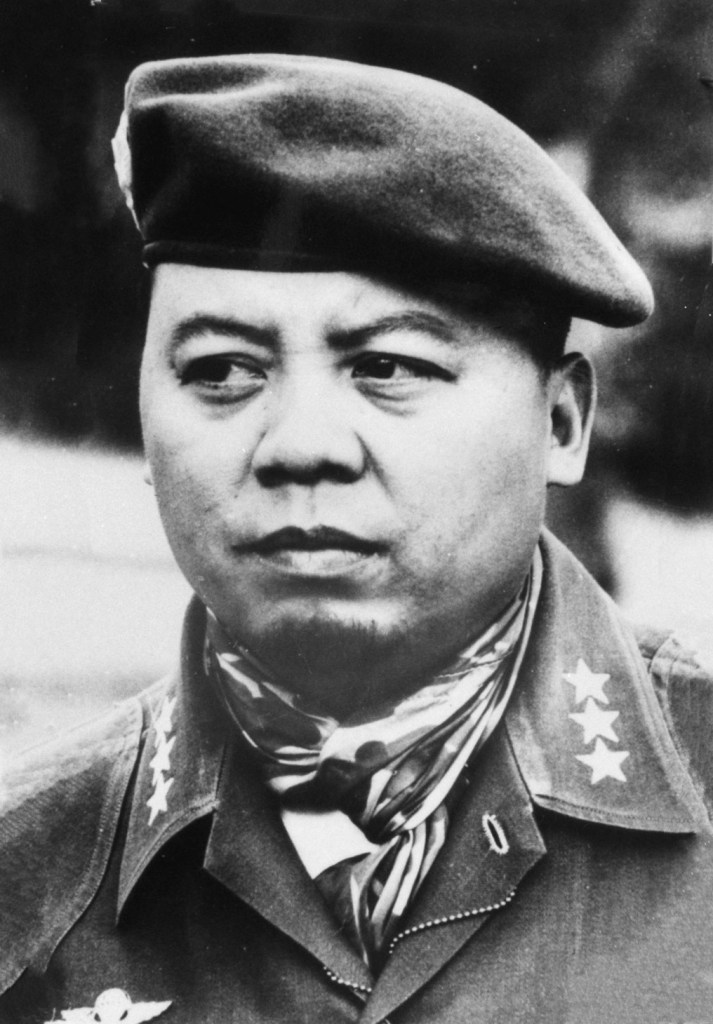
South Vietnamese General Nguyễn Khánh assumes the chairmanship of the Military Revolutionary Council and moves quickly to gain U.S. support for his regime. Khanh, chairman of the Military Revolutionary Council, said today that Major General Dương Văn Minh, the overthrown head of state, had agreed to serve the new Government as an adviser. General Khánh’s announcement was interpreted as an attempt to maintain a semblance of continuity after yesterday’s coup d’état. The new chairman said he had tried unsuccessfully to persuade the popular General Minh to stay on as head of state. Speaking at a news conference, General Khánh promised a fair trial to the leaders of the former junta who were arrested yesterday. He characterized his seizure of power as an “internal purge” by field commanders frustrated in their war against the Communist guerrillas by indecisive politics in Saigon. “While fighters were sacrificing their lives on the battlefield, too many officers had attitudes unworthy of a revolution,” General Khánh said. “I am taking personal control of the war effort.” The general denied reports that one or more of the deposed generals had been executed. “Not a shot was fired; no blood was shed,” he said. [Ed: Incorrect; there was one execution, Nguyễn Văn Nhung.]
Since the swift coup involved only a change in personnel and not in the Government structure, General Khánh said, no new formal recognition by foreign governments will be required. A spokesman at the United States Embassy confirmed that American recognition of the South Vietnamese Government would continue without any need for new formal action. General Minh’s new duties as adviser were not specified. Although General Khanh implied that he was not under arrest, General Minh’s house was still guarded by tanks and paratroopers. The new chairman, 36‐year-old commander of the army’s I Corps, appeared genial and confident before the cameras. He posed with his hands clasped above his head like a prizefighter, and he joked about his new goatee. Yesterday, in his first explanation of the motives behind the coup, General Khánh charged that the former leaders had plotted with French agents to neutralize Vietnam. Today he declined to discuss these charges, which met with skepticism among diplomats.
Communist Pathet Lao troops, believed to be supported by North Vietnamese forces, have overrun the neutralist headquarters in central Laos and pushed on for six miles, it was reported today. Prince Souvanna Phouma, neutralist Premier of the Laotian Coalition Government, charged in a communiqué last night that the Communists were violating the cease‐fire. He called on Britain and the Soviet Union, cochairmen of the 1962 Geneva conference on Laos, to intervene to halt the fighting. Washington officials believed the Pathet Lao attacks had the limited objective of linking supply routes from North Vietnam.
The Communist drive began Sunday, forcing troops of the neutralist and rightist factions into a general retreat, according to Vientiane sources. The Communists captured the neutralist headquarters, at Na Kay, and fighting is under way six miles to the southwest, military sources said. Na Kay is almost in the center of the narrow waist of Laos, which is only about 70 miles wide at that point. It is about 30 miles northeast of Thakhek, on the border of Thailand. A Communist victory would cut Laos in two.
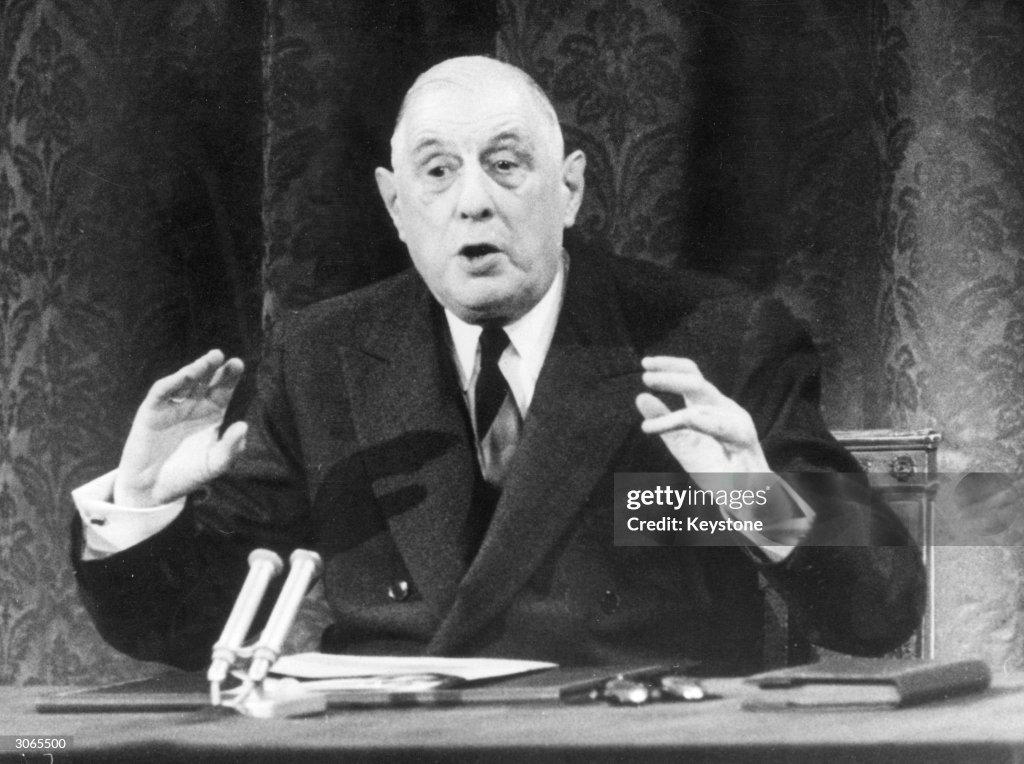
President de Gaulle proposed today the neutralization of the former French possessions in the Indochinese Peninsula in cooperation with Communist China. The states involved are Cambodia, Laos and North and South Vietnam. The United States is deeply involved in the anti‐Communist struggle in South Vietnam. Suggesting an international guarantee for the neutralized states, General de Gaulle stipulated that they must be free from any kind of foreign intervention, including, presumably, that of the United States. In discussing his proposal, the President used the term “Southeast Asia,” which, in French usage, refers to the territories given up at an East‐West conference in Geneva in 1954. The conference ended France’s struggle against Communist‐led rebels.
It is impossible to assure the future of the area, General de Gaulle said, without the participation of the Government in Peking, which France recognized on Monday because, he said, the French see “the world as it is.” President de Gaulle’s proposal came at the end of a rambling 92‐minute news conference in the Elysee Palace. His audience totaled 1,000, including French Cabinet ministers and reporters. The general, who is 73 years old, seemed older and more tired as he took his seat beneath glaring lights. He hardly glanced at the Cabinet, which sat at his right. Although his sentences were as rounded as ever, his choice of words as precise, some of the old vigor appeared to be missing. The impression that he had aged rapidly in the last six months was linked by many to his refusal, good‐natured but definite, to say whether he would be a candidate for reelection.
Journalist James Reston in The New York Times called for the U.S. to seek a negotiated settlement to the war in South Vietnam. Reston’s view echoed that of French President de Gaulle who was advocating that negotiations begin to make South Vietnam a neutral country.
Panama charged the United States tonight with the “infamy’ of deliberate armed aggression in the Canal Zone on January 9 and 10. The Panamanian chief delegate, Miguel J. Moreno Jr., warned the Council of the Organization of American States, meeting in emergency session, that what he termed aggressive acts could occur again. He demanded hemispheric measures to protect his country’s security. The United States forcefully denied that it had been guilty of aggression in the Canal Zone riots of January 9 and 10, which led to the present crisis, and expressed its readiness to cooperate in an investigation requested by Panama.
By unanimous agreement, however, the Council decided to refrain from any action until next Tuesday. The reason given was that many delegations said they lacked instructions, but the postponement appeared to be more of a diplomatic maneuver to gain time for new conciliation efforts. Panama’s decision to break off earlier talks through the Inter‐American Peace Committee and take her charge to the Council has deeply disturbed Latin American governments. As a result, new high‐level attempts to find a solution to the dispute are expected. In what was regarded as the most violent attack by a Latin American government on the United States since Fidel Castro seized power in Cuba, Mr. Moreno said: “We shall live under the constant threat of an armed North American attack.” He contended that as long as the “justice” of Panama’s demands for a revision of the 1903 Canal Zone treaty were not met, “the aggression remains latent along the border that separates the zone of the canal from the rest of the republic.”
The United States and Britain presented a joint proposal today to place an international force of at least 10,000 troops in Cyprus to keep the peace between the Greek and Turkish communities there. The plan immediately ran into objections. Under the proposal the minimum United States contribution would be a battalion of combat troops — 1,200 men — and as many support troops as were needed. Turkey announced early Saturday her acceptance of the British‐American proposal and the Greek Government was also reported to have accepted. In Cyprus, United States and British diplomats urged President Makarios and Vice President Kutchuk to agree in behalf of the Greek and Turkish Cypriote communities.
Cyprus’s Foreign Minister, Spyros Kyprianou, informed of the joint proposal this morning at a meeting at Marlborough House with Duncan Sandys, British Commonwealth Relations Secretary, said he found the plan unacceptable. If British forces cannot do the job alone, Mr. Kyprianou said, the matter should go before the United Nations Security Council. Such a step would permit the Soviet Union to have a voice in the bitter dispute. With Turkey poised to land troops on the island and Greece ready to fight if Turkey moves toward Cyprus, British and American diplomats fear that a misstep could completely disrupt the southeastern flank of the North Atlantic alliance. Greece and Turkey are members of the alliance.
A rigged constitutional referendum in Ghana sees 99.91% vote in favor, turning the country into a one-party state and making Kwame Nkrumah president for life. Voting was conducted in the referendum to amend the Constitution of Ghana, with results that suggested overwhelming approval for amendments to make Kwame Nkrumah “President for Life” with dictatorial powers, and to eliminate all political parties except for Nkrumah’s Convention People’s Party. The official numbers, described as “brought to a pitch by absurdity”, were 2,377,920 in favor, and only 2,452 against for a 99.91% approval of the amendment.
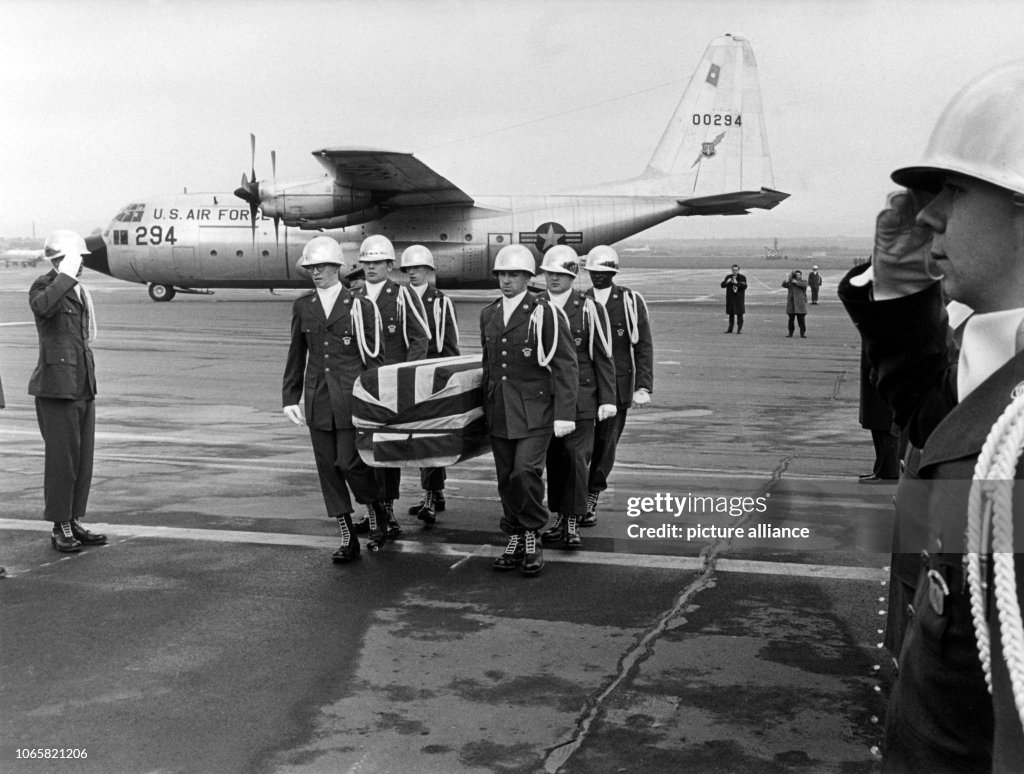
The bodies of three United States fliers were returned today to Wiesbaden Base, which they left Tuesday on a routine training flight. The officers, two pilots and their instructor, died in the crash of their twin‐jet T‐39 trainer, which was shot down inside East Germany by Soviet fighter aircraft. The bodies of the officers—Lieutenant Colonel Gerald K. Hannaford, 41; Captain John F. Lorraine, 34, and Captain Donald G. Millard, 33, were recovered at the crash site near Erfurt, East Germany, last night. A United States military detachment brought them to Tempelhof Airfield, in West Berlin. early this morning. An honor guard and high United States officials, including Ambassador George C. McGhee, stood by as the coffins were placed aboard a C‐130 transport.
An investigation by the United States has indicated that the Russians could have demonstrated more patience before shooting down an American air plane in East Germany Tuesday, but that they do not bear primary responsibility for the incident. Soviet and United States aircraft tried to warn the three-man crew of the jet trainer that it was off course. Russian interceptors tried to force it to land in East Germany and intentionally fired over it before shooting it down. All three officers aboard were killed. The Soviet Government accused the United States yesterday of a “gross provocation.” The United States replied that the Russians were guilty of “a careless and inexcusably brutal act of violence.” The belief here now is that both official statements were wide of the mark. The plane was a small, sweptwing two‐engine T‐39. Its crew had precise instructions to avoid the East German frontier on the training flight. Radar tracking during the mission showed that the plane strayed quickly from its assigned track. United States interceptors were sent to chase the plane and to warn it off, but they had to halt at the Communist frontier.
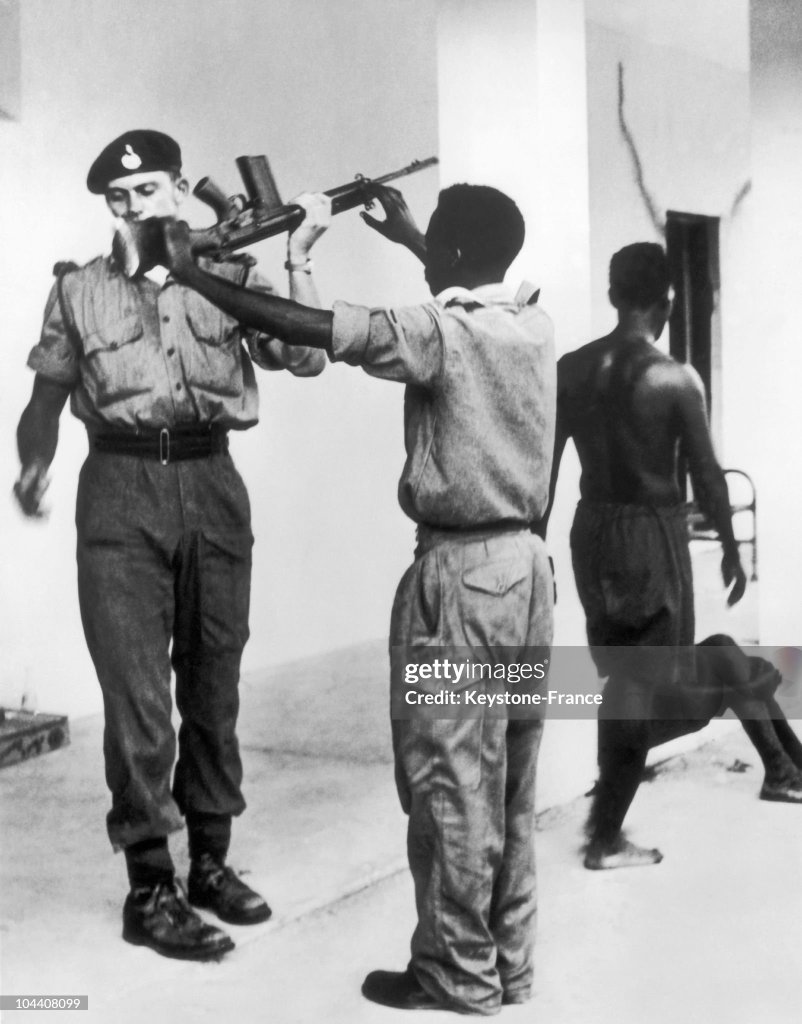
The first two planeloads of a Congolese commando battalion arrived today in Kikwit, capital of rebel‐torn Kwilu Province, to battle guerrilla bands that have been terrorizing the area since early this month. This battalion, the Third Commando, is considered the toughest and best trained in the Congolese Army. The troops are being airlifted from Shinkolobwe, 13 miles from Jadotville, in Katanga. They are commanded by Major Joseph Tshatshi, 34 years old. Nicknamed “Tshatshi the terrible,” he is known to military observers here as a strong disciplinarian.
The House of Representatives opened its long‐awaited debate on the civil rights bill today in a mood both earnest and good‐tempered. So lacking in acrimony was the debate, so considerate to each other were the Northern proponents and Southern opponents of the bill, that it seemed they had taken to heart the words spoken at the outset by Representative Clarence J. Brown. The conservative Ohio Republican, who has broken many a lance for civil rights in the past, enjoined his colleagues: “I hope we can conduct ourselves so that we can say to our children and our grandchildren that we participated in one of the great debates in American history, and we did it as statesmen.” However, the surface calm was probably deceptive. The debate today was general. The speakers on both sides were going over and over ground worn bare in the extended hearings last summer and in testimony before the Rules Committee the last three weeks.
The struggle will begin next Monday when amendments will be offered. The feelings that run deep on both sides may then be expected to surface under the pressure of the maneuvering. In the cloakrooms today it was already apparent that two of the seven substantive titles in the 10‐title bill might be heading into trouble. The first of these—Title VII —would create a commission on equal employment opportunity. This is popularly referred to as the Fair Employment Practices Commission (F.E.P.C.) after the agency set up during World War II to encourage nondiscrimination in hiring. Under the present bill, discrimination by labor unions and employers in interstate commerce would be banned. The commission would seek first to persuade those practicing discrimination to take corrective action. Where it was unsuccessful, it could bring suit, but the courts would determine whether the alleged discrimination had existed. But the commission is empowered to make labor unions and employers keep records, and to send out inspectors to enter plants and union offices to gather data to support its charges.
The Senate took a big step today toward early passage of the Administration’s tax bill by lumping together and tentatively adopting 152 amendments. The unanimous action had the effect of waiving time‐consuming votes on each of the amendments, which had been approved by the Senate Finance Committee. Any Senator may still demand and obtain separate votes, but only 8 or 10 of the amendments are likely to be challenged. Most of the rest are relatively minor or technical. In another action, the Senate unanimously agreed to vote Tuesday on an amendment by Senator Abraham A. Ribicoff, Democrat of Connecticut, providing special tax credits to help parents finance college education of their children.
President Johnson called on Congress today to patch up farm‐support programs and expand aid to farmers. At the same time, he urged establishment of a bipartisan commission to appraise the “revolutionary” changes in the marketing of food. This group’s recommendations would be used by farmers and businessmen to make economic adjustments and by the Government to “properly discharge its responsibility to consumers.”
“There are some 200,000 retail grocery stores,” he said, “but we know that $1 out of every $2 spent for groceries goes to fewer than 100 corporate, voluntary or cooperative chains. Our information on how this greatly increased concentration of power is affecting farmers, handlers and consumers is inadequate,” he asserted.
The President’s farm message clearly indicated the line his Administration would follow in this Presidential and Congressional election year. It would keep the Government deeply in agriculture. This position is bound to draw renewed attacks from Republicans and those farm groups that have fought for a gradual withdrawal of Government from agriculture. Congressional reaction ran along partisan or crop interest lines. No one saw anything new in the proposals. Senator Allen J. Ellender, Democrat of Louisiana, who is chairman of the Senate Agriculture Committee, doubted that many of the proposals would be approved. He favored wheat legislation but opposed a new cotton subsidy plan as too costly.
President Johnson asked the U.S. Congress to make the pilot Food Stamp Program permanent and nationwide; the Food Stamp Act of 1964 would be enacted into law in August.
Integration leaders announced today their terms for a 30-day cooling‐off period in Atlanta’s racial crisis. James Forman, executive secretary of the Student Nonviolent Coordinating Committee, said demonstrations against downtown restaurants would be. resumed immediately pending a reply from Mayor Ivan Allen Jr. He said an anti-segregation protest supported by white students from Georgia Tech would be held tomorrow to mark the fourth anniversary of the sit‐in movement. The sit‐ins against lunch‐counter segregation began February 1, 1960, at Greensboro, North Carolina, and led to the formation of the committee, which is now a student group in name only, for the most part.
The rent strike in the slums of the Harlem neighborhood in New York City reached its peak, with 50,000 tenants in 525 buildings refusing to pay rent until housing conditions improved. The strike had started with three buildings in November, and had reached 167 by the end of 1963. In March, the number of participants would begin to steadily decline as tenant groups failed in court.
Senator Barry Goldwater challenged Defense Secretary Robert S. McNamara today to say whether he believed the launching sites of United States ballistic missiles were vulnerable or invulnerable to enemy attack. The Senator also said he would not enter the West Virginia primary, which Governor Rockefeller announced today he would contest. In announcing his prospective entry, Mr. Rockefeller invited Mr. Goldwater and other candidates to take part in the primary campaign. The Arizona Republican charged that Mr. McNamara had said in testimony before Congress that there was a “certain uncertainty” that combat‐ready missiles stored in silos could withstand low-altitude atomic bursts. Mr. Goldwater said in New Hampshire earlier this month that United States intercontinental ballistic missiles were “not dependable.” Mr. McNamara accused him afterward of irresponsibility and of compromising military security.
The Ranger 6 spacecraft, performing photographic reconnaissance for man’s eventual lunar landing, is expected to crash on the moon Sunday about 4:25 A.M., Eastern standard time. Scientists of the California Institute of Technology’s Jet Propulsion Laboratory here, said today that the craft would land somewhere in an area 150 miles in diameter in the Sea of Tranquillity. Launched yesterday morning at Cape Kennedy, Florida, the spacecraft is being guided by computations made here and signals sent from the laboratory’s Goldstone tracking station in the nearby Mojave Desert. Early today the scientists delicately manipulated the eight-foot‐high, 825‐pound spacecraft by radio impulses to put it precisely on course for the latter part of its 240,000‐mile, 66‐hour journey. Had the trajectory not been corrected, the craft would have missed the moon by about 600 miles.
[Ranger 6 will hit its target almost precisely — but a malfunction will take out all its cameras, leaving it blind, and returning no useful data.]
At the Brookhaven National Laboratory in Upton, New York, a team of 31 particle physicists led by Nicholas P. Samios discovered the first evidence of the existence of the Omega minus particle (Ω−) that had been postulated in 1961 by Murray Gell-Mann and Yuval Ne’eman. The Ω−, located in one of more than 50,000 bubble chamber photographs, was the first of the subatomic Omega baryons to be confirmed, and “broke the temporary monopoly of particle discoveries” held by the Lawrence Berkeley National Lab team led by Dr. Luis Alvarez in California.
Dow Jones Industrial Average: 785.34 (+1.90).
Born:
Jeff Hanneman, American heavy metal musician (Slayer); in Oakland, California (d. 2013).
Allan Stewart, Canadian NHL left wing (New Jersey Devils, Boston Red Sox), in Fort St. John, British Columbia, Canada.
Don Graham, NFL linebacker (Tampa Bay Buccaneers, Buffalo Bills, Washington Redskins), in Pittsburgh, Pennsylvania.
Charles Vatterott, NFL guard (St. Louis Cardinals), in St. Louis, Missouri.
Jerome Norris, NFL defensive back (Atlanta Falcons), in Anderson, South Carolina.
Died:
Nguyễn Văn Nhung, 44, South Vietnamese military officer involved in the military coup three months earlier, was killed the day after the 1964 countercoup, apparently on orders of the coup leader, General Nguyễn Khánh.
Louis Allen, 44, an African-American businessman who owned his own logging business, was murdered at his home in Amite County, Mississippi, after having cooperated with an FBI investigation. Nobody was ever charged with his death.

 History Diaries