
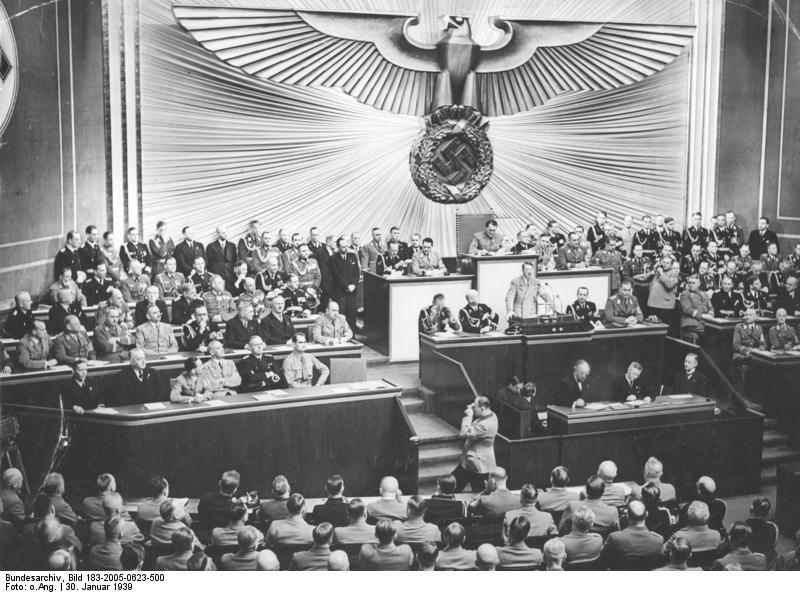
In a major speech before the Reichstag, Adolf Hitler justifies Germany’s aggression and warns other nations against “meddling.” In the speech, Hitler spoke of German-Polish peace and warned that if the “international Jewish financiers” threatened the world with another war, he would embark on eliminating the Jews to rid the world of this threat. Hitler, in an address to the Reichstag, gives public notice of his intentions, “If international Jewry should succeed in Europe or elsewhere, in precipitating nations into a world war, the result will not be the Bolshevization of Europe and a victory for Judaism, but the extermination of the Jewish race.” Hitler also comments on the lack of offers from the so-called democratic states to accept Jewish refugees.
Adolf Hitler proclaims his determination to regain Germany’s colonies and for Germany, Italy, and Japan to receive entitled riches. In his anxiously awaited speech before the first Great German Reichstag in the festively decorated Kroll Opera House, Chancellor Adolf Hitler served notice on the world tonight that Germany’s next great objective was the return of her former colonies and, in company with Italy and Japan, a repartition of the riches of this world among the nations in proportion to “their number, their courage, and their worth.” The speech lasted two hours and fifteen minutes, and ranged the gamut of Germany’s foreign and domestic problems besides reviewing the historic events of last year to which this Reichstag owes its existence. In some respects, except in the references to Jews, clerical opponents, and “warmongers,” against whom Herr Hitler was more threatening than ever, the speech lacked the militant overtone that had characterized his last Reichstag address, which had initiated the annexation of Austria and the Sudetenland.
Hitler says he has no claim on England and France except the return of old colonies.
That part of Chancellor Adolf Hitler’s speech dealing specifically with German-American relations reads textually as follows:
“Our relations with the United States are suffering from a campaign of defamation carried on to serve obvious political and financial interests which, under the pretense that Germany threatens American independence, are endeavoring to mobilize the hatred of an entire continent against the European States that are nationally governed. We all believe, however, that this does not reflect the will of the millions of American citizens who, despite all that is said to the contrary by the gigantic Jewish capitalistic propaganda through press, radio and films, cannot fail to realize that there is not one word of truth in all these assertions.
“Germany wishes to live in peace and on friendly terms with all countries, including America. Germany refrains from any intervention in American affairs and likewise decisively repudiates any American intervention in German affairs. The question, for instance, whether Germany maintains economic relations and does business with the countries of South and Central America concerns nobody but them and ourselves. Germany, anyway, is a great and sovereign country and is not subject to the supervision of American politicians. Quite apart from that, however, I feel that all States today have so many domestic problems to solve that it would be a piece of good fortune for the nations if responsible statesmen would confine their attention to their own problems.”
Archbishop Groeber in a pastoral letter concedes that Jesus Christ could not be made into an “Aryan,” but the son of God had been fundamentally different from the Jews of his time — so much so that they had hated him and demanded his crucifixion, and “their murderous hatred has continued in later centuries.”
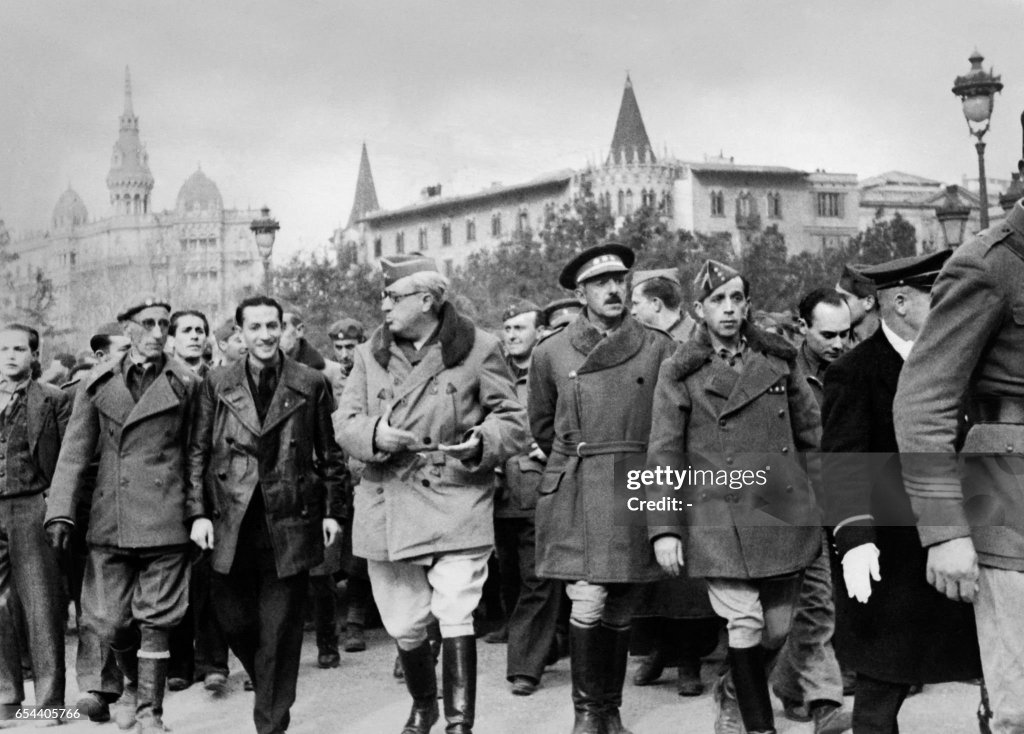
Generalissimo Francisco Franco’s judicial authorities face a gigantic task in verifying atrocity and general terrorism accusations against known and alleged extremists, in addition to ordinary criminals, who are said to have been active here throughout the Republican (Loyalist) regime. Today they escorted foreign press correspondents, on a tour of about forty clandestine prisons maintained apart from regular places of detention under official control. Convents apparently were the favorite sites selected by Marxist and anarchist labor organizations and the Republicans’ secret military information service, the dreaded S.I.M., as their “dungeons and torture chambers” for Rightists.
According to Nationalist (Insurgent) examining magistrates, about 800 political prisoners, considered the worst offenders, were carried off by the retreating Republicans! toward Gerona when they evacuated this city last Wednesday. More than 1,200 others left behind were liberated when General Franco’s troops entered the city Thursday. Some of those who have just been freed after terms of confinement varying 12 to 30 months told newspaper men who visited the jails where they had been kept of their treatment. There were also several weeping women who said their husbands had been removed from these prisons only forty-eight hours before Barcelona fell.
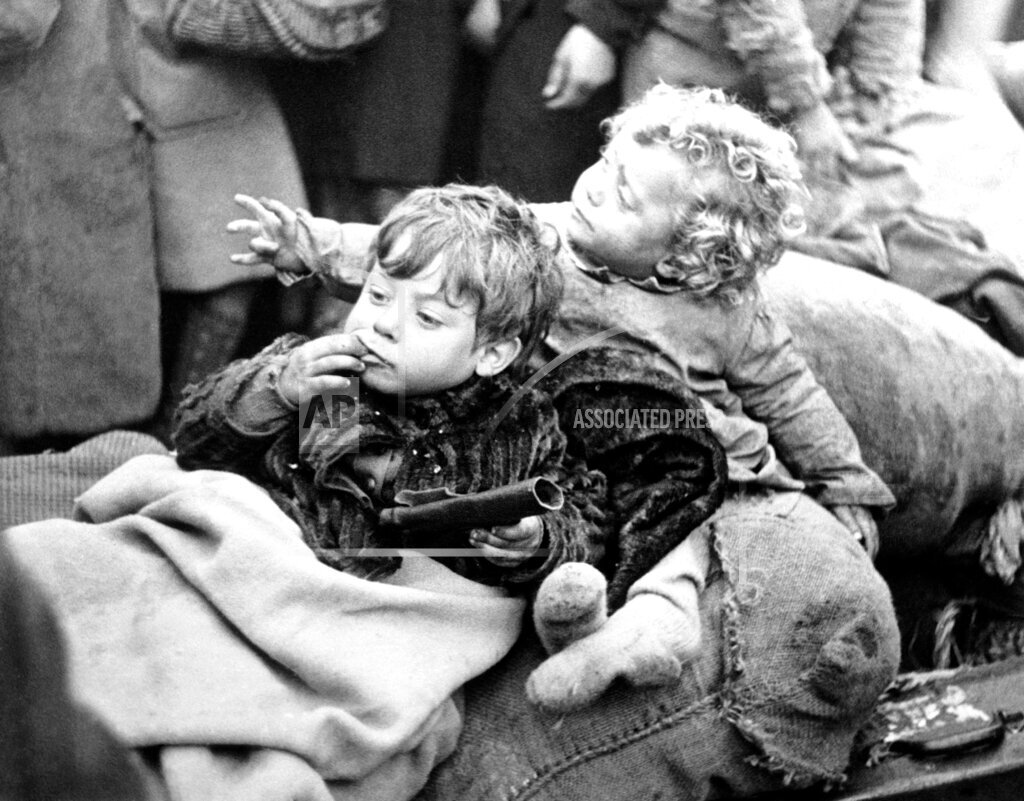
France shuts the Spanish border and thousands are turned back. France reinforces its border to prevent an influx of Spanish deserters. France closed her Spanish border suddenly this afternoon. If it remains closed this may mean the collapse of all resistance to Generalissimo Francisco Franco on the Catalan front. The closing occurred at about 5 P.M. at all border points. At Perthus all trucks, even those containing food and gasoline for the Spanish Loyalists, were turned back. More than 1,000 refugees, mostly women and children, were ordered back to Junquera, Spain. The groups returned included seventy-five British and Canadian former members of the International Brigades. These men, among whom were many wounded, had spent two nights in ditches awaiting evacuation. They will now spend a third night in the open.
Sixteen American members of the Washington-Lincoln Battalion also waiting at Junquera will be evacuated tomorrow if the border is reopened. It has been raining hard for two days, and bitter cold has set in. Twelve women refugees are reported to have died of exposure. In Banyuls today this writer saw a young woman unfold a dirty blanket in which lay her dead infant. The French in this district are sympathetic toward women and children refugees, but not toward deserters, whose arms range from small revolvers to Tommy-guns and hand grenades. Twenty starving Spanish soldiers from a regiment of 4,000 camped near the border invaded French territory this afternoon. To obtain food they held up a farm near Perthus. They escaped before Mobile Guards arrived.
In a temporary capital, Figueras, the Spanish government tries to reorganize its defenses. The Loyalists’ military situation appears slightly better tonight in that their resistance has stiffened. Whether this is due to the rain or to re-establishment of communications between scattered remnants of the Loyalist army, they seem at the moment to be holding off the Nationalists (Insurgents) on a line running roughly from north of Arenys de Mar on the east coast by way of the Granollers-Vich Highway to just south of Bergas, whence it turns north to Organa on the Seo de Urgel Road.
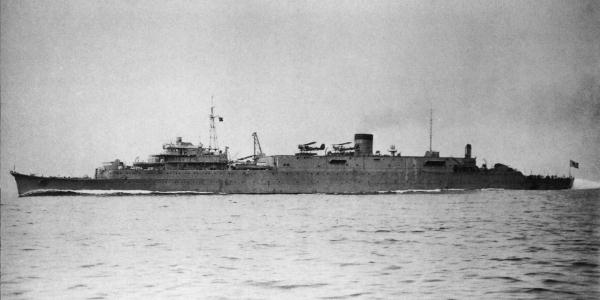
The British Admiralty published its war plans for the Royal Navy.
Major flooding is reported in the Thames Valley near London. In the Ipswich area, some 2,000 houses are flooded.
The Soviet government outlines the third five-year plan. Heavy industry is emphasized. A rough outline of the third Soviet Five-year Plan calling for an increase in annual production as a whole of 38 percent by the end of 1942 over the production of 1937, the last year of the second Five-year Plan, was given today in an advance release of an address on the Soviet economic situation by Premier Vyachieslav Molotov. The Premier will deliver the address to the eighteenth congress of the Russian Communist party in March. The speech was published today in leading Soviet newspapers. Although the country is now in the second year of the third Five-year Plan, this is the first announcement concerning the plan as a whole. The plan demands continuous increases in production year by year, although at a lower rate than in past years. The annual growth is expected to be 13.5 percent. The total production in 1938 was recently announced to have been 12 percent greater than 1937, as against a planned increase of 16 percent.
The same Democratic-Republican Congressional coalition which administered to President Roosevelt his first defeat of the session on the matter of the supplemental WPA appropriation was rising in the offing today to threaten the Administration leadership on other questions soon to come before Congress. As a result of both the Congressional and the White House reaction to the relief cut, contests between the Administration and coalition forces may be expected in the near future on most if not all of the following issues:
- The President’s request for an extension of authority to further devalue the dollar.
- Amendments to the National Labor Relations Act.
- Confirmation of Floyd Roberts as United States district judge for Virginia, Thomas R. Amlie as a member of the Interstate Commerce Commission and Donald Wakefield Smith for reappointment to the National Labor Relations Board.
- Reorganization of the Federal unemployment relief system.
Judging from comments to be heard on Capitol Hill, it is only a question as to when one of these issues will come before either body of Congress as to when the next set-to between the White House and the Congressional coalition will take place. Senator Glass of Virginia, head of the Banking and Currency subcommittee to which the President’s request for an extension of his dollar devaluation authority has been referred, made it plain that he would place upon the Treasury the burden of proof as to the necessity for continuing such power.
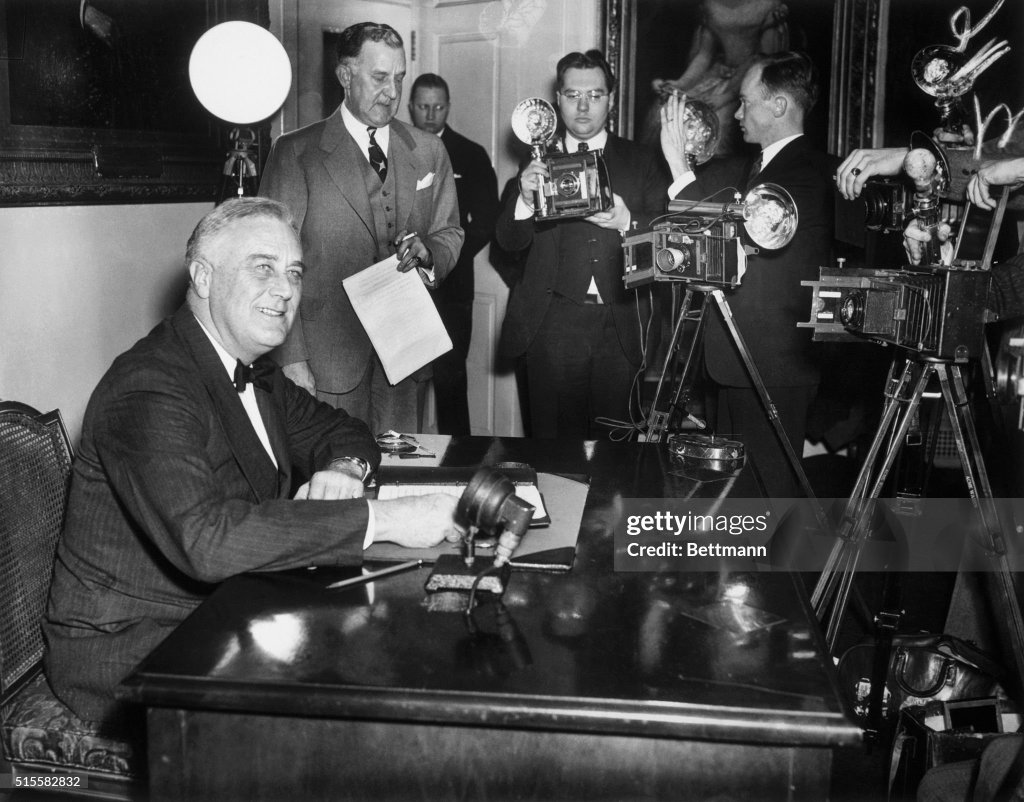
Eight thousand people attend the President’s birthday ball, where $25,000 is raised for infantile paralysis, or “polio.” President Roosevelt spent the entire day in the Executive Mansion and, as a part of the celebration of his birthday anniversary, presided at a luncheon at which celebrities of the stage, screen and radio were guests. His only business of the day was the usual Monday conference with legislative leaders.
The Senate was in recess. The Senators from the cotton-producing States discussed the cotton surplus and price problem. The Senate’s Finance Committee reported the House bill to recodify internal revenue laws, and its Interstate Commerce Committee invited Thomas Amlie to appear February 6 for questioning in connection with his appointment to the Interstate Commerce Commission.
The House rejected Senate amendments to the Relief Bill and sent it to conference. It continued a committee to investigate wild-life conservation, and its Rules Committee prepared to conduct a hearing tomorrow on resolution to continue the Dies committee for a year and give it a $100,000 appropriation to continue its investigation of un-American activities.
Martin T. Manton, senior judge of the United States Circuit Court of Appeals since 1926 and a member of the court since 1918, sent his resignation to President Roosevelt yesterday to become effective at the President’s pleasure, but not later than March 1. Judge Manton announced his resignation at a press interview held less than twenty-four hours after District Attorney Thomas E. Dewey had sent to Representative Hatton W. Sumners, Texas Democrat at the head of the House Judiciary Committee, six specific charges accusing Judge Manton of receiving, personally or through wholly owned or controlled corporations, a total of about $439,000 from individuals or companies whose affairs were or had been before the Circuit Court over which he presided.
The news of the resignation of United States Circuit Court Judge Martin T. Manton in New York was received in Washington this afternoon by Representative Hatton W. Sumners, chairman of the House Judiciary Committee, who said no investigation was planned into the charges that preceded the resignation. Mr. Sumners said the charges of District Attorney Thomas E. Dewey of New York against Judge Manton were received this morning, but they were in a different category from those pending in another move toward impeachment of another official. Therefore, he said, his committee would not entertain them further, in the light of Judge Manton’s resignation. Earlier in the day Mr. Sumners had said that the Dewey charges would be laid before his committee tomorrow. About noon, however, Mr. Sumners announced that he had received word from an “official source” that Judge Manton’s resignation already had been handed in and that he would not lay the Dewey charges before the committee.
[At his 1939 trial, Manton was acquitted of bribery, but convicted of conspiracy to obstruct justice. He served 19 months in federal prison.]
District Attorney Thomas E. Dewey has enhanced his political prestige by his investigation of Judge Martin T. Manton and the subsequent resignation of the jurist, Republican leaders said today.
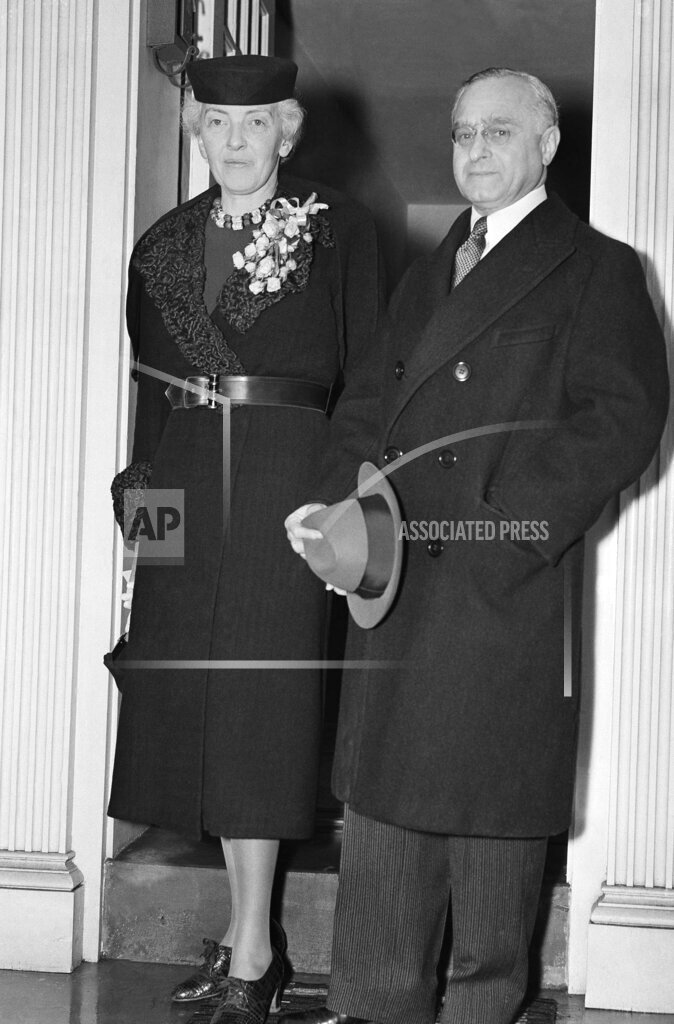
Felix Frankfurter is sworn in as Supreme Court Justice. One of the largest throngs that ever visited the chamber of the Supreme Court heard Felix Frankfurter take the oath of office today as an associate justice, and swear in firm, clear words to “administer justice without respect to person.”
The attack by fourteen private utility companies upon the Tennessee Valley Authority electric power program was rejected in a five-to-two decision of the Supreme Court today. The court held the corporations without legal standing to challenge the validity of the TVA plan. The ruling, read by Justice Roberts to a crowded courtroom, concentrated on that point. It did not pass upon the constitutionality of the government program, an omission severely criticized by Justices Butler and McReynolds, the two dissenters.
Justice Roberts said in the decision that “in no aspect of the suit” could the corporations have standing to maintain their case. Justice Butler said for himself and Justice McReynolds that the companies were “entitled to have this Court decide upon the constitutional questions they have brought here.” At the heart of the Roberts opinion was the conclusion that the companies had no right to escape the TVA competition of which they complained. The “vice of the position” they took was, it stated, “that neither their charters nor their local franchises involve the grant of a monopoly or render competition illegal.” Thus it held that the companies had no power to enjoin threatened acts of the government.
Comedian George Burns’s plane is grounded. Burns’s sentencing for smuggling is delayed.
All Hunter College students are to be x-rayed to determine prevalence of tuberculosis.
Writing in the New England Journal of Medicine, A Harvard neurologist, Wilfred Bloomberg, touts Benzedrine as help for chronic alcoholism, but warns wives against slipping the compound into their husband’s coffee.
Aftershocks terrify people in Chile, even as American aid arrives.
Fifty Siamese army officers are retired without pension after attempting to replace the 13-year-old King Ananda Majidol with his uncle.
According to War Minister Itagaki, Japan’s army plans a long stay in China. Permanent Japanese garrisons stationed at points throughout South, Central and North China and permanently strengthened naval forces to defend the ports of South and Central China that the Japanese Navy now holds are included in Japan’s policy. Statements to that effect were made in the Diet yesterday by War Minister Seishiro Itagaki and Admiral Mitsumasa Yonai, dispelling rumors that a more moderate policy was now favored by a strong faction of the army. According to these rumors, which gained credence among some European diplomats, many senior Japanese officers in China, even though they had formerly belonged to the forward party, were convinced by experience of the difficulties of holding down the whole of the present occupied regions. This faction, which was gradually attracting a majority of influential seniors, was preparing, according to the Tokyo rumors, to withdraw from South China, reach an amicable arrangement with Britain regarding the Yangtze region and confine Japan’s occupation to the North and Inner Mongolia. The rumors were highly circumstantial and the names of leading generals, including Rensuki Isogai and Kenji Doihara, were coupled with them.
It does not follow from formal denials given in the Diet that those reports are wholly unfounded, but General Itagaki’s and Admiral Yonai’s attitude made it clear that the importance of the so-called swing toward moderation had been exaggerated. The question was raised in the guise of an interpellation asking whether the army would not build semi-permanent barracks in the occupied areas and undertake cultivation of foodstuffs to make the occupation self-sustaining. General Itagaki replied that troops were stationed in various parts for various reasons — for example, tactical purposes, the maintenance of peace, and the necessities of national defense — and consequently the matter could not be treated collectively. “However, we are considering stationing troops over a wide area for a long period,” he said, “and we are preparing for it. Barracks are already being constructed to some extent. “We have heard rumors that the army will soon withdraw from Central or South China. The rumors are entirely unfounded; there is absolutely no truth in them. The army fully recognizes the importance of South China and the Yangtze region, especially Shanghai.”
Admiral Yonai immediately arose and endorsed General Itagaki’s statement, saying: “There will be no change in the navy’s policy of maintaining large forces in Central and South China and on the Yangtze than formerly. Along the coast of Central and South China the occupied areas must be defended so that they may contribute to the construction of a new order in East Asia.”
Dow Jones Industrial Average: 141.56 (+2.77).
Born:
Frank Wolf, American politician (Rep-R-Virginia, 1981-2015), in Philadelphia, Pennsylvania.
Norma Tanega, American folk and pop singer-songwriter, guitarist (“Walkin’ My Cat Named Dog”; “You’re Dead”), percussionist, and painter, in Vallejo, California (d. 2019).


[Idiots. All Identity Politics is idiocy.]
 History Diaries