The Soviet Union prodded Syria today to follow the Egyptian example of reaching a troop‐pullback agreement with Israel to maintain tactical solidarity with Cairo. A major commentary in Pravda, headlined “The Path Toward Settlement,” indicated that the Egyptian Foreign Minister, Ismail Fahmy, succeeded in his mission here last week to persuade Moscow to use its influence to coax the Syrians into following the Egyptian negotiating tactics. Egypt has wanted to avoid being the only Arab country striking a deal with Israel on the military fronts. Apparently, the Egyptians’ aim is to be sure that in later political negotiations at Geneva on a Middle East settlement, Cairo cannot be accused by other Arabs of having compromised the Arab cause. Some Palestinian groups are already raising the charge of betrayal.
The commentary in Pravda, the Communist party paper, stressed the importance of the Geneva talks, in which Syria is not participating. Pravda asserted that the Soviet Union and other Communist states had waged a vigorous political and diplomatic battle” to arrange a peace conference based on United Nations cease‐fire resolutions. The commentary, noting Syria’s absence from the Geneva conference, also pointed out that Israeli forces had managed to penetrate deeply into Syrian territory during the October fighting.
South Vietnam dispatched a destroyer escort, two other naval ships and 200 militiamen in an attempt to seize the Spratly Islands, now occupied by Taiwanese forces, military sources in Saigon said. The action reportedly is meant to be only a symbolic claiming of the Spratlys, some 600 miles south of the Paracels which South Vietnam lost to Chinese forces in a brief battle January 1920. The Vietnamese are under orders to avoid a fight with Taiwan troops, the sources said.
Gerald Emil Kosh, of Lafayette Hill, Pennsylvania, and five South Vietnamese captured during recent fighting in the disputed Paracel Islands in the South China Sea were freed by China and crossed into Hong Kong. Peking earlier had reported that Kosh had hepatitis, but he appeared in good physical condition. One Vietnamese was on crutches. Kosh, 27, a Defense Department civilian employee, had been serving as an observer with the Vietnamese navy.
Cambodian President Lon Nol declared a six-month state of emergency to cope with the most intense rebel offensive against Phnom Penh yet. Heavy fighting south of the city was reported in half a dozen spots as close as five miles to the capital. Government troops tried to push back rebel artillery units which have kept Phnom Penh under fire since last week. But the government said the troops made little progress against the firmly entrenched rebels.
Insurgent forces have reportedly withdrawn their artillery out of range of Phnom Penh, and the capital today went through its third day without being hit by shells. Government artillery and planes struck through the day at insurgent positions south of here. Some fighting was reported in the area, about nine miles from the capital, where government troops were said to be trying to push insurgents back.
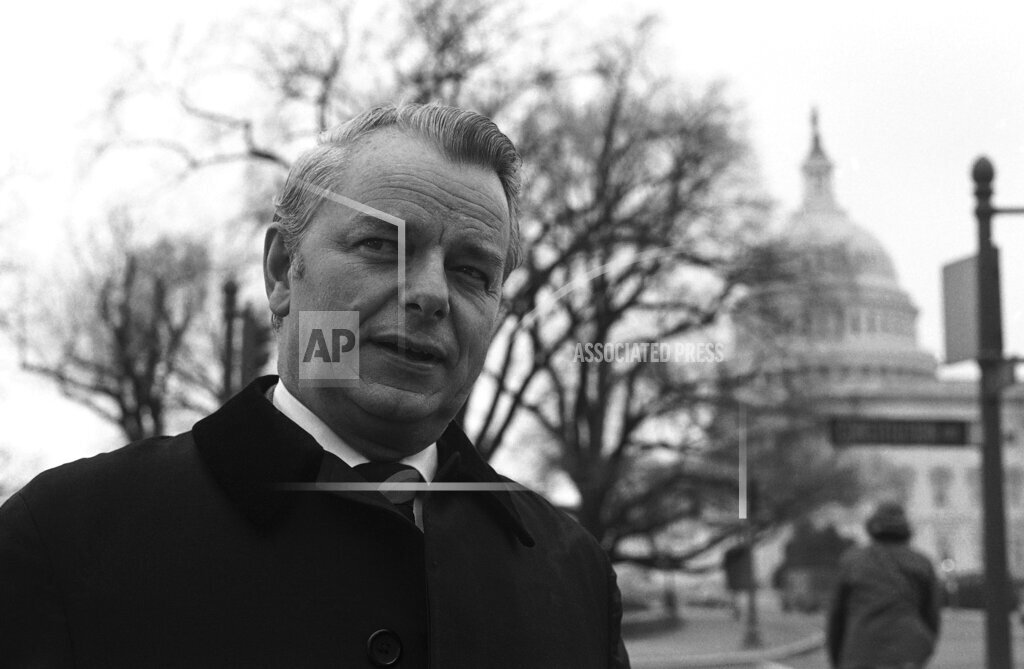
A proposal for a congressional stand against U.S. aid, trade or diplomatic recognition for North Vietnam or the Viet Cong until they permit a search for Americans missing in action was approved by a House subcommittee. The resolution, introduced by Rep. Robert J. Huber (R-Michigan), goes to the full House Foreign Affairs Committee.
The South Vietnamese government retained today the film and notebooks seized from James M. Markham, Saigon bureau chief of The New York Times, after he visited a Viet Cong area in Bình Định Province for a week. Mr. Markham, who had been taken by the government police from a bus in Bồng Sơn, about 275 miles northeast of Saigon, was released last night after having been held for 39 hours. He had been questioned by the police for six and a half hours and was questioned again this morning for an hour when he went to police headquarters to retrieve his notes and film. The police whom Mr. Markham described as courteous, said that they had turned over the notebooks and film to the office of Trịnh Quang Bình in the Information Ministry. They said that the materials were to be returned today, but Mr. Binh’s office did not make them available.
Four Soviet citizens of German extraction who had been trying for several years to get permission to emigrate to West Germany were arrested after a fistfight with policemen in front of the West German Embassy in Moscow. Two others in the demonstration slipped into the embassy compound and refused to. leave, fearing arrest. The group, carrying placards, appeared at the embassy to demonstrate their desire to emigrate after being refused exit visas by the passport office. The embassy said it would contact the Foreign Ministry to try to solve the problem.
Charles Davis, a 46-year-old American detained in West Berlin last November on suspicion of spying for East Germany, was sent back to the United States by American officials in West Berlin. The three Western allies in West Berlin ordered his expulsion as an undesirable person after his release from jail Monday. Espionage proceedings against him were dropped by a West Berlin judge. A warrant has been issued against Davis in the United States for alleged violation of passport laws.
Prime Minister Heath tried tonight to held off a strike in the nation’s coal fields by proposing a meeting of business and labor leaders at 10 Downing Street to draw up a wage settlement agreeable to the coal miners. The Prime Minister sent identical letters to the Trades Union Congress and the Confederation of British Industry after a late meeting of key Cabinet ministers. A strike vote of the mineworkers’ union is scheduled to start tomorrow. In effect, Mr. Heath’s appeal went over the heads of the union and directly to the Trades Union Congress, which represents Britain’s major labor unions. The 11th‐hour bid by Mr. Heath was interpreted as an effort to influence the outcome of the balloting among the 260,000 coal miners. A vote in favor of a strike has been widely expected.
Soviet Communist Party chief Leonid I. Brezhnev fueled speculation that he is urging Cuban Premier Fidel Castro to seek renewed relations with the United States. In a speech Tuesday broadcast later by Havana Radio, Brezhnev commented on positive results between Moscow and Washington. He also appeared to try to moderate Castro’s policy of supporting leftist revolutionary movements in Latin America.
Brezhnev declared last night in Havana that the Soviet Union did not consider Cuba “a strategic base” for influence. The leader of the Soviet Communist party, who spoke at a rally at the start of his first visit to Cuba, said that Soviet military aid to Havana was aimed at “peace and tranquility,” not toward any aggressive end. Excerpts from his speech and from that of Premier Fidel Castro were rebroadcast through the day today by the Havana radio, which reiterated that Mr. Brezhnev’s visit was a sign of “unbreakable ties” between the two nations. “To the Soviet Union,” Mr. Brezhnev declared, “Cuba is not an object of exploitation or of capitalist investments. It is not a strategic base out of which influence is expected.”
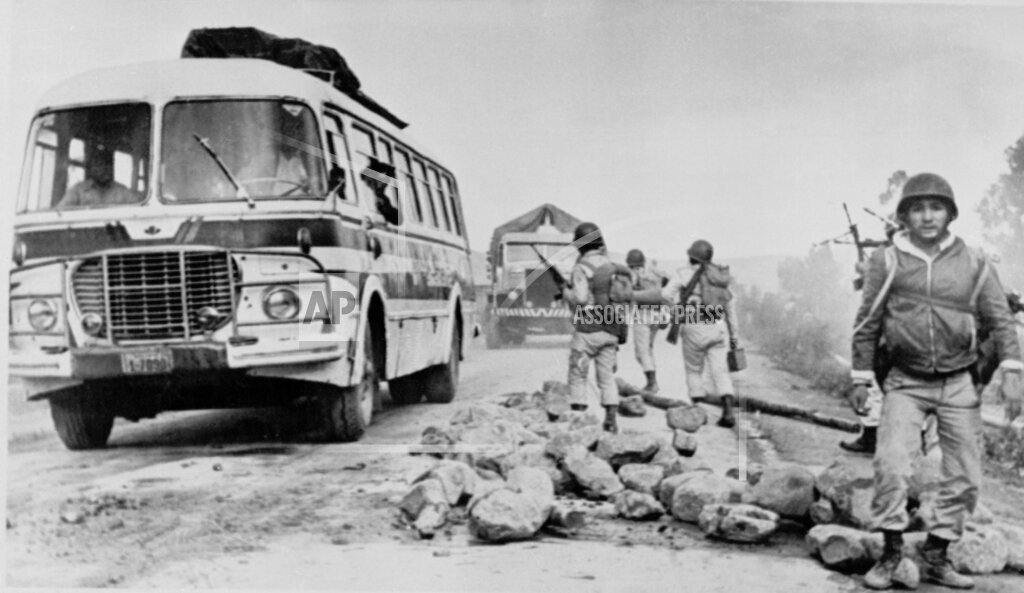
Bolivian troops have reopened three highways blocked by rebellious farm workers and the situation in the province of Cochabamba is “totally under control,” Information Minister Guillermo Bulacia said tonight. Mr. Bulacia gave no details of today’s military operation, but he said “normality” had returned to the area. Six thousand farm workers had been manning barricades around Cochabamba, Bolivia’s second largest city, demanding the resignation of President Hugo Bánzer Suárez. The roadblocks on three main highways had virtually cut off the city, 160 miles southeast of here, from the rest of Bolivia. In one nearby township, Tolatay the farm workers held an army general hostage for a time last night. Troops freed him but failed to clear the barricades.
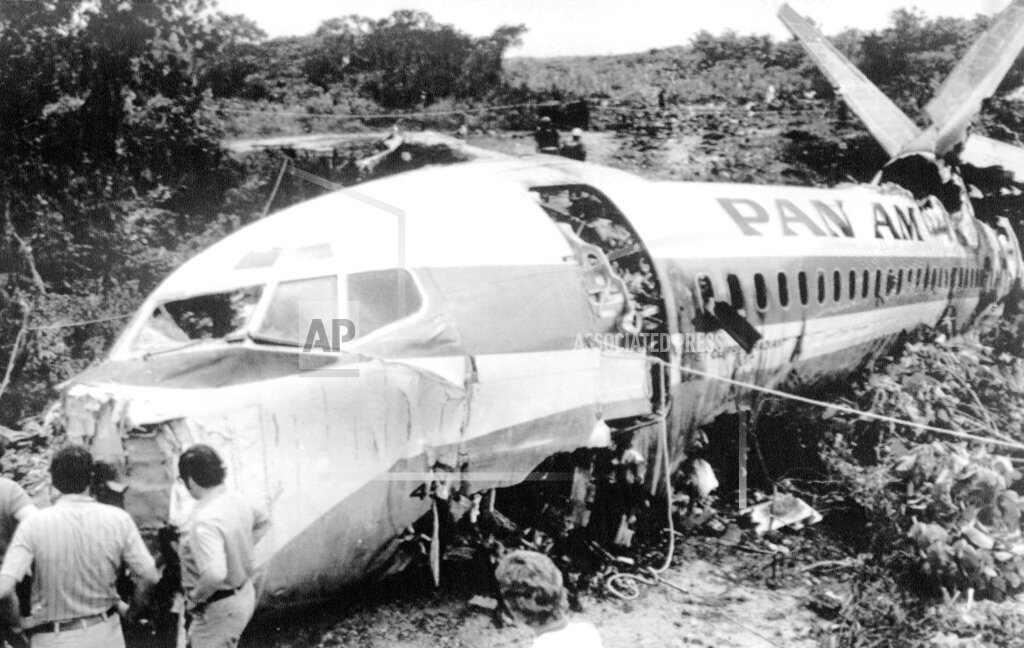
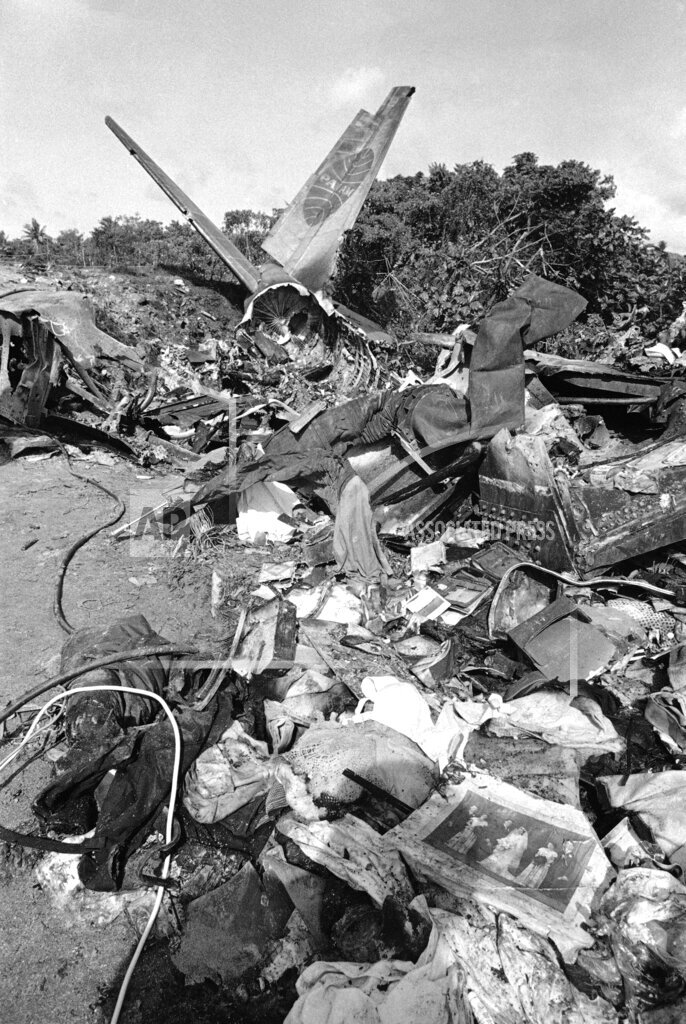
The crash of Pan Am Flight 806 killed 97 of the 101 people on board. The jet was making its approach to Pago Pago International Airport in American Samoa when a microburst-induced wind shear brought it down during its landing. The accident happened at 11:41 pm local time (1041 UTC on 31 January). Almost all the deaths were due to a fire that broke out after the crash.
The USSR performs a nuclear test at Eastern Kazakh/Semipalitinsk.
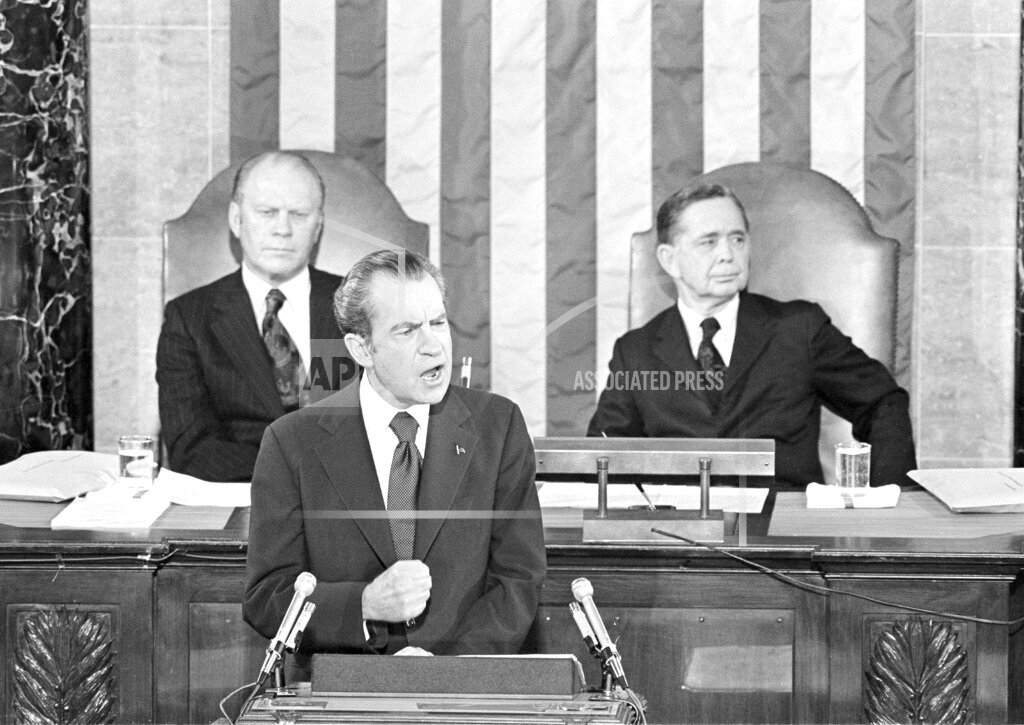
President Nixon will deliver his State of the Union address personally to a joint session of Congress and to America by television; it is not known if Watergate will be mentioned. The President hopes to use the speech as a foundation for rebuilding and revitalizing his leadership. Nixon is highly unlikely to resign at this time.
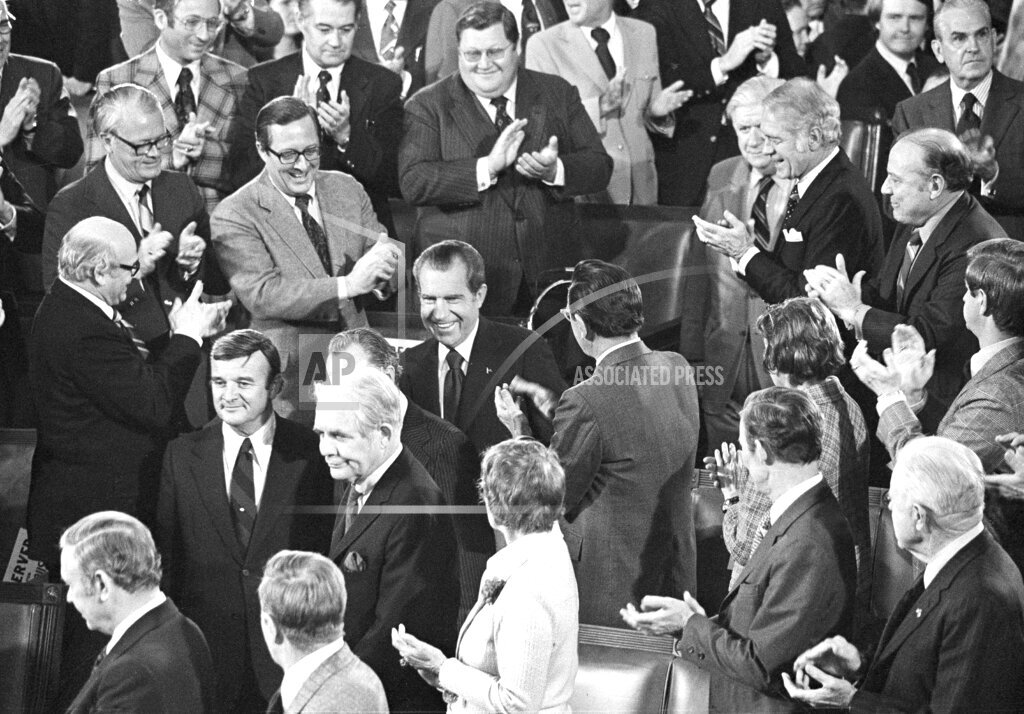
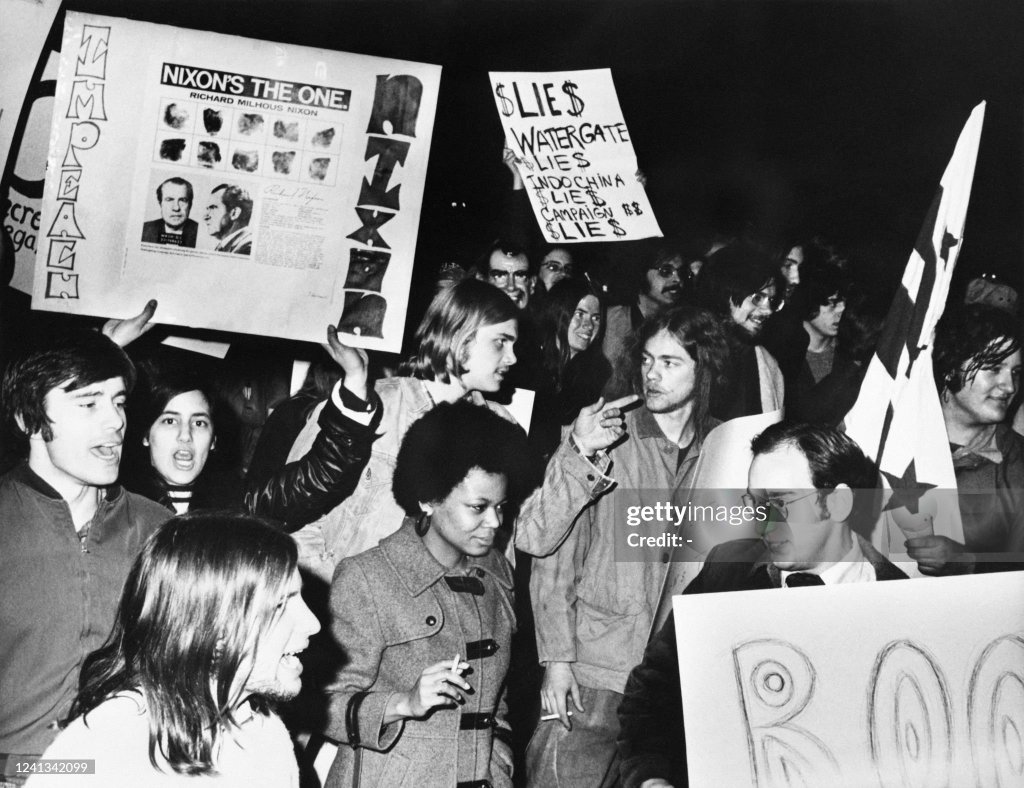
U.S. President Richard Nixon delivered the State of the Union Address to the 93rd United States Congress. Referring to what he described as “the so-called Watergate affair”, Nixon said, “I believe the time has come to bring that investigation and the other investigations of this matter to an end. One year of Watergate is enough.” Near the end of the speech, Nixon stated: “I want you to know that I have no intention whatever of ever walking away from the job that the people elected me to do for the people of the United States.” Nixon would resign the presidency on August 9 after a tape recording showed that he had ordered a cover-up of the investigation of the Watergate scandal.
President Nixon proposed to Congress tonight a 10‐point program for this year that he said would lessen the energy crisis, check inflation, make new progress toward world peace and institute reforms in such domestic programs as health, welfare and transportation. He made the proposals in a nationally televised State of the Union Address before a joint session of the House and Senate and in an accompanying 22,000‐word written message that detailed the approach of his Administration to the issues. Most of his proposals had been announced previously and much of what he asked was contained in legislation that had been before Congress for some time. Speaking in a forceful manner while reading a carefully rehearsed speech that rang with campaign oration, Mr. Nixon promised “historic progress” this year on the critical issues facing the nation.
One important aspect of the President’s proposals involves health care. The nation’s health costs have skyrocketed; a national health insurance plan will be proposed by the President. Senator Edward Kennedy, who has also proposed national health insurance, believes that Nixon’s plan means windfall profits for private insurance companies. Health, Education and Welfare Secretary Caspar Weinberger said he doesn’t think windfall profits will be a problem. The Nixon plan builds around private enterprise as opposed to a complete government takeover.
Attorney General William Saxbe will try to keep courts around the country from subpoenaing President Nixon. The President will not abide by a California subpoena to appear at John Ehrlichman’s trial; he declined to attend on “constitutional grounds”. Sources close to Ehrlichman reported that the subpoena of the President was simply a legal maneuver. If the President refused to testify, Ehrlichman could say his legal rights were violated.
H.R. Haldeman appeared before a federal grand jury to discuss the erased White House tapes. President Nixon’s personal secretary Rose Mary Woods will testify on Friday.
Bebe Rebozo’s lawyers demanded that Rebozo be given equal time during coverage of the Watergate hearings to rebut the committee’s “false and malicious” news leaks.
Senators and witnesses at a congressional hearing traced an intricate pattern of international financial arrangements involving oil companies, including a secret cabinet-level decision in 1950 to subsidize increased royalty payments to Arab oil nations by reducing taxes paid by the companies to the United States.
In an effort to head off a threatened work stoppage by independent truckers, the Nixon administration offered the truckers the prospect of relief from fuel shortages and rising costs. The offer included a proposed rule that would allow truckers to pass on to shippers, through higher rates, the equivalent of fuel-cost increases.
Indictments charging Howard Hughes and four of his associates with stock manipulation pertaining to the purchase of Air West Airlines were dismissed.
Judge William M. Hatten ordered the trial of accused mass murderer Elmer Wayne Henley moved out of Houston because of extensive pretrial publicity. Hatten said he would announce the trial location by Friday. Henley, 17, is charged with six slayings in a string of torture murders that claimed the lives of 27 teen-aged boys. He faces trial for the death of one of the youths, Charles Cobble, 17. Hatten also ordered the attorney for codefendant David Owens Brooks, 18, charged in four of the slayings, to file a motion for delay.
The steel industry opened crucial contract talks with both company and union bargainers indicating they would ignore government wage-price controls. The talks are the first and most important in this year’s big round of bargaining for nearly 10 million workers in various industries. For the first time in 321 years the threat of a nationwide steel strike is absent. A year ago the United Steelworkers surrendered its strike weapon in return for a promise of a guaranteed minimum wage increase. No dollars-and-cents figure was put on union demands for wage and benefit increases but it was expected to equal the 7% gains won recently by the United Auto Workers.
A Democratic Party source said Democrats are willing to accept an out-of-court settlement in their $6.4 million lawsuit against President Nixon’s reelection committee if the price is right. But the source said a Republican offer of $600,000 has been rejected. The Democrats are seeking to recover damages resulting from the June, 1972, Watergate break-in of the Democratic National Committee Headquarters in Washington.
Lester Matz, former head of an engineering consulting firm that received no-bid contracts from the state of Maryland, testified that he made $30,000 in kickbacks directly to Spiro T. Agnew, while Agnew was governor of Maryland and U.S. Vice President, Matz said he paid another $10,000 to a “close associate” of Agnew’s while Agnew was Baltimore County executive. In all, Matz said, he made at least $175,000 in illegal kickbacks between 1962 and 1970. Matz testified at the trial in Baltimore of Dale Anderson, Agnew’s successor as county executive, who is charged with 43 counts of bribery, extortion and conspiracy.
The United Auto Workers will urge Congress to freeze car imports at their current share of the market in an effort to stem the tide of industry unemployment, UAW President Leonard Woodcock said. Union sources said the call would be for temporary quotas to be lifted when the auto market regains its stability. U.S. cars built in Canada would be exempted, Woodcock said. But Big Three imports, such as General Motors’ Opel, would be restricted.
Dow Jones Industrial Average: 862.32 (+10.00, +1.17%).
Born:
Christian Bale, English film actor, 2011 Academy Award winner for Best Supporting Actor for “The Fighter”, Golden Globe Award winner for Best Actor for portraying former U.S. Vice President Dick Cheney in the film “Vice”; known also for portraying “Batman” in the “Dark Knight trilogy” 2005 to 2012; in Haverfordwest, Wales, United Kingdom.
Olivia Colman, English film and TV actress, Academy Award and BAFTA Award winner for Best Actress for “The Favourite”, Emmy and Golden Globe Award winner for portraying Queen Elizabeth II in “The Crown”, “Broadchurch”; in Norwich, Norfolk, England, United Kingdom.
Siluck Saysanasy, Laotian-born Canadian television actor in the Degrassi series in “Degrassi Junior High” and “Degrassi High”; in Vientiane, Laos.
Roger Hammond, British bicycle racer, eight-time gold medalist in the British National Cyclo-cross Championships including five consecutive titles 2000 through 2004, as well as 1994, 2006 and 2008; in Oxford, Oxfordshire, England, United Kingdom.
Gilber Caro, Venezuelan National Assembly deputy and political activist imprisoned multiple times by the Venezuelan government; in Caracas, Venezuela.
Jemima Khan (pen name for Jemima Marcelle Goldsmith), British journalist; in Chelsea, London, England, United Kingdom.
Charlie Zaa (stage name for Carlos Alberto Sánchez), Colombian singer; in Girardot, Cundinamarca, Colombia.
Died:
Murray Chotiner, 64, American attorney and confidant of U.S. President Nixon, died of complications from injuries sustained a week earlier in a January 23 automobile accident. In September 1952, when Nixon was accused of wrongdoing as running mate of Dwight D. Eisenhower, Chotiner had destroyed a letter of resignation that Nixon had directed him to deliver. Instead, Chotiner advised Nixon to speak to the U.S. public on national TV. Nixon went on to be elected as Vice President of the United States.
Olav Roots, 63, Estonian conductor, pianist and composer.
Bill Whitty, 87, Australian cricketer.
 History Diaries