Egyptian troops in the Sinai along with soldiers and civilians in heavily damaged Suez city celebrated their reunion with the rest of Egypt in an explosion of joy. Soldiers and irregulars, who had beaten back an Israeli attempt to penetrate the core of the city three months ago, roamed the streets all day. They fired submachine guns, rifles and revolvers into the air and danced on the wrecks of Israeli tanks.
A clash between Israeli and Syrian troops was reported today on the northern front for the fourth consecutive day. Israeli military sources accused Syria of having broken the cease‐fire in the Golan Heights area with artillery fire. In Damascus, a military spokesman said Syrian forces had clashed with an Israeli mechanized unit and had destroyed an armored troop carrier with its occupants. He said there were no Syrian casualties. The Israeli military sources said the Syrians had opened fire twice around midday, adding that there had been no Israeli, casualties. The Israelis denied a report from Damascus that a troop carrier had been hit in the action.
Appeals by President Anwar Sadat of Egypt to other Arab leaders to lift the oil embargo against the United States have been described as fulfillment of a pledge he made to Secretary of State Kissinger. A senior administration official said that according to information received in Washington, Mr. Sadat told King Faisal of Saudi Arabia, among other Arab leaders, that American policy in the Middle East had changed and that in response the embargo should be ended.
Kuwait announces 60 percent government participation in BP-Gulf concession. Government officials declined to comment on the report, but people in the oil industry said details of the agreement would be announced Thursday. The semi-official sources said the agreement would remain in force until 1979, when Kuwait’s participation percentage is to be renegotiated, probably to give Kuwait a still higher share. Gulf and B.P. have been negotiating the participation accord with Kuwait’s Government for more than a year,
The headlines that confronted the Israeli newspaper reader today could hardly have brought cheer to the breakfast table: Israeli forces withdraw from Suez; Israel and Syria still far apart on disengagement of forces; government cancels subsidies on bread, milk and other foods — prices rise to 30 to 70 per cent; more wrangling among top army command; political parties deadlocked on new coalition government. And so Israelis — a people who fought a costly war just three months ago and are still suffering casualties in almost daily artillery engagements with Syria — seem mired these days in a skeptical, uneasy, almost melancholy mood. The depressed national attitude is evident in the press, in discussions on Israeli radio and television and in conversations with ordinary Israelis. The public discontent seems distinct from defeatism or despair. The complaints center on the present rather than the future and if there is skepticism about what is to come, Israelis are nonetheless far from forlorn. Their essential assessment of their own ability to manage seems unshaken, even if the national mood is bleak.
The Cambodian high command in Phnom Penh said that the threat of a Communist ground attack on the capital had abated and that advance units of a 15,000-man government division had crossed the Prek Thnot River six miles south of the capital in an attempt to strike at Red positions. Rebel gunners had directed artillery and rocket fire at Phnom Penh since last week and more than 100 people have been killed. The Cambodian command said today that its fighter-bombers and helicopter gunships had struck through the day at insurgent positions near Phnom Penh, trying to wipe out artillery that had shelled the capital in recent days. There were 67 sorties during the day, the command said, 38 of them by propeller-driven T-28 planes. Meanwhile, reports from the field said that about 1,400 government troops were moving toward an area where rebel forces were clustered nine miles southwest of Phnom Penh. Ninety miles north of the capital, the Cambodian command said, government troops recaptured the village of Mohor, freeing at least 700 families who had lived under insurgent control.
The Saigon command said today that government troops had killed 72 North Vietnamese and Viet Cong troops in fighting 30 miles northwest of the capital and 40 miles southwest of it. The command said South Vietnamese bombers and artillery attacked 200 North Vietnamese and Viet Cong troops moving under cover of mortars to assault an outpost in the fighting northwest of Saigon. The communiqué said eight government soldiers had been killed and 16 wounded.
The State Department said today that it had officially been informed by China that Gerald Emil Kosh, the 27‐year‐old American captured when Chinese forces took control of the Paracel Islands, was suffering from hepatitis and would be released Thursday at the Hong Kong border. The department spokesman, George S. Velst, said officials in Peking had requested that American Red Cross representative receive Mr. Kosh.
James M. Markham, Saigon bureau chief of The New York Times, was released last night after 39 hours in the custody of the South Vietnamese government police, who had arrested him for making a one-week visit to a Viet Cong-held area. Mr. Markham said that policemen had removed him from a bus Monday morning in Bình Định Province, about 275 miles northeast of Saigon, a short time after he had emerged from Viet Cong territory. He was taken to Quy Nhơn, on the central coast, where he said he was questioned by police officers for four and a half hours. Then yesterday, under police escort, he was transferred by automobile to Saigon, where he was questioned again for several hours.
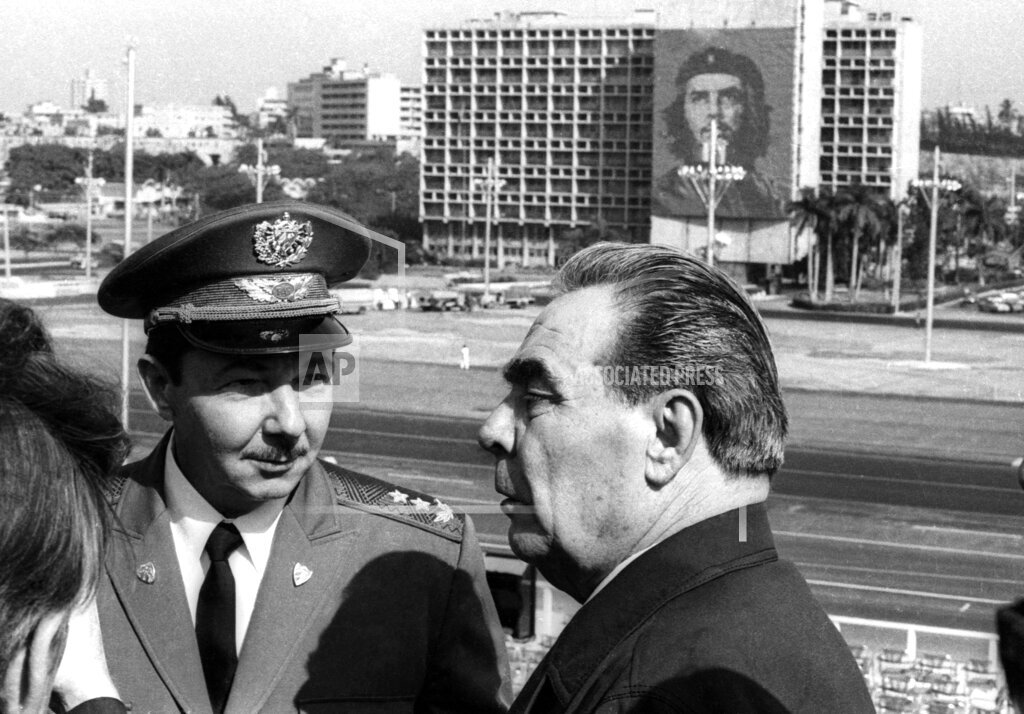
Soviet Communist Party chief Leonid I. Brezhnev began high-level talks with Latin American Communist leaders at a secluded mansion outside Havana. A radio broadcast said Cuba’s Premier Fidel Castro, President Osvaldo Dorticos and Armed Forces Minister Raul Castro conferred with Brezhnev and so presumably did party leaders gathered in Havana from other countries. Later, at a huge rally in Brezhnev’s honor, Castro attacked “renegades of the revolutionary Left” who criticize Russia, apparently referring to the Sino-Soviet rivalry.
Troops of Bolivia’s 7th Army Division moved against barricades to dislodge thousands of rebel farmworkers blockading roads around Cochabamba to protest government economic policy. A communique said the troops acted after the farmers seized army General Juan Perez Tapia who was sent to negotiate with them. Perez was appointed governor of Cochabamba after the farmers revolted six days ago. No details of the clashes were available but the leaders of the farmworkers had warned they would open fire if troops approached the barricades.
Political assassins struck again in Argentina, murdering a young left-winger and aggravating tensions between the left and right-wing factions within the ruling Perónist movement. Jose Roque Contino, 24, described as a militant member of the left-wing Perónist Youth Movement, was shot fatally by a gang of men who had forced him into a car in a suburb of Cordoba, police sources said.
Deputy Acapulco Mayor Vincente Rueda Saucedo was kidnapped by leftist guerrillas who demanded $400,000 in exchange for his life, police said. The 45-year-old clothing store owner was abducted while he was driving to his downtown office. The kidnappers were armed and traveling in a taxi, police reported. Local newspapers were contacted about Rueda Saucedo, reportedly by the Revolutionary Armed Forces.
South Korea’s Foreign Ministry firmly protested Japanese Prime Minister Kakuei Tanaka’s reported remark at the Japanese Diet that Japan’s colonial occupation of Korea before World War II proved beneficial to Korea. The premier reportedly said that his recent Southeast Asian tour convinced him that spiritual relations with Asian countries were more important than economic cooperation, citing Japan’s colonial rule of Korea as a good example.
Three former Greek government ministers, including the brother of former President George Papadopoulos, have been placed under house arrest, ranking officials in the deposed Papadopoulos regime said. The three were identified as Constantine Papadopoulos, who once held the post of minister of government policy, and Nicholas Efesios and Michael Balopoulos. Their confinement involves accusations that. they are “dangerous to state security.”
One of the longest and strangest labor disputes in the history of France ended today with a partial and dearly-bought victory for the workers and a sigh of relief from a watching nation. Nine months and 12 days after the management of the Lip watch factory in Besancon announced that it was virtually bankrupt and would have to discharge most of its employes, an agreement was signed to get the business going again. The curious, dragged‐out history of Lip involves executives who ran away, workers who seized the factory and kept on producing until the police expelled them, erratic Government attempts to mediate and, finally, today’s compromise.
King Baudouin of Belgium dissolved the Belgian Federal Parliament after his choice of Prime Minister, Leo Tindemans, was unable to form a new government. Voting for all 212 seats of the Chamber of Deputies would take place on March 10, 1974.
A California judge granted the defense’s request for a subpoena of President Nixon in the upcoming trial of John Ehrlichman and two White House “plumbers” pertaining to the break-in of Daniel Ellsberg’s psychiatrist’s office. Judge Gordon Ringer’s decision marked a historical moment. Ehrlichman attorney Joseph Ball conceded that the President has the right to resist the subpoena, but Ehrlichman’s attorneys believe that the President’s testimony would clarify the purpose of the White House “plumbers” unit.
Assistant press secretary Gerald Warren said that the court order would be considered by President Nixon. However, Nixon attorney James St. Clair allegedly told Ehrlichman’s lawyers that the President would not appear in court voluntarily on behalf of Ehrlichman.
House Judiciary Committee special counsel John Doar will present his report on impeachment proceedings soon.
Tapes involving the CIA are under investigation. CBS has learned that the CIA destroyed several tapes vital to the Watergate probe; those recordings were made secretly by the CIA. The agency director was set to allow one Senator to hear the actual recordings of the conversations in question, but before those tapes could be heard, word reached the Senate that all but one tape had been destroyed. The lone remaining tape contains a conversation between General Robert Cushman and E. Howard Hunt.
The Justice Department reportedly agreed to pay $10,000 postage for the mass mailing of a Nixon speech to thousands of persons last April. Representative Pat Schroeder’s complaint led to the revelation of the department’s payment. The legality of such a “free” mailing upset Schroeder.
Comptroller General Elmer Staats stated that he has found no legal authority for continuing Secret Service protection of Spiro Agnew. However, Representative John Moss said he is not sure that the expenditure can be halted.
The ranking Republican on the House Judiciary Committee said that President Nixon could not use executive privilege to withhold information from an impeachment inquiry. Representative Edward Hutchinson of Michigan told newsmen that if the White House asked his advice, “I would tell them that executive privilege, in the face of an impeachment inquiry, must fall.”
President Nixon in his State of the Union Message tomorrow night will propose what is described as a big, new income maintenance program, a form of “negative income tax” for the poor. He will also recommend an area development program to provide new aid to regions with severe poverty and unemployment problems. The President will deliver a 30-minute version of his message to a joint session of Congress and nationwide television audience at 9 o’clock, Eastern Daylight Time.
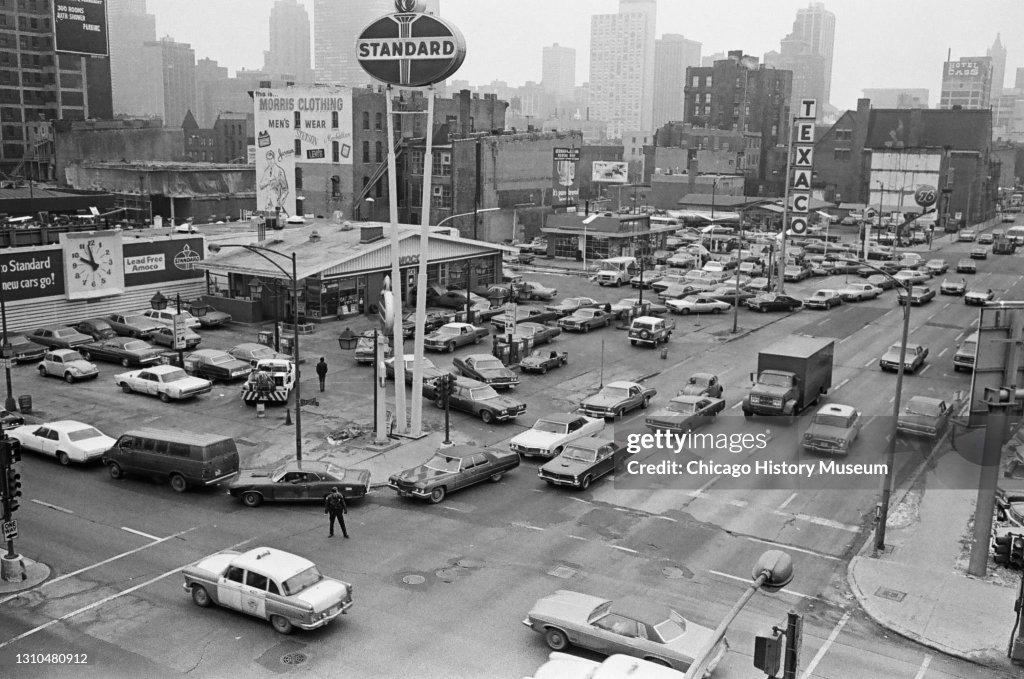
The Senate sent the energy emergency bill back to a House-Senate conference, thereby raising doubts that Congress will give the Nixon administration rationing authority in time for the expected spring worsening of gasoline supplies. Voting 57 to 37, a coalition of Republicans, oil-state Democrats and liberal Democrats from the Northern Plains supported the motion of Senator Gaylord Nelson, Wisconsin Democrat, to return the bill to conference.
While the government warns that the nation still faces a “critical” heating fuel situation, many dealers and distributors who provide fuel oil to homes in the Northeast say their storage tanks are full and the threat of a shortage this winter has been all but eliminated. As a result, some companies are reducing their prices, while others are increasing the amounts of fuel oil they allow their customers.
The government ended its array of controls over the outflow of dollars for lending and investing abroad. Some of the controls were more than a decade old. The action was taken because of the huge improvement last year in the nation’s balance of trade and its overall balance of international payments and the resulting strengthening of the dollar in foreign exchange markets.
More than 3,000 persons were arrested as a result of airport searches in the first year of the government’s tough anti-skyjacking drive, the Federal Aviation Administration reported. Almost 25% of those seized were carrying illegal firearms. Possession of narcotics and immigration violations also accounted for a large part of the arrests. Since January 5, 1973, every passenger flying from one of the nation’s 530 major airports has been required to pass through electronic screening devices that detect hidden weapons. Carry-on luggage must be searched or scanned and local law enforcement personnel must be present at each checkpoint.
Prosecution and defense lawyers agreed at a pretrial hearing that mass murder defendant Elmer Wayne Henley could not get a fair trial in Houston. A hearing was set for today to see if his trial should be moved. Judge William Hatten, however, overruled a defense motion to throw out the case on grounds of massive and prejudicial publicity. Henley, 17, is accused of murder in six of the 27 slayings of teenage boys who police say were killed by a homosexual torture ring discovered last August.
The Administration has failed in efforts to increase substantially the government’s hiring of Spanish-speaking persons, Rep. Don Edwards (D-California) said. Edwards, chairman of the Judiciary Committee’s civil rights subcommittee, said that when President Nixon announced his program to assist Spanish-speaking persons in 1970, they represented 2.9% of the federal workforce. That figure is now 3.1%, he said. Edwards pointed out that the group makes up 6% of the population nationally and said his panel would hold hearings on the problem soon.
1974 NFL Draft: Defensive end Ed “Too Tall” Jones from Tennessee State is the first pick by the Dallas Cowboys.
27th NHL All-Star Game, Chicago Stadium: The Western Division beats the Eastern Division, 6—4; MVP: Garry Unger, St. Louis, centre.
Dow Jones Industrial Average: 852.32 (-0.69, -0.08%).
Born:
Jeff Mitchell, NFL center (NFL Champions, Super Bowl 35-Ravens, 2000; Baltimore Ravens, Carolina Panthers), in Dallas, Texas.
David LaFleur, NFL tight end (Dallas Cowboys), in Lake Charles, Louisiana.
Dorian Boose, NFL and CFL defensive end (CFL Champions, Grey Cup-Oilers, 2003; New York Jets, Washington Redskins; CFL: Edmonton Oilers), in Frankfurt, Hesse, West Germany (d. 2016, suicide, CTE).
Andrea Danyell Kelly (née Lee), known professionally as Drea, American choreographer, dancer, and actress, ex-wife of singer-songwriter R. Kelly, in Chicago, Illinois.
Mălina Olinescu, Romanian singer; in Bucharest, Romania (died 2011, suicide).
Died:
Kate Gardiner, 88, New Zealand mountaineer who made the first ascents of 33 mountains in the Canadian Rockies.
Benjamin Steinberg, 58, American concert violinist, conductor and civil rights activist known for being co-founder (in 1965) of the Symphony of the New World, of pancreatic cancer.
H. E. Bates CBE, 68, English author known for the Larkin Family series of books about rural Britons, and for My Uncle Silas.
Jules Wabbes, 54, Belgian furniture designer and interior architect, of cancer.




 History Diaries