Senator Henry M. Jackson (D-Washington) said the United States should press the Soviet Union for a reduction in nuclear arms at the second stage of the strategic arms limitation talks in Geneva. If Moscow refuses, he said, the United States should build up its nuclear arsenal to “maintain the first SALT agreement, made in 1972, credibility of our deterrents.” The provides only for a freeze on the number of anti-ballistic missiles on each side and a limit on the number of offensive launchers. Experts say the agreement has been outdated by successful tests by the Russians of multiple, independently targeted reentry vehicles which give each missile several payloads.
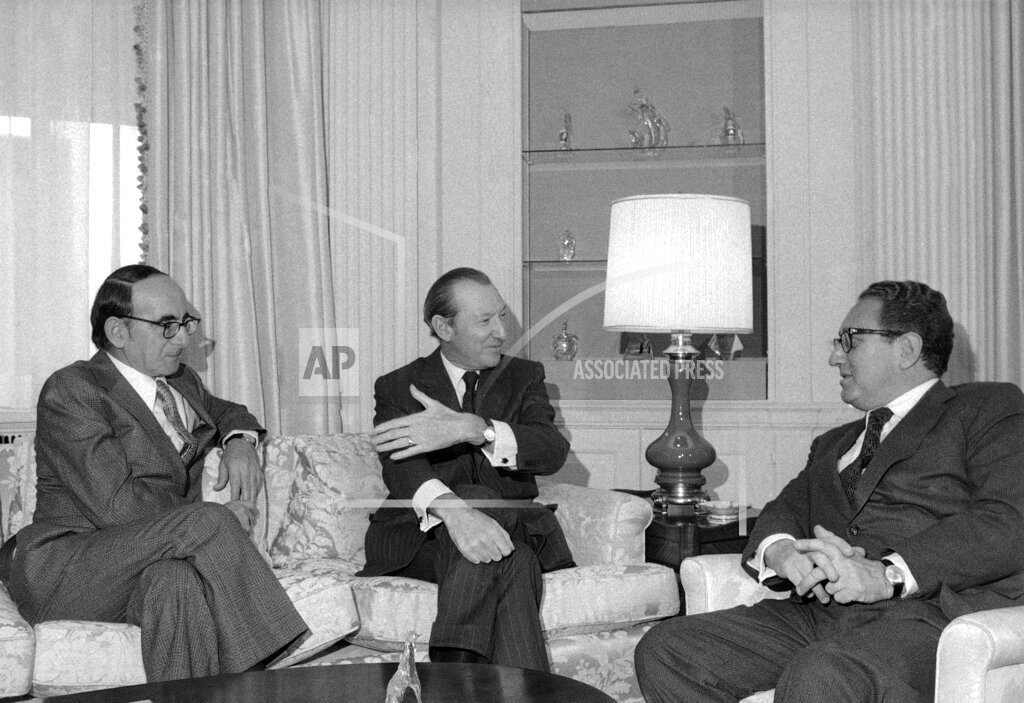
Israel and Syria continued fighting along the Golan Heights for a second straight day. The Israeli government announced that disengagement plans with Syria won’t begin until Syria releases the names of all POWs and allows the Red Cross to visit the prisoners. Secretary of State Henry Kissinger is still moderately hopeful about the disengagement plan. Kissinger met today with United Nations Secretary General Kurt Waldheim in New York. The meeting took place at the home of the U.S. ambassador to the United Nations, John Scali. Kissinger’s talks with Waldheim were aimed at keeping him informed about the role of United Nations’ troops in the Mideast.
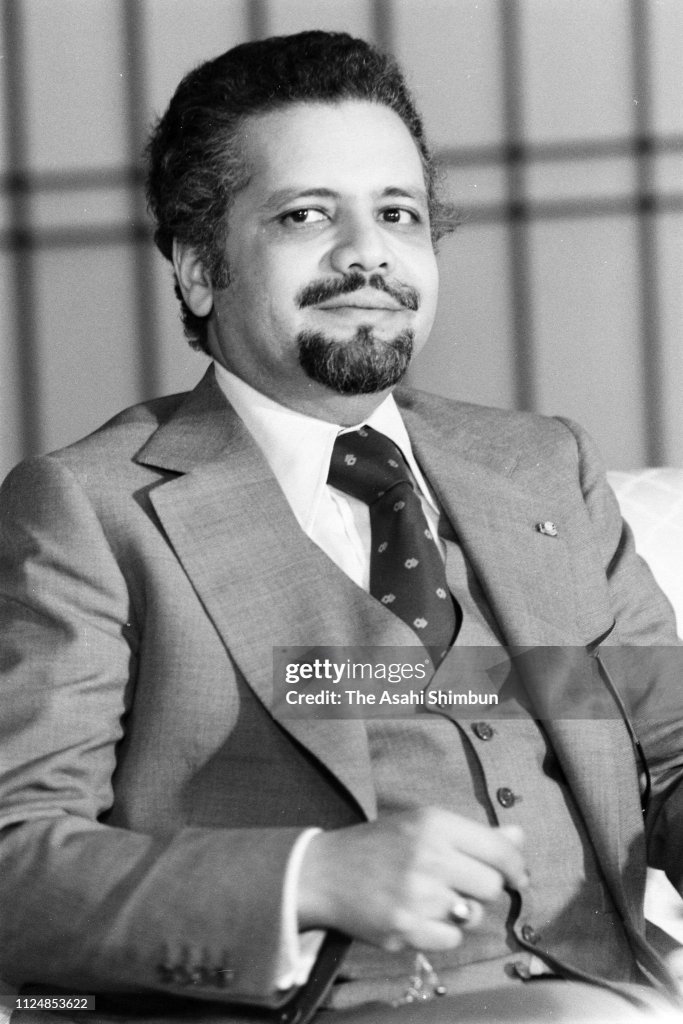
In Tokyo, Saudi Arabian oil minister Sheik Yamani stated that he is worried about the impact that oil price increases may have on the world economy. Arab sources declared that the oil embargo against the United States will continue. American Petroleum Institute president Frank Ikard could not predict how high gasoline prices would go, but he said that he doesn’t expect it to reach $1.00 a gallon.
Heavy snows have trapped tens of thousands of villagers in remote areas of Iran, Tehran newspapers reported. One paper said about 40,000 persons are stranded in the northeast region of the country, most of them in a string of 110 villages cut off by the snows. It was also reported that wolves have killed 100 sheep and goats and wounded three shepherds in Masjed-Soleyman, an oil town 200 miles southwest of Tehran where people saw snow for the first time in 21 years.
Mobs rioting over food shortages and high prices looted more than 100 shops and set several ablaze in the central Indian city of Ahmedabad. Police fired on a crowd looting a food grain shop, killing a 10-year-old boy and wounding another youth. It was the fourth consecutive day of firing on mobs protesting the scarcity of basic foods and rising food prices.
Thousands of people fled their homes in the crowded southern and southeastern sections of Phnom Penh, Cambodia today, seeing to escape artillery attacks by Communist‐led insurgents in which 84 people were killed in the last three nights. More than 100 shells hit the capital and Pochentong Airport, west of the city, last night. Hospitals and the police reported 35 dead and 75 wounded in the biggest attack so far of the current campaign. The rebels’ artillery was believed to be situated at two points about six miles south of the capital. A Government counteroffensive against the presumed artillery positions yesterday bogged down.
The push against the rebels continued today along the southern front, ranging from four to six miles south and southwest of Phnom Penh. Cambodian Air Force T‐28’s flew scores of sorties against the suspected gun positions without apparent success. For the refugees it was a familiar story. They packed their belongings onto their shoulders, or on motorbikes and oxcarts and carried them to temple grounds, makeshift refugee centers. Or they moved in with their relatives in the central and northern sections of Phnom Penh. Despite a curfew, the refugees streamed through military checkpoints, ignoring the usual identification procedures. Witnesses said that the flight was orderly, and several refugees denied that large numbers of guerrillas had infiltrated their ranks, as published reports had stated. The insurgents appeared to be making few friends. Cambodian military policemen at the Tuol Tumpoung station said they had received a report that a group of young men, all dressed in military uniforms through the southwest section of Phnom Penh last night shouting, “Abduct them, abduct them!” Meas Sam Ath, a teenaged girl, said that she was leaving for a northern part of the city to escape the artillery attacks. She said she had not even seen any Communist signs or leaflets in her neighborhood.
Fighting continues in South Vietnam although the first anniversary of the Vietnam cease-fire has been reached. Troops continue fighting a war that just won’t stop despite the cease-fire. The South Vietnam government is not blameless, as President Thieu refuses to agree to any political solution. Refugees from the Vietnam war remain as displaced as they were before the cease-fire agreement. South Vietnam knows that the peace agreement leaves much to be desired for them.
A four‐man crew from the American Broadcasting Company was arrested yesterday by Government troops after filming in a Viet Cong-controlled town about 65 miles northwest of Saigon. Authorities held the four more than 24 hours at the national police headquarters and released them today. Frank Mariano, the ABC bureau chief in Saigon, said that the crew’s cameras and film had been confiscated. He said that he planned to meet tomorrow with officials of the Information Ministry to try to get the film back. Lieutenant Colonel Lê Trung Hiền, spokesman for the Saigon command, said that the government’s policy was to allow visits to Viet Cong zones but only after Saigon authorities had given clearance. He said that the American Broadcasting Company had not informed Saigon officials of the visit.
More than four months after the violent coup that toppled the Marxist government of President Salvador Allende and took his life, the ruling military junta in Chile has done little to convince his followers that there are “neither victors nor vanquished,” a phrase used by General Augusto Pinochet, the new President. Chile remains divided between an apparent anti-Marxist majority either actively supporting the junta or passively accepting its excesses, and a large leftist minority which is cowed, silent and pessimistic.
Three days before the second anniversary of the Bloody Sunday massacre of 13 civilians by British troops, 4,000 people participated in a peaceful protest march, organized by the Provisional Irish Republican Army. The march through Derry in Northern Ireland followed the route of the 1972 march.
A background report on the California girl who was recently arrested in Britain on an arms smuggling charge: Two men were also arrested, both of whom attended Santa Barbara College. Allison Thompson lived near the college. Mrs. Thompson’s aunt, Melissa Merwin, said that Ted Brown encouraged Allison to pursue modeling or work as an artist. Brown is accused of violating arms export laws by supplying guns to Allison and her two companions for them to relay to Palestinian terrorists in England.
Santa Barbara shop owner Walid Bitar, one of the few people able to identify all four suspects, recalled that they were often seen together in a nearby restaurant. Bitar identified the Pakistani and Moroccan students as well as Brown and Thompson. He named the Moroccan as the leader of the little group. Brown purchased the arms and the tickets for the flight to England. The federal grand jury’s report on its findings regarding this case will be issued tomorrow.
The Soviet Union has successfully carried out missile tests in the northern Pacific, Tass news agency reported. The agency said foreign shipping and aircraft could, as of today, safely use the splashdown zone south of the Aleutian Islands. Last Thursday, Tass said the Soviet Union would use the area for missile tests until February 10, but gave no reason in its latest report for the curtailment of testing time.
Soviet sources in Moscow said the December 16 crash of a TU-124 jet of the Aeroflot state airline killed a large number of Lithuanian doctors. The sources said they did not know how many doctors were killed but that most of those aboard were going to a medical conference at Kursk, southeast of Moscow. They said the plane, which normally carries 56 passengers, was full. “Almost everyone in Vilnius (the Lithuanian capital) lost their family doctor,” one source said.
The Soviet government has protested to the U.S. Embassy against the “provocative behavior” of a U.S. reporter in interviewing a group of activist Soviet Jews who have been trying to emigrate to Israel. An embassy spokesman said the Russians threatened to expel the newsman. He is Gordon F. Joseloff of United Press International. After Joseloff had talked to the Jews, secret police stopped him on a Moscow street, seized written replies to questions he had asked the Jews and warned him not to write about the incident.
Three Greek cabinet ministers were injured when a temporary stairway collapsed at a church in the Athens suburb of Gizi, officials said. Commerce Minister George Anastasopoulos and Public Works Minister Trifon Triantafyllakos were taken to the hospital with broken legs. Transport Minister Alexander Tzavellas was slightly injured. Prime Minister Adamantios Androutsopoulos had just left the stairs before they gave way and was not hurt.
Pope Paul VI canonized Teresa Jornet Ibars, a 19th-century Spanish nun, in a ceremony at St. Peter’s Basilica.
The cargo ship MV Captayannis ran aground on a sandbar in the Firth of Clyde, Scotland, after strong winds caused it to drag its anchor and drift into the anchor chains of the BP tanker British Light. All crew members were rescued. The ship would sink the following morning; its wreck remains in place in the River Clyde.
The United States observed National MIA Awareness Day, proclaimed by President Nixon to mark the first anniversary of the Paris Peace Accords and to acknowledge Americans who had become missing in action in the Vietnam War. Relatives of those men held demonstrations and news conferences. The National League of Families called upon the President to send Secretary of State Henry Kissinger to Southeast Asia to get more facts regarding MIAs. The relatives of MIAs could accept a confirmation of death better than the present state of limbo. Meanwhile, many deserters and draft dodgers still remain in other countries without much hope of ever getting back home.
Relatives of U.S. servicemen listed as missing in action in Southeast Asia and a group of war protesters demonstrated separately in front of the White House. U.S. Park Police said they arrested four of the 150 war protesters on charges of demonstrating without a permit after they had blocked a White House driveway. The 250 MIA relatives marched quietly, seeking a meeting with President Nixon to discuss the 1,315 servicemen still listed as missing in action. President Nixon, however, was at his Camp David, Maryland, retreat. Among those protesting against continuing U.S. aid to South Vietnam was former priest Philip Berrigan, but he was not among those arrested.
Egil Krogh Jr. said yesterday that John W. Dean 3rd told him last March 20 that President Nixon had previously been unaware of the Watergate cover‐up. It was after a conversation the two had that day, Mr. Krogh said, that Mr. Dean decided to tell the President the cover‐up details. The statements by Mr. Krogh, former head of the White House investigation team known as the “plumbers,” contradicts testimony last summer by Mr. Dean, one‐time Presidential counsel, that Mr. Nixon knew details of the attempted bugging of the Democratic National Committee offices in 1972. Mr. Krogh, who has been sentenced to a six‐month prison term for his role in the burglary of Dr. Daniel Ellsberg’s former psychiatrist, made his remarks in a televised interview last night on the “60 Minutes” program on the Columbia Broadcasting System. According to Mr. Krogh, he and Mr. Dean held a two‐hour meeting last March 20 in which they discussed “a lot of things that John had been working on which I learned about for the first time.”
Senator Henry M. Jackson said that gasoline rationing would probably be necessary between April and June if the Arab countries did not lift their oil embargo before then. Frank N. Ikard, president of the American Petroleum Institute, predicted that gasoline supplies would be “extremely tight” this spring and early summer. But “hopefully, if everything goes well,” he said, “we will not have to ration.” He said he believed that gasoline prices had “leveled off” and should remain “roughly” at their present level. He and Mr. Jackson made their remarks on separate television interview programs.
U.S. Attorney James R. Thompson ordered an investigation into a $747,000 city contract awarded to a firm that allegedly had paid legal fees to Chicago Mayor Richard J. Daley’s son, Michael. Thompson acted after the Chicago Tribune said the Chicago Public Building Commission had awarded a contract for cabinet work at five public schools to the cabinet division of the AVM Corp. of Odenton, Md. Mayor Daley is commission chairman. The newspaper said the contract was awarded in August, 1972, when Michael Daley was receiving $6,000 yearly in legal retainers from AVM’s voting machine division.
With fears mounting that a recession is under way or soon will be, serious talk of tax reductions has begun in Congress in the last several days. Influential legislators who are talking about tax cuts include the chairmen of both the House and Senate tax writing committees, Representative Wilbur Mills and Senator Russell Long, and Senators Edward Kennedy and Walter Mondale. They have different ideas about who would get tax relief.
Former Attorney General Ramsey Clark said he would try to unseat Senator Jacob K. Javits (R-New York) in November without accepting “big money” campaign contributions. “I am looking for $10 contributions. I refuse to accept more than $100, and I’ll go with that as far as the people decide through the process of giving,” Clark said on a local radio program in New York City. Clark has not officially announced his intention to run, but he said he wanted to oppose New York’s senior senator because “Javits represents the most difficult problems and the greatest weakness in the way our system functions now.”
The Tutwiler Hotel, a Birmingham landmark, was demolished to make way for a new building. Once the city’s finest hotel, the Tutwiler was the fashionable place for parties and conventions. A circular seat in its red-carpeted lobby was a favorite rendezvous spot. Guests included most of the famous who visited the city from the hotel’s opening in 1914 until it went bankrupt and was padlocked in 1972. It was the largest hotel in Alabama — with 400 rooms — for more than half a century.
New England’s colleges and universities, which had just about scrimped their way back to financial security, are now watching their plans for balanced budgets collapse under the weight of staggering fuel bills. This is likely to mean that students and parents will soon have to pay another round of stiff tuition increases and that staff and faculty will be reduced further.
The captain of a Bulgarian fishing vessel seized on charges of fishing in U.S. waters — he claims he was outside the limits — waited aboard his ship in New York harbor for the next step in proceedings against him. A Coast Guard spokesman said the U.S. attorney’s office would review the case of the trawler Limoza today. Captain Peter Todorov Donchev could be fined $100,000 and imprisoned for one year and his ship and cargo could be impounded. Coast guardsmen pursued and seized the trawler Saturday and towed it to harbor, where the captain was charged with fishing within the 12-mile limit. A magistrate ordered a hearing for Feb. 5. Until then, both captain and 79-man crew were confined to the ship.
The Federal Bureau of, Investigation admitted that it was keeping a “subversive” file on a 16‐year‐old New Jersey high school girl who wrote a letter to the Socialist Workers party as part of a school project. In papers filed in answer to a suit brought by the girl, Lori Paton of Chester, the FBI also disclosed that it had ordered a criminal investigation into her activities. The agent in charge of the FBI’s Newark office previously had denied that the girl was being investigated.
Pastoral and theological problems have arisen for Roman Catholic clergymen across the country since the film version of the best-selling novel, “The Exorcist”, opened to capacity crowds in 24 cities the day after Christmas. The effect of the extremely popular movie’s horror scenes on many movie-goers has been intense.
Jules Styne, Betty Comdem & Adolph Green’s musical “Lorelei”, starring Carol Channing, opens at the Palace Theatre, NYC; runs for 320 performances.
Rod Laver of Australia defeated Arthur Ashe of the U.S., 6-1, 6-4, 3-6, 6-4, to win the U.S. Professional Indoor tennis tournament in Philadelphia.
Brazilian racing driver Emerson Fittipaldi won the 1974 Brazilian Grand Prix at Interlagos Circuit in São Paulo, Brazil.
Born:
Ole Einar Bjørndalen, Norwegian biathlete, winter of eight Winter Olympics gold medals (including four in 2002) and 20 gold medals in world championships between 1998 and 2016; in Drammen, Norway.
Tim Harden, American track and field athlete, 2001 world indoor champion in the 60-meter dash; in Kansas City, Missouri.
Bry Nelson, MLB second baseman, outfielder, and pinch runner (Boston Red Sox), in Crossett, Arkansas.
Marco Malvaldi, Italian crime novelist known for the BarLume mystery series; in Pisa, Italy.
Died:
Georgios Grivas, 75, Greek Cypriot guerrilla leader who founded and led the EOKA-B paramilitary group, as well as Organisatos Chi and EOKA.
Leo Geyr von Schweppenburg, 87, German general who commanded the 5th Panzer Army during World War II.
Richard Gregg, 88, American social philosopher, advocate of passive resistance and the author of the 1934 treatise The Power of Non-Violence.
Sir Edward Spears, 87, British Army major-general and Member of Parliament, liaison between the British and French Armies during World War One and World War Two.








 History Diaries