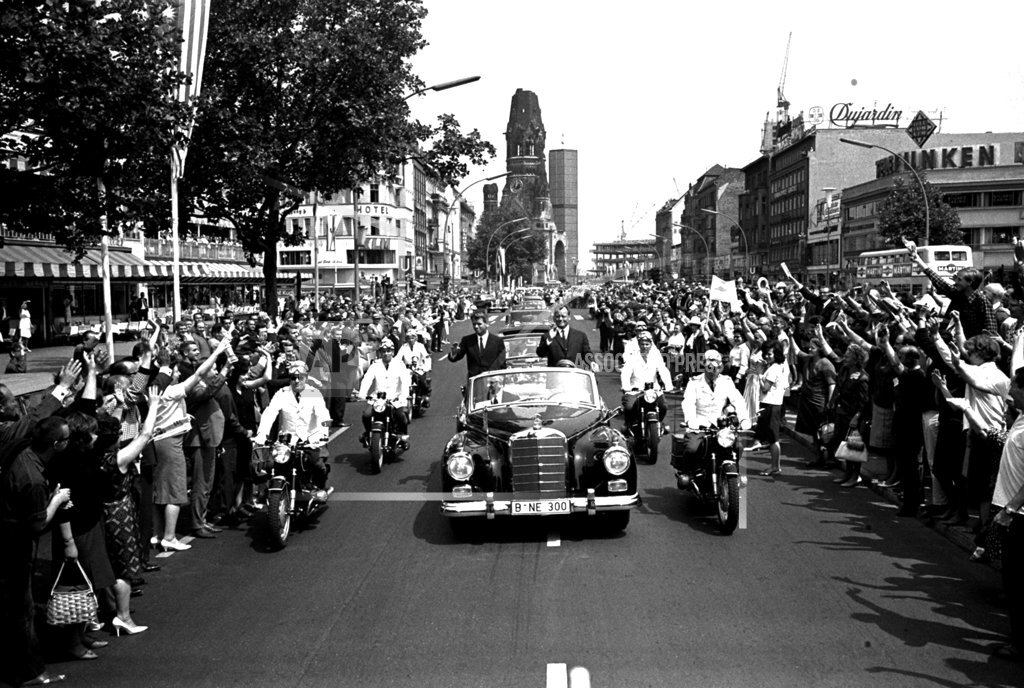
Negotiations for a solution of differences between the United States and Panama stalled again today. Panama stood fast on her demand for explicit assurance that the United States would agree to renegotiate the Canal Zone treaty. A four‐hour meeting of the Inter‐American Peace Committee with representatives of the two countries produced no results. Another effort was planned for 10 A.M. tomorrow. Members of the five-nation group, an agency of the Organization of American States, made no attempt to conceal their disappointment and growing frustration. They had hoped that the concessions made last night by the United States in agreeing to a “full and frank review of all issues,” including those arising from the canal, had cleared the way for an agreement today. Ellsworth C. Bunker, the principal United States negotiator, is reported to have consented to a specific reference to the canal in a draft agreement proposed by the committee as a first step toward the restoration of normal relations between the two countries.
Previously, the United States opposed any statement that would have suggested readiness to renegotiate the canal treaty. But after consulting with his Government, Dr. Miguel J. Moreno Jr., the chief Panamanian representative, said the proposed wording of the agreement was still unsatisfactory. It is not enough, he said, for the United States to leave open the possibility of a treaty revision. “We must have positive assurance that there will be a revision,” Dr. Moreno declared. “The present draft does not even spell out that the United States would be willing to enter into such negotiations.”
To demonstrate that the Panamanian Government had widespread support in its firm stand, he cited to the committee a message from 17 professors of the University of Panama indicating that confidence in inter-American mediation was fading. The petition asked that the Panamanian Government renew charges of aggression against the United States before the United Nations.
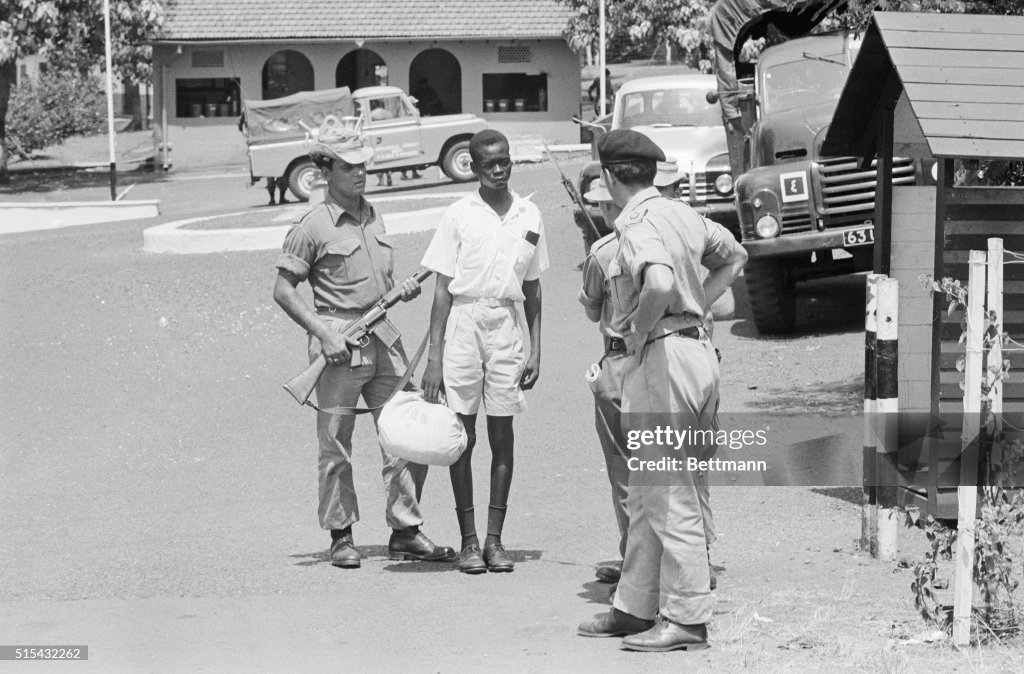
East Africa was calm tonight after British troops had put down widespread army mutinies in land, sea and air attacks. At least 5,300 British troops remained on the alert in Kenya, Tanganyika and Uganda. British warships patrolled the palm-fringed coastline on the Indian Ocean. The African troops had rebelled to demand more pay and the removal of British officers still commanding them.
In Tanganyika, 400 African youths pledged support for President Julius K. Nyerere in a chanting procession through the streets of Dar es Salaam, the capital. To the west, however, Uganda remained edgy. The Government of Prime Minister Milton Obote imposed full censorship of news published or broadcast in the country or sent overseas. About 30 mutineers were still at large in Tanganyika. They fled when British Royal Marine commandos seized their barracks at Colito, 10 miles north of Dar es Salaam, in yesterday’s dawn attack.
The Soviet Government accused Britain of “preparing armed aggression” against Zanzibar, where a revolt occurred January 12. Moscow warned of “dangerous consequences.”
Guerrilla bands in Kwilu Province have killed an American Baptist missionary, Miss Irene Ferrel, with a poisoned arrow, missionary sources said today. Miss Ferrel’s associate missionary, Miss Ruth B. Hege, was attacked and seriously wounded. She was reported to have been hospitalized in Kikwit, the capital of Kwilu, with both hands hacked off. The region is in central Congo, 300 miles east of Leopoldville.
Premier Nguyen Ngoc Tho of South Vietnam said in a statement published today that reported French plans to press for a negotiated settlement of the war against the Communist guerrillas were “sabotaging us, killing us, drowning us in difficulties.” The French plans were reported earlier this month in a French press agency dispatch that stirred up a political storm in South Vietnam. The Premier’s statement, made in an interview with the Paris newspaper France‐Soir, was distributed by the agency today. The French plans called for recognition of Communist China and proposed a cease‐fire, the withdrawal of “outside” interference and reunification of North and South Vietnam through negotiations. The Saigon regime fears that a neutralization of Vietnam would lead to an eventual Communist takeover.
Communist guerrillas in South Vietnam will release prisoners before a Vietnamese New Year cease‐fire Hsinhua, the Chinese Communist press agency, reported today. The Viet Cong guerrillas have decided to enforce a cease‐fire from February 11 to 17, the agency said.
The United States has been asked by Britain if it would send troops to Cyprus to help maintain order in that embattled island republic. It was understood that Washington disliked the idea, but had not definitely rejected it. Reliable sources reported that Britain had made similar approaches in the last two days to France, Italy and West Germany, asking if they would join a selective force in Cyprus that would represent the North Atlantic alliance. The open warfare of Christmas week between the Greek and Turkish communities in Cyprus was put down only when Britain moved her own forces between the battIing Cypriotes. More than 2,500 British soldiers are holding positions and patrolling the roads to prevent a new outbreak of violence.
Britain has argued, in her messages to the North Atlantic powers, that she cannot carry this burden alone for long. Her forces are stretched almost to the breaking point with new military commitments in Malaysia and East Africa. She has also pointed out that Cyprus, independent from Britain for three and a half years is a problem for the alliance in that warfare between the two Cypriote communities threatens to draw Greece and Turkey, both NATO members, into the conflict. Both Greece and Turkey have army contingents permanently stationed in Cyprus under the terms of the treaty by which they undertook to preserve the status quo on the island. Britain, which retains bases in Cyprus, is also a party to the treaty.
France is ready to join West Germany and Italy in a new move toward European unity. President de Gaulle believes, qualified sources said tonight, that Belgium and the Netherlands are moving toward withdrawal of objections to French proposals in this area. Two years ago Belgium and the Netherlands blocked progress toward unity when they rejected close cooperation among the six nations of the European Common Market — France, West Germany, Italy, Belgium, the Netherlands and Luxembourg — as a first step toward political unity. The Belgians, seconded by the Dutch, opposed this French plan on the ground that no political step should be taken until Britain became a member of the Common Market, or European Economic Community. After lengthy negotiations between Britain and the Common Market countries, France vetoed British membership last January. Throughout 1963 the Belgians and Dutch continued to oppose proposals for political unity.
Indonesian Air Force airplanes dropped thousands of leaflets on the island of Borneo along the nation’s border with Malaysia, each containing an order from President Sukarno directing Indonesian Army troops in the jungle to obey a cease-fire order.
Attorney General Robert F. Kennedy won British approval today for the results of his mediation efforts between Indonesia and Malaysia. After a long meeting between Mr. Kennedy and the Prime Minister, Sir Alec Douglas-Home, the Government issued a statement welcoming the ceasefire on the island of Borneo and the conference of Asian leaders arranged by the United States Attorney General. Nevertheless, some skepticism lingered. British officials were saying that two questions remained to be answered before the outlook for the conference could be gauged. The first question is whether the cease‐fire will last. Mr. Kennedy apparently believes it will if both sides exercise restraint over isolated breaches. The second question is what the diplomatic conference is to cover.
Prime Minister Jawaharial Nehru surprised and pleased New Delhi and worried his doctors today by attending the big annual Republic Day parade and sitting through the two‐hour ceremony. It was his first public appearance since he suffered a paralytic stroke that affected his left side January 7. Despite his satisfactory recuperation, his doctors have advised the Prime Minister against any exertion. He was driven from his residence in a black limousine, which moved along the parade route so the Prime Minister could be seen before the procession began. Then the car halted at the central reviewing stand, and Mr. Nehru got out and walked slowly but unaided to his seat.
The ceremonies were also marked by a walkout of the Chinese Communist chargé d’affaires in protest against the citation of three Indian Army officers for bravery during the Chinese attack on India late in 1962. The citations, read by President Sarvepalli Radhakrishnan, said that an outpost had been “attacked by Chinese in overwhelming strength” and repeatedly referred to the Chinese as “the enemy.”
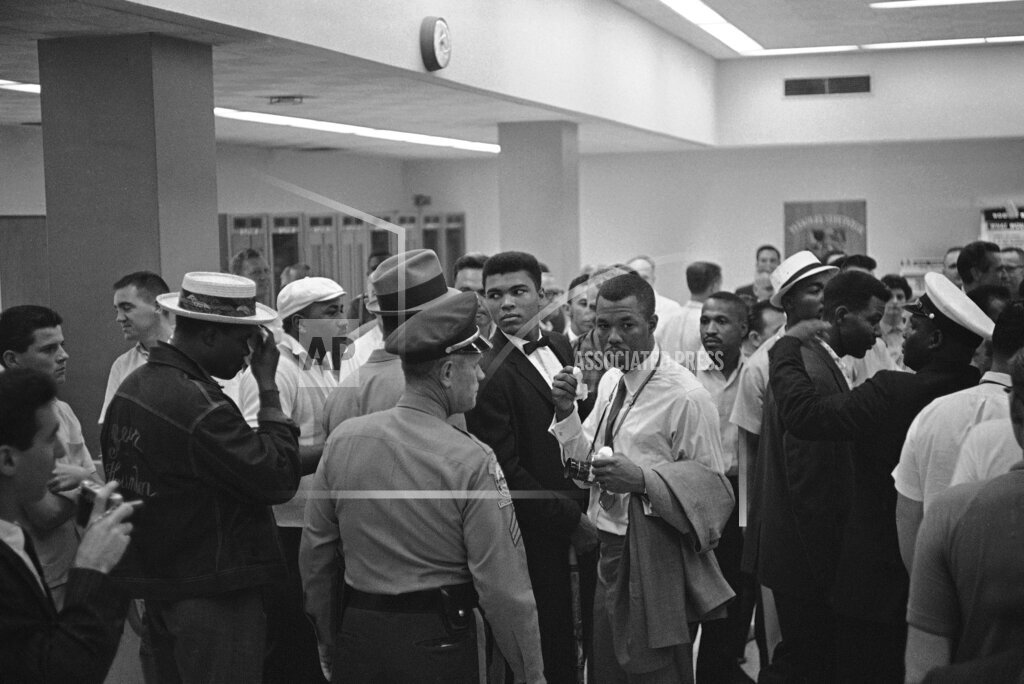
Blacks and restaurant bouncers clashed three times tonight, after the arrest earlier today of 84 anti-segregation demonstrators. The arrests came shortly before an unofficial United Nations panel left the city following a study of race relations. Four Black girls, a bouncer and a policeman were injured in the disturbances at the entrance of Leb’s Restaurant, in the heart of the business section. The violence followed efforts by anti-segregation pickets to force their way into the establishment. There were no arrests in these encounters.
All those arrested earlier, on charges of disturbing the peace, were later released on their own signatures. The action came after an official of the Student Nonviolent Coordinating Committee had promised that it would obey city picketing regulations to walk single file and to keep moving. The agreement was made in a meeting between Chief of Police Herbert T. Jenkins and James Forman, executive secretary of the student committee, and Donald L. Hollowell, a Black lawyer. Mr. Forman was one of those arrested. Mayor Ivan Allen Jr. contended in a statement that the racial tension here had resulted from efforts by civil rights groups to “seek national publicity at local expense.”
Senator Harry F. Byrd, still unconvinced of the need for tax relief, has quietly stepped aside as manager of the Administration’s $11.5 billion tax reduction and reform bill. The conservative Virginia Democrat, chairman of the Senate Finance Committee, disclosed today that he had delegated the task to Senator Russell B. Long of Louisiana. Mr. Long is the second‐ranking Democrat on the committee. Senator Byrd was largely responsible for a speedup that resulted in the bill’s approval by a 12‐to‐5 vote in the Finance Committee last Thursday. The extent of his cooperation with the Johnson Administration in hastening the vote had led to speculation that he might handle the measure on the Senate floor. However, Senator Byrd voted against the bill Thursday and then asked Senator Long to take over as floor manager, a role ordinarily discharged by the committee chairman.
The Conservative party, a New York State organization that is supporting Senator Barry Goldwater for President, attacked Governor Rockefeller yesterday as “the most profligate taxer and spender ever to serve as Governor of New York.” The party, which has close ties to the Goldwater‐for‐President campaign, issued a statement evidently intended to embarrass the Governor in his bid for Presidential delegates in the New Hampshire primary election March 10. “Governor Rockefeller’s fiscal record is an artful display of deceptive stunts and fiscal somersaults,” J. Daniel Mahoney, the Conservative party’s state chairman said.
Governor Rockefeller has decided to give his wife a prominent role in his campaign for the Republican Presidential nomination. The Governor has concluded that the best way to face the issue of his divorce and remarriage is to take the second Mrs. Rockefeller with him into every state in which he has definitely entered the primaries — New Hampshire. Oregon and California, thus far. Last Friday she made her first campaign tour, to New Hampshire. Tomorrow she will fly with the Governor to California for a three‐day visit. Next week she is scheduled to accompany him to Oregon. Mrs. Rockefeller will not go on the Governor’s extended trips. But she will attend key rallies and help him in some of what he considers his most effective campaigning — meeting people on the street.
The first declaration of support from a big urban county for Attorney General Robert F. Kennedy for Vice President came from the Democratic organization of New York’s Erie County yesterday. The organization’s announcement was carefully timed to precede the meeting here tomorrow of the 300‐member Democratic State Committee and the party’s $100‐a‐plate state dinner tomorrow night. The Buffalo‐Erie metropolitan area, the 15th largest in the nation, with a population of 1,306000, was among the first sections of the nation to declare for John F. Kennedy for President in 1959. In supporting President Kennedy’s brother, Erie Democrats, led by Peter J. Crotty, the county chairman, declared that the Attorney General had “won the confidence of the country by reason of his sound judgment, courage and ability to deal effectively with domestic and foreign problems.”
President Johnson congratulates General Douglas MacArthur on his 84th birthday anniversary “on behalf of a grateful nation for what you have given and all you have done.” President Johnson terms the general “one of the authentic heroes of this century.” MacArthur receives five West Point cadets, including one whose great-grandfather in 1899 appointed MacArthur to West Point.
Dr. Luther Terry, surgeon general of the United States, tells a New York television audience he sees no need for new federal laws to curb cigarette smoking in the interest of national health. He advises, instead, an intensive educational campaign, similar to the one he credits with virtually erasing the polio menace, which at one time produced 50,000 casualties yearly in the United States.
William F. Knowland, onetime Republican leader of the United States Senate, predicts Senator Barry Goldwater of Arizona will win the California Presidential primary over Governor Nelson Rockefeller of New York by 500,000 votes. Rockefeller will start stumping the state tomorrow for its 86 convention votes. Goldwater is scheduled to canvass the state during March, April, and May, for the primary on June 2.
President Johnson and Chief Justice Earl Warren attended the annual Red Mass in Washington where a bishop attacked the philosophy which has guided recent religious decisions of the Supreme Court.
Secretary of Defense Robert S. McNamara goes before Congress today to spell out a five-year military preparedness program which will concentrate heavily upon an improved intercontinental missile system.
The first half of a split countdown for the flight test of America’s largest rocket, the Saturn SA-5, has been completed at Cape Kennedy and preparations were proceeding for the launching tomorrow.
The annual telecasts of “The Wizard of Oz” in the United States resumed. Although the classic film had not been shown in 1963, the delay between broadcasts had been only a little more than a year, with the previous telecast having been December 9, 1962.
Born:
Cathy Podewell, American actress (Cally Harper Ewing-“Dallas”), in Evanston, Illinois.
Susannah Melvoin, American songwriter and vocalist (The Revolution), in Los Angeles, California.
Wendy Melvoin, American Emmy Award-winning songwriter and guitarist (Wendy & Lisa – “Nurse Jackie Theme”; The Revolution, 1980-86), in Los Angeles, California.
M.L. Johnson, NFL linebacker (Seattle Seahawks), in New York, New York.

 History Diaries