The South Vietnamese military command reported 70 more cease-fire violations today, the first anniversary of the signing of the Paris peace agreement. The most significant fighting was in the Mekong Delta where South Vietnamese and Viet Cong troops clashed near Đầm Dơi in An Xuyên province. The command said 27 Viet Cong and six government troops were killed.
The year that has elapsed since the signing of the Paris peace agreements on January 27, 1973, has not brought peace to South Vietnam. But the war that continued throughout 1973 and into 1974, an essentially military struggle with sharp economic consequences, did not appear to establish a distinct momentum in favor of the Communists or the Saigon government. “It was not as decisive a year as one might have thought it would be last February,” said an American diplomat looking back over 12 months in which, according to Saigon Government figures, almost 60,000 Vietnamese, 45,000 of them Communists, have died in petty, skirmishes and battles now forgotten. Though bloodletting has been as extensive as it was before, neither side could claim stunning victories or significant territorial acquisitions. Nor, despite continual accusations, could either ‘side demonstrate convincingly that it was more sinned against than sinning.
In the Mekong Delta, on the central coast and, above all, in the skies over most of the country, Saigon Government forces initiated many actions. It was a rare province where government artillery could not be heard in “harassment and interdiction” fire into Communist‐held areas. As the first anniversary of the Paris agreements approached, President Nguyễn Văn Thiệu offered this definition of “peace” to an audience in Cần Thơ: “Real peace is territorial security, protection of the harvests, production increase, self-development. It consists in weakening the Communists, defeating them, annihilating their tax collectors, their assassination squads.” The President then ordered his troops to attack the Communists in their zones of control instead of waiting to be attacked.
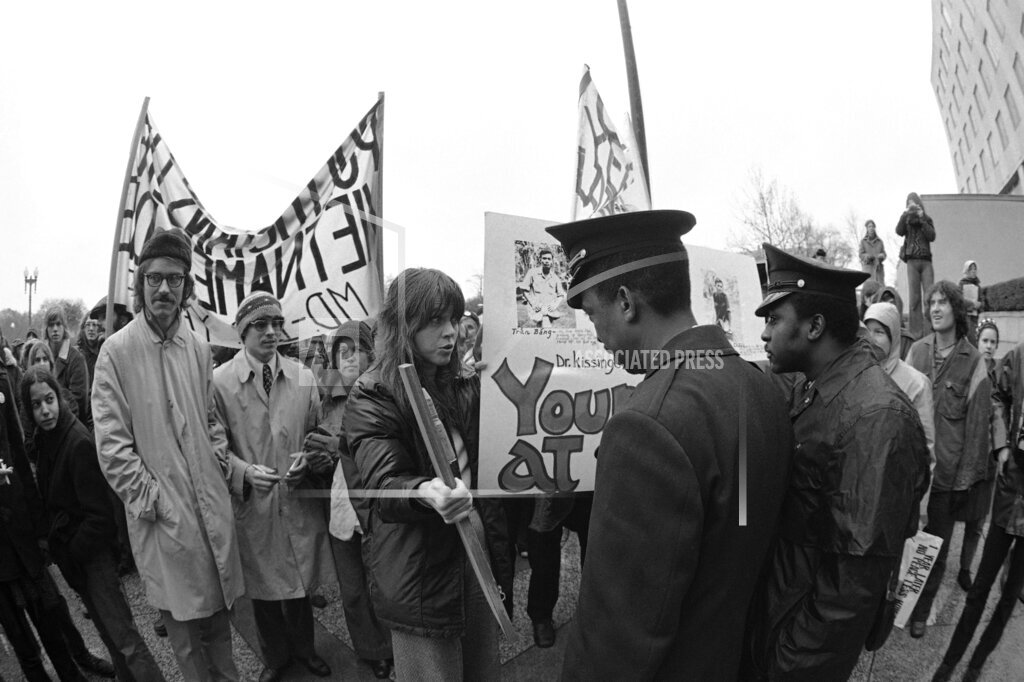
The memory of “our war,” the Vietnam war until 1973, still pains official Washington. But a year after the signing of the Paris peace agreements “their war” the struggle that still goes on and has taken almost 60,000 more Vietnamese lives since the cease‐fire has become just another fact of life here. The Paris document bore the title “Agreement on Ending the War and Restoring Peace in Vietnam.” Clark M. Clifford, former Secretary of Defense and critic of the war, finds the title ironic, saying, “The Administration’s position that it achieved peace with honor is a travesty.” But most Nixon Administration officials and some members of Congress agree with Secretary of State Kissinger, who said last month “We have succeeded not in guaranteeing necessarily a permanent peace but in moving the decision to a Vietnamese decision.”
A group of American social workers visiting South Vietnam has urged adoption agencies here to stop their practice of placing most mixed-race black‐Vietnamese children with white adoptive parents and begin placing them in black homes instead. “Since they’re going to America, and in view of the racial situation there, we feel that youngsters would have a better opportunity to develop their self‐identities in black homes,” explained Alfred Herbert, an official of the Black Child Development Institute in Washington. Mr. Herbert, who is black, led the group of three blacks I and three whites on a recent nine‐day trip around South Vietnam. They visited orphanages, spoke with Government officials and tried to make their case to representatives of the American adoption agencies operating here.
Insurgents bombarded Phnom Penh’s crowded slums with more than 100 artillery shells last night, setting wooden homes afire and driving thousands of residents from the area. It was the heaviest of three straight nights of insurgent shelling of the capital’s densely populated and poverty-stricken Boeung Turn Pun sector, and one of the worst attacks on Phnom Penh since the Cambodian war started in April 1970. The United States Embassy here went on alert, with Marine guards drawing weapons and other equipment. The casualty toll in last night’s two-and-a-half-hour barrage was not immediately known. The first two nights of shelling killed 50 and left 117 wounded, authorities reported.
Three months and a day after they seized the fringe of Suez city and a large area around it in the final months of the October war, the Israelis are about to withdraw. Although the pullout process began formally Friday, the first Israeli positions south and west of Suez will actually be abandoned Monday. The Israelis are committed to complete their evacuation of the western bank of the Suez Canal by Feb. 21. By March 5, they are scheduled to take up new positions some 12 miles east of the canal.
The Federation of American Scientists proposed that one way out of the atomic arms race would be for the United States and the Soviet Union to agree on the phased elimination of their land-based missile force. Increasingly, the federation said in a policy statement, land-based missiles are becoming a “destabilizing factor” in the nuclear balance as each side becomes concerned that its missile force is vulnerable to attack by the other. It is a trend that cannot be reversed technologically, the federation believes, nor can it be helped through some agreement limiting the number of intercontinental missiles each side may possess.
A 270-foot Bulgarian stern trawler carrying 79 men and a 182-ton catch of mackerel — a floating fish factory — was seized in international waters off the Jersey Shore early yesterday by a Coast Guard cutter that gave chase after allegedly sighting her fishing illegally inside the 12-mile coastal limit. Invoking international law, the cutter Unimak overtook the trawler Limoza 131.4 miles off Little Egg Harbor, sent a boarding party onto her decks and, after notifying the State Department, formally seized the ship.
The crash of Turkish Airlines Flight 301 killed 66 of the 73 people on board. The Fokker F28 Fellowship crashed and burned shortly after takeoff from Cumaovası Airport (now İzmir Adnan Menderes Airport) in Izmir.
Bülent Ecevit becomes Prime Minister of Turkey for the first time. Turkey’s 104-day political crisis ended when the country’s new premier, Bulent Ecevit, took office as head of the coalition government. Ecevit, a former labor minister who leads the Republican People’s Party, established the coalition with the ultraconservative National Salvation Party.
A man who collapsed on a bus near the home where author James Pope-Hennessy was murdered has been interrogated and is “officially assisting” in the murder investigation, London police said. Scotland Yard said robbery appeared to be the 10tive for the killing. The Times of London said the author was killed by three thieves who invaded his bachelor apartment in search of a $150,000 advance from the American publishers of his partially finished biography of Sir Noel Coward.
A policeman was killed by sniper Glenmorley just outside Belfast as fire while patrolling the village of sporadic shootings broke out at the start of demonstrations of Roman Catholics in Northern Ireland to mark the second anniversary of Londonderry’s “bloody Sunday” in which 13 Catholics were killed by British troops. The slain officer was not identified but authorities said he was the father of four.
Leaders of the Communist parties of Western Europe opened a weekend meeting in Brussels to discuss the “crisis of world capitalism” and how they can take advantage of it. The 21 delegations from 10 Western European countries and West Berlin heard Louis Van Geut cite elements of what he called the “deepening of the crisis of world capitalism — monetary unrest, inflation, instability, contradictions between the United States, Europe and Japanese imperialism.”
King Baudouin of Belgium named Flemish Christian Socialist leader Leo Tindemans as premier-designate and asked him to try to form a government to replace the Socialist-led coalition that resigned a week ago. Tindemans, 51, was deputy premier and budget minister in the previous government.
The Guðmundur and Geirfinnur case, widely considered a miscarriage of justice, began when an 18-year-old laborer, Guðmundur Einarsson, disappeared while walking home on a snowy night from a dance hall in Hafnarfjörður in Iceland.
Five persons were drowned, at least three homes were swept away and scores of other residences were damaged as Australia’s worst storm of this century swept through Brisbane. The known death toll stood at 11 as Cyclone Wanda and torrential rains continued to whip up record floods over most of the state of Queensland.
St. George, Grenada, was comparatively calm after two days of looting in isolated districts by a small but determined band. Shops were still shuttered, essential services were at a standstill and debris littered the streets of the Caribbean island capital after rioting that killed at least one man. The rioting came after demonstrations against the government of Prime Minister Eric Gairy. Grenada will gain independence from Britain February 7.
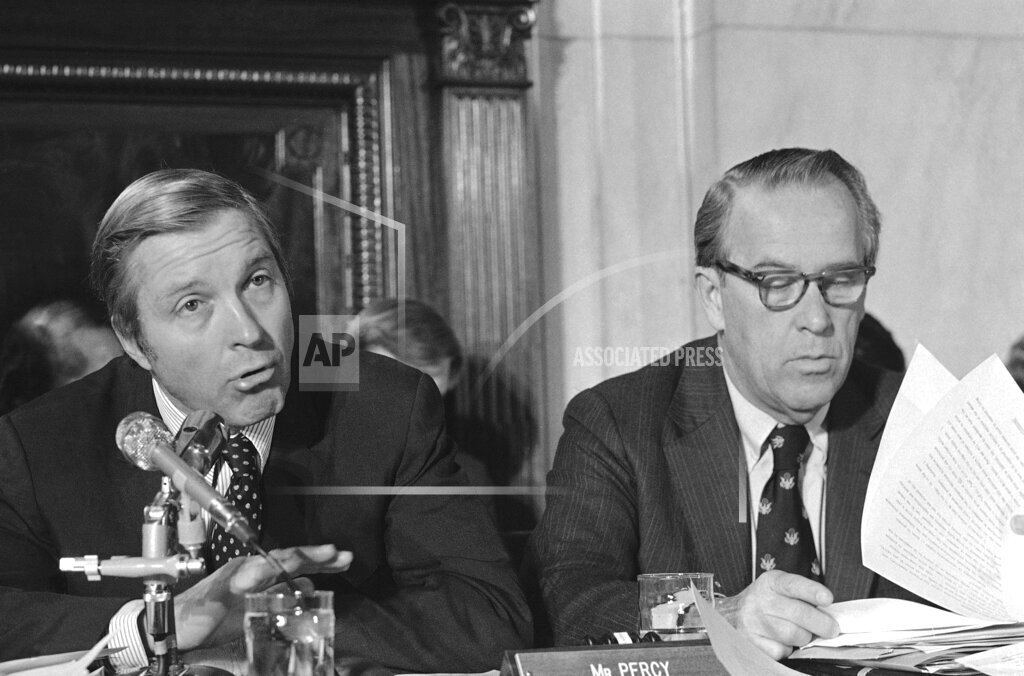
The Senate Watergate Committee postponed indefinitely the controversial hearings on contributions to the 1972 Nixon campaign that were to have been held during the next two weeks. Senator Sam Ervin, the committee’s chairman, said the delay had been agreed upon by the committee “in order to make sure that no prejudice be done to the Mitchell and Stans trial” scheduled to begin next month in the Federal District Court in New York. Former Attorney General John Mitchell and former Secretary of Commerce Maurice Stans have been charged with obstruction of justice and perjury.
If President Nixon is looking to conservatives for support in his hour of travail, he would have been dismayed by the words that echoed through the meeting rooms of Washington’s Mayflower Hotel this weekend. The speakers were participants in a conservative political action conference, and their message was plain: Richard Nixon has done us dirt. “If you took a poll of this group,” said F. Clifton White, the political consultant who put together the Barry Goldwater blitz of 1964, “you would find a substantial majority that wishes the President would just go away, just resign.”
U.S. population grew only 0.8% in 1973, the lowest annual rate since 1938. Census Bureau figures showed the population was 210,740,000 on January 1 compared to 209,123,000 a year earlier.
Tornadoes touched down in three Southern states, killing a 9-month-old baby in eastern Alabama, injuring at least 22 persons and causing damage in scattered areas, authorities said. The infant, Bartlett Baldwin, was killed and three persons were injured in Pot Ash, Alabama, where two mobile homes were reported destroyed. In Columbus, Mississippi, a twister destroyed several trailers in a mobile home park and injured 18 persons, none seriously. The third tornado struck a mobile home park just south of Lafayette, Louisiana, and flattened one home, injuring its owner.
Shots were fired at three trucks, roofing nails were strewn on at least five highways and two fire bombs were seized as truckers in Ohio and Pennsylvania tried to organize a strike in advance of a nationwide shutdown planned for Thursday. The nationwide shutdown, to protest against high fuel prices and freight rate regulations, was planned by a truckers’ coalition organized last week in Washington. Some trucker groups in Ohio and Pennsylvania, however, were in the third day of a partial shutdown, and hundreds of trucks had been pulled off the highway.
A proposed settlement of a $246,801 income tax claim against former Teamsters leader Jimmy Hoffa calls for him to pay $48,873, the St. Louis Post-Dispatch reported. The paper said the proposal, worked out by the Internal Revenue Service and Hoffa’s attorneys, had been submitted to the U.S. Tax Court. The IRS filed suit in 1969, contending Hoffa owed more than $172,000 in taxes for 1965 and 1966, plus interest.
An American, detained in Cuba since the yacht he was sailing sank off the Cuban coast in August, returned to the United States. Ralph Brembt, 20, was one of three crewmen rescued by Cubans after their boat sank. Cuba asked $6,000 for their release, ostensibly for the rescue and room and board. The other two were released in a short time because Cuba believed the money had been paid, Brembt said. But it apparently had not been paid, and Brembt was detained in Havana to wait for the boat owner to come to terms with the government. Brembt said he was told the U.S. State Department finally paid the bill.
New Orleans’ district attorney post went to Democrat Harry F. Connick when his opponents in the March 5 general election, Republican William Mora III and independent Eddie Sapir, both withdrew. Connick defeated long-time District Attorney Jim Garrison by 2,200 votes in a December 15 Democratic runoff. Garrison, found innocent in September of charges that he had accepted bribes to permit illegal pinball gambling, contested the runoff election but withdrew the suit after preliminary court action, saying he would return to private practice.
Researchers at the National Center for Disease Control have developed a new rabies serum free of side effects. The serum, expected to be licensed shortly, is extracted from the blood of persons immunized against rabies. Rabies serum now is extracted from the blood of horses, and about 40% of the persons who receive the horse serum develop serum sickness.
Two inventors working to perfect a clean, fuel‐saving car have just had their Federal support raised from $1 to $33,000 for three months of rigorous government testing by the E.P.A. Their prototype car, a much-modified 1972 Buick Skylark, is a “hybrid” that operates simultaneously on gasoline and electricity. The gasoline engine, half the size and power of the Skylark’s V‐8, runs at fairly constant throttle setting. Smallness and constant thrust, say the inventors, Dr. Victor Wouk and Dr. Charles L. Rosen, are keys to low exhaust emissions and low fuel consumption. The electric motor, which emits no pollutants, is used for starting, and it provides the extra power needed when the driver wants to accelerate or climb a hill.
In Spokane, Washington, at least 175 employees of Pathology Associates Medical Laboratories, Inc. had food poisoning from the Shigella bacteria, after a company banquet at the Ridpath Hotel.
At the 31st Golden Globe Awards, “The Exorcist” won the award for Best Drama, while “American Graffiti” won the award for Best Comedy or Musical. Al Pacino and Marsha Mason win for best actor and actress.
Born:
Shannon Hale, American Young Adult Fantasy author (“Princess Academy”), in Salt Lake City, Utah.
Rokia Traoré, award-winning Malian singer and songwriter; in Beledougou, Mali.
Died:
Boris Bychowsky, 65, Soviet scientist and parasitologist for whom the Bychowskicotylidae family of flatworms in fish are named, as well as four genera and numerous species.
Julius Patzak, 75, Austrian tenor.


 History Diaries