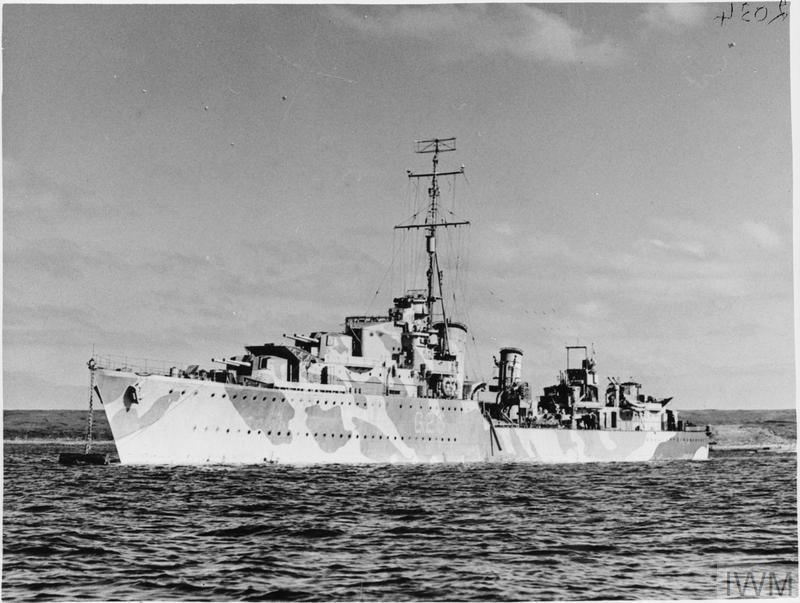
HMS Matabele arrived at Plymouth, England on 26th January 1939 and after completing her sea trials went to Portland England to join the 2nd Tribal Destroyer Flotilla. After the outbreak of World War 2, she had to be docked in order for two new propellers to be fitted but she was made ready in time to rescue the submarine HMS Spearfish on the 26/27th September 1939.
In April 1940, Matabele joined the Home Fleet destroyer screen in the North Sea. She moved up and down the fjords of Norway ferrying soldiers ashore at Namsos and screening transports out to sea during the daytime. While operating in Norway, she ran onto the Fasken Shoal but managed to get back to her home port safely. On 17 May 1940 the light cruiser HMS Effingham ran aground on an uncharted rock on Faksen Shoal in Vestfjord carrying troops to Bodo to help block the German advance on Narvik. She was later torpedoed and destroyed with gunfire by HMS Matabele and abandoned.
In April 1941, Matabele underwent an extensive refit at Barrow-in-Furness, England. The refit was completed on the 27th May but the ship ran aground when leaving Barrow. The resulting repairs meant that she could not rejoin the Home Fleet until August 1941. Due to the German invasion of Russia, Matabele was immediately assigned to Russian convoy duty.
Lost 17 January 1942. On 8 January 1942, HMS Matabele and HMS Somali were ordered to join the escort of convoy PQ.8. On 17 January, just off Kola Inlet, HMS Matabele (Cdr. Arthur Caerlyon Stanford, DSC, RN) was torpedoed by the German submarine U-454 and sank in two minutes in position 69º21’N, 35º27’E. Even in that short time, many had managed to abandon ship only to die from hypothermia in the icy waters. Out of her complement of 238 only two survived of the four that were rescued up by the minesweeper HMS Harrier.
Battle Honours: NORWAY 1940 – ARCTIC 1941-42
One day after General Garcia Valiño’s men capture Manresa, the Nationalist vanguard takes the town of Tibidabo, the highest mountain around Barcelona, which overlooks the entire city. The Nationalists are now on the outskirts of Barcelona and all the defensive lines are gone. Barcelona is hit by 47 air bombing raids. The government flees the city.
Barcelona was virtually ringed and isolated by the Insurgents last night, but appeals to the populace to surrender were countered with a retort that the Rebels would face an “inch by inch” fight to take the city.
Reports from correspondents who had left there, however, indicated that only a miracle could save the city; in recent days apathy on the part of the people was noted. Moreover, the loss of Barcelona as an industrial center will impair further Loyalist resistance.
The Insurgent planes ranged far yesterday: French anti-aircraft guns drove them away from the border at Portbou and a German bomber crashed on French territory.
A German bombing plane crashes in the French Pyrenees; all five members of crew found are dead.
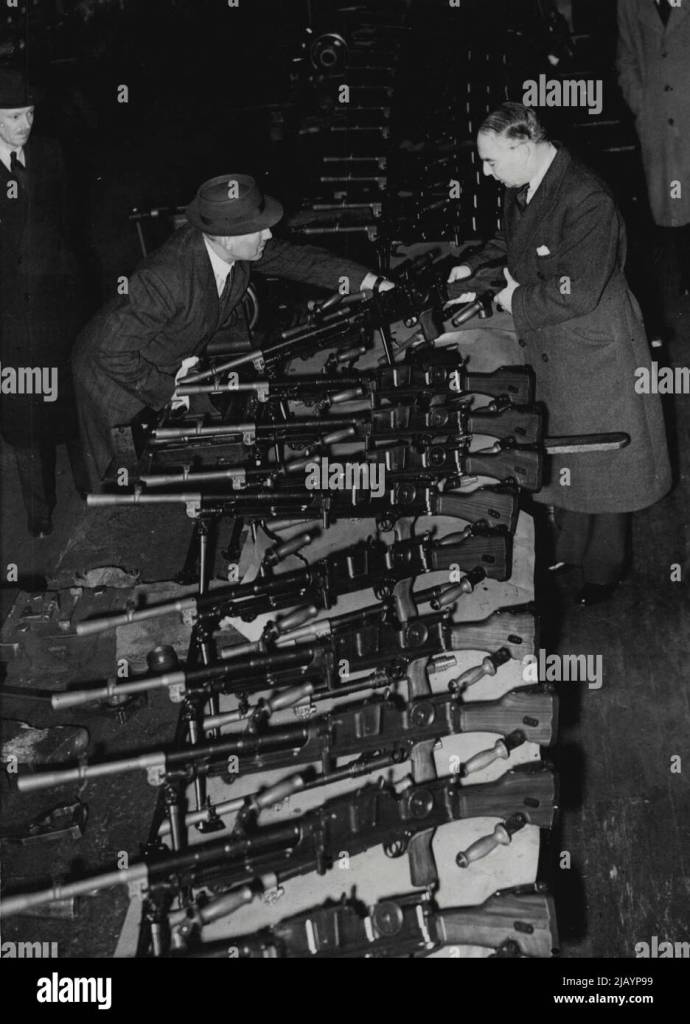
Loss of the Barcelona arms factories is expected to doom all the Spanish Loyalist defense forces.
The trickle of refugees toward France continued. An arrangement was reported made under which a safety zone for them would be set aside on Spanish soil near the frontier.
In Washington, Senator Lewis opposed lifting the embargo on arms to Spain, and a similar position was taken by Martin Conboy in a letter to The New York Times.
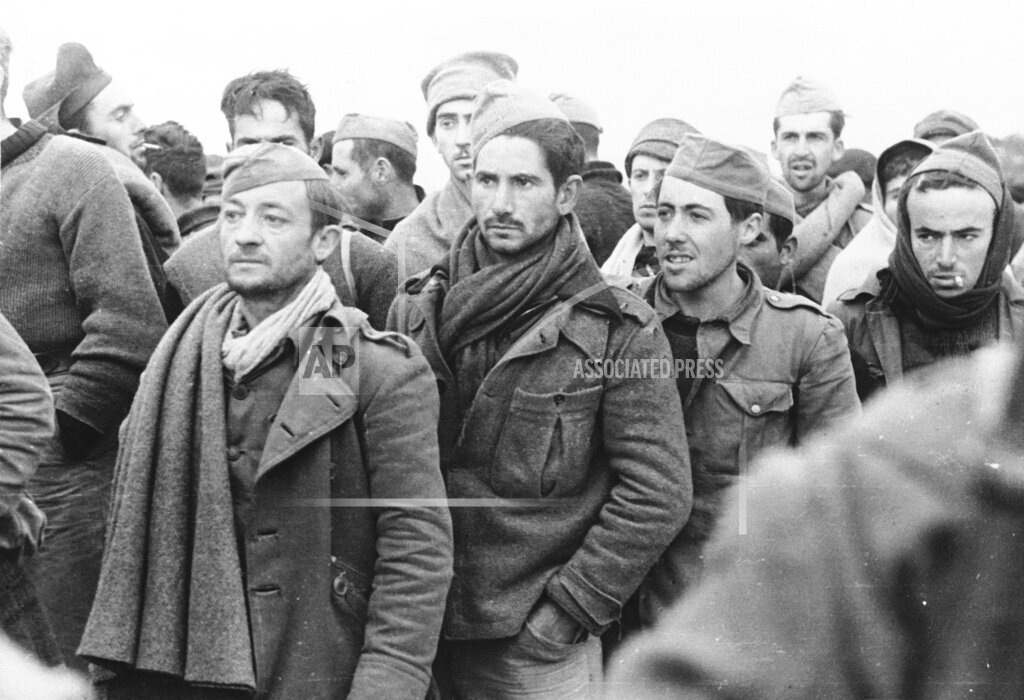
Spanish Insurgents laid a ring of shellfire and steel about Barcelona tonight to meet a challenge that the city would be defended “inch by inch, street by street, house by house” as a demand was made for surrender of the 2,000,000 inhabitants. The Associated Press reported from London that the Spanish News Agency, in a dispatch dated from Barcelona this morning, said violent fighting was proceeding in several sectors around the former provisional capital. “Republican forces with extremely high morale and fighting spirit counter-attacked heroically and in one counter-attack took fifty-four prisoners,” the agency said. The communiqué listed sectors outside the city to the west and northwest as points where the battle was most savage.
[Ed: In truth, morale is non-existent, and the battle for the city is over before it began.]
It is the ghost of an army that has thrown itself across the southern and western sides of the city — the once great Army of the Ebro, which has been broken by its gallant but hopeless struggle of the last thirty-three days and nights. against enormous odds. General Enrique Lister, who had twice called on his famous Fifth Corps for a truly superhuman effort-first at Borjas Blancas, then at Martorell-was making a last stand for Barcelona today. General Modesto, who commands the Army of the Ebro, was throwing in whatever fresh men he had who had come from Valencia. There are brigades in that army with 120 men left, companies that have twenty-five rifles, no machine guns and only fifteen to twenty. cartridges daily per man. There are brigades with two machine guns and no artillery. There had been no reserves of men since the Fifth and Fifteenth Corps were thrown in during the second day of the offensive, until now, when some soldiers have been brought around from Valencia.
An American ship, the light cruiser USS Omaha, arrives in the Barcelona area to pick up American refugees. Diplomats are told to stay. Thirty Americans were menaced by Insurgent aerial bombs as they boarded the American warship to sail for French ports.
Trickle of refugees to the French border continues, but there is no major influx from Spain.
Joachim von Ribbentrop arrived in Warsaw, Poland and spoke to Polish leaders regarding the German wish to annex Danzig and to have Poland sign the Anti-Comintern Pact.
Germany and Poland hail the 5th anniversary of the German-Polish non-aggression accord. But the Poles refuse to support schemes against Western powers, or to turn over Danzig.
Adolf Hitler resolved to wipe the entire Polish state off the map should Foreign Minister Joachim von Ribbentrop’s final approach to persuade the Poles of German territorial proposals become rejected.
Nazi Propaganda Minister Joseph Goebbels is shorn of some powers.
Resuming the task of finding ways and means for the evacuation of Jews from Germany, George Rublee, chairman of the Inter-Governmental Committee on Refugees, today conferred for two hours with Ministerial Director Helmuth Wohlthat, the specialist for “Aryanization” problems in the German four-year plan organization, who replaces Dr. Hjalmar Schacht in the negotiations with the Evian committee. As a result of this conference, it was stated in circles close to Mr. Rublee that the German Government had agreed to continue the negotiations where Dr. Schacht’s dismissal interrupted them and on the same basis, which would mean that the concessions Dr. Schacht is reported to have made in his last conference with Mr. Rublee would remain intact. On the other hand, a memorandum specifying the points of agreement that the committee had worked out for submission to Dr. Schacht was not submitted to Herr Wohlthat but is being redrafted, and the new draft will be submitted tomorrow. The significance of this redrafting is still to be revealed, but the Rublee committee hopes for the best.
The Reich indicates a willingness to negotiate on the payment of the $18,000,000 Austrian bonds held in the U.S.
Italian Jew-baiter Roberto Farinacci scolds the Catholic Church for its sympathy for Jews; in Germany, Julius Streicher declares the Jewish “problem” remains, and calls Kristallnacht “only a little test.”
France doubles the speed of her mobilization program; a crisis is expected after the fall of Barcelona.
Cure-of-war conference urges neutrality shift against Japan and for lifting embargo on Spain.
Rumania lays to Fascists a plot to destroy public buildings in Bucharest with flame-throwers.
Sir Stafford Cripps, the British Labor Party’s “ablest lawyer” is removed from the party after he makes verbal attacks on Prime Minister Neville Chamberlain.
Britain begins enrollment in war aid help, printing 20 million booklets describing jobs available.
The Soviet government believes it is nearly to a stage where it no longer needs to buy from or sell to democracies.
Although claiming the votes to force a restoration by the Senate of $150,000,000 which was cut from the deficiency relief bill by the House, Senator Barkley, Democratic floor leader, again warded off a vote today to obtain time for a further canvass of the situation in the first real test in the new Congress of the Administration’s strength in the Senate. Mr. Barkley indicated after the session closed late in the day that a vote was unlikely tomorrow, but affirmed his confidence that he could out-vote the conservative coalition led by Senators Byrnes, Harrison and Adams. The House voted a bill carrying $725,000,000 instead of $875,000,000 as requested by the President, to run the WPA from February 1 to June 30, the end of the current fiscal year. The Senate Appropriations Committee approved the reduction by a vote of 17 to 7. Meanwhile new controversies crept into debate which at many points represented little more than time-killing by advocates of the larger fund.
Homer Martin resigns from the executive board of the CIO. Homer Martin, president of the United Automobile Workers of America, announced yesterday his resignation from the executive board of the Congress of Industrial Organizations and openly declared war on John L. Lewis as chairman of the CIO. He declared that he and his faction in the automobile workers’ organization would fight to the end to retain control of the union against what he termed Mr. Lewis’s efforts to destroy its autonomy. In a letter to Mr. Lewis informing him of his resignation, effective immediately, Mr. Martin accused the CIO chieftain of betraying “the principles and policies of a democratic labor movement” and of aiming at a personal dictatorship over organized labor.
He also charged Mr. Lewis with having formed an alliance with Stalinists in an alleged conspiracy to dominate the automobile workers’ organization and warned him that “the intelligent union-conscious workers of America, loyally devoted to democratic principles and procedure, will never submit to such dictation.” Mr. Martin also maintained that Mr. Lewis’s “lieutenants,” Philip Murray, president of the Steel Workers Organizing Committee, and Sidney Hillman, president of the Amalgamated Clothing Workers, had held “secret conferences” with employers and members of the automobile workers’ organization “for the purpose of transferring control of the organization to yourself.”
Broad and detailed revision of the National Labor Relations Act was proposed today in a series of amendments introduced by Senator Walsh, carrying out recommendations prepared by the American Federation of Labor. The same amendments will be introduced soon in the House, it was learned. The amendments were described by their sponsor as designed “to guarantee fair and equitable administration of the law by the National Labor Relations Board.” One of the amendments borrowed a provision from the New York State Labor Relations Act, which provides that the NLRB “may” investigate petitions for an employee election filed by an employer and order such an election. Under current practice, although this right was implied for employers, “the board arbitrarily refuses to entertain such petitions even though there is nothing in the NLRA which would close the door to such action,” said Senator Walsh.
District Attorney Thomas Dewey is the most popular potential Republican candidate for president.
Jury selection is complete in the retrial of James Hines. Testimony is to begin tomorrow.
Admiral Leahy, at a House committee hearing, upholds the plan for a strong base on Guam.
A House group reads the resolution on the impeachment of Secretary of Labor Miss Perkins and recesses without action.
Secretary of Commerce Hopkins, preparing a program for industry, warns on speculation until he reveals it.
Martin Dies, chairman of the House Committee Investigating Un-American Activities, is found to owe back taxes.
President Roosevelt seeks major reform of the Federal Communications Commission.
Seventy percent of Americans oppose a six-year term for the presidency.
The U.S. Army Air Corps announced a new competition for a new fighter design. The requirements were 310-370 miles per hour top speed, 15,000 feet ceiling, and 2 hours endurance at cruise speed. The firm Curtiss-Wright would ultimately win the competition with the P-40 design.
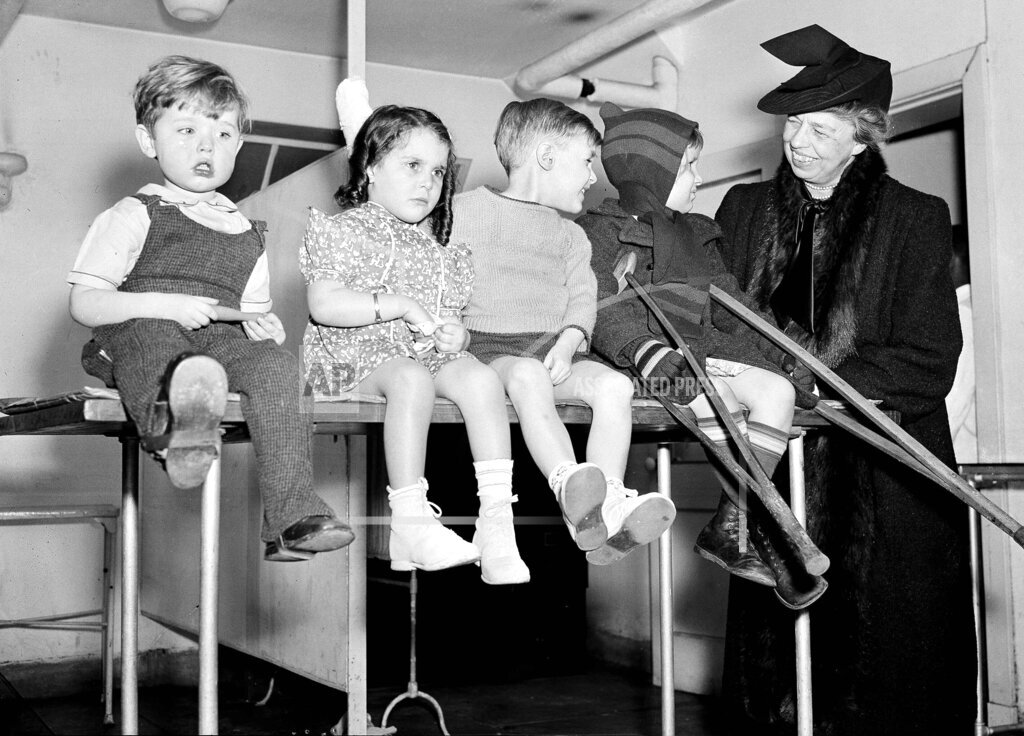
Seventeen million cases of trichinosis are believed to exist in the United States, but are difficult to diagnose.
Uranium fission was observed for the first time at Columbia University in the United States. The first nuclear fission experiment (splitting of a uranium atom) in the U.S., is conducted in the basement of Pupin Hall, Columbia University by a team including Enrico Fermi.
Writing to Lewis Strauss of the publishers Kuhn, Loeb and Co., Leo Szilard the nuclear physicist tells of an exciting breakthrough in the quest for a sustained nuclear reaction.
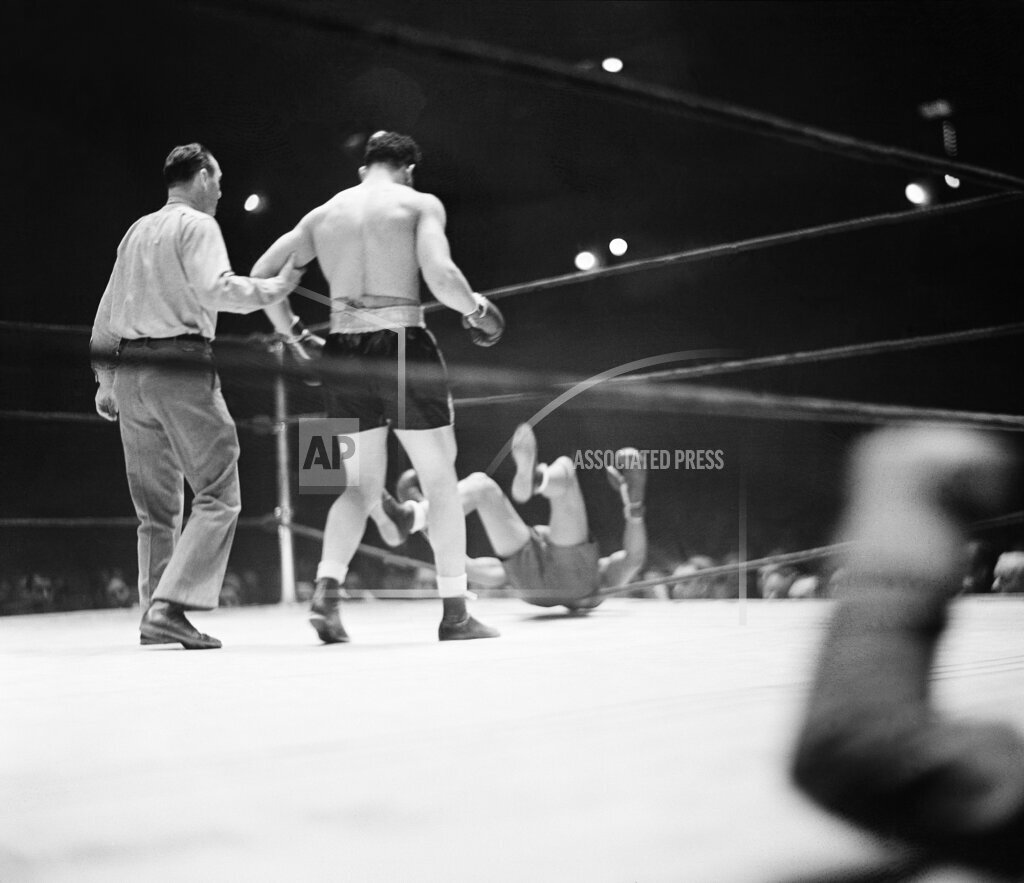
Joe Louis successfully defends his heavyweight title for the fifth time. He knocked out John Henry Lewis in the first round.
Lou Gehrig accepts a $4,000 pay cut in his contract with the New York Yankees.
The Canadian government plans nearly $64 million in expenditures for defense.
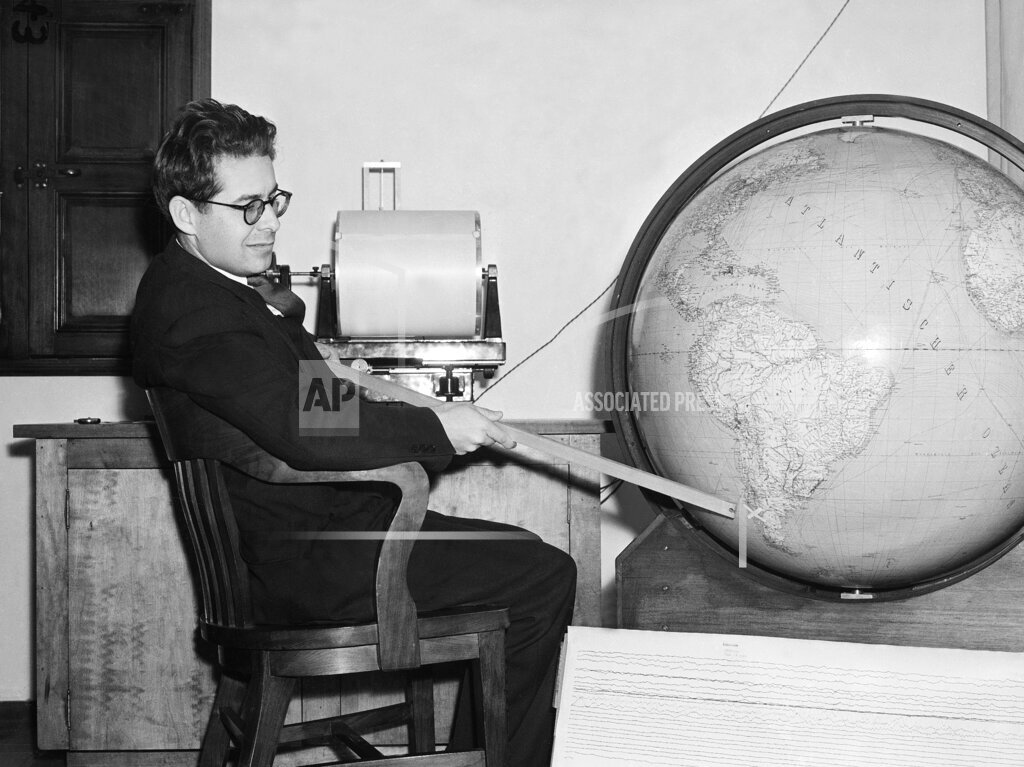
An earthquake last night virtually wiped out Concepción, Chile’s southern capital, and devastated twenty towns and cities in six rich agricultural provinces, with many thousands of dead and injured. Two thousand were reported dead in Concepcion alone, with fires completing the devastation begun by the earth shock. Chillán, a city of 50,000, fifty miles inland from Concepción, was reported as completely razed. Only fragmentary reports, gathered by amateur operators at a hundred battery sets, last night linked the capital by short wave with the earthquake zone. Parties were organized at Talcahuano, the seaport of Concepción, to reach that city, which during the day maintained an ominous silence. The figure of 2,000 dead at Concepción was reported here by the manager of the Chile Telephone Company at Tetuco and other nearby towns confirmed the estimate as probable, adding that 1,000 more were seriously injured.
The newspaper Imparcial, usually well informed, confirms a report, not denied, it is said, in official circles, that no less than 10,000 met death last night in what is admittedly the worst earthquake in Chilean history. The Governor of Concepción sent a message to the Minister of the Interior estimating that the dead there reached many thousands, although it was not yet possible to form any clear idea. He asked the immediate dispatch of Red Cross aid, doctors, food and clothing. Chillán, however, is now in the foreground, side by side with Concepción, as the most stricken city. Aviators say that its destruction. was almost complete.
A Pan American-Grace Airlines pilot advised his headquarters at Lima, Peru, last night that 4,000 persons were dead at Chillán as a result of the earthquake and that the ruined city was in flames, according to The Associated Press. A theater collapsed during a night show killing all in the audience, it is reported. The prison roof fell in, and all important buildings were destroyed. The streets are so filled with debris as to make rescue work utterly impossible. Light, power, water and drainage are gone. Troops are doing their utmost to save the injured who are still entombed but as darkness sets in the task is most difficult. The dying, under the debris, are helplessly demanding aid. Tents are being rapidly put up in surrounding fields. The lack of trains and other communications does not permit a sufficient supply of medical and sanitary requirements. The wrecked streets are filled with the injured.
[The total death toll of this 8.3 Magnitude earthquake is estimated at roughly 28,000.]
The Japanese premier shares a plan to handle a potential embargo by Britain and the United States.
Attacks on Shanghai are likely as the seventh anniversary of the Japanese attack on Chapei approaches.
Japan denies it plans to attack Russia, but threatens to destroy Soviet troops if they start aggression.
Dow Jones Industrial Average: 140.72 (-0.63).
Born:
Angela Thorne, British stage and screen actress (“To the Manor Born”; “Three Up, Two Down”), in Karachi, British India (now Pakistan)
Naval Construction:
The Kriegsmarine (German Navy) Type VIIC U-boats U-71 and U-72 are ordered from F. Krupp Germaniawerft AG, Kiel (werk 618 and 619).
The Kriegsmarine (German Navy) Type VIIC U-boats U-77, U-78, U-79, U-80, U-81, and U-82 are ordered from Bremer Vulkan-Vegesacker Werft, Bremen-Vegesack (werk 5-10).
The Kriegsmarine (German Navy) Type VIIC U-boats U-88, U-89, U-90, U-91, and U-92 are ordered from Flender Werke AG, Lübeck (werk 292-296).
The Вое́нно-морско́й флот СССР (ВМФ) (Soviet Navy) “M” (Malyutka)-class (3rd group, Type XII) submarine M-57 is launched by Krasnoye Sormovo (Gorkiy, U.S.S.R) / Yard 112.
The Nihon Kaigun (Imperial Japanese Navy) Type C (C1 sub-class) cruiser submarine I-20 is launched by the Mitsubishi Kobe Yard, Kobe, Japan.
The Royal Navy Tribal-class destroyer HMS Matabele (F 26, later G 26) is commissioned. Her first commanding officer is Commander George Kelvin Whitmy-Smith, RN.
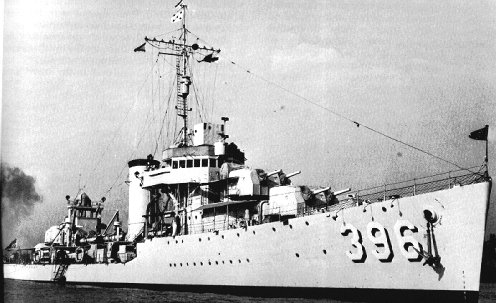
The U.S. Navy Somers-class destroyer USS Jouet (DD-396) is commissioned. Her first commanding officer is Commander Guy Wheeler Clark, USN.
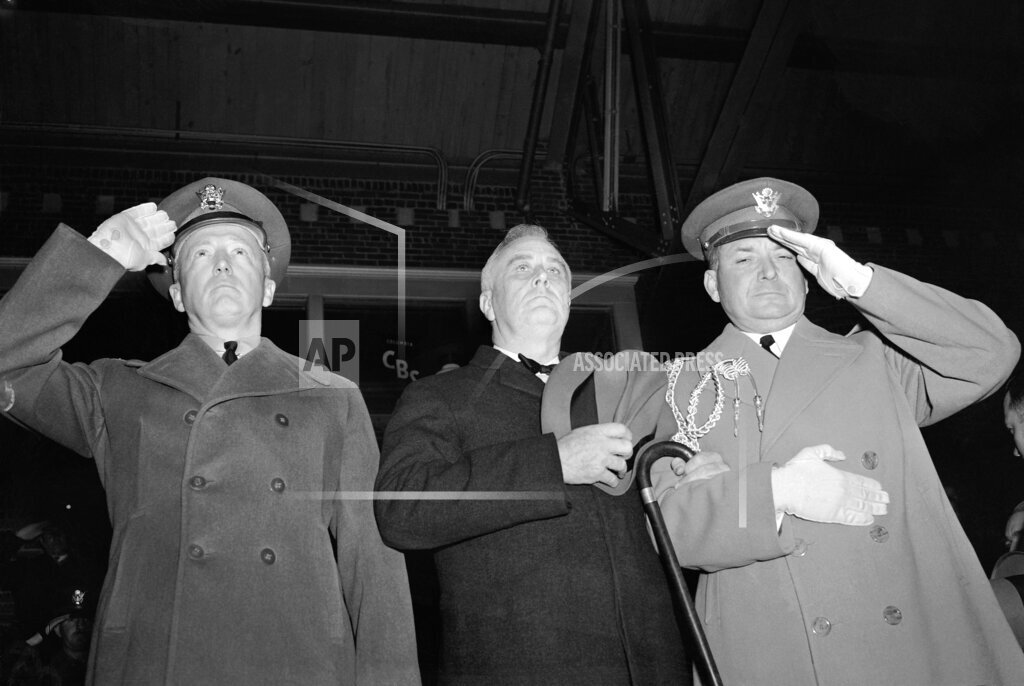
Following shakedown training which took Jouett to England and Ireland, the ship returned to Norfolk, Virginia on 29 April 1939 and began operating on the Neutrality Patrol along the East and Gulf Coasts. She stood out of Pensacola Bay on 15 February 1940 as one of the escorts for Tuscaloosa, carrying President Franklin D. Roosevelt on a cruise through the Gulf of Panama, returning to Pensacola, Florida on 1 March 1940. Jouett then set course for the Panama Canal and the Pacific, arriving Pearl Harbor for duty on 10 April 1940.
The destroyer remained in Hawaiian waters during the next year exercising with aircraft carriers and perfecting tactics. Sailing on 18 April 1941, Jouett accompanied Yorktown through the canal to Cuba, proceeding from there to Port of Spain, Trinidad, on 19 May. The ship then joined a cruiser and destroyer force under Rear Admiral Jonas H. Ingram charged with guarding against German surface or submarine attacks on American shipping. Jouett was at Port of Spain on 7 December 1941 when the Japanese attack on Pearl Harbor brought America into the war. The ship then began offensive antisubmarine patrols between Brazil and Africa, helping to keep the ocean supply lines open. She accompanied Army engineers to Ascension Island on 30 March 1942, where an airfield was built. Jouett convoyed the oil tankers from Trinidad south during the months that followed, often attacking submarines with depth charges. In December 1942, the ship returned to Charleston, South Carolina for repairs, but by 21 January 1943 she was back in Natal harbor, Brazil.
Jouett received President Getúlio Vargas of Brazil on 27 January 1943, providing quarters for him and his party during conferences on board Humboldt with President Roosevelt. Following the talks, which cemented relations between the countries and provided for closer naval cooperation, President Vargas departed Jouett on 29 January.
The veteran destroyer resumed her escort duties in February, and 14 May joined in the search for U-128 off Bahia, Brazil. Aircraft dropped depth charges on the U-boat and brought her to the surface where gunfire from Jouett and Moffett sent her to the bottom. The destroyer continued to serve with Admiral Ingram’s antisubmarine force, now 4th Fleet, through the rest of 1943. On New Year’s Day 1944 she joined Omaha for ocean patrol; and the ships intercepted German blockade runner SS Rio Grande, with a cargo of crude rubber. After the crew abandoned ship, Omaha and Jouett sank the German ship. This effective closing of the South Atlantic to German blockade runners was demonstrated even more forcefully on 5 January when patrol planes reported a strange ship identifying herself as Floridian. Intelligence identified her, however, as blockade runner Burgenlund. Before aerial attacks could begin Omaha and Jouett picked her up on radar and closed in. Scuttling charges and the cruiser’s gunfire sank her just after 17:30.
Jouett returned to Charleston once more in March 1944 and engaged in training operations in Casco Bay, Maine, before sailing for England in convoy on 16 May 1944. There she joined a Reserve Fire Support Group for the invasion of France. Jouett arrived off Omaha Beach on 8 June, escorting coastal steamers with support troops embarked. She repelled an air attack that day, and until 21 June screened British heavy cruisers during shore bombardment and provided antisubmarine screen for the Omaha Beach transport area. The second front established, Jouett escorted convoys to and from the Firth of Clyde until 12 July 1944 when she sailed with a convoy for Algeria.
The destroyer arrived at Oran on 21 July to prepare for the next major European operation, the invasion of southern France. Departing Naples on 14 August, Jouett arrived off the Delta assault area next day and, as troops landed, acted as command ship of the Convoy Control Group charged with the smooth routing and unloading of support troops. This duty continued until 3 September, after which the ship operated on patrol out of Toulon. In early October Jouett steamed off Cap Ferrat, giving gunfire support to American troops in the fighting ashore. She also destroyed mines off San Remo on 9 October, destroyed bridges, and covered Allied minesweeping operations in the area.
Jouett sailed from Oran on 31 December 1944 for repairs at Charleston. After refresher training in Casco Bay in April, the battle-tested ship made convoy voyages to England and Cuba before the end of the war on 15 August 1945.
She was decommissioned at Philadelphia Naval Shipyard on 1 November 1945, and was scrapped there in 1946.
Jouett received three battle stars for World War II service.
 History Diaries