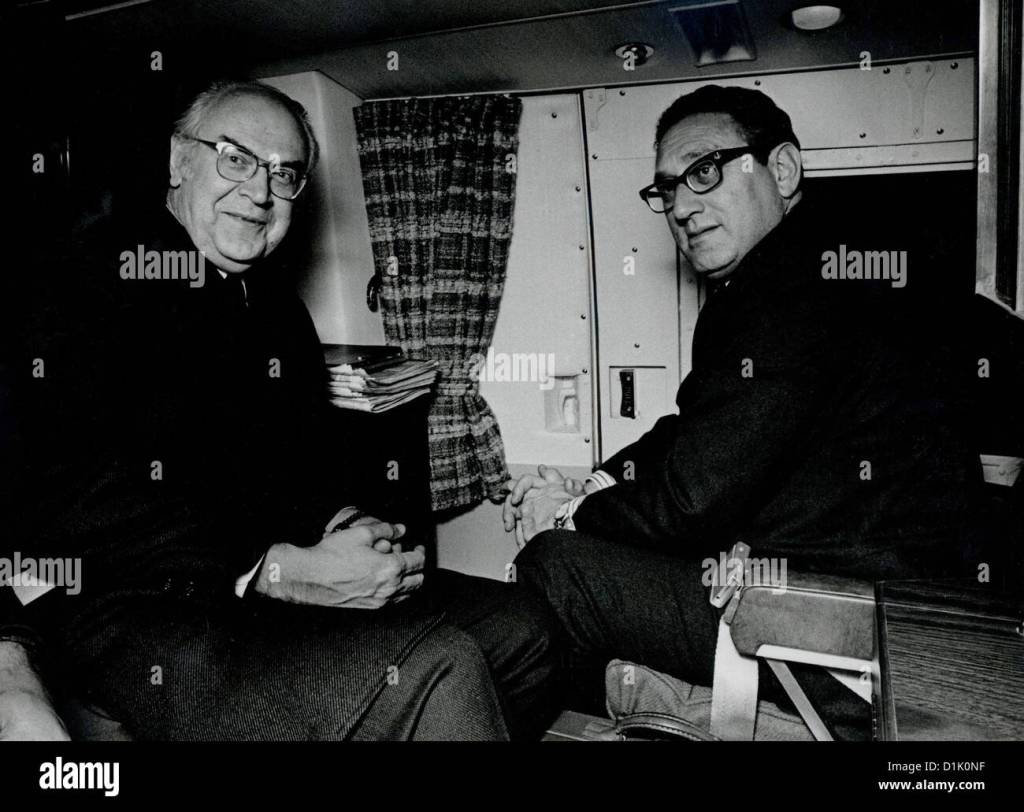
Israel Defense Forces troops began a full-scale withdrawal from the west bank of the Suez Canal. United Nations troops moved into the positions vacated by the IDF. Israeli forces began pulling out tanks, trucks and tons of other heavy equipment from the bridgehead they have occupied on the western bank of the Suez Canal since the October 24 cease-fire in preparation for the withdrawal to the new lines east of the canal specified in the Israeli-Egyptian agreement on the separation of forces. But no Israeli positions were actually given up.
There is optimism that the Suez Canal could be reopened by the end of the year. The biggest job, of clearing wrecks, could be done in six months, experts believe. Removing Egyptian military causeways and dredging accumulated silt would be quick by comparison.
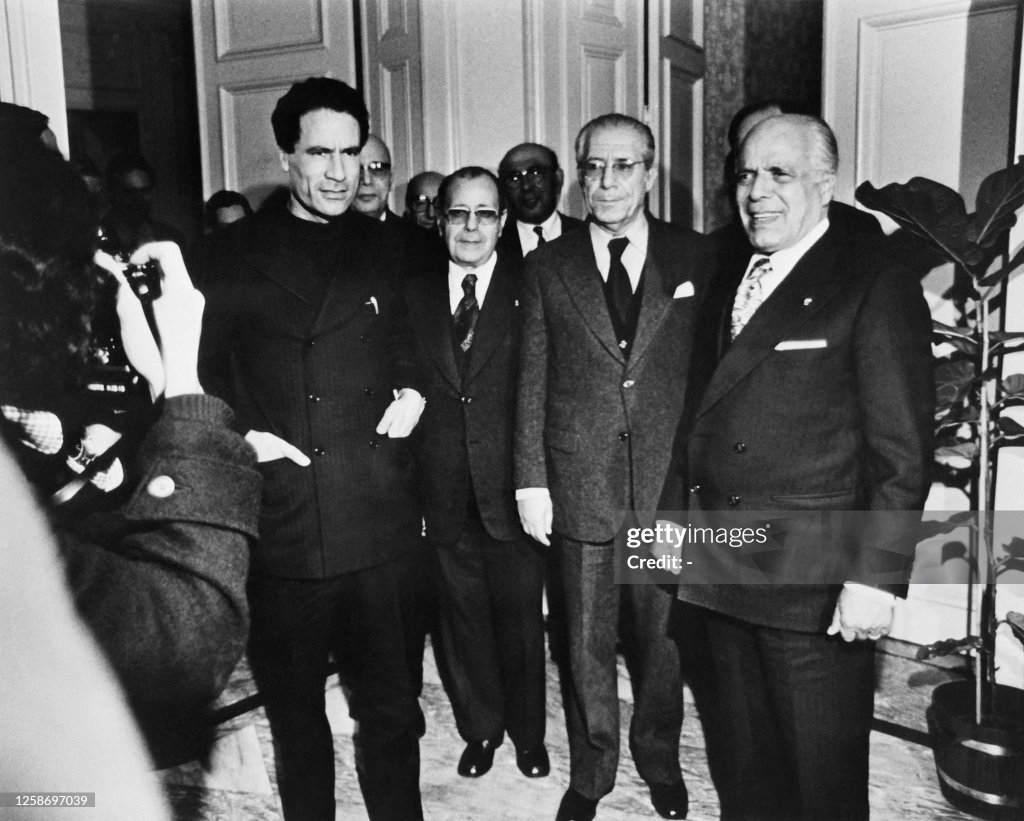
Colonel Muammar el‐Qaddafi, the Libyan head of state, flew to Geneva today and met with President Habib Bourguiba of Tunisia for further discussions on the projected merger of their two nations. Some Tunisian sources said they believed that the colonel had rushed to Geneva to urge Mr. Bourguiba either to press ahead with the union plan that was announced on January 12 or to drop it. Tunisia’s new Foreign Minister, Habib Chatti, said after the meeting that Tunisia’s constitutional procedures for a referendum on the merger had been discussed and that the vote could not be held for three or four months. The Foreign Minister said in reply to a question that Libya appeared to be ready to move faster into the union than did Tunisia. But he said that this was simply a question of Tunisian constitutional requirements that demanded more time than Libya needed.
The U.S. Department of State announced that Gerald Emil Kosh, a civilian U.S. Department of Defense employee who had been captured on January 20 after the Chinese landing on Pattle Island during the Battle of the Paracel Islands, was being held by the People’s Republic of China. China has informed the United States that she is holding Gerald E. Kosh, an American Embassy observer who was reported missing last weekend during a battle in the Paracel Islands between Chinese and South Vietnamese forces, the State Department said. Mr. Kosh, 27 years old, is a civilian attached to the embassy in Saigon.
After meetings with Defense Attaché Office (DAO) commander General John E. Murray, South Vietnamese General Cao Văn Viên, chairman of the Joint General Staff and his head of logistics General Đồng Văn Khuyên ordered cuts to ammunition and fuel supplies for all units due to budgetary constraints.
The Soviet Union successfully tested its first multiple independently targetable reentry vehicle (MIRV) missile, the UR-100N, referred to by the Western alliance NATO as the SS-19 Stiletto intercontinental ballistic missile (ICBM). The first launch, and another one the next day, were fired from a site deep with the USSR and traveled to a test range 4,500 miles (7,200 km) away, about 850 miles (1,370 km) north of Midway Island in the Pacific Ocean. The U.S. Department of Defense disclosed the existence of the Soviet missile, which rivaled the older LGM-30G Minuteman III missile deployed by the U.S. since 1970.
South Vietnam proposed today that Saigon and Hanoi establish diplomatic relations “in a new effort to break the deadlock and to explore all the paths susceptible to lead to peace. At a news conference on the eve of the anniversary of the signing of the Paris cease‐fire agreement, South Vietnam’s Foreign Minister, Vương Văn Bắc, said his country was making the proposal in the hope that “the two sides can also discuss all measures aiming at reducing the tension in South Vietnam, as well as at defendng the long‐range interests of the Vietnamese nation.”
Foes of Prime Minister Eric M. Gairy of the Caribbean island of Grenada are fleeing to Trinidad 90 miles to the south. The 133‐square‐mile island, which is scheduled to become independent from Britain on February 7, has been torn by demonstrations against Mr. Gairy for several weeks. On Monday, the protests resulted in a street battle between the Prime Minister’s opponents and supporters. The troubles flared up in December after the police allegedly beat up several members of a moderate opposition group called the New Jewel Movement. The father of a leader of the group died during Monday’s disorders, and an unconfirmed report that he had been shot fed the protests further. Information from Grenada is scarce because cable and telephone workers have cut communications with the island in one of several strikes that have contributed to the turmoil of the last few weeks.
The Perónist‐controlled Congress today passed a controversial terrorism bill virtually doubling ‘prison sentences for kidnappers, conspirators and armed extremists and turning over internal‐security functions to the federal police rather than local law‐enforcement officers. Although the new legislation does not provide the death penalty for any crimes, its provisions covering “illicit associations” and “incitement to violence” are defined so ambiguously that its opponents fear that it may be used to stifle legitimate political dissent as well as left‐wing extremism. Congress acted only eight months after repealing similar measures that had been imposed by the previous regime.
Negotiations between West Germany and the United States on a new agreement aimed at offsetting the cost of maintaining American troops here have been at a standstill since November. West German officials say they are waiting for the United States to make the next move toward obtaining a new two‐year agreement for German outlays to offset the drain on the American balance of payments resulting from the troop costs. But the West. Germans are not pressing, for the move, and some resent what they regard as demands for “mercenary payments” for the 229,000 American soldiers and airmen here.
Prime Minister Bülent Ecevit of Turkey formed a new coalition government between his Republican People’s Party (CHP) and the National Salvation Party (MSP).
France plans a new series of nuclear tests around Mururoa Atoll in the South Pacific again this year despite sharp protests from New Zealand, Australia, and other nations, the Maritime Safety Agency reported today.
Dr. Addeke H. Boerma, director general of the Food and Agriculture Organization, said that the drought in the sub-Sahara region was worse this year than ever before, while pledges of aid had fallen far short of total needs. He told newsmen in Nigeria that “it is necessary to ask again for the world to help.”
Simultaneous strikes began in 44 towns in the Gujarat state in India in conjunction with the Navnirman Andolan movement. Clashes with police took place in 33 cities. The riots caused by the rise in food prices would spread from Gujarat to Maharashtra, and then to Bihar in March. The Indian Army was called in to restore order on January 28 after rioting had killed 42 people in Ahmedabad.
Climate changes, notably a southward migration of the monsoons, combined with a sharp reduction in fertilizer production, threaten food supply for a considerable part of the world population. The southward shift is believed to have caused the five-year drought in Africa and is blamed for severe droughts in India and Latin America.
America is facing a possible wheat shortage. President Nixon has suspended limits on wheat imports, though White House spokesman Gerald Warren denied the action was taken because of the shortage. The quotas will remain suspended until June, when a bumper crop of U.S. wheat is expected.
The United States has already committed over a billion bushels of wheat to Russia and other nations, but the number of available bushels in the U.S. is less than the amount which has been committed. Bread prices are almost certain to rise because Canadian wheat prices will rise also.
President Nixon’s tax deductions for the donation of his vice-presidential papers to the national archives is under scrutiny. The deed of the gift may have been backdated, at least that possibility is being investigated by California Secretary of State Jerry Brown. Brown says he’s convinced the deed was backdated.
Judge Gerhard Gesell requested that President Nixon explain his reason for invoking executive privilege after the Senate Watergate Committee subpoenaed five White House tapes involving conversations between John Dean and the President. The judge quashed another Watergate committee subpoena. The Watergate hearings will resume next week, with the major networks rotating live coverage.
House Republican leader John Rhodes challenged members of the House Judiciary Committee to disqualify themselves from voting on President Nixon’s impeachment if they have already made up their minds before the articles of impeachment have even been drafted.
The Senate Watergate committee plans to focus its hearings next week on allegations that John N. Mitchell, the former Attorney General, agreed to allow Howard R. Hughes to purchase Las Vegas hotel and casino in return for the $100,000 cash contribution that associates of Mr. Hughes gave to Charles G. Rebozo, a friend of President Nixon. Several committee lawyers acknowledged today that the connection between the $100,000 and the Mitchell decision was “tenuous,” especially since no evidence had been gathered to show that Mr. Mitchell knew specifically of the contribution. But the staff members point to a chain of evidence suggesting that Mr. Mitchell bypassed normal antitrust channels in granting the Hughes interests permission to buy the Dunes Hotel.
Vice President Gerald Ford said that he doubts Republicans will suffer in congressional elections because of Watergate, as Senator Barry Goldwater predicted. In Johnstown, Pennsylvania, Ford spoke in support of Republican candidate Harry Fox. Fox hopes to win the special election for the seat which was made vacant by John Saylor’s death.
Ford said that he doesn’t plan to view the documents that would supposedly exonerate President Nixon from all involvement in Watergate, and he will take Senator Hugh Scott’s word and the President’s. The Vice President still supports the President, but is doing so now with less flamboyancy than before. However, Ford’s strong defense of President Nixon drew criticism from Democratic party chairman Robert Strauss.
The leaking of secret grand jury testimony would become a crime under a recommendation of Chief Judge John J. Sirica and his colleagues on the Federal District Court for the District of Columbia. The 15 judges have called on Chief Justice Warren E. Burger as chairman of the Judicial Conference of the United States„ to put into motion machinery to drift legislation creating this new deterrent to violation of the sanctity of the grand jury. In a joint statement, the Federal judges indicated that the only weapon available against leaks, citing and punishing a party for contempt, was not effective enough to deal with the practice. Instead, they called fo “statutory Criminal sanctions over and above contempt.” The judges asked Chief Justice Burger to have a judicial conference committee draft the bill creating the new crime for submission to Congress. The conference provides such functions for the Federal judiciary.
U.S. Army Lieutenant Colonel Anthony Herbert filed a $44 million libel suit against CBS for portraying him as a liar in connection with his allegations about a military cover-up of Vietnam War atrocities.
Lawyers for Howard R. Hughes successfully forestalled today the issuance of a bench warrant for their billionaire client — at least until next Wednesday. Mr. Hughes, who has not appeared in public in more than two decades, was due in Federal District Court here today to be arraigned on criminal charges of stock manipulation, conspiracy and wire fraud. The charges, which relate to Mr. Hughes’s 1968 purchase of Air West, are contained in a Federal grand jury indictments handed up December 27. The reclusive Mr. Hughes, as expected, did not appear in court but remained in his hotel hiding place in the Bahamas. Although a battery of lawyers appeared on his behalf, Judge Bruce Thompson ruled that none was his official representative because none had submitted a signed authorization from Mr. Hughes.
George P. Shultz reportedly has finally decided to resign as Secretary of the Treasury. One of his friends predicted yesterday that Mr. Shultz would be out of the Government by April 1. Another mentioned “the Ides of March.” The assumption was that Mr. Shultz would not leave until Congress had received the new budget, the President’s Economic Message, a proposal for a new tax on oil profits and related testimony. Mr. Shultz declined to comment on his reported decision to leave the Nixon Administration. He said there had been so many rumors of his resignation that he had decided to say nothing about any of them.
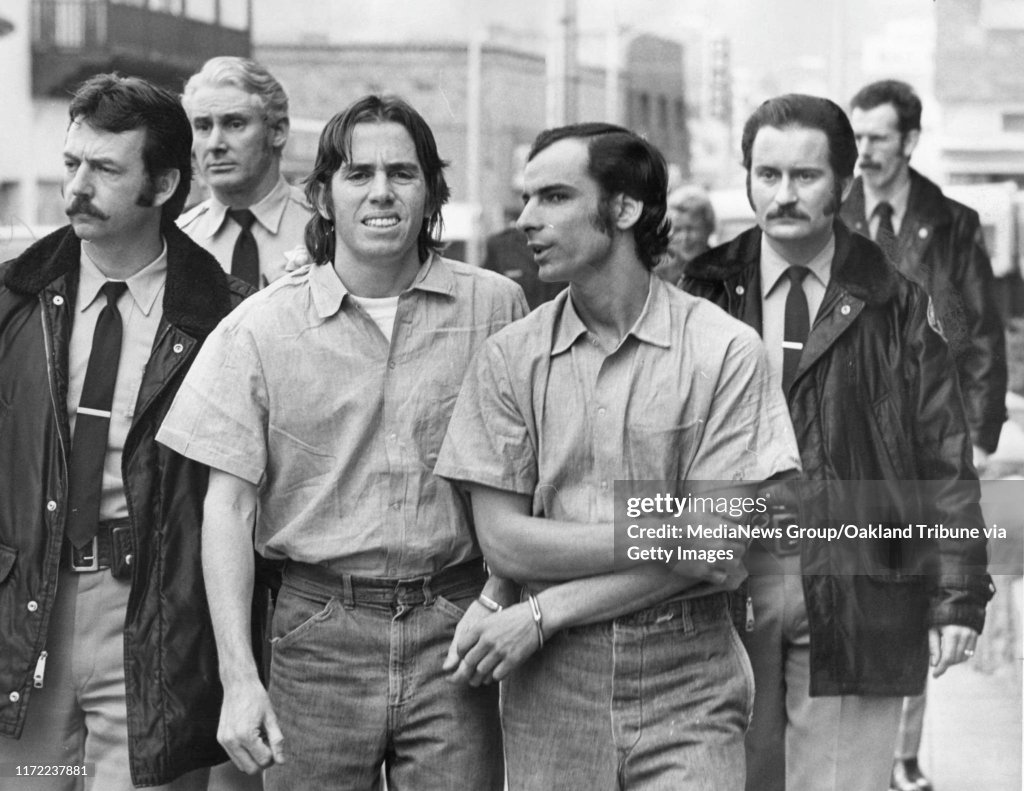
In Minnesota, American actor Marlon Brando attended jury selection at the trial of American Indian Movement leaders Dennis Banks and Russell Means to show his support for the defendants, who had been indicted on charges related to the 1973 occupation of Wounded Knee.
Dr. Christiaan Barnard transplants 1st heterotopic heart transplant (adding donor heart without removal of old).
Yale University announced that the Vinland map, which purportedly showed the portion of North America explored by Leif Erikson in the 11th century, was a 20th-century forgery.
Ray Kroc, fast-food entrepreneur (McDonalds), buys the Padres for $12 million.
Dow Jones Industrial Average: 859.39 (-3.69, -0.43%).
Born:
Roman Yegorov, Russian Olympic swimmer (2 silver medals, 1996), in Leningrad, Russian SFSR, Soviet Union.
Phill Jones, New Zealand Olympic and professional basketball player; in Christchurch, New Zealand.
Adam Meadows, NFL tackle (Indianapolis Colts, Denver Broncos), in Powder Springs, Georgia.
Dan Serafini, MLB pitcher (Minnesota Twins, Chicago Cubs, San Diego Padres, Pittsburgh Pirates, Cincinnati Reds, Colorado Rockies), in San Francisco, California.
Igor Miladinović, Serbian chess grandmaster; in Niš, SR Serbia, Yugoslavia.
Claudelle Deckert, German actress and model; in Düsseldorf, West Germany.
Adam Bousdoukos, German actor; in Hamburg, West Germany.
Robert Budreau, Canadian filmmaker; in London, Ontario, Canada.
Died:
William Fawcett (stage name for William Fawcett Thompson), 79, American character actor.
Nora Holt, 89, American music critic, composer, singer and pianist, first African American to receive a master’s degree in music in the United States.
James Pope-Hennessy, 57, British biographer and historian, was beaten and stabbed to death in his West London apartment, in a midday attack by three men. Pope-Hennessy, known for “his disclosure of intimate royal secrets” in 1959 from the diary of Queen Mary, had been working on a biography of Noël Coward at the time of his murder. One of the killers said that the motive for the home invasion had been to search for a $150,000 advance that had been given to Pope-Hennessy for the Coward biography.
 History Diaries