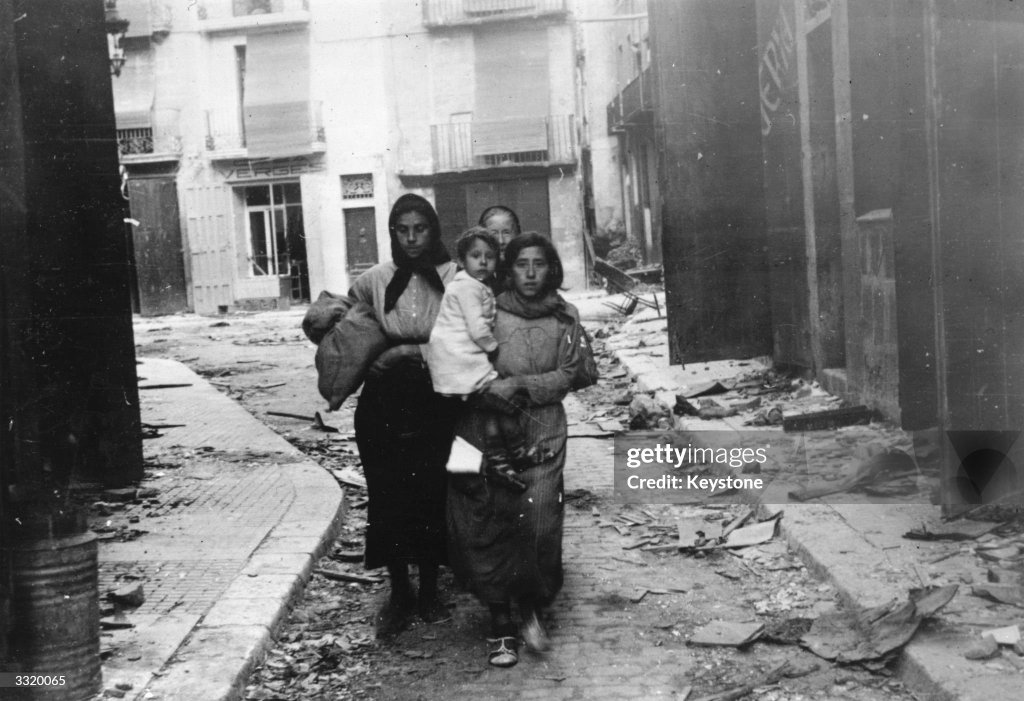
Spanish Nationalist forces were within three miles of Barcelona, Spain. At this point the Spanish Republican government, led by Dr. Juan Negrín, fled to Girona, Catalonia, Spain. The Republican troops in Barcelona continued to maintain a token resistance. Barcelona is placed under martial law as Franco’s forces close in; leaders flee. The Spanish government moves to Figueras.
General Franco’s troops swept up to the outskirts of Barcelona yesterday at their nearest point they were within a mile of the municipality. They captured an airport and while their bombers blasted the city their artillery hurled shells into it. Elsewhere in Catalonia the Insurgents also moved forward, reporting that the whole defense line had broken.
Republican (Loyalist) troops have failed to prevent Generalissimo Francisco Franco’s forces from crossing the Llobregat River. A colonel on General Franco’s headquarters staff told your correspondent the fate of Barcelona had been decided today. General Franco’s Fourth Navarre Division, commanded by General Camilo Alonso, this morning smashed down the last resistance of the Republicans. It is now crossing the Llobregat at Martorell, only ten miles northwest of Barcelona. From where this message was typed the writer could see the outskirts of Barcelona shimmering through a haze of sunshine. Constant bombardment by flight after flight of General Franco’s bombers has had its effect on the defenders, who have now completely crumbled. General Franco is master of the whole territory on the west of the Llobregat from Manresa down to the Mediterranean.
General Juan Yagüe’s Moroccan troops captured Barcelona’s airdrome at Prat de Llobregat and late this afternoon were within one mile of the suburbs of the city. No serious obstacle remained in their path.
The Legionnaires of the Moroccan Corps stormed the imposing rock citadel of Montjuich overlooking Barcelona, Spain, freeing 1,200 Political prisoners who had miraculously escaped execution.
The rebels’ northern column, commanded by General Garcia Valino, captured Manresa and cut the railway which leads to France. Manresa is an ancient town founded by the Romans and a modern center of the textile and chemical industries. The rebels crossed the Cardona River and advanced eastward from Manresa, cutting another highway to France. This left Barcelona only two main highways and the coastal railway leading northward to France. So sure were the rebels of quick capture of Barcelona that they already had set up a government for the city. Thousands of specially trained men were formed into a corps of “public order and police,” to be rushed into the capital on the heels of troops.
Rebel dispatches said General Franco had appointed a council of twenty-one men to take over the administration and that Miguel Mateu y Pla, a noted economist, was named rebel mayor of the city. If the rebels capture Barcelona they will hold thirty-eight of the forty-nine provincial capitals of mainland Spain. In such a case, rebel-held territory would have a population of about 16,000,000, with about 6,000,000 remaining in the separated government zones — northern Catalonia and central Spain. The provincial capitals remaining in government hands would be Girona (in Catalonia), Alicante, Almeria, Albacete, Cuenca, Ciudad Real, Guadalajara, Jaén, Madrid, Murcia, and Valencia.
In Barcelona itself the night and day air raids strained the nerves of the populace, which tried to carry on its normal activities. Many government ministries moved out of the city to the north.
In the light of these developments military experts in Paris foresaw a quick mopping up of Catalonia and did not believe the rest of the Loyalist-held area could carry on a prolonged conflict by itself.
France will receive Spanish refugees and expects 100,000–500,000 along the Catalan border.
As refugees streamed northward toward France the Loyalist Foreign Minister asked that country to admit 150,000. The French were willing to accept large numbers if an international fund paid their expenses.
To provide for Americans seeking to get out of Barcelona the cruiser USS Omaha arrived off Caldetas.
The attention of French Deputies was turned to Rome, as Italy called a new class to the colors to ensure that France would not intervene in Spain.
Communists in Spain urge the United States to lift the arms embargo. 3,000 march for the same in New York’s Times Square.
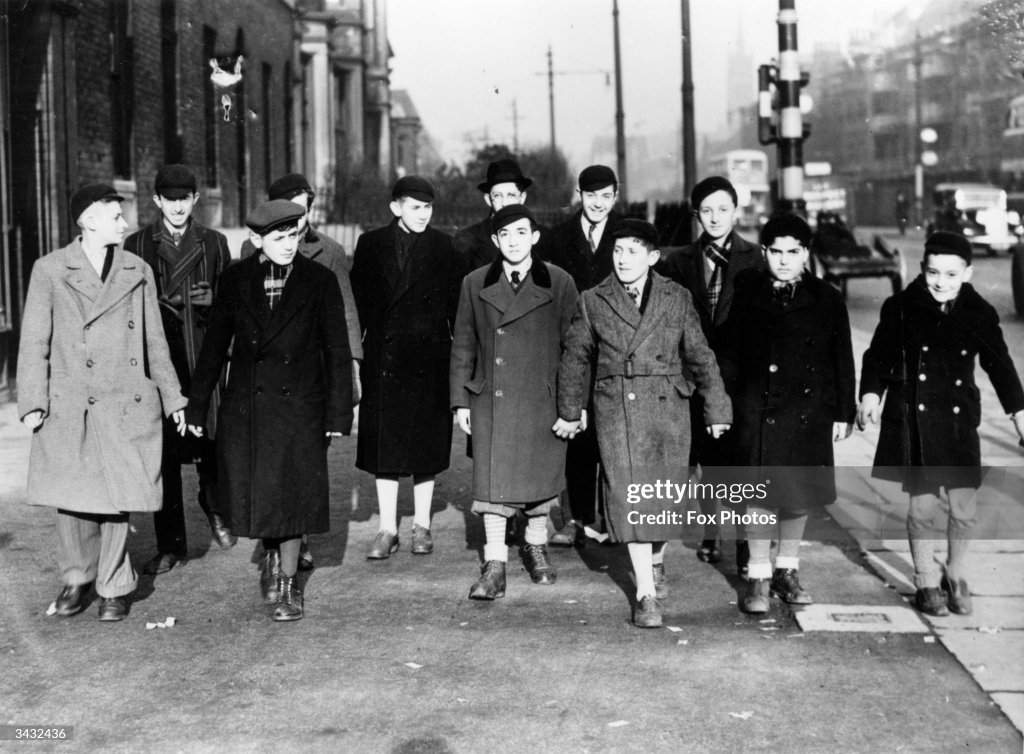
Hermann Göring commissions Security Police Chief Reinhard Heydrich is commissioned to effect the comprehensive emigration of Jews from German territory. Göring orders Reinhard Heidrich to establish the Reich Central Office for Jewish Emigration to organize and accelerate the emigration of the Jews. Heydrich names Gestapo chief Heinrich Mueller to head the department. Almost 80,000 Jews will leave Germany in 1939. Göring commissions Heydrich to bring the “Jewish question to as favorable a solution as present circumstances permit.”
Germany and Poland reach an agreement on Jewish deportees. One thousand Jews at a time may return to Germany to settle their accounts. A special proprietary account for this purpose will be set up in Germany for deposits only.
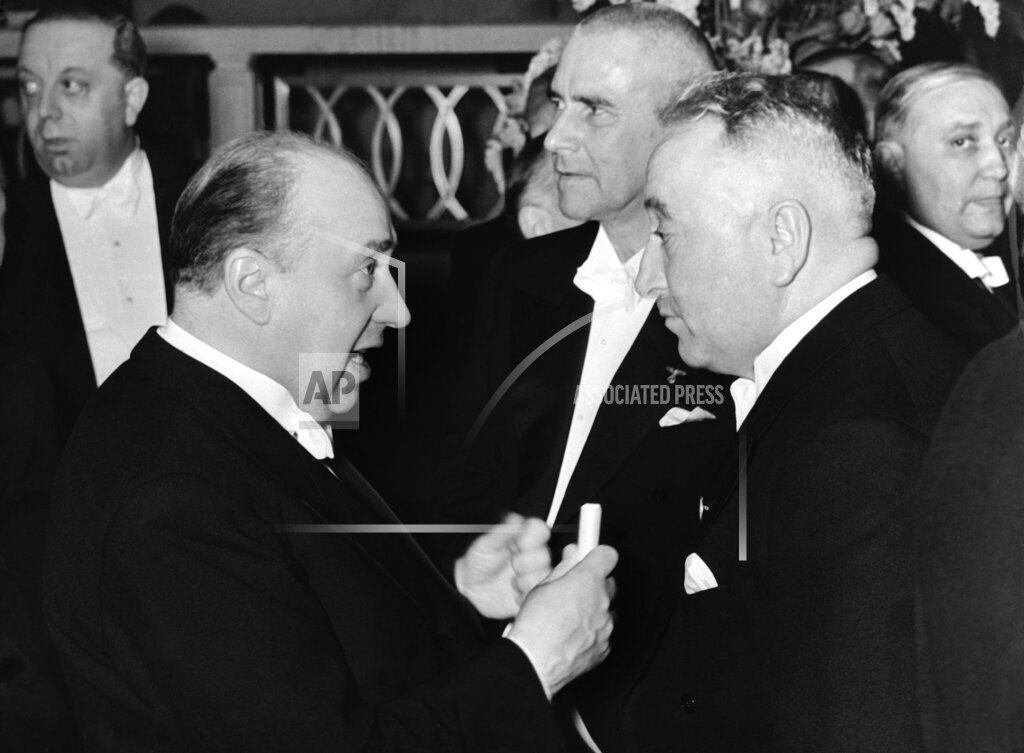
Colonel Josef Beck, Poland’s Foreign Minister, outlined in an interview the cardinal points of Poland’s current foreign policy. In reply to a question as to the basic principles that guided him in conducting the foreign affairs of Poland, he said: “The foremost principle of Polish foreign policy is the maintaining of good relations with our neighbors. That is why the Polish Government attaches such great importance to its relations with Germany and Soviet Russia. The second principle of our policy is loyal observance of the alliances binding Poland to France and Rumania. The third is to oppose any decision made in matters concerning Poland without consulting her. The concern of Poland in any problem depends largely upon its distance from the Polish frontiers.” He was then asked what role in Polish policy is played by the question of colonies. To this he replied: “Poland is interested in the colonial problem for two reasons — looking for territories for settlement and for raw materials for her industries. Poland is in consequence seeking at present to collaborate with nations that have colonial territories.”
Germany pressures Czechoslovakia to renounce treaties with Russia and France.
Prime Minister Neville Chamberlain urges the British to fill civilian defense unit vacancies.
The Arab Defense Party will not have a delegate at the London conference.
Charges of misrepresentation by administration spokesmen who surveyed Federal relief requirements for the immediate future were made by Senators Adams and Byrnes today, as sharp debate started in the Senate on the amount by which the Works Progress Administration should be financed from February 1 through the rest of the current fiscal year until June 30. While the Senate devoted a few hours to debate, intensive efforts were put forth by both sides to bolster their positions by appeals made in canvassing cloakrooms, corridors and Senators’ offices. It seemed possible that only one or two votes might decide the issue, and the administration played for time.
When it appeared that the Senate was prepared to vote on the question of whether the WPA should receive a deficiency appropriation of $875,000,000, as advocated by the administration, or the $725,000,000 to which the House and the Senate Appropriations Committees cut the estimate, Senator Barkley, the Democratic floor leader, moved for a recess tonight to block the vote. Senator Barkley evidently was playing for time in the hope that a flood of telegrams from city officials, local chambers of commerce, retailers, labor groups and others throughout the country would tilt the scales definitely in favor of restoring the appropriation to President Roosevelt’s estimate.
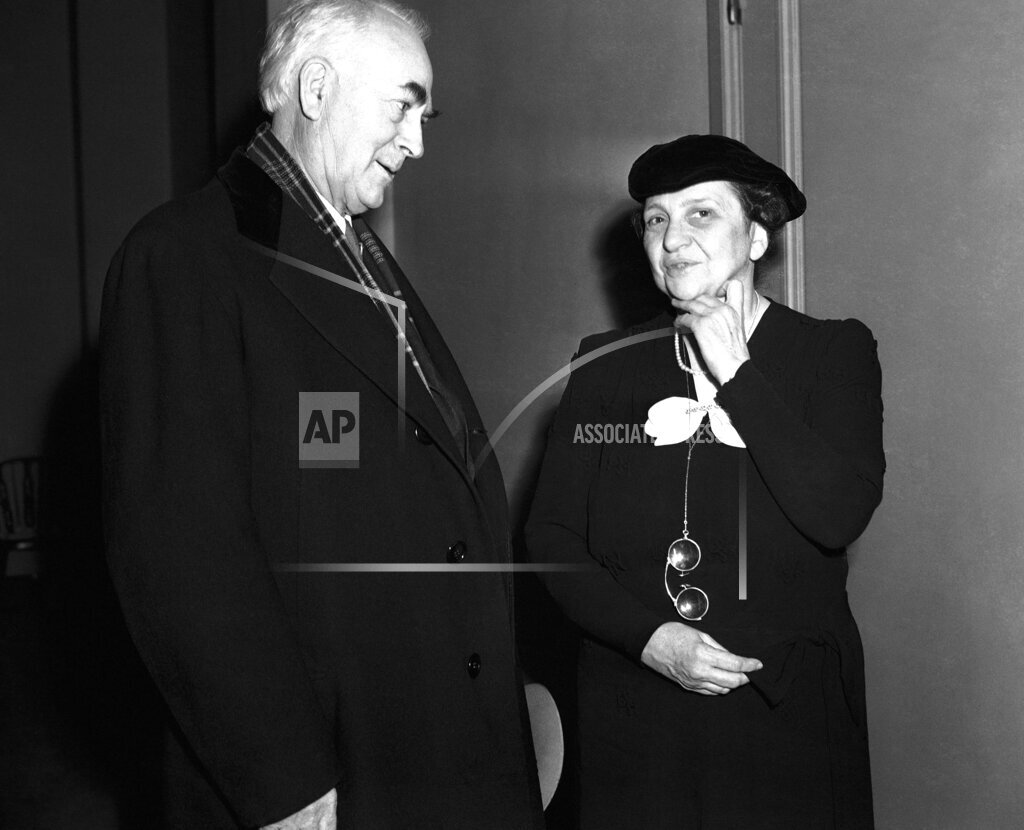
The impeachment of Secretary of Labor Frances Perkins and two of her aides for high crimes and misdemeanors in violation of the constitution was demanded on the House floor today by Representative J. Parnell Thomas (R-New Jersey). Thomas offered a resolution calling upon the House Judiciary Committee to investigate the official conduct of the three Labor Department executives and determine whether articles of impeachment should be reported to the House.
The principal high crimes and misdemeanors charged against Secretary Perkins and the two Labor Department officials are:
- Conspiracy to defraud the United States by failing, neglecting, and refusing to deport aliens who advocate overthrow of the government by force.
- Refusal to enforce the Immigration laws with specific reference to Harry Bridges, California labor agitator, alien, and communist.
- Conspiracy to release Bridges without bond after his arrest contrary to a constitutional provision that bail be provided.
- Deliberate omission of important evidence in the court proceedings to deport Joseph Strecker, confessed communist.
Vice President Garner and Postmaster General Farley are understood to be exerting their influence to prevent the offering of an anti-third term resolution in the Senate and action on it in this session. The activity of Mr. Garner in this matter is reported to have increased during the last few weeks. He saw several Senators today concerning the pending relief measures and is reported to have used the opportunity to argue against the advisability of injecting the third-term controversy into the situation. Senator La Follette let it be known today that he would not offer an anti-third-term resolution at this time. He sponsored one in 1928 when there was talk that President Coolidge might seek another term. He feels that the President has no present intention of breaking the tradition, but since Mr. La Follette. is as much opposed to a Presidential third term now as he was in 1928, he will get behind a resolution, it is said, if there is any sign that the President is sounding out sentiment on that topic.
Legislators introduce many bills on the Neutrality Act, increasing pressure on President Franklin Roosevelt.
Delegates of the Cause and Cure of War committee are expected to pressure Congress and President Roosevelt to ban war materials exports to Japan. First Lady Eleanor Roosevelt questions the ethics of hiding behind the Neutrality Act.
President Franklin Roosevelt introduces a national health care plan to Congress. Federal and state cooperation is needed, Roosevelt says, and the cost will be $850 million over 10 years.
At the end of another day of examination of jurors, eight had been chosen yesterday to hear the second trial of James J. Hines, Tammany district leader, on charges of being a part of Arthur (Dutch Schultz) Flegenheimer’s policy racket conspiracy. A ninth juror who had been sworn in was excused at the end of the day by Judge Charles C. Nott Jr. in General Sessions Court. To District Attorney Thomas E. Dewey and Lloyd Paul Stryker, chief of the defense, he had expressed his reluctance to serve because, he said, he had recently embarked on a new business enterprise and was fearful that being tied up on a jury for several weeks would cause him substantial financial losses.
About 250 clergy ask President Franklin Roosevelt to lift the Spanish arms embargo, fearing Franco’s success.
Men are encroaching upon women’s jobs, says the director of the Women’s Bureau of the Department of Labor.
Permatron, a magnetically controlled, gas-filled industrial tube, is introduced at an exhibition by Raytheon Products. Scientists expect many practical uses for the tube.
The movie “Gunga Din” premieres in Los Angeles. Cary Grant, Victor McLaglen, and Douglas Fairbanks star.
George Sisler, Eddie Collins, and “Wee” Willie Keeler are elected to the Baseball Hall of Fame by the BBWAA.
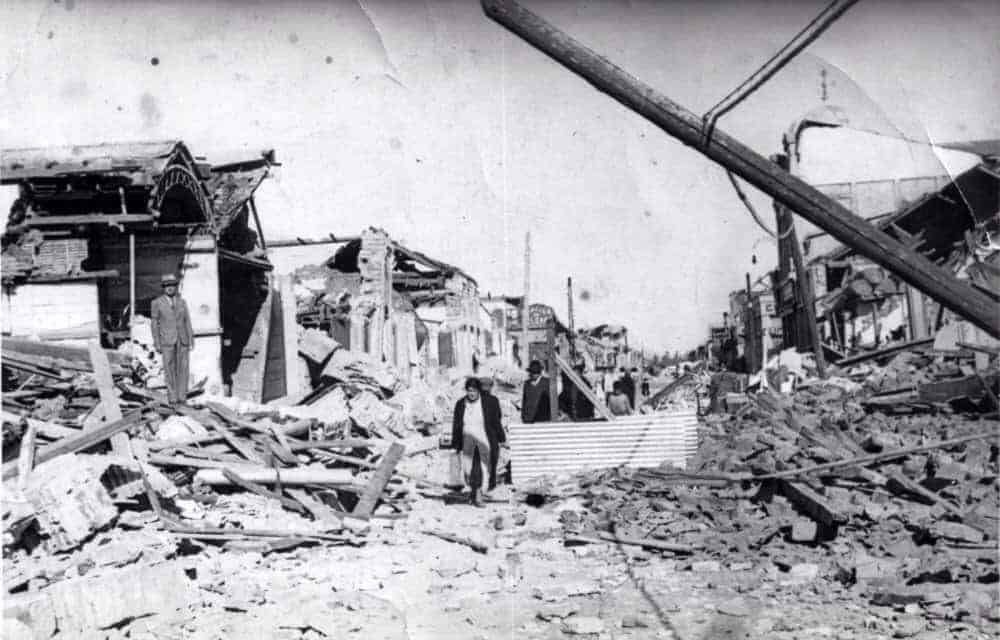
30,000 are reported dead in an 8.3 Richter Magnitude earthquake in Concepción, Chile. The first area to be hit was the town of Chillán, where several thousand houses were destroyed. It is believed that almost one in four of the citizens were killed, many trapped in collapsed buildings. Several minutes later the town of Concepción was violently hit. Here, nearly all of the buildings were completely destroyed. The bodies of the dead piled up and were later buried in mass graves. The quake started fires in Concepción that burned out of control for several days. Electricity and water were cut off, and the town’s infrastructure was all but destroyed.
Extraordinary precautions against terrorism in Shanghai on Saturday, the seventh anniversary of Japan’s attack on Chapel, China’s principal “National Humiliation Day” are being planned by the police and all foreign defense forces in the International Settlement and the French Concession and by the Japanese Army and Navy. The Japanese Army special intelligence section announced that it had obtained evidence of widespread plots for assassinations on Saturday of Chinese who are operating politically and economically with the invaders. Representatives of the Chinese Blue Shirts and Chinese Communists and student organizers were said to have been busy here for more than two weeks planning a reign of terror. Chinese newspapers published in the International Settlement and French Concession are advising all Chinese within these safe areas to fly the national and Kuomintang (Nationalist party) flags on Saturday, urging all places of business to close and ordering three minutes of silence and cessation of traffic at noon as a token of mourning for China’s many humiliations from Japan in the last forty-five years.
An estimated 30,000 civilians per day flee Chungking as Japanese forces continue bombing raids.
Dow Jones Industrial Average: 141.35 (+0.03).
Born:
Ray Stevens, American country, pop, and novelty singer-songwriter (“Ahab the Arab”; “Everything Is Beautiful”; “The Streak”), in Clarkdale, Georgia.
Sandy Valdespino, Cuban MLB outfielder and pinch hitter (Minnesota Twins, Atlanta Braves, Houston Astros, Seattle Pilots-Milwaukee Brewers, Kansas City Royals), in San Jose de las Lajas, Cuba (d. 2023).
Naval Construction:
The Sjøforsvaret (Royal Norwegian Navy) Sleipner-class destroyer HNoMS Odin is launched by the Horten Navy Yard (Oslo, Norway).
The Nihon Kaigun (Imperial Japanese Navy) Kagerō-class destroyer Hatsukaze (初風, “First Wind”) is launched by the Kawasaki Shipyards (Kobe, Hyōgo prefecture, Japan).



 History Diaries