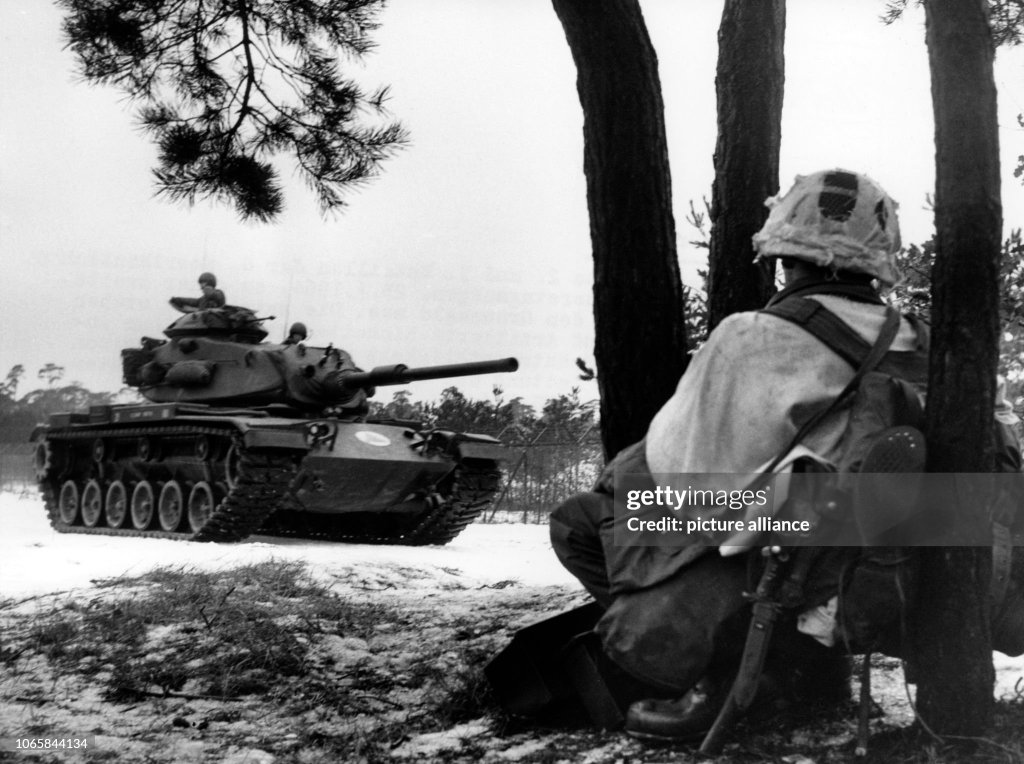
A Viet Cong battalion-size force carries out the first sizable action in Cà Mau Peninsula in two months when it makes a pre-dawn attack on Năm Căn, an isolated district capital. Communist battalions in the area are believed to number 450 men. United States military observers noted that it was the first major guerrilla initiative in the Cà Mau region since a government outpost at Chà Là was nearly overrun in a heavy battle last November 23. Since then, there has been an uneasy lull in the region. Năm Căn is a vulnerable district town 180 miles south of Saigon. Informed sources said the Communist force struck the town from south and east before dawn and fought the defenders for nearly two hours until driven off by air attacks. Communist troops used 60‐mm. mortars, 57‐mm. recoilless rifles and machine guns, killing 6 men and wounding 23. Two civilians also were killed.
President Johnson said today that the United States was prepared to engage in a “full and frank review” with Panama of all issues that have divided the two countries. In an appeal for renewed efforts for an equitable settlement of the two‐week‐old Canal Zone crisis, which has caused deep concern throughout the hemisphere, Mr. Johnson said he was certain that Panama and the United States “can remain good friends.” The President, in a statement read to newsmen, made no concession to Panamanians’ demand for explicit assurances that the United States was prepared to negotiate a revision of the treaties governing the Panama Canal. In agreeing to talk about outstanding problems, the President said, “we would set no preconditions, and we will enter talks with no preconceptions, and we hope Panama will take the same view.”
A full-scale Communist assault on the United States project for a mixed‐manned fleet of Polaris-armed surface ships is developing at the disarmament conference here. Semyon K. Tsarapkin, the Soviet delegate, said today that the project must be “swept away” before agreement could be reached to prevent the spread of nuclear weapons. Mr. Tsarapkin’s comment was made outside the 17-nation conference, but his idea was echoed at today’s session by Marian Naszkowski of Poland and Ladislav Simovic of Czechoslovakia. The Communist objection to the project is that it amounts to indirect proliferation of nuclear weapons, especially to West Germany.
“Whatever the arguments put forward to justify this plan, there is no doubt that if it comes into being, it would place nuclear weapons directly in the hands of those powers that at present do not have them,” Mr. Naszkowski said. The Polish delegate asserted that the project “has not been favorably received by many” members of the North Atlantic Treaty Organization. “The only real support for it,” he added has come from “people who want access to nuclear weapons and the possibility of using them.” The United States is discussing the project with seven of its allies — West Germany, Britain, Italy, Belgium, the Netherlands, Greece, and Turkey. A test is scheduled on a United States vessel.
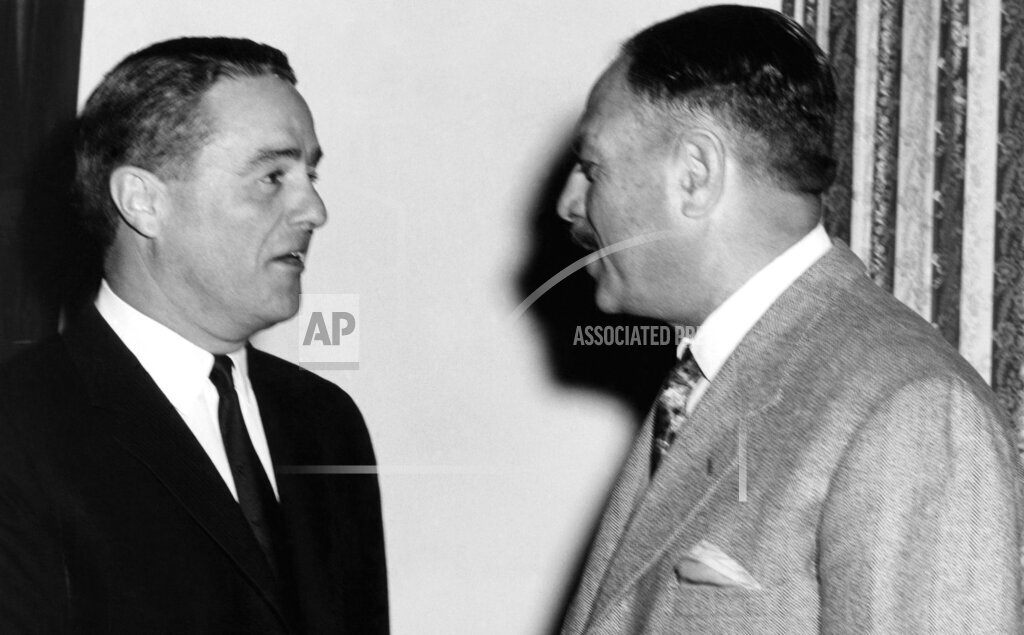
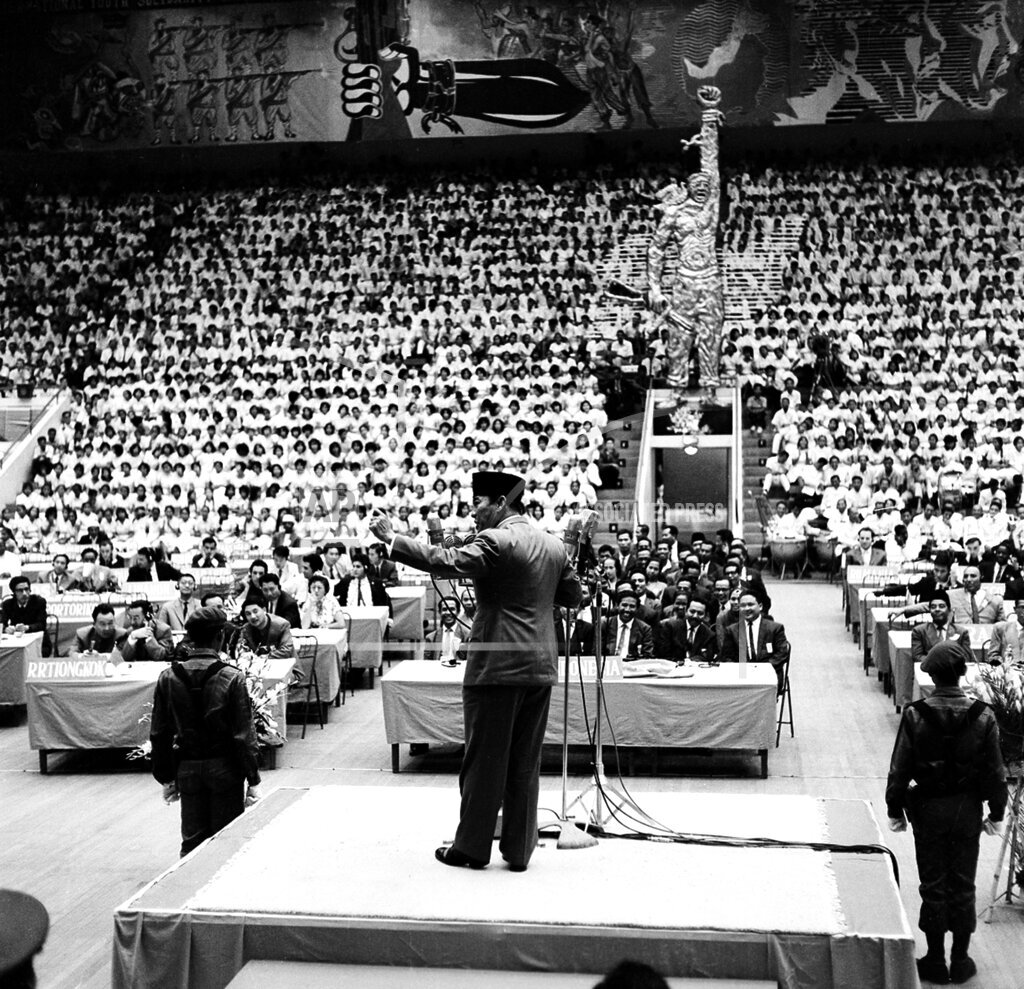
In Jakarta, Indonesian and Malaysian leaders agreed to a ceasefire, mediated by U.S. Attorney General Robert F. Kennedy. But President Sukarno of Indonesia has threatened to upset mediation machinery built up by Attorney General Robert F. Kennedy for a settlement of the Malaysian crisis. Mr. Sukarno vowed continued hostility toward Malaysia in a speech in Jakarta last night just after Mr. Kennedy left on a roundabout flight back to Washington with an agreement by Indonesia, Malaysia and the Philippines on steps toward peace. The mercurial Indonesian leader said at a rally of 15,000 cheering youths that his island nation would press its drive to crush Malaysia unless that anti‐Communist federation of former British colonies was changed to suit Indonesian tastes. “Onward, never retreat!” Mr. Sukarno said. “Crush Malaysia! Indonesia may change her tactics, but our goal will remain the same.” Tactically, Indonesia agreed to a cease‐fire with Malaysia in the undeclared jungle war on their 800‐mile‐long border in Borneo.
A move for closer links between Britain and the six members of the Common Market was rejected by France today at a ministerial meeting of the Western European Union. France turned back Britain’s appeal for a voice in talks among the six that could lead eventually to European political integration. The exchange took place at the opening session of a two‐day meeting or the Western European Union, which consists of Britain and the Common Market nations — West Germany, France, Belgium, Italy, Luxembourg and the Netherlands. After France vetoed Britain’s attempt to enter the Common Market a year ago, the union became a means of maintaining informal contact between Britain and the six.
A comment by U. Alexis Johnson, Deputy Under Secretary of State for Political Affairs, implying that the United States would come to the aid of Israel in case of Arab aggression, has caused protest and indignation in the Arab world. Mr. Johnson said in Washington this week that the United States followed a neutral policy in the Middle East, but that it would not stand idly by if aggression were committed. Newspapers in Damascus and Cairo also denounced the State Department stand. Special importance is attached to the American statement because it is the first authoritative statement of Middle East policy since President Johnson took office. In Damascus the Syrian Revolutionary Council was reported planning to invite all Arab Foreign Ministers to meet and formulate a joint Arab answer to Under Secretary Johnson.
The Soviet Union acknowledged today that there was a sharp drop last year in the rate of growth of consumer‐goods production. In an economic report for 1963, Moscow also disclosed that large‐scale slaughter resulting from a lack of feed had reduced the number of hogs owned by collective and state farms to half the 1962 total. The rate of growth for the entire economy was put at 5 percent, continuing a decline of 1 percent a year that began in 1960, when the rate of growth was 8 percent. A controversial estimate made public two weeks ago by the United States Central Intelligence Agency said that the Soviet Union’s rate of economic growth in the last two years was less than 2.5 percent annually.
Explosions toppled the minaret of the Bairaktar Mosque in Nicosia on the island of Cyprus tonight. The mosque is considered by the Turkish Cypriotes as the foremost Muslim shrine on the island. The mosque stands less than a quarter of a mile from Metaxas Square, the heart of the Greek Cypriote sector of the city. At least three blasts, heard throughout the city, brought down the sandstone blocks from which the pencil‐shaped minaret was built. A minaret is a mosque tower where the daily hours of prayer are cried out to the people by the muezzins, or callers. The new incident came as diplomats prepared to resume a London conference aimed at settling differences between the Greek and Turkish Cypriotes that led to heavy fighting last month.
Troops of Uganda’s army mutinied today, and British troops were flown in from Kenya. From reports received by the Commonwealth Relations Office here, it appeared that about 250 soldiers of the Uganda Rifles had mutinied at Camp Jinja on Lake Victoria and were holding their British officers and noncommissioned officers. The Ugandan soldiers also held the Minister of the Interior, Felix Onama, when he went to talk with them about pay increases, which seemed to be their main grievance.
Prime Minister Milton Obote declared in a statement tonight that the increases had been granted and that Mr. Onama was returning to give him a report. “There was no mutiny,” said the Prime Minister’s statement, which was read over the Kampala radio. “The situation is completely normal. The whole army is back in the barracks, and all troops are loyal to the Government.” The statement asked the people not to panic and asked that offices and shops open tomorrow. The British troops were requested as a precaution, the statement added, and it will not be necessary to have their services for long. Uganda is the third former British possession in East Africa to be the scene of an upheaval in the last 11 days.
There is serious concern in the Congo for the lives of several American missionaries, whose station at Kandale in rebellious Kwilu Province was seen today to have been burned to the ground. The pilot of a low‐flying plane reported that there was no sign of life. Seven adults and two small children were missing. Moreover, according to unconfirmed reports reaching here, a Belgian Roman Catholic mission was attacked nearby and two or three priests were massacred. The Americans belong to the Congo Inland Mission, an evangelical Protestant group with headquarters in Elkhart, Indiana. Two days ago, missionaries in Leopoldville lost radio contact with the mission at Kandale. Today a small plane was sent to fly over the area. The pilot reported that all the mission buildings — including two schools, one recently completed — were burned to the ground.
The theft from a mosque in Kashmir of a hair revered as a relic of the Prophet Mohammed has had far greater political than religious repercussions. The dissatisfaction of Kashmiris with their local government, but apparently not with the Indian national Government, found expression in protests and riots that followed the theft. The Indian Government has emphasized that this violence did not take a sectarian religious turn in Kashmir. The big Muslim majority there seems to have shown no animus toward the Hindu minority.
Indeed, the indications are that main targets of the arson and looting that followed the disappearance of the relic were the extensive business interests of Bakshi Ghulam Mohammed, former Prime Minister of the state, and of his brother and political right hand, Bakshi Rashid. Both are Muslims. Kwaja Shamsuddin, the present state Prime Minister, is a henchman of the Bakshis and was put in office because they supported him in a caucus of the National Conference. That is the governing party in the Indian‐controlled two‐thirds of the state of Jammu and Kashmir.
Prime Minister Jawaharlal Nehru appealed to the people of India to “maintain calm and refuse to be provoked” by the news of religious killings in East Pakistan. In his first public statement since he fell ill two weeks ago, Mr. Nehru called for patience “in keeping with the age‐old tradition of tolerance which is our most precious heritage.”
Pope Paul VI will send a leading Roman Catholic Cardinal to the Middle East within the next few days to establish further contacts with the Eastern Orthodox Church, according to Vatican sources. They said Giacomo Cardinal Lercaro, Archbishop of Bologna, had been chosen for the mission.
Pope Paul VI instituted the World Day of Prayer for Vocations.
24th Amendment to the United States Constitution ratified, barring poll tax in federal elections. The South Dakota Senate voted, 34-0, to ratify the 24th Amendment to the United States Constitution, prohibiting the use of poll taxes in elections for federal office. In so doing, South Dakota became the necessary 38th of the 50 states to make the amendment effective, since approval by at least three-fourths of the states was necessary to amend the U.S. Constitution. The amendment would subsequently be ratified by Virginia (1977), North Carolina (1989), Alabama (2002) and Texas (2009), but eight states did not ratify it after it became effective, including Mississippi, (which voted to reject ratification in 1962), and Arkansas (which still had a poll tax law, but did not enforce it).
The Senate Finance Committee approved the Administration’s tax reduction and reform bill today. The vote was 12 to 5. As revised by the committee, the measure would give individuals and corporations about $11.5 billion in annual tax relief. Well over half the cuts would apply to income received this year. The cuts would be fully effective on 1965 income. Senate debate on the bill, which was passed by the House of Representatives last September 25, is expected to start about February 3. Democratic leaders hope to steer it to passage by February 11. In a hectic, final round of voting, the committee approved amendments for repealing $455 million in Federal sales taxes on articles ranging from jewelry and furs to musical instruments purchased for school bands. Then, under pressure from the White House, it deleted all those amendments. The committee decided to retain the 10 percent Federal tax on theater tickets. On Monday it had approved an amendment to repeal it.
Early enactment of “a realistic and crisis‐proof Presidential succession law” as a memorial to President Kennedy was urged today by Senator Frank E. Moss. “Let us not lose the momentum provided by our late tragedy,” the Utah Democrat said at a Senate Judiciary subcommittee hearing on various proposed constitutional amendments aimed at orderly transition of executive Dower. Mr. Moss advocated a plan under which a vacancy in the office of Vice President would be filled by nomination by the President and confirmation by the houses of Congress. The nomination would be made within 30 days after the elevation of a former Vice President upon the death of a President.
Senator Jacob K. Javits offered his own proposal calling for the election of a Vice President by a joint session of Congress, but giving the President the power to reject its choice. The New York Republican told the subcommittee he had amended his previous proposal on the subject to add, in addition to election by Congress a requirement that the Congressional election be made “by and with the advice and consent of the President.” He said this would assure that in electing a Vice President, Congress would give “considerable weight to the views of the President.”
Senator Barry Goldwater said today that he could sense widespread indecision among New Hampshire voters over his candidacy for the Republican Presidential nomination. For the third day, the Arizonan answered dozens of questions from adults and students who seemed eager to compare what he said with their often-vague impressions of just how conservative he was. Mr. Goldwater said little that he had not said or written in the past, but his campaign performance was extremely arresting, nonetheless. He suggested new military attempts to oust Communism from Cuba. He indicated he would favor American withdrawal from the United Nations if Communist China were admitted. And he suggested that medical care for the aged under Social Security would undermine the American family and filial love.
He also said that some people did not want to work. He asserted that the nuclear test ban treaty made it impossible to test the reliability of United States guided missiles and that Secretary of Defense Robert S. McNamara had destroyed more military morale than any of his predecessors. In addition, he declared that $5 to $7 billion a year could be trimmed from public spending and that trends toward “handouts and circuses” were threatening the United States with a fate comparable to that of Rome or ancient Egypt. On the other hand, he praised a number of Democratic policies, including President Johnson’s handling of the Panama crisis, and seemed indifferent to any political uses that could be made of this support. Senator Goldwater gave firm answers to his critics, mostly college students. He told one, “If some of these colleges you fellows go to would start paying attention to the Constitution, I would feel safer about the future of the country.”
President Johnson pictured as innocent today his receipt of an expensive stereophonic phonograph from Robert G. Baker, the former secretary of the Senate majority whose business dealings are under investigation here. Referring to the stereophonic set as a gift of “the Baker family,” the President said that “we had exchanged gifts before.” The President also gave an account of the purchase of $200,000 of insurance on his life after his heart attack in 1955. But he did not comment on charges that have been made in the Baker investigation that the agent who sold the insurance was forced to buy advertising on the Johnson family television station.
Mr. Johnson, turning from a foreign policy statement on Panama to the Baker case, surprised White House reporters with his remarks. He left the room where he was speaking before they could question him. Mr. Johnson’s unexpected remarks were the first that he has made on the Baker case, a major topic of conversation in Washington since last fall. Mr. Baker was the Democratic secretary while Mr. Johnson was the Senate majority leader, and was widely regarded at that time as Mr. Johnson’s protégé. Mr. Baker was forced to resign his post when charges of improper use of his influence were raised against him.
Richard M. Nixon said last night that if a deadlock developed at the Republican convention, he would accept a draft as the Presidential candidate. The former Vice President, currently the leading contender for the nomination in many public opinion polls, said he did not expect a deadlock to occur. But if the party offered him the opportunity to run again, he said, “I would accept it.” During a televised interview with Walter Cronkite on the Columbia Broadcasting System network, Mr. Nixon also left himself open for a draft as the Vice‐Presidential nominee. He classified the position as the “second office in this land,” and added that no responsible public official, including himself, could turn it down.
A New York civil‐rights demonstrator who went to jail for 10 days rather than pay a $50 fine was released yesterday from the Women’s House of Detention. Standing in the morning sunlight outside the jail at 10 Greenwich Avenue, the woman, Mrs. Elaine Bibuld, said: “I never regretted my choice.” She saw in the fact that nearly all her fellow prisoners were, like herself, Blacks, an indelible mark of misery among them, missed opportunities for a useful life, and discrimination. With her at the interview were her husband and a half‐dozen members of the Brooklyn chapter of the Congress of Racial Equality. It was at a CORE demonstration at the Downstate Medical Center in Brooklyn last July that the Bibulds were arrested for disorderly conduct.
Secretary of Defense Robert S. McNamara plans to turn over certain public relations duties of the military services to his Assistant Secretary of Defense for Public Affairs. The plan is intended to improve efficiency, eliminate duplication and forestall interservice battles such as the latest one between the Army and Air Force over the Army’s experimental air assault division at Fort Benning, Georgia.
The Museum of History and Technology, now referred to as the National Museum of American History, opened in Washington adjacent to the Smithsonian Institution. On the first Sunday after the opening, more than 57,000 people visited the new museum, and more than 2,510,672 had visited by June 30.
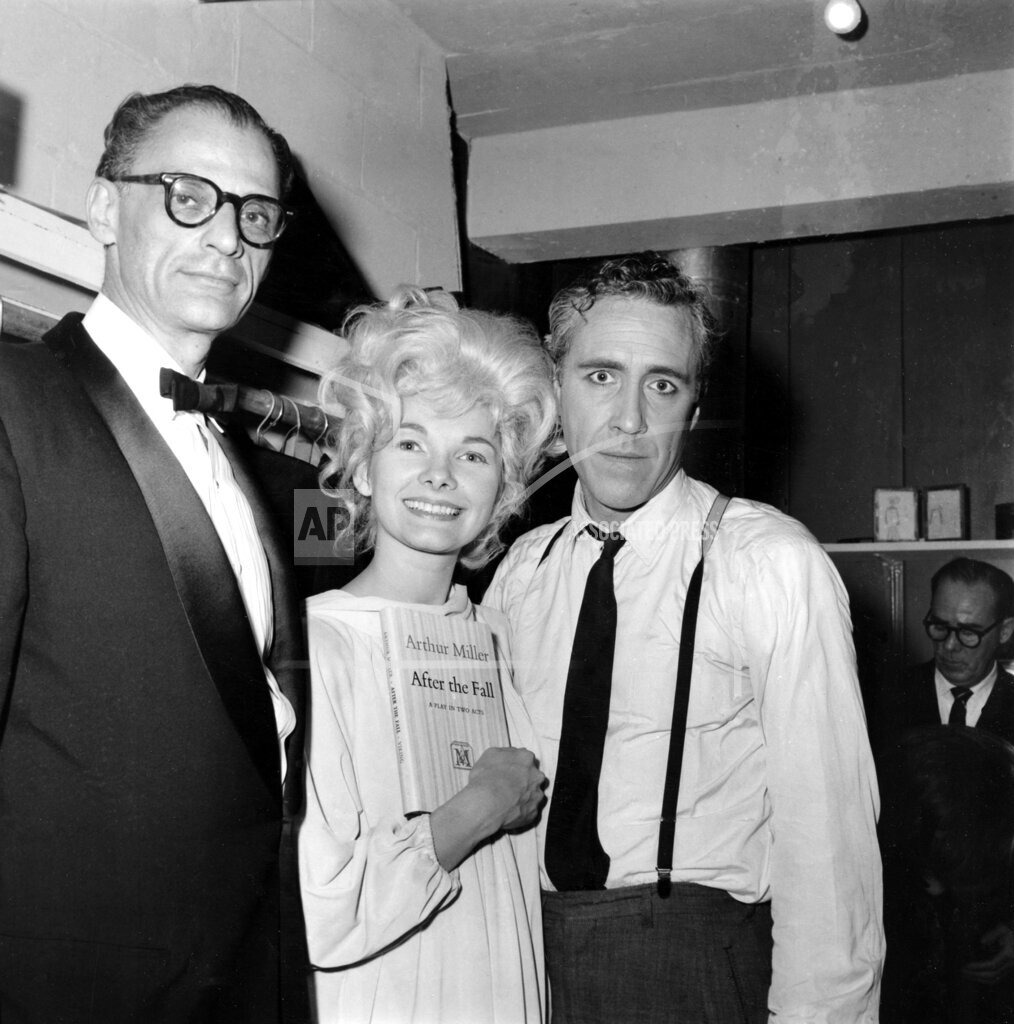
Arthur Miller’s “After the Fall” opened on Broadway. A semi-autobiographical work, it generated controversy over his portrayal of his ex-wife, the late Marilyn Monroe.
Dow Jones Industrial Average: 782.86 (+1.55).
Born:
Mariska Hargitay, American television actress (“Law and Order: Special Victims Unit”) and Emmy Award and Golden Globe winner, the daughter of Jayne Mansfield and Mickey Hargitay, in Santa Monica, California.
Frank Winters, NFL center and guard (NFL Champions, Super Bowl 31-Packers, 1996; Pro Bowl, 1996; Cleveland Browns, New York Giants, Kansas City Chiefs, Green Bay Packers), in Hoboken, New Jersey.
Robert Stallings, NFL tight end (St. Louis Cardinals), in McComb, Mississippi.



 History Diaries