Israeli troops and tanks have begun withdrawing from the western bank of the Suez Canal to new positions on the eastern side ahead of schedule, according to military sources in Tel Aviv. The withdrawal and the removal of land mines were made in preparation for the full evacuation of the bridgehead under the terms of the Egyptian-Israeli agreement signed last week.
Ending a six-day tour of eight Arab capitals, President Anwar Sadat of Egypt indicated that Syria was willing to talk with Israel about the separation of troops from the Golan Heights front. At a news conference in Rabat, just before returning to Cairo, Mr. Sadat said that the Middle East peace conference in Geneva would not be resumed until Syria and Israel reached agreement on troop withdrawal.
An Iranian military appeal court commuted two of seven death sentences imposed at a trial of 12 people convicted of plotting to assassinate the shah and kidnap members of the Iranian royal family. The court upheld the other five death sentences, confirmed prison sentences of three to five years on three other accused but reduced similar terms for the remaining two. One of the men whose sentence was commuted received 15 years and the other 10.
Cambodian government troops and Communist-led Khmer Rouge guerrillas traded half a dozen small villages less than 10 miles from Phnom Penh in the seesaw battle for the capital. The fighting covered a broad area ranging from the Tonle Bassac River on the southeast to Tonle Sap River on the northwest. The area east of the city, across the Mekong River, is generally under rebel control.
The Cambodian command said today that it had cleared insurgents from northwest of the capital after a 19‐day operation in which it said 301 Communists had been killed. The insurgents are reported to have switched their attack to the city’s southern flank where, intelligence sources have said, there has been a build‐up of guerrilla forces. Fierce fighting near Takhmau, on the east bank of the Bassac, has been reported. The Government announcement said that 27 Communists had been captured during the fighting north of the city and that well‐entrenched guerrillas who had been firing rockets into Phnom Penh had been forced back. Government casualties were put at 30 killed and 200 wounded. Nearly 200 people have been killed or wounded in the almost daily insurgent rocket attacks on Phnom Penh and its airport and several foreign embassies have warned their nationals to leave.
North Vietnam’s Foreign Minister has charged that the Saigon Government, with United States support, is getting ready for stepped‐up military operations in Vietnam. The charge was made in an interview in Hanoi given to Agence France‐Presse for the first anniversary of the Paris agreements ending the Vietnam war. Nguyễn Duy Trinh, a Hanoi Politburo member, was quoted as making the charge in reply to a question about the possibility of a major Communist offensive comparable to that of Tet, 1968, or the one in 1972. The Foreign Minister, referring to the South Vietnamese President, said, “Nguyễn Văn Thiệu’s hysterical calls for war, for sabotaging the Paris agreement, as well as the American threats in support of these calls amount to a cynical defiance of Vietnamese and international opinion.”
“The slanderous allegations proffered in order to justify their war hysteria simply aim at deceiving public opinion to prepare the ground for new adventures, for aggravated violation of the Paris agreement,” he added. Mr. Trinh said that a foretaste of what was being planned was given by “recent violent bombings” and “major” ground operations against Viet Cong‐held territory, as’ well as by “frequent violations of North Vietnam’s airspace.” Mr. Trinh accused the Americans of “maintaining, and even reinforcing, their corps of military advisers, who are now camouflaged as civilian personnel.” Asked what the Communist priorities were at this stage, Mr. Trinh answered: “The safeguarding of peace — making it stable and durable; the dressing of the wounds of war and the building of socialism in the North; the completion of the national and democratic tasks in the South, and movement toward peaceful reunification of the motherland.”
The U.S. State Department denied reports that teams searching in Vietnam for missing or dead American military personnel included secret intelligence agents. Reports attributed to Steven M. Davis, a former coordinator of top-secret documents at a Saigon communications center, asserted that under an order from the secretary of state in May, 1973, the MIA search teams were instructed to gather intelligence data through agents assigned to each team.
Leaders of Britain’s coal miners agreed to increase the pressure in their wage struggle with the British government by proposing a vote on whether to extend the present slowdown to an all-out strike. If the proposal is approved by the union’s executive, the vote would be the first gauge of sentiment among the miners since their leaders ordered a ban on overtime work in mid-November. After a three‐hour meeting, the leaders agreed to propose a vote at the pits on whether to extend the present slowdown to an all‐out strike. It would be the first test of sentiment among the miners themselves since mid‐November, when the leaders ordered a ban on overtime.
The dispute has already curtailed the country’s power supply and led to a three‐day work week and other emergency steps. A national strike could, bring industry virtually to a halt, because 70 percent of electric power in Britain is generated by coal.
Eight French Army soldiers were killed and three others seriously injured when the unit of 16 men took an unauthorized shortcut on a march through a 400-yard (370 m) long railway tunnel and was struck by a train. The group had lost its way during night maneuvers near Château-Thierry in France’s département of Aisne.
A fire killed 23 teenaged boys at the Heilig-Hartcollege (Sacred Heart School), a boarding school in Heusden, Belgium.
A small earthquake in the Berwyn range of mountains in North Wales coincided with atmospheric lights and was followed by reports of a UFO sighting in the village of Llandrillo in Denbighshire.
The text of a confession purportedly signed by Li Hung-shu after his arrest with five members of the Soviet Embassy in Peking was published by the Chinese Communist Party newspaper People’s Daily. The paper said Li, who was still being interrogated, was recruited by Soviet intelligence in June, 1972. The five embassy personnel were expelled from China January 19 after being held for four days. The arrests were made by waiting militiamen as Li gave the Russians “intelligence in secret writing” and received a bag containing a radio transmitter and receiver.
The Bolivian armed forces announced their full support for President Hugo Banzer in an apparent effort to help him weather a wave of strikes. The backing is significant in a country such as Bolivia, which has seen more than 180 governments in its 148 years of independence. Policemen guarded plants left idle as a result of strikes An estimated 100,000 miners and white collar and industrial workers were off the job.
President Juan D. Perón was reported planning a federal takeover of the province of Buenos Aires — Argentina’s largest and most densely populated — following the resignation of Governor Oscar Bidegain in the wake of a Marxist guerrilla attack on an army garrison. Bidegain was the first important victim in a new anti-left purge.
An international women’s delegation that visited Chile reported that 80,000 persons have been killed and 150,000 thrown out of work as a result of the ouster of the Allende regime in September. Margot Mrozinski of West Berlin told a U.N. press conference sponsored by the Soviet mission that the leftist Women’s International Democratic Federation delegation gathered the information on a January 9-15 visit. She attributed the information to church and diplomatic officials, lawyers and members of victims’ families.
Food and Agriculture Organization Director Addeke Boerma renewed an appeal for more international relief as the West African drought worsened. On leaving Rome at the start of an 11-nation African tour, he said that only about 500,000 tons of grains had been promised and practically no money. The FAO now reports that the grain shortage in the six worst affected countries Mali, Mauritania, Senegal, Chad. Niger and Upper Voltamay be about 1.2 million tons.
Space agency officials said today that they believed Skylab’s controlling gyroscope was “slowly but surely caving in” during the final days of the earth‐orbiting mission that first began last May. A picture‐taking pass of the earth by the Skylab was canceled, and engineers monitored closely the activity of the vital stabilization control device. If the gyroscope stops functioning it could severely curtail scientific activity aboard the spaceship, and possibly bring an early end to the mission, although that was not expected.
Skylab is scheduled for a splashdown February 8 off Baja California, Mexico. A spokesman for the National Aeronautics and Space Administration said the flight director, Neil Hutchinson, was concerned about the deterioration of the gyro. Experts in Mission Control here said the gyro had apparently stabilized after faltering early today. The astronauts were in no danger and would be safe if the gyro quit completely, the officials said.
Due to waning public interest in space exploration, the major American television networks announced that there would be no live coverage of the Skylab 4 splashdown the following month. This would be the first time since 1966 that the return of a crewed NASA spacecraft would not be broadcast live.
Senator Henry Jackson reported that the Senate oil hearings turned up no evidence of oil companies’ creating the energy crisis, but he claimed that windfall profits were made. Exxon reported that its 1973 profits were up 60% from ’72.
President Nixon sent his energy message to Congress. Environmentalists are angry over a proposal to use coal in some power plants. Energy czar William Simon urged Congress to go along with the proposal which allows oil companies to reinvest profits in the search for new fuel sources.
Interior Secretary Rogers Morton signed the permit for construction of the Alaska pipeline. Commerce Secretary Fred Dent announced the establishment of export quotas on gasoline and other petroleum products.
The profit question came up again at Senate hearings. Senator Jacob Javits noted that oil companies are reporting “enormous” profits for 1973. Administration energy czar William Simon testified at another hearing regarding the windfall profits tax, and stated that oil company profits are not unreasonable. Executives from Shell, Amoco and Gulf all reported the likelihood of serious gasoline shortages next summer.
Senator Jackson learned that some American companies in Saudi Arabia obeyed orders to cut off fuel supplies to U.S. military forces during October’s Mideast alert; the Pentagon declined comment.
The American Petroleum Institute reported that crude oil imports last week were the lowest since February ’72.
The government assured trucking firms that they are permitted to pass along the higher costs of diesel fuel; as a result, consumers will pay more for everyday commodities. A hike in the national speed limit was rejected.
President Nixon has apparently told Republican leaders that he will “fight like hell” against efforts to impeach him. Reports on a recent meeting between the President and 18 members of the House portray Mr. Nixon as firm in his refusal to consider resigning, and determined to fight the current House inquiry into his possible impeachment.
In a straight party-line vote, the Senate Watergate Committee decided to end its two-month recess and resume public hearings next week. The hearings will begin with testimony on the $100,000 given to the President’s friend, Charles G. Rebozo, by agents of Howard Hughes and will go on to an investigation of contributions by the dairy industry to the Nixon campaign.
The Federal Trade Commission told Congress it should strengthen the printed warning on cigarette packages and add a warning to little cigars to let smokers know they may be running the risk of cancer, heart disease and other ailments. It also recommended the government start an advertising campaign on radio and television and in print to discourage smoking, especially among young persons, and launch a research program to develop a “safe” cigarette. The annual FTC report said U.S. consumption of cigarettes during 1973 hit a record 582 billion, an increase of 3.8% over 1972.
The House of Representatives today abruptly killed the Administration‐sponsored bill for a new contribution to the World Bank to aid the economic development of the world’s poorest countries. The proposed contribution would have been $1.5‐billion spread over four years, out of a total contribution from the richer countries of $4.5‐billion. The bill to authorize such a contribution was defeated by a vote of 248 to 155. Only 47 Republicans supported the bill, while 130 voted against it. The Democrats split much more closely, with 108 for the measure and 118 opposed. A major factor in the House vote was growing disillusion with foreign aid in general, particularly at a time when there has been a squeeze on many Federal domestic programs.
Supplies of wheat now held in American elevators will be drawn down to dangerously low levels before the harvest of the 1974 crop begins in mid‐May. But Middle Western grain dealers insisted today that there was no reason to expect a serious shortage of flour or bread between now and early summer, though the price of both may rise again by then. One industry source estimated that bread prices would rise by only one or two cents a loaf.
In this time of shortage-psychology, when such items as toilet tissue are being hoarded, market analysts are not advising consumers to go fill their freezers with 45‐cent‐a‐loaf bread. “We still have as much wheat in our elevators now as we’ve had at this time of year any time in the past 10 years,” said Jim Jordon, Kansas City Board of Trade representative for Union Equity Cooperative Elevators, one of the largest handlers of winter wheat in the nation. He said that because of high export demands “there is a possibility of using almost all the winter wheat we have before June, leaving us with little reserve. But I think it will be impossible to run clear out. The price for it is high now, and if goes up any more, it will ration itself.”
An F-4C jet fighter crashed on the Gila Bend Gunnery Range in Gila Bend, Arizona, killing U.S. Air Force Maj. Jerry D. Whitlock and USAF Second Lieut. Jerry W. Smith.
The Ford Foundation has disclosed that it will withdraw its support of public television broadcasting over the next few years, after more than two decades as the noncommercial system’s chief benefactor outside the government. The withdrawal has prompted the public television industry to adopt a radical new plan, under which individual stations would pay for the production of national programs and, to a large extent, would determine which shows would be produced. David M. Davis, program officer in charge of public broadcasting for the Ford Foundation, said the organization — which has pumped $150‐million into public broadcasting since 1951 — had decided upon an “orderly withdrawal” over the next four or five years because it believes the time has come for the industry to stand on its own feet.
First edition of women’s magazine “Story”
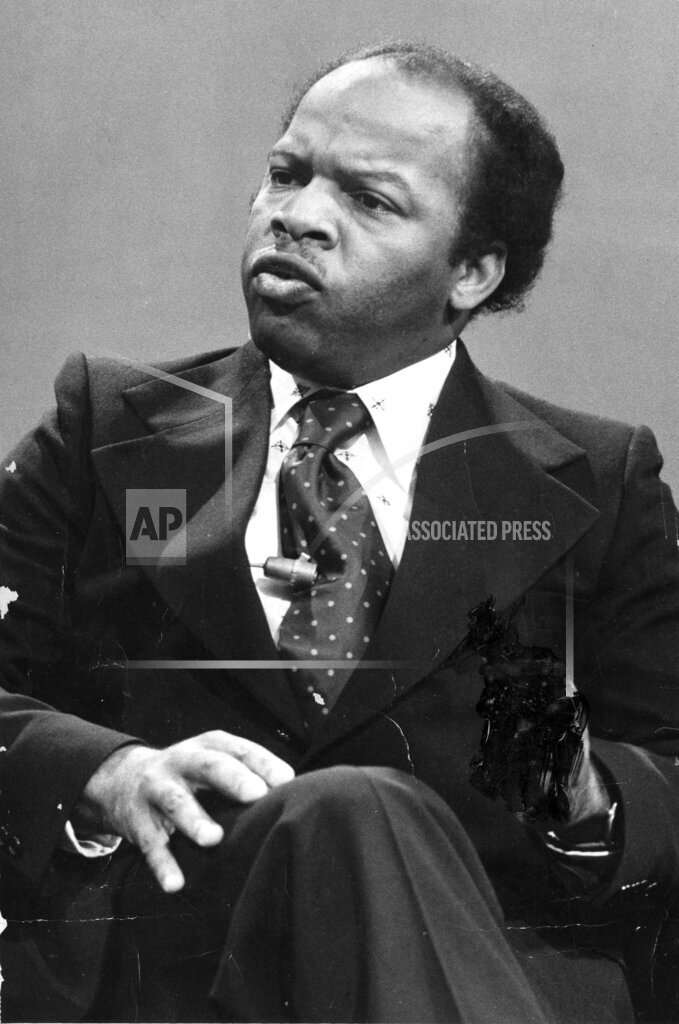
Five days before their scheduled rematch fight, boxers Muhammad Ali and Joe Frazier were dressed in suits and being interviewed by Howard Cosell for Wide World of Sports when their trash talk resulted in an argument and a five-minute scuffle in the studio.
Dow Jones Industrial Average: 871.00 (+7.53, +0.87%).
Born:
Tiffani Thiessen, American actress (“Beverley Hills 90210″, Saved by the Bell”, “Alexa & Katie”), in Long Beach, California.
Jack D. Fischer, U.S. Air Force test pilot and NASA astronaut (NASA Astronaut Group 20, Soyuz MS-04 [Expedition 51/52], 2017); in Louisville, Colorado.
Joël Bouchard, Canadian ice hockey defenceman (Calgary Flames, Nashville Predators, Dallas Stars, Phoenix Coyotes, New Jersey Devils, Pittsburgh Penguins, New York Rangers, New York Islanders), in Montreal, Quebec, Canada.
Erubiel Durazo, Mexican MLB designated hitter and first baseman (Arizona Diamondbacks, Oakland A’s), born in Hermosillo, Mexico.
Mark Watson, MLB pitcher (Cleveland Indians, Seattle Mariners, Cincinnati Reds), in Atlanta, Georgia.
Norah O’Donnell, American TV journalist, and anchor for the “CBS Evening News” since 2019; in Washington, District of Columbia.
Derek Cianfrance, American filmmaker (“Sound of Metal”), in Lakewood, Colorado.
Yuki Urushibara, Japanese manga artist; in Yamaguchi Prefecture, Japan.
Died:
Richardson Dilworth, 75, U.S. politician, former Mayor of Philadelphia from 1956 to 1962
Helmuth Kahl, 72, German Olympic modern pentathlete.
Athalia Ponsell Lindsley, 56, American model, dancer and activist, was murdered with a machete in front of her home in St. Augustine, Florida. The murder remains unsolved.





 History Diaries