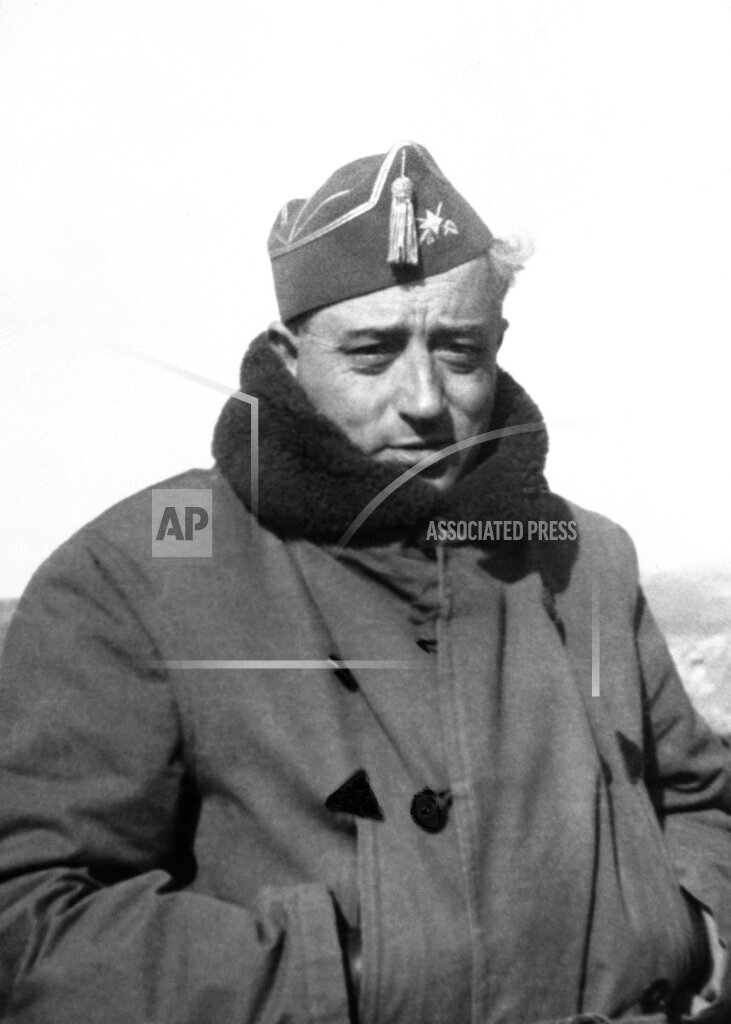
Hitler dismisses Hjalmar Schacht as president of the Reichsbank and replaces him with Walter Funk. Schacht was left as an unpaid minister without portfolio until 1943. A secret report to Hitler, prepared by Himmler, had accused Schacht of being disloyal to Nazi interests in his negotiations with George Rublee. Newspapers report that he retired. Negotiations for a Jewish exodus of refugees from Germany were suspended.
Newspapers indicate that Joseph Goebbels may go in front of a Nazi tribunal to answer scandalous personal questions and may need to resign.
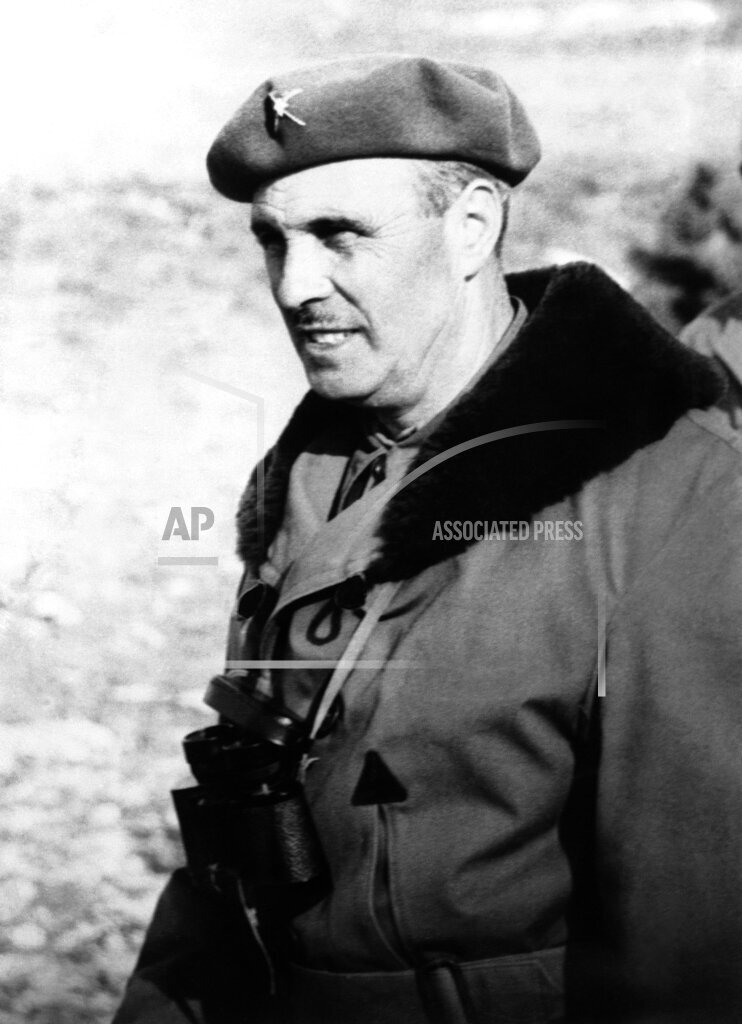
Spanish insurgents announced in quick succession tonight the capture of Igualada and Vendrell, two towns of high military importance to the Barcelona defense lines in eastern Spain. Igualada was one of four main keys to the government “mystery line” of defense, and Vendrell was a government outpost and control point for coastal highway traffic leading to Villanueva and Villafranca. The fall of Vendrell, thirty-two miles southwest of Barcelona near the Mediterranean coast, was reported shortly after the insurgents announced another force had taken Igualada, industrial center of 10,000.
Igualada is 28 miles northwest of Barcelona. Its capture cuts the government’s main north and south line of communication, which ran just behind the full length of government fortifications. Insurgent reports received in Lérida, behind the insurgent line, said a force of rebel troops captured the village of La Llacuna, fifteen miles due south of Igualada, and pushed to within twenty-six miles of Barcelona. A government communique made no mention of the reported capture of Igualada. Other main defense points are Manresa, northeast of Igualada and northwest of the capital; Villafranca, south of Igualada, and Villanueva, on the Mediterranean coast south of Villafranca. A rebel force, using tanks and artillery, has been directed against each of these points.
The rebel force aiming at Manresa reported capture of the communications center of Calaf, forty-five miles northwest of Barcelona. The insurgents still were ten miles west of Manresa, but capture of Calaf and nearby Sampere represented a six-mile advance, bringing the insurgents almost within artillery range of the main highway for supplies from the French border to Barcelona through Manresa. Calaf is fifteen miles west of Manresa. Insurgent military headquarters said the fall of Igualada placed government forces at Villafranca in desperate positions. Villafranca is a main communication center for the southern sector of the government line. The highway and railroad linking Vendrell and Villafranca were said to have been cut by insurgent artillery. The roar of the insurgent heavy artillery could be heard in Barcelona. The government poured every available man into the defense lines and women were volunteering at the rate of 600 a day to take over men’s jobs.
The Spanish government in Barcelona moves 45 tons of gold and silver bars to France as Franco’s troops close in on the city.
Italian Foreign Minister Count Nobile Ciano conducted an official visit to Belgrade to establish closer political, economic, and cultural relations with the Yugoslav government. One goal of the foreign minister’s visit was to achieve a reconciliation between the Yugoslav and Hungarian governments. The Yugoslav government’s unwillingness to consider any cession of territory to Hungary, however, made any reconciliation almost impossible.
France grants the U.S. a six-month permit for trans-Atlantic flights, expected to commence in June.
IRA man Seán Russell had a notice printed in the Dublin newspapers in which he dissociated himself from the Hawneys Hotel attack the previous day. It stated “IRA Headquarters had no knowledge of this attack, nor would it order or countenance such an action”. This unsanctioned action is assumed to have been carried by a local non-S-Plan-involved IRA unit. In Lancashire, an unexploded package of gelignite and a stopped alarm clock timer were found attached to an electricity pylon. Arrests were made, with a London man charged with possession of 2 tons of potassium chlorate and 1 ton of iron oxide between 1 October and 5 November 1938.
The League of Nations passes feeble resolutions about the Spanish civil war and the Sino-Japanese war.
President Roosevelt’s spending policy received another blow today when a Senate Appropriations subcommittee voted 8 to 3 to sustain the House reduction of $150,000,000 in the pending deficiency relief bill. The subcommittee recommended an appropriation of $725,000,000, the same amount voted by the house, to finance the Works Progress Administration from February 7 to June 30. President Roosevelt had demanded $875,000,000, and the powerful administration lobby was assisted by the CIO, labor’s so-called Nonpartisan League, the Workers’ Alliance, which is a communist organization of relief recipients, the United States Conference of Mayors and other pressure groups.
The action of the subcommittee, which is expected to be sustained by the full committee and the Senate itself, gave Mr. Roosevelt his first Senate defeat at this session of the new Congress. It was a victory for the Senate Democratic economy advocates, chiefly Senator Pat Harrison (D-Mississippi) and Senator James F. Byrnes (D-South Carolina), who did most of the maneuvering and missionary work to block the administration lobby. A proposal to boost the appropriation to the $875,000,000 demanded by the President was defeated by what Senator Alva B. Adams (D-Colorado), chairman of the subcommittee, said was “not a close vote.”
The Senate considers keeping relief funding intact during cold winter months.
Two Democratic Senators who triumphed over New Deal efforts to defeat them in the primaries of last year, criticized Harry L. Hopkins and politics in the WPA today but stated that they would vote for confirmation of Mr. Hopkins as Secretary of Commerce. Senator Tydings of Maryland carried his attack on the Senate floor to President Roosevelt, declaring that his was the responsibility for any politics played by Mr. Hopkins and the WPA. He challenged the Senate, without directly requesting it to do so, to study the role of the President in the “purge” efforts, asserting that the President had come as an “outsider” into Maryland to participate in the primary and asking “was that using government property, was that using government money for political purposes?”
Senator Connally of Texas gave notice today that Southern Senators would filibuster against any anti-lynching measure brought to the floor. He interrupted debate on the nomination of Harry L. Hopkins for Secretary of Commerce to comment on the introduction by Senators Wagner of New York, Van Nuys of Indiana and Capper of Kansas yesterday of an anti-lynching bill similar to one blocked at the last session. “Any attempt to revive this bill will result in wasting half the time of this Senate and accomplishing nothing,” Mr. Connally said. “It will not pass.”
A court acquits Prohibition-era gangster George “Bugs” Moran on counterfeiting charges.
The anticipated impeachment of UAW head Homer Martin takes a twist when Martin locks himself in his office and suspends 15 members of the board.
Thomas Dewey bans a move on nominating him for the presidency.
One-third of the estate of the late New York Yankees owner Colonel Jacob Ruppert goes to a former actress Helen Winthrope Weyant who appears shocked at bequest. She inherits $300,000.
The President of the American Tariff League declares reciprocal pacts a failure and an invitation to foreign industry.
The American Federation of Radio Artists votes to strike over pay issues.
Aviation training for youth is favored by 87 percent of those polled.
The Naval Board requests $65 million from the Senate for bases on Guam. President Roosevelt today announced his support of the $65,000,000 bill for naval and air base construction. This includes an authorization of $5,000,000 for the fortification of the Island of Guam. Yesterday the President denied that he had approved the navy’s proposal to fortify Guam. The President emphasized that the bill provides for an authorization and not for an appropriation. He said that an authorization does not mean construction nor does it commit the present or future congresses to translate the authorization into cash for the construction. Mr. Roosevelt indirectly confirmed the belief that he is drawing attention to possible fortification of Guam for political purposes. The Japanese are much concerned over the proposal to fortify an island hardly 1,500 miles from Tokyo. It is believed the administration hopes to get the Japanese into a conference which might bring an agreement under which the United States would drop any works at Guam if the Japanese would level fortifications in nearby mandated islands.
U.S. companies are now in consensus on banning airplane exports to Japan.
Margaret Mitchell said today her increasing fan mail indicated southerners generally approved Vivien Leigh for the role of Scarlett in the film version of “Gone with the Wind.” Writers from Ohio, New Jersey, Kansas, and Oregon joined two southern attacks upon selection of the English actress. However, they are in small proportion to the favorable letters. She declared Susan Myrick of Macon and Mr. and Mrs. Wilbur Kurtz of Atlanta, both southerners, retained as advisers by Selznick, are well versed in southern accent and customs.
Charles Ives’ 1st Sonata “Concord” premieres.
LPGA Titleholders Championship Women’s Golf, Augusta CC: Patty Berg wins 3rd straight title by 2 strokes ahead of Dorothy Kirby.
El Salvador seizes many rebels; executions are rumored.
Japanese spokesmen reported today their army bombers had destroyed a large quantity of arms and provisions imported from the Soviet Union in a raid on Paoki, a town of Shensi province, northern China. Paoki is about 90 miles west of Sian, which was bombed yesterday in a raid reported to have caused 200 casualties. Japanese reports said the headquarters of the 4th Division, barracks and a railway station were blown up in the Paoki raid.
A report by the Chinese National Relief commission said the Japanese made 3,548 raids on 417 towns and cities in 20 provinces in the 17 months ending last November 30. The commission reported 35,175 Chinese civilians were killed and 44,050 wounded. The figures did not include casualties in villages and rural areas.
Slowly fighting deeper into the heart of China, two Japanese columns at present are expanding the buffer zone around Hankow, fallen Chinese provisional capital. These columns are pushing westward and northwestward, again threatening cities up the Yangtze River, including Shasi, Hupeh province. This river port is 290 miles from Hankow by river, but only 200 miles cross country. It is 890 miles from Shanghai. The two columns were reported today halfway to Shasi after circling a vast, swampy area west of Hankow. Chinese military authorities said one of the columns was advancing from Tsaoshin, 100 miles due west of Hankow, moving northwestward to attack Kingshan, eighteen miles northwest of Tsaoshih. The other was said to be moving southwestward from the town and threatening Tienmen, about 25 miles away.
Chinese reported they had recaptured the town of Wamiaotsi, eighty miles west of Hankow, after a three-day counter-attack which blocked Japanese forces driving through central Hupeh province along the Han River. Wamiaotsi was occupied by the Japanese Sunday. In South China, the Chinese said, severe fighting was going on near Tsungfa, thirty miles northeast of Canton, with the Japanese still unable to organize their projected offensive into Kwangsi province. A correspondent of Domei, a Japanese news agency, with the Japanese forces in North China, reported an intensification of Japanese aerial activity along the Yellow River and the Lunghai Railway. The movement was reported to foreshadow an early Japanese offensive into Shensi province. The Japanese long ago invaded Shansi province, lying just east of Shensi.
New indications were seen today that the Japanese were preparing to renew their military campaign in South China. possibly including attacks on Hainan Island and the town of Pakhoi, near French Indo-China. Reports from Canton said troops were leaving Wongsha station throughout the night for undisclosed destinations to the north. Chinese reported Fahsien, twenty-five miles north of Canton, was captured by the Japanese after severe fighting. A large Japanese naval concentration was reported at Weichow Island in the Gulf of Tonkin. It was rumored the French were concentrating their Far Eastern naval forces in the Gulf of Tonkin also.
Facing one of the most crucial periods in its history, the Japanese nation today was admonished by the leaders of its new government to exert renewed efforts to overcome domestic and foreign difficulties. In speeches to parliament Premier Baron Kiichiro Hiranuma and his ministers of foreign affairs, finance, army, and navy, outlined the cabinet’s domestic and foreign policies. They said they were determined to carry out wholesale reforms which will enable the country to push through a long-term war and reconstruction in China. All resources of the nation must be concentrated in order to attain the great objective of establishing a new order in east Asia, the premier warned. He urged the people to be prepared for further difficulties and sacrifices. Military power, he said, must be amplified speedily and productive capacity must be increased. He also stressed the difficulties to be met in conducting the current war in China and in the establishment of a Japanese-Chinese-Manchukuoan economic bloc.
Japan considers stricter film censorship.
Dow Jones Industrial Average: 149.11 (-0.36).
Born:
Murle Breer, American golfer (U.S. Women’s Open 1962), in St. Petersburg, Florida.
Nalin Chandra Wickramasinghe, Sri Lankan-born British mathematician & astronomer, in Colombo, Ceylon (now Sri Lanka).
Naval Construction:
The Royal Navy Net-class boom defense vessel Dragonet (Z 82) is laid down by the Blyth Shipbuilding & Drydock Co. Ltd. (Blyth, U.K.).



 History Diaries