
Henry Cabot Lodge, Jr., the U.S. Ambassador to South Vietnam, sent President Johnson a report by Giovanni D’Orlandi, the Italian Ambassador, suggesting that Trần Văn Đôn and Ngô Đình Diệm were potential leaders of a group that might attempt to assassinate French President Charles de Gaulle.
The Central Committee of the Communist Party of Vietnam adopted Resolution 9. The secret resolution declared all-out war on South Vietnam to defeat the ARVN before the United States could introduce a large number of American soldiers into the war. The Resolution estimated that American soldiers participating in the war would not exceed 100,000. The Americans “clearly understand that if they get bogged down in a large-scale protracted war, then they will fall into an extremely defensive position internationally.” Diplomacy would be expanded to gain “the sympathy of antiwar groups in the United States” and other people around the world. Finally, the Resolution called for a purge of party members in North Vietnam who had emphasized socialistic development in North Vietnam rather than North Vietnamese help for the “liberation” of the South.
Resolution 9 was the most important Communist party decision on action in South Vietnam since the Geneva Accords of 1954, which had provisionally separated North and South Vietnam pending national elections (never held, due to opposition by the government of South Vietnam).
With the adoption of Resolution 9, party moderates such as Hồ Chí Min and Võ Nguyên Giáp were marginalized and those who supported the Soviet policy of peaceful coexistence were purged in what became known as the “Revisionist Anti-Party Affair.” Militant leaders such as Lê Duẩn and Lê Đức Thọ who favored the Chinese Maoist approach of worldwide revolution took command of the Communist Party and North Vietnam.
Convinced that no dramatic disarmament measures are possible for the moment, the United States is seeking instead the limited objective of continuing the downward trend in the armament race achieved in 1963. This is the emphasis observers at the disarmament conference, which resumes here tomorrow, read into President Johnson’s reply today to Premier Khrushchev’s call for an international agreement repudiating the use of force. American officials connected with the disarmament conference seem confident that the limited objective can be achieved in the relaxed atmosphere of East‐West relations established by the signing of the limited nuclear weapons test ban agreement in August. Underground tests were excluded from that agreement.
President Johnson will meet with the Inter‐American Peace Committee of the Organization of American States tomorrow or Wednesday to discuss the Panama situation. The suggestion for a meeting came from the five‐nation group, which felt that its effort to settle the dispute between the United States and Panama would benefit from hearing Mr. Johnson’s views. The group met with President Roberto F. Chiari in Panama last week. Mr. Johnson’s message agreeing to a meeting reached the committee at a closed session this morning. The committee also heard Manuel Trucco, Chile’s Ambassador to the O.A.S., recount his efforts to keep a briefly made agreement last week from collapsing over different interpretations of what it provided. The committee will probably resume its efforts to reconcile the two nations’ viewpoints Wednesday. The United States is ready to discuss the 60‐yearold Panama Canal Treaty; Panama demands a commitment that the treaty will be renegotiated.
Panama’s new O.A.S. delegate, Dr. Miguel J. Moreno Jr., is expected here tomorrow to press his demand for action under the 1947 Rio de Janeiro Treaty for Inter‐American Reciprocal Assistance, but there is no expectation that he can muster the two‐thirds vote necessary to invoke that treaty. Committee members believe both sides want a settlement, but that working one out will have to satisfy domestic political requirements in both nations. Officials here said United States economic aid to Panama had been suspended for purely practical reasons, not as a deliberate political decision. They said work on projects and disbursement of aid payments had been halted because the personnel of the Agency for International Development had left Panama.
Nineteen men went on trial at Buckinghamshire Assizes for the Great Train Robbery carried out on August 8 at a railway bridge at Ledburn in the United Kingdom. The trial opened today with a charge of jury corruption. Ivor Richard, a lawyer for Brian Field, one of the defendants, said Mr. Field’s wife had been approached by a man who said that five prospective jurors would decide in Mr. Field’s favor for £500 each.
The Commonwealth Relations Office announced that Dar es Salaam, the capital of Tanganyika, was quiet tonight after a day of mutiny by African troops. Earlier today the House of Commons had been told that with mutinous soldiers rioting in the republic, on Africa’s east coast, the situation was deteriorating. The Admiralty said the aircraft carrier HMS Centaur left Aden this evening “and is going down to stand off the East African coast in view of the political situation there.” There was no indication that the troops aboard the Centaur, including about 600 Royal Marine commandos, would land in Tanganyika. Accompanying the aircraft carrier is the destroyer Cambrian. With the units aboard the Centaur and those stationed in Kenya, there will be nearly 2,000 British servicemen in the area.
Premier Levi Eshkol warned today that Israel would act if Arab states tried to sabotage her water plans. The statement was the first official Israeli reaction to the reported decision of the Arab conference in Cairo to dam tributaries of the Jordan River rising in Arab countries to prevent the waters from reaching Israel. Speaking in the Knesset (Parliament), the Premier said Israel would begin this year intercepting the Jordan’s flow into the Sea of Galilee and pipe the waters to the semi‐arid Negev.
The United States is applying strong pressure on Nationalist China not to withdraw its diplomats from France when France recognizes Communist China. High State Department officials confirmed today that urgent consultations were taking place in Washington and Taipei in advance of President de Gaulle’s announcement of recognition, which is expected early next week. The sources expressed the view that some of the apprehension felt here when the French intention became known last week might have been exaggerated. They said the move could hold some advantages for the United States if the Chinese Nationalists cooperated. But they emphasized that the “if” was a big one. They cautioned that such an attempt to get Taipei to agree to a position that it has long abhorred could cause a severe strain in relations between Nationalist China and the United States.
The Indonesian Government stepped in today after members of Communist‐led unions took over the Unilever Corporation, owned by British and Netherlands interests, and ran up a red flag over Shell Oil Company property here. The vast British ‐ owned P. & T. Company rubber and tea estates on west Java were also said to have been seized by workers who took over 16 estates in the Subang area Saturday night. The government arranged for a meeting tomorrow at which a coordinator will mediate between the unions and the Unilever Corporation management.
Prince Abdul Rahman, Prime Minister of Malaysia, was reported yesterday to have agreed to meet President Diosdado Macapagal of the Philippines in Phnom Penh to discuss their dispute over formation of the new federation of Malaysia. After meeting with Prince Norodom Sihanouk, Cambodia’s head of state, the Malaysian was said to have accepted an offer by the Philippines for a meeting in Cambodia’s capital in mid-February. Prince Sihanouk arrived in Kuala Lumpur on a surprise visit a day before the arrival of Attorney General Robert F. Kennedy, who has been trying to persuade leaders of Malaysia, the Philippines and Indonesia to settle their differences. The Cambodian leader said at the Kuala Lumpur airport that he would be happy to talk with Mr. Kennedy, but that he had no plans as yet to do so. As a head of state protocol prevents me from asking to see him,” he said, “but if Mr. Kennedy wants to see me, I am quite ready to meet him.”
Attorney General Kennedy left Manila for Kuala Lumpur at midnight. He said at a news conference at the airport that he had no plans to meet with Prince Sihanouk. But diplomatic sources did not discount the possibility that they would meet. At such a meeting Cambodia’s current dispute with the United States could be expected to arise. Cambodia has ordered an end of United States military and economic aid, charging American aid to Cambodian rebels. Cambodia also wants an international conference to guarantee her neutrality.
Swahili was made the new official language of Zanzibar, replacing English.
The Atomic Energy Commission estimates that with nuclear explosives a new sea‐level canal could be dug across the Isthmus of Panama at a cost of $500 million or less. According to the A.E.C. studies, the nuclear excavation project could be conducted without posing a radioactive health hazard, and at about a tenth the cost of conventional construction methods. The A.E.C. proposal is to detonate a series of buried thermonuclear explosives. The explosives would shatter and eject the earth and in the process carve out a 60‐mile‐long ditch 1,000 feet wide and 250 feet deep.
President Johnson, confident that a tax cut will bring a rapidly expanding economy in 1964, issued a strong warning to business and labor today not to take advantage of the boom through “inflationary” increases in wages and prices. In his first Economic Message the President foresaw a boom of glowing proportions — a gross national product rising to $623 billion from $585 billion last year, a drop of about 500,000 by year‐end in unemployment and records in personal incomes and corporate profits. The nation, he said, will set a record for the duration of a period of recession‐free prosperity, and its rate of economic growth, already fast, will speed up further.
President Johnson said today that the United States could not wait for the gradual growth of the economy to lift the “forgotten fifth of our nation above the poverty line” Renewing his appeal for a war on poverty, the President said in his Economic Report to Congress: “Americans today enjoy the highest standard of living in the history of mankind. But for nearly a fifth of our fellow citizens, this is a hollow achievement. They often live without hope, below minimum standards of decency.” The per capita income of 35,000,000 Americans, he continued, was only $590 in 1962, as compared with $1,900 for the nation as a whole. The President’s message was based on a 275‐page report of his Council of Economic Advisers, headed by Walter W. Heller.
President Johnson said today that Indian welfare had been placed in the forefront of his attack on poverty. The President, speaking in the East Room of the White House to tribal representatives here for a meeting of the National Congress of American Indians, said that Indians suffered more from poverty than any other group in the country. Walter Wetzel of Montana, president of the congress, laid before Mr. Johnson the organization’s ideas of what needs to be done to combat poverty, unemployment and educational problems among the Indians. The group’s outline included a request for “special consideration” to Indians in the allocation of jobs under public works and other federal programs. It also called for lower interest charges in federal loans, protection against efforts of various states to gain jurisdiction over Indian reservations and further guarantees on treaty rights.
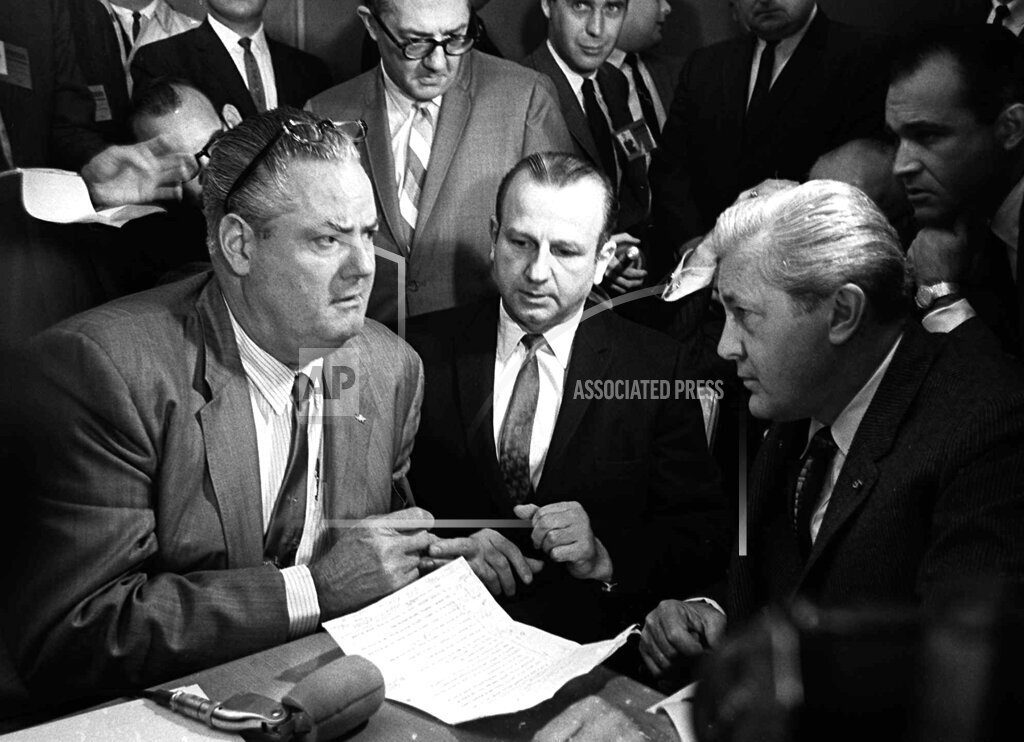
A New York psychiatrist testified today that Jack Ruby did not know right from wrong when he shot the accused assassin of President Kennedy. Dr. Walter Bromberg, the clinical director of Pinewood Psychiatric Hospital in Westchester County, said Ruby had told him that he did not remember the killing of Lee H. Oswald on November 24. Dr. Bromberg, who examined Ruby for 11 hours on behalf of the defense, said that a severe emotional shock caused by President Kennedy’s assassination had triggered Ruby into a “fugue state.” In such a condition, a person acts automatically with no memory later of what he has done, the doctor said. Ruby was susceptible to this condition, Dr. Bromberg said, because of the apparent organic damage to his brain. His testimony this afternoon confirmed a report offered earlier by Dr. Roy Schafer, a clinical psychologist at Yale University. Dr. Schafer said that the results of tests he had given to Ruby last month indicated physical damage to the brain, resulting in psychomotor epilepsy.
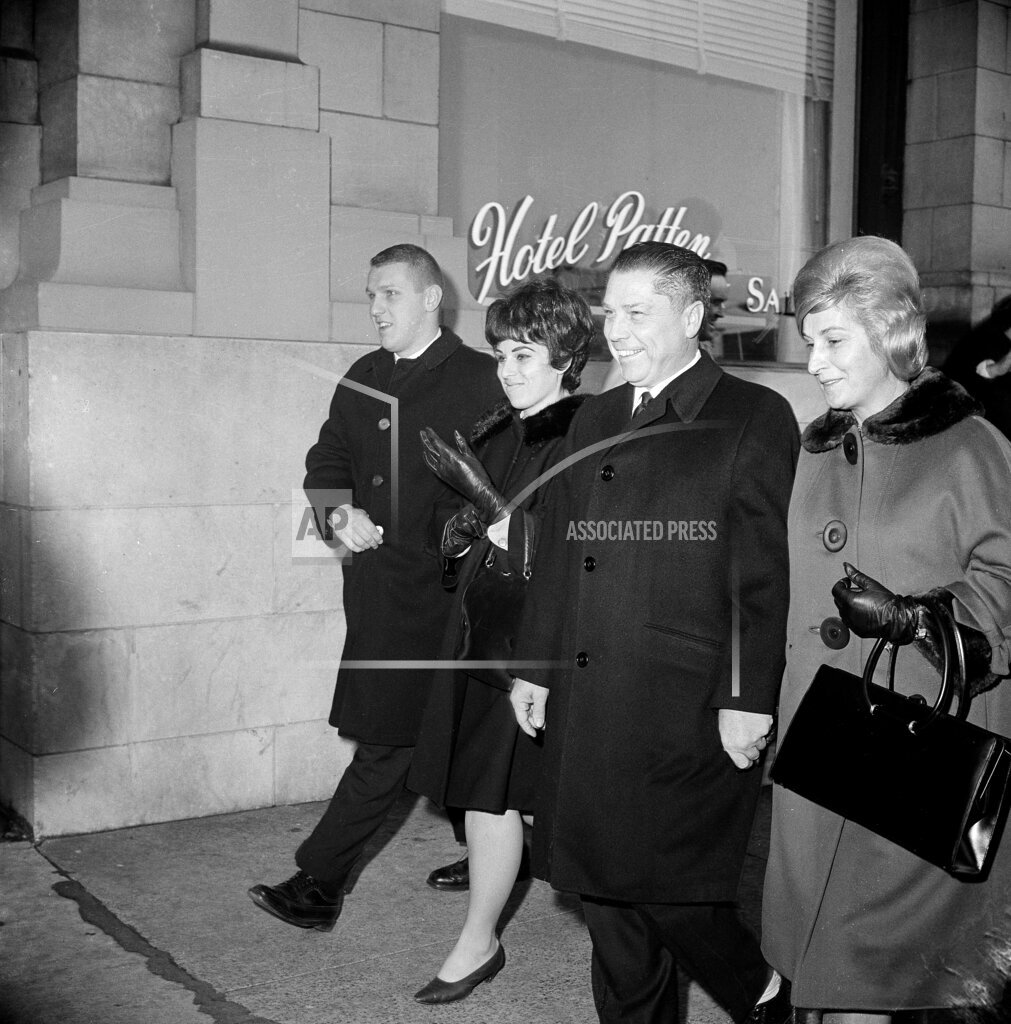
United States District Judge Frank W. Wilson today ordered the jury in the jury‐tempering trial of James R. Hoffa and five co‐defendants placed under tight security for the duration of the trial. Judge Wilson took the action at the opening session of the trial, overruling the vigorous objections of defense attorneys. Mr. Hoffa, president of the International Brotherhood of Teamsters, and the five other defendants are being tried on charges of trying to influence jury in Mr. Hoffa’s trial in Nashville in late 1962 on charges of accepting illegal payments from an employer. The jury split 7 to 5 in favor of an acquittal and a mistrial was declared. He could be retried in that case.
The Senate Finance Committee voted today to repeal the 10 percent Federal tax on theater tickets. It wrote the repeal provision into the Administration’s $11 billion tax reduction and reform bill, which is expected to reach the Senate floor in a week or two. The action, a surprise, came on an amendment by Senator J. W. Fulbright, Democrat of Arkansas, on behalf of the National Association of the Legitimate Theater and the League of New York Theaters. The vote was 9 to 8. Treasury officials estimated that the provision would reduce annual taxes on admissions by $5 million. Whether the savings would be passed on to theatergoers was uncertain. The tax, under present law, is stated separately and paid by the patron in addition to the cost of the ticket.
Senator Barry Goldwater said today that “it would be too patently obvious, too phony” for him to modify his bluntly conservative campaign technique. In a shirt‐sleeve interview in his Senate offices, the Arizona Republican declared: “I have to take my chances that more people will like what I say than not.” Mr. Goldwater said he might have lost the tentatively promised support of 150 to 175 prospective delegates to the Republican National Convention since Lyndon B. Johnson became President. However, he thinks he is still far ahead in his race for the Republican Presidential nomination and that he will reclaim that support through primary election victories.
Mrs. Ione F. Harrington, Republican national committeewoman from Indiana, was appointed assistant director today of the women’s division of Senator Barry Goldwater’s Presidential campaign organization. The women’s director is Mrs. Emery C. Johnson, Republican national committeewoman from Arizona.
Harold E. Stassen formally announced his candidacy for the Republican Presidential nomination today. He told a news conference at the Statler‐Hilton Hotel that his purpose was “to enlarge the debate” on important issues within the Republican Party. He said he was prepared to enter the New Hampshire preferential primary immediately, and planned later to enter the primaries of California and the District of Columbia. It is his hope, he said, to win a minimum of 10 percent of the vote in New Hampshire and, as his campaign picks up momentum, to take at least 51 percent of the California vote. Mr. Stassen’s announcement caused more dismay than surprise in Republican ranks in Washington. After a spectacular rise and eclipse in 1948, when he lost the nomination to Thomas A. Dewey, the political stock of the former Minnesota Governor has steadily declined. But apparently his political ambition has not.
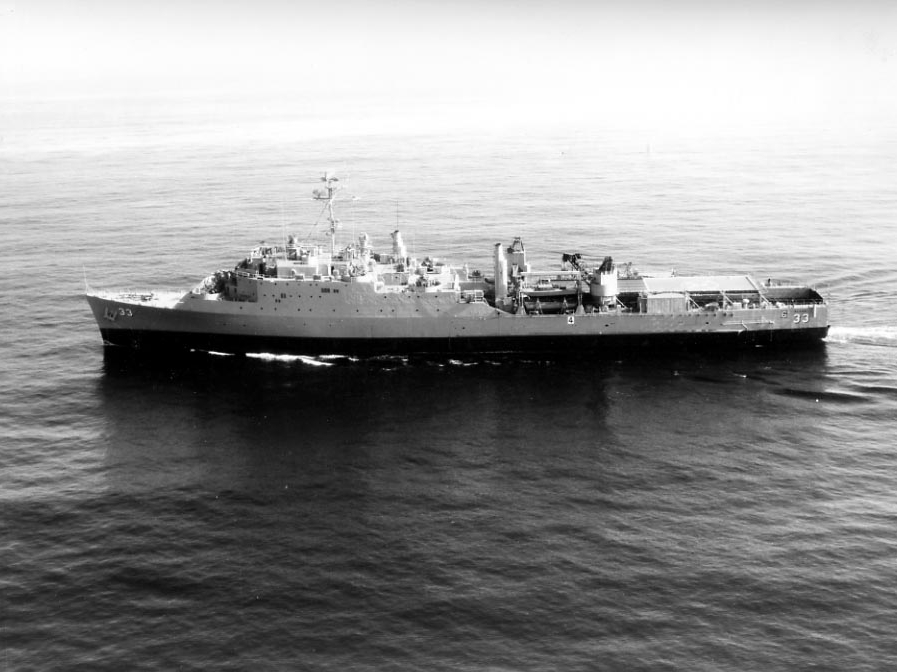
The Navy successfully launched a long‐range Polaris A‐3 submarine-launched ballistic missile from a surface ship today. It flew about 2,000 miles and was the 20th success in 32 firings. The launching of the Relay 2 communications satellite and the ground firing of the engines of the Titan 2 rocket are scheduled for tomorrow.
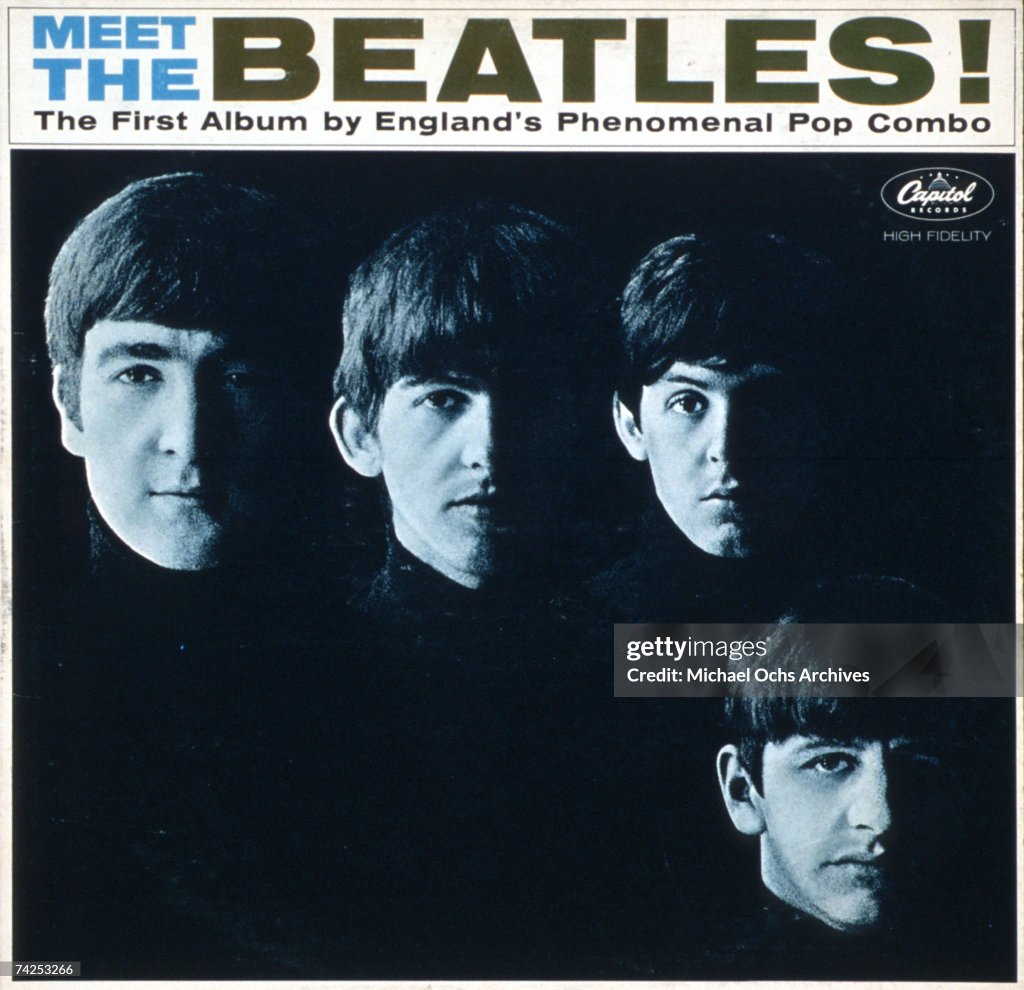
“Meet the Beatles!” the first The Beatles album from Capitol Records in the United States, was released ten days after Chicago’s Vee-Jay Records releases “Introducing… The Beatles.” The two record companies would battle it out in court for months, eventually coming to a settlement.
Dow Jones Industrial Average: 773.03 (-2.66).
Born:
Ozzie Guillén, Venezuelan MLB shortstop and manager (All Star, 1988, 1990, 1991; Chicago White Sox, Baltimore Orioles, Atlanta Braves, Tampa Bay Devil Rays), in Ocumare del Tuy, Venezuela.
Ron Harper, NBA shooting guard and point guard (NBA Champions-Bulls, 1996, 1997, 1998, Lakers-2000, 2001; Cleveland Cavaliers, Los Angeles Clippers, Chicago Bulls, Los Angeles Lakers), in Dayton, Ohio.
Tony Garbarczyk, NFL defensive end (New York Jets), in New York, New York.
Victoria Sellers, English actress (“Crime Zone”, “Warlords”), only child from the marriage of actor Peter Sellers and actress Britt Ekland, in London, England, United Kingdom.
Fareed Zakaria, Indian-American journalist and author, in Bombay (now Mumbai), India.

 History Diaries