About 700 members of the 1st Battalion of the Tanganyika Rifles mutinied against their white British Army officers and briefly took control of the Tanganyikan capital, Dar es Salaam. According to Tanzanian records, the mutineers wanted higher pay and African officers to replace their British commanders; the uprising began at the Colito Barracks in Lugalo and then was joined by units at Tabora and Nachingwea. The rebels arrested 30 of their British officers, built roadblocks to stop entry and exit at Dar es Salaam, took control of the airport, the radio station, the railway station, and police stations, as well as the State House, the office of President Julius Nyerere (although Nyerere was not there at the time). Thirty people were killed during the brief insurrection, but the mutineers (who had no plans to operate their own government) freed the British officers after Defense Minister Oscar Kambona acceded to their demands. The British commanders were flown out of the country, and British troops were asked to maintain order until Nigerian troops could replace them.
One week after Zanzibar’s revolution, it is clear that Communist‐trained Africans seized every bit of real power on the island. They were trained by Communist China, the Soviet Union and Cuba. The leftist revolutionaries control the principal ministries, including Foreign Affairs, Defense and Internal Affairs. Fears have been expressed that neither the rest of Africa nor the West can prevent the revolutionaries from turning Zanzibar into a Communist state — just 25 miles off the East African coast. The take‐over of Zanzibar gives the Communists their greatest victory in Africa. It has been likened to the loss of Cuba by the West to the revolution of Fidel Castro five years ago. Fewer than 50 subversives trained in guerrilla warfare and political revolution carried out the Zanzibar take‐over. Cuba trained the guerrillas. Communist China and the Soviet Union trained the political experts.
They made Abeid Karume President of the revolutionary regime to give an “African image” to the revolution, which overthrew the island’s Arab minority Government. Mr. Karume is the leader of the Afro‐Shirazi party, the main political movement of the African majority among the island’s 310,000 people. But the real power is concentrated in the hands of the Vice President, Abdullah Kassim Hanga, and the Minister of External Affairs and Defense, Abdul Rahman Mohammed Babu. Mr. Hanga, a bitter opponent of the West, is Soviet‐trained. He studied international law in Moscow and has a Russian wife.
Panama and the United States looked to each other today to make a first move to break the deadlock over the issue of revision of the treaty governing the Panama Canal. A solution seemed to hinge on finding a face‐saving formula. The 10‐day‐old conflict has presented President Johnson with the most serious challenge to his foreign policy. Panama completed her break in relations with Washington Friday. There was still some hope here that a solution might be found through the continued effort of the Inter‐American Peace Committee. But nationalist opposition to this course has been increasing. High Panamanian and United States officials conceded privately today that they basically wanted to reach an agreement but did not know how to do so without compromising their domestic and international political positions.
Panama is organizing a lobby among other Latin American governments, to drum up support for Panama’s aggression charges against the United States. The special ambassadors will ask allies in the Organization of American States to help it force America’s hand in the diplomatic stalemate resulting from the violence and bloodshed in the Canal Zone boundary riots. Panama hopes its first dividend will be a Washington agreement to draft a new treaty, sharply curtailing United States rights on the isthmus.
Panama’s ambassador to the United Nations says the United States must surrender its right to operate the Panama Canal and fix a date when Panama will take over the waterway. Ambassador Aquilino Boyd tells a television audience the United States must renegotiate its treaty with Panama.
The Panama crisis is likely to speed a decision by the United States on building an Atlantic‐Pacific sea‐level canal in the Central American region. The need for a new canal for shipping and military reasons has been recognized for several years. The subject has been under close study in the Government for nearly two years. But the current crisis has convinced many key members of the Administration and Congress that political pressures in Panama will go on indefinitely, regardless of the outcome of the present controversy. The officials believe that the United States security and interests require that the decision on a new canal be taken as promptly as possible. All discussions on the subject assume that atomic explosions would be set off to open the new canal. Estimates on the time needed to build a sea‐level canal and place it in operation vary from five to 10 years, depending on the site.
There have been suggestions that the United States take on alone the building and operation of a canal under a treaty arrangement with a friendly country, possibly Nicaragua. One was that a sea‐level canal could be built in Panama. Northern Colombia and southern Mexico have also been mentioned. But the conflict with Panama this month has suggested that any contractual arrangement in a foreign country may run into the difficulties that have arisen in Panama.
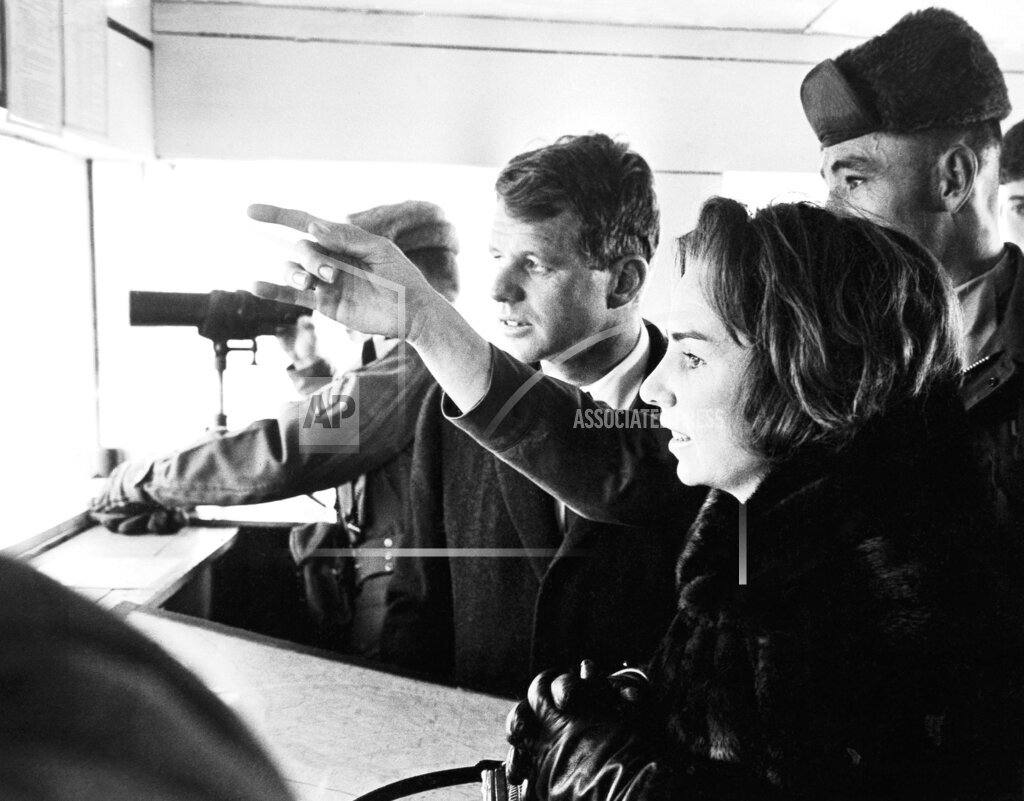
Armed Communist and West Berlin policemen faced each other at the wall today in the most serious border incident since the Christmas holiday period. The confrontation came as a 17‐year‐old East German climbed the wall and got entangled in the barbed wire at the top. His foot was hit by a bullet. The West Berlin police shouted across the wall that they would shoot back unless the firing stopped. When the East German guards held their fire, several West Berlin policemen rushed to the wall and helped the bleeding youth over to the Western side. He was taken to a hospital. A few hours later, the official East German press agency A.D.N., protested that the West Berlin police had committed a “gross violation of the border.”
Chancellor Ludwig Erhard’s Minister for Special Tasks, Heinrich Krone, will go to Paris tomorrow to express West Germany’s concern over France’s intention to recognize Communist China. Dr. Krone, a strong advocate of close French‐German cooperation, has an appointment with President de Gaulle on Tuesday. Although officials here gloomily believe that the die is already cast, Dr. Krone is expected to convey the grave misgivings in Bonn over General de Gaulle’s intended diplomatic stroke. The opinion in responsible quarters here is that the Atlantic alliance would be hard hit by the establishment of relations between France and China. Officials in Bonn believe that French‐German relations will be strained. This judgment is based on the foreseeable impact of President de Gaulle’s act upon West German interests.
The Catholic Republican opposition party in France (M.R.P.) warns President Charles de Gaulle his move to recognize the Red government of mainland China could shatter the western alliance. The party’s policy making committee insists most French political groups want close ties with the United States and do not approve De Gaulle’s unilateral moves in Asia.
President Diosdado Macapagal pledged his full cooperation today with Attorney General Robert F. Kennedy’s efforts toward a peaceful settlement of the Malaysian crisis. Mr. Macapagal said prospects for an early meeting of the heads of state of Malaysia, Indonesia and the Philippines on the issue was “encouraging.” The Philippine President’s pledge was contained in a joint statement after a 2½ hour conference of Mr. Macapagal and Mr. Kennedy at Malacanang Palace this morning. Mr. Kennedy informed Mr. Macapagal of the result of his talks with President Sukarno of Indonesia in Tokyo last week on the Malaysia issue. Mr. Sukarno agreed at that time the issue should be solved through negotiation. Mr. Macapagal noted that the Philippines had endeavored from the beginning to bring about an early reconciliation in the Southeast Asian problem.
Prime Minister Lester B. Pearson denied tonight upon his return from Paris that he had discussed the sale of uranium with President de Gaulle. He said he had no idea where such speculation arose. He said also that Canada’s position toward recognition of Communist China remained unchanged. President de Gaulle had informed him that France would recognize Peking. Reports that Canada was prepared to sell uranium to France were unfavorably received here.
A referendum on rejecting the constitution of Swaziland took place in the British colony (and southern African kingdom) after being called by King Sobhuza II. The Swazi constitution had been imposed by British administrators two weeks earlier, and the vote was purely advisory, and took place without endorsement or supervision by the United Kingdom. The official results showing of 124,380 votes cast in spite of a boycott by British supporters “indicated that 102 percent of the voting-age population had participated” and showed 124,218 for rejection and only 162 votes against and the British colonial office ignored the “somewhat surrealistic” figures.
President Johnson will renew his urgent call for quick action on the $11 billion tax reduction bill in two messages to Congress this week. They are the annual Economic Report, which will be submitted tomorrow, and the Budget Message, to be delivered Tuesday. The proposed Federal budget for the fiscal year beginning next July 1 is no longer a secret. In his State of the Union Message two weeks ago, the President said he would seek $97.9 billion, surprisingly $500 million less than the last budget. But Mr. Johnson has said his new budget will supply more for education, health and an anti‐poverty program than ever before. How he will do more for less is detailed in the budget volume.
The tax bill, voted by the House of Representatives, is before the Senate Finance Committee. However, the pace of the committee’s consideration does not seem to be quickening. It is hoped now that all committee voting can be completed by the middle of this week. Allowing another week or so for staff work on the Economic Report, the bill could reach the Senate floor before the end of the month. Passage before the recess for Lincoln’s Birthday, February 12, would then be possible. Keeping to that tight timetable would not only permit an early tax reduction, as the President desires for bolstering the economy, but also clear the way in the Senate for an extended debate on civil rights legislation.
Hearings on the rights bill will go into the third week before the House Rules Committee. Leaders hope to wind up arguments with Southern opponents on the committee in time to get the bill past the House before the Lincoln Day recess. The two Democratic Senators from Minnesota, Hubert Humphrey and Eugene J. McCarthy predicted today that the required two‐thirds vote could be obtained to close debate in the Senate and bring the broad rights measure to a vote.
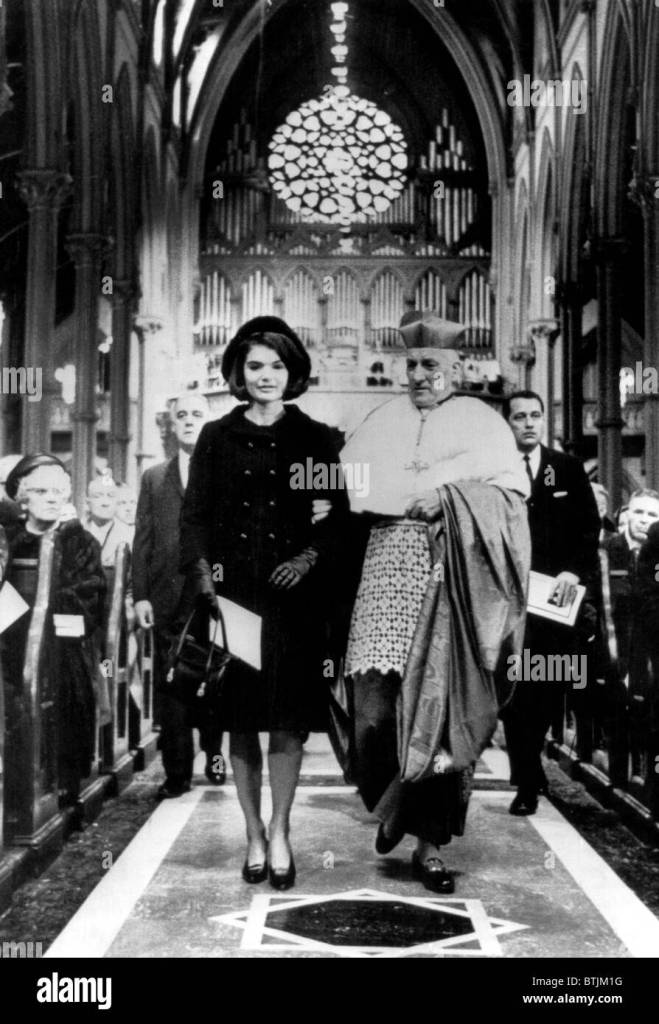
Boston offered cultural and liturgical homage today to the memory of John Fitzgerald Kennedy, a native son. The tribute was a performance of Mozart’s Requiem in D Minor by the Boston Symphony Orchestra during a solemn pontifical mass celebrated by Richard Cardinal Cushing in the Cathedral of the Holy Cross. The orchestra was conducted by Erich Leinsdorf. In a brief address at the close of the mass, the Roman Catholic prelate paid tribute not only to the President but also to his widow and his mother. Cardinal Cushing spoke of the “stalwart heart of Mrs. John F. Kennedy.” He called Mrs. Joseph P. Kennedy a symbol of “maternal strength and absolute confidence in God.” Senator Edward M. Kennedy, a brother of the President, and Mrs. Eunice Shriver, a sister, also were present. The immediate family received communion from the hand of the Cardinal.
Governor Rockefeller’s organization plans to invade the South in an attempt to win delegates to the Republican National Convention. The New York Governor’s staff intends to set up Rockefeller‐for‐President groups in every state in the South. In addition, his representatives plan to woo Republican leaders in the Old Confederacy to convince them that Mr. Rockefeller deserves their support. Supporters of Senator Barry Goldwater, the only other announced candidate for the Republican Presidential nomination, have claimed the South for the Arizonan. A Rockefeller invasion of this territory would thus represent an attempt to infiltrate a Goldwater bastion.
President Johnson and his wife took the pastor of the Thurmont (Md.) Old Methodist Church by surprise by showing up at the 11:15 a.m. services.
The California Poll finds that among California Democrats, Robert F. Kennedy leads all others as first choice for the Vice-Presidential nomination, assuming that Lyndon Johnson is the Presidential nominee.
The Harris Survey reports that of all the names in contention for the Republican nomination for President, that of Richard M. Nixon consistently receives most support from rank-and-file Republicans.
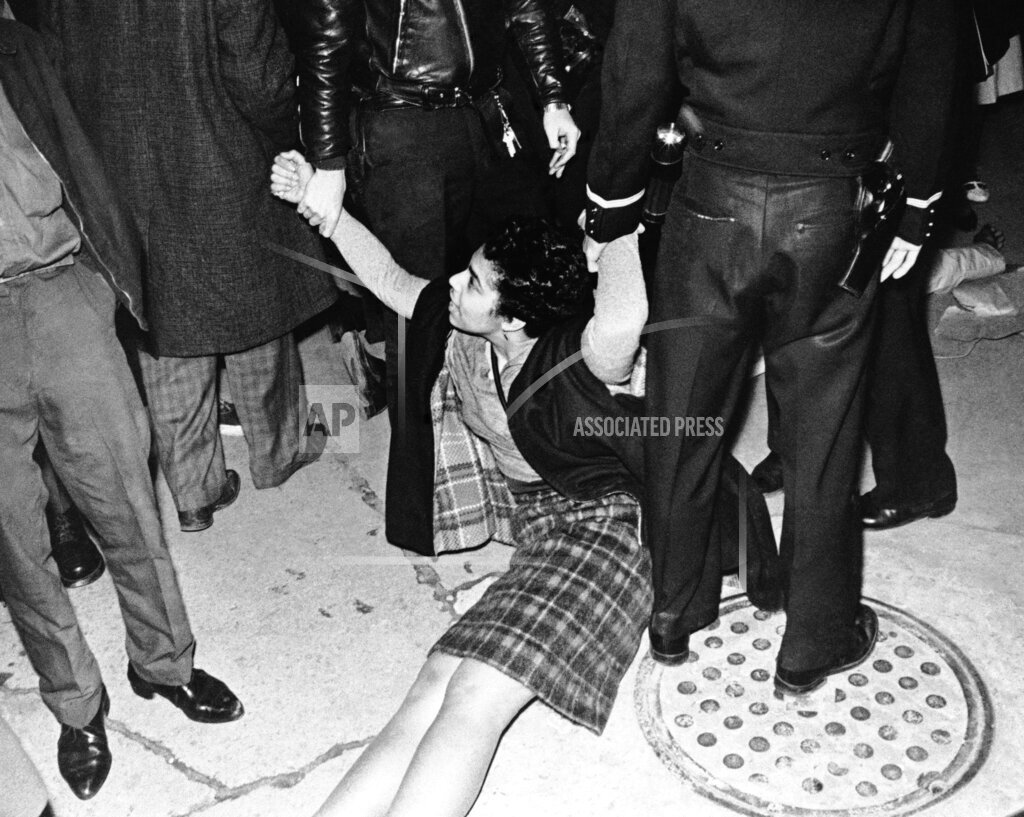
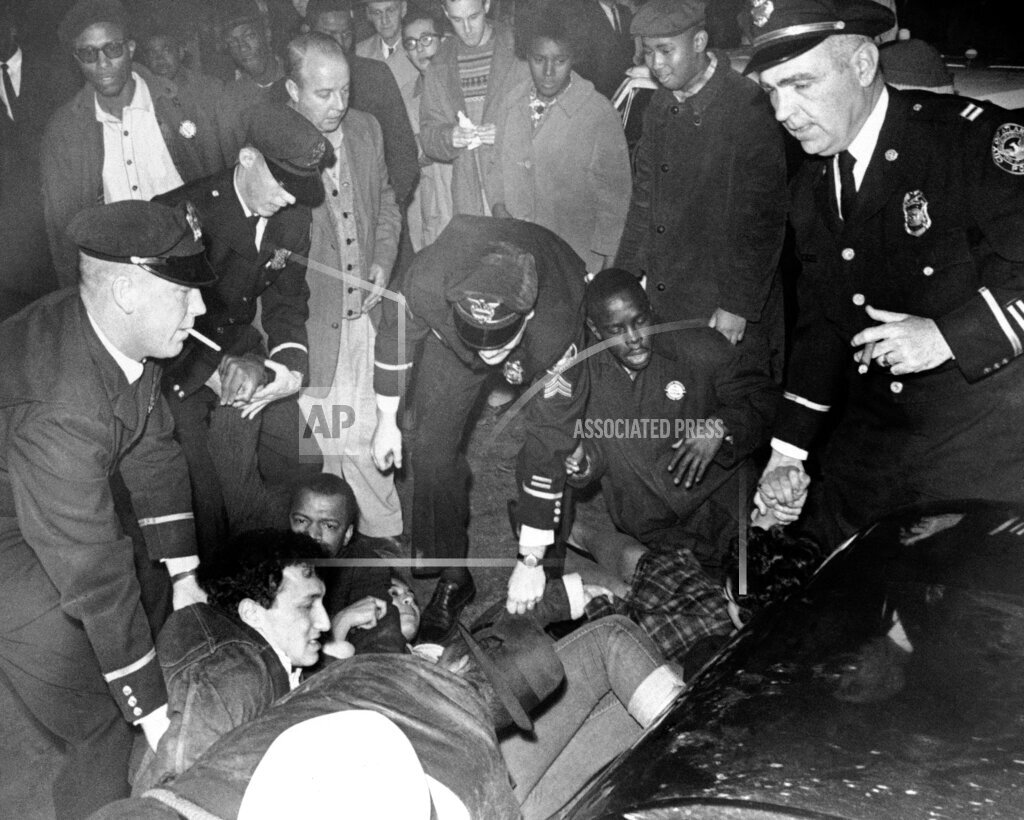
The Congress of Racial Equality asked the FBI to investigate the burning of 150 crosses in Louisiana, said to signal a revival of the Ku Klux Klan.
Federal compulsion probably is inevitable to breach barriers that bar most non-whites from skilled crafts and jobs, the Civil Right Commission said.
Santo (Sam) Perrone, Detroit gang member questioned in the 1948 ambush shooting of Walter P. Reuther, is injured seriously in an explosion in his parked automobile. He is in critical condition. George Edwards, former Detroit police commissioner and now a federal judge, once identified Perrone as a Mafia or Cosa Nostra member.
Rep. Harold D. Cooley (D-North Carolina), representing the nation’s leading tobacco growing state, contends the FTC has no authority to require a health hazard warning on every package of cigarettes. Cooley warns that if the agency can control or curb cigarette packaging, it could do the same with eggs and milk, which tend to increase the cholesterol level in blood, which in turn appears related to certain heart ailments.
Planes and ships scan 2,000 square miles of ocean off southern California in search of a balloon flying grandmother, missing in the Catalina channel race. Mrs. Barbara Keith, 41, only woman in the unusual race, is last sighted 15 miles offshore from San Diego. Before the race ends, five contestants crash into the Pacific. Actor Cliff Robertson, who portrayed John F. Kennedy in the film “PT-109,” is one of the rescued pilots. Don Piccard, a member of the famous balloon flying family, crashes in a cactus patch.
A House committee reported that the federal government owns land and property around the world valued at $315 billion or $9 billion more than the national debt.
Dr. Edward R. Annis, president of the American Medical Association, accuses union leaders of injustice to their members in supporting the administration’s medicare measures. Dr. Annis says the increased social security taxes to be imposed under the program would wipe out any tax savings offered under the administration’s tax reduction proposals. He advises union members to ask their leaders why they are so eager to sell them out.
Gordon Lill, a geophysicist, has been chosen to take charge of the Project Mohole, the controversial program to drill a hole to the interior of the earth.
A three-day dispute over pension benefits that threatened to tie up most West Coast shipping has ended with maritime engineers reaching agreement.
3rd AFL All Star Game, Balboa Stadium, San Diego: Western Division beats Eastern Division, 27—24; MVPs: Keith Lincoln, San Diego Chargers, fullback; Archie Matsos, Oakland Raiders, linebacker.
Born:
Clinton Smith, NBA shooting guard (Golden State Warriors, Washington Bullets), in Cleveland, Ohio.
Mark Bellini, NFL wide receiver (Indianapolis Colts), in San Leandro, California.
Ralph Van Dyke, NFL tackle (Cleveland Browns), in Chicago Heights, Illinois.
Jim Morris, MLB pitcher (Tampa Bay Devil Rays), inn Brownwood, Texas.
Mark Grater, MLB pitcher (St. Louis Cardinals, Detroit Tigers), in Rochester, Pennsylvania.
Ricardo Arjona, Guatemalan singer and songwriter, in Jocotenango, Guatemala.
Died:
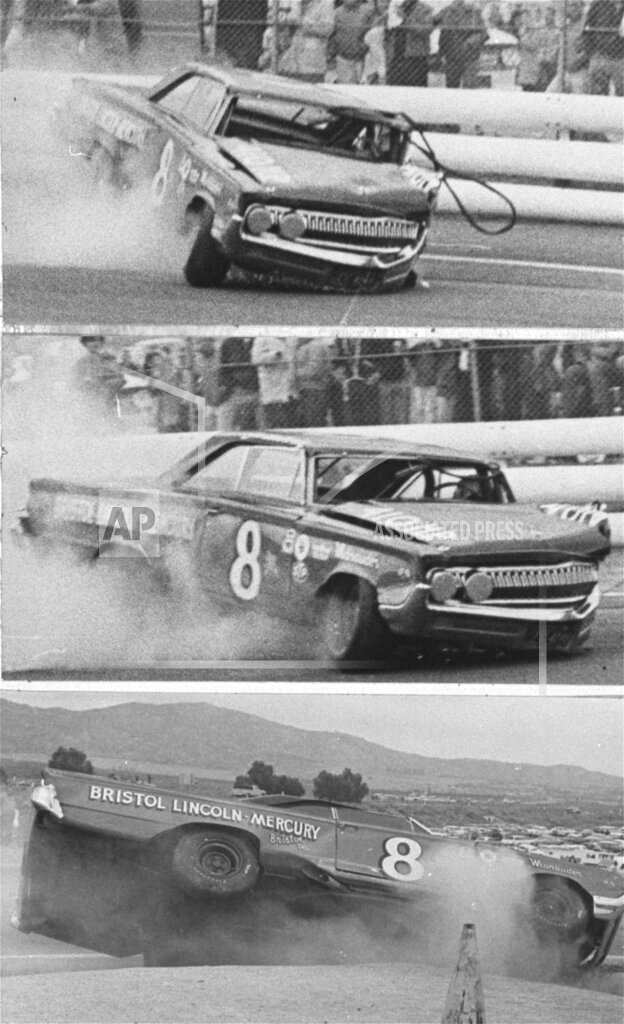
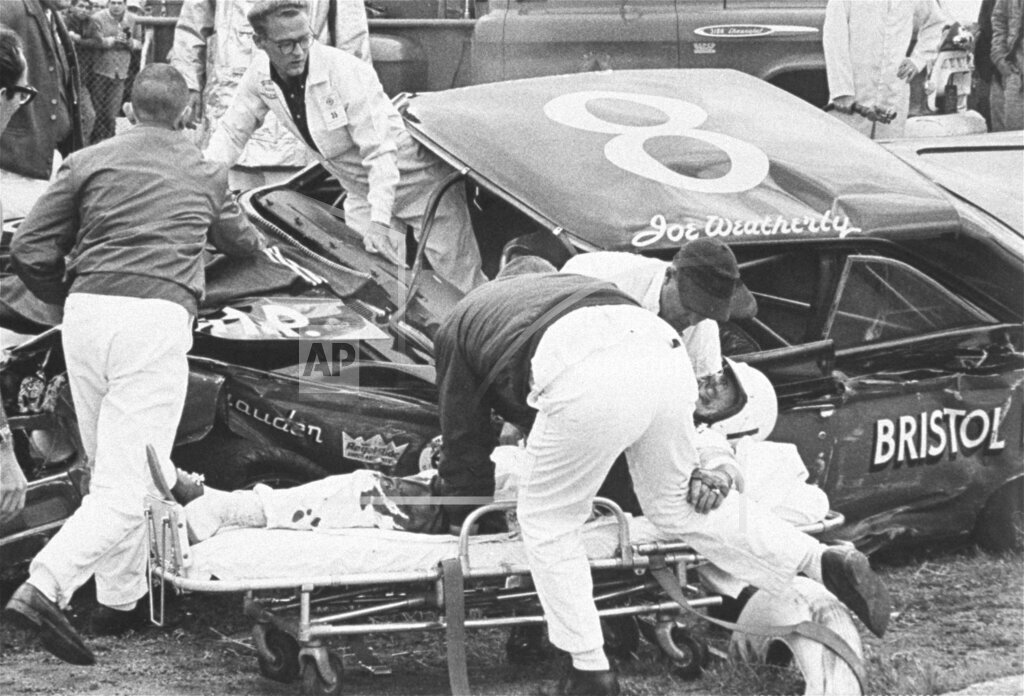
Joe Weatherly, 41, the defending NASCAR Grand National champion, was killed at the Riverside International Raceway in California when his car skidded into a retaining wall on the 76th lap of the Motor Trend 500. Weatherly had taken a difficult turn at 100 mph, leading to speculation that his accelerator had gotten stuck.
Firmin Lambot, 77, Belgian racing cyclist who twice won the Tour de France (1919, 1922).

 History Diaries