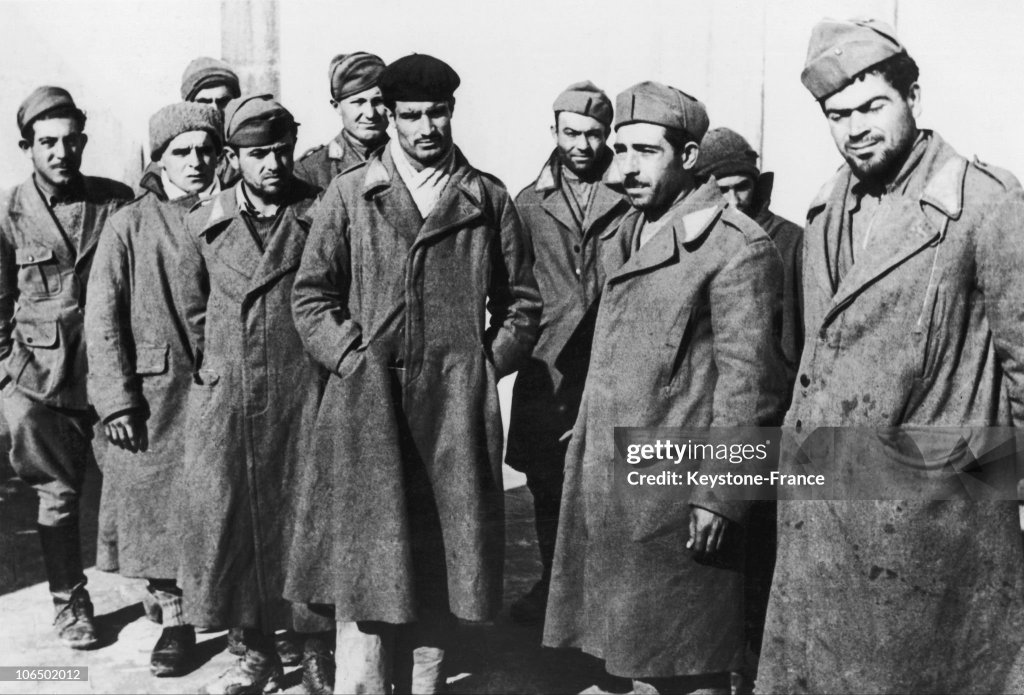
The Spanish rebel drive into Catalonia slackened pace today, but mainly for the purpose of consolidating the gains made in the last week, rather than because of pressure by the loyalists. The government, however, claimed its first recent success. Barcelona reported that loyalist troops counterattacked and recaptured Santa Coloma de Queralt, southwest of Igualada, the first town the rebels took after entering Barcelona province. Rebels said the loyalists’ weekend retreat was so hasty that their own three armies advancing on Barcelona moved forward so fast they had difficulty maintaining contact.
Today the rebels contented themselves with cleaning out pockets left by the loyalists, moving up heavy artillery, establishing strong bridgeheads to protect the crossing of rivers by their armies, and with reforming their lines. Only in the center of the Catalonian front did the rebels report gains. From Cervera, which was captured yesterday, the rebels drove ten miles eastward. They captured fifteen more villages in that sector west of Igualada and were only thirty-one miles from Barcelona. As the rebel line is now shaping, it runs from Tamarit, on the Mediterranean coast about six miles east of Tarragona, northward to the east of Catllar, along the west bank of the Gaya River to Bellprat, northward past Santa Coloma de Querelt and northwestward between Artesa and Pons, and thence northward to Andorra. The rebels claimed to hold positions dominating Pons.
Along much of this front the loyalists are more than a mile away from the rebels. The secret fortifications with which the loyalists expect to prevent further rebel advance toward Barcelona are generally believed to run from the Mediterranean coast west of Vendrell, northward to the west of Villafranca and Igualada. The line is about 35 miles west of Barcelona. Since the rebels began their drive on December 23, the loyalists have used the strategy of withdrawing without a decisive battle, preserving their manpower and materials. The rebels declare the time has come when the loyalists will be forced to fight to defend their remaining Catalonian territory. With the hasty training of recently called recruits under 18 years of age and from 39 to 45 years, it is expected that Catalonia will be able to put in the field an army of 400,000 men to face General Francisco Franco’s 300,000 men on the front. However, observers believe Franco can increase his forces to 500,000.
Barcelona charged that because of German and Italian aid, the rebels have an overwhelming superiority of material amounting to about 6 to 1 in artillery and an accumulation of 800 warplanes. A Barcelona dispatch denied that Premier Juan Negrín had gone to Paris to plead with the French government to open the frontier for the shipment of arms and supplies to Catalonia. The rebels now hold thirty-seven of the forty-nine mainland provincial capitals of Spain. The twelve capitals which the government still controls are Alicante, Almeria, Albacete, Barcelona, Cuenca, Ciudad Real, Gerona, Guadalajara, Jaen, Madrid, Murcia, and Valencia. The rebels say there are about 14,000,000 persons in rebel territory against 8,000,000 in the separated government areas and that the rebels control about 1,550 miles of coastline compared with 470 miles in government hands.
The Duke of Alba suggests the Spanish monarchy may be restored after the civil war ends.
France today decided to stay clear of the Spanish civil war. The government said it would not give aid to the Spanish government unless Great Britain did, and Britain was determined not to intervene. Risk of a European war was considered too great. Government leaders wrestled with the problem throughout the day and at one point considered the advisability of acting on their own. But the bugaboo of a war in which France might find herself alone was too much. Foreign Minister Georges Bonnet announced that France would revise her policy of non-intervention in Spain only if Britain did. He was careful, however, not to close the door too tightly on the hopes of a considerable portion of the French parliament, which is demanding help for the Spanish government.
Premier Daladier’s plight in the face of the rebels’ advance on Barcelona and the unwillingness of England to sanction open aid to the Spanish government armies was put on public display in the Chamber of Deputies. There Daladier and his ministers were assailed by communists and Socialists in front of their own Radical-Socialists, who also demanded aid for Barcelona. Behind these demands was a threat to band together in an effort to cripple the cabinet. Leon Blum, leader of the Socialists, who are numerically the strongest party in the chamber, called on the tumultuous session to go on record on the Spanish question.
The eighth ordinance of the Reich Citizenship Act is passed, barring Jewish dentists, veterinarians and chemists from practicing their professions. Jewish dentists may only treat Jewish patients.
With all German and stateless Jews completely eliminated from German economic life, the Elite Guard organ, the Schwarze Korps, authoritative prophet of all Nazi anti-Jewish measures, proclaimed today a boycott on foreign Jews still doing business in Germany. This is particularly significant in view of the recent exchange of notes between the United States and German Governments. In this exchange Germany refused the American request for general assurances that the anti-Jewish measures would not be applied to American Jews and in principle maintained her right to “differential treatment” of American citizens according to their race or creed. Nevertheless, she promised to “examine and settle” any specific cases of such differential treatment brought to her attention under German-American treaties. As there are but few American Jews to whom this differential treatment could be applied Nazi Germany is able to safeguard her discriminatory principle at the cost of at most a few thousand marks for the “practical settlement” of specific cases taken up by the United States Embassy.
Germany pushes to become the primary supplier to Chile. Britain would be hurt more by the move than the United States.
The Worldwide Jewish Congress refuses to accept a Jewish relocation plan that rewards Germany economically.
Approximately 80,000–100,000 unemployed Czechs are to be sent to Germany.
Denmark, Latvia and Estonia sign a nonaggression pact with Germany. Norway, Sweden and Finland insist on strict neutrality.
Slovakian premier, Father Tiso, declares his foremost task is to solve the “Jewish question.”
The Irish Republican Army is blamed after bomb blasts hit Britain. IRA bombs blast London, Manchester, Birmingham and Alnwick in Northumberland. In Barton-upon-Irwell, an attempt was made to bomb an electricity pylon stretching across the Manchester Ship Canal. The bag of dynamite and gelignite failed to explode due to a faulty timer. In Great Barr, a bomb exploded at an electricity pylon, cutting off the supply for a number of hours. In Coleshill there were explosions at Hams Hall Power Station, the main source of Birmingham’s electricity supply. In London a bomb exploded at Williams Deacons Bank; gas mains were damaged. The British Government sought to improve security of infrastructure in England. All power stations, gas works, telephone exchanges, and the Droitwich transmitting station were put under police protection. Police patrols around the government buildings at Whitehall were strongly reinforced and all ships from Ireland arriving at Holyhead, Fishguard and Liverpool were closely inspected.
British housewives were advised tonight to begin accumulating stocks of food and also water against a possible emergency. The advice was given by Sir Auckland Geddes, who held several important government positions throughout the World War and is now adviser to Sir John Anderson, Civilian Defense Minister. In a speech at Beckenham, which caused no little alarm, Sir Auckland said: “People should, without creating any disturbance of markets, gradually begin to get extra food to store in their houses. They might also store water in bottles in case waterworks are damaged.” The government is making all arrangements for feeding, he added, “but remember that these may not always work.” Buying now, he explained, is not “food hoarding,” which occurs only when people rush to shops in times of crisis.
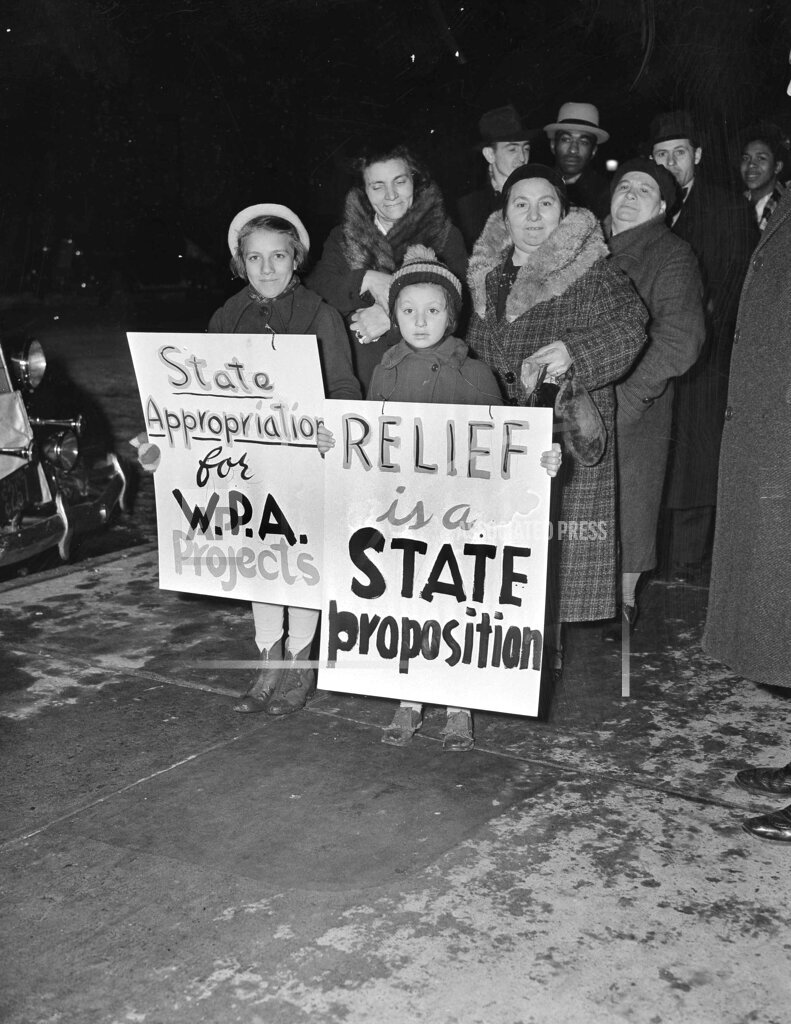
A combination hitherto unfailing in its appeal to Congress — President Roosevelt, the Relief Administration, both factions of organized labor and the United States Conference of Mayors — swung into action with vigor today in an effort to prevail upon the Senate to restore the House’s $150,000,000 cut to the supplemental appropriation for the WPA. Asked at his press conference to comment upon the bill pending before a Senate subcommittee, the President said that more than 1,000,000 WPA workers would have to be discharged by June 1 if Congress did not restore the appropriation to the $875,000,000 which he recommended ten days ago. Earlier in the day Colonel F. C. Harrington, WPA Administrator, had warned the Senate subcommittee of similar reductions, although he did not place the figure so high. Labor’s solid front in support of the larger appropriation was completed when William Green, president of the American Federation of Labor, addressed a letter to Senator Adams, chairman of the Senate subcommittee, urging restoration of the $150,000,000.
The anti-spending coalition of Republicans and conservative Democrats in congress today prepared for a fight to the finish against President Roosevelt’s revival of two controversial easy money projects. One is the harnessing of the tides for power at Passamaquoddy, Maine; the other is a shipping canal across Florida to connect the Gulf of Mexico with the Atlantic Ocean. As soon as the President made known his proposal to complete the projects, the anti-spending group. which halted previous attempts to revive the projects announced that they would again work to defeat the pet Roosevelt measures. They expressed themselves as confident that they would kill the proposal by a crushing vote.
The President called for completion of the projects in a letter to Representative Joseph J. Mansfield (D-Texas), chairman of the House Rivers and Harbors Committee. He asked that the committee, which last year refused to give consideration to the completion of the two projects, give them new and favorable consideration this year. The cost is estimated at 100 million dollars. The projects are particular favorites of the President. He started work on the Quoddy project and the ship canal over the adverse reports of army engineers and other experts. The scheme to harness the tides drew heavy criticism on the ground that once the power was produced, there would be no outlet for it because it could not be transmitted profitably to New England industries. The Florida canal, which would extend across the state from Mayport on the Atlantic side to Point Inglis on the Gulf side, was assailed as unnecessary and possibly dangerous to the state’s fruit industry through possible seepage of salt water through underground channels into the agricultural land.
The CIO attempts to mend a rift among auto union factions.
Eleanor Roosevelt defends the press, saying that the public is right to fear a government with too much influence.
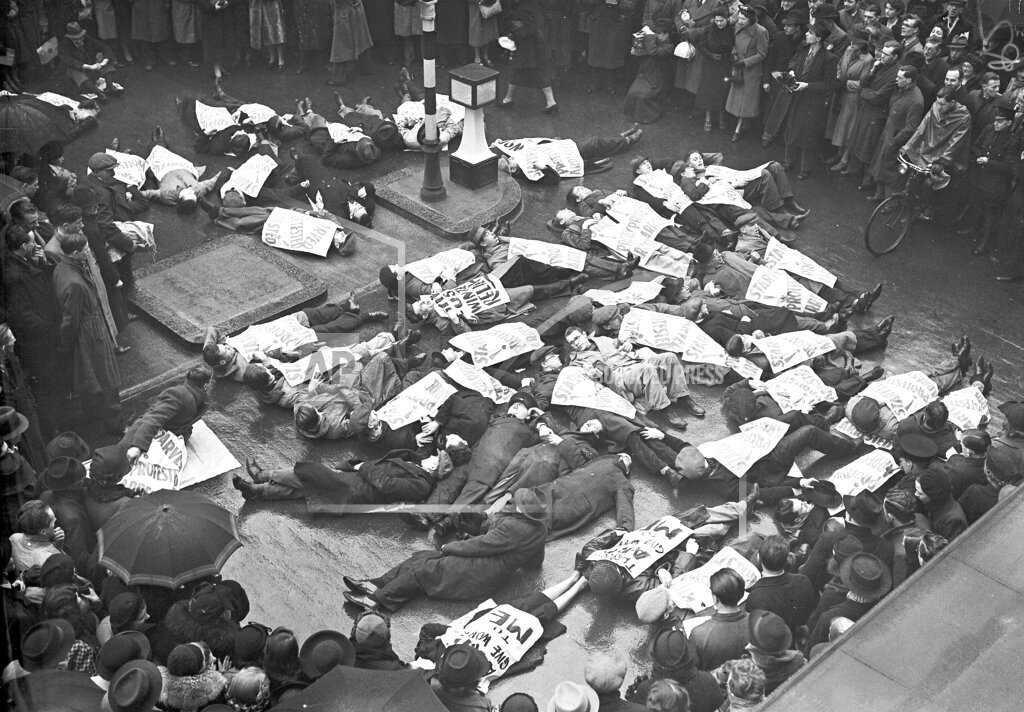
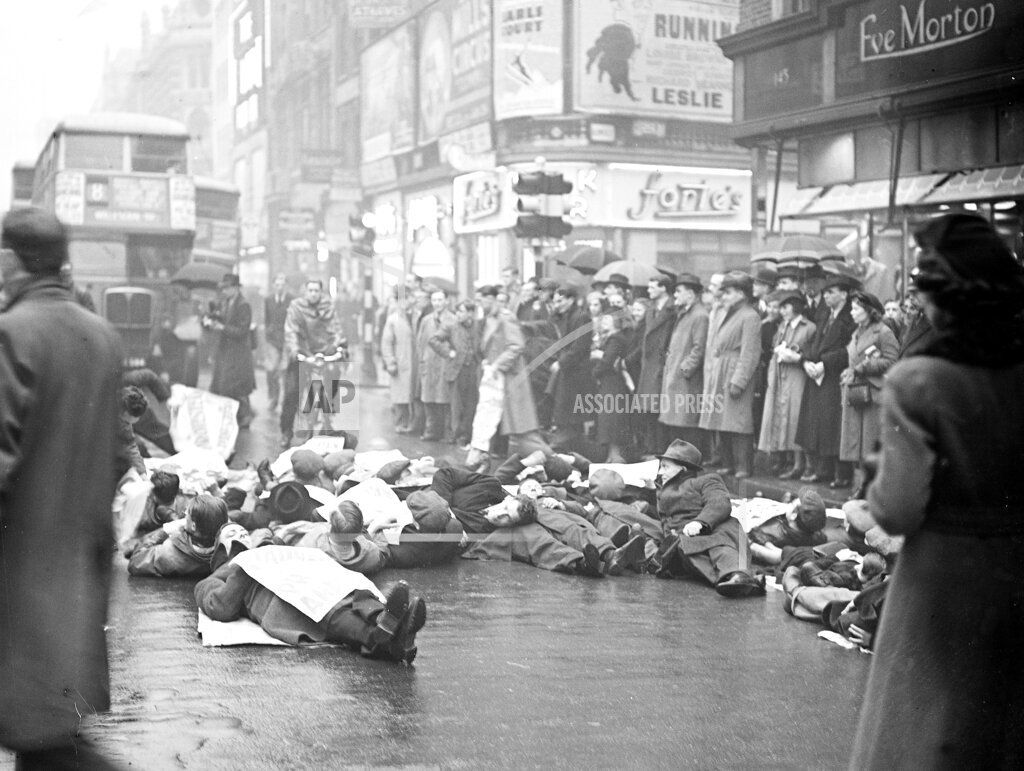
Theater employees use sit-down strike tactics to protest WPA budget cuts.
An integrated system of relief — federal, state, and local — is urged.
J.P. Morgan quits the board of the American Museum of Natural History after 30 years.
A government attorney declared in court yesterday that he was prepared to prove that Murray Humphreys, one time lieutenant of Al Capone, received $50,000 as a kidnapping ransom in 1931 — and did not pay income taxes on the amount.
Ed Barrow is elected New York Yankees president succeeding deceased Jacob Ruppert.
Boxer Joe Louis begins intense training for his heavyweight bout against John Henry Lewis.
Church leaders urge closing of the New York World’s Fair on Sundays.
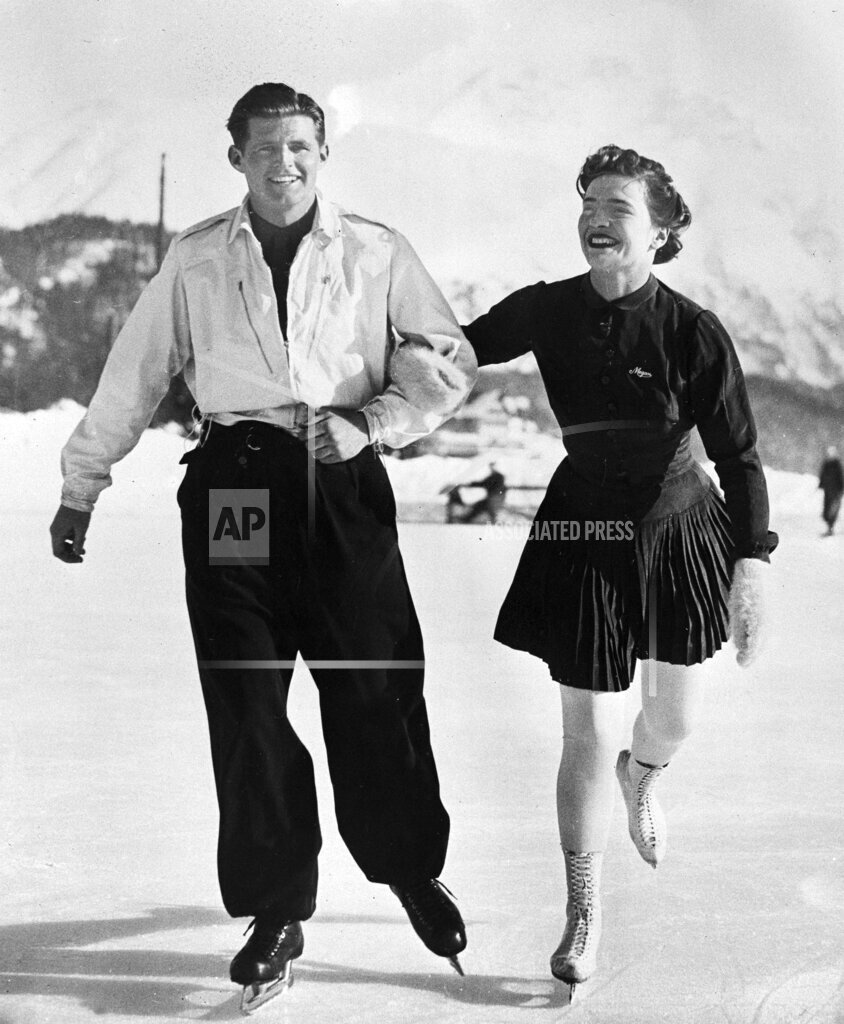
About 14,000 spectators welcome Olympic gold medalist Sonja Henie at an ice skating program held at Madison Square Garden in New York.
On a secret mission indicative of closer Mexican-German relations — an outgrowth of Mexican economic dependence on oil barter deals with Germany — General Juan F. Azcarate is rushing by plane through the United States tonight to catch the Hamburg-American liner Hansa at New York tomorrow en route to Berlin. From his landing point in Europe, he will fly to the German capital. Interviewed aboard a Pan American Airways plane flying between Mexico City and Brownsville today, General Azcarate asserted, “I must get to Berlin in a hurry,” but he did not amplify his statement. General Azcarate has just been reappointed Mexican Minister to Berlin. He was withdrawn from the post at the end of 1937 and assigned to army service in Mexico. In the interim Mexico has seen fit to maintain only a subordinate in charge of her diplomatic interests in Berlin, as the United States Government is now doing, although its Ambassador, Hugh R. Wilson, is still formally accredited.
Adding interest to General Azcarate’s swift trip is the fact that he is considered the outstanding airplane designer in Mexico. A large proportion of Mexican Army planes now in service were designed by him. Despite Mexican official claims that barter deals with the Reich (in which oil from expropriated American and British properties is exchanged for German machinery and other products) are purely commercial in character, there are growing indications that political relations with the Nazis are growing closer. These barter deals bid fair to deliver a body blow to the already waning United States-Mexican trade.
Heavy fighting developed along the Yellow River in northeast China today when Japanese infantry, supported by aerial and artillery bombardments, attempted an invasion of Shensi province. Chinese commanders said they repulsed two Japanese thrusts in southwest Shansi province. Casualties were reported high on both sides. In rearguard attacks, Chinese guerrillas raided railways and highways traversed by Japanese. One troop train was reportedly derailed, killing twenty Japanese and injuring thirty. Renewed fighting also flared in east Homan province. The Chinese reported the recapture of Luyi, where they said the Japanese suffered 500 casualties. In Kiangsi province the Japanese directed a general offensive toward the Lushan mountains, seeking to capture the Kuling mountaintop resort where 2,500 Chinese have been holding out.
An American-built military airplane with heavy armament has arrived at Rangoon, Burma and is being sent across the frontier to China. The airplane is a demonstration model, sent in advance of others that are coming on specially chartered ships. American pilots have begun to arrive here en route to China to train the Chinese with the new planes. A consignment of machine guns for China arrived on the ship that brought the airplane.
Japanese and Chinese are buying more U.S. products.
Dow Jones Industrial Average: 148.93 (+0.67).
Born:
Maury Povich, American television personality, in Washington, District of Columbia.
Archbishop Christodoulos of Athens and All Greece, in Xanthi, Thrace, Greece (d. 2008).
Bob Giraldi, American film and television director (music video for Michael Jackson’s “Beat It”), in Paterson, New Jersey.
Naval Construction:
The Marine Nationale (French Navy) battleship Richelieu is launched by Arsenal de Brest (Brest, France).



 History Diaries