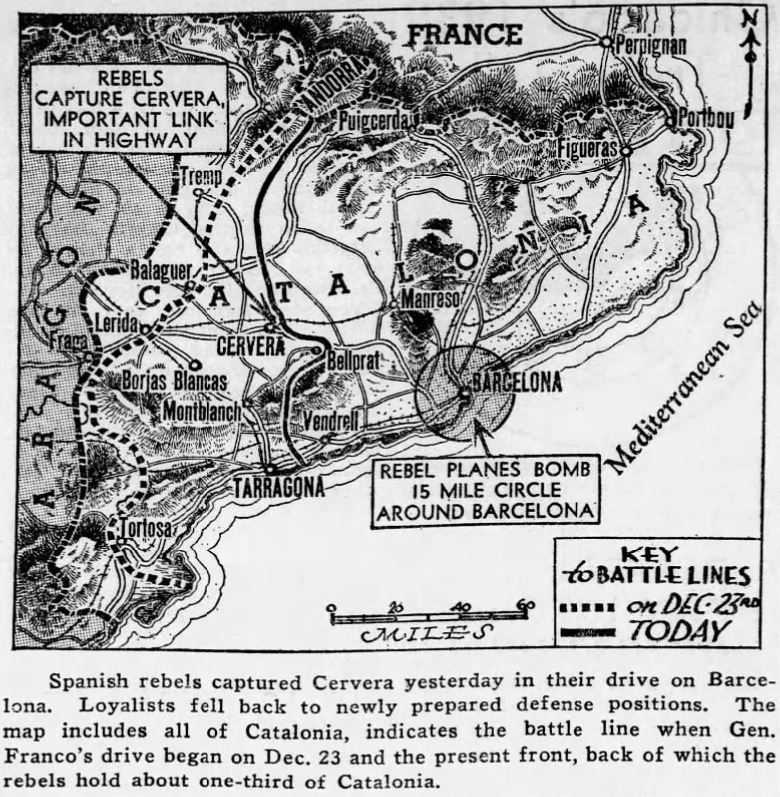
Three Spanish rebel armies closed in on Barcelona tonight after a day of continued advances. Despite a surface calm, mounting uneasiness was reported in the menaced capital. The nearest rebel force was barely more than thirty-three miles away. From field headquarters at Lérida, Generalissimo Francisco Franco appealed by radio to Republican Spain to lay down its arms, asserting a rebel victory was inevitable. His message said the rebels were marching on Barcelona “not to destroy her but to save her.” Dispatches received in London said Premier Juan Negrín of government Spain had left Barcelona on a secret visit to Paris to urge the French government to open its frontiers for movement of arms to his hard-pressed forces.
Travelers reaching the border from Barcelona declared the rebel advance, which began on December 23, was a full week ahead of the very best the government general staff thought Franco’s men could do. Some said the capital might fall within three weeks. Roads of central and southern Catalonia were jammed with refugees from the zone in which the government’s new line of “secret defenses” were built in the mountains along the borders of Barcelona province. The refugees hampered troop movements and created a serious food shortage in the capital. Against the government’s new defense line, to which militiamen fell back after abandoning the important port of Tarragona yesterday, the rebels pitted three full army corps totaling almost 150,000 men on a front less than 50 miles long.
The largest town to fall during the day was Cervera, formerly a community of 4,000 inhabitants 65 miles northwest of Barcelona on the trunk highway to Lérida. It is in a rich agricultural district. Today’s action marked the first time during the 30-month-old civil war that the government has been outnumbered in manpower as well as mechanical equipment. The southernmost rebel army was deployed along the main coastal highway from Tarragona northeast to Barcelona and in the foothills of mountains rising from a narrow plain along the Mediterranean. Rebel warships bombarded the sea coast.
The other two armies were converging on Igualada, believed to be the northern end of the new government lines. Igualada, like Cervera, lies on the Lérida-Barcelona highway. It lies twenty-two miles east of Cervera and forty-three miles northwest of Barcelona. One of the two armies converging on Igualada, advancing from Bellprat, already was within the borders of Barcelona province and only twelve miles southwest of the town. The other was advancing eastward from Cervera along the highway.
Fleets of rebel planes smashed at a fifteen-mile circle around Barcelona. They dropped half-ton bombs and were reported to have strafed the refugee-packed road from Tarragona with machine gun bullets. The number of dead was unknown. Six towns were bombed and machine gunned in the path of the rebel advance toward Barcelona. Twelve miles south of Barcelona a bomb hit a civil hospital and destroyed the operating room. Five attendants were hurt. Five rebel bombers roared over Barcelona in the early afternoon as refugees stood in long queues at food distribution centers.
Italian Premier Benito Mussolini states that French-Italian issues cannot be considered until after the Spanish civil war ends.
Foreign Minister Georges Bonnet of France told the League of Nations council today that foreign combatants must be withdrawn from both sides in the Spanish Civil War before there can be any Mediterranean appeasement. The speech was regarded as a challenge to Premier Mussolini of Italy, who has been represented as confident of a rebel victory soon and confident that Italy’s support of the victory would lend weight to the Fascist agitation for Mediterranean concessions from France. The Italian foreign office disclosed on Sunday that Mussolini had informed Prime Minister Chamberlain of Britain that any conciliation of the French-Italian Mediterranean quarrel must await the end of the Spanish war.
Bonnet spoke after a league committee reported it was “morally convinced” all foreigners had been withdrawn from the government front. A few remain in camps behind the lines, the committee said. The French foreign minister said total evacuation of foreigners from rebel areas must follow completion of evacuation of alien combatants from government Spain. “Then, and only then,” he said, “would it be possible to speak of an appeasement in the western basin of the Mediterranean.” Many thought this meant no negotiation between France and Italy until the Italians get out of Spain. Il Duce has withdrawn 10,000 Italians from rebel armies, but a number still remain. The Spanish government has charged that the 10,000 withdrawn have been replaced. Authorized sources said Bonnet would tell the French Chamber of Deputies that Mussolini had authorized a formal statement by the British government that Italy would respect the territorial integrity of Spain.
The Fascist press in Rome today warned France that any French attempt to save the Barcelona (loyalist) government in Spain would dash itself against the Rome-Berlin axis. Newspapers also called on the Italian people to be ready to avenge French “insults” against their national honor. It was announced officially that a column of Italian soldiers was among the first Spanish rebel troops to enter Tarragona, Spanish seaport which fell to the rebels yesterday.
Germany today joined her ally, Italy, in warning France against giving aid to loyalist forces in Spain. Giving wide publicity to Italian reports that France plans to send “several divisions of regulars to Catalonia,” Nazi newspapers said: “France would be ill advised in attempting to play a last trump card in Barcelona. Mussolini has not formulated Italy’s claims on France, but Franco’s guns and the Italian volunteers in Spain speak for him.” Italians have been clamoring for a slice of France’s African empire.
Britain and France may give free port privileges in Djibouti to Italy.
The German foreign minister visits Poland to celebrate the fifth anniversary of the nonaggression pact between the two countries.
The League of Nations Council began its one hundred-fourth session in Geneva.
The IRA formally declares war on Great Britain. The Irish Republican Army (IRA) begins a 14-month-long bombing campaign, the S-Plan, in England. It was conceived by Seamus O’Donovan in 1938 at the request of then-IRA Chief of Staff Seán Russell. Russell and Joseph McGarrity are thought to have formulated the strategy in 1936. During the campaign there were 300 explosions/acts of sabotage, 10 deaths and 96 injuries.
Five bombs exploded on this day in London, while three exploded in Manchester. According to The Times (on 18 January), another one targeted Hams Hall Power Station and two of the principal water mains supplying the station. A porter was killed in Manchester. Armed police guards were posted at power stations and reservoirs.
Destroyer HMS Anthony collides with an auxiliary sailing barge, the Leonard Piper.
Austrian physicists Lise Meitner and Otto Frisch successfully observed nuclear fission in an experiment in Sweden.
The Senate Judiciary Committee approves Felix Frankfurter for Supreme Court Justice and Frank Murphy as Attorney General.
President Franklin Roosevelt requests an extension of the Social Security Act to benefit children and the elderly. President Roosevelt today recommended in a message to Congress that the existing social security system be expanded and liberalized “rather than turning to untried and demonstrably unsound panaceas.” While thus proposing to head off the Townsend and other radical old age pension schemes, the President recommended no change in the existing practice of financing federal deficits with payroll taxes. The specific proposals of the social security board, which Mr. Roosevelt transmitted to Congress, evaded the controversial issue of the “full reserve” provision of existing law, on the ground that “the treasury department has primary responsibility” in matters of financing.
This was seized upon by Senator Arthur H. Vandenberg (R-Michigan) as confirmation of his contention that the full reserve provision of existing law “is frankly a device to help a hard-pressed treasury.” Under the full reserve provision, payroll taxes on employers and employees for old age annuities go into a reserve fund, which is invested in government bonds and which is scheduled to reach a maximum of 47 billion dollars by 1980. Senator Vandenberg said the provision got into the law for an ulterior and not a social service purpose.
Determined to impress Congress with the necessity of his $552,000,000 minimum defense program, President Roosevelt met today with heads of departments concerned with military, naval and fiscal policy who are expected to be called to testify before Congress.
Polls indicate 73 percent of women and 62 percent of men approve of Eleanor Roosevelt’s active role in U.S. politics.
Sheriff A.F. Stanley said he and his deputies confiscated forty-eight shotguns, rifles and pistols “as a precaution against a possible outbreak of violence” at a Black sharecropper camp north of New Madrid, Missouri late today.
The American Aeronautics Association proposes air-training courses for boys before they attend college.
The assistant of explorer Lincoln Ellsworth crushes his knee and nearly drowns during the Antarctic exploration.
The Chief of Army Engineers requests $350 million for flood control.
Use of frozen gasoline is found to curb plane peril.
Major General Frank M. Andrews, Chief of Army General Headquarters Air Force, in an address to the annual convention of the National Aeronautic Association at St. Louis, said that the United States was a fifth- or sixth-rate air power.
An estimated 33 million hope to attend the nation’s World Fair.
Daily newspaper comic strip “Superman” debuts.
Henry Fonda is to play the lead role in “Young Mr. Lincoln.”
The Antigua Trades and Labour Union is formed “to lead the struggle of the working people against oppressive and exploitative working conditions in the sugar industry and the port.”
A new constitution is being formed in El Salvador.
The Chilean leadership determines to help the poor, even at the expense of other classes of citizens.
The United States and Britain jointly protest Japan’s plan to dominate China and subordinate third-world countries. Great Britain bluntly told Japan in a stiff note released for publication this morning that she is not prepared to accept or recognize Japan’s proclaimed guardianship over China. The London government rejected any change in the status China brought about by force. Japanese officials as well as the press made no comment, but it was evident Tokyo is highly displeased. Unofficial quarters said the communication plainly indicates joint action by the United States and Britain. The British note was handed to Foreign Minister Hachiro Arita Saturday by Sir Robert L. Craigle, British ambassador to Tokyo.
The Japanese government is suspicious of the proposed U.S. fortification of Guam, and threatens to smash whoever attempts a foothold in China. The United States today was warned against fortifying Guam and Wake islands in the Pacific if President Roosevelt’s government intends using the islands as a means of getting a political grip in China. The warning was issued by the newspaper Kokumin Shimbun, which is regarded as a spokesman for Japanese military circles. If the United States intends to interfere with Japan’s proclaimed guardianship over China, the newspaper said, “the Japanese people are determined to smash the American fleet.”
Dow Jones Industrial Average: 148.26 (No change).
Born:
Paul Dudley, NFL halfback (New York Giants, Philadelphia Eagles), in Fort Smith, Arkansas (d. 1987).
Ramon “Ray” Philips, Welsh rock singer (Nashville Teens – “Tobacco Road”), in Tiger Bay, South Wales, United Kingdom.
Naval Construction:
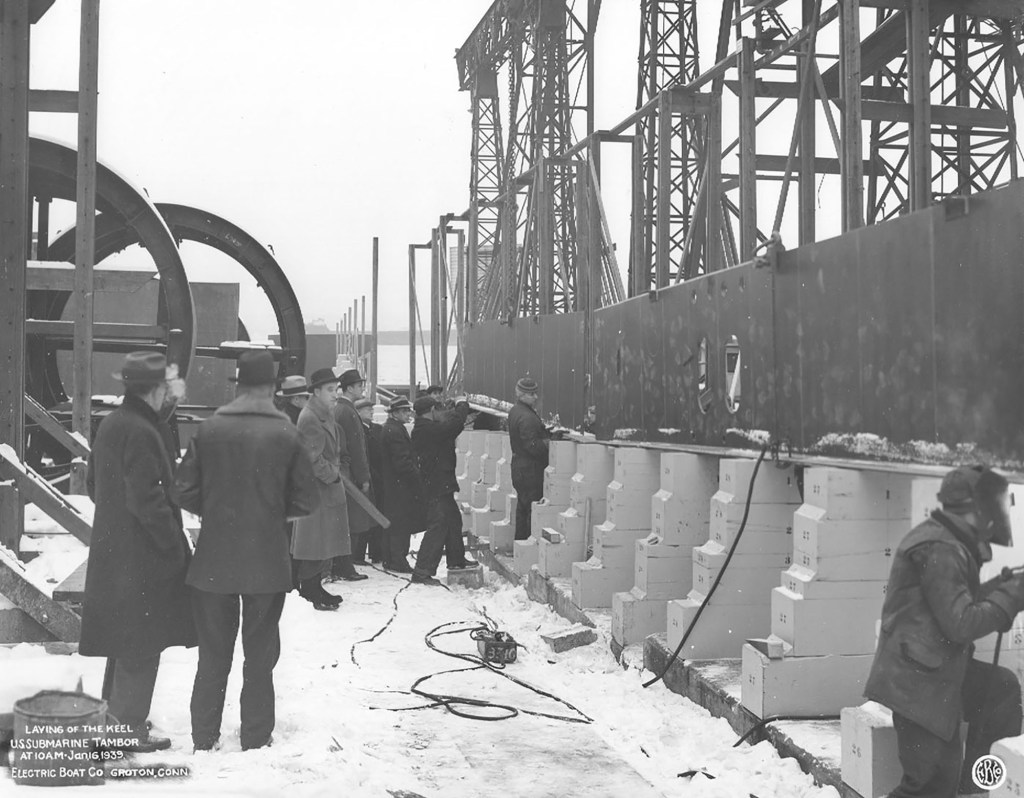
The U.S. Navy submarine USS Tambor (SS-198), lead boat of her class of 6, is laid down by the Electric Boat Co. (Groton, Connecticut, U.S.A.).
The Marine Nationale (French Navy) Elan-class minesweeper FS Commandant Duboc is launched by A & Ch Dubigeon (Nantes, France).
The U.S. Navy Sargo-class submarine USS Sculpin (SS-191) is commissioned. Her first commanding officer is Lieutenant Commander Warren Dudley Wilkin, USN.



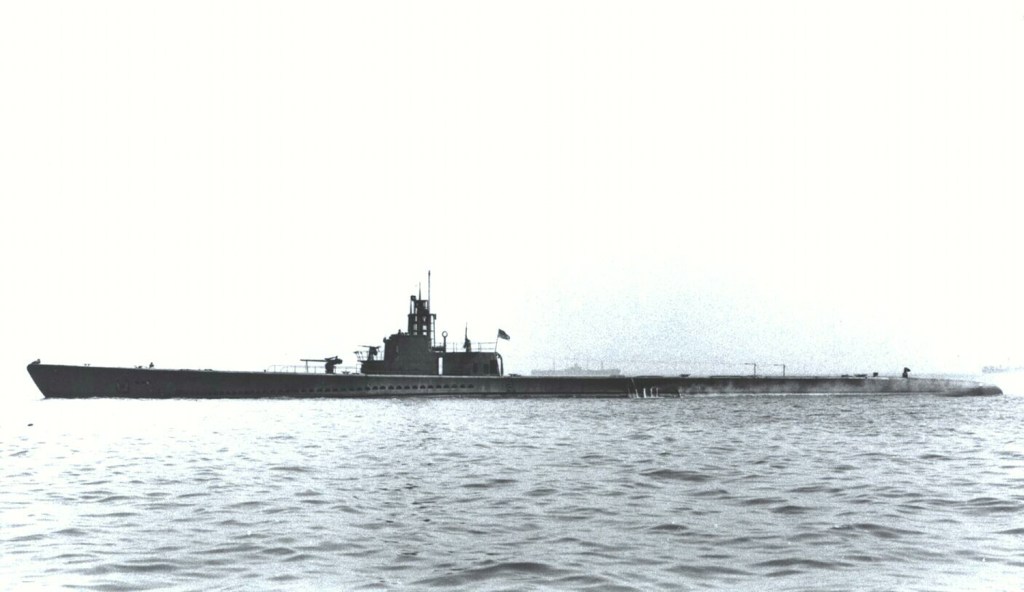
JANAC credits Sculpin with sinking three ships for a total of 9,835 tons in 9 war patrols. She was awarded the Asiatic-Pacific Campaign Medal with eight battle stars for World War II service and the Philippine Presidential Unit Citation (Republic of the Philippines).
During her shakedown cruise USS Sculpin was diverted to help search for the missing sister boat USS Squalus (SS 192). Squalus had sunk due to mechanical failure on 23 May 1939. Sculpin found the sunken submarine and aided the submarine rescue ship Falcon as she rescued all 33 surviving men from the non-flooded areas of the Squalus. 26 men drowned in flooded aft section the sinking.
Lost 19 November 1943. She remains on eternal patrol.
Following a brief overhaul period at Pearl Harbor, Sculpin – commanded by Fred Connaway – departed Hawaii for her ninth war patrol on 5 November 1943. Ordered to patrol north of Truk, she was to intercept and attack Japanese forces leaving Truk to oppose the forthcoming invasion of Tarawa in the Gilbert Islands. Sculpin and two other submarines were to form a wolf pack to make coordinated attacks on the enemy, with either Searaven or Apogon. Captain John P. Cromwell, who had been fully briefed on the Tarawa operation and was in the picture on ULTRA, was on board Sculpin to coordinate wolf pack operations.
After refueling at Johnston Island on 7 November, Sculpin proceeded to her assigned station. On 29 November, Captain Cromwell was ordered to activate the wolf pack. When the submarine failed to acknowledge, the message was repeated 48 hours later. The submarine was presumed lost on 30 December and stricken from the Naval Vessel Register on 25 March 1944.
The account of Sculpin’s final patrol was given by the surviving members of her crew, who were liberated from Japanese prisoner of war camps after V-J Day. On 16 November, she had arrived on station and had made radar contact with a large, high-speed convoy on the night of 18 November. Making a fast end run on the surface to attack on the morning of 19 November, she was in firing position but was forced to dive when the convoy and its escorts zigged toward her. When the Japanese task force changed course, Sculpin surfaced to make another run, but was discovered by the destroyer Yamagumo, which the convoy commander had left behind for just this eventuality, only 600 yards (550 m) away. Diving fast, the submarine escaped the first salvo of depth charges. A second string of “ash cans” knocked out her depth gauge and caused other minor damage. She evaded the destroyer in a rain squall and around 1200 attempted to come to periscope depth. The damaged depth gauge stuck at 125 feet (38 m), so the submarine broached and was again detected. She immediately submerged and the destroyer attacked with a pattern of 18 depth charges. There was considerable damage, including temporary loss of depth control. As a result, Sculpin ran beyond safe depth so that many leaks developed in the hull. So much water entered that the submarine was forced to run at high speed to maintain depth. This made tracking easy for the Japanese sonar. A second depth charge attack knocked out Sculpin’s sonar.
The submarine’s commanding officer, Commander Fred Connaway, decided to surface and give the crew of the doomed vessel a chance for survival. With her decks still awash, Sculpin’s gunners manned the deck guns but were no match for the destroyer’s main battery. A shell hit the conning tower and killed the bridge watch, including Connaway, and flying fragments killed the gun crew, including gunnery officer Lieutenant Joseph Defrees, the ship’s sponsor’s son. The ship’s senior surviving officer, Lieutenant George E. Brown, ordered Sculpin abandoned and scuttled. Before he opened the vents, he informed Captain Cromwell. Fearing he might reveal the plans for the Tarawa invasion under the influence of torture or drugs, Cromwell refused to leave the stricken submarine, giving his life to escape capture. He was posthumously awarded the Medal of Honor for his act of heroism and devotion to country. Sculpin’s diving officer, Ensign W. M. Fiedler (who failed to notice the depth gauge had stuck), along with ten others, some doubtless already dead, joined him.
Forty-two of Sculpin’s crew were picked up by Yamagumo. One badly wounded sailor (William Henry Welsh) was thrown back in the sea because of his condition. The survivors were questioned for about ten days at the Japanese naval base at Truk, then were embarked on two aircraft carriers returning to Japan. Chūyō carried 21 of the survivors in her hold. On 4 December, the carrier was torpedoed and sunk by Sailfish and twenty of the American prisoners perished; one man, George Rocek, was saved when he was able to grab hold of a ladder on the side of a passing Japanese destroyer and hauled himself on board. (Ironically, Sailfish – at the time named Squalus – was the same submarine Sculpin had helped to locate and raise some four-and-a-half years before.) The other 21 survivors arrived at Ōfuna Camp, Japan, on 5 December and, after further questioning, were sent to the Ashio copper mines for the duration of the war.
 History Diaries