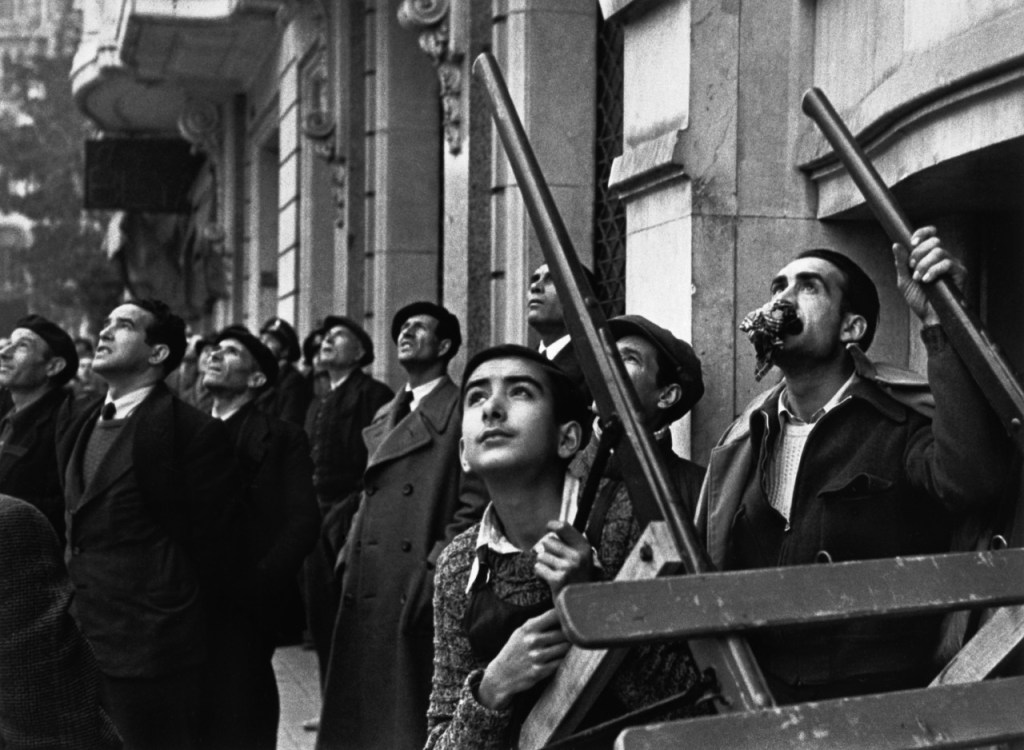
The Spanish Civil War broke out in 1936, when part of the Spanish army rebelled against the Second Republic, a democratic leftist government elected in 1931. It gained international dimensions when Fascist Germany and Italy began supporting the military uprising, led by General Franco, with weapons and soldiers. The USSR helped the Republic, and a significant contingent of volunteers joined the International Brigades and fought for the Republic. The Republic became increasingly dominated by communists, often working directly for Stalin. The conflict became the symbol of a larger conflict between Fascists and Communists. The war would end in 1939 with Franco’s victory over the Republicans.
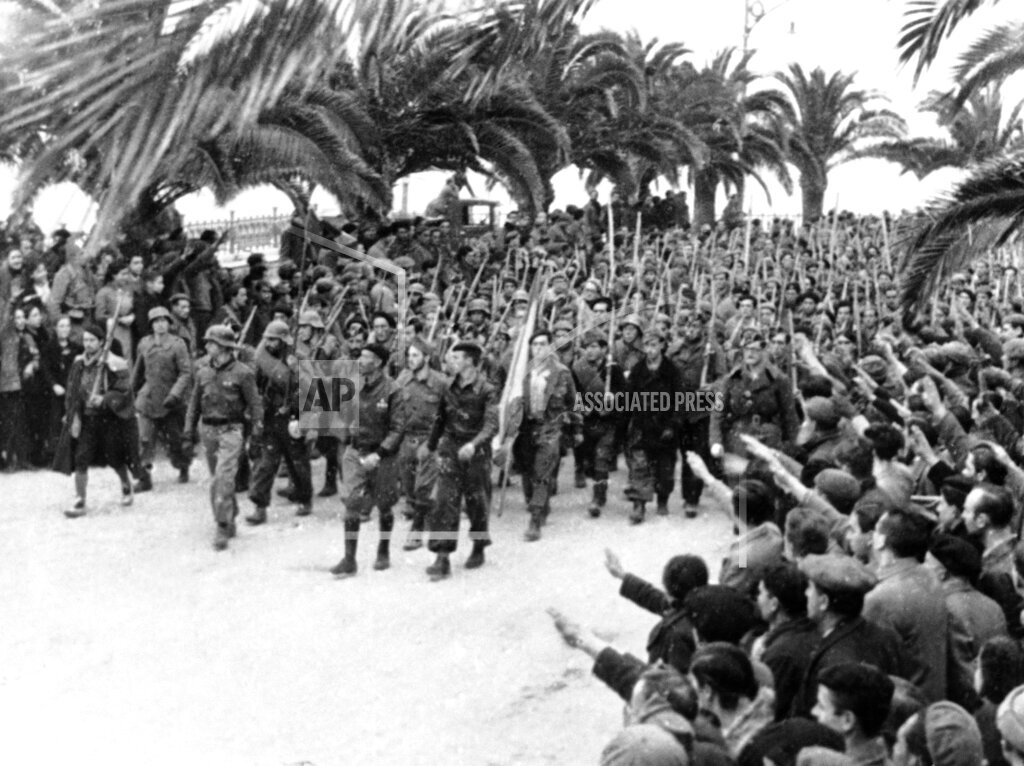
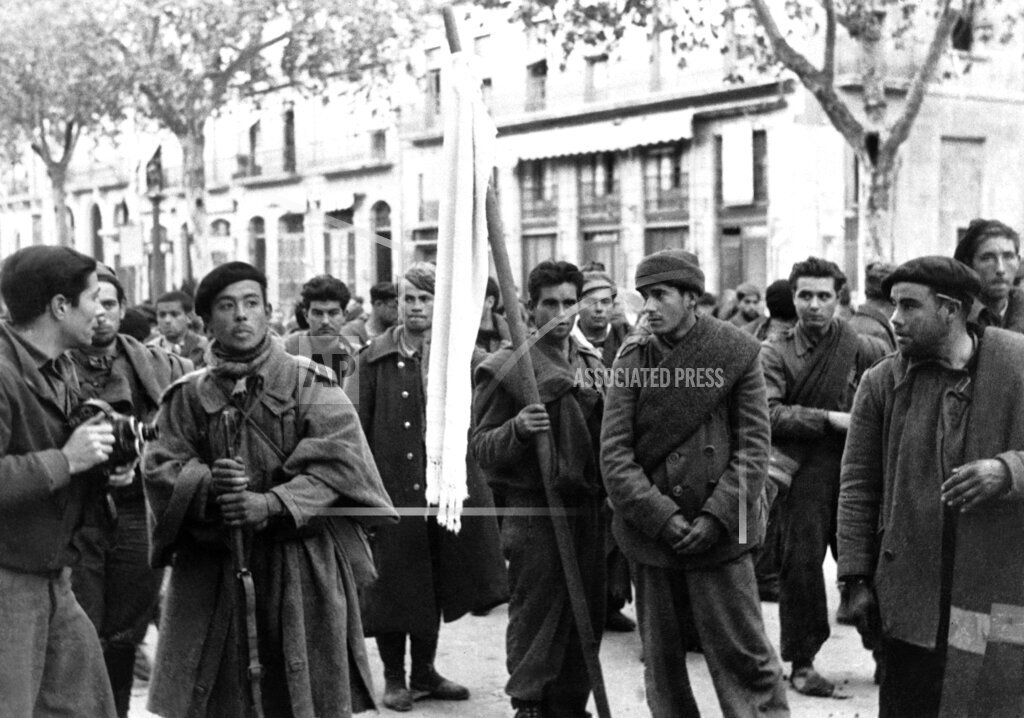
Tarragona, Spain surrendered to Spanish Nationalist forces. Spanish insurgents take Tarragona and Reus in Catalonia. Spanish rebels today captured historic Tarragona, second most important city of Catalonia, in their swift drive toward Barcelona, the government capital. Generalissimo Francisco Franco’s high command said Navarrese troops, veterans of almost every major action in the two-and-one-half-year-old civil war, entered the seaport shortly after noon. They were commanded by General Juan Bautista Sanchez. The advance gave Franco’s forces a virtually complete occupation of Tarragona and Lérida provinces, two of the richest in Spain. Tarragona, from which vital communications roads radiate inland from the coastal highway, is about 63 miles by road southwest of Barcelona. The city in 218 B. C. was the headquarters of a great Roman army.
Rebels said that Reus, government munitions center about nine miles from Tarragona on a direct highway. also had fallen to Franco’s converging forces on the south of the 100-mile Catalonian front. A third rebel corps was reported to have driven south from Valls, reaching the Mediterranean near the mouth of the Gaya River, about six miles beyond Tarragona on the highway to Barcelona. All along the Catalonian front in northeastern Spain government forces were giving ground. In central and southwestern Spain, where the government had attempted to draw some of Franco’s Catalonian manpower with counter-offensives, the fronts were stalemated.
Thus, on the third anniversary of the formation of the Spanish Popular Front, the government found itself in the gravest position in its history. A ministerial decree yesterday, making possible the mobilization of virtually every able-bodied Spaniard in government territory — man or woman — indicated the government’s own appraisal of the dangers it faces. A second rebel army is within forty miles of Barcelona, rapidly advancing eastward toward a junction with the southern forces in the Tarragona sector. Rebel troops in the west had smashed their way into Barcelona province, taking the village of Bellprat, about thirty-seven miles from the government capital. This action turned the last of the government’s three lines of fortifications defending Barcelona.
Military observers were amazed at the speed of the government withdrawal throughout lower Catalonia virtually without firing a shot except for rearguard actions to cover the retreat. They suggested, however, that the government might be retiring to a surprise defense line just inside the border of Barcelona province. These sources said the orderly withdrawal of the government forces indicated that it might be part of a long-laid plan to make the most determined stand along the natural line of mountain defenses near the provincial border. Government reports have hinted of a plan to retire to the north if rebel pressure became too heavy, always leaving open a line of communication with France in hopes that the French frontier might be reopened to arms and foreign fighters.
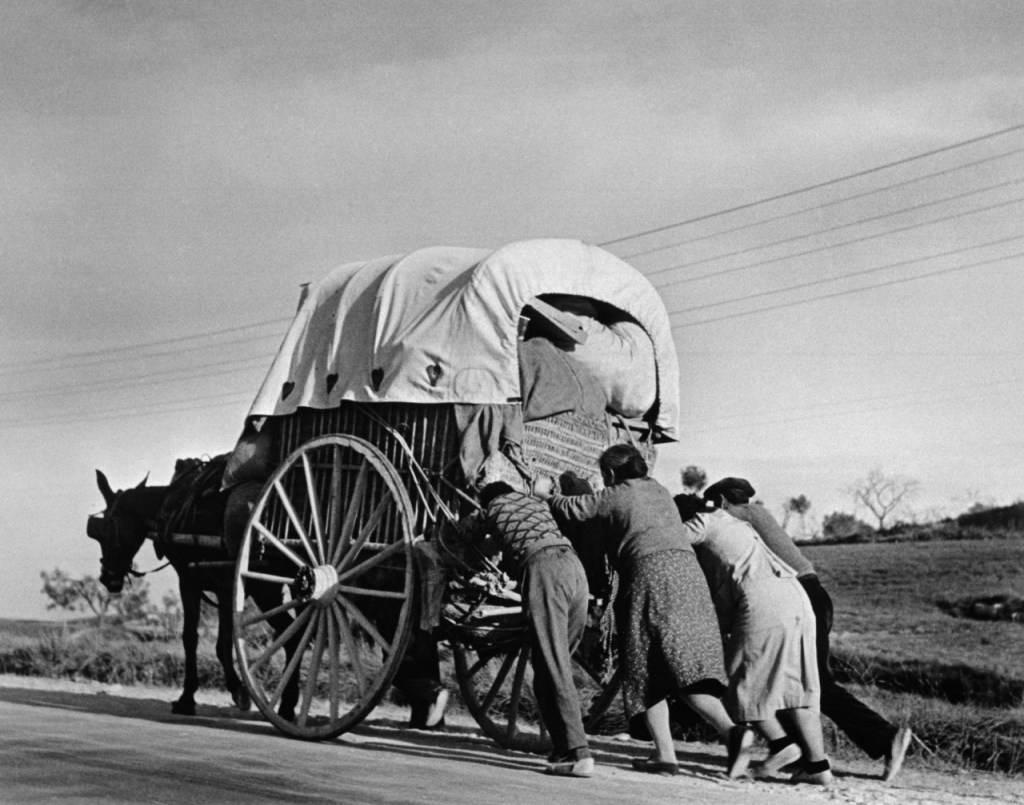
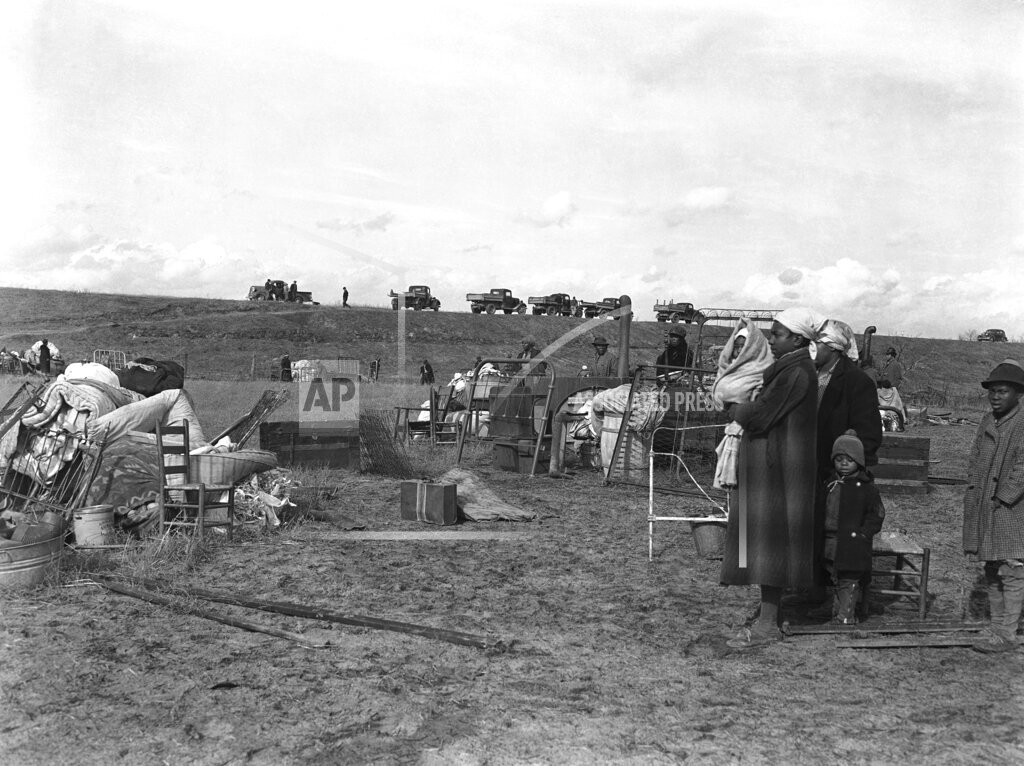
The population of Seo de Urgel, just south of the French frontier, was ordered by Barcelona to leave the town within twenty-four hours. The government was reported planning its last big defense of Seo de Urgel, key to the Puigcerda valley and the railroad line which links Barcelona with France. The most serious danger to the government in Catalonia was the sudden refugee problem caused by the rapid rebel gains. About 70,000 women, children, and aged men fled from Tarragona.
Lord Halifax, British Foreign Minister, urged Georges Bonnet, French Foreign Minister, to satisfy some of Italy’s claims.
The executive committee of Premier Édouard Daladier’s Radical Socialist party demanded today that the government consider necessary steps to prevent an Italian aided rebel victory in Spain from menacing France’s Mediterranean empire. A resolution adopted by the committee accused Italy of violating its promises made to the London non-intervention committee. It added that continued Italian occupation of Spain proper, the Spanish Balearic Islands, and Spanish Morocco created “the gravest peril for our Mediterranean communications.” The sudden preoccupation of Daladier’s own party with the whirlwind series of rebel victories in Catalonia, just south of the French border, injected a new note into the French-Italian territorial quarrel.
Daladier conferred in secret with members of the party governing committee on the danger to France of a rebel victory and in a speech to an open meeting of the committee warned that the next several weeks would be a time of uneasiness for the republic and its empire. In an obvious reference to Italian clamor for a share of France’s territorial holdings the premier declared that all internal quarrels must be ended if France is to survive. “My government will concentrate all energy to prevent a conflict which would mark the end of western civilization,” he thundered. “But it will never allow France’s position and interests to be questioned either by force or by ruse.”
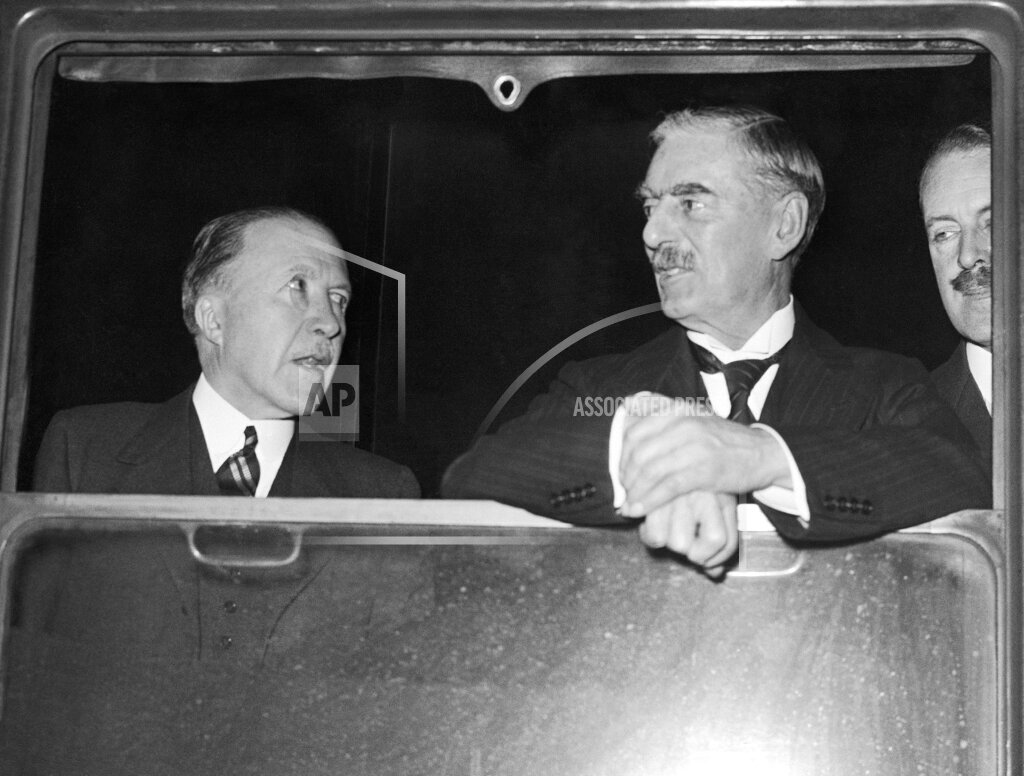
British Premier Chamberlain is told Mussolini has no intention of withdrawing Italian troops from Spain until victory is assured for General Franco.
Dr. Alfred Rosenberg, Nazi philosopher, editor, and Jew baiter, charged today that dependence of the Democratic Party on “its Jewish financial backers” was responsible for “America’s attitude toward Germany.” Addressing a mass meeting marking the sixth anniversary of Nazi assumption of power in Lippe, Rosenberg said: “As concerns the American attitude toward Germany, the explanation lies in the fact that the leading Democratic Party is fully dependent on its Jewish financial backers. In America they attempt to influence people to forget what a great part German immigrants played in development of the new world.”
Lines of people in Moscow wait to see Lenin’s body — 15 years after his death.
In the Soviet Union, the Regime introduced the compulsory “Labour Book” for all workers, in which were inscribed details of all the jobs that the worker had held and any infraction of discipline, punishments and reprimands. No worker could change employment without written permission from his Plant Director in the Labour Book.
Another bitter communist attack on Colonel Charles A. Lindbergh was contained in a recent number of the English edition of Communist International, organ of the Comintern. Lindbergh recently was scolded by leading Soviet aviators who alleged he had belittled soviet aviation to Prime Minister Chamberlain’s followers in England. It was charged that Lindbergh’s criticism resulted in Britain’s surrender to Adolf Hitler’s demands for Sudetenland. Under the heading, “Father and Son,” the Communist International seeks to contrast the elder Lindbergh, a Minnesota congressman in the earlier years of this century, with his aviator son.
The United Palestine Appeal closes its Washington conference and asks for entrance to Palestine for 100,000 Jewish refugees.
Prospects for the U.S. Senate sustaining the House in cutting $150,000,000 from President Roosevelt’s supplemental estimate for WPA increased over the week-end as Congressional leaders prepared for another legislative week which they expected to be dominated by the subjects of unemployment relief, national defense, and Senate confirmation of three important executive appointments. Perhaps the largest contributor to the chances of the Senate supporting the House in reducing the emergency relief appropriation from $875,000,000, as requested by the President, to $725,000,000 resulted from a tacit agreement of leaders of the Congressional economy bloc to concentrate on the reduction at this time. Apparently, they had determined to put over any consideration of more fundamental changes in the federal relief system until the appropriation for a full year is before Congress several weeks hence.
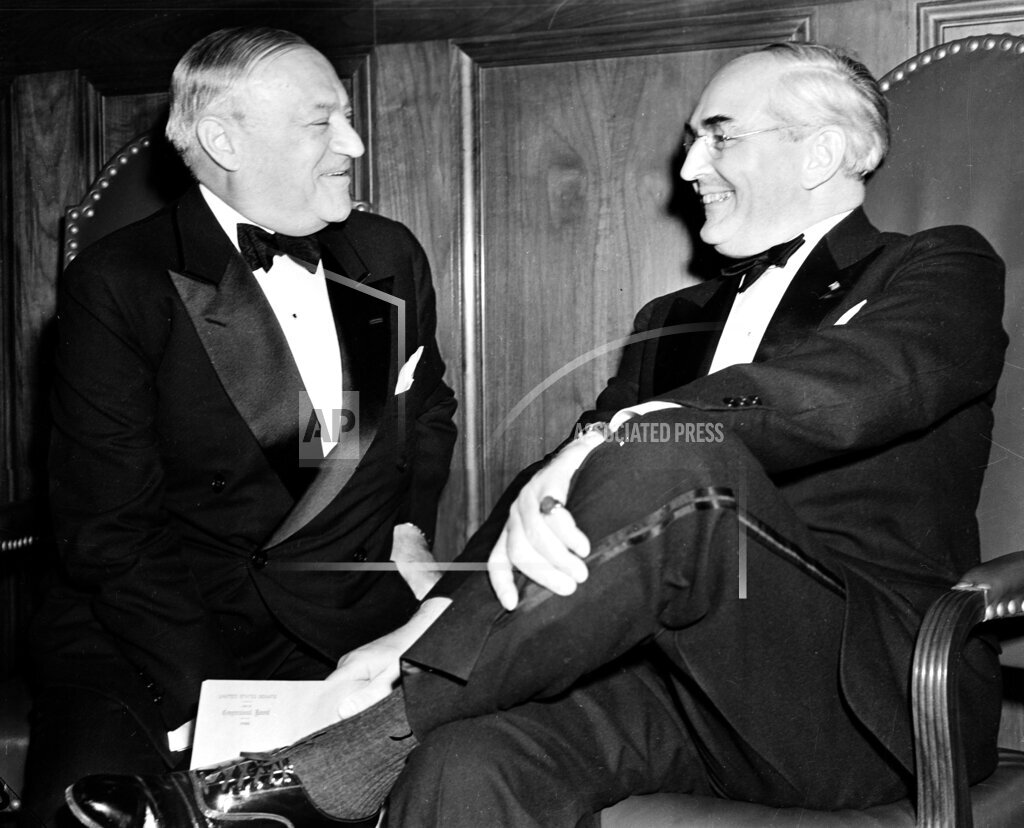
The lines of battle between the President and the conservative Democratic-Republican coalition in congress over the Roosevelt policy of indefinite pump priming deficits were drawn tonight. In reply to Chairman Marriner S. Eccles of the federal reserve board, Senator Harry F. Byrd (D-Virginia), leader of the forces demanding retrenchment and budget balancing, attacked as fallacious the Eccles spending theory, embraced by the President and in “direct repudiation” of past pledges by him. According to this theory, continued pump priming expenditures in excess of revenue will raise the national income from the present 60 billion dollars a year to 80 billion dollars, whereupon the increased tax revenue will balance expenditures.
Amid increasing evidence that the House’s rebellion against the Administration’s spending policies had spread to the other end of the Capitol, the Senate’s Special Committee on Unemployment and Relief came forward today with a program for a wholesale revision of the entire Federal relief system so as to put it on a permanent basis and insulate it from partisan politics.
Congress is expected to review farming legislation, with wheat, corn, and cotton crops at the forefront of the discussion.
President Franklin Roosevelt invites the Brazilian foreign minister to visit Washington.
The United States considers the fortification of the island of Guam. An angry reaction is anticipated from Japan.
A new interceptor plane, the Curtiss-Wright CW-21, is off the ground and out of sight in 90 seconds. George A. Page, head of the Saint Louis Airplane Division of Curtiss-Wright, decided to develop a fighter aircraft based on Carl W. Scott’s two-seater Model 19. Page’s concept was a lightweight fighter interceptor with as high a rate of climb as possible in order to allow bomber formations to be attacked with minimal warning. If faced with fighter opposition, it was intended not to dogfight, but to use its superior climb rate to escape. While this was a direct contradiction to the United States Army Air Corps′ requirements for fighters (which stressed low-level performance), this did not concern Page, since the new fighter was intended for export.
Insulin crystals, which benefit those with diabetes, are patented.
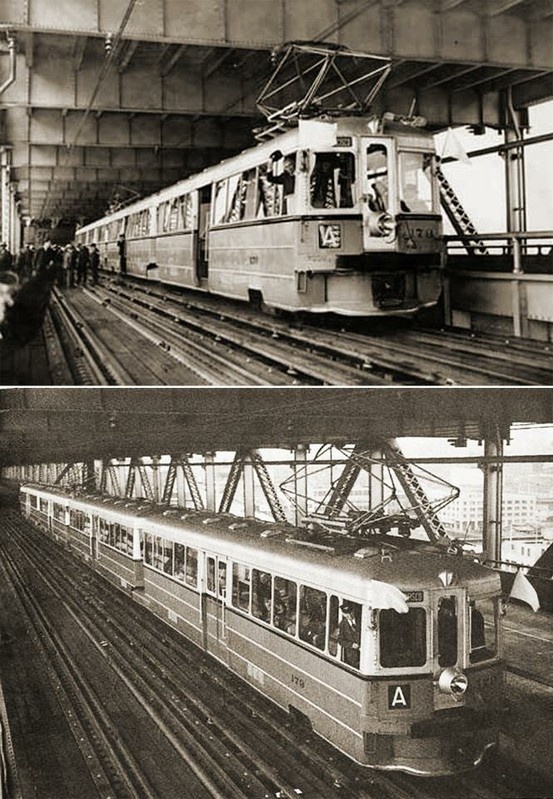
In San Francisco, the Municipal Railway and Market Street Railroad (streetcars) and the Key System light rail trains begin service to the Transbay Terminal.
With fifteen weeks to go before the New York World Fair opens April 30, the exposition work is more than nine-tenths completed, it was announced yesterday by Grover Whalen, president of the Fair corporation. As the buildings of the World’s Fair are being pushed toward completion at Flushing Meadow Park a nation-wide check by the American Institute of Public Opinion indicates that 33,000,000 Americans are hoping to attend the Fair sometime after its opening on April 30.
The Federal Communications Commission grants permission to create four experimental television stations.
The musical revue “Set to Music” by Noël Coward opened at the Music Box Theatre on Broadway.
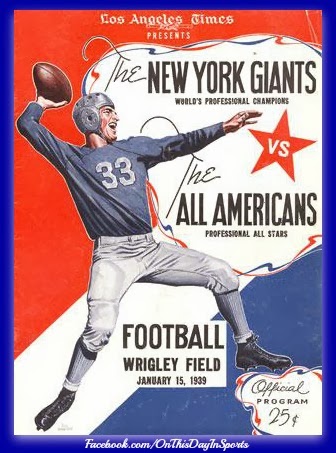
The first-ever National Football League All-Star Game was played at Wrigley Field in Los Angeles. The reigning NFL champions the New York Giants defeated a team of all-stars, 13—10. The first half was uneventful as the two teams went to their locker rooms knotted at three with the best of the game yet to come. In the third quarter, Washington’s Sammy Baugh found his all-star squad sitting on their own 30 and facing a second and inches situation, he hit Lions halfback Lloyd Cardwell at the 40 then Cardwell was off to the races and the finish line was the endzone. After the extra point the All Stars held a 10—3 lead that would be short lived. When the Giants quarterback Big Ed Danowski took over, he walked his team down the field in quick succession on a 73-yard drive that began late in the third then would end with a game tying 22-yard pass to Chuck Gelatka. With less than five minutes to go in the contest Ed Goddard of the Cleveland Rams put the ball on the turf when he mishandled a punt, the Giants Orville Tuttle recovered and three plays later with the ball on the 17-yard line Ward Cuff split the uprights to give the Giants a lead that would stand.
The game drew an estimated 15,000 people, it was a huge disappointment to those involved in making it happen. One reason stated was that it was a cold and foggy day in L.A. that kept the fans from filling the stands. The game was played in L.A. again the following season before being played in New York and Philadelphia in ’41 and ’42. While those that organized the event expected it to be an annual contest, World War II changed that as travel restrictions were put in place and the game was discontinued. It reemerged in 1950 and would take the name “Pro Bowl” with the teams being picked from the best in each of the league’s two divisions.
The government of El Salvador mobilized the army, the National Guard and the police last Friday to suppress an expected revolution, reports brought here today disclosed. All troops were concentrated in barracks and forts, all leaves were canceled and before midnight the streets of the capital were patrolled by soldiers armed with machine guns. It is understood that the government claims to have received information from its secret service that the revolution was planned for midnight. It was also reported that numerous arrests of suspects were made by the police and some persons were placed under guard in their homes. Calm was restored yesterday. The proclamation of a new constitution continuing President Maximiliano H. Martinez in power for six years more is expected soon.
Argentina beat Brazil 5 goals to 1 in football’s Roca Cup.
A congressional election is held in Ecuador. Women were granted the right to vote two days ago.
Japan claims victory in the Hangchow area of China. A Japanese army spokesman today reported the “pacification” of the Hangchow area after 300 battles and skirmishes in a year. Hangchow, capital of Chekiang province, lies about 100 miles southwest of Shanghai. The Japanese captured it on Christmas eve, 1937. The Japanese said Chinese regulars now had been routed and guerrillas had been dispersed. He asserted the mopping-up operations resulted in the killing of 435 Chinese and the capture of 425 as well as a large number of machine guns, rifles and ammunition. Japanese casualties were reported as ninety-eight killed, and 300 wounded.
Two hundred are killed after Japan bombs the Chinese capital of Chungking. The American girls’ school is hit, but there are no casualties. The mists which almost perpetually enshroud Chungking (today Chongqing) cleared briefly today and Japanese planes, taking advantage of the improved visibility, droned over to administer the worst bombing the new China capital has yet experienced. Officials estimated 400 were killed, but persons who visited the bombed areas placed the dead at 200. The Methodist Mission Girls school, an American institution, was damaged when a bomb hit the compound and smashed the front of the faculty residence and doors and windows of the main building. Miss Catherine Boeye of Ottumwa, Iowa, and Miss Dorothy Jones of Joliet, Illinois, ran out with the students and all escaped injury. The school is situated in the western suburbs and is not marked by American flags.
Casualties were heaviest inside the densely populated walled area on the south bank of the Kialing River, near the Yangtse intersection. There, several buildings including a teahouse, sheltering scores of persons, were reduced to shambles. Seventy-five persons were killed or injured. Chinese pursuit planes challenged the Japanese raiders and shot down a two motored bomber which fell in flames several miles below the city. In the haze above 6,000 feet, 27 Japanese planes arrived over the city in three flights about 1 p.m. The ensuing battle between the rival air forces could not be seen from below, but its progress was evidenced by the sounds of zooming motors and the popping of machine guns, which lasted for half an hour.
Residents of the old section of the city were virtually trapped. It was impossible to cross the river or flee to open country to the west when alarms were sounded because of the lack of time. Farther to the northwest of Hankow, former Chinese military capital, Japanese reported heavy air and artillery bombardments on Tungkwan and smaller towns. Tungkwan is eighty miles east of Sian, Shensi province capital. The Central News agency at Wanhsien, down the Yangtse, reported that 130 civilians were killed or injured Saturday in a Japanese air raid there when bombs fell in the center of the city.
The number of German Jewish refugees finding refuge in Shanghai was swelled to more than 2,000 today with the arrival of two groups totaling 244.
Following a summer of destructive bushfires in Victoria state, rain at last comes to this part of Australia.
Born:
Don Kojis, NBA small forward (NBA All-Star, 1968, 1969; Baltimore Bullets, Detroit Pistons, Chicago Bulls, San Diego Rockets, Seattle SuperSonics, Kansas City-Omaha Kings), in Milwaukee, Wisconsin (d. 2021).
Fran Morelli, AFL tackle (New York Titans), in Medford, Massachusetts (d. 2008).
Christopher Steel, British composer (“Changing Moods”; “The Morning Stars Sang Together”), in London, England, United Kingdom (d. 1992).
Tony Bullimore, British yachtsman (1997 solo around-the-world yacht race, dramatic rescue), in Southend-on-Sea, England, United Kingdom (d. 2018).

 History Diaries