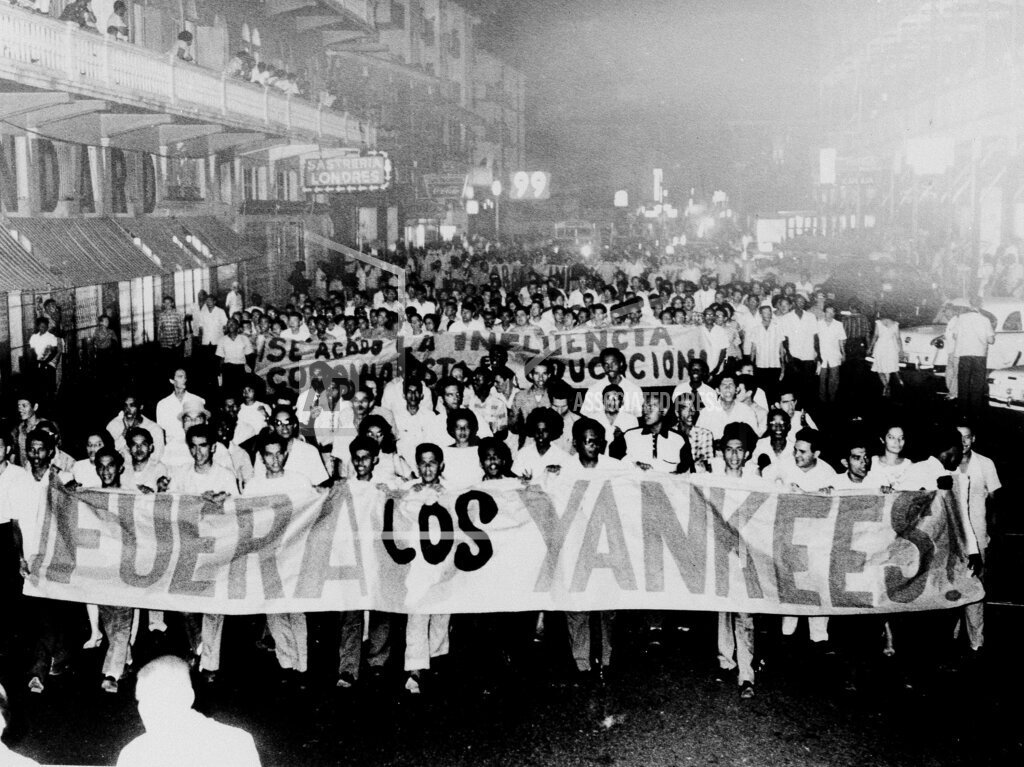
Panama and the United States agreed early today to resume diplomatic relations. The two countries also agreed to begin negotiation of all their differences 30 days after diplomatic relations are resumed. A communiqué announcing the end of the dispute was worked out by the Inter-American Peace Committee of the Organization of American States, the United States representative and the Panamanian Foreign Minister, Fernandez Galileo Solis. The communiqué was made public at 1:35 A.M.
President Roberto F. Chiari of Panama wants the United States to give him public assurances that it is prepared to negotiate a revision of the Panama Canal treaties as a condition for resuming relations. This was disclosed tonight by Foreign Minister Fernandez Galileo Solis. The new insistence followed a mass demonstration against the United States by several thousand Panama students during the evening. Earlier, President Chiari had told his nation in a 10‐minute broadcast that Panama regarded Washington’s accord to “negotiate without limitations”—an accord reached after long talks during last night — as a commitment to replace existing treaties with a new one. Mr. Solis said that, unless President Johnson or Secretary of State Dean Rusk spelled out Washington’s willingness to negotiate “substantive changes” in the Canal treaties, Panama would not re‐establish diplomatic relations with the United States. Panama’s new demand threatened the accord reached only 24 hours ago by the Inter‐American Peace Committee after four days of intensive efforts to heal the deep rift between the two countries.
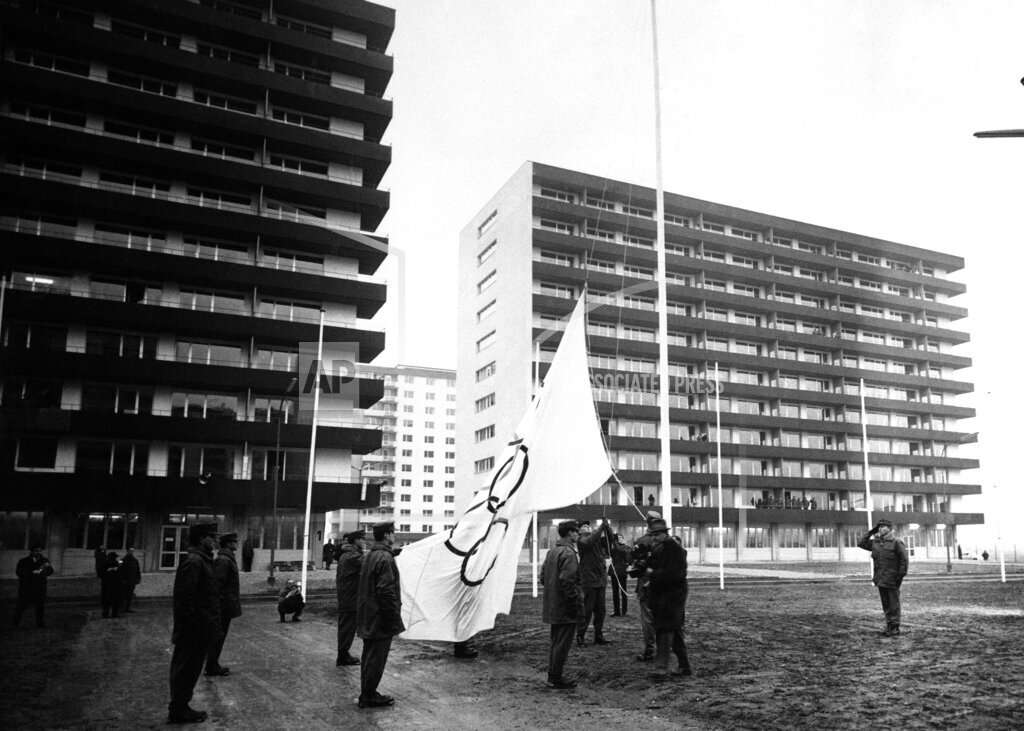
The collapse of a 12-story apartment building killed 20 construction workers in Paris, a day before a ribbon cutting ceremony to dedicate a new public housing project. Reportedly, the workers “were putting the last prefabricated steel and concrete beams in place” on the building on Boulevard Lefebvre in the 15th arrondissement, Vaugirard. The accident would later be traced to the site manager’s decision to remove temporary metal bracing from the incomplete structure in order to use the braces elsewhere. An author would later note that “This landmark accident marked a significant shift in attitudes toward building site safety”, and before the end of the year, the French government introduced the first major reforms in more than 50 years.
Representatives of the Greek Cypriots and Turkish Cypriots met in London to begin a multinational peace conference to negotiate a halt to the civil war on the island nation of Cyprus. The mediation team from the United Kingdom was joined by negotiators from the nations of Greece and Turkey, after the parties had agreed to the talks on January 2. The participants in the 16-day conference included many future leaders of Cyprus, with the Greek Cypriots being represented by three future Presidents of Cyprus (Glafcos Clerides, Spyros Kyprianou and Tassos Papadopoulos); the future President of the breakaway Turkish Republic of Northern Cyprus, Rauf Denktash and a future Prime Minister, Osman Örek; the ambassadors to the United Kingdom from Greece (Michel Melas) and Turkey (Zeki Kuneralp); Turkish Foreign Minister Feridun Erkin; and the moderators, British Secretary of State for the Commonwealth Duncan Sandys and a future Foreign Minister Lord Carrington.
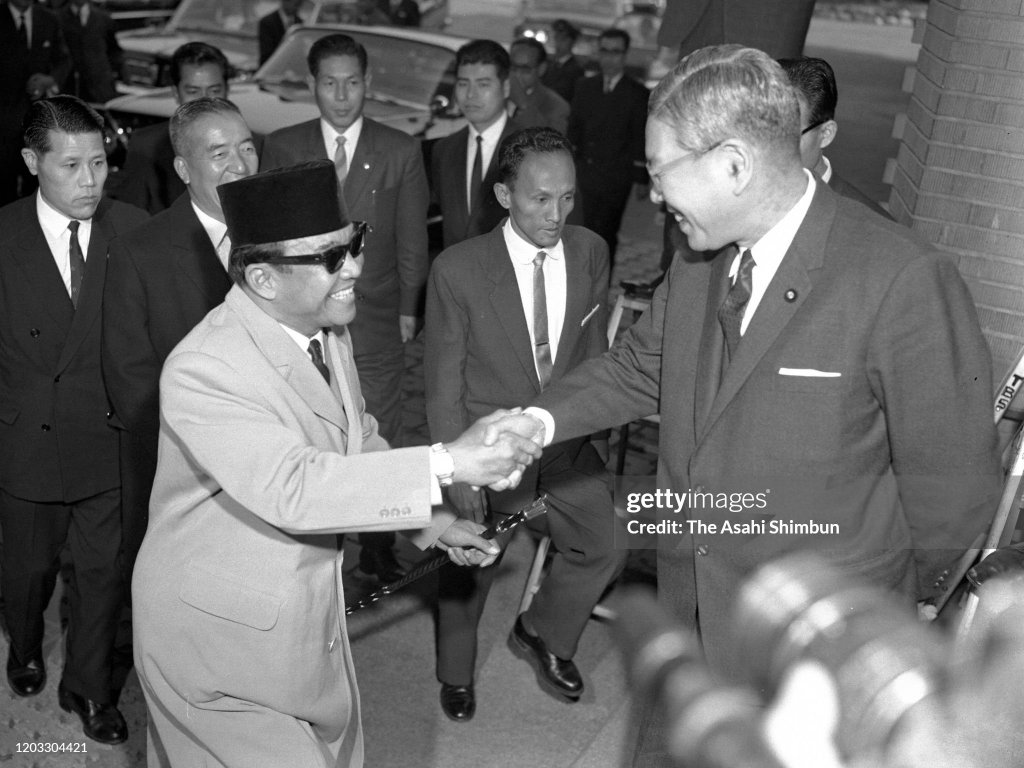
An Indonesian threat to form a military alliance with Red China or the Soviet Union awaits Attorney General Robert F. Kennedy on his arrival in Tokyo to confer with President Sukarno on the latter’s quarrel with Malaysia and Britain. The threat is made by Foreign Minister Subandrio after British confiscation of spare parts for Indonesian planes in Hong Kong.
Armed volunteers of the new republican government of Zanzibar round up hundreds of Arabs and Africans and herd them into a compound below the new president’s office. The rebel regime denies a radio broadcast that it intends to hang two ministers of the deposed Arab government.
A pipe-smoking French “countess” who once served General Eisenhower as an interpreter is summoned to court in Paris on charges of plotting to assassinate President Charles de Gaulle. She and two men face possible death penalties if found guilty of the Secret Army Organization (OAS) plot which was thwarted last February.
Chancellor Ludwig Erhard said today that a “prosperous, happy and free Europe” could be achieved only if Britain were included. This endorsement of Britain’s view struck a happy note for Dr. Erhard’s two‐day visit to London for talks with Sir Alec Douglas‐Home, the Prime Minister. Taking another stand against President de Gaulle’s concept of the Continent as a third force between the United States and the Soviet Union, Chancellor Erhard said: “To speak of the European mainland in the political sense can be only political reminiscence, not political reality.”
A group of East Berlin refugees again manages to escape to West Berlin through a laboriously dug tunnel near Bernauer Strasse. In 1963-64 tunnel builders dug two escape tunnels towards East Berlin. The tunnels began in the basement of a bakery at Bernauer Straße 97, located on the west side of the city. The building no longer exists today; it was replaced by new buildings in the 1970s. The first tunnel took five months to build. It was finished in January 1964. But it unintentionally ended in a coal storage area right behind the border strip, in clear view of the border guards. Three young women were able to flee through this tunnel before it was discovered. A few months later the tunnel builders used the same basement to attempt a second tunnel. This tunnel ran twelve meters under the surface all the way to Strelitzer Straße 55. On October 3-4, 1964, 57 people succeeded in escaping through the tunnel known as “Tunnel 57.”
President Johnson is planning to urge Premier Khrushchev to help convert the United Nations into a body that could act on the Soviet appeal for the renunciation of force in territorial disputes. That will be the central theme of a detailed reply and rebuttal to Mr. Khrushchev’s New Year’s message to all nations calling for a worldwide treaty of nonaggression. The United States intends to match the Soviet propaganda gesture by sending its note to all countries and then taking the issues to the Geneva disarmament conference, which reconvenes next Tuesday. The long American note will probably be published on Saturday.
Thirteen Arab nations agreed today to set up a military command to strengthen the Arab position on problems related to Israel. A spokesman at the conference of Arab heads of state said that the joint command would have a permanent headquarters and “financial capabilities.” The site of the headquarters and other details have apparently not been worked out. But a briefing officer said some details might be contained in a communiqué to be issued when the conference ends, possibly tomorrow. In another accord, the United Arab Republic and Jordan decided to resume diplomatic ties. They were broken off in September, 1961, when Jordan quickly recognized a revolutionary regime in Syria that seceded from the United Arab Republic after anti‐Castro developments in Damascus.
The National Assembly voted today for disciplinary action against former President Posun Yun, leader of the opposition Civil Rule party for an “inflammatory speech” against the regime of President Chung Hee Park. The motion brought by the ruling Democratic Republic party, was adopted, 101 to 4 with 2 abstentions. The opposition members walked out when the voting was called. The action followed a speech by Mr. Yun at an Assembly session yesterday in which he demanded a “clear” answer from the administration “whether the present situation in the country would not justify another revolution to overthrow the Park regime.”
President Johnson promised today that “we have just begun to fight” for the program of financing medical care for the aged through Social Security. Predicting Congressional approval of the plan first submitted three years ago by President Kennedy, Mr. Johnson said: “This great nation, the most powerful of all nations, should no longer continue to ask our old people to trade dignity and self‐respect for hospital and nursing‐home care.” The President’s optimistic view of the proposed legislation’s chances of getting through Congress—a view not shared by many observers on Capitol Hill—was expressed to a group of 47 leaders of organizations that are pressing for the program.
Senator Barry Goldwater (R-Arizona) invades Governor Nelson A. Rockefeller’s territory and unleashes a frontal attack against the “Santa Claus promises” of the Democratic administration in a speech before the Economic Club of New York. Challenging the contention that President Johnson is economy-minded, Goldwater says the President’s State of the Union message makes clear that his economic program is guided in spirit by “the Santa Claus of something-for-nothing and something-for-everyone.” He also called on the United States to stand firm in the Panama crisis.
Senator Goldwater criticized President Johnson’s war on poverty last night and suggested an inquiry into the question of whether “the attitude or the actions” of the poor had contributed to their plight. In a speech before the Economic Club of New York, Mr. Goldwater, a candidate for the Republican Presidential nomination, also accused the President of deception in claiming economies in the federal Government. Mr. Goldwater’s publicized dispute with Secretary of Defense Robert S. McNamara over the dependability of American guided missiles was given new impetus when the Senator said, “I have never agreed with Secretary McNamara that we should lie to the American people about weapons systems.” The Senator’s remark about Mr. McNamara came during a question period after the speech. He said Mr. McNamara had, in the past, told the public that the Nike‐Zeus anti‐missile missile was “the best” weapon of its kind “despite the fact it wasn’t doing very well.”
The 88th Congress already has done more to promote education than any Congress in at least five years, but President Johnson is not satisfied. In signing the $1.2 billion college-aid bill on December 20, the President praised Congress for “a series of legislative landmarks in the field of education.” “But these new measures will still not do the whole job of extending educational opportunities to all who want and can benefit by them, nor in meeting our growing national needs,” he added. “I therefore strongly urge the Congress to take early, positive action on the unfinished portion of the National Education Improvement Act, particularly those programs which will assist elementary and secondary schools.”
The Teamsters negotiate the first national labor contract. It provides for a package of pay and fringe‐benefit increases totaling $400 million over its 38‐month term. An increase in motor carrier freight rates is virtually certain to result. When ratified, the contract will provide a total of 28 cents an hour in wage increases in three annual steps and $5 a week in increases in employer payments into medical‐care and pension funds. The agreement, which follows closely terms that had been reported as agreed on informally by key officials of the union and major trucking concerns many weeks ago, is one of the most significant labor developments of the postwar period.
The United States Post Office Department announced that it would drop the long-standing practice of indicating the time of day as part of the cancellation of a piece of mail, effective February 1, 1964. Instead of having the time (within the nearest one-half hour) that a letter was received for delivery, the new stamp would merely indicate A.M. or P.M. to show whether it was received in the morning or afternoon.
President Johnson proposed to Congress today a $5.3 billion budget for the civilian space’ program in the fiscal year starting next July 1. The appropriations budget, cut more than $600 million from the amount requested by the National Aeronautics and Space Administration, was described by space officials as barely adequate to achieve a manned landing on the moon by 1969. The officials warned that any additional cuts by Congress would postpone the lunar expedition to the next decade. Mr. Johnson’s request was considerably less than what was asked last year under the Kennedy Administration — $5.7 billion. Skeptical, Congress cut that to $5.1 billion.
Meanwhile, Senator Clinton P. Anderson, chairman of the Senate Committee on Aeronautical and Space Sciences, questioned whether technical problems, including the hazard of intense solar radiation in the latter part of this decade, might postpone the Apollo lunar expedition. For budgeting and technical reasons, doubt has risen in Government and scientific circles that it will be possible to achieve a landing by 1969. Senator Anderson, New Mexico Democrat, was the first person in a position of responsibility to suggest openly that it might be advisable to abandon the goal set by President Kennedy in May, 1961.
Theodore Chaikin Sorensen, the brilliant young Nebraskan who wrote many of John F. Kennedy’s major public statements, resigned today as Special Counsel to the President. Mr. Sorensen, who said he would write a book about the Kennedy Administration, thus became the first major figure of that Administration to leave President Johnson’s staff or Cabinet.
Lieutenant Colonel John H. Glenn Jr. will hold a press conference in Columbus, Ohio, tomorrow at which he is expected to announce that he will seek the Democratic nomination for the Senate seat now held by Stephen M. Young. It is reported that the 42-year-old astronaut will resign from the space program soon after the announcement. Senator Young, 74 years old, has said he will seek another term. If he holds to that, Colonel Glenn will face him in a primary battle. Representative Robert Taft Jr., son of the famous Ohio Senator, is expected to be the Republican candidate.
The eight-year prison term of Billy Sol Estes for selling phony mortgages to finance companies is upheld by Texas’ highest appeals court. Estes’ claim that widespread publicity in newspapers and on television hurt his cause was rejected as grounds for overturning the case by the three-man court. Estes is facing another sentence of 15 years meted out by a federal judge on another charge in connection with his fraudulent farm empire.
The opening of the Whisky a Go Go on Sunset Strip in Hollywood, California.
Major League baseball executives vote to hold a free-agent draft in New York City. A new TV pact is also signed.
San Francisco Giants make champion outfielder Willie Mays the highest-paid player in baseball when they sign him to a new $105,000 per season contract.
Dow Jones Industrial Average: 774.71 (+0.22).
Born:
Nuu Faaola, NFL running back (New York Jets, Miami Dolphins), in Honolulu, Hawaii.
Chris Barber, NFL defensive back (Cincinnati Bengals, Tampa Bay Buccaneers), in Fort Bragg, North Carolina.
Jeff Banister, MLB pinch hitter (Pittsburgh Pirates), in Weatherford, Oklahoma.
Died:
(Weldon Leo) “Jack” Teagarden, 58, American jazz trombonist (Paul Whiteman, 1933-38; Louis Armstrong’s All-Stars, 1946-51), singer (“Basin Street Blues”), and bandleader, dies from bronchial pneumonia.
 History Diaries