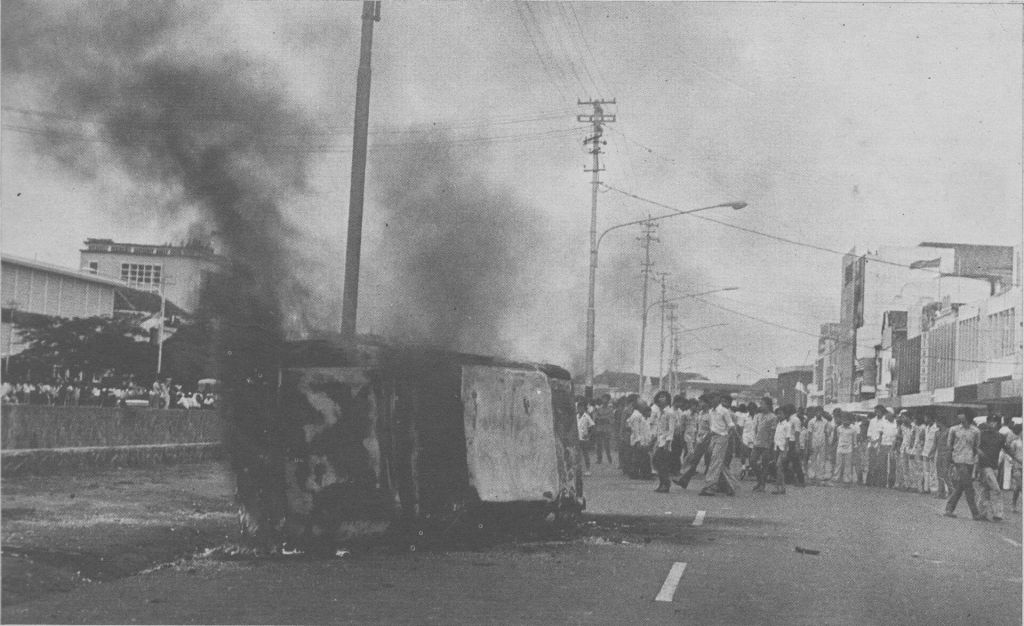
The Malari incident took place in Jakarta, capital of Indonesia, as thousands of students protested against a state visit by Japan’s Prime Minister Kakuei Tanaka. The riot then turned into an attack on Chinese Indonesians in the suburb of Glodok. Indonesian security forces intervened, and at least 11 people were killed, 137 injured, and 700 arrested. The mob burned 144 buildings in and around Jakarta. This morning, thousands of students demonstrated in the streets of Jakarta, calling for lower prices, an end to corruption, and the disbanding of Aspri, Suharto’s clique of personal assistants. Although the demonstrations began peacefully, by the afternoon suspected Special Forces’ agent provocateurs had turned it into a full riot. Hundreds of cars were burned, mainly of Japanese make. More stores were looted, including “the most visible symbol of Japanese presence in Indonesia”, an Astra dealership selling Toyota-brand cars on Sudirman Street.
By the evening, the riot had been diverted into an anti-Chinese Indonesian pogrom. Stores in Glodok, owned by ethnic Chinese, were looted, vandalized, destroyed, and burned; the largest being the Senen shopping complex. The security forces did little to stop the looting, and it was reported that General Sumitro was seen speaking with the demonstrators in a friendly manner. However, some troops executed orders to shoot looters on sight. The riots were brought to an end the next day, when KKO, RPKAD, and Kostrad forces fired upon the rioters. By then, Prime Minister Tanaka had already left Indonesia due to the riots. During the three days of civil conflict 11 people were killed, 17 critically injured, 120 non-critically injured and roughly 770 arrested. Almost 1,000 motor vehicles were damaged and 144 buildings destroyed or burned. General Sumitro, the Deputy Chief of the Armed Forces, was blamed for inciting the rioters, and forced to resign.
North Vietnamese troops shelled several South Vietnamese Government positions near the Lê Minh border camp today and made one ground assault, apparently trying to prevent reinforcements from reaching the camp in the Central Highlands. An advance patrol of 30 South Vietnamese infantrymen was landed in Lê Minh by helicopter yesterday after the area had been softened up by bombing. The Saigon command said that its forces had run into resistance three-and-a-half-miles from Lê Minh. Saigon’s chief military spokesman, Lieutenant Colonel Lê Trung Hiền, said that the fighting was apparently continuing. In action closer to Saigon, the government said that Viet Cong gunners fired 20 mortar shells into Củ Chi, a district capital 20 miles northwest of Saigon. One person was reported killed and two wounded.
The Viet Cong accused the Saigon Government today of conducting large-scale air strikes against one of their strongholds. They called the raids the heaviest bombing in South Vietnam since the United States ended its air attacks a year ago.
Rebel troops bombarded downtown Phnom Penh with rockets as the 9 p.m. curfew fell over the city. At least 13 persons were killed and more than 20 injured when a single 122-mm. rocket slammed into a crowded three-story apartment building.
Malaysian government forces hit guerrillas with air strikes, artillery and mortar barrages in the jungle 45 miles northeast of Kuala Lumpur, Defense Minister Hamzah Abu Samah said. The guerrillas were operating far south of their regular Thailand border haunts, where they fled after the Malayan Communist uprising of the 1960s, he said.
Emergency transmitters on Polaris submarines mistakenly signaled they had been “sunk by enemy action” on two occasions in 1971 thus raising the threat of accidental nuclear war, according to Rep. Les Aspin (D-Wisconsin). He said the signals from the malfunctioning transmitters, which are carried in buoys, set off military alerts until the malfunctions were reported by the subs themselves. Aspin charged that the Navy started persecuting the small firm that designed the receiving system for the signals while trying to protect the company that built the faulty buoys.
Soviet novelist Alexander Solzhenitsyn, in his first public statement since publication of his new book “The Gulag Archipelago,” said fellow writer Lidia Chukovskaya was expelled from the Soviet Writers Union because she allowed him to live and work at her country house in Peredelkino. His written statement, made available to Western correspondents, made no reference to official attacks against him but only defended the ailing and almost blind Miss Chukovskaya, 66.
Britain’s 29,000 railroad engineers ended another 24-hour strike but the industrial turmoil continued as 10,000 subway workers voted to strike Feb. 4 if they do not get a $14.49 million pay increase by then. Prime Minister Edward Heath told the House of Commons he would make a new effort at conciliation with the nation’s labor unions in a move which appeared to lessen the likelihood of a sudden general election.
London police, alerted by an airport worker, found a live mortar shell near the end of one of Heathrow Airport’s main runways. An army bomb disposal squad exploded the shell. It was not known whether police had been able to identify the shell’s origin. Officials said investigation showed the shell could not have been left behind by soldiers during last week’s big security alert.
The last resettlement camp for Asians expelled from Uganda closed amid charges the British government was treating the immigrants shabbily. The 40 or 50 families leaving the former British air base of West Malling, near London, were the remainder of about 22,000 persons uprooted when Ugandan President Idi Amin expelled all Asians on British passports in August, 1972. Reports from immigrant leaders, claim there was no sustained attempt on the part of the British to resettle the Asians in a genuine sense. But the government-appointed resettlement board said it was satisfied and prepared to dismantle its services by the end of January.
Warrants have been issued against at least four suspects in the kidnapping of J. Paul Getty III, police sources in Rome said. They said the warrants were issued in Lagonegro, the town in southern Italy near the spot where Getty was released December 15 for a $2.9 million ransom. The sources did not name the suspects. Getty, 17, was abducted in Rome July 10 and held for five months by kidnappers who cut off his right ear and mailed it to a newspaper to press ransom demands.
The Brazilian Congress voted, 400 to 76, to elect General Ernesto Geisel over rival candidate Ulysses Guimarães as President of Brazil, but not before opposition members halted the proceedings three times with protests.
Argentine guerrillas said they had kidnapped an arms manufacturer and would not release him until they are given a cache of weapons. The Marxist People’s Revolutionary Army sent a statement to newspapers claiming it had seized Julio Baraldo of the Angel Baraldo and Co. arms firm and was holding him for a ransom of an unspecified number of pistols, rifles, and automatic weapons.
All but one of the Rosenkowitz sextuplets, born last Friday in Cape Town, South Africa, have gained weight, a hospital bulletin reported. The mother’s gynecologist, Dr. Vincent Harrison, said the babies were all healthy and their chances of survival were “very high.”
A Japanese company, Sato Foods Industries Co., Ltd., received U.S. patent No. 3,786,159 for a process for manufacturing alcohol powder.
The Knight Street Bridge opened, joining Vancouver and Richmond, British Columbia.
The three astronauts on the third crewed U.S. space mission to Skylab set a new world record for time spent in space, breaking the mark of 59 days, 11 hours set by the previous crew on its mission from July 28 to September 25, 1973. Launched on November 16, 1973, the new Skylab astronauts reached 60 days in space later in the day, and would complete 84 days, 1 hour and 12 minutes in space upon their return on February 8.
A group of electronics experts testified that the 18-minute gap on a White House tape was caused by repeated erasures and rerecording. A buzz obliterates a portion of a conversation which took place between President Nixon and H.R. Haldeman three days after the Watergate break-in. A panel of technical experts testified that the 18½-minute gap in the tape recording of President Nixon’s conversation with H. R. Haldeman on June 20, 1972, was made by someone pushing the record-erase button at least five times and as many as nine times. White House attorney James D. St. Clair objected to all questions about whether the erasure was deliberate.
The President’s new Watergate defense lawyer, James St. Clair, made his first appearance in the case today. The electronics experts’ report to Judge John Sirica refutes Rose Mary Woods’ theory of how the tape gap occurred. Dr. Richard Bolt said that erasures were made repeatedly on the tape in question. Dr. Thomas Stockham testified that some erasures overlap, while there are tiny gaps between others. Dr. Mark Weiss testified that the buzz on the tape was caused by a defective part in Mrs. Woods’ recorder. The President’s lawyers delayed cross-examining the experts until Friday. Records show that only three persons ever played the tape: presidential assistant Steve Bull, President Nixon and Mrs. Woods.
The White House had no comment on today’s testimony, but the President’s lawyers urged the public not to jump to conclusions. Nixon spent most of the day concerned with the federal budget. Budget director Roy Ash met with the President. Presidential spokesman Gerald Warren said that the explanation of the White House plumber’s unit is now “inoperative”. Republican Senator Howard Baker said that these latest developments are potentially damaging to the President. Former Attorney General Elliot Richardson stated that the credibility and public confidence of President Nixon won’t improve with this latest news.
CBS reporter Daniel Schorr uncovered more information on Howard Hughes’ $200,000 campaign contribution which was given to President Nixon’s friend Bebe Rebozo for delivery to Nixon. Rebozo allegedly kept the money for two years before returning it to Hughes. Hughes’ aide Richard Danner testified that the contribution originated from a personal request by the President. Danner revealed new information at secret hearings with the Senate Watergate Committee. Rebozo almost refused to accept the money because President Nixon’s brother Donald was involved in the arrangements. White House press secretary Gerald Warren flatly denied the story.
Speaking to a convention of the conservative American Farm Bureau in Atlantic City, Vice President Gerald Ford defended President Nixon. Ford declared that no valid grounds exist for the President’s impeachment, and he hopes that the House Judiciary Committee will complete its job promptly regarding the impeachment probe. Ford had no comment on today’s developments in the White House tape controversy.
The government released new fuel allocation plans. Energy official John Sawhill announced that the needs of customers will be fulfilled if homeowners turn down their thermostats. Questioned about homeowners running out of fuel, Sawhill stated that the government would not allow utility customers to freeze to death. Gasoline supplies will be cut 20%. Sawhill revealed that the shortage will be felt even more during the summer months. A stand-by gasoline rationing plan will be published tonight.
The fuel allocation system may work on paper, but dealings on a personal level upset the inflexible and dehumanized system. Temperatures for homes containing sick persons is one example. Mandatory allocations place fuel dealers in the middle.
Robert VanderLaan, the majority leader of the Michigan Senate, easily won the Republican nomination for the U.S. House seat vacated by Vice President Ford. VanderLaan, 43, of Kentwood, polled 54, or 26,105 votes, against three GOP competitors in the state’s 5th Congressional District. VanderLaan now faces a February 18 election against Democrat Richard Vander Veen, 51, Grand Rapids lawyer who lost to Ford in 1958. VanderLaan is expected to get active support from the very popular Ford, who held the seat for 25 years and never got less than 60% of the vote.
Senator Carl T. Curtis (R-Nebraska) asked Senate Majority Leader Mike Mansfield of Montana not to permit Howard M. Metzenbaum, Cleveland industrialist, to take his seat as the new senator from Ohio when Congress reconvenes Monday. “He should be asked to stand aside until an appropriate committee makes a thorough and complete investigation of his income tax situation,” Curtis said in a letter. Metzenbaum, a Democrat, was appointed to the seat held by William B. Saxbe, who resigned to become U.S. attorney general. Curtis noted that two days before his appointment Metzenbaum paid $118,102 in taxes the government claimed he owed.
William H. Rentschler, President Nixon’s 1968 Illinois campaign manager, has been fined $300 and sentenced to 30 days in jail on a contempt of court charge in Norfolk, Virginia. It arose from bankruptcy hearings concerning the collapse of a Norfolk sporting goods chain he operated. Rentschler, who is under indictment in Chicago on mail fraud charges, said he would appeal.
The Republican Party is changing faces in its top woman’s post. A spokesman for GOP National Chairman George Bush confirmed that co-chairman Janet Johnston of Winters, California, had resigned her $35,500-a-year post as of February 1. The statement quoted Miss Johnston, 34, the California national committeewoman, as saying only that her departure was necessary “commensurate with my future plans,” which were not detailed. Other sources at the national committee headquarters in Washington said that Bush had reluctantly asked for her resignation as a result of widespread complaints that she was ineffective and often abrasive.
The first of the 10 “BTK Murders” took place in the U.S. city of Wichita, Kansas, as a security alarm installer, Dennis Rader, strangled a family of four people, two of them children. Rader would kill three more victims in the 1970s, then resume the murders in 1985, and would taunt the Wichita police before finally being arrested in 2005.
A school bus-type vehicle carrying farm workers fell into a drainage canal southwest of Blythe, California and near Ripley, California at approximately 6:30 a.m. PST, before sunrise, killing 19 people and injuring 28.
Comet Kohoutek, discovered from Earth on March 18, 1973, and predicted to be even brighter than Halley’s Comet, made its closest approach to Earth, coming no closer than 0.8 astronomical units or 74,000,000 miles (119,000,000 km), and being barely visible to the naked eye.
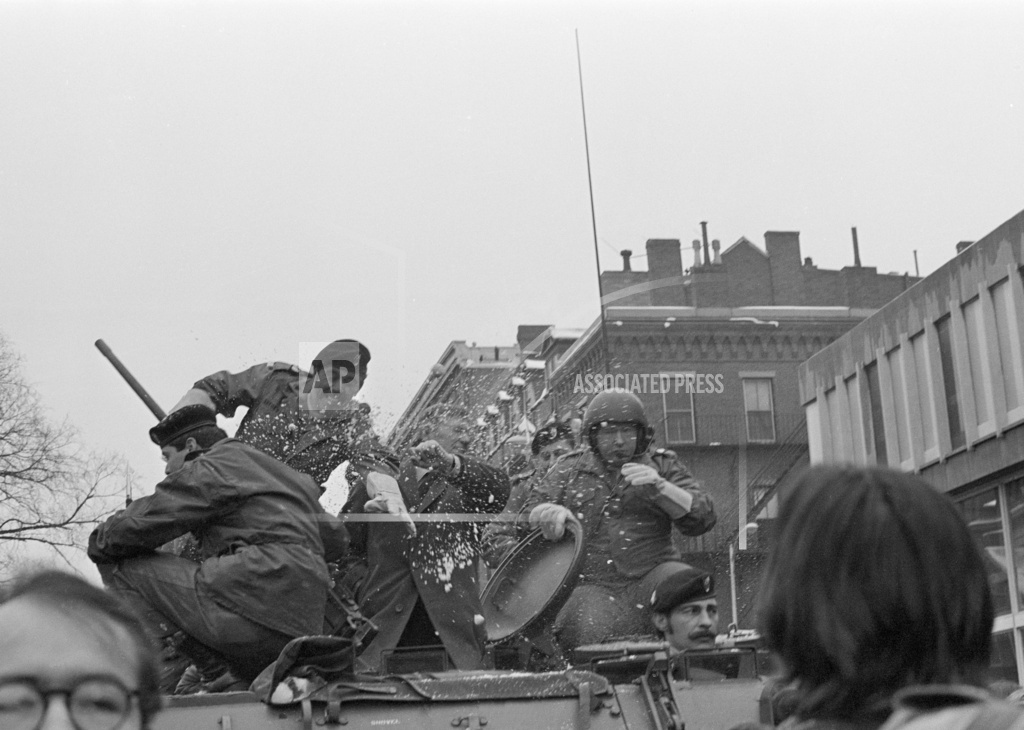
Actor John Wayne visited Cambridge, Massachusetts, at the invitation of “The Harvard Lampoon,” to debate students and promote his new film, “McQ.” Wayne rode through Harvard Square from the Lampoon Castle to the Harvard Square Theatre in an armored personnel carrier from Fort Devens, confronted on the way by Native Americans expressing support for the protesters on trial for the Wounded Knee Occupation. At the debate, Wayne claimed not to be able to hear a question about his participation in enforcing the Hollywood blacklist.
The U.S. TV sitcom “Happy Days” debuted on ABC. After switching in 1975 to being filmed in front of a live audience, Happy Days would reach number one in the Nielsen ratings in the United States. Critic reaction was mixed, with Jay Sharbutt of the Associated Press writing, “It is a half-hour comedy series. It is set in the 1950s. It is awful,” but adding that it “does a pretty fair job of recapturing the atmosphere of the era,” and Kay Gardella of New York’s Daily News commenting that as a midseason replacement, “some of the new arrivals are worse than the shows that were dropped.”
24th NBA All-Star Game, Seattle Center Coliseum: West beats East, 134-123; MVP: Bob Lanier, center, Detroit Pistons.
Dow Jones Industrial Average: 846.40 (+6.22, +0.74%).
Born:
Mike Minter, NFL safety (Carolina Panthers) and college coach (Campbell University 2013-23), in Cleveland, Ohio.
Ray King, MLB baseball pitcher (Chicago Cubs, Milwaukee Brewers, Atlanta Braves, St. Louis Cardinals, Colorado Rockies, Washington Nationals), in Chicago, Illinois.
Died:
Josef Smrkovský, 62, Czechoslovak politician who had led the reforms of the Prague Spring of 1968 and was later punished, died of cancer.
Charles Rosher, A.S.C., 88, English-born cinematographer.
Yosef Serlin, 67, Israeli Minister of Health, 1952 to 1955, and Zionist activist, lawyer and member of the Knesset.
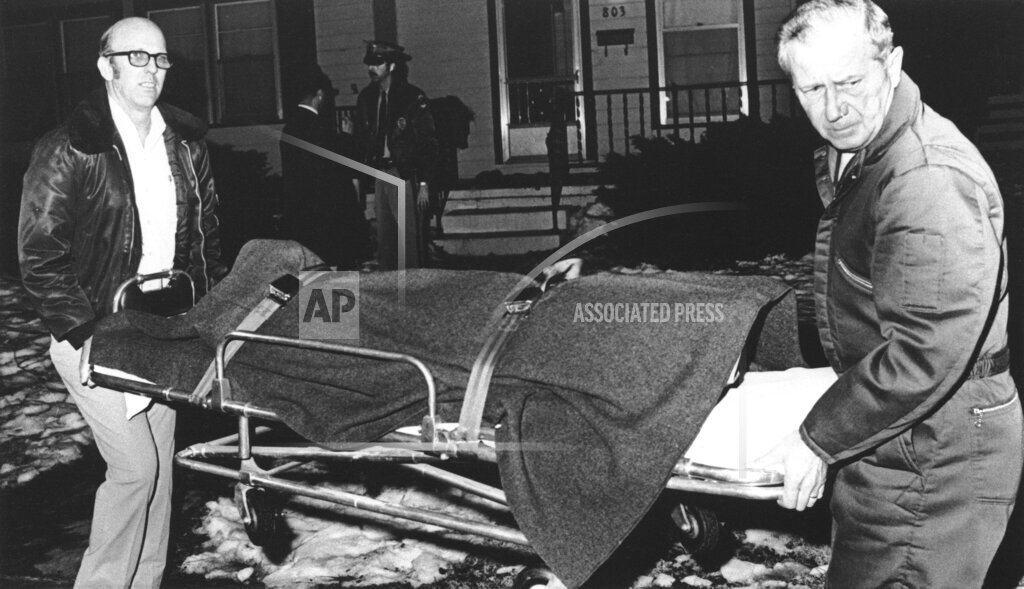
[Ed: The Oteros were the first victims of a serial killer who was finally caught in 2005. Dennis Rader – also known by his self-appointed moniker ‘BTK’ – ‘bind, torture, kill’ – killed ten people, including the Otero family, between 1974 and 1991. He is now serving ten consecutive life sentences.]



 History Diaries