Insurgents in Spain announced tonight they had reached the border of Barcelona province and were only 37½ miles from the government capital in their drive for a decisive victory in Spain’s civil war. General Francisco Franco put an army of 300,000 men into action against government lines defending the capital city of Barcelona. The insurgent forces were said to have entered Barcelona province on its western boundary through capture of Codom Peak in the Sierra de Queralt. This marked an advance of nearly thirteen miles since morning for the northern column of the rebels’ central army corps.
The column sent back word of the capture of important villages and towns in quick succession throughout the day. Recounting today’s successes in northeastern Spain, the insurgents reported that seven army corps taking part in the big push had speeded up operations over the whole of the 100-mile front. It extends from the Pyrenees mountains east of Andorra, near the French border, southward through Lérida and Tarragona provinces to the Mediterranean. Insurgent infantry was supported by artillery fire on a world war scale, and airplanes were massed in squadrons of 100.
About twelve miles northwest of the Queralt mountain advance, insurgent divisions hammered government defenses west of Cervera, their next objective along the main Lérida-Barcelona highway. Thirty miles south of the Queralt mountain action, the insurgents reported their troops had captured the walled town of Valls, a government air base twelve miles north of the port of Tarragona. Government reports denied this, however. An insurgent force in Valls would be within forty-five miles overland of the city of Barcelona. Still farther south, rebels converged on Tarragona after an advance east from Falset. Insurgent headquarters announced this force captured the village of Montroig, within three miles of the Mediterranean coast.
This maneuver enabled the insurgent artillery to cut the main coastal highway fifteen miles below Tarragona, and thus to block retreat northward of large forces of government troops. The plight of these troops resulted from the rebels’ success yesterday in making the loyalist pocket along the Ebro River untenable. The insurgents also announced the occupation of Hospitalet on the Mediterranean coast twenty-four miles north of Tortosa and sixteen miles southwest of Tarragona. In Barcelona, meanwhile, the loyalist government was reported pressing both men and women into defense activities. Government counter-offensives in southwestern Spain and in the Brunete sector west of Madrid appeared to have failed in their purpose of diverting troops from General Franco’s drive in Catalonia.
All Spanish citizens between 17 and 55 years of age, including women, were drafted into the military reserves. The order was one of a series approved at a cabinet meeting January 12, but was not mentioned previously when all men between 20 and 45 years of age were mobilized and seven more military classes called for service. Another decree announced the militarization of all businesses, industries, and works related directly or indirectly to the war, including the transport and provision services. The government said its forces had effected an orderly withdrawal without suffering heavy losses and reported it was entrenching for a strong stand in the Tarragona sector.
[Ed: Tarragona will fall tomorrow. The rout is on…]
The 6,000-ton British freighter Stanwell, on which workmen had just completed repairs made necessary by a previous bombardment, was struck again today by two bombs dropped by a squadron of five insurgent raiders. The bombs crashed through the vessel’s forward deck. Authorities said there were no victims.
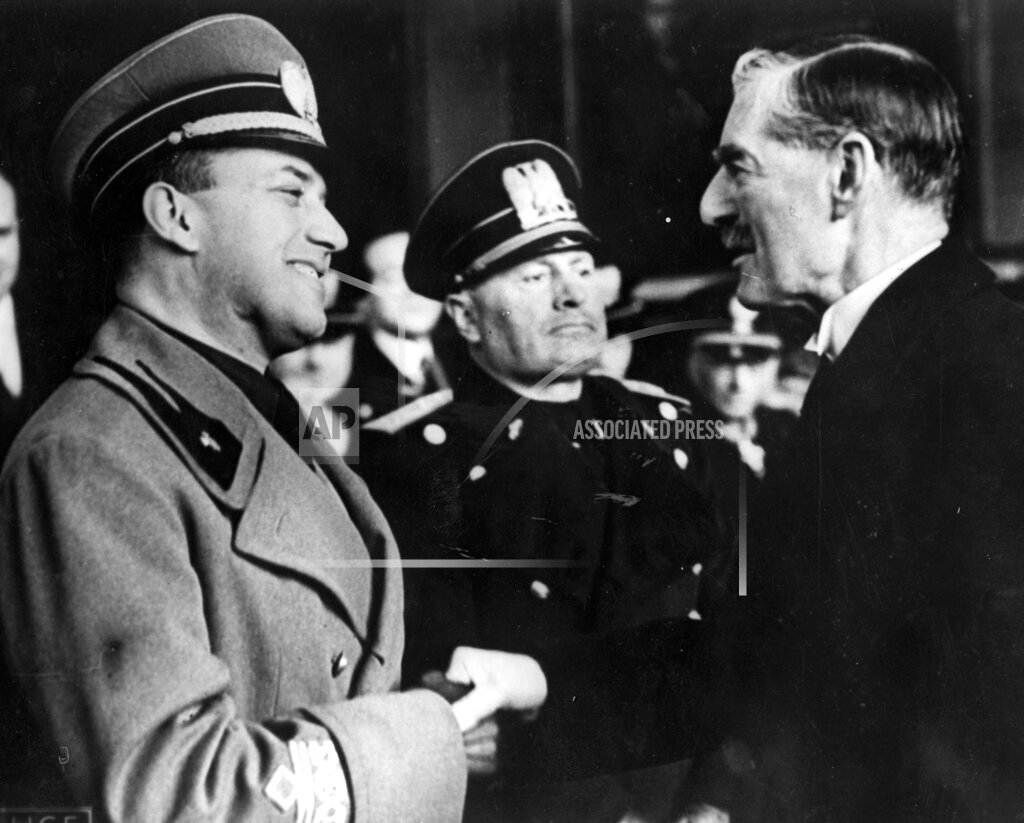
Following his talks with Mussolini, Chamberlain is satisfied that Italy will co-operate in settling the problem of Germany and Italy’s Jewish refugees.
Virginio Gayda, in today’s Giornale d’Italia explains the lack of concrete achievements in the Rome conversations by saying that the European problems, which were examined, interest not only Italy and Britain but also other countries, therefore they cannot be solved in bilateral conversations.
Pope Pius XI urges foreign diplomats at the Vatican to grant as many visas as possible to victims of German and Italian racial prejudice.
The Reich Propaganda Ministry notified the German press that Hitler was no longer to be referred to as “Führer and Reich Chancellor” but was now to be called simply “Führer.”
Adolf Hitler reportedly tells Italian Premier Benito Mussolini to avoid war in 1939.
France today ordered displays of force from one end of the Mediterranean to the other, apparently against what the Daladier government considers the aggressive attitude of Italy. The French Atlantic and Mediterranean fleets were ordered to show their strength off Africa’s northwest coast in maneuvers which will coincide with the Mediterranean visit of the British Home Fleet on a regular spring cruise. Three submarines received instructions to proceed to Syria where demands for freedom from French control have caused rioting. French army and navy commanders-in-chief were told to make tours of inspection of African colonial fortifications.
France is expelling many Italians living illegally in Tunisia.
Norway claims Queen Maud Land; about a million square miles in the Antarctic to be used for whaling.
An Arab revolt against British control of Palestine disbands as two Arab chiefs flee.
Abolition of the WPA and the PWA, the government’s two principal spending agencies, was recommended today by the Senate Committee on Unemployment and Relief. The committee proposed replacing the agencies with a department of public works, which would supervise all government projects. The new department also would assume control of old age pension grants, payments to the blind and for dependent children, and would supervise the Civilian Conservation Corps and the National Youth Administration.
The report, submitted by Chairman James F. Byrnes (D-South Carolina), proposed a new system of unemployment compensation ranging from $5 to $15 a week. “A work program should not be expected to suddenly expand in order to take care of a great increase in unemployment caused by an unexpected recession in business,” the report said. “Unemployment compensation should be the source of financial help to the worker who loses his job because of a falling off in general business. “Each year the budget. in the light of existing conditions, can set forth the amount of money it is deemed advisable to allot to public work in cooperation with states and local governments. The allotments should be based upon the population of the states and upon the number of unemployed in the various states.”
President Roosevelt anticipates a bottleneck of plane production due to the shortage of skilled workers.
Colonel Sylvain Raynal, hero of World War I, dies from the long-term effects of gassing.
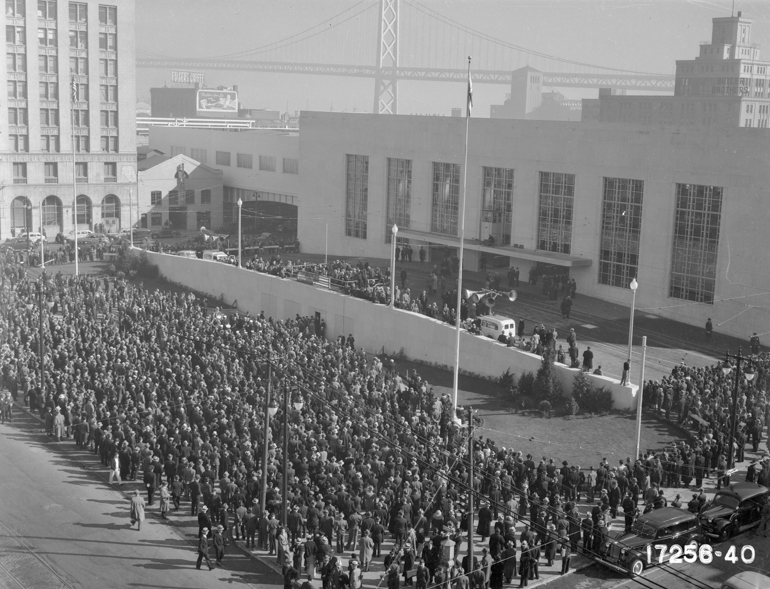
In San Francisco, mayors of Northern California cities participated with State officials today in dedicating the $18,000,000 railway facilities for the San Francisco-Oakland Bay Bridge. The services likewise were a “farewell” to the fleet of passenger ferries which have connected San Francisco with the northern and central part of the State for 75 years. While flags were raised and speeches were made today, tomorrow will be the first day for the public to use the electric railway system and inspect the glistening $2,300,000 glass and concrete terminal in San Francisco.
New York City is likely to legalize smoking in all theaters.
The French pavilion of the New York World Fair is dedicated.
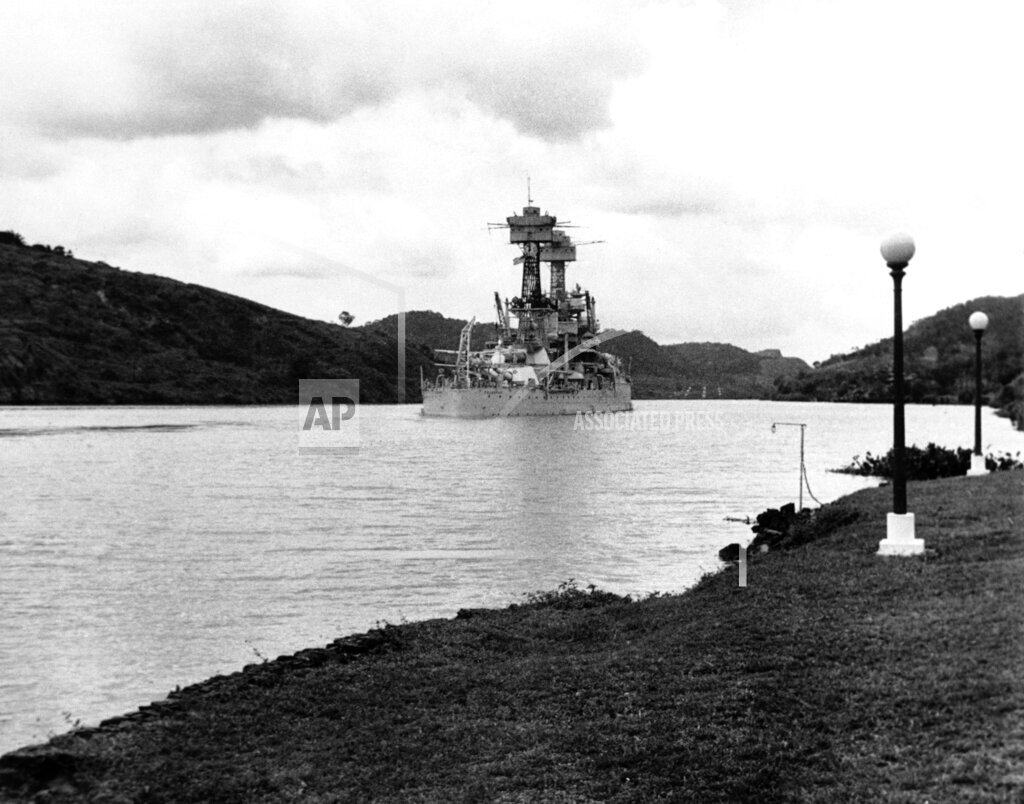
A U.S. fighting fleet of 80 ships passes through the Panama Canal under heavy guard. Training exercises are scheduled in the Atlantic and Caribbean. The United States Fleet completed passage of the Panama Canal early this evening and about thirty-four merchant ships, waiting at both portals, began transit which will continue throughout the night.
Explorer Lincoln Ellsworth reports that the Antarctic ice cap is receding.
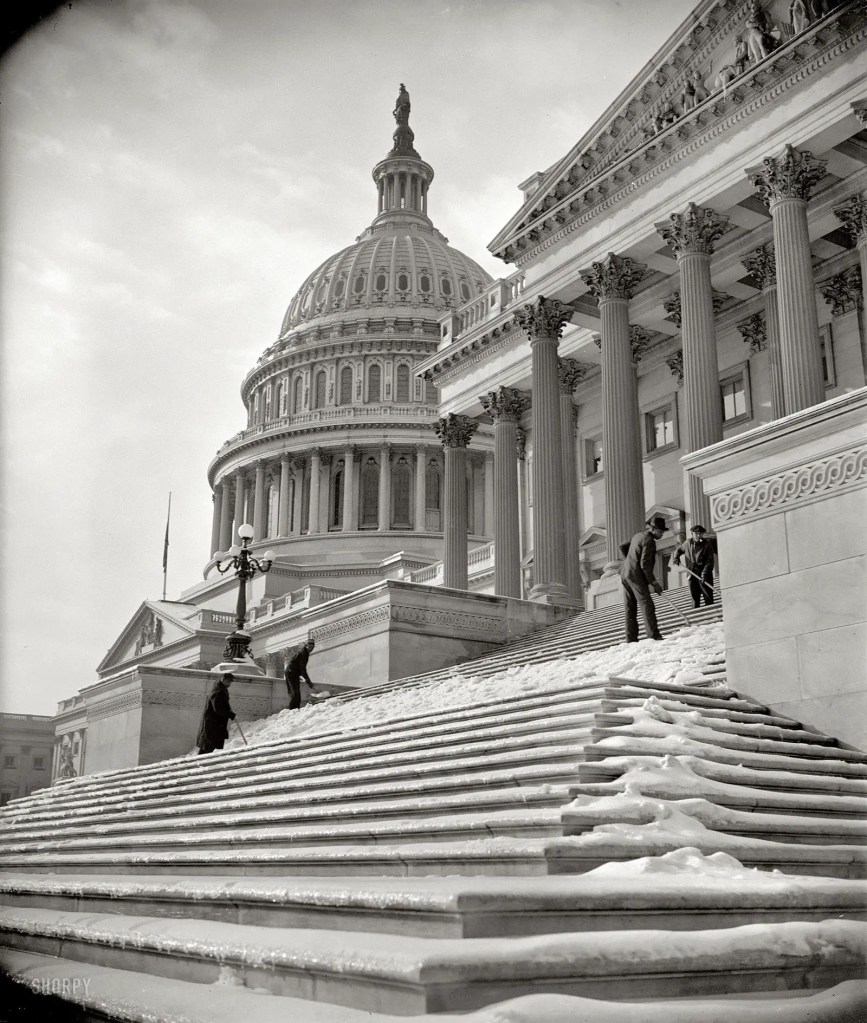
A snowstorm covers New York City and causes a severe traffic jam. Deep winter snows, routing false harbingers of spring, blanketed much of the nation last night with the heaviest fall of the 1938-39 season. At least 31 storm deaths were reported as subfreezing temperatures glazed highways from the Atlantic Coast to the Rocky Mountains. The fatalities resulted from airplane accidents, sledding mishaps, heart attacks while shoveling snow, traffic crashes on icy streets, and exposure. Nearly 10 inches of snow, two inches more than Thanksgiving Day’s heavy fall, covered New York and brought out 32,000 shovel-and-sweep workers to keep traffic moving. Hundreds of motorists abandoned their cars at the height of the storm. Maryland reported the heaviest snowfall since 1927, with 10 inches, while Wisconsin residents shivered amid nose-nipping temperatures.
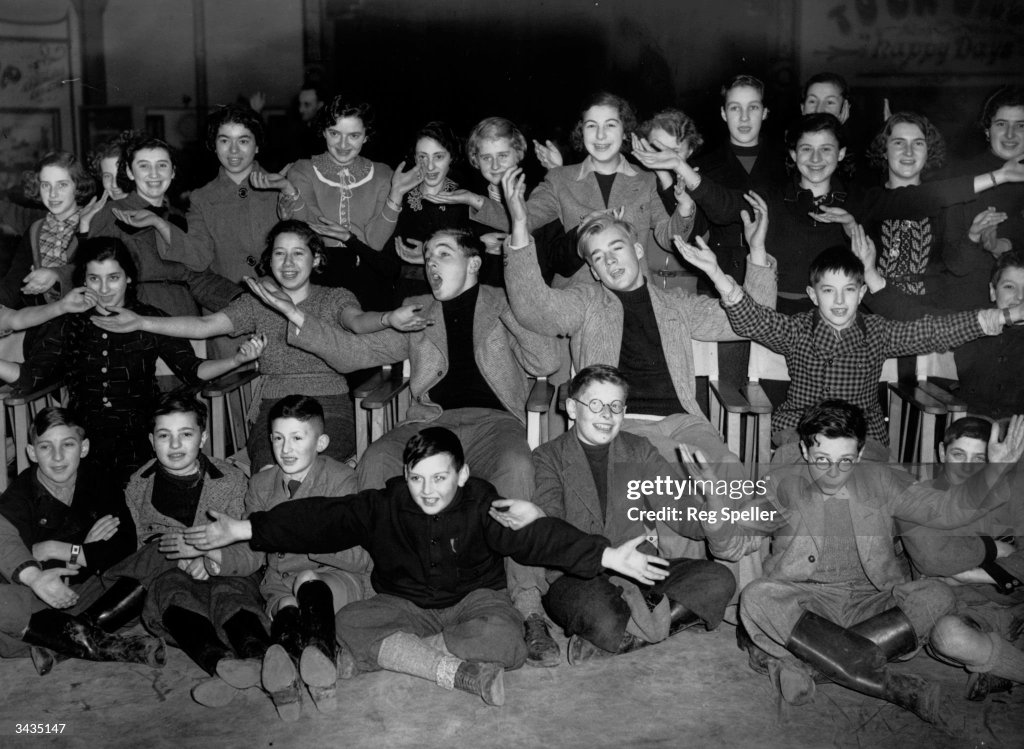
Three hundred refugee Jews from Germany and Italy who were on their way to Paraguay to establish new homes, found themselves stranded today in Montevideo when the Paraguayan government canceled their visas. Uruguayan authorities, perplexed by the unexpected problem, were troubled further with disclosure that 200 more Jewish refugees would arrive Monday in a similar plight. President Alfredo Baldemir called a special cabinet meeting for Monday to study the problem. All of the 300 in the city tonight apparently have means. They traveled first class on the Italian liner Conte Grande and took up temporary abode in the capital’s finest hotels — under police surveillance.
The 200 due Monday, however, are all third-class passengers on the smaller French vessel Lipari, and their problem may become more acute. They embarked in Hamburg and are believed to be mostly from Germany. The refugees are equipped with visas granted by Paraguayan consular officials abroad. They were almost in sight of their “new homeland,” yesterday when they learned that the Paraguayan government had canceled all immigration permits issued since the end of November. Economics Minister José Bozzano of Paraguay said in Asuncion that all Jewish immigrants must have entrance visas issued by the national land colonization bureau, and this bureau said in turn that the refugees stranded in Uruguay, not being farmers, would not be allowed to enter Paraguay.
Britain sends a strongly worded note to Japan, demanding an open door in China. London was informed tonight that Sir Robert Craigie, British Ambassador to Japan, had called at the Foreign Office in Tokyo this afternoon and delivered one of the most firmly worded notes that had passed between the two countries in years.
Chinese reports today reported that a rejuvenated air force, said to include Soviet as well as American and British volunteers, had inflicted terrific damage on Japanese warships and airplanes in South China. Claiming the first major Chinese triumphs in recent phases of the war with Japan, the Chinese messages asserted that:
- Two Japanese warships were sunk off the Bocca Tigris forts in the Canton River.
- Japanese batteries at Kongmoon, south of Canton, were demolished. Twenty Japanese airplanes were set afire near the Bocca Tigris forts.
- Another twenty Japanese planes were engaged in a dog fight and some of them were shot down.
[Ed: These claims, like most air combat claims, are, of course, exaggerated.]
The advices did not report Chinese casualties. Japanese officials discounted or denied the Chinese claims. The Chinese said that a total of thirty-four Chinese planes took part in the raids. Fourteen of them attacked the Kongmoon batteries and two bombarded the Japanese warships. Although the Chinese had made several attempts to strike back at the Japanese in the rich Canton area, they had been repulsed in land fighting. Earlier this week, dispatches from Chungking, temporary Chinese capital, asserted that Russian, British, American, Australian, and New Zealand flyers had joined the rejuvenated air force. About 500 new planes, including some Bellancas, were reported to have been imported by way of French Indo-China. High Chinese officials, however, denied that any new Bellancas had been purchased.
Japanese bombers, meanwhile, attacked Hengyang on the Canton-Hankow railroad. The magistrate’s office was demolished,180 other buildings were destroyed or damaged by fire and about 200 casualties were inflicted, Chinese reports said. The United States consulate at Hankow announced that it was investigating the removal by Japanese military officials of a consular notice from the offices of the du Pont company forbidding entry. Such notices are placed by consular officials on American property. The du Pont office notice was replaced by a Japanese military notice saying: “Nothing can be moved in or out of these premises without permission of the Japanese military.”
The new Japanese Premier Hiranuma denies a unitary party system is planned.
The Japanese Empress dons a maternity girdle to commemorate the beginning of her 9th month of expectancy.
The State of Victoria in Australia is going through a terrible ordeal of fire. The calamity has already cost thirty-one lives and millions of pounds of losses of timber, property, stock, roads and telegraphs. More than 1,000 square miles have burned.
Dow Jones Industrial Average: 148.26 (+1.74).
Born:
Fred Arbanas, AFL-NFL tight end (Super Bowl IV, 1970; AFL Champions-KC, 1962, 1969; AFL All-Star, 1962–67; Super Bowl IV, 1970; Dallas Texans-Kansas City Chiefs), blind in one eye, in Detroit, Michigan (d. 2021).
Mel West, AFL halfback (Boston Patriots, New York Titans), in Columbia, Missouri (d. 2003).
Tim Talton, MLB pinch hitter, catcher, and first baseman (Kansas City A’s), in Pikeville, North Carolina (d. 2021).

 History Diaries