Hungary signs an anti-Communist document and is anticipated to withdraw from the League of Nations. Reichsführer Hitler’s drive to the east, with the object of isolating and encircling the Soviet Union with Nazi allies, made another great gain today. Hungary accepted the invitation of Germany, Japan, and Italy to join them in their anti-communist pact. This pact, which binds the signatories to keep each other informed on international communist activities and to act jointly on “necessary measures of defense” against communism, originally was entered into by Germany and Japan on November 25, 1935. It was expanded on November 6, 1937, when Italy joined.
Count Stephen Csaky, Hungarian foreign minister, is expected to sign the pact on his arrival in Berlin from Budapest next Tuesday for a two-day state visit. It is also believed that he will soon announce Hungary’s intention to leave the League of Nations. “Hungary reinforces the powers of order, which hold together against Jewish bolshevist destruction and to an ever-increasing extent determine world politics,” said the official Nazi newspaper, Der Angriff. “The strengthening of the anti-communist pact must be especially welcome in view of the influence the Jewish bolshevist attacks have on the official American policy.” Boersenzeitung, organ of the German armed forces, declared: “The bolshevist setback in Spain has induced the communist Internationale to shift its activities to other quarters of the world. We need only to refer to the communist activities in America, where the tentacles of the communist Internationale reach into the antechambers of the highest government officials.”
Referring to Bela Kuhn’s communist regime in Hungary in 1919, the Deutsche Allgemeine Zeitung said: “Nations which have been spared similar experiences perhaps fail to understand the issue at stake. Especially in America, a pathological campaign is waged to dim the minds of the people. Perhaps such nations must first undergo similar experiences before they are cured.”
Jews in Germany are arrested in reprisal for yesterday’s shooting in The Netherlands.
The Reich assures the United States that American citizens in Germany will be treated well. Germany and the United States, though completely at odds on Germany’s right to discriminate against American Jews in Germany, appeared today to have reached a practical solution of a controversy that has added tension to the disturbed relations between them. An exchange of notes between the two governments, released this afternoon by the State Department, disclosed:
- The United States again declined to recognize Germany’s right to apply to American Jews in Germany treatment not applied to other American citizens.
- Germany declared there was nothing in international law to prevent her from doing so.
- Germany, however, agreed to respect rights to which American citizens are entitled by virtue of treaties between the two governments.
- The United States expressed itself as gratified at this and agreed to submit to the German foreign office, for its examination, cases of alleged discrimination against American Jews. Hitherto such cases were taken up with local authorities.
- The German foreign office says that if such cases should be brought to its attention by the American embassy, the German government for its part is prepared to examine and settle them on the basis of prevailing treaty provisions.
The American chargé d’affaires, Prentiss B. Gilbert, who presented the American note to the Wilhelmstrasse, likewise submitted a number of cases of reported discrimination. American officials will now await Germany’s decision on the specific cases as a test of her intentions with regard to American Jews. Officials, on the basis of the two notes, believed tonight that Germany would settle the cases of American Jews who suffered damage or injury in recent outbreaks. There was some difference of opinion, however, as to the interpretation Germany might place on the treaty rights mentioned in the note.
One thousand Jews will be taken in sealed trains from Danzig to Genoa, Italy, from where they will sail on a Greek ship for an unrevealed destination. This mass deportation will begin on January 27. The Jews will be sent across the frontier to East Prussia and put in guarded German trains which will take them to Italy. “We do not know where we will go,” one Jew said. “No permit has been received yet. We have heard we will land in Shanghai.” The deportees will leave Danzig penniless. The Nazis have taken over the property of the Jewish religious community, for which they paid 1,000,000 guilders. This, they explained, covered the expenses of transport to Genoa and chartering the ship.
The Spanish Nationalists captured Tortosa. The government tonight announced evacuation of the lower Ebro River area to a line at Hospitalet on the Mediterranean. The action was taken to prevent advancing insurgents from isolating troops and civilians. Simultaneously there were reports that the government had launched an offensive near Brunete, fifteen miles west of Madrid, in an effort to counteract the insurgents’ eastward sweep in northeastern Spain. Hospitalet is twenty-four miles north of Tortosa, whose capture was announced this morning, and at a point more than halfway from Tortosa to the important port of Tarragona, which is fifty miles southwest of Barcelona.
During the present insurgent offensive in northeastern Spain, which began December 23, the Tortosa region was protected by a defense system of which the Ebro River was an important factor. The town and its surrounding area became untenable, however, with the rebel troops threatening to drive to Tarragona from captured Falset and Montblanch. This maneuver would cut off Tortosa from the rest of Catalonia. Insurgent dispatches said the Moroccan cavalry, which took Tortosa, swept on beyond Perello to a point seventeen miles north of Tortosa and closed in on the mountain hamlet of Mas de Camagrosa. Meanwhile motorized rebel infantrymen rolled up the coast road to Perello, a town of 5,000.
A loyalist communique admitted that the insurgent line north of Montblanch had been pushed farther toward the coast today. It added, however, that insurgent attacks north of this area were repulsed. Insurgent dispatches reaching Perpignan, France, said rebel troops had smashed through the last line of fortifications defending the important walled industrial town of Valls, southeast of Montblanch and twelve miles north of Tarragona.
According to French reports, Spanish rebels are changing their capital from Barcelona to Valencia.
British Prime Minister Neville Chamberlain watches a two-hour demo of how Italy’s youth keep fit — a combination of gymnastic and rifle drills.
Chamberlain sees a “good-sized gap” between British and Italian viewpoints on French issues.
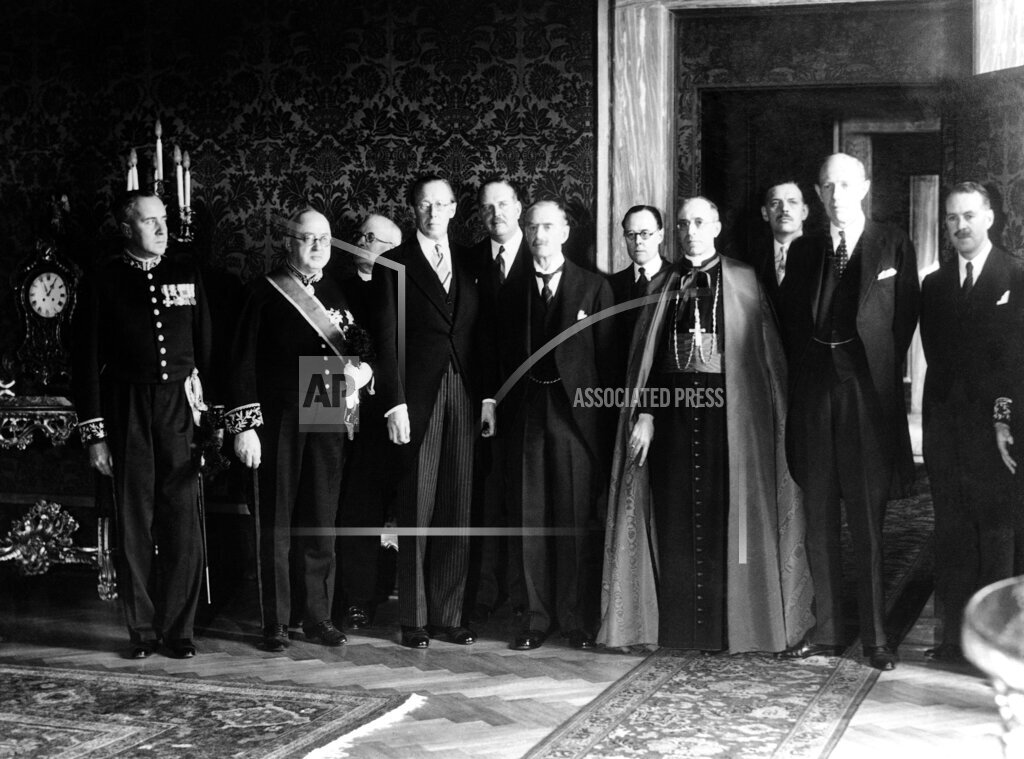
The Pope holds an audience with British Prime Minister Neville Chamberlain. The pope talked of the resistance democracies must make against the dangerous regimes of the world, as well as racial persecution and the need to help refugees.
French politicians commend President Franklin Roosevelt on his commitment to liberty as the 150th anniversary of French liberty is commemorated.
Belgian premier signs the Burgos Treaty for trade relations with Franco’s (Nationalist) Spain.
French reports from the Djibouti border today reported strong concentrations of Italian troops in Italian Ethiopia near the frontiers of French and British Somaliland. Similar reports were denied last month. Today’s dispatches gave specific locations at the junction of the borders of Ethiopia and the British and French colonies, and at Sardo, farther north, opposite the heart of French Somaliland. Senegalese sharpshooters sent here by France recently to reinforce the Somaliland garrison were moved toward the Ethiopian border last night.
House Representatives pass a $725 million relief bill, though the funds are restricted and the decision is not unanimous. The House tonight passed and sent to the Senate a resolution appropriating 725 million dollars to finance the Works Progress Administration from February 1 to June 30. The final roll call vote was 397 to 16. A coalition of Republicans and unpurged Democrats functioned efficiently to defeat administration attempts to raise the total of the appropriation to $875 million, the amount requested by President Roosevelt in a special message eight days ago. The members turned down an amendment carrying the higher figure by a vote of 226 to 137. This approval of a slash of $150 million from the President’s estimate of WPA needs constituted one of the most stunning reverses suffered by Mr. Roosevelt in his spending program since he took office.
In addition to endorsing the 17 percent cut in the President’s estimate, the House tacked onto the appropriation a number of restrictive amendments, some of which were also regarded as slaps at the administration. These amendments included:
- A provision that aliens shall not be employed by the WPA. The agency has hitherto refused to distinguish between citizens of the United States and aliens in awarding jobs to applicants.
- A restriction in WPA wage differentials to 25 percent. Under this amendment the agency would be forced to pay practically the same wages to northern and southern workers, whereas differentials as high as 1,000 per cent now exist.
3 An amendment providing that no salary may be paid to a WPA employee attempting to influence the vote of another employee. - A provision which, in effect, sets aside an executive order by President Roosevelt blanketing under civil service 35,000 administrative employees of the WPA.
The two main contests involved the administration’s attempt to raise the appropriation to 875 million dollars and the Republican minority attempt to appropriate only 350 million dollars at this time to carry the WPA until April 7. Both were unsuccessful.
Roosevelt requests a quick appropriation of $552 million for planes needed for national defense.
Harry L. Hopkins, President Roosevelt’s right-hand left-wing adviser, today concluded his three day act of confession and repentance before the Senate Commerce Committee. He left a record in which Mr. Hopkins as Secretary of Commerce repudiated Mr. Hopkins as WPA chief. The committee delayed action on recommending the confirmation or rejection of Hopkins’ appointment pending the printing of the voluminous record of the testimony, but there is little doubt that the nomination will be confirmed. Ostensibly Hopkins was as contrite today when he called certain WPA political activities in Pennsylvania reprehensible as he was Wednesday when he said activities of the WPA in the Kentucky senatorial primary campaign were so rotten that he should have fired the whole administrative force. Again he admitted, professing deep regret, that his own partisan political speech making while he was relief administrator was improper. He said it was a mistake for the senate not to pass the Hatch amendment, forbidding political activity by WPA and PWA supervisory employees, to the 3.75-billion-dollar relief and pump priming bill last year.
The Security and Exchange Commission will inquire about a potential monopoly of the insurance industry.
The American College of Dentists outlines an insurance plan to aid lower income families.
The National Labor Relations Board argues that employers should not be allowed to fire staff who participate in sit-down strikes over unfair labor practices.
Congressman Ben Cravens dies of pneumonia soon after his seventh term begins.
Northwest Airlines Flight 1, registration NC17389, was a Lockheed Model 14 Super Electra aircraft which crashed in eastern Montana on Friday, January 13, 1939, approximately 0.5 miles (0.80 km) southwest of the Miles City Airport. All four on board were killed in the accident. Departure from Miles City was delayed for over an hour due to weather conditions at Billings, but the aircraft eventually departed at 9:14 PM, with only two passengers on board. Shortly after takeoff to the northwest (current runway 31), and at an altitude of five hundred feet (150 m) above ground level (AGL), the aircraft began a short turn to the left, lost altitude rapidly, and descended almost to the ground. It then pulled up into a sharp climb, reached about 500 feet AGL again, turned left again and descended rapidly into a ravine approximately half-mile southwest of the field.
Although the state of the wreckage prevented investigators from definitively pinpointing the exact origin of the fire, an area of severe burning was found close to the cross-feed fuel valve located in the cockpit between the pilot and co-pilot. The Super Electra’s cross-feed fuel system maintained a constant pressure of approximately 4.5 pounds per square inch (31 kPa), and there had been numerous reports of leakage in the vicinity of the valve. Lockheed designers had not provided any method by which any fuel that did leak from the valve could safely be drained. It was also difficult to maintain or inspect the valve due to its location.
An 8 by 10-inch photo is sent by wire from Chicago to New York in just five minutes.
Five convicts that escaped their Alcatraz prison cells are caught attempting a desperate swim to freedom. One of them, “Doc” Barker, notorious gangster and the son of “Ma” Barker, is fatally shot. Arthur “Doc” Barker, Dale Stamphill, William Martin, Rufus McCain and Henri Young tried to escape from Alcatraz Federal Penitentiary by sawing through their cell bars and then bending the bars of a window. Prison guards spotted them at the shoreline – three of the five men surrendered but Barker and Stamphill refused and were shot. Barker died from his injuries.
The hat industry, concerned that the average man does not own 12 hats — the number needed, they say, to be a well-dressed man — publishes a list of best-hatted men.
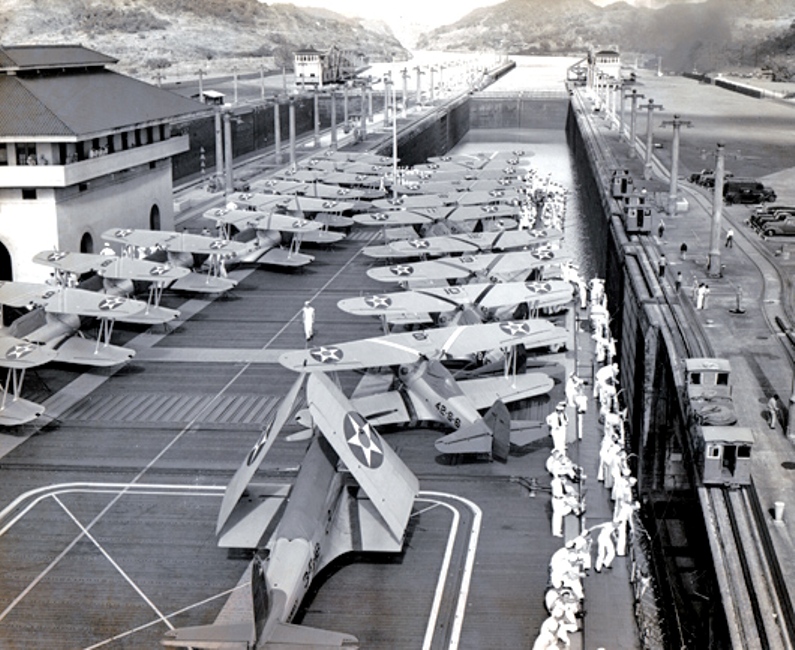
U.S. Marine units under Brigadier General Richard P. Williams began its participation in US Navy’s Fleet Exercise No. 5 in the Caribbean Sea.
Vivien Leigh is to play opposite Clark Gable in “Gone with the Wind.” The two years’ guessing contest as to who will play the role of Scarlett O’Hara in the motion picture version of Margaret Mitchell’s “Gone with the Wind” was ended tonight with the signing of Vivien Leigh, English actress, for the part. It will be her first Hollywood movie. Selection of Miss Leigh, after every actress in Hollywood had been considered for the role, was announced by David O. Selznick, president of Selznick-International studio, which will make the picture. Production in technicolor will begin within two weeks, with Clark Gable cast as Rhett Butler, Leslie Howard as Ashley Wilkes, and Olivia De Havilland as Melanie. George Cukor will direct the movie, using an already completed screenplay by Sidney Howard and Oliver H. P. Garrett.
“Son of Frankenstein,” starring Basil Rathbone, Boris Karloff and Bela Lugosi, is released.
A $1 million offer for racing thoroughbred Man ‘O War is refused.
New York Yankees owner Colonel Jacob Ruppert dies of phlebitis at age 71. On the 17th, Ed Barrow is elected president to succeed Colonel Ruppert.
Japanese forces repair a railroad damaged by Chinese guerrillas. Japanese railroad communications, cut by Chinese guerrillas both south and west of Tientsin, were reported to have been restored today. Derailment of a Japanese military train below Tsangchow, fifty-five miles south of Tientsin, disrupted traffic Tuesday on the Tientsin-Pukow railroad. Chinese guerrillas blew up the track and damaged a bridge of the Tientsin-Peking line near Langfang, about midway between the two cities, halting all traffic yesterday. Dispatches from Peking yesterday said travelers on the eighty-mile Tientsin-Peking railroad could hear distant gunfire between Japanese and guerrillas. More than a mile of track was said to have been destroyed and a freight train blown up.
Jean Decoux was named the commander of French naval forces in the Far East.
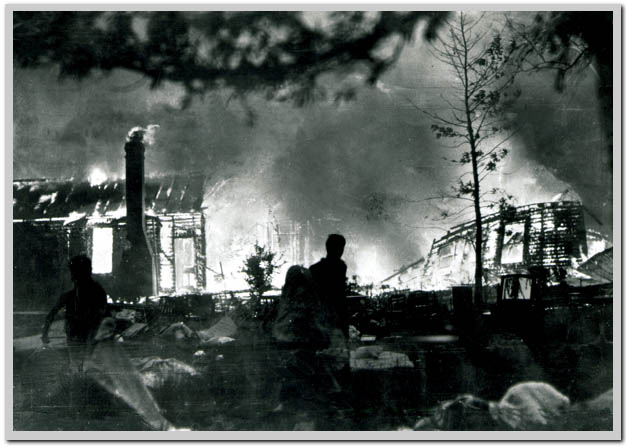
The Black Friday bushfires burn 20,000 square kilometers of land in Victoria, Australia, claiming the lives of 71 people. The Black Friday bushfires were part of the devastating 1938–1939 bushfire season in Australia, which saw bushfires burning for the whole summer, and ash falling as far away as New Zealand. It was calculated that three-quarters of the State of Victoria was directly or indirectly affected by the disaster, while other Australian states and the Australian Capital Territory were also badly hit by fires and extreme heat. This was the third-deadliest bushfire event in Australian history, only behind the 1983 Ash Wednesday bushfires and the 2009 Black Saturday bushfires. Fires burned almost 2,000,000 hectares (4,900,000 acres) of land in Victoria, where 71 people were killed, and several towns were entirely obliterated. Over 1,300 homes and 69 sawmills were burned, and 3,700 buildings were destroyed or damaged. In response, the Victorian state government convened a Royal Commission that resulted in major changes in forest management. The Royal Commission noted that “it appeared the whole State was alight on Friday, 13 January 1939”
Dow Jones Industrial Average: 146.52 (-0.81).
Born:
Cesare Maniago, Canadian NHL goalie (Toronto Maple Leafs, Montreal Canadiens, New York Rangers, Minnesota North Stars, Vancouver Canucks), in Trail, British Columbia, Canada.
Jim Bradshaw, NFL safety (Pittsburgh Steelers), in St. Clairsville, Ohio.
Died:
Jacob Ruppert Jr., 71, American Baseball HOF executive (owner New York Yankees 1915-39; signed Babe Ruth; built Yankee Stadium), from phlebitis.
Arthur Barker, 39, American criminal (shot trying to escape Alcatraz).


 History Diaries