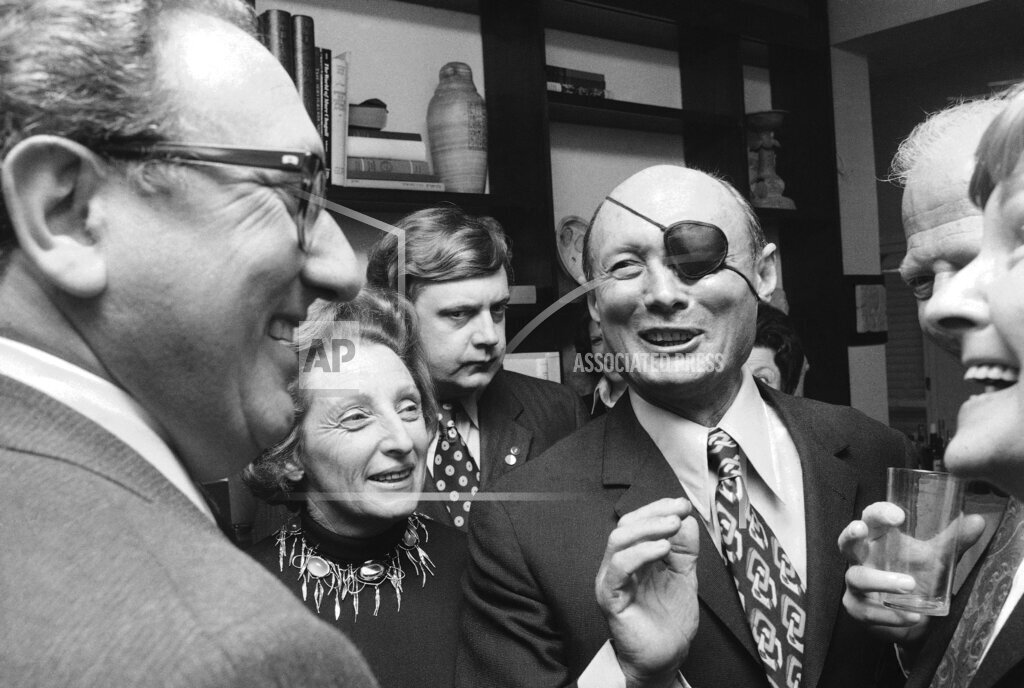
Supposedly, Secretary of State Henry Kissinger has arranged a major breakthrough in the Mideast. The Israeli deputy prime minister informed Kissinger that a specific Israeli proposal has been created for troop disengagement along the Suez Canal. Kissinger spent time with Defense Minister Moshe Dayan and chief of staff David Elazar working out the technical details of the disengagement. Israeli foreign minister Abba Eban then authorized Kissinger to present the disengagement plan to Egypt; Kissinger flew from Israel to Egypt with the proposal. If Egypt accepts the agreement, the Geneva peace conference attendees will review the plan. A final peace agreement may be imminent.
The United Nations command reported today that Israeli forces yesterday lifted their blockade of supplies to the city of Suez and Third Army troops on the eastern side of the canal. The blockade began at noon Friday. Rudolf Stajduhar of Yugoslavia, the United Nations spokesman, said that 45 trucks reached Suez city and 16 reached the unloading area for the Third Army troops. Normally 25 to 27 trucks reach each of the two destinations daily. Mr. Stajduhar said yesterday’s reduced number for the Third Army troops was due to the poor condition of the trucks, which have to travel over rough roads north of Suez.
President Hafez al‐Assad Syria consulted with his top aides today on proposals for negotiations with Israel separating their forces in the Golan Heights, according to informed travelers from Damascus. They said President Assad, who is also Commander in Chief of the armed forces, conferred with Defense Minister Mustafa Tlas, top military commanders and Foreign Minister Abdel Halim Khaddam. The travelers, who are known for their connections with the ruling Baath Socialist party in Syria, reported that Secretary of State Kissinger was expected in Damascus, the Syrian capital, sometime this week for talks with President Assad and to try to arrange the Syrian-Israeli negotiations on disengagement.
An Israeli soldier was killed today in artillery exchanges with Syrian forces in the Golan Heights, an army spokesman said here. He also reported artillery and mortar exchanges on the Egyptian front but said there were no Israeli casualties. The spokesman described as ridiculous a report from Damascus of heavier Israeli casualties.
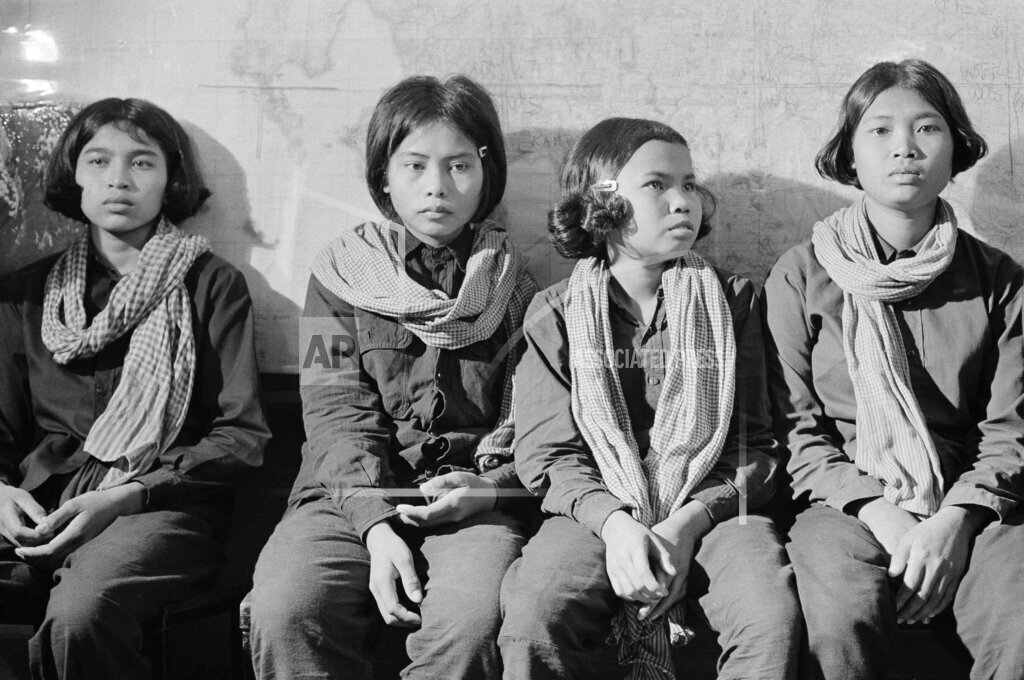
In Cambodia, fighting continued near Phnom Penh. The best government troops have been sent to hold back Communist troops from the capital city. Fishermen were caught between government and insurgent troops. Overall government losses were light. Military sources reported that rebel antiaircraft gunners shot down a Cambodian Air Force plane late tonight over a battle area northwest of Phnom Penh. Reports from the field said the converted DC‐3 plane had been strafing a suspected rebel position when it was struck while flying at low altitude. The sources said the plane caught fire and crashed with all five crew members believed killed. Earlier, guerrillas fired three 122‐mm. rockets into Phnom Penh, wounding the wife of a French naval attaché and 11 other civilians, officials said.
A Cambodian Government spokesman today rejected a suggestion that President Lon Nol step aside to facilitate peace negotiations between the government and the insurgent guerrillas. Information Minister Trinh Hoanh attacked the proposal made yesterday by Son Sann, who served as Premier during the rule of Prince Norodom Sihanouk, that Marshal Lon Nol leave Cambodia for “medical treatment” in the United States. “Marshal Lon Nol is a President elected by the people during universal and direct suffrage,” Mr. Trinh Hoanh said “He has to accomplish his duties, and carry out the mission that has been offered to him by the people.” “Our President has no such Intention to renounce his duties while the nation is facing danger from the North Vietnamese and the Viet Cong.”
The South Vietnamese Government has begun to slip back after having reached the brink of success in dissolving large land holdings, distributing them to poor tenant farmers and thus eliminating one of the Viet Cong’s most potent political issues. Here and there in secure areas around the country, Vietnamese plantation owners are coming back to reclaim land they abandoned because of the war. Some local officials are demanding that peasants relinquish land titles they were given just a few years ago. The recent developments have partly eroded what had been one of the most ambitious land reform programs in Asia, financed largely by American aid and undertaken in 1970 as a frankly political effort to woo peasants from allegiance to the Viet Cong.
The Soviet Union is expanding its capacity for building nuclear submarines and starting work on a new, larger class of ballistic missile submarine, according to Pentagon officials. The developments were not completely unexpected, but Pentagon officials said that they provided further evidence that the Soviet Union was determined to challenge the longstanding superiority of the United States in nuclear submarines. The appearance of the larger class of Soviet missile submarines was first hinted at last week by Secretary of Defense James R. Schlesinger. He cited that development and the Soviet testing of four new intercontinental ballistic missiles as proof that Moscow was showing a “great deal of vigor” in developing new strategic weapons.
Heinrich Lipphardt, a German businessman who had been held prisoner in since 1953 by the Communist government of the People’s Republic of China, was set free and allowed to cross into British Hong Kong at the Lowu border crossing. Lipphardt, who had operated a business in northern China before the 1949 Chinese Revolution, had been sentenced to life imprisonment for spying. West German Consul Ruprecht Henatsch said Lipphardt had a medical checkup, was in relatively good health and would leave for West Germany as soon as he felt up to traveling.
With the island of Grenada to become independent on February 7, Queen Elizabeth II dismissed the British Governor, Dame Hilda Bynoe, from office at the request of Prime Minister Eric Gairy. Gairy’s predecessor, Herbert Blaize, had appointed Dame Hilda. Prime Minister Eric Gairy, who will lead the Caribbean island of Grenada to independence from Britain on February 7, had dismissed the governor, Dame Bynoe. Radio Grenada announced that Gairy advised Queen Elizabeth II to end Dame Hilda’s appointment. The governor was technically appointed by the queen, although in practice she names whoever is recommended. In this case, Dame Hilda was recommended by Gairy’s political opponent, former Prime Minister Herhert Blaize. For more than a week, thousands of striking workers and opponents of Gairy have demonstrated, demanding the resignation of both Gairy and Dame Hilda.
A middle-aged man was found shot to death in a Roman Catholic district of Belfast. His death followed shoot-outs between British troops and snipers in Londonderry and a series of explosions in other parts of Ulster.
Dutch motorists had freedom of the roads for the first Sunday in 10 weeks but many left their cars at home to conserve their gasoline ration. A ration, first since World War II of 15 liters (about 4 gallons) per week, was introduced last week and automatically meant the end of the Sunday driving ban introduced November 4 following the Arab oil boycott of Holland.
Five Democratic congressmen told the Export-Import Bank that it might jeopardize its future if it continues to consider a $49 million loan for exploration for a possible $10 billion U.S.-Soviet natural gas project in Siberia. The five Democrats said Congress’ will is expressed in the Jackson-Vanik amendment prohibiting such credit loans for U.S.-Soviet trade until the Russians permit Jews and other citizens to emigrate freely. Export-Import Bank loans are made at 6% interest, with the difference between 6% and the higher open-market rate being subsidized by the U.S. government. It has been argued that the subsidized U.S. credit would permit the Russians to continue spending their own money on defense projects.
Seraphim is elected Archbishop of Athens and All Greece.
Floodwaters were rising over much of Australia and more rain was forecast. In the southwest, thousands of square miles were inundated by as much as 30 feet. Officials reported the Barwon River at Collare nebri was still rising. At Walgett, 430 miles north-northwest of Sydney, 20 persons were rescued from isolated ranches by helicopter. A civil defense official at Wee Waa said the town was still under three feet of water but the level was dropping.
An Indian Health Ministry official warned New Delhi’s 2,400 junior doctors, on strike since Jan. 1, that if they did not resume work by Tuesday they would face “the inevitable consequences, both administrative and academic.” He did not go into detail. The junior doctors are demanding higher salaries and better working conditions. The strike has crippled New Delhi’s eight major hospitals, where senior doctors and skeleton staffs are attending only to emergency cases.
Left-wing guerrillas ambushed a seven-man police patrol in the town of San Luis y San Pedro near Acapulco, killing three, wounding three and apparently taking one prisoner. police said. A major search was mounted for the guerrillas, who were believed to have fled into the Sierra Madre Mountains. It was the second time in less than a year that guerrillas have killed policemen in the area, located 250 miles south of Mexico City.
Dallas-Fort Worth Regional Airport (DFW), which would become the second-busiest in the world for passenger service, opened in the U.S. state of Texas for scheduled flights. The first flight to land was a Boeing 727 arriving from Memphis, Tennessee. American Airlines Flight 293 to Los Angeles became DFW’s first departure several hours later. Operated by the cities of Dallas and Fort Worth, the airport occupies 27 square miles (70 km2) of land in Dallas County and Tarrant County.
President Nixon flew back to Washington from California in a small government plane. The President faces monumental problems in the upcoming year. President Nixon returned to Washington today after an 18-day California vacation, prepared to plunge into a new round of government activity that his aides hope will divert some attention from his Watergate troubles and enhance his chances of continuing in office for the three years remaining in his term.
In effect, the President has decided to return to the strategy for restoring his credibility that he used frequently without much success last year — to show the nation a President so deeply engrossed in his job that the agitation for his “resignation or impeachment would fade.
“Operation Candor,” the ambitious effort to clear the President’s name through a series of meetings with political leaders and disclosure of documents and other information, fizzled out while Mr. Nixon was in California, This came about when he decided to resist in court efforts of the Senate Watergate committee to subpoena hundreds of tape recordings and documents, a return to his defense of executive privilege, and after long statements were issued in the controversies over the International Telephone and Telegraph Corporation antitrust case and the milk price rise, both in 1971.
David Young Jr. of the White House plumbers group concluded in a report submitted early in 1972 to President Nixon that Adm. Thomas Moorer, chairman of the Joint Chiefs of Staff, had received secret National Security Council documents taken from the office of Henry Kissinger. The report also implied that classified materials were provided both to Admiral Moorer’s office and to Jack Anderson, the columnist.
The House Judiciary Committee’s impeachment investigation could be delayed indefinitely if President Nixon invokes executive privilege and refuses to turn over tapes and documents, Attorney General William Saxbe said. A President using executive privilege during an impeachment investigation “is new ground that has never been explored before and I would guess it’s finally going to be decided by the Supreme Court of the United States,” he said.
Senator Barry Goldwater appeared on “Meet the Press” and said that President Nixon’s ability to govern has improved. Goldwater stated that the world has high esteem for the President and for Henry Kissinger. Goldwater added that if the President resigned, an upheaval in American politics would follow. Goldwater’s statement strengthens President Nixon’s position.
Escaped convict Raymond A. McMahon, sentenced to life in prison in the hit-and-run deaths of two Tampa sisters, was captured after a well-planned escape from a Florida state mental hospital, officials said. He was arrested in Tampa after fleeing from the institution in Chattahoochee. Apparently provoked by a “Dear John” letter from his wife the day before, McMahon, 32, used a stolen key and took advantage of a fake fight to make his escape, said Rex Newman, a hospital spokesman. McMahon was sentenced November 2 in the July 14 deaths of Roxanne Caton, 13, and her sister, Rabyn, 5. The state charged that he had deliberately run over the girls as they walked at dusk along the shoulder of the road.
A 3-year-old boy who police said had been beaten for wetting his pants died of injuries, a spokesman for St. Mary’s Hospital in Huntington, West Virginia, reported. The boy, Jonathan Workman, was brought to the hospital by his mother. Della Workman, and Jackie L. McAboy, 23, both of Ft. Gay. Doctors said the child had extensive head injuries, including a broken jaw. Magistrate Virgil Mills said a murder warrant would be issued for McAboy, who was being held in the county jail. Keith Ray, county sheriff, said Jonathan’s brother, Dallas, 5, “told us that McAboy was breaking Jonathan of wetting his pants and he hit and kicked his little brother and then threw him into the commode, head first.”
A Riverside County sheriff’s officer said that a small game hunter might have been responsible for what sounded like a gunshot or shots near the estate where President Nixon was staying near Palm Springs. Three and a half hours after the incident the President and his party departed for Washington in a small military passenger jet, but the White House said the reported shot or shots had nothing to do with his unannounced departure. Sheriff’s deputies and Secret Service agents were unable to find the source of the disturbance.
Byron De La Beckwith, an avowed white supremacist twice tried but never convicted of killing Mississippi civil rights leader Medgar Evers in 1963, will go on trial today on federal charges of carrying a ticking time bomb and firearms into New Orleans. Fertilizer salesman Beckwith, 52, descendant of Confederate President Jefferson Davis and son of a prominent Mississippi planter, was arrested as he entered New Orleans. on September 27, 1973, allegedly with a small arsenal in his car. There has been no explanation of Beckwith’s intent.
A new crackdown on street crime in New York City seems to be working, but problems have arisen. Few muggers are caught; even fewer go to prison. A tough-looking uniformed police squad patrolled neighborhoods which have been particularly plagued by muggers. The squad moved from precinct to precinct, hoping to scare away muggers. The tactics were not very successful.
Now, members of the crime unit are sent out into the streets in various disguises in hopes of becoming victims of street crime and catching criminals in the act. Detective Mary Glatzle said she gets self-satisfaction from removing muggers, robbers and rapists from streets. Police catch the perpetrators swiftly and without violence. The police are proud of their new tactics in the fight against street crime. However, most suspects get only a light sentence in court and are back on the streets soon. The New York City jails are filled with suspects of street crimes, but few are convicted and receive stiff sentences. The state legislature is reviewing street crime in New York City; changes may be imminent.
New Zealand racing driver Denny Hulme won the 1974 Argentine Grand Prix at Autodromo Municipal Ciudad de Buenos Aires, Argentina.
NFL CHAMPIONSHIP, Super Bowl VIII:
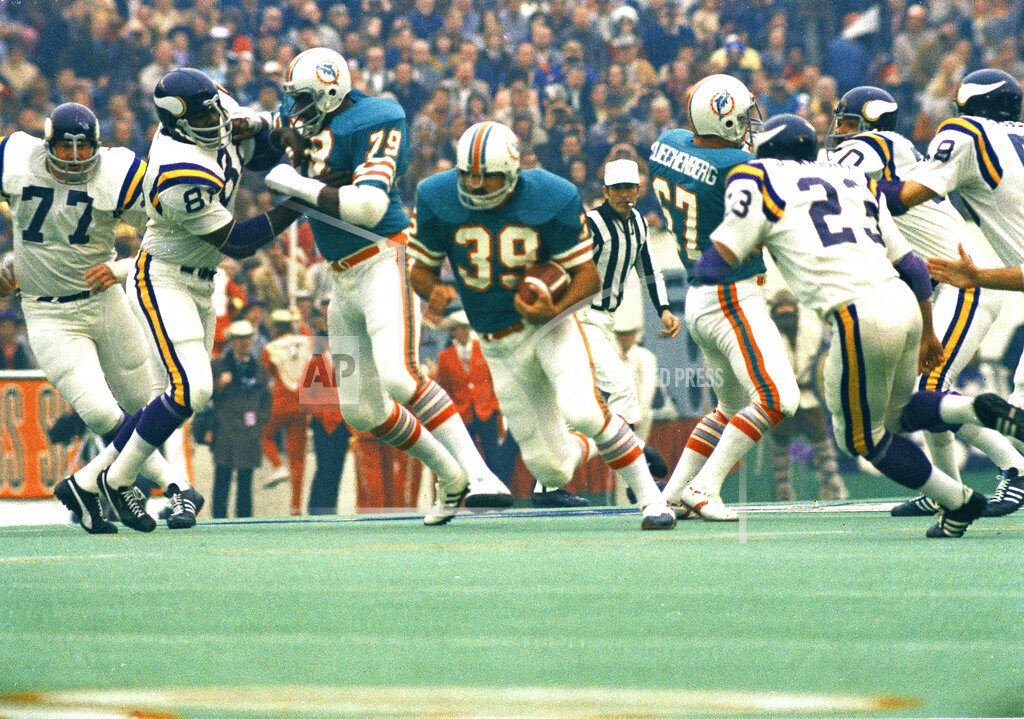
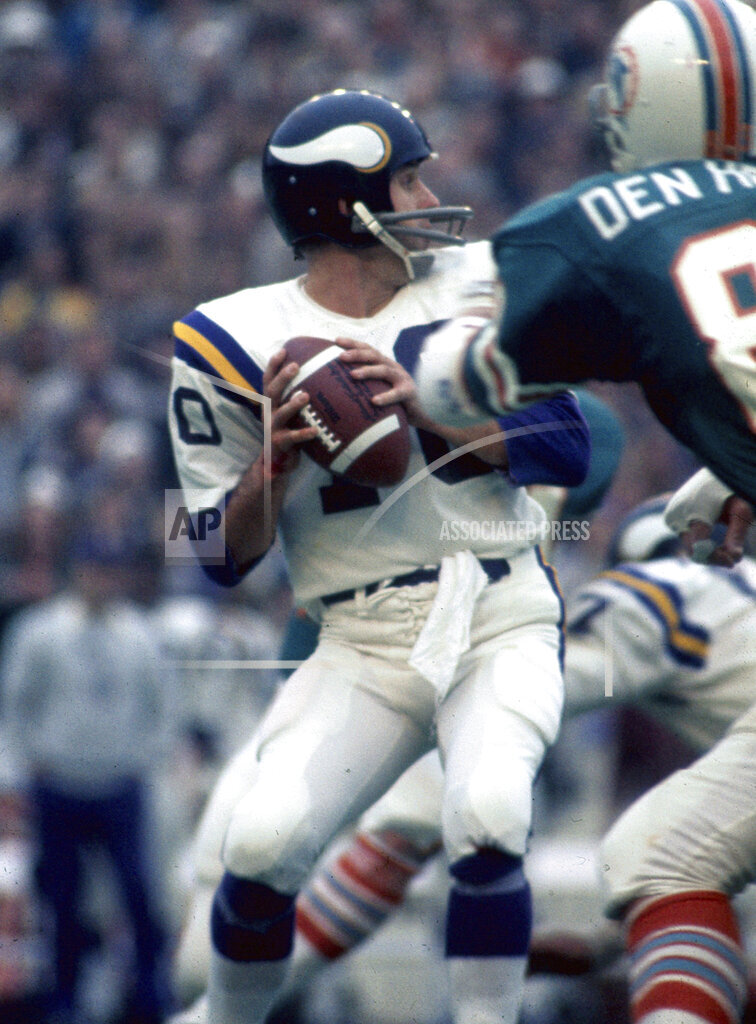
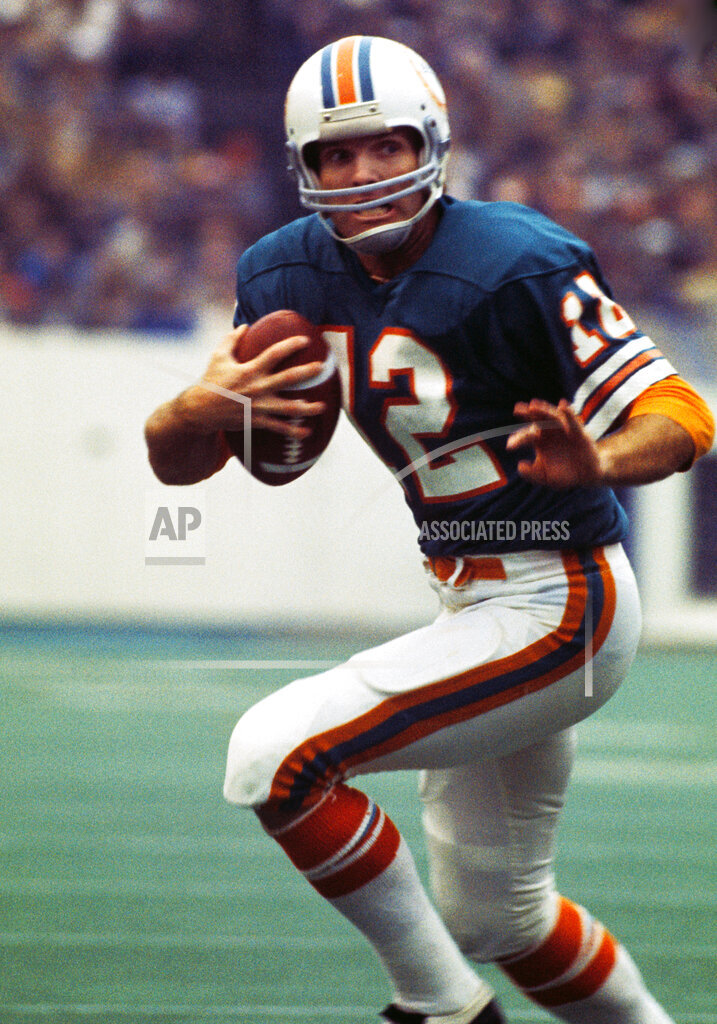
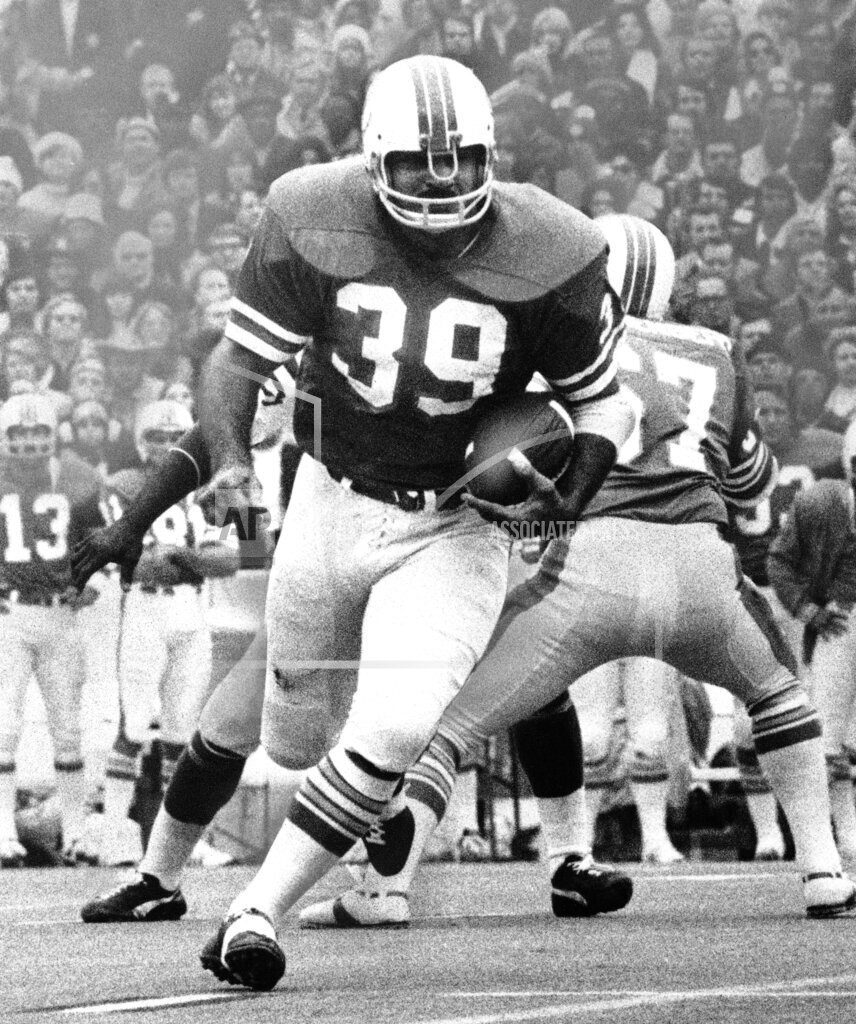
In Super Bowl VIII, held at Rice Stadium in Houston, Texas, the American Football Conference (AFC) champion Miami Dolphins retained their title as National Football League champions, defeating the National Football Conference (NFC) champion Minnesota Vikings by a score of 24—7.
First quarter
As they had the two previous Super Bowls, the Dolphins won the coin toss and elected to receive. The Dolphins dominated the Vikings right from the beginning, scoring touchdowns on two 10-play drives in the first quarter. Said Jim Langer, “It was obvious from the beginning that our offense could overpower their defense.” The two drives were very similar, both containing 8 rushes, 2 passes (both of which were complete), one third-down conversion, and four first downs picked up, while Miami did not get penalized. First, Dolphins defensive back Jake Scott gave his team good field position by returning the opening kickoff 31 yards to the Miami 38-yard line. Then Mercury Morris ran right for four yards, Larry Csonka crashed through the middle for two, and quarterback Bob Griese completed a 13-yard pass to tight end Jim Mandich to advance the ball to the Vikings 43-yard line. Csonka then ran on second down for 16 yards, then Griese completed a six-yard pass to receiver Marlin Briscoe to the 21-yard line. Three more running plays, two by Csonka and one by Morris moved the ball to the Vikings 5-yard line. Csonka then finished the drive with a five-yard touchdown run.
Then after Minnesota’s offense went three downs and out, Mike Eischeid’s punt went only 34 yards. Scott fumbled the return but recovered the ball, giving Miami better field position than the opening drive. The Dolphins then went 56 yards in 10 plays (aided with three runs by Csonka for eight, 12, and eight yards, and Griese’s 13-yard pass to Briscoe) to score on running back Jim Kiick’s one-yard run (his only touchdown of the season) to give them a 14—0 lead.
By the time the first quarter ended, Miami had run 20 plays for 118 yards and eight first downs, and scored touchdowns on their first two possessions, with Csonka carrying eight times for 64 yards and Griese completing all four of his passes for 40 yards. Meanwhile, the Miami defense held the Minnesota offense to only 25 yards, six plays from scrimmage, and one first down. The Vikings advanced only as far as their own 27-yard line. The Dolphins set the record which still stands for the largest Super Bowl lead (14 points) at the end of the first quarter. It has since been tied by the Oakland Raiders against the Philadelphia Eagles in Super Bowl XV (led 14—0) and the Green Bay Packers against the Pittsburgh Steelers in Super Bowl XLV (led 14—0).
Second quarter
The situation never got much better for the Vikings the rest of the game. After each team traded punts early in the second period, Miami mounted a seven-play drive starting from their own 35-yard line, culminating in a 28-yard field goal from kicker Garo Yepremian to make the score 17—0 midway through the second quarter. On the first play of the drive, Minnesota was penalized 15 yards for unsportsmanlike conduct on linebacker Wally Hilgenberg. On the previous series, Hilgenberg had thrown an elbow through Csonka’s facemask, cutting Csonka above the eye, but had not been penalized. Later in the drive, Mercury Morris ran for 10 yards on a 3rd down play from the Minnesota 40-yard line to allow Miami to get into field goal range.
The Vikings then had their best opportunity to score in the first half on their ensuing drive. Starting at their own 20-yard line, Minnesota marched to the Miami 15-yard line in nine plays, aided by Fran Tarkenton’s completions of 17 and 14 yards to tight end Stu Voigt and wide receiver John Gilliam’s 30-yard reception. Tarkenton’s eight-yard run on first down then advanced the ball to the 7-yard line. But on the next two plays, Vikings running back Oscar Reed gained only one yard on two rushes, bringing up a fourth-down-and-one with less than a minute left in the half. Instead of kicking a field goal, Minnesota attempted to convert the fourth down with another running play by Reed. However, Reed lost the ball while being tackled by linebacker Nick Buoniconti, and Scott recovered the fumble. About the decision to run with Reed on three straight plays, Grant defended the decision since the Vikes twice had converted in the NFC title game against Dallas. “If it’s less than a yard, we go for it”, he said. “We feel we have the plays to make it.” The Dolphins, however, made the stop where the Cowboys had not.
Jim Langer wrote that at halftime, “We definitely knew that this game was over.”
Third quarter
Gilliam returned the second half kickoff 65 yards, but a clipping penalty on the play moved the ball all the way back to the Minnesota 11-yard line. Two plays later, Tarkenton was sacked for a six-yard loss by defensive tackle Manny Fernandez on third down, forcing Minnesota to punt from their own 7-yard line. Scott then returned the punt 12 yards to the Minnesota 43-yard line.
Miami then marched 43 yards in eight plays to score on Csonka’s two-yard touchdown run through Hilgenberg to increase their lead to 24—0 with almost nine minutes left in the third quarter. The key play was Griese’s third-and-five, 27-yard pass to wide receiver Paul Warfield to the Minnesota 11-yard line. It was Griese’s last pass of the game, his only pass of the second half and just the seventh overall, and only Warfield’s second, and last, catch of the game. (Because of his hamstring injury, Warfield had earlier been limping through primarily decoy routes.) The Vikings might have had the drive held to a field goal attempt when Morris lost 8 yards on a third-and-4 play from the Minnesota 5, but Hilgenberg was called for holding, giving Miami an automatic first down at the 8. From there, Csonka carried twice to a score. On the scoring play, Griese forgot the snap count at the line of scrimmage. He asked Csonka, who said “two.” Kiick said, “No, it’s one.” Griese chose to believe Csonka, which was a mistake; it was “one.” Griese bobbled the ball slightly, but still managed to get it to Csonka.
After an exchange of punts, Minnesota got the ball back at their 43-yard line after Larry Seiple’s kick went just 24 yards.
Fourth quarter
The Vikings then mounted a 10-play, 57-yard drive, with Tarkenton completing 5 passes for 43 yards, including a 15-yarder to Voigt on 3rd-and-8, and taking the ball into the end zone himself six plays into the 4th quarter on a 4-yard touchdown run. This was the first rushing touchdown by a quarterback in Super Bowl history.
Minnesota recovered the ensuing onside kick, but an offsides penalty on the Vikings nullified the play, and they subsequently kicked deep. Miami went three-and-out, but Seiple boomed a 57-yard punt and Minnesota got the ball back at its own 3-yard line. Eight plays later, along with the only penalty charged to Miami in the game (four yards for pass interference), the Vikings reached the Miami 32-yard line. Tarkenton got there with a 27-yard completion to Ed Marinaro. But after two incomplete passes, his pass intended for wide receiver Jim Lash was intercepted by Dolphins’ cornerback Curtis Johnson at the goal line. Miami got the ball back at their 10-yard line with 6:24 left in the game, and Csonka and Kiick were the ball carriers on all 12 remaining plays. The Dolphins picked up 2 first downs by rush and 2 by penalty on Minnesota in running out the clock. With less than four minutes to play, a frustrated Alan Page was called for a personal foul for a late hit on Griese, and then two plays later both Page and Kuechenberg were given offsetting personal fouls after getting in a scuffle with each other.
Wrote Jim Langer, “We just hit the Vikings defense so hard and so fast that they didn’t know what hit them. Alan Page later said he knew we would dominate them after only the first couple of plays.”
Dolphins’ fullback Larry Csonka became the first running back to be named Super Bowl MVP; both his 145 rushing yards and his 33 carries were Super Bowl records. Csonka broke the previous record for yards rushing (121) and carries (30) set by Matt Snell (who was also a fullback) in Super Bowl III. Griese finished the game with just six out of seven pass completions for 73 yards. Miami’s seven pass attempts were the fewest ever thrown by a team in the Super Bowl. The Dolphins rushed for 196 yards, did not have any turnovers, and were not penalized in the first 52 minutes. Tarkenton set what was then a Super Bowl record for completions, 18 out of 28 for 182 yards, with one interception, and rushed for 17 yards and a touchdown. Reed was the leading rusher for the Vikings, but with just 32 yards. Tight end Stu Voigt was the top receiver of the game with three catches for 46 yards. The Vikings’ lethargic performance was very similar to their performance in their loss to the Kansas City Chiefs in Super Bowl IV.
Minnesota Vikings 7, Miami Dolphins 24
Born:
Sergei Brylin, Russian National Hockey Team and NHL centre (NHL Champions, Stanley Cup-Devils, 1995, 2000, 2003; New Jersey Devils), in Moscow, Russian SFSR, Soviet Union.
Matt Lepsis, NFL tackle (NFL Champions, Super Bowl 33-Broncos, 1998; Denver Broncos), in Conroe, Texas.
Jason Sasser, NBA small forward (San Antonio Spurs, Dallas Mavericks, Vancouver Grizzlies), in Denton, Texas.
Mary Jo Sanders, female U.S. professional boxer with 25 wins and one loss; in Detroit.
Died:
Raoul Jobin, 67, French Canadian operatic tenor.
Dr. Arthur Arndt, 80, Jewish German physician who survived the Holocaust (along with six members of his family) despite being in Berlin during World War II, after being helped to hide in the Nazi German capital. Arndt’s wife Lina, who was born July 22, 1886, in Prussia, Germany, died on December 14, 1980. Arthur Arndt’s story was profiled in the book Survival in the Shadows: Seven Jews Hidden in Hitler’s Berlin, by Barbara Lovenheim (Open Road Integrated Media, 2002).
Salvador Novo, 69, Mexican author and television presenter, official chronicler of Mexico City.
Mohammad Iqbal Shedai, 85, Pakistani activist and Pan-Islamist who campaigned for Muslim independence and the partition of British India.

 History Diaries