The Barcelona government summoned men of advanced age to the colors today in an effort to halt General Francisco Franco’s drive in Catalonia. The rebels reported their advance forces were “within sight of the sea” near Tarragona. The loyalists ordered the mobilization of men from 39 to 45 years of age. Previous mobilization orders had included men from 18 to 38 years. Men from 45 to 50 years were ordered to join fortification brigades building new defenses for Barcelona. Previous fortification brigades were dissolved and the men 45 years and under were sent into the regular infantry. It was estimated 200,000 men were affected by the mobilization orders.
War and supply industries were ordered militarized. All available arms were ordered to the front. Half the number of specialists in industries were ordered released from work and sent to the front. Physicians began a reexamination of all persons previously exempted from front line duty. The rebels reported gains all along the 125-mile Catalonian front. In the mountainous north, they took Cisca peak and Aramunt, northeast of Tremp. Northeast of Artesa, on the Segre River, they took Masset heights, dominating a principal highway to Puigcerda on the French frontier. Southeast of Artesa, the rebels took Priexens, Agramunt, and Puigvert de Agramunt on the road to Cervera. The biggest gains were on the southern end of the front. Montblanch, a hub of highways and center of agriculture and industry, was taken yesterday. Today the rebels occupied the villages of Pira and Barbara northeast of Montblanch. At Barbara they were only 45 miles directly west of Barcelona.
The rebels struck south from Montblanch toward Valls, 8 miles away, the government’s principal airdrome in the region. Valls is 12 miles north of Tarragona, the principal seaport of southern Catalonia. The rebels said they hold heights from which they can see the Mediterranean. The most important town captured during the day was Falset, 22 miles west of Tarragona, and in a region of lead and manganese mines. Moroccan troops driving down from the northwest took Falset. Falset is on a main east and west highway and is only 12 miles from the Mediterranean shore, but there is an intervening range of mountains. The rebels took the village of Marsa, west of Falset, and also pushed eastward toward Reus, 9 miles away. At the extreme southern end of the active front, the rebels took Mora la Nueva, on the east bank of the Ebro opposite Mora de Ebro, and moved eastward on the road to Falset.
Success of the rebels’ drives from Montblanch and Falset would drive a new “wedge to the sea” and isolate thousands of loyalists defending the Tortosa sector between the Ebro River and the sea. The battle for Catalonia has developed into the greatest of the war, with an estimated 350,000 men on the government side and 300,000 on Franco’s. Rebels asserted that in twenty days of fighting they had taken 1,200 square miles of territory, 125 towns and villages and more than 30,000 prisoners. Reports were meager concerning the loyalists’ counter-offensive in Estremadura (southwestern Spain). It was said government artillery was shelling the town of Llerena, on the main railway from Seville to Salamanca.
Premier Mussolini and Prime Minister Chamberlain ended their face-to-face talks tonight in which they explained, without completely reconciling, their points of view on Europe’s troubles. Tomorrow Chamberlain will have an audience with Pope Pius XI, and on Saturday will leave for home. Both Il Duce and the British leader refrained from entering into any deal whatsoever to settle any problems. Included among these problems are Italy’s demands on France for concessions in Africa and Italy’s aid to the rebels in the Spanish civil war. Foreign observers characterized as a “draw” Chamberlain’s latest appeasement trip, which perhaps strengthened his position at home. A Chamberlain spokesman emphasized that nothing had been given away. Mussolini likewise could show his followers that he had yielded nothing.
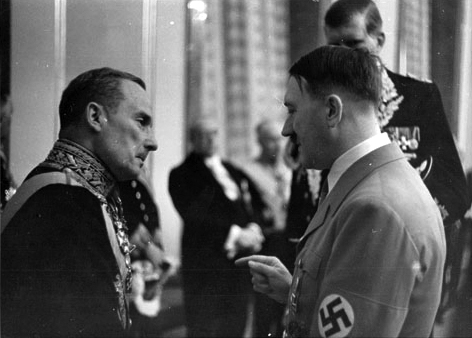
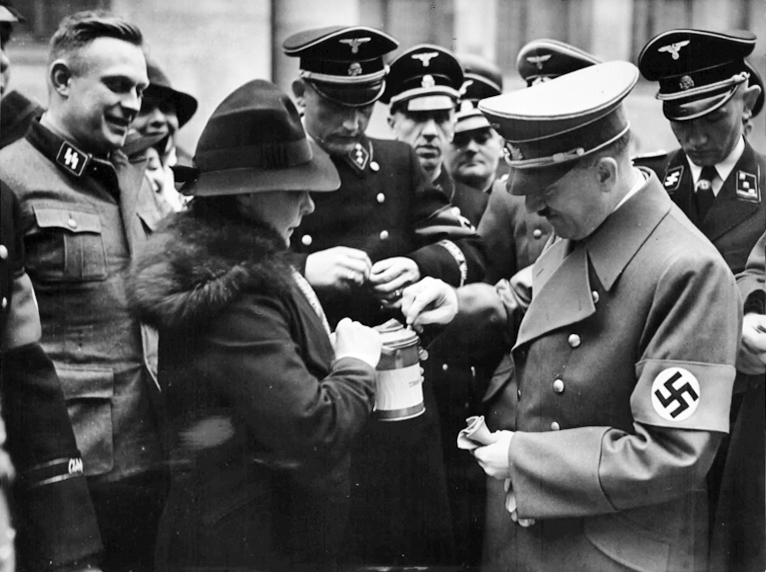
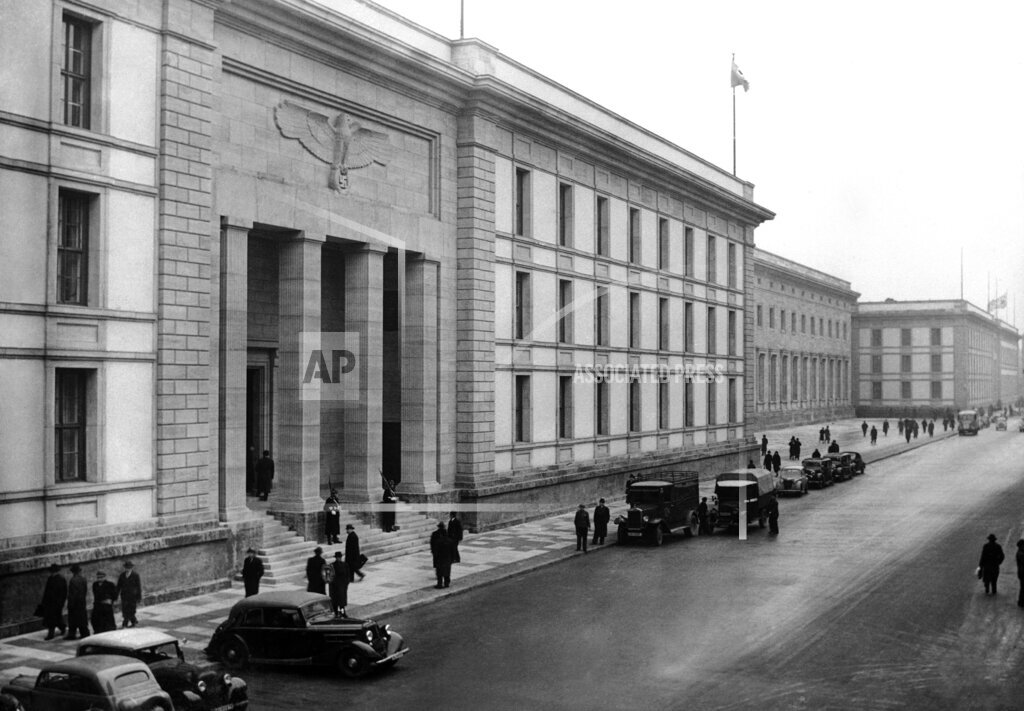
Adolf Hitler and the Berlin diplomatic corps praised the “peace of Munich” today at the traditional New Year’s reception, which was held in the Führer’s glittering new chancellery. The reception, following the precedent set two years ago, had been postponed from January 1, so diplomats did not need to interrupt their Christmas and New Year holidays. In exchanging greetings Hitler and Msgr. Cesare Orsenigo, papal nuncio and dean of the diplomatic corps, expressed the hope that all international differences would be settled by the means used at Munich. Germany won the Sudetenland from Czecho-Slovakia under the Munich agreement.
Max Schmeling, former world’s heavyweight boxing champion, and his wife, Anny Ondra, motion picture actress, were questioned for hours by Nazi authorities Monday and Tuesday, it was learned tonight. The fighter and his wife got into trouble for discussing in public the affair of Dr. Paul Joseph Goebbels, Nazi minister of propaganda, with Lida Baarova, the film actress. Goebbels demanded the arrest of the couple, who are two of the most popular persons in Germany, but this was summarily quashed by Reichsführer Hitler.
Schmeling, at his country estate in Pomerania, today denied that he or his wife were in difficulties with the authorities. But the story of his run in with the propaganda chief was affirmed by several sources in Berlin. Here is what happened: The Schmelings were guests last Saturday at a party given in a Berlin restaurant. The now widely, if cautiously, discussed subject of Goebbels’ beating at the hands of friends of Gustav Froelich, husband of Miss Baarova, came up.
Remarking on Goebbels’ interest in Miss Baarova, as well as in numerous other actresses over whom the propaganda czar holds a whip hand, Schmeling was supposed to have said: “It’s a lucky thing for Dr. Goebbels that he never tried to play with Anny, because I would have broken his neck.”
International negotiations are underway to help Jewish people leave Germany.
A world conference on wheat is planned, with exports being a main topic.
The British protest after Franco’s fighters cross into territorial waters of Britain.
The British Air Ministry announced the formation of the RAF Auxiliary Air Force Reserve.
The Daily Colonist newspaper in Victoria, British Columbia reports shots fired at a German consular official’s home in Holland. The Nazis issued a warning to the Dutch, saying they will be held responsible for the safety of Germans in the Netherlands.
Italian Premier Benito Mussolini reassures the Japanese government of their mutual friendship.
The wedding of Italian Princess Maria is postponed because of the illness of Maria’s sister, Mafalda.
Admittance to the Academy of Sciences of the Soviet Union is to depend, in part, on the candidate’s adherence to Marxist beliefs.
U.S. President Franklin Roosevelt asked Congress for $552 million in defense expenditures to prepare the country for war. The American government planned to expand fortifications in the Pacific and the Caribbean (Puerto Rico and the Virgin Islands). President Roosevelt began to express his strong support for the Western democratic states. The Roosevelt administration allowed the French government to purchase large numbers of American aircraft and built an additional 600 aircraft for the U.S. armed forces. U.S. President Franklin Roosevelt acknowledged that “…our existing air forces are so utterly inadequate that they must be immediately strengthened.”
Democratic leaders applauded the special message in which the President outlined his program and announced immediate steps to carry it into effect. Republican leaders were skeptical of the dangers envisaged by the President and attributed the “Roosevelt war scare” to his political necessity of diverting public attention from the failure of the New Deal and diverting relief and pump priming expenditures from WPA made work to the more popular undertaking of providing for the country’s defense. “I am unable,” said Senator Arthur H. Vandenberg (R-Michigan), “to concede the imminence of America’s danger which the message by its urgency is calculated to imply, provided we mind our own business and keep out of other people’s business and keep out of other people’s wars. A sound America-first foreign policy is the best of all defenses. But any recommendation from the commander in chief demands prompt and open minded attention.” “The American people,” said Representative Hamilton Fish (R-New York), “still are in the dark as to what nation or nations intend to attack us. No airplane has yet been invented that can bomb our cities from European or Asiatic bases. It looks like another pump priming scheme done up in a red, white, and blue bowknot.”
Military leaders appeal to the government for increased research and standardization of equipment for national defense and emergency purposes.
Pro-administration House Representatives fight to restore the slashed $150,000 to the relief budget; but the cut has wide support. President Roosevelt ‘expects a fairy godmother to wave a magic wand and somehow rescue the country from financial ruin,’ Representative Clifton A. Woodrum of Virginia, ranking member of the House Appropriations Committee, declared on the House floor today. It was the boldest Democratic attack against the administration’s fiscal policy yet heard in congress. The speech was received with wild approval by both Democratic and Republican members and sounded the keynote for opposition to Mr. Roosevelt’s spending program by members of both parties. Woodrum’s address opened the battle in the House over the President’s request for 875 million dollars to finance the Works Progress Administration from February 1 to June 30. The House Appropriations Committee today approved, by a 20 to 12 vote, a sub-committee recommendation that the appropriation be reduced by 150 million dollars to a 725-million-dollar figure. Woodrum urged approval of the 17 percent slash.
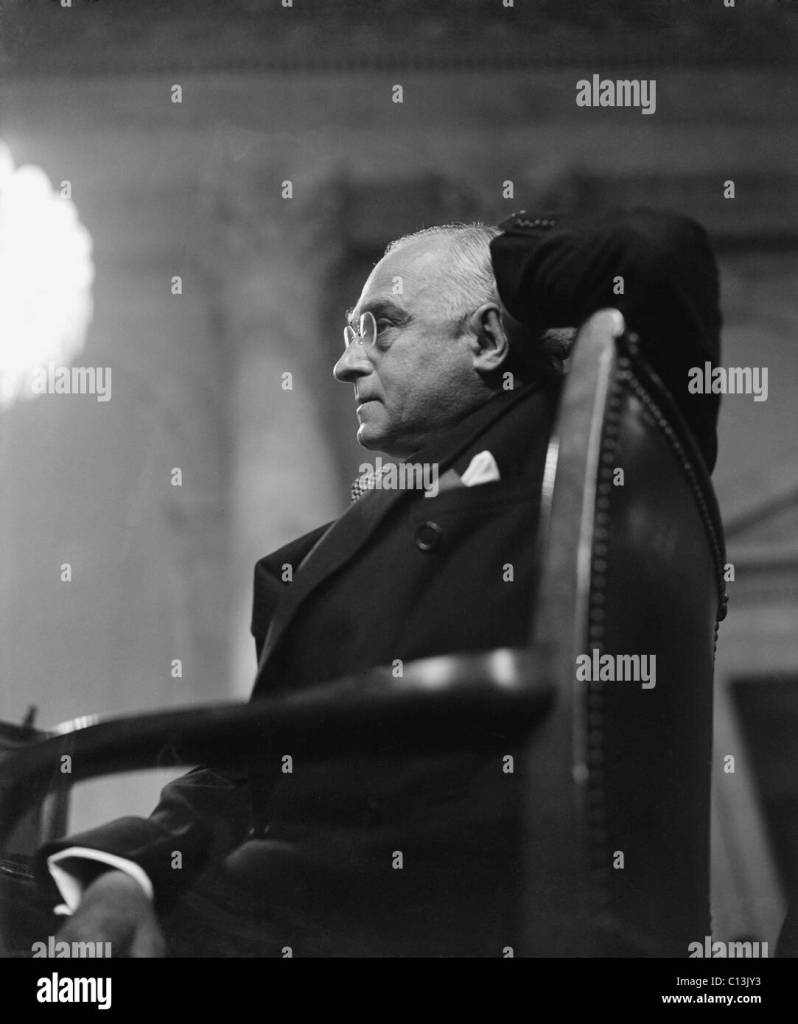
Felix Frankfurter, Supreme Court nominee, appears before a Senate subcommittee to answer questions about accusations of radicalism. After much verbal fencing and evasion by indirection, Professor Felix Frankfurter, President Roosevelt’s nominee for the United States Supreme Court, finally denied today that he is a communist or an adherent of the communist doctrine. Following Frankfurter’s appearance and testimony, the nine-member Senate Judiciary Subcommittee considering his nomination met in executive session and voted unanimously to recommend his confirmation. Frankfurter was the second Supreme Court nominee in the history of the United States to be called before the Senate Judiciary Committee for questioning on the subject of his qualifications and fitness for that office. The other one was Justice Harlan Fiske Stone, who was appointed by President Coolidge.
The fact that Frankfurter asked point blank, “Are you a communist?” was significant, because it resulted from the senate’s experience in rushing through the confirmation of former Senator Hugo L. Black without asking him: “Are you or have you ever been a member of the Ku Klux Klan?” Black was forced to confess, after his confirmation as a Supreme Court justice, that he had been a Kluxer. Members of the Judiciary Committee refused to call Black, dismissing as preposterous the suggestion that President Roosevelt would appoint a Kluxer to the Supreme Court of the United States. Apparently, their doubts that Mr. Roosevelt would appoint a communist to the bench were not so strong, for they did call Frankfurter.
The editor of New Republic magazine denies Communist ties during a Dies hearing.
Eleanor Roosevelt asks every American to donate a dime toward finding a cure for infantile paralysis and says this “March of Dimes” must be spearheaded by women.
Prison warden Frank Craven is convicted of involuntary manslaughter after four prisoners die of heat stroke in Holmesburg, Pennsylvania. He faces 18 months to three years in prison. The prosecutor had sought a verdict of second-degree murder.
Mrs. Roosevelt went on record today in favor of passage of a Federal anti-lynching bill “as soon as possible.”
The House Civil Service Chairman pushes to separate politics and the WPA.
The seven-day trucker strike ends in Boston after the governor personally meets with truckers.
A bill is introduced to establish a minimum wage for domestic workers.
Harvard University appoints its first dean, George Chase.
Interest in Adolf Hitler’s book, “Mein Kampf,” increases at libraries.
Timely Comics (later Marvel) is founded by American publisher Martin Goodman in New York.
The Foundation of the Blind brings “talking books” to blind children in schools.
Chile’s new government pushes for reforms to lower the cost of living and to achieve socialist objectives.
Foreign sources reported today that an American Lutheran church at Shasi, Hupeh province, was demolished and five persons killed when a lone Japanese plane dropped two bombs in the town’s main street on Tuesday. No Americans were believed to be among the casualties.
Japanese authorities announced today that successful mopping up operations north of Nanking had made it possible to open a 100-mile stretch of the Tientsin-Pukow railway. They said one train would make a round trip daily from Suchow, junction of the Lunghai and Tientsin-Pukow lines, to Pengpu, 85 miles northwest of Nanking, beginning next Sunday.
Chinese guerrillas last night cut the Peiping-Tientsin Railway, totally halting traffic.
The foreign minister of the Japanese-dominated Chinese government of Nanking protests the British move to close a police station in international territory.
Dow Jones Industrial Average: 147.33 (-1.32).
Born:
Helmut Eisendle, Austrian writer, in Graz, Austria (d. 2003).
Jacques Hamelink, Dutch writer & poet (Cold Unrest), in Terneuzen, Netherlands.
Naval Construction:
The U.S. Navy Arcturus-class attack cargo ship USS Alcyone (AKA-7) is laid down by the Sun Shipbuilding & Drydock Co. (Chester, Pennsylvania, U.S.A.), as SS as Mormacgull.
The Kriegsmarine (German Navy) Type 1936 destroyer Z19 Hermann Künne (52) is commissioned. Her first and only commanding officer is Korvettenkapitän Friedrich Kothe.

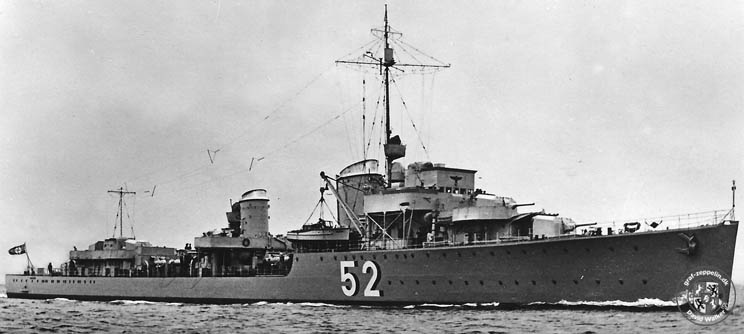
Beached and scuttled 13 April 1940 in Herjangsfjord, Norway, during the second battle of Narvik. On the night of 12/13 April, Commander (Fregattenkapitän) Erich Bey, the senior surviving German officer at Narvik, received word to expect an attack the following day by British capital ships escorted by a large number of destroyers and supported by carrier aircraft. The battleship HMS Warspite and nine destroyers duly appeared on 13 April, although earlier than Bey had expected, and caught the Germans out of position. Z19 Hermann Künne, leading Z13 Erich Koellner westwards to take up her position flanking the entrance to the fjord, was the first ship to spot the approaching British ships and alerted Bey. The other operable destroyers joined Z19 Hermann Künne as she fell back and engaged the British ships at long range from behind a smoke screen. Nine Fairey Swordfish torpedo bombers attacked the German destroyers, near-missing Z19 Hermann Künne and another ship, but lost two aircraft shot down during the attack. By the early afternoon, the Germans had exhausted most of their ammunition and Bey ordered his ships to retreat to the Rombaksfjorden (the easternmost branch of the Ofotfjord), east of Narvik, where they might attempt to ambush any pursuing British destroyers. Lieutenant Commander (Korvettenkapitän) Friedrich Kothe, captain of the ship, misunderstood the signal and headed north into the Herjangsfjord where he run the ship aground in Trollvika near Bjerkvik. She had fired off all of her ammunition, including practice and star shells; her depth charges were rigged for demolition and they were set off once the crew had abandoned ship. The destroyers Eskimo and Forester followed the German ship into the Herjangsfjord and the former put a torpedo into the wreck for good measure, breaking off her stern.
 History Diaries