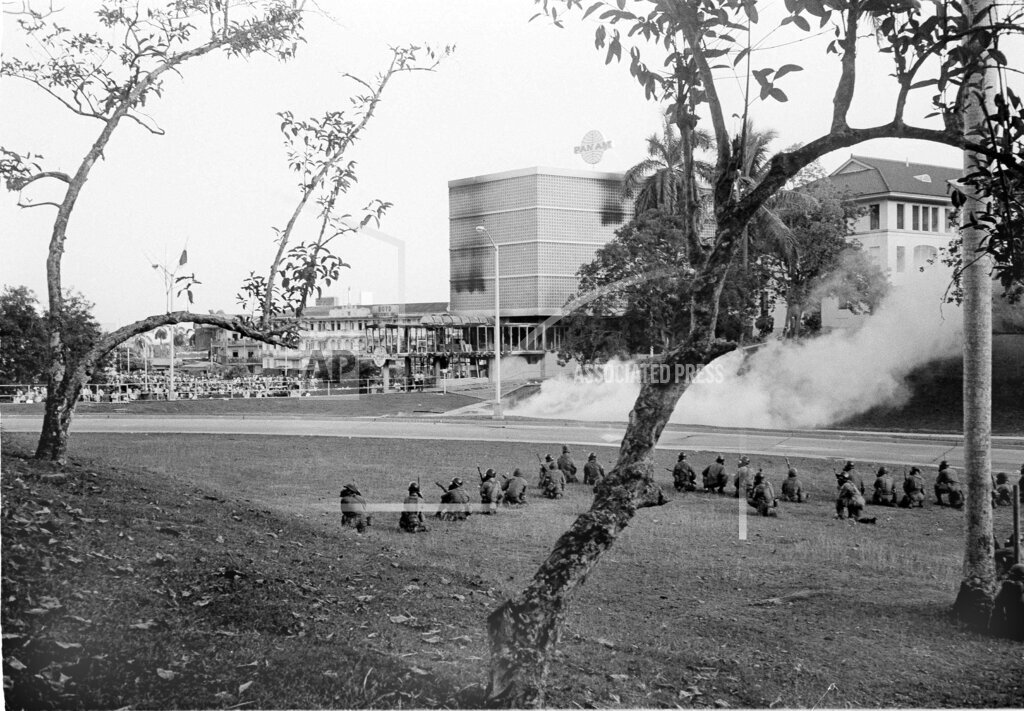
United States and Panamanian troops exchanged fire today for the first time in history near the Canal Zone boundary. A Panamanian soldier was killed. President Roberto S. Chiari tonight called the shooting, in Cristobal, regrettable. Chiari said tonight, in an exclusive interview, that he will not resume diplomatic relations with the United States unless he gets a promise that a new canal treaty will be negotiated.
The Panamanian government regained control of the capital city here tonight from the agitators who had been sniping at United States troops. The national guard was ordered into the streets to disperse mobs, with tear gas, if necessary. Snipers who had holed up in the Legislative palace, from which they were firing on American troops at the boundary across the way were flushed out. De Lesseps Plaza, which is located there, was blacked out again tonight. The 5th of May Plaza, near the old railroad station, appeared quiet. Panamanians were sitting on the benches and reading newspapers.
Secretary of State Dean Rusk says Cuba’s communist dictator, Fidel Castro, is responsible for much of the violence in Panama. He makes it clear, as well, that the United States will not cede any of its rights in the Panama Canal Zone or its protective military bases. Rusk makes both points in a television interview after talking by telephone with Thomas C. Mann, in Panama on a peace-seeking mission.
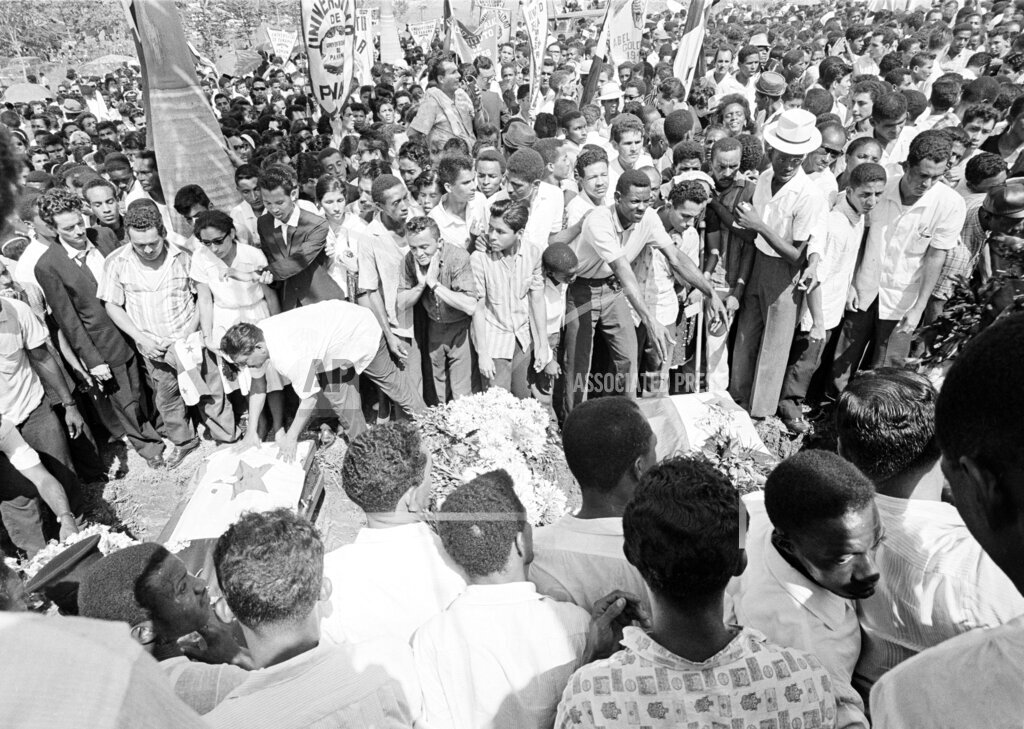
Panamanians, bitter at the United States over the flag incident and resulting shootings, say they can never again feel friendship toward America.
Support for Panamanians in their dispute with the United States was voiced by Chinese Party Chairman Mao Tse-tung.
General Robert E. Wood warns against the United States submitting to arbitration of its treaty rights in the Panama Canal area. The director and retired chairman of Sears, Roebuck & Co. says this nation “will be finished in Latin America” if it allows such a thing to happen. General Wood was one of General George Goethals’ assistants in constructing the canal.
Cuban Premier Fidel Castro arrived in icy Moscow from tropical Cuba today for talks with Premier Nikita S. Khrushchev and a hunting trip in Russia’s snows. Castro was met at the airport by Khrushchev. The Cuban leader wore his usual olive-green uniform and beret, despite a temperature of 23 degrees Fahrenheit. Khrushchev was in a heavy black coat. A 21-gun salute greeted the Cuban leader. Most of the Soviet capital’s diplomatic missions also were represented, but not the U.S. embassy since the United States and Cuba no longer have diplomatic relations.
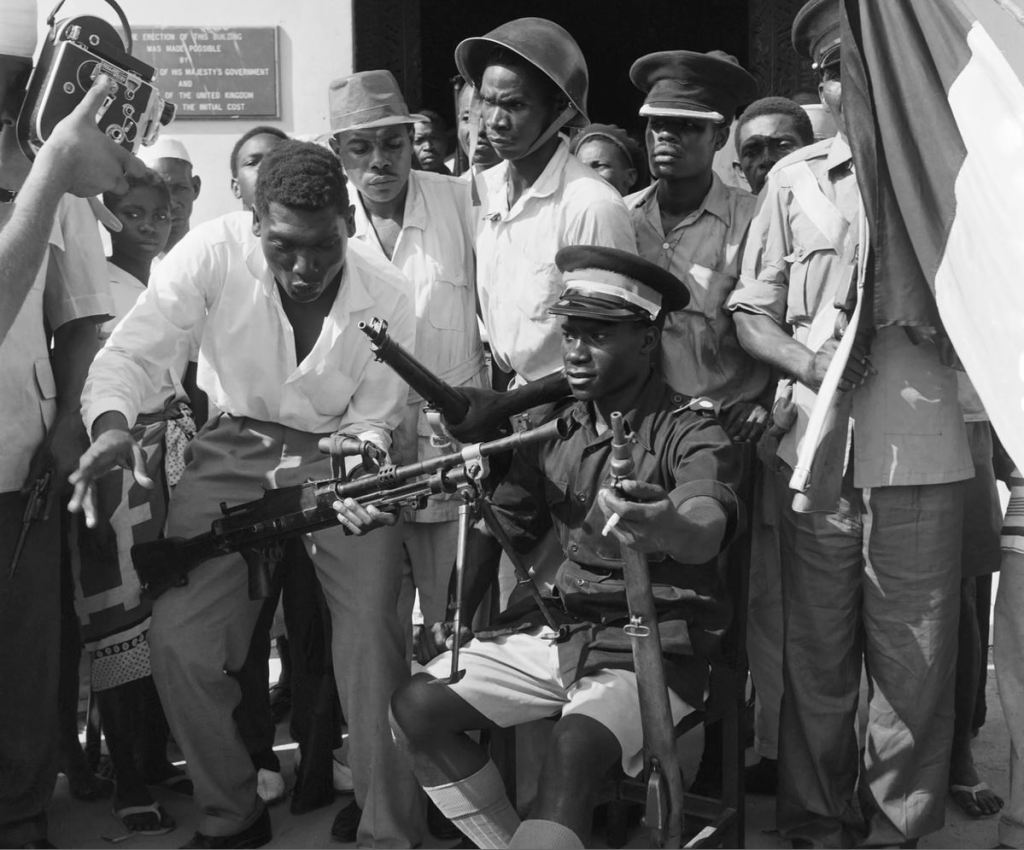
Only a month after Zanzibar had been granted full independence, its predominantly Arab government was overthrown by the predominantly members of the Afro-Shirazi Party. The Zanzibar Revolution was led by John Okello, who dubbed himself “Field Marshal” of the revolution. Just after midnight, Okello and his men seized the police station in Mtoni, north of the capital, Zanzibar City. After emptying the station of its arsenal of weapons, the Okello’s men had taken control of the seat of government by dawn, and controlled the radio station at Ng’ambo. From there, Field Marshal Okello directed a nationwide massacre of Asian and Arab residents, and over the week that followed, between 5,000 and 15,000 were killed. Okello’s radio broadcasts and threats were bizarre, with promises that if the public disregarded orders, he would take measures “88 times stronger than at present” and that “We, the army have the strength of 99 million, 99 thousand.”
Later in the day, the leader of the Afro-Shirazi Party, Sheikh Abeid Karume, declared himself the first President of the People’s Republic of Zanzibar; by then, the last monarch of the Sultanate of Zanzibar, Jamshid bin Abdullah Al Said, had fled the country along with Prime Minister Muhammad Shamte Hamadi. The destroyer ship USS Manley, which had been on patrol on the Indian Ocean, evacuated 61 U.S. citizens from the island nation, which would merge three months later with Tanganyika to form the Republic of Tanzania.
Mayor Willy Brandt expressed hope today that the Berlin Wall could be reopened, but cautioned his fellow West Berliners against premature optimism. “It is useless to arouse early hopes where the shoe pinches,” Brandt said in an address on his twice-monthly radio broadcast. “Do not allow yourselves to be driven mad, either by rumors, guesses, indiscretions [by the press], or by announcements by the East German news agency.” Speaking to listeners in both halves of this divided city, Brandt reiterated his hopes that some arrangement could be found for allowing passage through the wall.
Rioting between Hindus and Muslims continued in the Calcutta area today. Arson and looting spread over extensive areas. Nine persons were killed in suburban clashes and six by police or army gunfire today. This brought the death toll to 75 in four days of disorders. The Indian army began taking over the administration of five areas in the city, P. C. Sen, West Bengal’s chief minister, announced. He said six more areas would come under army rule as soon as troop reinforcements were flown in.
Black smoke rolled over the city from a burning Muslim-owned factory. Ailing Prime Minister Jawaharlal Nehru dispatched Home Minister G. L. Nanda to Calcutta for a survey of religious strife between the Hindu majority and the Muslim minority. Nanda is one of two subordinates named by Nehru to carry on the government leadership temporarily because of the prime minister’s illness.
Pope Paul VI decides to attend the Roman Catholic eucharistic congress in Bombay, India, late this year, and may visit the United States in the near future. Reviewing the success of his pilgrimage to the Holy Land, a Vatican source discloses the pontiff plans several other trips, one of which may place him in New York City during the world’s fair, which will open April 22 and continue until October 18.
Arab leaders flew into Cairo today for a meeting on how to block Israel from starting its plan to divert the waters of the Jordan River for irrigation. President Gamal Abdel Nasser of the United Arab Republic greeted some with a warm embrace and others with a handshake. The conference opens tomorrow. Algerian President Ahmed Ben Bella, Sudanese President Ibrahim Abboud and Iraqi President Abdel Salem Arif were among those who got the traditionally warm Arab embrace. But King Hussein of Jordan received only a handshake.
Italian President Antonio Segni leaves for the United States by plane tomorrow for the first of a series of high-level meetings with allied leaders this year. Segni, who will be accompanied by Foreign Minister Giuseppe Saragat, flies first to Philadelphia. He also will visit Washington, Norfolk, Virginia, and New York before flying back next Saturday. His talks in Washington are expected to include easing of east-west tensions, disarmament, and the progressive unification of Europe.
President Johnson is considering sending Attorney General Robert F. Kennedy on a mission to talk with Indonesia President Sukarno in Japan.
Brazilian President Joao Goulart’s chief labor adviser, Gilberto Crockatt de Sa has resigned after unsuccessful attempts to oust “negative left” elements in labor.
The U.S. government’s indictment of smoking as a major public health hazard rocked Congress Sunday. Legislators hastily drafted bills and proposed hearings to determine what can be done next. Expressions of alarm and concern greeted the Surgeon General’s Advisory Committee report Saturday that cigarette smoking is a prime cause of lung cancer and several other deadly diseases. But behind the immediate furor, many in government and on Capitol Hill seemed to believe that the report itself will do little to change the habits of the 70 million Americans who smoke regularly. Indications were that Congress, which must ultimately decide what to do, would provide more money for research and education to inform the public of the dangers of smoking.
In the positions he has taken on public issues, Senator Barry Goldwater has received overwhelming support from conservatives, a mixed reaction from rank and file Republicans and substantial disagreement from the electorate as a whole.
Five persons were killed and at least 13 others were injured when an enormous explosion wrecked a Massachusetts chemical plant and touched off a raging fire.
James R. Hoffa, teamster union president, said yesterday that he has concluded negotiations on all money issues for a national trucking contract. Hoffa added that he and trucking company negotiators will begin “wrapping up” talks today. He said the contract will be signed by Wednesday at the latest, even though some trucking companies are balking at the teamster demands, calling them too expensive. Contract talks are being held in the Edgewater Beach and Conrad Hilton hotels in Chicago.
It is estimated that the new three-year contract, if signed as Hoffa predicts, will cost the trucking industry about 450 million dollars a year. Hoffa said the new contract calls for wage increases of 10 cents an hour the first year, 8 cents the second, and 10 cents the third year. The contract also calls for employers to contribute an additional $5 a week for each member in pension and health and welfare benefits.
A Democrat and Republican senator urge Congress to revamp United States immigration laws so all would-be Americans are treated as members of “the family of man,” no matter where they were born. The appeals are made by Senator Philip A. Hart (D-Michigan) and Senator Kenneth B. Keating (R-New York), who testified today at the first Senate hearings on immigration in 12 years.
President Johnson flew back to the White House tonight by helicopter in a light snow, ending his first weekend visit to Camp David, in the Maryland mountains. The President was accompanied by Mrs. Johnson and their guests, Secretary of Defense Robert S. McNamara, Mrs. McNamara, and their son, Greg. The President attended services this morning in an Episcopal church in Catoctin Furnace.
John J. McKeithen, who rode the race issue to victory in Louisiana’s Democratic runoff for governor, kept the issue hot with renewed blasts against civil rights.
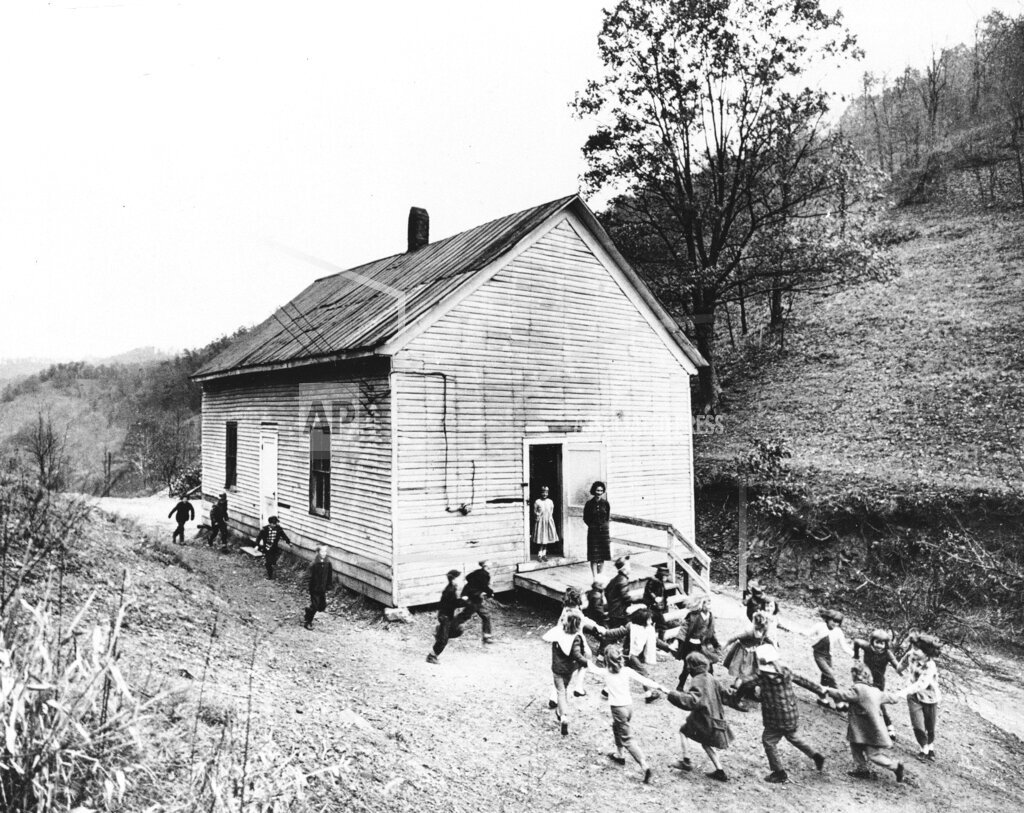
Economic and social ailments of the 10 Appalachian states are the special target of federal efforts.
Mounds of drifting snow blew across much of the Northeastern United States Sunday in the wake of blizzards that left thousands of persons stranded. Two giant storm systems — one moving northeastward along the Atlantic seaboard and the other driving eastward across the Central and Midwestern states — were responsible for the havoc. Winds up to 50 m.p.h. pied the snow into drifts as much as 6 to 10 feet high. Roads in many areas in Illinois, Indiana, Ohio, and other states were impassable and state police issued pleas for motorists to remain at home. At Neoga, a little Central Illinois community, the 1,200 residents were trying to cope with more than 500 unexpected guests-motorists stranded by the snow. The local American Legion Hall and the Masonic Temple were opened to accommodate them.
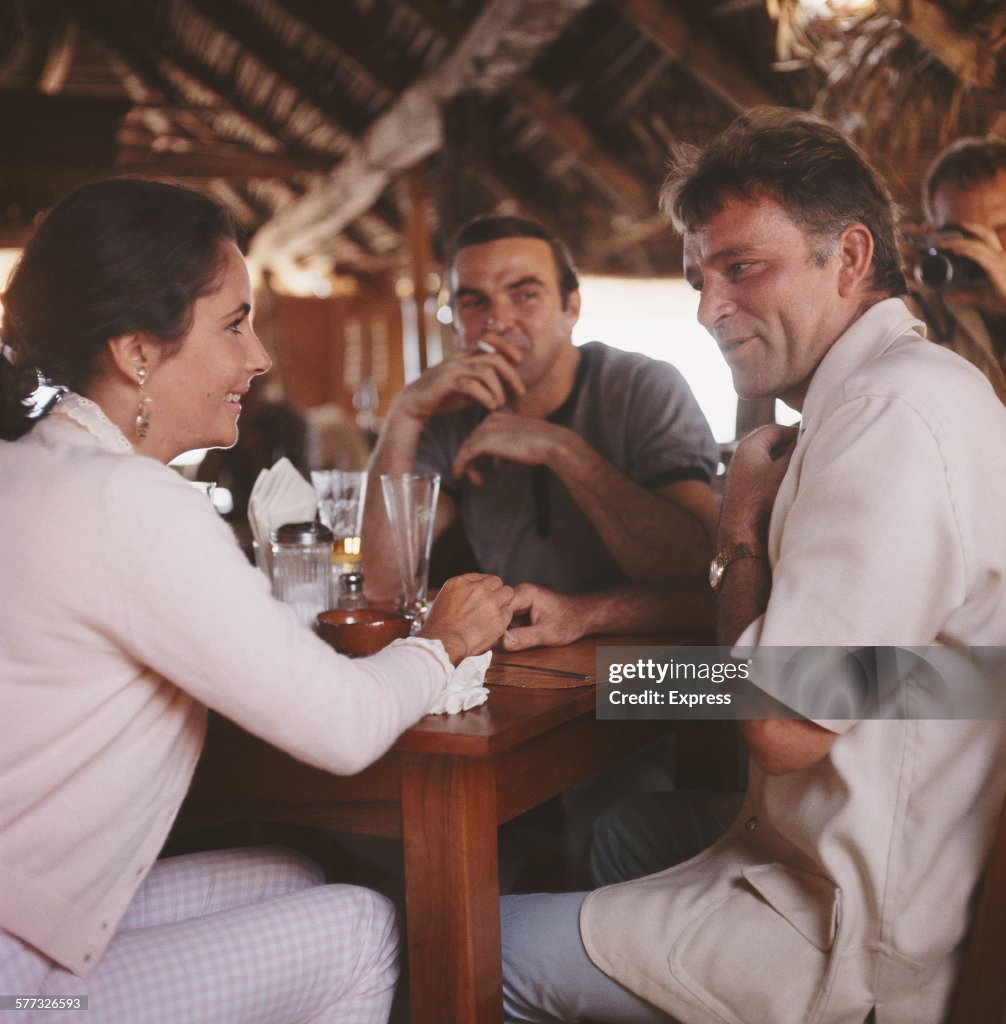
Actor Richard Burton said Sunday it would be about six months before he is able to marry Elizabeth Taylor because singer Eddie Fisher is “creating difficulties.” Attorneys for Miss Taylor and Fisher have been trying to arrange a financial settlement which would clear the way for their divorce. “The other party (Fisher) is creating difficulties which we do not expect to see resolved very soon,” Burton said.
[Ed: Boo Hoo. She cheated on him. Why should he make it easy on her?]
14th NFL Pro Bowl, Los Angeles Memorial Coliseum: Western Conference beats Eastern Conference, 31-17; MVPs: Johnny Unitas, Baltimore Colts, quarterback; Gino Marchetti, Baltimore Colts, defensive end.
Born:
Jeff Bezos, American billionaire and computer scientist who founded Amazon.com; in Albuquerque, New Mexico.
Laura Gildemeister, Argentina, tennis star, in Córdoba, Argentina.
Ralph Malone, NFL defensive end (Cleveland Browns), in Huntsville, Alabama.
 History Diaries