
A NATO spokesman in Brussels said that the Soviets have deployed a battery of nine SS-20 missiles in the eastern part of the Soviet Union since they suspended talks on limiting intermediate-range missiles in Europe seven weeks ago. Missiles in the eastern part of the Soviet Union are not aimed at North Atlantic Treaty Organization countries and the target of the new missiles was not disclosed. Intelligence officials have said previously that many SS-20 missiles based in this area are targeted on China. A U.S. official who asked not to be identified said spy satellites verified the existence of the new missile base and more such deployments are expected. The new deployment brings the number of the mobile, 3,175-mile range SS-20s to 378, with 1,134 nuclear warheads.
President Reagan, hoping to resume talks with the Soviet Union, will deliver a major address next Monday on the state of relations with Moscow, the White House announced today. Mr. Reagan will deliver the televised speech from the East Room of the White House at 10 A.M. An Administration official said the President would take a “realistic, constructive approach.”
He indicated that Mr. Reagan had decided to abandon the kind of language he used in a speech last March when he called the Soviet Union “the focus of evil.” The official said Mr. Reagan had decided that the time had come for an assessment, feeling his program to rebuild America’s military strength “is well on its way.” He said the Russians had had “a bad year.” Their leadership is uncertain with the prolonged illness of Yuri V. Andropov and “they failed to split the allies” when the United States decided to go ahead with the deployment of missiles in Europe, the official said. “So this is a good time for the President” to make the speech, he added. At the same time, he cautioned against expecting any “dramatic” announcement.
Soviet President Yuri V. Andropov is suffering from a virus infection after a kidney transplant several months ago, a West German magazine reported in Bonn. The Bonner Energie Report, an oil and energy monthly, quoted high Soviet diplomatic sources as saying that although Andropov is not bedridden, he is only able to work about two days a week.
The Soviet Union confirmed that fire damaged a compressor station on the Siberian natural gas pipeline, but denied Western reports that the blaze and other problems would delay its completion. The fire reportedly occurred in mid-December, and it was the first time the Soviets acknowledged damage to the pipeline system that will carry natural gas to Western Europe.
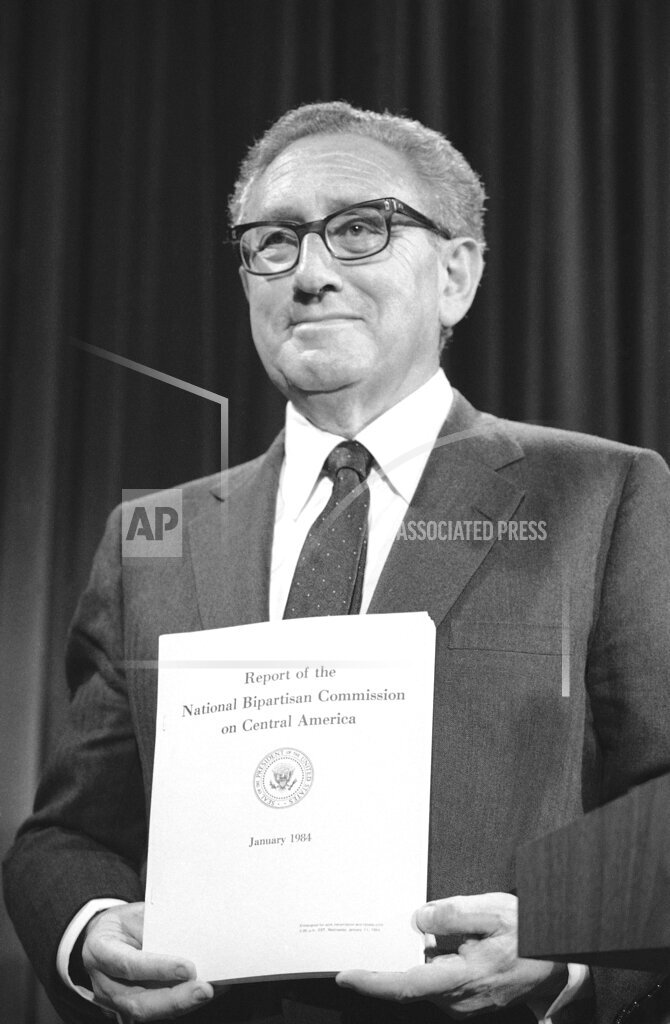
A Soviet-Cuban challenge in Central America has “importantly engaged” United States security interests, according to a bipartisan Presidential commission. In a 132-page report, the commission proposed quick new infusions of military aid to El Salvador and a broad five-year, $8 billion economic aid program for the region.
No bipartisan consensus on policy toward Central America was generated immediately by the recommendations of the Presidential commission, according to members of Congress. Republicans backed most recommendations, while Democrats generally deplored what they consider overreliance on military aid.
President Reagan receives a briefing from Henry Kissinger’s Central American Commission.
A U.S. Army pilot was killed in Honduras by hostile fire “from the direction of the Nicaraguan border from a person or persons unknown” after his helicopter made an emergency landing, the Pentagon announced.
The foreign ministers of Argentina and Chile will meet with Vatican officials January 23 to try to resolve the dispute over islands in the Beagle Channel at the tip of South America, the Vatican announced. Pope John Paul II agreed in 1979 to mediate the dispute, which brought Chile and Argentina to the brink of war. At issue are 10 barren islands claimed by both countries in the Beagle Channel, which connects the Pacific and Atlantic Oceans. The disputed area is believed to contain oil deposits.
Former Argentine President Reynaldo Bignone, charged with complicity in the presumed murder of two Communists, will demand that his case be transferred from a civilian to a military court, court sources said today. The 55-year-old retired army general, who was arrested Tuesday, will maintain that a civilian judge lacks the authority to try him, the sources said. Judge Carlos Oliveri ordered General Bignone’s arrest after the former President testified Tuesday in connection with the August 1976 disappearance of Luis Garcia and Luis Steimberg. General Bignone testified again today, then was returned to detention.
Suriname’s Army today failed to end a strike in the country’s vital bauxite industry apparently aimed at toppling the military ruler, Desi Bouterse, the Dutch news agency A.N.P. reported. Soldiers occupied the Suralco bauxite plant near Suriname’s capital, Paramaribo, but withdrew after several thousand workers made clear they were determined to continue their three-week-old strike, the agency reported.
A positive gesture by Syria was reported by Reagan Administration officials. They said that President Hafez al-Assad had agreed to meet with President Reagan’s special Middle East envoy, Donald Rumsfeld. The meeting would come at a time when the Administration attaches importance to better relations with Syria as a way of resolving the Lebanese crisis.
Muslim militiamen and Lebanese Government troops repeatedly exchanged fire in the southern Beirut suburbs and nearby hills, forcing another delay in completing an agreement to separate the warring factions.
A call for withdrawal of the Marines from Lebanon was issued by several Democratic Senators, with some support from Republicans, at a hearing of the Foreign Relations Committee. The chairman of the committee, Senator Charles H. Percy, Republican of Illinois, suggested that the American force be replaced by troops from other countries.
Israel’s opposition Labor Party, which has surged ahead of the government in recent polls, would unilaterally withdraw Israeli troops from Lebanon without insisting on a simultaneous pullout by Syria, Abba Eban, a former foreign minister and the party’s foreign affairs spokesman, said in Jerusalem. He said the May 17 troop withdrawal accord between Israel and Lebanon, based on the premise of simultaneous withdrawal by Syria and Israel, was absurd since it allowed Syria to dictate Israeli troop movements.
The World Zionist Organization’s governing council in Jerusalem rejected former Defense Minister Ariel Sharon for a top job organizing Jewish immigration to Israel. Prime Minister Yitzhak Shamir had strongly endorsed Sharon for the job, but his candidacy was opposed by some leaders of the U.S. Jewish community and by moderate Zionist groups. Some opponents said Sharon lost credibility when he was reprimanded last year for failing to prevent Lebanese Christian militiamen from killing hundreds of Palestinian refugees in two Beirut camps in September, 1982.
An avowed Palestinian revolutionary was acquitted today of murdering a leading official of the Palestine Liberation Organization in Albufeira, Portugal last year. The defendant, Mohammed Hussein Rashid, 23 years old, of Jerusalem, was sentenced to three years in prison for using a false passport found on him when he was arrested. On the murder charge, however, he admitted being part of the execution squad sent by a radical P.L.O. splinter group but said he did not do the shooting. Mr. Rashid was arrested in a Lisbon hotel April 10, hours after Issam Sartawi, European coordinator for the P.L.O., was shot to death in a crowded hotel lobby while attending a Socialist International meeting in this southern Portuguese resort.
South Africa rebuffed an offer by black guerrillas to attend direct peace talks on Namibia. “If SWAPO chooses to respond in such a provocative manner to South Africa’s efforts to find a peaceful solution to the South-West Africa (Namibia) question, then the South African government cannot see much point in continuing with this exercise,” Foreign Minister Roelof F. (Pik) Botha said in Pretoria. Guerrillas of the South-West Africa People’s Organization said they are willing to attend the peace talks, but they said the talks must deal solely with a cease-fire and not turn into a South African public relations charade.
Michigan Republicans gave President Reagan an unsurprising 96.5 percent endorsement tonight at the beginning of its delegate selection process. With 78 percent of the county and Congressional district caucuses reporting, the straw vote was 2,916 for Mr. Reagan, 68 for Benjamin Fernandez, a California businessman, and 39 for Harold Stassen of Minnesota, a perennial Presidential candidate. Mr. Stassen and Mr. Fernandez are the only announced candidates to challenge Mr. Reagan, who is to formally declare his candidacy January 29. Party officials said they could not characterize participation in the caucuses as either light or heavy. In addition to the straw poll, plans called for those attending the caucuses to select some 1,800 delegates to the Republican State Convention set for January 27-28 in Grand Rapids.
President Reagan meets with the Economic Policy Board.
Leases on the outer continental shelf can be offered for sale to the oil industry without requiring Federal officials to consider the environmental concerns of the coastal states, the Supreme Court ruled. The 5-to-4 decision is likely to speed the offshore leasing process.
A $10 million award was upheld by the Supreme Court. Voting 5 to 4, the Justices ruled that Federal law does not prohibit the punitive damage award won by the estate of Karen Silkwood in a negligence suit against the Kerr-McGee Corporation. The High Court, which overturned a ruling by a federal appeals court, returned the case to the lower court for further proceedings, in which the award can be challenged on other grounds.
The E.P.A. is under intense pressure from the states and industry to set guidelines for permissible limits for a cancer-causing pesticide found to be contaminating an increasing number of food products, according to agency officials. Rusty Brashear, a spokesman for the Environmental Protection Agency, said, “The urgency level is growing.”
Coleman A. Young is entrenched as the dominant political figure in Detroit 10 years after he became the first black to be Mayor. But he has been able to do little to reverse the decline of a city where unemployment is 17 percent.
NASA space shuttle STS 41-B with the orbiter Challenger moves to the launch pad at Cape Canaveral, Florida. It will be notable for including the first untethered spacewalk by Bruce McCandless II.
The U.S. Army is refusing to pay damages to a woman who was raped and beaten on a base 14 months ago by two fellow soldiers, saying such an assault is one of the risks of serving in the military. Betty Ann Buckmiller, 26, says she will sue, if necessary, to win damages for the November, 1982, attack while she was on active duty at Fort Ord, California, in the Army Reserve. The two soldiers who attacked her were court-martialed in February, 1983, and sentenced to 20 years and 40 years in prison. “There’s no job I’ve heard of where rape is incident to any type of working conditions,” Buckmiller said in a recent interview.
“It is unlikely” that U.S. Information Agency Director Charles Z. Wick will be prosecuted for secretly taping in Florida a telephone conversation with White House Chief of Staff James A. Baker III, the state’s attorney in Palm Beach County, Florida, said. But the official, David Bludworth, said in an interview that he would advise Baker that under Florida law, he and others whose conversations are found to have been taped by Wick can sue the director for damages. Wick has acknowledged taping conversations without telling people. President Reagan, a longtime friend, has defended Wick.
The threat of a nationwide walkout by 50,000 refinery workers was averted today when the Oil, Chemical and Atomic Workers International Union reached agreement with the Gulf Oil Corporation on a two-year contract that is expected to set a pattern for agreement. Hours later, however, Atlantic Richfield refineries were selected for strikes by the union, which accused the oil company of failing to abide by some provisions of the Gulf settlement. Jerry Archuleta, a spokesman for the union, said the agreement with Gulf would serve as a model for negotiations with other major oil companies. The Gulf agreement called for a 20- cent-an-hour increase the first year and a 35-cent hourly increase the second year, along with improved fringe benefits, Mr. Archuleta said. Union members in the oil industry averaged $13.61 an hour under the old contract.
Thousands of blue-collar workers at the giant Weirton steel plant became their own bosses today as documents were signed creating the nation’s largest experiment in employee ownership. About 10,000 workers now own the tin-plate mill where many of their fathers and grandfathers worked. The $386.1 million transaction was financed largely with borrowed money, but the employees have agreed to reductions in pay and benefits in an effort to make the new venture profitable. About 2,000 employees are still laid off, but an efficiency program has been worked out in hopes of bringing many of them back. For thousands still working, the purchase means a chance to save their jobs in a slumping industry. The new Weirton Steel becomes the largest employee-owned company in the United States. The next largest is Pamida, a discount retail chain in Nebraska that employs 5,000 people.
The Consumer Product Safety Commission took the first step toward getting what it considers hazardous child enclosures out of American homes. The commission voted 3 to 1 to regulate the expandable wooden enclosures under the Consumer Product Safety Act, a technical step that will speed action on recalls or future bans if they are required. The enclosures are circular, but are similar to expandable, accordion-style gates with diagonal wooden slats. The slats form V’s at the top, and the commission has received reports of three children who have strangled when their necks were trapped in them. There may be as many as 235,000 of the enclosures in American homes, the commission warned. The commission still faces a vote on whether a recall is necessary.
Classes for 79,000 Cleveland public school students were canceled because of a custodians’ “sick-out” that one official termed a rape of the school system. Of the school district’s 300 custodians and assistant custodians, 287 called in sick. “These unions have a long history of engaging in operational and financial rape of the Cleveland public schools. And they are determined to continue this rape at any cost,” school board lawyer Robert Duvin said. Superintendent Frederick Holliday canceled classes, saying he did not believe the students could be kept safe and warm. It was the second time in two months a sick-out by custodians — engaged in a contract dispute with the school board — disrupted classes.
The Bahamian authorities have arrested four Florida men and seized a DC-3 airplane suspected of making an illegal drop of drugs off the Bahamas on Monday night when a United States Air Force helicopter crashed while trying to intercept it, the authorities said today. Five people are missing from the downed helicopter. Frank Chellino, a spokesman for the Drug Enforcement Administration, said two other people from a second aircraft were also in custody.
The Chicago Sun-Times filed suit to block Pulitzer Prize-winning columnist Mike Royko from writing for the rival Chicago Tribune, but a judge refused to issue a temporary restraining order and Royko’s byline appeared in both newspapers — the Sun-Times reprinting an old article and the Tribune carrying its first Royko column. The judge set a hearing on an injunction for today. Royko walked out on the Sun-Times, contending that his contract is not binding, after the paper was purchased by Australian press magnate Rupert Murdoch, saying that some of the papers published by Murdoch are “trash.”
A novel begun 55 years ago by an author who is now 88 years old has been made a main selection of the Book-of-the-Month Club. The 1,344-page book about life in small-town Ohio is by Helen Hooven Santmyer. The novel is Miss Santmyer’s answer to Sinclair Lewis’s unflattering portrait of small-town America in his 1920 novel “Main Street.”
Denver Nuggets 163, San Antonio Spurs 155: highest-scoring NBA game.
Dow Jones Industrial Average: 1277.32 (-1.16).
Born:
Kevin Boss, NFL tight end (NFL Champions, Super Bowl 42-Giants; New York Giants, Oakland Raiders, Kansas City Chiefs), in Corvallis, Oregon.
Matt Mullenweg, American entrepreneur, founder and developer of WordPress, in Houston, Texas.
Died:
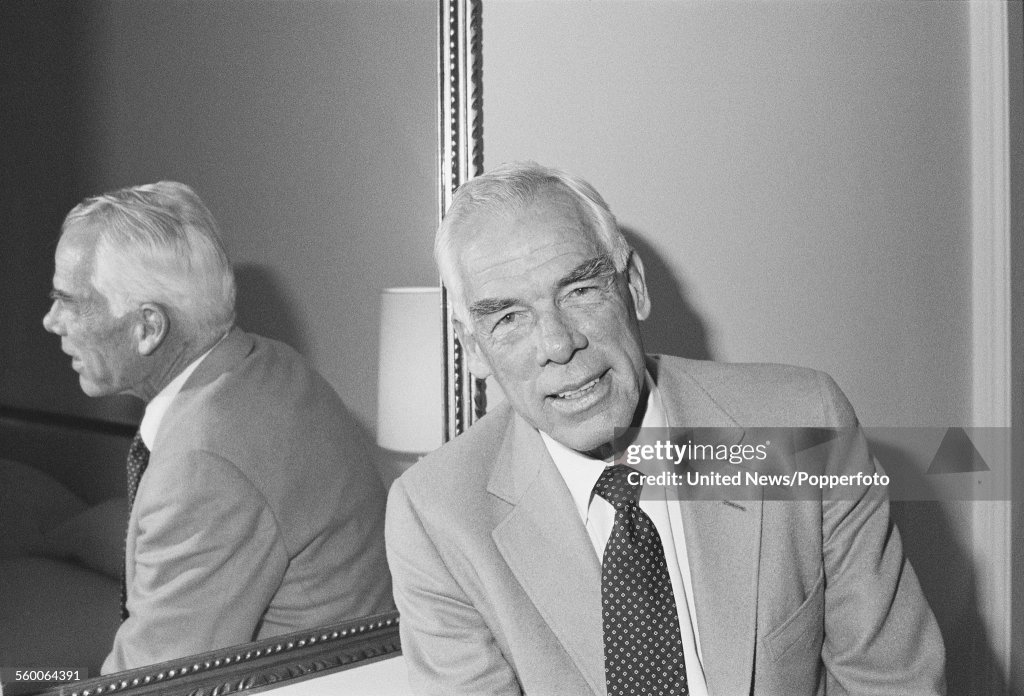
Jack La Rue, 81, American actor and TV narrator (Lights Out, Mouthpiece, My Favorite Brunette).




 History Diaries