United States Ambassador to South Vietnam Henry Cabot Lodge Jr. reported to Washington that the new President of South Vietnam Dương Văn Minh told him that he opposed American soldiers going into villages and districts of rural Vietnam as they would be perceived as “more imperialistic than the French” and would give credence to communist propaganda that the Saigon government was a lackey of the United States.
Panama severed diplomatic relations with the United States, and its representative to the United Nations demanded that the U.S. surrender control of the Canal Zone and the Panama Canal to Panamanian sovereignty. The death toll at the end of the day was 27 people, 24 of whom were Panamanian civilians and three who were American soldiers. Relations would be resumed on April 3. Anti-American mobs battled United States soldiers in the streets within the Canal Zone during the day and a United States embassy spokesman said there was an unconfirmed report last night of a mob of 2,000 roaming in Colon at the opposite Atlantic end of the canal. In Panama City, bands of students were reported still roaming the streets early today. Late in the night, the Sears Roebuck store in Panama City was set afire and the flames roared out of control.
There also was sporadic gunfire in Shaler triangle along the border separating the city from the Canal Zone. Most of the shooting appeared to be aimless but some of it apparently was directed at the Tivoli Hotel inside the triangle. Residents of the hotel were evacuated. Twenty-seven persons, including three American soldiers, were reported killed in the rioting. Panama’s President Roberto F. Chiari threatened to renounce existing treaties with the United States, including the one under which the United States operates the canal. Thomas Mann, the United States’ Latin-America troubleshooter, was dispatched by President Johnson on a peace-seeking mission. He arrived by plane last night and immediately met with President Chiari at the presidential palace.
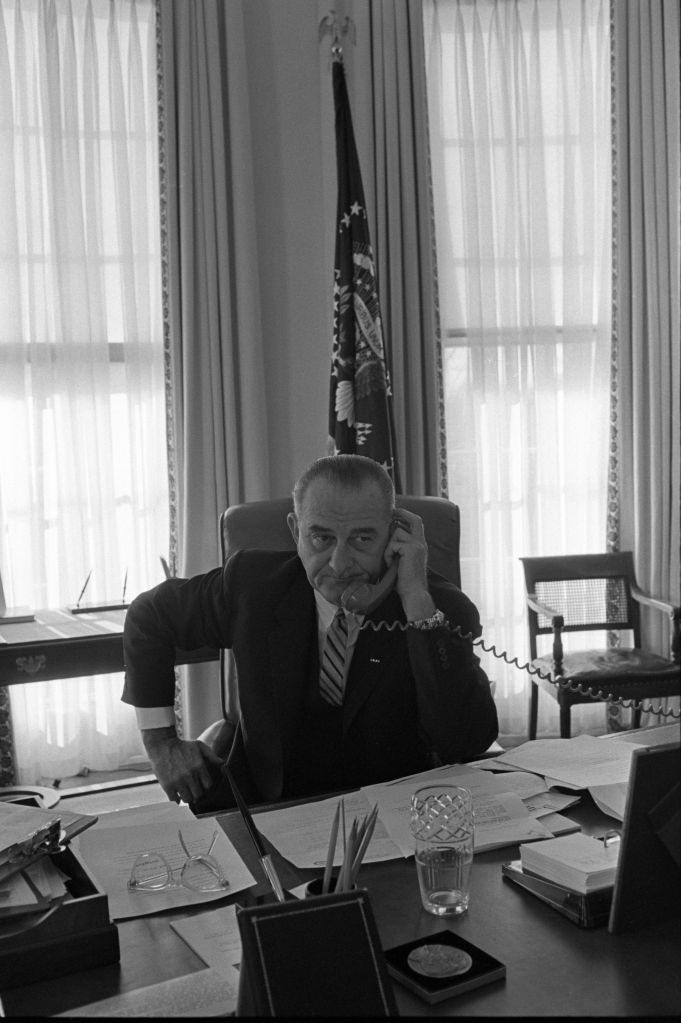
President Johnson talks by telephone with President Roberto F. Chiari of Panama and sends a diplomatic-military mission to the Caribbean country to settle without further bloodshed the crisis involving the Canal Zone. The President orders the United States commander in the Canal Zone to restore and maintain order and safety. Both nations agree to mediation by the inter-American peace commission, a unit of the Organization of American States.
Friendship ties of 60 years are disrupted in a matter of hours by rioting in Panama, putting a severe crimp in the Latin American policy of the United States. Panama officials and American army authorities in the Canal Zone blame each other for the eruption of violence.
Moscow radio tonight accused the United States command in the Panama Canal Zone of repression, lying and deceit. In a broadcast on the home service to Russian listeners, the radio said that United States troops opened fire on students holding a peaceful demonstration. “United States troops shoot Panamanian patriots,” the broadcast began. It asserted the incidents had “shaken public opinion in all Latin America.”
“After the bloody act of repression against the Panamanians,” the broadcast said, “the United States command in the Canal Zone undertook a maneuver of deceit and put out a statement that the troops attacked the demonstrators at the request of Panamanian authorities. This lying statement met with a categorical protest from the government of Panama. “The shooting of the young Panamanian patriots has caused the wrath and indignation of the entire people. The country is in the grip of a wave of violent protest demonstrations. The situation in Panama is becoming inflamed.”
Russia’s newspapers print no word of it, but reports persist that a blond ax-killer is on the loose in Moscow, killing as a thrill or because he is the loser in a macabre card game. The reports say he is interested only in finding children unattended at home. Frightened housewives bar their doors.
General Wallace M. Greene, Commandant of the United States Marine Corps, said today he had no quarrel with the way combat helicopters were being used in South Vietnam’s war against Communist guerrillas. He was quoted in Tokyo earlier this week as having said: “We feel the fixed‐wing aircraft is far better in support of ground forces than the helicopter. The Army helicopter is so slow and vulnerable that we do not think it is an ideal gun platform.” General Greene said, however, that he had not referred to escort helicopters. “The Marine Corps uses armed helicopters itself, primarily in a suppressive role against enemy ground fire, to keep the enemy down,” he said. General Greene is touring Marine installations in South Vietnam. The Army’s rapidly expanding aviation section, including fighting helicopter units, has received unfavorable comment from ranking Navy, Air Force and Marine Corps officers. Helicopters play a major role in the guerrilla war here.
In South Vietnamese combat today a United States Army plane was shot down by Communist gunfire and crashed in the city of Cà Mau today, killing two Vietnamese civilians and injuring seven, an American spokesman reported. The crew was reported to be safe.
Battles continue between Muslims and Hindus in Calcutta, India. A dusk‐to‐dawn curfew was imposed in parts of Calcutta and the suburbs today after rioting spread in the wake of violence early this week in East Pakistan. The police halted a group of college students as they were organizing a demonstration march. A clash erupted and the police shot one student dead and wounded another. There was panic and unrest in the city following this incident. Crowds paraded the streets shouting anti‐Muslim slogans. At least half a dozen persons were stabbed in isolated incidents.
The State Department said tonight that Prince Norodom Sihanouk, Cambodia’s chief of state, had decided to postpone his January 15 deadline for the departure of United States military and economic advisers from Cambodia. A spokesman for the State Department described the move as a “step in the right direction of improved Cambodian relations” and as a “positive reflection on efforts by the Philippines to mediate differences between Cambodia and the United States.” According to officials here, Prince Sihanouk has asked Americans to stay and finish work on the American-Cambodian Friendship Road and to continue aid projects begun last year. The officials noted, however, that in an effort to comply with Prince Sihanouk’s original January 15 deadline nearly all United States aid personnel and equipment had already left Cambodia.
West Berlin and East German officials agreed in an East Berlin meeting today to continue seeking ways of reopening the Communist wall to West Berliners. The Western and Communist negotiators met for three hours and will meet again at an undisclosed date, a West Berlin spokesman said. Neither side put forth new proposals on traffic between East and West Berlin, he added. But they discussed earlier suggestions.
The United States has called for a fundamental reorganization of the United Nations to limit the power of the small nations.
Senator Barry Goldwater, the Arizona conservative candidate for the Republican Presidential nomination, today stood by his charge that the nation’s long range missile systems are undependable. He said he is asking for a full-scale probe of his charges by the Senate preparedness subcommittee, of which Senator John Stennis (D-Mississippi) is chairman.
“If I am proven wrong, I will be very pleased and happy to admit it, but if there is a lack of dependability, I do not believe the American people should be lulled into a false feeling of security by numbers and statistics, or by the fact that by intimate and constant attention and under ideal conditions we can place rockets into orbit,” he said in a statement. Goldwater’s questioning of the dependability of our missile systems, made in New Hampshire, drew a blast yesterday from Secretary of Defense Robert S. McNamara, who said the senator’s statement was “completely misleading, politically irresponsible, and damaging to national security.”
The senator said it seemed strange that McNamara would call a dependability gap a political issue “when the missile gap, so profusely used in the 1960 campaign, wasn’t so considered by his present associates,” and in fact did not exist, “as the secretary well knew.” Goldwater said that when he speaks of a dependability gap, he is not referring to launching vehicles under ideal conditions, but about the dependability of missile systems that might have to be launched in the middle of the night, during a storm, and upon an instant’s notice. “I am talking about life-or-death dependability of the missiles upon which the fate of peace itself and of every man and child of this nation may hinge as we face the threats and aggressions of communism,” he said.
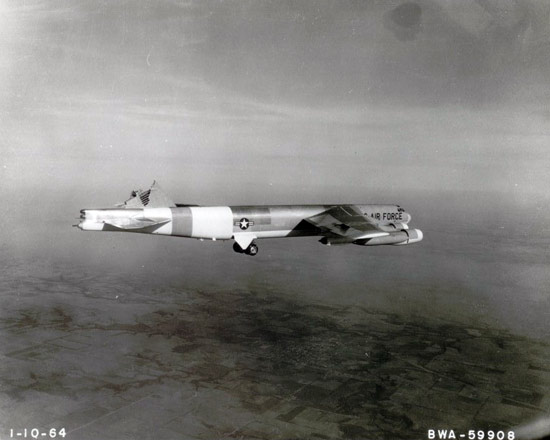
A B-52H Stratofortress, serial number 61-023, flown by Boeing test pilot Charles F. (“Chuck”) Fisher, was conducting structural testing in turbulence near East Spanish Peak, Colorado. The other crew members were pilots Richard V. Curry and Leo Coer, and navigator James Pittman. Dick Curry was flying the airplane and Chuck Fisher, the aircraft commander, was in the co-pilot’s position. Pittman was on the lower deck. The bomber was carrying two North American Aviation GAM-77 Hound Dog nuclear cruise missiles on pylons under its wings. Flying at 14,300 feet (4,359 meters) and 345 knots (397 miles per hour, 639 kilometers per hour), indicated air speed, the airplane encountered severe clear air turbulence and lost the vertical stabilizer. Several B-52s had been lost under similar circumstances. (Another, a B-52D, was lost just three days later at Savage Mountain, Maryland.) Fisher flew the bomber back to Wichita and was met by a F-100 Super Sabre chase plane. When the extent of the damage was seen, the B-52 was diverted due to the gusty winds in Kansas. Six hours after the damage occurred, Chuck Fisher safely landed the airplane at Eaker Air Force Base, Blythville, Arkansas. He said it was, “the finest airplane I’ve ever flown.”
The Commerce Department approves additional subsidized wheat sales to Russia exceeding 103 million dollars in value. The commerce department refuses information on the sales other than disclosing that three licenses are for 16 million dollars each, one for 48 million dollars, and one for $7.6 million. Basing figures on previous transactions with the communist bloc, experts calculate the export subsidies on the shipments will cost American taxpayers more than 30 million dollars.
Governor Nelson Rockefeller criticizes President Johnson’s State of the Union message as one of empty promises and remarkable omissions. Rockefeller charges Johnson’s message fails to mention America’s problems abroad and asserts the President held out a package of promises on the domestic front that simply “will not be delivered at the quoted price.”
The U.S. unemployment rate declined in December to 5.5 percent, the Labor Department reported today. The drop from a rate of 5.9 percent in November was substantial. Experts in the Bureau of Labor Statistics cautioned, however, against attaching much significance to it. A good share of the drop, they said, was a correction from a large jump the month before. That increase was caused to a considerable extent by a quirk in the statistics used to adjust the rate to eliminate seasonal influences.
Congress completes action on a resolution authorizing an appropriation of 15½ million dollars to construct on the banks of the Potomac a memorial to President Kennedy to be known as the John F. Kennedy Center for the Performing Arts.
A state judge strikes down a New York executive order requiring a school district to end racial imbalance in its schools. Justice Isadore Bookstein of the New York Supreme Court says the order violates a state law designed to bar discrimination in the public schools, terming the order discriminatory against white pupils.
The Federal Trade Commission is ready to move soon against smoking after the publication of today’s report by the surgeon general on the relation between smoking and health.
Stock market averages declined, breaking a string of seven straight daily advances, but many issues rose.
The U.S. version of “That Was The Week That Was” premieres.
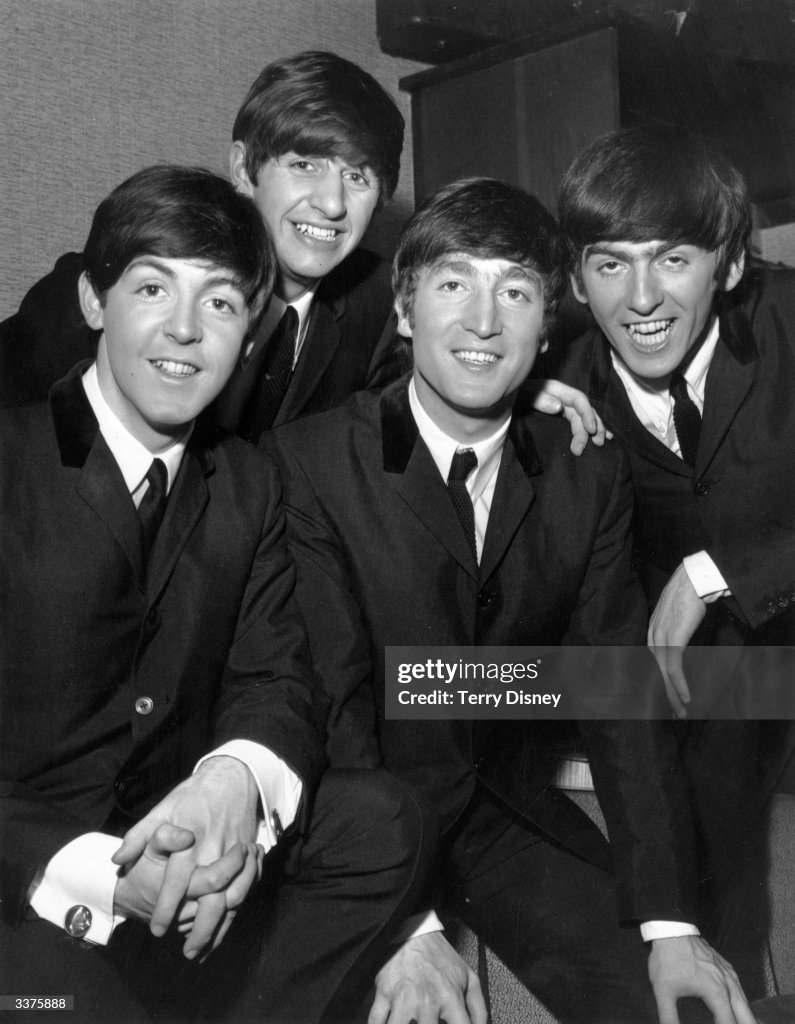
“Introducing… The Beatles” was released by Chicago’s Vee-Jay Records to get the jump on Capitol Records’ release of “Meet the Beatles!,” scheduled for January 20. Capitol obtained a restraining order against Vee-Jay on January 16 to prevent further sales, although Vee-Jay would defy the order by releasing the album again on February 10 and spending nine-weeks with the second most popular selling album, behind Capitol’s number one seller.
Dow Jones Industrial Average: 774.33 (-2.22).
Born:
Brad Roberts, Canadian rock singer (Crash Test Dummies – “Mmm Mmm Mmm Mmm”), in Winnipeg, Manitoba, Canada.
Karen Josephson, American synchronized swimmer (Olympic gold 1992), in Bristol, Connecticut.
Sarah Josephson, American synchronized swimmer (Olympic gold 1992), in Bristol, Connecticut.
John Bosa, NFL defensive end (Miami Dolphins), in Keene, New Hampshire.
Tony Elliott, NFL defensive back (Green Bay Packers), in Detroit, Michigan.
Krista Tesreau, American actress (“Guiding Light”, “One Life To Live”), in St Louis, Missouri.





 History Diaries