Rebel Spanish commanders reported a twelve-mile advance and the capture of ten villages today in a powerful thrust against government lines on the central Catalonian front east of Balaguer. The attack was aimed at government defenses along the Villagrasa Road toward Cervera on the highway to Barcelona, less than seventy air miles away. Villagrasa is nine miles west of Cervera. Hard fighting Navarrese troops southeast of Lérida reported another gain, driving beyond the Lérida-Tarragona Road between Borjas Blancas and Vimbodi. Behind heavy air and artillery bombardments, rebels broke through government entrenchments on the eastern bank of the Segre River and drove the enemy back past Alcoletge, which is northeast of Lérida and near the main highway to Barcelona. Another force struck southeast to broaden the Segre bridgehead by joining forces already based at Artesa de Lérida.
The attack completed the rebel conquest of the Lérida sector, driving government forces from positions they had occupied since April 3, 1938, and which had held Franco’s troops on the western side of the river. Rebel officers said their engineers had strung two bridges across the Segre to reach the strongly fortified government line. They said a general advance along the whole Catalonian front rapidly was straightening the line which the rebels steadily have been pushing eastward toward Barcelona in the campaign which began on December 23. Southwest of Montblanch, on the highway to Tarragona, rebels said they had captured Ulldemolins in a surprise attack and branched into two columns to cut around Mount de Montsant down the slopes of the Llena Mountains.
The Spanish government reported today that its southwestern offensive had swept beyond the Zujar River almost within artillery range of the main railroad line connecting Seville with northern rebel Spain. The ultimate goal of General José Miaja, government commander in the Estremadura drive, appeared to be to split rebel Spain in two by driving west to the Portuguese border. Its immediate strategy was to compel Franco to withdraw troops from Catalonia and weaken the rebel northern drive. Powerful government forces, moving swiftly through the rich Penarroya mining region, last night captured Fuenteovejuna, an important road center, and by dawn today were closing in on Azuaga, another road hub about fifteen miles farther west.
They were also within fifteen miles of the main Seville-Salamanca Railroad, government dispatches said, and only about seventy miles from the Portuguese frontier. In three days, Barcelona reports said, the government’s southern drive has conquered about 250 square miles of rough country with attacks fanning out from the severed Cordoba-Almorchon Railroad.
Thirty-two persons were killed and forty-seven injured in a swift raid by five rebel bombers on Valencia today. Twenty-five bodies were found soon after the noon attack on the government-held seaport and seven other bodies were found later in the ruins of twenty-one houses.
Fresh fighting broke out today on the uncertain borders of Hungary and Czecho-Slovakia. Czecho-Slovak troops were declared to have bombarded a Hungarian village with incendiary shells. The Hungarian telegraphic agency said three Hungarian houses were set on fire in the village of Nagygejoce, near Ungvar, by the Czecho-Slovak shells. No loss of life was reported.
The fighting, said the agency, started last night and continued intermittently this morning. The Czecho-Slovaks were reported to have kept up an irregular fire even after officers on both sides began an inquiry into the incident. Reports from Chust, capital of Carpatho-Ukraine [Ruthenia], the eastern province of Czecho-Slovakia, told of two other border clashes at Dovhe (Ungvar) and at another village between Vysni Koropec and Munkacs. One Czecho-Slovak officer was reported wounded. The Hungarian account of the Ungvar clash said the Hungarians gave no ground. The commander of the Hungarian frontier patrol said his front was first attacked by a mixed formation of 200 Czecho-Slovak soldiers and Carpatho-Ukrainian irregular infantrymen. The patrol took up defensive positions and asked for reinforcements from Ungvar.
The infantry attack was repulsed, according to the Hungarian version, but then artillery began to fire incendiary shells which started scattered blazes in the village. One regular Czecho-Slovak officer was reportedly captured. Ungvar is about twenty-five miles west of Munkacs where Hungarians said forty-seven persons were killed in an eight-hour battle and bombardment Friday. Ungvar and Munkacs are located in separate indentations of territory, each about ten miles across, with Czecho-Slovak territory on three sides. Both towns are located on the border of Carpatho-Ukraine to which Hungary has been reluctant to give up her claims in her desire to achieve a common frontier with Poland. Germany has opposed her ambitions. Ungvar, 160 miles northeast of Budapest, formerly was the capital of Ruthenia, now called Carpatho-Ukraine. It was ceded to Hungary after the Vienna award of November 2 by Italy and Germany, and Chust became the Carpatho-Ukraine capital.
British Prime Minister Neville Chamberlain is to visit France and Italy. He denies he will serve as a mediator between the two countries. Europe today entered what may prove its most decisive week since Munich with both the dictatorships and democracies anxious for peace, but each at its own price. Prime Minister Neville Chamberlain of Great Britain, who will go to Rome for “exploratory” conferences with Premier Benito Mussolini of Italy, will be the central figure in a week packed with negotiations. Chamberlain will stop in Paris Tuesday to confer with Premier Edouard Daladier of France. Daladier’s resolution not to surrender an inch of French territory to Italian colonial aspirations was fortified by his triumphal swing around France’s loyal Mediterranean empire.
Daladier, upon his return to Paris today, warned Frenchmen of “great tasks” to come to preserve France’s empire intact. French newspapers published excerpts from the German and Italian press to show growing Fascist pressure on France to meet Italy’s expansionist demands. When Chamberlain reaches Rome Wednesday it will be his second meeting with Il Duce. Mussolini invited him to make the visit when they first met at Munich during the “big four” conferences over Czecho-Slovakia last September 29. Their conversations are expected to cover broad political, economic, and humanitarian fields. But before Chamberlain entrains for home next Saturday it is certain he will have plumbed as deeply as possible the spirit of peace in Rome’s populace. For it is his unshaken conviction that the people of Germany and Italy want peace as much as anyone.
“A nation must perish when preachers of God’s word are forbidden to speak the truth,” said a proclamation which was read today in Confessional (Evangelical Lutheran) churches of Germany. The proclamation revealed that the Nazi government is preparing to attain the aim it has steadily pursued since 1935, namely to impose state rule over the entire church through government officials. “For that purpose,” the message said, “a mock synod is being created which is to merge all elements within the church by state compulsion. The church has its authority from God and cannot approve such a development, and the German people who walk in the darkness are beginning to see the great light.”
The proclamation deplored dissensions within the church itself at a time when “unity is so essential.” It said “in prayer we must summon all our strength and work for true church unity.” The message disclosed that pastors have been disciplined by the Nazi regime because they had protested anti-Jewish excesses. They had previously been punished for calling church goers to prayer and repentance during the September war scare over Czecho-Slovakia. In Dahlem, suburb of Berlin, the proclamation was read in the church of the Rev. Martin Niemöller, imprisoned Confessional leader and submarine commander in the world war, by his brother, the Rev. Wilhelm Niemöller.
In his sermon Niemöller said: “Because in the face of threatening war the Confessional church preached profession of faith and repentance, its leadership has been subjected to charges of treason. “And because the pastors felt compelled in the face of the persecution of Jews to preach observance of the Ten Commandments they have been forbidden to preach and their salaries have been stopped (by the government).
Picasso paints La Femme Accoudeé in Paris.
Residents of Tunisia say they are accustomed to foreign rulers fighting over their land; France and Italy are just the current situation.
Two French warships arrived at the naval base of Djibouti today amid rising tension between this French colony and Italy’s neighboring East African empire. The newly arrived craft were the 1,969-ton dispatch boat D’Iberville and the destroyer Epervier. They were sent to this port on the Gulf of Aden from France’s eastern Mediterranean fleet. Detachments of troops also are enroute from France to reinforce Somaliland garrisons. The latest evidence of French-Italian tension was an attack last Thursday on a station of France’s Djibouti-Addis Ababa railway at Diredawa in Italian Ethiopia. Many Italian posters proclaiming Fascist intentions to occupy Djibouti have reached here from Ethiopia.
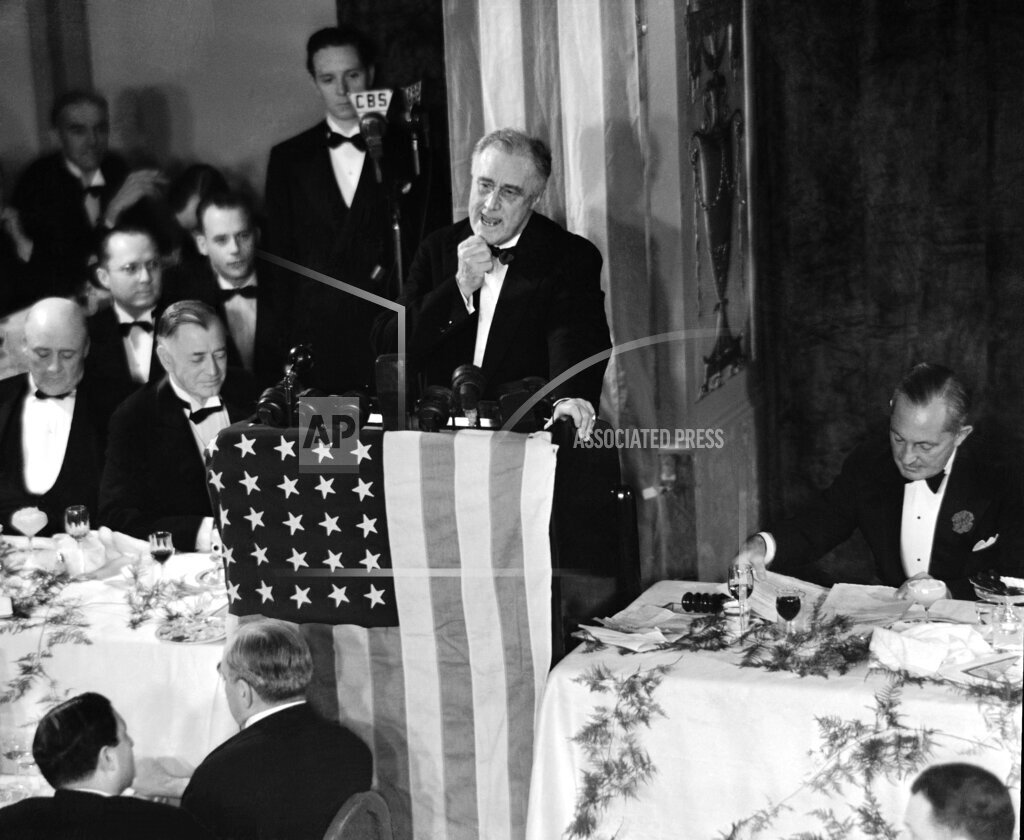
President Franklin Roosevelt’s critics in Congress intend to back increased spending for defense, while refusing to back social and unemployment programs. President Roosevelt’s Jackson Day speech, proposing to purge the Democratic party of its conservative members, was accepted today by the conservative Democrats in congress as a declaration of war. And they declared themselves ready for the battle. Upon the outcome of this struggle between the conservative wing led by Vice President John Nance Garner and the New Deal wing led by the President hinges the control of the Democratic national convention in 1940 and the nomination of the Democratic candidate for President. It bids fair to be such a political battle as has not been witnessed since the standpat and progressive factions of the Republican party went down in fratricidal combat in 1912.
Mr. Garner and most other conservative and middle of the road Democrats in congress were grim and tight lipped in discussing for publication the situation produced by the President’s challenge. It was apparent, however, from what they said off the record that they recognize they have come to the parting of the ways with the President. They are preparing for the first round of the battle, which will take place in this session of Congress when they seek to modify New Deal legislation and put the brakes on the Roosevelt spending policy. Several conservative Democratic senators whom the President unsuccessfully sought to purge in the Democratic primaries last year have taken the position that the true liberals are those Democrats who defeated Mr. Roosevelt’s attempt to pack the Supreme Court. The real reactionaries, they contend, are the President and the other New Dealers who would have subordinated the court to the will of the executive.
President Roosevelt is agreeable to the new economic program, but asks that Congress not put changes into effect before July 1, fearing that rapid changes would be harmful.
Representative Martin Dies (D-Texas) called upon the administration today to “quit pussyfooting” and make known its attitude toward continuing the life of the House Committee on un-American Activities. “If they are going to oppose us, why don’t they come out in the open and make an issue of it?” he asked. “Then we can come to grips and settle it. They know they can’t beat us.” Dies has asked the House to recreate the committee, of which he was chairman and appropriate $150,000 for the investigation.
His reference to “pussyfooting” was prompted by reports that the administration might not oppose continuation for a limited time. The committee has been the target for sharp attacks by President Roosevelt and administration leaders. The Texan said he did not know why Secretary Ickes had canceled a scheduled radio address on the subject, “playing with loaded Dies.” The talk had been announced as another attack on the committee by Ickes. Dies was inclined to take lightly the president’s announcement that the Justice Department would look into the failure of some foreign groups to register with the government.
Congress reviews the construction of a second “Panama Canal” through Nicaragua.
Proposed legislation will ask that household workers be limited to 60-hour workweeks.
The North Carolina College for Negroes will start a graduate program with funding from the WPA.
A micro-camera and polarized light are used successfully to detect postage stamp fraud.
The U.S. embassy in Paris sends a report to Washington detailing an eyewitness account of a Japanese seaplane ramp and airplane hangar on Jaluit in the Marshall Islands of the Pacific.
Judy Garland and other stars join the first Screen Guild Radio Show to raise money for the Motion Picture Relief Fund. The show will run until 1952.
The Philadelphia Orchestra, with Eugene Ormandy conducting and featuring Marian Anderson as contralto, records “Von ewiger Liebe” by Johannes Brahms.
After a lull of more than a year, the Chinese launched a surprise offensive on Hangchow, capital of Chekiang province, with sudden attacks today from three directions. Hangchow is about 100 miles southwest of Shanghai and has been held by the Japanese since late in 1937. The Japanese said the Chinese 63rd Division had crossed the Tsientang River ten miles southwest of Hangchow, while other Chinese units moved in from the west, almost cutting off the city from the interior. A third Chinese force crossed Hangchow Bay and landed at Haiyen, forty miles northeast of Hangchow. The initial attacks were repulsed, Japanese spokesmen asserted, but severe fighting still was going on. Japanese planes were bombing the Chinese. Chinese prisoners disclosed that Chinese inside Hangchow had plotted to aid in the offensive, the Japanese asserted. A cache of arms and munitions was said to have been seized by Japanese authorities.
Chinese pirates, raiding shipping within 15 miles of Shanghai, twice tried today to capture foreign steamers. Three armed junks fired on the Italian steamer Lipari near the confluence of the Woosung and Yangtze rivers, killing one Chinese passenger. An hour later two Chinese were wounded when the German steamer Hansa was fired on at the same spot. Both ships put on full steam and escaped up the Woosung toward Shanghai.
Born:
Bob Talamini, AFL guard (Super Bowl III-Jets, 1968; AFL All-Star, 1962-1967; Houston Oilers, New York Jets), in Louisville, Kentucky (d. 2022).



 History Diaries